Parenting twins is a masterclass in logistics, and nowhere is that more apparent than in your vehicle. While a single baby mirror might suffice for one rear-facing car seat, twins demand a completely different strategy. You’re not just looking for a glimpse of one infant—you need a comprehensive view of two tiny humans, often positioned on opposite sides of your backseat. The right wide-angle car seat mirror transforms from a nice-to-have accessory into an essential safety tool that gives you eyes in the back of your head (or at least the back of your car).
But here’s the thing: not all wide-angle mirrors are created equal, and what works for a singleton setup often fails miserably when you’re juggling two car seats. The market is flooded with options promising “360-degree views” and “crystal-clear reflections,” yet many collapse under the real-world demands of twin parenting—vibration on highways, compromised sightlines in compact cars, and the unique challenge of monitoring two babies who might be doing two very different things at any given moment. This guide cuts through the marketing fluff to equip you with the knowledge to choose a solution that actually works for your twin-specific needs.
Top 10 Wide-Angle Car Seat Mirrors for Twins
Detailed Product Reviews
1. Shynerk Baby Car Mirror, Safety Car Seat Mirror for Rear Facing Infant with Wide Crystal Clear View, Shatterproof, 360° Rotation, Crash Tested and Certified
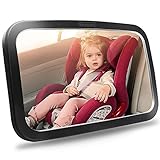
Overview: The Shynerk Baby Car Mirror positions itself as a premium safety solution for parents wanting peace of mind. This single-mirror system attaches to adjustable headrests and provides a wide, crystal-clear view of rear-facing infants through your rearview mirror. It’s designed for families prioritizing certified protection over basic functionality.
What Makes It Stand Out: This mirror boasts impressive safety credentials including crash testing and shatterproof acrylic glass construction. The heavy-duty straps provide exceptional stability, while the 360° rotation with hinge design allows precise angle adjustment. Unlike basic models, it’s specifically engineered to remain secure even during accidents, giving parents confidence that the mirror itself won’t become a projectile. The extra-wide reflection ensures you won’t miss subtle movements or breathing patterns.
Value for Money: At $20.59, it’s mid-range but justified by safety certifications that cheaper alternatives lack. The shatterproof acrylic and robust strap system represent meaningful upgrades over $10-15 models. For parents prioritizing safety over savings, this is a worthwhile investment for a single child. The manufacturer also stands behind their product with responsive customer support, adding long-term value.
Strengths and Weaknesses: Strengths include certified crash testing, genuine shatterproof materials, extra-wide viewing area, and stable 360° adjustment. The heavy-duty straps outperform elastic bands on competitors. Weaknesses are the single-mirror limitation for multiple children and higher cost per unit compared to value packs. The acrylic glass, while safer than real glass, may scratch more easily than glass alternatives.
Bottom Line: The Shynerk mirror is ideal for safety-first parents with one rear-facing child. The certified crash testing and quality construction justify the modest premium, making it a reliable choice for daily peace of mind.
2. Funbliss 2-Pack Baby Car Mirror - Shake-Proof & Shatterproof, 360° Adjustable Angle, Clear Wide View for Rear-Facing Infants, Easy Install, Perfect Baby Travel Gear & Carseat Accessories

Overview: The Funbliss 2-Pack Baby Car Mirror addresses a specific need: monitoring multiple rear-facing children simultaneously. This twin set provides comprehensive visibility for families with twins or siblings in close-age car seats. Each mirror delivers a clear, wide-angle view without the premium price tag of buying two separate units.
What Makes It Stand Out: The dual-pack configuration is the primary differentiator, offering exceptional value for multi-child families. Each mirror features shake-proof construction using seatbelt-material straps that eliminate wobbling. The convex design expands the viewing field without distortion, while 360° rotation enables custom positioning for each child’s seat location. This thoughtful engineering ensures both mirrors stay precisely aimed despite road vibrations.
Value for Money: At $17.66 for two mirrors, this represents outstanding value—under $9 per unit. Comparable single mirrors often cost $15-20 each. For families needing two mirrors, the savings are substantial without compromising on safety features like shatterproof plastic and secure mounting. The seatbelt-material straps alone justify the cost over cheaper elastic versions.
Strengths and Weaknesses: Major strengths include the economical two-pack pricing, superior stability from premium straps, clear convex optics, and straightforward installation. The shake-proof design truly delivers on smooth rides. Weaknesses include potentially smaller individual mirror size compared to premium single units, and the pack might be unnecessary for single-child families. The plastic construction, while shatterproof, may lack the optical clarity of glass.
Bottom Line: For parents of twins or multiple young children, this is unbeatable value. The Funbliss 2-Pack delivers reliable performance and significant savings, making it the smart choice for multi-child vehicle setups.
3. HD Car Mirror for Baby,360° Adjustable Rear View Mirrors Provides a Wide Field of Vision & Observation of the Rear Seat,Clip-on/Stick-on Convex Mirrors Baby Mirror for Car
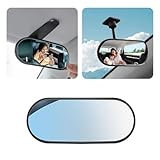
Overview: The HD Car Mirror for Baby offers versatility through its innovative dual-mounting system, appealing to parents who want installation flexibility. This budget-conscious option provides HD glass clarity with multiple positioning choices, making it adaptable to various vehicle configurations where headrest mounting isn’t ideal.
What Makes It Stand Out: The unique selling proposition is the choice between stick-on or clip-on mounting. The stick-on bracket adheres to the rear windshield while the clip-on option attaches to the sun visor. This adaptability suits various vehicle configurations. The HD glass mirror promises superior clarity compared to plastic alternatives, and the double gimbal design enables true 360° adjustment. It’s essentially two products in one package.
Value for Money: At $8.85, this is among the most affordable mirrors offering genuine versatility. The dual-mount capability effectively provides two products in one. However, the low price raises questions about long-term durability and safety certifications that aren’t explicitly mentioned. You’re paying for flexibility rather than certified protection.
Strengths and Weaknesses: Strengths include exceptional mounting flexibility, HD glass for clear images, 360° adjustability, and impact-resistant housing. The price point is highly attractive. Weaknesses involve potential adhesive damage to window tint, glass mirror safety concerns despite housing protection, and lack of mentioned crash testing. The stick-on installation may also vibrate more than strapped alternatives, and clip-on positioning can be awkward.
Bottom Line: This mirror suits budget-minded buyers wanting installation options. While not the safest certified choice, its flexibility and clarity make it a decent compromise for careful drivers in low-risk scenarios. Consider your vehicle type before purchasing.
4. Lyxheth Baby Car Mirror, Car Seat Mirrors, Wide Angle Convex Clip-on Mirrors, Universal Auto Interior Accessories Children Backseat Adjustable Rearview Mirror for Viewing Rear Passengers (1PCS)

Overview: The Lyxheth Baby Car Mirror targets ultra-budget shoppers seeking basic functionality. This single clip-on convex mirror prioritizes affordability and simplicity for occasional monitoring needs. It doubles as a makeup mirror, making it a multi-purpose accessory rather than a dedicated baby safety device.
What Makes It Stand Out: Its primary distinction is the rock-bottom price combined with surprising versatility. The strong spring clip ensures secure attachment to sun visors, while the ABS and glass construction provides durability. The convex design widens the viewing angle, and the dual-ball joint enables 360° positioning. For under $7, it delivers fundamental rear-seat visibility.
Value for Money: At $6.64, this is the cheapest option reviewed. For parents needing only occasional rear seat checks or those on extreme budgets, it’s functional. However, the absence of safety certifications and shatterproof guarantees means you’re trading safety assurance for savings. The multi-use design adds some value, but it’s not a true baby safety product.
Strengths and Weaknesses: Strengths include unbeatable price, easy clip-on installation, multi-function use, and wide compatibility. The convex lens effectively reduces blind spots. Weaknesses are significant: no crash testing mentioned, real glass instead of acrylic, basic ABS plastic housing, and potential sun visor obstruction. The small size may provide limited viewing area compared to dedicated baby mirrors, and the clip could damage visor material over time.
Bottom Line: Consider this only for tight budgets or supplemental use. For primary baby monitoring, invest more in certified shatterproof models. It works but lacks the safety pedigree serious parents should demand for everyday use.
5. CERITORN Universal Car Interior Rearview Baby Mirror Wide Angle Convex Mirror Clip-on mirrors for Viewing Rear Passengers

Overview: The CERITORN Universal Car Interior Rearview Baby Mirror balances quality materials with moderate pricing. This clip-on convex mirror focuses on durability and versatile positioning for parents wanting a reliable mid-range option without committing to premium prices.
What Makes It Stand Out: The mirror features high-quality ABS housing combined with drop-resistant micro-convex glass, suggesting better construction than budget alternatives. Its versatile clipping system attaches to sun visors or even the existing rearview mirror, offering multiple placement options. The 360° rotation provides comprehensive angle adjustment, and the micro-convex design widens the field of view without excessive distortion.
Value for Money: Priced at $8.92, it sits between ultra-budget and premium options. The improved materials justify the slight premium over $6-7 models, though it lacks the safety certifications of $20+ alternatives. For parents wanting better build quality without breaking the bank, it hits a sweet spot. The universal clipping mechanism adds practical value across vehicle types.
Strengths and Weaknesses: Strengths include durable ABS construction, drop-resistant glass, secure clipping mechanism, and flexible mounting options. The convex mirror effectively expands the rear view. Weaknesses include the continued use of glass rather than safer acrylic, absence of explicit crash testing, and clip-on limitation compared to headrest-strap models. It may also obstruct existing mirror functionality if clipped there, and the clip strength could vary.
Bottom Line: The CERITORN mirror is a solid mid-tier choice for quality-conscious parents on a budget. While not the safest certified option, its durable build and versatile mounting make it a dependable daily driver for baby monitoring in most vehicles.
6. UHANBUT Car Mirror for Baby, 360° Adjustable Wide Angle Car Rear View Convex Mirror, Universal Baby Facing Rear HD Safety Back Seat Mirrors Clip on Sun Visor (1PC)
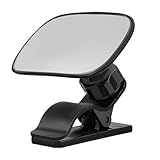
Overview: The UHANBUT Car Mirror for Baby offers a compact, budget-friendly solution for parents wanting to monitor rear-facing infants without turning their heads. This 3.53 x 2.24-inch convex mirror clips directly onto your sun visor or interior panel, providing a wide-angle view through your existing rearview mirror. The 360-degree adjustable design allows flexible positioning to eliminate blind spots, while the ABS frame and glass construction promise durability.
What Makes It Stand Out: Its universal clip-on design sets it apart—no tools required, and it fits virtually any vehicle from sedans to trucks. The high-elastic spring clips ensure a secure hold without damaging surfaces, and the convex shape effectively expands your field of vision despite the mirror’s small footprint.
Value for Money: At $6.69 for a single unit, this is one of the most affordable baby mirrors available. The price point makes it accessible for budget-conscious families or as a backup option. While it lacks premium features like shatterproof certification, the cost savings are substantial compared to $12-18 alternatives.
Strengths and Weaknesses: Strengths include effortless installation, compact size that won’t obstruct your view, and impressive versatility across vehicle types. The 360-degree rotation provides excellent adjustability. Weaknesses are the small viewing area that may require precise positioning, absence of explicit safety certifications, and potential vibration on rough roads due to the clip-on design.
Bottom Line: The UHANBUT mirror is a solid entry-level choice for parents prioritizing simplicity and affordability. It delivers core functionality without frills, making it ideal for occasional use or families wanting to test the concept before investing in a larger system.
7. BOEYOS Baby Car Mirror, Safety Car Seat Mirror for Rear Facing Infant, Clear Wide View, 360°Rotation, Easily Observe the Baby Move, Secure, Shatterproof, Crash Tested and Certified (Black)

Overview: The BOEYOS Baby Car Mirror elevates the standard clip-on design with enhanced safety features and thoughtful engineering. This compact mirror attaches to headrests or sun visors, offering a wide-angle view of your rear-facing infant with 360-degree rotation capability. Measuring similarly to competitors at a compact size, it emphasizes certified safety and user comfort.
What Makes It Stand Out: Unlike basic models, BOEYOS boasts crash testing and safety certification, providing peace of mind for cautious parents. The anti-glare design reduces eye strain and prevents sunlight from disturbing your baby, while the specially processed ABS frame offers superior impact resistance. Rounded edges add another layer of safety, preventing injuries during installation or adjustment.
Value for Money: Priced at $8.99, this mirror sits in the mid-range category. The additional $2-3 over budget options is justified by legitimate safety testing and premium features like anti-glare coating. For parents who value certified protection, this represents excellent value without reaching premium price points.
Strengths and Weaknesses: Strengths include verified safety credentials, glare reduction, durable construction, and flexible mounting options on either headrest or visor. The lightweight design ensures stability. Weaknesses include the smaller viewing surface that may not suit all preferences, and the price is slightly higher than no-frill alternatives. The compact size might require more frequent readjustment as your child moves.
Bottom Line: The BOEYOS mirror strikes an impressive balance between safety assurance and affordability. Its crash-tested design makes it a top recommendation for safety-conscious families who want verified protection without paying premium prices. The anti-glare feature is a notable bonus for sunny climates.
8. KUQUTIDY Car Mirror for Baby, 360° Adjustable Baby Car Mirror, Wide Angle Convex HD Safety Cars Seat Mirrors Clip-on for Viewing Rear Passengers, Rearview Mirrors Accessories for Baby Rear Facing

Overview: The KUQUTIDY Car Mirror for Baby distinguishes itself through versatility and clear optics in a compact package. This 3.53 x 2.24-inch convex mirror clips onto sun visors, rearview mirrors, or interior panels, offering 360-degree rotation for optimal viewing angles. The HD curved glass and durable ABS frame provide a clear, distortion-free image of your rear-facing child.
What Makes It Stand Out: Its multi-functionality is unique—this mirror doubles as a makeup mirror or blind-spot mirror when not monitoring your baby. The high-definition glass ensures superior clarity compared to standard mirrors, while the non-toxic, odorless construction addresses health concerns. The clip-on design works virtually anywhere in your vehicle’s interior.
Value for Money: At $7.99, this mirror offers middle-ground pricing with premium optical quality. The versatility effectively provides three products in one, making it an economical choice for drivers who appreciate multi-purpose accessories. It bridges the gap between basic $6 models and $10+ specialized mirrors.
Strengths and Weaknesses: Strengths include exceptional image clarity, versatile mounting options, 360-degree adjustability, and the bonus utility as a makeup or blind-spot mirror. The compact size prevents obstructing your forward view. Weaknesses are the small viewing area common to clip-on models, and the lack of explicit safety certifications or anti-glare features. The multi-use design may compromise its primary function for some users.
Bottom Line: The KUQUTIDY mirror is perfect for practical parents who value versatility and optical quality. While it serves excellently as a baby monitor, its additional functions make it a smart investment for those wanting more utility from their purchase. It’s a flexible solution that adapts to changing needs.
9. Wide-Angle Shatterproof 360° Rear Facing Back Seat Baby Car Mirror with Removable Base (12 x 7.5 inches), Wide Angle View, Adjustable Rotation, Easy Installation

Overview: The Wide-Angle Shatterproof Baby Car Mirror takes a different approach with its substantial 12 x 7.5-inch surface and strap-mounted design. This larger mirror attaches to adjacent headrests using adjustable buckle straps, providing a panoramic view of your rear-facing child without requiring you to turn your head. The removable base and 360-degree rotation offer exceptional positioning flexibility.
What Makes It Stand Out: Its generous size dramatically improves visibility compared to palm-sized clip-on alternatives. The strap mounting system provides superior stability on rough roads, while the removable base allows for easy transfer between vehicles. The shatterproof construction ensures safety, and the panoramic view lets you monitor multiple children or see the entire back seat area.
Value for Money: At $12.99, this mirror commands a premium over clip-on models but delivers proportionally more value. The larger viewing area reduces eye strain and eliminates the need for precise positioning. For parents wanting comprehensive visibility, the investment pays dividends in convenience and peace of mind.
Strengths and Weaknesses: Strengths include expansive viewing area, stable strap mounting, shatterproof safety, and easy transferability. The 360-degree rotation works flawlessly with the larger mirror. Weaknesses are the larger footprint that may partially obstruct rear visibility, more complex installation requiring adjacent seat access, and higher price point. It may not fit vehicles without adjustable headrests.
Bottom Line: This wide-angle mirror is ideal for families wanting maximum visibility and stability. Its larger size and secure mounting make it superior for long trips or monitoring multiple children. While it costs more and takes up more space, the enhanced viewing experience justifies the trade-offs for most parents.
10. Funbliss Rear Facing Car Seat Mirrors - Shake-proof & Shatterproof Baby Car Mirror for Backseat - Clear Wide View, Easy Install, 2 Pack for Multiple Kids

Overview: The Funbliss Rear Facing Car Seat Mirrors set offers a comprehensive solution for families with multiple children in rear-facing seats. This two-pack system features 9.6 x 6.8-inch mirrors that mount securely to headrests using three attachment options. The shake-proof and shatterproof design ensures a stable, clear view even on bumpy roads, while the generous size provides excellent visibility.
What Makes It Stand Out: The dual-pack configuration is the standout feature—monitoring two children simultaneously provides exceptional value and convenience. The shake-proof engineering addresses a common complaint with cheaper mirrors, while the three attachment methods guarantee compatibility with various headrest designs. The durable construction withstands daily use and rough terrain.
Value for Money: At $17.66 for two mirrors, the per-unit cost of $8.83 is competitive with mid-range single mirrors. For families needing two monitors, this represents significant savings compared to buying separately. The robust construction and stability features make it a long-term investment that grows with your family.
Strengths and Weaknesses: Strengths include the economical two-pack, superior stability on rough roads, shatterproof safety, multiple mounting options, and clear wide-angle view. The size hits a sweet spot between visibility and space efficiency. Weaknesses include the higher upfront cost, requirement for adjustable headrests, and potential overkill for single-child families. Installation takes more time than clip-on models.
Bottom Line: The Funbliss dual-pack is the definitive choice for families with two rear-facing children. Its shake-proof design and excellent value make it a practical, safe investment. Even single-child families might appreciate the backup mirror, but it’s optimized for multi-child monitoring. The stability alone makes it worth considering over basic alternatives.
Understanding the Twin Challenge: Why Standard Mirrors Don’t Measure Up
When you’re monitoring two babies simultaneously, the limitations of standard car seat mirrors become glaringly obvious. Traditional mirrors are designed with a single infant in mind—typically centered behind the driver or passenger seat. They offer a narrow field of view that forces you to choose which baby gets your visual attention at any moment. For twins, this creates a dangerous game of chance where you might miss critical moments: one twin spitting up while the other slips into an unsafe head position, or one unbuckling their chest clip while their sibling sleeps peacefully beside them.
Wide-angle technology specifically engineered for twin configurations uses convex glass or acrylic with a precise curvature ratio—often between 120 and 180 degrees—to capture both car seats in a single glance. This isn’t just about convenience; it’s about reducing cognitive load while driving. Studies on driver distraction show that every second spent refocusing between two separate mirrors increases accident risk exponentially. A properly positioned wide-angle system allows your peripheral vision to monitor both infants simultaneously, keeping your primary focus where it belongs: on the road ahead.
Decoding Wide-Angle Technology: What Those Degree Measurements Actually Mean
Manufacturers love to throw around numbers like “180-degree view” or “extra-wide 200-degree lens,” but these specifications require scrutiny. The degree measurement refers to the mirror’s field of view—the angular width of what you can see reflected. For twin setups, the sweet spot typically falls between 150 and 180 degrees. Anything less than 150 degrees might not capture both seats in smaller vehicles, while mirrors claiming over 180 degrees often create fisheye distortion that makes it difficult to assess your babies’ actual positions or facial expressions.
The curvature radius matters just as much as the degree measurement. A mirror with a 1000R curvature (meaning it would complete a circle with a 1000mm radius) provides a gentler, more natural view with less distortion than an aggressive 400R curve. For twins, you want enough curvature to see both seats clearly without the “funhouse mirror” effect that makes it impossible to tell if your baby is comfortably asleep or has slumped into an unsafe position. Premium options use advanced aspheric designs that maintain clarity at the edges while maximizing the central viewing area where your twins’ faces appear.
The Safety Non-Negotiables: Crash Testing and Shatterproof Standards
Here’s where expert-level knowledge separates responsible parenting from risky gambles. Any mirror you consider must meet or exceed FMVSS 213 standards—the same federal motor vehicle safety standards that govern child restraint systems. Look for mirrors that have undergone independent crash testing, not just manufacturer claims of “safety-tested.” The testing should specifically evaluate what happens during a frontal collision at 30 mph, when that mirror becomes a projectile if improperly secured.
Shatterproof construction isn’t just a buzzword; it’s a critical safety feature. True shatterproof mirrors use either tempered glass laminated with a protective film or, more commonly for twin-specific models, aerospace-grade acrylic that’s been chemically hardened. The mounting system deserves equal scrutiny. Strap-based mounts should use automotive-grade seatbelt webbing with reinforced stitching, while headrest-clip systems need steel internal structures—not plastic that can crack in temperature extremes. Remember, you’re installing this above two precious passengers; compromise isn’t an option.
Strategic Positioning: The Art of Dual Monitoring
Installing mirrors for twins requires geometric precision that would make a mathematician proud. Unlike singleton setups where you can simply strap a mirror to the center headrest, twins force you to work with lateral positioning. The most effective configuration depends on your car seat placement. If you’ve positioned both twins on the outboard seats (the safest position according to the American Academy of Pediatrics), you’ll need either two strategically angled mirrors or one oversized wide-angle mirror mounted on the center headrest.
The mirror’s center should align with the midpoint between your two car seats, angled to capture both infants’ faces in the upper third of your rearview mirror’s reflection. This positioning minimizes the head movement required to check on them—ideally, your eyes should only need to shift 15-20 degrees from the road to the mirror. In vehicles with adjustable headrests, you may need to remove the center headrest entirely and use a specialized bracket that mounts directly to the seatback’s metal frame for optimal positioning.
Size Optimization: When Bigger Isn’t Always Better
Twin parents often assume they need the largest mirror possible, but oversized mirrors create their own problems. Mirrors exceeding 12 inches in width can obstruct your rear window visibility, creating dangerous blind spots that defeat the purpose of enhanced safety. The optimal size for most vehicles falls between 7.5 and 11 inches wide, with a height of 4.5 to 6 inches.
Consider your vehicle’s specific dimensions. In a compact SUV like a Honda CR-V or Toyota RAV4, a 9-inch wide mirror typically provides perfect coverage without blocking rear visibility. In larger minivans such as the Chrysler Pacifica or Honda Odyssey, you might scale up to 11 inches to compensate for the increased distance between the center headrest and the outboard car seats. The key is measuring your actual sightline from driver’s seat to rearview mirror—any mirror that forces you to look around it to see traffic behind you is too large.
Material Science: Glass vs. Acrylic for Twin Clarity
The glass versus acrylic debate intensifies when you’re trying to monitor two babies instead of one. Genuine glass mirrors offer superior clarity and scratch resistance, but they weigh significantly more—often 1.5 to 2 pounds for a twin-sized mirror. That weight becomes a critical factor in crash scenarios and can cause mounting straps to loosen over time from constant vibration.
High-end acrylic mirrors have closed the quality gap considerably. Look for optical-grade acrylic with a silvering process that achieves 95% or higher reflectivity—comparable to glass but at one-third the weight. The real differentiator is the anti-scratch coating. Premium twin mirrors feature a silicon dioxide hard coat that resists damage from toddler kicks, tossed toys, and cleaning cloths. Avoid basic acrylic mirrors that scratch from simple dust wiping; those micro-abrasions accumulate quickly and make it impossible to see subtle details like breathing patterns or facial expressions across two infants.
Vibration Dampening: The Highway Stability Factor
Nothing renders a twin mirror system useless faster than vibration. At highway speeds, poorly designed mirrors turn into blurring, jiggling distractions that make it impossible to distinguish between a sleeping baby and one in distress. The physics are simple: any mirror with a resonant frequency matching your vehicle’s engine RPM or road vibration will amplify movement rather than resist it.
Effective vibration dampening requires a multi-layered approach. First, the mounting straps should incorporate silicone grip pads that create friction against the headrest fabric—not just smooth straps that slide. Second, the mirror housing needs internal stabilization, often achieved through a weighted bezel or gel-filled chamber that counteracts oscillation. Third, the connection point between mirror and mount should use a ball-and-socket joint with a tension screw, allowing you to lock in the angle securely. Test any mirror by firmly tapping it after installation; if it continues shaking for more than two seconds, it will fail on the highway.
Adjustability Mechanics: Growing With Your Twins
Your twins will remain rear-facing for at least two years, and possibly up to four if you follow the latest AAP guidelines. During that time, their seated height will change dramatically, and your mirror system must adapt without requiring complete reinstallation. Look for mirrors offering at least 60 degrees of vertical adjustment and 45 degrees of horizontal pivot.
The adjustment mechanism quality reveals itself in the details. Premium mirrors use metal-on-metal joints with brass bushings that maintain tension through thousands of adjustments. Budget options rely on plastic gears that strip within months, leaving you with a mirror that slowly droops and requires constant repositioning. Consider mirrors with indexed adjustment points—small detents that click into place—so you can reliably return to the perfect angle after cleaning or when switching between drivers of different heights. Some advanced models even offer tool-free adjustment from the driver’s seat using a secondary control mirror, though these systems introduce additional complexity that may not suit all users.
Night Vision and Low-Light Performance
Twins don’t synchronize their sleep schedules, and nighttime driving introduces a unique challenge: how do you monitor two babies in near-darkness without turning on interior lights that disrupt their sleep and impair your night vision? Standard mirrors reflect whatever ambient light exists, which often means seeing little more than shadows.
Advanced twin mirrors incorporate subtle LED lighting systems with motion activation or remote control. The key specification here is lumens output—look for 5-10 lumens maximum. Anything brighter creates glare that bounces off the mirror and into your eyes. The best systems use edge-lit acrylic that creates a soft, even glow across the mirror surface rather than pinpoint LEDs that create hotspots. Color temperature matters too; 3000-3500K warm white light is gentle on infant eyes while providing sufficient illumination for you to check breathing and positioning. Some premium models include infrared night vision that works with your rearview mirror’s auto-dimming function, though these require careful positioning to avoid feedback loops.
Cleaning and Maintenance: Because Twins Are Messy
Let’s be realistic: your twin mirror will face projectile spit-up, sneeze mist, and the occasional flung puree pouch. Cleaning frequency increases exponentially with two babies, and how you maintain the mirror affects both longevity and safety. Acrylic mirrors require different care than glass—ammonia-based cleaners like Windex actually degrade acrylic over time, causing clouding and micro-cracks.
The expert approach uses a two-step process: first, a dry microfiber cloth to remove abrasive particles, then a cleaning solution of distilled water with a drop of baby shampoo. This pH-neutral mixture cuts through organic mess without damaging anti-scratch coatings. For glass mirrors, isopropyl alcohol works effectively but requires immediate buffing to prevent streaks that obscure details. Mounting straps need monthly inspection—tighten them with the same force you’d use on a car seat harness, about one inch of slack maximum. Check for sun damage, fraying, or plastic buckle fatigue, especially if you park in direct sunlight where interior temperatures can exceed 140°F.
Budget vs. Premium: The Real Cost Breakdown
Twin parenting strains any budget, and it’s tempting to opt for a $15 mirror set versus a $60 premium system. The price difference, however, reflects meaningful engineering that impacts safety and usability. Budget mirrors typically use 2-3mm thin acrylic that warps in heat, plastic ball joints that loosen within weeks, and strap systems that stretch and require constant re-tightening.
Premium mirrors justify their cost through several features: 4-5mm optical acrylic or tempered glass, steel-reinforced mounting hardware, and independent crash testing documentation. They often include replacement warranties—a telling indicator of manufacturer confidence. Consider the cost-per-use over your twins’ rear-facing years (approximately 1,460 days). A $60 mirror costs about 4 cents per day, while a $15 mirror that needs replacement every six months actually costs more long-term. More importantly, the frustration of a mirror that won’t stay positioned or vibrates constantly has a value that’s hard to quantify but deeply felt during a 3 a.m. drive with two crying infants.
Vehicle-Specific Considerations: From Compact Cars to Minivans
Your vehicle’s architecture dramatically influences which mirror system will work effectively. In compact sedans like a Honda Civic or Toyota Corolla, the distance between the center headrest and outboard car seats is minimal—often less than 18 inches. Here, a single wide-angle mirror works beautifully, but you must ensure it doesn’t interfere with rear visibility in the smaller rear window.
SUVs and crossovers present a different challenge: the elevated seating position and larger cabin volume require mirrors with greater vertical adjustment range. Minivans, the unofficial vehicle of twin parents, offer both opportunities and obstacles. The generous space allows for larger mirrors, but the third-row seating and potential for additional passengers mean your mirror system shouldn’t obstruct the view for other drivers. Some minivans have integrated headrest DVD screens or sunroof mechanisms that limit mounting options. Measure your headrest post width and spacing before purchasing—some European vehicles use non-standard post dimensions that require adapter clips.
The Two-Mirror vs. One-Mirror Debate
A persistent question among twin parents: should you install two separate mirrors (one above each car seat) or one large wide-angle mirror in the center? The answer depends on your specific setup and priorities. Two-mirror systems offer dedicated, close-up views of each baby but require you to look at two separate reflection points, increasing eye movement and cognitive load. They’re also more expensive and double the installation points that could fail.
Single wide-angle mirrors reduce complexity and provide a unified view, but you sacrifice some detail. The optimal solution for most twin parents is a hybrid approach: one premium wide-angle mirror (10-11 inches) mounted center, supplemented by a small 4-inch convex mirror positioned to catch blind spots. This creates a primary viewing zone where you can monitor both babies simultaneously, with the secondary mirror available for detailed checks when traffic conditions allow. The key is positioning the secondary mirror in your peripheral vision’s sweet spot—about 30 degrees from your primary mirror—so it doesn’t require significant head turning.
Installation Pitfalls: What the Manual Doesn’t Tell You
Even the best mirror becomes hazardous if installed incorrectly, and twin installations have unique failure points. The most common mistake is overtightening straps, which compresses headrest foam and creates a loose fit once the foam rebounds. Tighten straps firmly, then wait 24 hours and re-tighten after the foam settles. Another frequent error is mounting the mirror too high—aim for the center of the mirror to align with the midpoint between your twins’ expected head heights at 12 months, not their newborn position.
Angle adjustment errors plague twin setups specifically. Many parents angle the mirror to see the babies’ faces straight-on, but this creates glare from the rear window. The optimal angle reflects the babies’ faces from slightly above, using the car’s headliner to block direct sunlight. Test your installation at different times of day; a mirror that works perfectly at noon might become a blinding hazard during golden hour when the sun sits lower. Finally, never attach toys or accessories to the mirror framework. The additional weight compromises stability and creates secondary projectiles in a crash.
When to Upgrade: Signs Your Mirror System Is Failing
Twin mirrors endure more stress than singleton setups, and they degrade faster. Replace your mirror system immediately if you notice any of these warning signs: the image becomes cloudy or develops a yellow tint (indicating UV degradation of the acrylic), the mounting straps show fraying or discoloration, or the mirror develops persistent vibration that adjusting won’t fix.
More subtle indicators include difficulty distinguishing between your twins’ facial expressions (suggesting the reflective coating is deteriorating) or the mirror slowly shifting position despite repeated tightening (indicating stripped adjustment gears). The two-year mark is a good time for proactive replacement, especially if you’ve parked in direct sunlight regularly. UV exposure accelerates material breakdown, and a mirror that looks fine can have compromised structural integrity. Consider upgrading sooner if you transition from infant carriers to convertible car seats, as the new seating angles may require a different mirror shape or size for optimal viewing.
Frequently Asked Questions
Are wide-angle car seat mirrors actually safe to use with twins?
Yes, when they meet FMVSS 213 standards and are properly installed. The key is choosing a mirror specifically crash-tested for the weight and mounting style, ensuring it’s shatterproof, and positioning it where it won’t become a projectile. Never use a mirror that attaches with suction cups or adhesive—these can detach and strike your infants.
Should I use one large mirror or two smaller ones for my twins?
For most vehicles, one premium wide-angle mirror (10-11 inches) mounted on the center headrest provides the safest, most stable solution. Two mirrors increase installation complexity and require looking at two separate points, which is more distracting. Only consider dual mirrors if your vehicle’s center headrest is non-removable or obstructed.
What’s the best placement if my twins are on opposite sides of the backseat?
Mount a single wide-angle mirror on the center headrest, positioned so its center aligns with the midpoint between the two car seats. Angle it slightly upward to capture both babies’ faces in the upper portion of the mirror. In vehicles without a center headrest, use a specialized bracket that mounts to the seatback frame.
How do I reduce mirror vibration on highways?
Choose a mirror with internal stabilization (weighted bezel or gel chamber), silicone grip pads on mounting straps, and a ball-and-socket joint with a locking tension screw. After installation, tighten the straps firmly, wait 24 hours for headrest foam compression, then re-tighten. Test by tapping the mirror—it should stop shaking within two seconds.
Can I see my twins clearly when driving at night?
Yes, if you select a mirror with integrated LED lighting (5-10 lumens) or infrared night vision. Avoid mirrors that rely solely on ambient light. The best systems use edge-lit acrylic for even illumination without glare. Warm white light (3000-3500K) is gentlest on infant eyes while providing enough visibility for you to monitor breathing.
What if my vehicle has fixed headrests that can’t be removed?
Many modern vehicles have integrated headrests. Look for mirrors with adjustable strap systems that can wrap around the headrest’s upper portion, or consider models that mount directly to the seatback using the headrest post holes (even if posts aren’t present). Some premium brands offer vehicle-specific adapter kits.
How often should I clean my twin car seat mirror?
Clean at least weekly using a dry microfiber cloth followed by a solution of distilled water and baby shampoo. Avoid ammonia-based cleaners on acrylic mirrors. Inspect mounting straps monthly for sun damage or stretching, and re-tighten as needed. Replace the mirror every two years or sooner if you notice clouding, yellowing, or persistent vibration.
Will a wide-angle mirror fit in my compact car?
Yes, but size selection is critical. In compact cars, choose a mirror no wider than 9 inches to avoid obstructing rear visibility. The mirror should be positioned as high as possible on the center headrest while still capturing both babies’ faces. Measure your rear window sightline before purchasing to ensure the mirror won’t block your view of traffic.
At what age should I stop using car seat mirrors for my twins?
Remove mirrors when your twins transition to forward-facing car seats, typically around age 2-4 depending on their size and your car seat’s limits. Once forward-facing, you can see them directly through the rearview mirror, eliminating the need for a separate mirror. Continuing to use a mirror with forward-facing children creates an unnecessary projectile risk.
Can I use these mirrors with infant car seat carriers?
Yes, but the installation requires extra attention. Infant carriers position babies at a different angle than convertible seats, so you may need to angle the mirror more steeply downward. Ensure the mirror’s view captures their faces above the carrier’s handle or canopy. As your twins grow and you switch to convertible seats, you’ll need to readjust the mirror angle significantly.