Welcoming twins into your family is like stepping into a beautiful chaos—twice the cuddles, twice the love, and yes, twice the gear decisions. Among the most critical choices you’ll make during those sleep-deprived nesting months is where your little ones will rest during those precious first few months. The right twin nursery bassinet isn’t just a purchase; it’s your command center for survival, a sanctuary for your babies, and quite possibly the most-used piece of equipment in your home.
While single parents debate between three bassinet models, parents of multiples face a labyrinth of configurations, safety considerations, and space constraints that require a completely different strategic approach. This guide cuts through the noise, offering you the expert-level insights you need to make a confident decision without overwhelming you with brand-specific noise. We’ll explore the essential features, safety standards, and lifestyle factors that truly matter when you’re shopping for two.
Top 10 Twin Nursery Bassinets for Multiples
Detailed Product Reviews
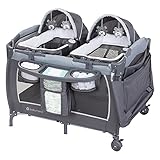
1. Baby Trend Lil’ Snooze™ Deluxe III Nursery Center® Playard for Twins, Cozy Grey
Overview:
The Baby Trend Lil’ Snooze Deluxe III positions itself as a premium nursery center that evolves with your twins. This versatile system transforms from dual bassinets into a full-size playard, offering extended usability from newborn through toddler stages. Each Rock-A-Bye Bassinet detaches to function as a standalone rocker, complete with plush fabrics and mesh ventilation for safe, comfortable sleep.
What Makes It Stand Out:
The integrated electronic music center sets this apart from competitors. Each bassinet has its own volume-controlled unit with nightlight, vibration, two music styles, and nature sounds. The hanging toys in each bassinet promote developmental grasping skills. This combination of entertainment and soothing features creates a self-contained environment that addresses multiple infant needs simultaneously.
Value for Money:
At $214.99, this is the premium option, but justified by its 3-in-1 functionality. You’re essentially getting two bassinets, two rockers, and a playard in one package. Comparable separate purchases would exceed $300, making this economical for space-conscious families seeking multi-stage utility without cluttering their home with separate pieces.
Strengths and Weaknesses:
Strengths include exceptional versatility, electronic soothing features, excellent ventilation, and long-term usability. The removable bassinets offer flexibility for room-to-room use. Weaknesses include the highest price point, potential complexity in transitions, and electronic components that could malfunction over time. The unit may also occupy more floor space than dedicated bassinets.
Bottom Line:
Ideal for parents wanting a comprehensive, tech-enabled nursery solution that adapts from birth through toddler years. The Baby Trend justifies its premium price through multifunctionality and convenience features that simplify twin care.
2. cutebeams Twin Bassinet for 2 Babies, 3 in 1 Bedside Co Sleeper Double Bassinet for Twins, Rocking Bassinet for Baby with Wheels and Storage Basket, Includes Mattress (Grey)

Overview:
The cutebeams Twin Bassinet delivers remarkable versatility at a competitive price point. This 3-in-1 system functions as a standalone crib, bedside sleeper, and rocking bassinet, adapting to various parenting scenarios. The aluminum frame supports up to 45 pounds while remaining lightweight enough for practical daily use, making it suitable for twins through early infancy.
What Makes It Stand Out:
Height adjustability from 28 to 32.7 inches combined with tilt angle control addresses both parental ergonomics and infant reflux concerns—a rare combination in this category. The expansive 25.6" x 25.6" storage basket dwarfs competitors’ pockets, while the mosquito net adds practical protection. CPC certification to multiple ASTM standards demonstrates serious safety commitment.
Value for Money:
At $179.99, this offers premium features rivaling $250+ alternatives. The robust adjustability, large storage, and triple-function design provide exceptional utility. Parents receive hospital-grade flexibility without the premium markup, making it accessible for budget-conscious families unwilling to compromise on features or safety certifications.
Strengths and Weaknesses:
Strengths include versatile configurations, superior height/tilt customization, generous storage, comprehensive safety certifications, and lockable 360° wheels. The mesh sides and washable fabrics ensure hygiene. Weaknesses include a rocking mechanism that may lack the smoothness of dedicated rockers, and the height range, while good, doesn’t reach the highest beds. Some parents might find assembly slightly time-consuming.
Bottom Line:
An outstanding all-purpose twin bassinet that balances functionality, safety, and affordability. The cutebeams excels for parents seeking maximum adaptability without sacrificing quality or breaking the budget.
3. Jestonten Twin Bassinet for 2 Babies, Double Bassinet for Twins with Music Toys, Mosquito Net & Storage Basket Portable Foldable Bedside Sleeper for Newborns, Grey

Overview:
The Jestonten Twin Bassinet prioritizes portability and convenience for modern, mobile families. This thoughtfully designed sleeper offers tool-free assembly and folds into a compact package with included carry bag, making it ideal for travel, grandparents’ homes, or small apartments where space is premium. It provides certified safety without sacrificing mobility.
What Makes It Stand Out:
The removable middle divider transforms this from two separate sleep spaces into a shared bassinet, offering unique flexibility competitors lack. This adaptability, combined with the musical mobile that plays soothing melodies, creates both a bonding environment and developmental stimulation. The 360° mesh walls maximize airflow from all angles, ensuring constant ventilation.
Value for Money:
Priced at $179.98, this positions itself as a mid-range travel solution. While lacking some premium adjustability features, the portability, CPC certification, and dual-mode configuration deliver strong value. It’s particularly cost-effective for families needing a secondary sleep location without investing in a second full-featured bassinet.
Strengths and Weaknesses:
Strengths include effortless setup and folding, travel-friendly design, versatile partition option, mosquito net inclusion, and musical entertainment. The three-level height adjustment (30.71"-32.28") covers most bed heights. Weaknesses include a narrower height range than some rivals, absence of tilt functionality for reflux, and unspecified storage capacity that appears modest. The frame, while sturdy, may sacrifice some stability for portability.
Bottom Line:
Perfect for parents who prioritize mobility and simplicity. The Jestonten excels as a secondary bassinet or primary solution for families who travel frequently, offering certified safety and clever adaptability in a go-anywhere package.
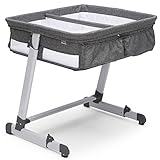
4. Simmons Kids By The Bed City Sleeper Bassinet for Twins - Adjustable Height Portable Crib with Wheels & Airflow Mesh, Grey Tweed
Overview:
The Simmons Kids By The Bed City Sleeper offers a streamlined, safety-first approach to twin bassinet design. This no-frills solution focuses on core functionality: providing separate sleep spaces with maximum airflow and bedside accessibility. The slim wheeled base slides discreetly under furniture, making it ideal for tight spaces where every inch matters.
What Makes It Stand Out:
Five adjustable heights (extending to 38.25") accommodate exceptionally tall beds that competitors cannot match. The JPMA certification exceeds basic requirements, offering peace of mind for safety-conscious parents. The 30" x 30" footprint provides ample sleeping area while maintaining a space-efficient profile that fits in most bedrooms.
Value for Money:
At $159.99, this is the most budget-friendly option without compromising essential safety standards. While lacking premium features like rocking or extensive storage, it delivers certified twin sleep safety at a price point accessible to most families. The washable fitted sheets and 1" mattress provide practical hygiene solutions.
Strengths and Weaknesses:
Strengths include exceptional height adjustability, JPMA certification, slim space-saving design, breathable mesh construction, and affordability. The wheeled base offers easy mobility. Weaknesses include basic storage pockets versus larger baskets, absence of rocking or tilt features, and no included mosquito net or entertainment elements. The mattress is thinner than some parents prefer for extended use.
Bottom Line:
An excellent entry-level choice for safety-focused parents seeking a straightforward, certified twin bassinet. The Simmons prioritizes essential functionality and accessibility, making it ideal for those who value simplicity and compliance over deluxe features.
5. Delta Children Bondi Beechwood Twin Bassinet with PureAir Breathable Mesh Sheet and FSC-Certified Wood, Tan

Overview:
The Delta Children Bondi Bassinet distinguishes itself through sustainable materials and thoughtful airflow engineering. Constructed with FSC-certified beechwood legs and mélange fabric, this bassinet appeals to environmentally conscious families seeking style without sacrificing safety. The side-by-side design keeps twins close while maintaining separate sleep spaces for safe co-bedding.
What Makes It Stand Out:
PureAir mesh sheets represent genuine innovation, allowing airflow beneath babies rather than just around them—directly addressing overheating concerns. The FSC certification ensures responsibly sourced materials, while the non-skid feet provide stability without damaging floors. The substantial storage basket shelf keeps essentials within arm’s reach.
Value for Money:
At $179.99, you pay a modest premium for sustainable materials and specialized sheets. Comparable eco-friendly baby gear often commands 20-30% higher prices. The inclusion of two water-resistant mattress pads and breathable sheets adds tangible value, making this competitively priced for its ethical positioning and innovative design.
Strengths and Weaknesses:
Strengths include sustainable FSC-certified construction, superior airflow technology, modern aesthetic, generous under-bassinet storage, JPMA certification, and non-skid stability. The 22.9-pound weight feels substantial and secure. Weaknesses include no height adjustability, limited portability due to wood construction, absence of rocking or tilt features, and no mosquito net or entertainment attachments.
Bottom Line:
The ideal choice for design-conscious, eco-minded parents who prioritize sustainable materials and innovative airflow. The Delta Children bassinet proves that environmental responsibility and infant safety can coexist beautifully in a functional twin sleep solution.
6. Cheermomo Twin Bassinet for 2 Babies, Double Bassinet for Twins, Rocking Bassinet with Wheels and Storage Basket, Full-Mesh Sides, 5-Height Adjustable, Portable and Stable Baby Crib (Standard Grey)

Overview: The Cheermomo Twin Bassinet delivers exceptional versatility for parents of twins, seamlessly converting between a rocking bassinet, bedside co-sleeper, and standalone crib. Designed for infants 0-6 months, it features a spacious 32.3" x 32.3" sleeping area with breathable mesh sides. The lightweight aluminum frame supports up to 45 lbs while maintaining excellent portability for modern families.
What Makes It Stand Out: This bassinet’s three-mode functionality sets it apart from competitors. The rocking motion calms fussy babies, while the co-sleeper configuration enables convenient nighttime feeding. The generous storage basket (25.6" x 25.6" x 9.8") is larger than most alternatives, keeping essentials within reach. Certified to ASTM standards with OEKO-TEX materials, it prioritizes safety without compromise.
Value for Money: At $179.99, this bassinet offers remarkable value. Comparable twin bassinets with fewer features often exceed $200. The inclusion of premium certifications, multi-mode functionality, and substantial storage justifies every dollar. Parents essentially receive three products in one, eliminating the need for separate rockers or co-sleepers, making it a cost-effective nursery solution.
Strengths and Weaknesses: Strengths include versatile 3-in-1 design, excellent safety certifications, breathable mesh construction, large storage basket, and height adjustability (28"-32.7"). The anti-reflux tilt feature benefits babies with digestive issues. Weaknesses include a 45-lb weight limit that may not suit larger babies, and the rocking mechanism might not be as smooth as dedicated rockers.
Bottom Line: The Cheermomo Twin Bassinet is an outstanding investment for twin parents seeking versatility, safety, and convenience. Its thoughtful design addresses multiple parenting challenges in one package. Highly recommended for those wanting a multi-functional sleep solution without breaking the bank.
7. Jestonten Twin Bassinet for 2 Babies - Double Bassinet for Twins with Music Toys, Mosquito Net & Storage Basket Portable Foldable Bedside Sleeper for Newborns, Khaki
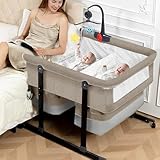
Overview: The Jestonten Twin Bassinet combines safety and entertainment in a portable package designed for newborns. This khaki-colored bassinet features a removable partition, allowing twins to sleep together or separately. With 360° mesh walls and an included mosquito net, it ensures a secure, breathable environment. The tool-free assembly and foldable design make it ideal for travel and small spaces.
What Makes It Stand Out: The integrated musical mobile with soothing melodies distinguishes this bassinet, providing developmental stimulation while calming babies. The removable partition offers flexibility as twins grow. Its travel-friendly design with a carry bag makes it uniquely suited for families on the move, while the mosquito net adds protection against insects and pets that many competitors lack.
Value for Money: Priced at $179.98, this bassinet offers excellent value for mobile families. While similar to the Cheermomo in price, it trades some storage capacity for portability and entertainment features. The musical component eliminates the need for separate crib toys, and the foldable design saves money on additional travel cribs. It’s a smart choice for budget-conscious parents who prioritize flexibility.
Strengths and Weaknesses: Strengths include the musical mobile, removable partition for flexible sleeping arrangements, excellent portability, tool-free setup, and comprehensive safety certifications. The 360° mesh provides superior ventilation. Weaknesses include smaller storage capacity compared to some competitors, limited height adjustment range (30.71"-32.28"), and the music feature may require battery replacements over time.
Bottom Line: The Jestonten Twin Bassinet is perfect for parents who travel frequently or have limited space. Its combination of portability, safety, and entertainment features makes it a versatile choice. While storage is modest, its foldable design and musical mobile provide unique value for active families.
8. Ihoming Twin Bedside Bassinet for Baby Grey Co Sleeper Crib Attaches to Bed Double Bassinet Sleeper for Twins Infant Newborn Adjustable Safe Sleeping Solution

Overview: The Ihoming Twin Bassinet prioritizes space and stability with its impressive 37.5" x 35.5" sleeping area—significantly larger than standard twin bassinets. Constructed from aircraft-grade aluminum alloy, it supports up to 175 lbs, accommodating babies up to 5 months. The sleek grey design features six height adjustments and a 10° anti-spit-up tilt, making it a premium co-sleeping solution.
What Makes It Stand Out: The exceptional size provides twins with ample room to move comfortably without feeling cramped. The six-level height adjustment (29.5"-35.5") offers superior compatibility with various bed heights compared to competitors’ typical 3-5 levels. The aircraft-grade aluminum construction ensures unmatched durability and stability, while the brand’s 30-day money-back guarantee and 12-month warranty demonstrate confidence in product quality.
Value for Money: At $229.99, this is a premium option, but the price is justified by its superior materials, larger dimensions, and higher weight capacity. Parents of larger or older infants will appreciate the extended usability. While $50 more than basic models, the enhanced durability and spaciousness make it a worthwhile long-term investment, potentially eliminating the need for early transitions to cribs.
Strengths and Weaknesses: Strengths include the largest sleeping area in its class, exceptional 175-lb weight capacity, six height adjustments, premium aluminum construction, and anti-reflux tilt design. The generous warranty provides peace of mind. Weaknesses include the higher price point, lack of included storage solutions, and its larger footprint may not suit smaller bedrooms. The design is less portable than foldable alternatives.
Bottom Line: The Ihoming Twin Bassinet is ideal for parents prioritizing space, durability, and extended use. Its premium construction and larger dimensions justify the higher price. Recommended for those with adequate space and budget who want a robust, long-lasting sleep solution for their twins.
9. MTWML Twin Bassinet for 2 Babies,Portable Twins Crib with Storage Bag and Replaceable Mattress Cover,Adjustable Height Double Bedside Crib Attaches to Bed with Strap for 0-6 Months (Deep Grey)

Overview: The MTWML Twin Bassinet focuses on practicality and hygiene with its innovative replaceable waterproof mattress cover and suspension storage bags. This deep grey bassinet measures 32.28" x 32.28", providing comfortable space for 0-6 month twins. The tool-free installation and attachable design with safety straps make it a convenient bedside sleeper, while the high-density sponge mattress ensures proper support.
What Makes It Stand Out: The replaceable waterproof cover is a game-changer for messy situations, allowing quick changes without washing the entire mattress. The inclusion of suspension storage bags rather than a fixed basket provides customizable organization options. The built-in fixing belt system offers secure attachment to adult beds, and the separate waterproof layer addresses a common pain point parents face with nighttime accidents and spit-up.
Value for Money: At $198.99, this bassinet strikes a balance between premium features and affordability. The replaceable cover alone saves money on mattress replacements and cleaning supplies. While slightly more expensive than basic models, the practical design elements—especially the hygiene-focused features—provide significant value. It’s competitively priced for parents who prioritize easy maintenance and convenience.
Strengths and Weaknesses: Strengths include the innovative replaceable waterproof cover, tool-free assembly, adjustable height (28.15"-32.68"), practical suspension storage bags, and secure bed attachment straps. The high-density mattress offers good support. Weaknesses include a standard weight capacity (not specified but typical), fewer height adjustments than premium models, and the storage solution may be less sturdy than fixed baskets. No mention of safety certifications is concerning.
Bottom Line: The MTWML Twin Bassinet excels in practicality and hygiene management. Its replaceable cover design makes it perfect for parents who value easy cleanup. While it lacks some premium features, its thoughtful maintenance-focused design makes it a smart mid-range choice for busy parents of twins.
10. Baby Trend Retreat Nursery Center with Two Removable Rock A Bye Bassinets, Changing Table, Organizer, and Music Center with Nightlight, Quarry

Overview: The Baby Trend Retreat Nursery Center is a comprehensive all-in-one solution that goes beyond a simple bassinet. This quarry-colored system includes two removable Rock-A-Bye Bassinets with canopies, a changing table, parent organizer, and electronic music center with nightlight. Designed for babies 0-24 months and up to 30 lbs, it transitions from newborn bassinets to a full playard, offering exceptional longevity.
What Makes It Stand Out: This is the only product that functions as a complete nursery command center. The removable bassinets with carrying handles provide portability, while the integrated changing table eliminates the need for separate furniture. The electronic music center with vibration, nature sounds, and nightlight offers multi-sensory soothing. The parent organizer keeps diapers and wipes accessible, creating a self-contained care station.
Value for Money: At $192.26, this represents incredible value. Purchasing separate bassinets, changing table, and sound machine would easily exceed $300. The extended age range (0-24 months) maximizes utility far beyond the typical 6-month bassinet lifespan. For parents seeking to minimize nursery furniture purchases, this single investment covers multiple essential needs, making it the most economical long-term choice.
Strengths and Weaknesses: Strengths include unmatched versatility with bassinets, changing table, and music center, extended usability up to 24 months, portability of removable bassinets, and integrated storage. The playard function adds tremendous value. Weaknesses include a lower 30-lb weight limit for the entire unit, bulkier footprint requiring more space, and the bassinets are smaller than dedicated twin bassinets. Setup may be more complex than simpler models.
Bottom Line: The Baby Trend Retreat Nursery Center is the ultimate value-packed solution for parents wanting maximum functionality. Its all-in-one design saves money and space while providing years of use. Highly recommended for those prioritizing versatility and long-term value over specialized twin-specific features.
Why Choosing the Right Twin Bassinet Matters
The early months with twins present unique challenges that singleton parents simply don’t face. Your babies will likely be smaller at birth, may have spent time in the NICU, and often have different sleep patterns despite sharing a womb. A well-chosen twin bassinet becomes more than a sleep surface—it’s a tool for establishing healthy sleep routines, monitoring both infants efficiently, and preserving your own sanity during 2 AM feeding sessions.
Research shows that proximity to parents during sleep significantly reduces SIDS risk while promoting better breastfeeding outcomes, which is especially crucial when you’re juggling two feeding schedules. The right configuration allows you to respond to one baby without always disturbing the other, a skill you’ll master out of necessity. Making an informed choice now prevents costly replacements later and ensures your nursery workflow supports rather than hinders your daily rhythm.
Understanding Different Twin Bassinet Configurations
Side-by-Side Designs
These models place your babies parallel to each other, mimicking their womb arrangement and making it easier to tend to both simultaneously. The layout typically resembles two standard bassinets merged into one unit, often with a slight divider that provides separation while maintaining visibility. Parents love the ability to soothe both babies at once and the symmetrical aesthetic that fits neatly against a wall.
Stackable and Vertical Options
Perfect for urban dwellers or those working with compact spaces, these innovative designs position one bassinet above the other. Most feature a secure locking mechanism and independent access to each level. While they maximize floor space, consider your physical comfort—bending to the lower level postpartum can be challenging, and you’ll want to ensure the height works for your bedside setup.
Convertible Single-to-Double Models
These transformers start as a single bassinet and expand to accommodate two infants. They’re ideal for parents who want longevity and versatility, often converting into playards or travel cribs later. The trade-off is typically a larger footprint when expanded and sometimes less specialized features for twin-specific needs.
Safety First: Essential Certifications and Standards
JPMA Certification and ASTM Standards
Never compromise on safety certifications. The Juvenile Products Manufacturers Association (JPMA) seal indicates rigorous testing for stability, structural integrity, and hazardous materials. ASTM International standards specifically address bassinet safety, including mattress firmness, side height requirements, and weight limits. For twins, verify that certifications apply to the double configuration, not just single-bassinet mode.
Weight Limits and Individual vs. Combined Capacity
Twin bassinets list both per-basin weight limits and total unit capacity. Most accommodate 15-20 pounds per side, but preemies or smaller twins may reach length limits before weight limits. Crucially, understand whether the stated capacity assumes simultaneous use—some models have reduced limits when both bassinets are occupied. Always plan for your babies’ 6-month growth projection, not just their birth weight.
Mesh Wall Requirements and Breathability
Full mesh walls on all four sides aren’t just a feature; they’re a necessity for safe sleep. This ensures optimal airflow and allows you to monitor both babies without hovering directly overhead. Check mesh quality—it should be taut, fine-weave, and securely attached with no gaps larger than a pencil width. For stackable models, verify that the upper level’s floor doesn’t obstruct the lower level’s ventilation.
Key Features That Make or Break a Twin Bassinet
Adjustable Height Mechanisms
Your postpartum body will thank you for investing in smooth, one-handed height adjustment. The ideal bassinet positions the mattress level with your own bed surface, eliminating the need to sit up fully for nighttime checks. Look for models with at least 5-7 height positions and confirm the range fits your specific bed height, whether you have a low platform or tall four-poster.
Storage Solutions and Organization
With twins, you need twice the diapers, wipes, burp cloths, and changes of clothes within arm’s reach. Premium twin bassinets integrate storage thoughtfully—under-basin shelves, side pockets, or detachable organizers. Avoid models where storage compromises stability or creates tripping hazards during midnight navigation. The best designs keep essentials visible but contained.
Ease of Cleaning and Maintenance
Babies are messy, and twins create messes on a schedule that seems almost coordinated. Every fabric component should be removable and machine-washable, while the frame should wipe clean without disassembly. Consider how easily you can access all nooks where milk, spit-up, or diaper blowouts might hide. Dark-colored fabrics may hide stains better but can make nighttime visibility challenging.
Space Considerations: Measuring Your Nursery
Bedroom vs. Nursery Placement Strategies
Most pediatricians recommend room-sharing for at least six months, but twins challenge the traditional bedside setup. Measure your bedroom’s available perimeter, accounting for door swings and your own path to the bathroom. Some families opt for a split arrangement—one bassinet in the master bedroom, one in the nursery—though this complicates monitoring. Others dedicate a corner of their bedroom exclusively to the twin bassinet zone.
Navigating Tight Spaces and Apartment Living
Urban parents need to think vertically and modularly. Consider bassinets with a smaller footprint that can tuck into closets during the day or roll under standing desks. Some families successfully use a large walk-in closet as a “nursery nook,” provided ventilation is adequate. Remember to measure elevator and doorway widths if you live in a multi-story building—you’ll need to get the bassinet home and possibly move it between rooms.
Future-Proofing for the Next Stage
Your twin bassinet has a lifespan of 4-6 months on average. Plan its placement with an eye toward what comes next: two cribs or a single larger sleep space. Will the bassinet’s location block crib placement? Can it convert into something useful afterward, or will you need storage space for it? Smart space planning now prevents complete nursery reconfigurations when you’re already sleep-deprived.
Budget Planning: What to Expect at Every Price Point
Entry-Level Essentials ($150-$300)
Budget twin bassinets focus on core safety and functionality. You’ll typically find simpler height adjustment, basic storage, and manual operation. Materials may be less premium but should still meet all safety certifications. These workhorses often lack the bells and whistles but reliably serve their purpose. Consider this tier if you’re planning a quick transition to cribs or need a temporary solution.
Mid-Range Sweet Spot ($300-$600)
This category offers the best value-to-feature ratio. Expect smoother mechanisms, better mattress quality, more storage options, and often convertible designs that extend usability. You’ll find thoughtful details like tool-free assembly, premium fabrics, and perhaps a few convenience features like vibration or nightlights. Most families of multiples find their ideal match in this range.
Premium and Smart Options ($600+)
High-end twin bassinets justify their price with superior materials, advanced adjustability, and integrated technology. Think natural bamboo mattresses, aerospace-grade aluminum frames, and app-connected monitoring systems. While luxurious, assess whether these features solve real problems for your specific situation or simply add complexity. For some parents, the durability and resale value make this investment worthwhile.
Lifestyle Factors: Matching Bassinets to Your Daily Routine
Breastfeeding and Night Feeding Logistics
If you’re planning to breastfeed, your bassinet setup becomes your feeding command post. Side-by-side configurations allow tandem feeding with proper positioning support. Consider models with removable dividers or those that can be temporarily reconfigured to create a larger surface for feeding pillows. Easy-access storage for nursing supplies, pumps, and bottles directly on the bassinet reduces disruption during cluster feeding sessions.
Travel and Portability Needs
Families who travel frequently or split time between locations need a different strategy. Some twin bassinets fold remarkably compact for car transport, while others are designed to be checked as luggage. Weight becomes a critical factor—anything over 35 pounds becomes cumbersome. Consider whether you’ll need a separate travel solution altogether, like two individual travel bassinets that can be used together or separately.
Pet and Sibling Integration
Older siblings and curious pets add complexity to bassinet placement and design. Lower-to-the-ground models may be accessible to toddlers or large dogs, while taller units provide natural barriers. Some families use bassinets with zippered mesh canopies for added protection, though these must be used strictly according to safety guidelines. Think about how easily a toddler could rock the unit or access the babies when you’re not present.
The Great Debate: Side-by-Side vs. Stackable Designs
Pros and Cons of Side-by-Side Layouts
The horizontal arrangement excels at parental accessibility—no bending or stretching to reach either baby. It creates a visual centerpiece in your nursery and often provides larger individual sleep surfaces. However, these units demand substantial floor space and can be challenging to navigate around in dim lighting. They also typically cost more due to their larger material requirements.
Pros and Cons of Stackable Configurations
Vertical designs are space-saving champions, often occupying the same footprint as a single traditional bassinet. They encourage you to assign “top and bottom” babies, which some parents find helpful for organization. The downside? You’ll need to bend frequently for the lower infant, which can strain your postpartum recovery. Also, consider whether the lower baby feels visually isolated or if the design allows adequate face-to-face interaction.
Hybrid and Modular Solutions
Innovative manufacturers now offer systems that can switch between side-by-side and stackable configurations as your needs evolve. These modular designs might start stacked in your bedroom for the newborn phase, then expand side-by-side in the nursery. While versatile, these transformers often involve trade-offs in stability or ease of conversion. Evaluate whether the flexibility justifies potential compromises in daily use.
Mobility Matters: Wheels, Weight, and Portability
Locking Casters and Stability Balance
Mobility is a double-edged sword. Wheels let you move the bassinet for cleaning, repositioning, or daytime room changes, but they must lock securely. Look for individual wheel locks rather than a central brake system—this provides better stability on uneven floors. Test the lock mechanism yourself; it should engage with a definitive click and require intentional force to release.
Weight Distribution and Tip-Over Prevention
Twin bassinets are inherently top-heavy, especially with two moving infants. The base should be significantly wider than the sleep surface, with a low center of gravity. Some models include anti-tip brackets that can secure to a wall, which is worth considering if you have older children who might climb. Always keep heavier storage items in lower compartments to maintain stability.
Folding Mechanisms for Storage
If you need to clear space during the day, investigate how easily the bassinet folds. Premium models collapse with one hand and stand upright when folded, while budget options may require complete disassembly. Consider where you’ll store it—closets, under beds, or behind doors—and measure these spaces beforehand. A folded bassinet should still protect the mattress from dust and pet hair.
Material Matters: Breathability, Cleaning, and Durability
Mattress Quality and Firmness Standards
The included mattress often reveals a bassinet’s overall quality. It should be firm enough that you can’t press your hand more than an inch into the surface, with no soft spots or sagging. For twins, verify that both mattresses are identical in firmness and that replacements are readily available. Some parents invest in waterproof mattress covers for each side—essential for those inevitable simultaneous diaper failures.
Frame Materials: Wood, Metal, and Composites
Solid wood frames offer timeless aesthetics and excellent durability but add significant weight. Powder-coated steel provides modern styling and easy cleaning but can feel cold or institutional. High-quality plastics and composites reduce weight and cost while offering design flexibility. For any material, check that all edges are smooth and that finishes are non-toxic and chip-resistant.
Fabric Choices and Chemical Sensitivities
Your newborns will spend 16-18 hours daily in close contact with these materials. Look for OEKO-TEX certified fabrics that guarantee no harmful chemicals. Organic cotton linings are gentler on sensitive skin but may show stains more readily. Darker colors can help with light blocking for daytime naps, while lighter interiors improve visibility during nighttime checks.
Smart Features: When Technology Meets Twin Sleep
Integrated Monitoring Systems
Some modern twin bassinets include built-in sensors tracking each baby’s movement, breathing, or sleep patterns. While potentially reassuring, these systems should supplement, not replace, safe sleep practices and parental vigilance. Consider data privacy—where is the information stored? Also, evaluate whether constant monitoring increases or decreases your anxiety during an already stressful period.
Soothing Mechanisms: Vibration, Sound, and Light
Gentle vibrations, white noise, and soft nightlights can help settle one baby without fully waking the other. However, these features add complexity and potential failure points. Battery life becomes critical—imagine both sides dying simultaneously at 3 AM. Manual alternatives like a simple push-rocking mechanism often prove more reliable and give you tactile feedback about your babies’ movements.
App Connectivity and Data Tracking
Bluetooth-enabled bassinets can log sleep patterns, feeding times, and diaper changes for each twin separately. This data is invaluable for pediatrician visits and establishing routines. The trade-off? You’ll be tethered to your phone during a time when experts recommend reducing screen time. Consider whether the data benefits outweigh the potential for tech-induced stress.
Transition Planning: From Bassinet to Crib
Recognizing When It’s Time to Move
Most twins outgrow bassinets between 4-6 months, but watch for specific signs: rolling over consistently, pushing up on hands and knees, or exceeding weight/length limits. With two babies, you might need to transition them at different times if one develops faster. Have your next sleep solution ready at least a month before you anticipate the move to avoid rushed decisions.
Gradual Transition Strategies
Abrupt changes disrupt established routines. Start with one nap daily in the new cribs while keeping nighttime in the familiar bassinet. Some parents move the bassinet into the nursery for a week before the final transition, letting babies adjust to the new room first. If your bassinet converts to a playard, this intermediate step can ease the change significantly.
Splitting Twins: Same Room or Separate?
The great twin parenting debate continues into the crib stage. Many twins sleep better together initially, but safety guidelines recommend separate sleep surfaces. Consider starting with cribs side-by-side in the same room, maintaining their visual connection while following safe sleep protocols. Some families use a single large crib initially, then transition to separate cribs—discuss this timeline with your pediatrician.
Common Mistakes Parents of Multiples Make
Overlooking Individual Sleep Preferences
Twins are individuals, not a matched set. One might prefer a slightly inclined position for reflux while the other sleeps flat. One might be a light sleeper needing darkness, while the other dozes anywhere. Choosing a bassinet that forces identical environments for both babies ignores their unique needs. Look for models allowing independent adjustments or be prepared to modify your approach for each child.
Ignoring Long-Term Storage and Resale Value
That massive twin bassinet that fits perfectly in your master bedroom becomes an obstacle when babies move to cribs. Before purchasing, research the resale market for that style—some configurations are in high demand among multiple families, while others are difficult to rehome. Consider whether it folds compactly for attic storage or if you’ll need to disassemble it completely.
Sacrificing Quality for Convenience Features
A bassinet with 12 soothing sounds and a built-in diaper caddy might seem appealing, but if the frame wobbles or the mattress sags, those features are meaningless. Prioritize structural integrity and safety certifications above all else. The best convenience features are worthless if the basic function—providing a safe sleep surface—fails.
Expert Tips for Maximizing Bassinet Longevity
Rotating and Flipping Strategies
Extend your bassinet’s usable life by rotating mattresses weekly and flipping them if design permits. This prevents permanent indentations from developing where babies’ heads rest. Some parents alternate which baby sleeps on which side to equalize wear patterns, though this requires meticulous tracking of preferences and habits.
DIY Modifications and Accessories
The multiple parenting community is creative. Some parents add custom-fitted sheets with color-coded tags for each twin, while others create divider extensions for side-by-side models using safe, breathable materials. Always verify that modifications don’t void warranties or compromise safety. Simple additions like clip-on reading lights or detachable storage caddies can enhance functionality without structural changes.
Maintenance Schedules for Heavy Use
With double the use, maintenance is critical. Create a weekly checklist: tighten all screws, check wheel locks, inspect mesh for tears, and clean thoroughly. Monthly, deep-clean the frame and check for any warping or stress marks. Document any issues immediately—most warranties require prompt reporting. This discipline prevents small problems from becoming safety hazards.
When to Start Shopping and Timeline Considerations
The Ideal Shopping Window
Begin researching twin bassinets in your second trimester, around 20-24 weeks. This timing allows for delivery delays and assembly learning curves without the pressure of impending labor. Many models have 6-8 week lead times, especially if you’re ordering directly from manufacturers. Starting early also lets you watch for sales and gently used options from families whose twins have outgrown them.
Assembly and Testing Period
Never wait until babies arrive to assemble your bassinet. Set it up by 32-34 weeks pregnant, when you still have mobility and energy. Test all mechanisms, wash all fabrics, and sleep with it in your room for a few nights to identify any issues. This trial run reveals problems like squeaky wheels, difficult latches, or height mismatches while there’s time to address them.
Backup Planning for Preterm Arrivals
Twins arrive early more often than singletons. If your babies come before 37 weeks, they may have specific needs like apnea monitors or positioning supports that affect bassinet compatibility. Some hospitals require specific sleep surfaces for NICU graduates. Have a flexible mindset and a simplified backup plan, like two basic, hospital-approved bassinets that can be used temporarily.
Frequently Asked Questions
How long can my twins realistically share a bassinet? Most twins share a bassinet for 4-6 months, but this depends on their size, development, and the specific model’s weight limits. Preterm or smaller twins may use it longer, while larger or more active babies might need to transition earlier. Always follow manufacturer guidelines and your pediatrician’s advice, and watch for signs like consistent rolling or pushing up on hands and knees.
Is it safe for my twins to sleep side-by-side in one large bassinet? While twins often sleep better together, the American Academy of Pediatrics recommends separate sleep surfaces to reduce SIDS risk. Most twin bassinets provide a divider or separate compartments. If you choose a single large surface, discuss safe positioning with your pediatrician and transition to separate spaces as soon as babies show any mobility.
What’s the difference between a twin bassinet and two single bassinets? Twin bassinets are designed as one unit, offering a smaller combined footprint and often better stability than two separate units. They typically allow easier monitoring of both babies from one position. Two singles offer more placement flexibility and can be used separately later, but they take up more space and may have different safety standards when placed side-by-side.
Can I use a twin bassinet for travel or moving between rooms? Some twin bassinets are designed for portability with locking wheels and fold-flat mechanisms, but most are intended as stationary nursery furniture. If frequent room changes are important, prioritize lightweight models under 30 pounds with robust wheel systems. For true travel, many families invest in separate, compact travel bassinets instead of transporting their main unit.
How do I clean a twin bassinet with two babies using it constantly? Establish a cleaning rotation where you thoroughly clean one side while the other baby uses their side, then switch. Most fabrics are machine-washable; keep a spare set of sheets for each side. For the frame, use baby-safe disinfectant wipes daily and a deeper clean weekly. Always ensure the mattress is completely dry before replacing sheets to prevent mold.
What height should my twin bassinet be relative to my bed? The bassinet mattress should align with the top of your adult mattress, creating a seamless surface that eliminates gaps where babies could become trapped. Most adjustable bassinets accommodate bed heights from 22 to 30 inches. Measure your bed before purchasing, and remember that mattress toppers and bedding can affect the final height calculation.
Are smart features worth the extra cost for twins? Smart features can provide reassurance and data tracking that helps manage two babies’ schedules, but they don’t replace safe sleep practices. If you’re technologically comfortable and find data helpful, integrated monitoring might reduce anxiety. However, many parents of twins prefer simplicity—fewer features mean fewer things to malfunction during critical sleep times.
How much storage do I really need in a twin bassinet? More than you think. With twins, you’ll go through 16-20 diapers daily in the early weeks, plus wipes, creams, and multiple outfit changes. Aim for storage that can hold at least a full day’s essentials for both babies. However, ensure storage compartments don’t compromise stability or create tripping hazards during nighttime navigation.
Can I assemble a twin bassinet by myself? Most twin bassinets require two-person assembly due to their size and the need to align multiple components simultaneously. While enthusiastic parents can manage solo assembly, it’s safer and faster with help. Many retailers offer assembly services for an additional fee—worth considering in your third trimester when mobility is limited.
What do I do if one twin outgrows the bassinet before the other? This is common with twins, especially boy/girl pairs where growth patterns differ. Options include transitioning the larger baby to a crib while the smaller continues in the bassinet, or moving both to cribs simultaneously to maintain their shared sleep environment. Discuss the timing with your pediatrician, and don’t rush the transition just because one baby has reached a limit—developmental readiness matters more than arbitrary weight numbers.