Packing for a family trip with a toddler can feel like preparing for a miniature expedition. Between the snacks, diapers, and entertainment, it’s easy to overlook one small but mighty essential: a reliable travel utensil set. Yet, these compact tools play a surprisingly pivotal role in maintaining your little one’s nutrition and health away from home. Restaurant-provided utensils are often too large for small mouths, and using whatever’s available can expose developing immune systems to unwanted germs. The right travel set becomes an extension of your home feeding routine, ensuring that whether you’re navigating airport terminals or visiting relatives, your toddler’s mealtime remains safe, familiar, and developmentally appropriate.
This comprehensive guide dives deep into everything parents need to know about selecting travel utensil sets that prioritize hygiene, support nutritional needs, and foster independence—without compromising on safety or convenience. Let’s explore the features that truly matter when your child’s health is on the line.
Top 10 Travel Utensil Sets for Toddlers
Detailed Product Reviews
1. Kirecoo 2 Set Toddler Utensils, Toddler Forks and Spoons, Stainless Steel kids Silverware Set, Designed for Self Feeding Flatware Utensils with Travel Carrying Cases BPA Free (White & Aqua)
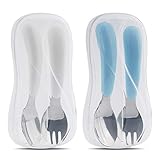
Overview: The Kirecoo toddler utensil set provides two complete stainless steel cutlery pairs (forks and spoons) designed specifically for children transitioning to independent eating. Each set comes in its own travel case, featuring white and aqua color options that appeal to both genders. The utensils are crafted from food-grade 304 stainless steel without harmful chemicals like BPA, lead, or phthalates, ensuring safe mealtime experiences for children aged 12 months and up.
What Makes It Stand Out: This set excels with its child-centric engineering. The curved handles are perfectly contoured for small hands developing grip strength, while the deeper spoon bowl design makes scooping soups and cereals significantly easier for beginners. The fork tines are deliberately rounded to prevent mouth injuries while still effectively spearing food. Most impressively, the included travel cases are hard-shell containers that clip securely, making them ideal for diaper bags, preschool lunches, or restaurant outings without contamination concerns.
Value for Money: At $7.89 for two complete sets ($3.94 per set), this product sits in the mid-range price bracket. The value proposition strengthens when considering the premium travel cases—similar cases alone retail for $2-3 each. Compared to single-set alternatives priced at $5-6, you’re essentially getting a second set for under $2, making it economical for families wanting backups or multiple children.
Strengths and Weaknesses: Strengths include genuine stainless steel durability, thoughtful self-feeding design, excellent portability with protective cases, and chemical-free materials. The two-color option provides nice variety. Weaknesses are limited to only receiving two sets, which may not suffice for families preferring daily rotation without constant washing. The color selection is also limited to just white and aqua, offering less personalization than multi-color packs.
Bottom Line: The Kirecoo set is an excellent investment for parents prioritizing safety, portability, and developmental appropriateness. The travel cases and ergonomic design justify the slightly higher cost per piece, making it ideal for active families frequently dining out or sending children to daycare.
2. 9 Pieces Toddler Utensils Stainless Steel Fork and Spoon Safe Baby Silverware Set, Kid Safe Utensils Children’s Flatware Kids Cutlery Set with Round Handle for LunchBox (Blue, Green, Pink)
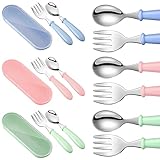
Overview: This comprehensive 9-piece collection delivers three complete toddler utensil sets, each comprising a fork, spoon, and dedicated carrying case. Available in blue, green, and pink, the set is constructed from robust 304 stainless steel that resists rust, scratching, and denting. Designed for children aged 18 months and older, the utensils feature rounded handles and softened edges throughout, making them safe for unsupervised practice while building fine motor skills.
What Makes It Stand Out: The standout feature is undoubtedly the triple-set configuration with individual color coding. This allows parents to designate specific colors for different days, children, or locations (home, daycare, grandma’s house). The round handle design provides a uniform grip surface that some children find more natural than contoured alternatives. Each set’s independent carrying case prevents cross-contamination and makes tracking which set needs washing remarkably simple.
Value for Money: Priced at $8.99 for nine pieces (three complete sets), this represents exceptional value at approximately $3 per set. Most competitors charge this amount for a single set without a case. The dishwasher-safe stainless steel ensures longevity through countless cycles, effectively reducing the cost-per-use to pennies over the product’s lifetime. For families with multiple children or those wanting spares, this bulk offering eliminates the need for separate purchases.
Strengths and Weaknesses: Major strengths include the generous quantity, individual color-coded cases, safety-rounded design, and true stainless steel construction. The variety pack solves the “everyone wants a different color” dilemma. The primary weakness is storage space—the three cases take up more drawer room than a single container. Some children might also find the perfectly round handles less ergonomic than contoured designs for extended use.
Bottom Line: This 9-piece set is the ultimate value choice for families needing multiple toddler utensil sets. The color-coded system and quantity make it perfect for households with several young children or parents wanting dedicated sets for home and travel without constant washing.
3. WXCWYQR Toddler Utensils, Toddler Forks and Spoons, Baby Stainless Steel Silverware Set with Storage Box for Self Feeding Safe, Dishwasher Safe (2 Set with Case)

Overview: The WXCWYQR toddler utensil collection includes two stainless steel fork-and-spoon pairs, each housed in its own storage box. Constructed from high-quality 304 stainless steel, these utensils are sized appropriately for toddlers mastering self-feeding skills. The design emphasizes safety with smooth edges and proportions that match small mouths and hands. The compact storage boxes provide protection and portability for families on the move.
What Makes It Stand Out: This set distinguishes itself through its minimalist, functional approach. The handles feature a subtle anti-slip texture that helps maintain grip even with wet or messy hands—a detail often overlooked in budget-friendly options. The storage boxes are transparent, allowing quick identification of contents without opening them. The fork tines are slightly wider-set than typical toddler forks, making it easier for children to successfully spear foods like peas or diced vegetables, building confidence with each meal.
Value for Money: At $7.99 for two sets ($4 per set), this product offers solid mid-tier value. While slightly more expensive per set than bulk options, the quality stainless steel and functional storage boxes justify the cost. The transparent cases add convenience that opaque alternatives lack. For parents wanting just one or two quality sets without overbuying, this strikes an excellent balance between affordability and thoughtful design features.
Strengths and Weaknesses: Strengths include the transparent storage boxes, anti-slip handle texturing, dishwasher-safe materials, and appropriately-sized utensil heads. The stainless steel construction ensures durability and hygienic cleaning. Weaknesses include limited aesthetic appeal—the design is purely functional without colorful elements that might excite children. The set only includes two pieces per case, so losing one utensil renders the set incomplete until purchase of a replacement.
Bottom Line: WXCWYQR delivers a practical, no-frills solution for parents seeking safe, portable toddler utensils without paying for unnecessary extras. The transparent cases and subtle grip enhancements make it particularly suitable for organized parents who value function over flashy design.
4. 4 Pcs Toddler Utensils, Toddler Forks and Spoons,stainless Steel Baby Utensils Baby Silverware Set with Storage Box for Safe Dining
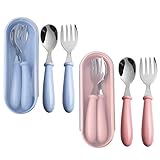
Overview: This 4-piece set provides two toddler utensil pairs featuring a hybrid construction of 304 stainless steel heads with ABS plastic handles. Available in blue and pink, the set includes a matching storage box for each pair. The design prioritizes safety with smooth, rounded edges and small-diameter handles engineered for little hands. The plastic components add color and grip while keeping the food-contact surfaces metal for hygienic eating.
What Makes It Stand Out: The hybrid material construction is the defining characteristic. The ABS handles provide superior grip through their textured, anti-slip surface, which is particularly beneficial for children still developing fine motor control. The handles also remain cooler to the touch when eating hot foods compared to all-metal alternatives. The color-coded blue and pink sets allow easy assignment for siblings or quick visual identification in a crowded diaper bag.
Value for Money: Priced at $7.99 for two sets, this falls in the standard range for toddler utensils. The value proposition centers on the specialized handles rather than quantity. Parents specifically seeking anti-slip grips will find the cost justified, though those indifferent to handle material might prefer all-steel options at similar prices. The included storage boxes maintain parity with competitors, ensuring you’re not sacrificing portability for the handle feature.
Strengths and Weaknesses: Strengths include the excellent grip provided by ABS handles, cool-touch comfort, safety-rounded edges, and included storage boxes. The hybrid design offers the hygiene of stainless steel where it matters most. Weaknesses involve the plastic handles potentially cracking if chewed or dropped on hard surfaces, and the color scheme being somewhat gender-stereotyped. The ABS material may also stain over time with strongly colored foods like tomato sauce.
Bottom Line: This set is ideal for toddlers struggling with grip on smooth metal handles. The plastic coating provides tactile feedback and temperature insulation that pure stainless steel cannot match, making it a smart choice for children needing extra assistance with utensil control.
5. Stainless Steel Travel Kid Cutlery Set with Portable Case, Safe Toddler Spoon and Fork Set for Self-Feeding, Ideal Toddler Utensil Set for School Lunch, Travel, & Outdoors, Dishwasher Safe (Purple)

Overview: This single toddler utensil set offers a compact spoon and fork pair in a vibrant purple travel case. Designed for maximum portability, the set features ergonomic, contoured handles and high-quality stainless steel construction. The entire package is dishwasher-safe and sized specifically for toddlers aged 2-4 years who are establishing independent eating routines. The case’s slim profile fits easily into lunch boxes, purses, or diaper bag side pockets.
What Makes It Stand Out: The ergonomic handle design is this product’s primary differentiator. The soft-contoured grip naturally encourages proper finger placement and reduces hand fatigue during longer meals. The case features a snap-lock mechanism that’s secure enough to stay closed in a bag but simple enough for a toddler to open independently—promoting self-sufficiency beyond just eating. The purple colorway stands out from typical blue/pink offerings, appealing to children wanting something unique.
Value for Money: At $4.99 for a single set, this is the most budget-friendly option in the category. While you receive fewer pieces than multi-set alternatives, the quality isn’t compromised. The ergonomic handles and robust case would typically command a premium price. For parents needing just one reliable travel set or wanting to test toddler readiness before investing in multiple sets, this offers minimal financial risk with maximum practicality.
Strengths and Weaknesses: Strengths include the superior ergonomic handle design, ultra-portable slim case, secure snap-lock closure, and attractive purple color. The price point makes it accessible for all budgets. The single-set limitation is the main weakness—there’s no backup if this set is forgotten at school or left at a restaurant. The case, while protective, offers less impact resistance than hard-shell alternatives. Some children might find the contoured handles too specific if they prefer different grip styles.
Bottom Line: This is the perfect entry-level or supplementary travel set for parents prioritizing ergonomic design and affordability. It’s best purchased as a dedicated “on-the-go” pair while maintaining separate utensils for home use, ensuring you’re never caught without clean cutlery during outings.
6. Stainless Steel Kid Silverware Set with Carrying Case, Safe Toddler Spoon and Fork Set for 1+, Ideal On-The-Go Toddler Utensil Set for School Lunch, Travel, & Outdoors, Dishwasher Safe(BLUE)

Overview:
This stainless steel toddler utensil set offers an entry-level solution for parents introducing utensils to children aged one and up. The blue carrying case houses a spoon and fork designed specifically for little hands learning self-feeding. Marketed for travel, school, and outdoor use, the dishwasher-safe construction promises easy maintenance. The compact design ensures it fits easily into diaper bags or lunch boxes, while ergonomic handles target proper grip development during the critical self-feeding learning phase.
What Makes It Stand Out:
The aggressive $4.99 price point immediately distinguishes this from competitors costing two to four times more. The ergonomic soft handles demonstrate genuine consideration for toddler hand anatomy, while the dedicated carrying case addresses hygiene during transport. Stainless steel construction at this price challenges the dominance of plastic alternatives, offering durability that withstands repeated dishwasher cycles and toddler abuse. For parents unsure about toddler readiness, this provides a low-risk trial option.
Value for Money:
Exceptional value for budget-conscious families. This allows purchasing multiple sets for different locations without financial strain. However, the suspicious “$20.79 / count” notation suggests potential listing errors requiring verification. Assuming the $4.99 price is accurate, it undercuts even basic plastic sets while offering metal durability. The value proposition is strongest as a backup or introductory set rather than a primary long-term investment.
Strengths and Weaknesses:
Strengths include unbeatable affordability, stainless steel durability, ergonomic handles, dishwasher safety, and genuine portability. The compact case maintains cleanliness between uses. Weaknesses involve vague material specifications without grade numbers, limited color options, potentially thinner steel construction, and optimistic age rating starting at 1+. The price ambiguity creates purchase uncertainty that may deter some buyers.
Bottom Line:
A smart purchase for parents prioritizing budget and core functionality. While lacking premium certifications, it delivers essential features at an unparalleled price. Ideal as backup sets or for testing toddler readiness without significant investment, though families planning long-term daily use may want to upgrade eventually.
7. ASOMIC Premium 316 Stainless Steel Toddler Utensils with Silicone Handles & Travel Case, Kids Spoon & Fork Set for Toddler Self Feeding at Daycare, Preschool & School, BPA-Free, Dishwasher Safe

Overview:
The ASOMIC set targets safety-conscious parents with marine-grade materials and thoughtful engineering. This three-piece set features BPA-free silicone handles and a travel case designed for daycare, preschool, and school environments. The 316 stainless steel offers superior corrosion resistance compared to standard 304 grade, while ergonomic design facilitates self-feeding development. Dishwasher-safe construction ensures daily practicality for busy families managing multiple mealtimes.
What Makes It Stand Out:
The 316 stainless steel designation represents a significant material upgrade, providing enhanced resistance to acidic foods and repeated washing. The silicone travel case offers antimicrobial advantages over plastic alternatives. Innovative details like the spoon’s raised table rest maintain hygiene, while narrow fork tines and deep spoon bowls address genuine toddler feeding challenges. Cheerful colors encourage independence and make mealtime engaging for reluctant eaters.
Value for Money:
At $18.99 for three utensils ($6.33 each), this sits in the mid-premium range. The price reflects superior materials—316 steel costs substantially more than standard grades—and comprehensive safety features. For families planning extended use across multiple children, the durability justifies the investment. Compared to basic sets, you’re paying for enhanced safety certifications, better rust protection, and ergonomic refinements that genuinely improve the feeding experience.
Strengths and Weaknesses:
Strengths include premium 316 stainless steel, BPA-free silicone handles, rust-resistant construction, hygienic table rest, child-friendly case, and ergonomic design. The materials genuinely facilitate self-feeding. Weaknesses involve higher cost, potentially excessive for families needing multiple sets, and silicone handles that may retain food odors over time. The three-count packaging might not suit parents wanting matched pairs for daily rotation.
Bottom Line:
Highly recommended for parents prioritizing material safety and durability. The 316 steel and thoughtful design justify the cost for daily use. Ideal as a primary home-and-travel set, though budget shoppers may want cheaper supplementary sets for backup purposes.
8. Deejoy Toddler Utensils with Travel Case, Baby Spoons and Forks Set for Self Feeding, Silicone Bendable Handle, Easy Grip Heat-Resistant, Self-feeding Flatware Sets for Kids (Stage 2) Pink

Overview:
The Deejoy Toddler Utensils serve as a Stage 2 training set for babies aged 6-18 months, featuring innovative bendable handles. This pink set includes a spoon and fork with food-grade PP tips and steel wire cores encased in TPE handles. The adjustable design allows customization of utensil angles as babies develop coordination. A storage box and dishwasher-safe construction complete this specialized self-feeding tool for the youngest learners.
What Makes It Stand Out:
The bendable handle represents genuine innovation, enabling parents to adjust angles as grip strength and coordination evolve. This adaptability extends usability across the critical 6-18 month developmental window. The steel wire core maintains shape after bending, unlike pure silicone alternatives. Stage 2 specificity provides confidence for parents navigating feeding milestones, while the $8.95 price balances affordability with specialized design that addresses real developmental needs.
Value for Money:
Strong value for early self-feeding training. At $4.48 per utensil, it costs less than premium brands while offering unique adjustability competitors lack. Parents save money by not replacing utensils as frequently during developmental transitions. However, mixed materials (PP tips, TPE handles) may not match the longevity of pure stainless steel sets, potentially limiting value for families seeking multi-year use beyond the 18-month target window.
Strengths and Weaknesses:
Strengths include innovative bendable design, appropriate for younger babies, food-safe materials, heat resistance, portable case, and grip training focus. The adjustable angle genuinely aids hand-eye coordination development. Weaknesses involve durability concerns with mixed materials, limited lifespan beyond toddler years, potential for wire fatigue with excessive bending, and less sophisticated aesthetics compared to stainless steel alternatives.
Bottom Line:
Excellent for parents introducing utensils during the 6-18 month window. The bendable feature justifies purchase for developmental support, though families should plan to upgrade to more durable sets as children approach age two. Perfect as a transitional training tool rather than long-term solution.
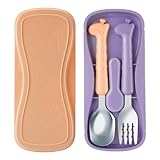
9. lohodo Toddler Utensils Kids Spoon and Fork Set 18/8 Stainless Steel Silverware BPA Free Pink & Purple Cute Giraffe Child Flatware with Travel Case for Age 3+
Overview:
The lohodo Toddler Utensils combine certified safety with playful design, featuring 18/8 (304) stainless steel and BPA-free materials. This pink and purple giraffe-themed set targets children ages three and up, distinguishing itself from competitors focusing on younger toddlers. A travel case supports on-the-go use for preschool and kindergarten. The design emphasizes both functionality and aesthetic appeal to encourage independent eating in resistant eaters.
What Makes It Stand Out:
Giraffe-shaped handles create immediate visual appeal that resonates with preschool-aged children, transforming utensils from tools to treasured possessions. This addresses the psychological aspect of encouraging utensil use. Functional enhancements—deep spoon bowls and grooved fork tines—demonstrate engineering focused on actual food capture. The 18/8 stainless steel specification provides material transparency rarely seen at this price point, building trust with informed parents.
Value for Money:
At $9.99 for two utensils ($5.00 each), this sits in the competitive mid-range. The price reflects specialized design work and safety certifications without reaching premium levels. Parents receive true 304 stainless steel durability and child-appealing aesthetics for roughly half the cost of ASOMIC’s 316 steel set. The value proposition strengthens for families with utensil-resistant children who might respond to the playful design, potentially saving mealtime frustration.
Strengths and Weaknesses:
Strengths include certified 18/8 stainless steel, engaging giraffe design, functional bowl and tine engineering, BPA-free materials, portable case, and age-appropriate sizing for 3+ years. The design genuinely motivates independence. Weaknesses include limited to two utensils, higher cost than basic sets, giraffe theme may not appeal to all children, and pink/purple colors lack gender neutrality. The 3+ age range misses younger toddler markets.
Bottom Line:
A solid choice for preschoolers needing encouragement with utensil use. The giraffe design provides unique value for resistant eaters, while quality materials ensure durability. Recommended for children aged 3-5, particularly those responding to character-driven motivation.
10. Kirecoo 2 Set Toddler Utensils, Toddler Forks and Spoons, Stainless Steel kids Silverware Set, Designed for Self Feeding Flatware Utensils with Travel Carrying Cases BPA Free (White & Pink)
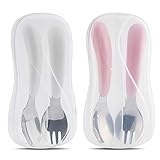
Overview:
The Kirecoo 2 Set Toddler Utensils delivers double value with two complete spoon-and-fork sets in white and pink, each with individual travel cases. Marketed as 100% food-grade stainless steel without BPA, lead, latex, or phthalates, this set targets the self-feeding learning phase. Curved handles and deeper spoon bowls address practical toddler challenges while maintaining safety through rounded edges and child-proportioned sizing for independent eating.
What Makes It Stand Out:
The twin-set packaging provides exceptional practicality—parents can keep one set at home and one in the diaper bag, or maintain a backup during washing. Individual cases for each set enhance hygiene and organization. The curved handle design specifically targets grip development, while deeper bowls acknowledge the difficulty toddlers face with standard shallow spoons. At $7.99 for four utensils total, the per-piece value challenges even budget competitors while solving real parental organization challenges.
Value for Money:
Outstanding value proposition. At effectively $2.00 per utensil, this undercuts most competitors while delivering stainless steel construction and multiple cases. Families receive two color options and complete portability for less than the price of many single sets. The value multiplies for parents of twins or multiple young children. The only trade-off appears to be unspecified stainless steel grade, though the “food-grade” claim provides baseline assurance for safety-conscious buyers.
Strengths and Weaknesses:
Strengths include exceptional quantity (4 utensils, 2 cases), curved ergonomic handles, deeper spoon bowls, comprehensive safety claims, individual travel cases, and unisex color options. The twin-set approach solves real parental organization challenges. Weaknesses involve vague stainless steel grading, potentially thinner construction, basic aesthetic design lacking child-centric appeal, and no mention of fork tine engineering for food retention.
Bottom Line:
Best value for families needing multiple utensil sets. The quantity, safety features, and practical design deliver maximum utility per dollar. Highly recommended as a primary purchase or supplement to premium sets, ideal for families with multiple children or those wanting home-and-away convenience without the premium price tag.
Why Travel Utensil Sets Are Essential for Toddler Nutrition
The Hygiene Factor: Protecting Developing Immune Systems
Toddlers explore the world with their mouths, making them particularly vulnerable to bacteria and viruses. A dedicated travel utensil set eliminates the need to trust the cleanliness of communal cutlery or makeshift tools. Unlike standard adult utensils that may harbor residue from industrial dishwashers or previous users, your personal set ensures your child uses only what you’ve sanitized. This becomes especially critical in environments like airplanes, where tray tables rank among the most bacteria-laden surfaces, or at family gatherings where well-meaning relatives might not adhere to your sanitization standards.
Building Healthy Eating Habits On-the-Go
Consistency is the cornerstone of establishing healthy eating patterns. When toddlers use familiar utensils, they’re more likely to maintain their eating routines, even in unfamiliar settings. The right-sized spoon encourages proper portion control and pacing, preventing overeating or frustrating mealtime battles. Travel sets designed specifically for toddler nutrition support self-feeding skills that are crucial for development, ensuring that a weekend away doesn’t derail months of progress toward independent eating.
Key Materials: Understanding Your Options
Food-Grade Silicone: Flexibility Meets Safety
Silicone has revolutionized toddler dining with its unique combination of softness and durability. Look for 100% food-grade silicone that’s free from fillers, which can compromise safety. This material withstands temperatures from freezer to boiling water without leaching chemicals, making it ideal for both hot meals and chilled snacks. Its naturally non-stick surface resists food particle buildup, a critical hygiene advantage when thorough cleaning isn’t immediately possible. The slight flexibility also protects developing gums and emerging teeth—a thoughtful feature for toddlers who haven’t outgrown the mouthing phase.
Stainless Steel: Durability for the Long Haul
Medical-grade stainless steel offers unmatched longevity and a non-porous surface that bacteria simply cannot penetrate. Unlike materials that can develop micro-scratches over time, quality stainless steel maintains its smooth, easily sanitizable surface indefinitely. For travel, it’s remarkably lightweight relative to its durability and won’t absorb odors or flavors from previous meals. The cool touch of metal also provides sensory feedback that helps toddlers develop temperature awareness—an underrated aspect of safe eating.
Bamboo and Wood: Natural Alternatives
Sustainability-conscious parents often gravitate toward bamboo or hardwood utensils, and for good reason. These materials are renewable, biodegradable, and naturally antimicrobial to some degree. However, they require more diligent care to prevent cracking, which can become a hygiene issue. The key is selecting sets treated with food-safe, non-toxic finishes and understanding that these utensils need thorough drying before storage. For travel, they excel in lightweight portability but may not be suitable for liquid-heavy foods that can seep into untreated grain.
BPA-Free Plastics: What Parents Need to Know
While “BPA-free” has become a marketing buzzword, savvy parents should dig deeper. Many BPA alternatives (like BPS or BPF) may present similar endocrine-disrupting concerns. If choosing plastic, opt for polypropylene (recycling code #5) or polyethylene (code #2), which have more stable molecular structures. Even then, avoid heating plastic utensils or exposing them to acidic foods for extended periods, as these conditions can accelerate chemical leaching. For travel, plastic’s shatterproof nature is appealing, but it should be replaced more frequently than other materials.
Critical Safety Features Every Parent Must Consider
Size and Shape: Age-Appropriate Design
A spoon that’s too deep prevents proper tongue movement, while one too shallow delivers inadequate nutrition per bite. The ideal toddler spoon holds approximately 2-3 milliliters—enough for meaningful nourishment without overwhelming small mouths. Fork tines should be blunt and short enough to prevent palate injury but long enough to spear soft foods effectively. For children under 18 months, slightly angled handles reduce wrist rotation, making self-feeding less frustrating and more successful.
Choke Hazards and Small Parts
Travel sets with removable handles or interchangeable components require careful scrutiny. Any detachable piece smaller than a golf ball poses a potential choking risk. The connection points between utensil heads and handles should be seamless or permanently bonded. Be particularly wary of sets where decorative elements could pop off under biting pressure. Always perform a “pull test” before first use, firmly tugging on all components to ensure they can withstand toddler-level manipulation.
Temperature Resistance and Thermal Safety
Toddlers lack the experience to recognize when food is dangerously hot. Quality travel sets should include materials that don’t conduct heat rapidly, preventing burns from hot soup or warmed purees. Silicone handles on stainless steel utensils provide an excellent compromise—metal for hygiene, silicone for safe gripping. Some advanced sets feature color-changing materials that signal when food exceeds safe temperatures, though these should be verified as food-safe and free from thermochromic chemicals that could migrate into food.
Hygiene and Cleanability: The Non-Negotiables
Dishwasher-Safe vs. Hand-Wash Only
While dishwasher-safe labeling suggests convenience, understanding the nuances matters. Top-rack dishwasher-safe items may warp or degrade over time due to proximity to heating elements. Truly dishwasher-durable materials include high-quality stainless steel and silicone. For hand-wash only items, consider your travel reality: will you have access to proper cleaning supplies? Sets that clean easily with just warm water and mild soap offer practical advantages during road trips or in hotel rooms without kitchenettes.
Antimicrobial Properties and Coatings
Some travel sets boast antimicrobial additives, typically silver ions embedded in the material. While these can inhibit bacterial growth, they don’t eliminate the need for proper cleaning. More importantly, verify that any antimicrobial claims are backed by third-party testing and that the additives are permanently bonded—not surface coatings that could wear off into food. For most families, diligent cleaning trumps antimicrobial features, which can provide a false sense of security.
Storage Solutions That Prevent Contamination
The travel case is as important as the utensils themselves. Look for ventilated cases that allow residual moisture to evaporate, preventing mold and mildew growth. Cases with separate compartments for each utensil prevent cross-contamination and reduce the likelihood of bacteria transfer. Materials matter here too—fabric pouches may look charming but can harbor bacteria unless machine washable. Hard-shell cases with smooth, wipeable interiors offer superior hygiene for frequent travelers.
Portability Factors: Beyond Just Size
Compact Cases and Travel Pouches
The ideal travel case should be no larger than a sunglasses case, fitting easily into diaper bags, purses, or even coat pockets. However, compact shouldn’t mean cramped—utensils need enough space to avoid touching each other, which can transfer food residue. Cases with built-in utensil holders or elastic straps keep items secure during transit, preventing the “dump and search” scenario at mealtime. Some innovative designs incorporate a small loop for attaching to stroller hooks or bag straps, keeping them accessible yet out of the way.
Weight Considerations for Travel
Every ounce counts when you’re juggling a toddler and carry-on luggage. A complete travel set should weigh under 4 ounces total—utensils and case included. Stainless steel sets can be surprisingly lightweight when designed with toddler proportions in mind, often weighing less than bulky silicone alternatives. For air travel, consider how the set’s weight distribution feels when you’re already managing a wriggly child, boarding passes, and security protocols.
All-in-One vs. Modular Sets
All-in-one sets offer simplicity—a fork, spoon, and sometimes a knife in a single case. Modular sets allow customization, perhaps adding a straw or snack cup attachment. For travel, the sweet spot often lies in a hybrid approach: a core set of essentials with the option to add components for longer trips. Consider whether the modularity adds meaningful functionality or just complexity that could lead to lost pieces in transit.
Age-Appropriate Design: From First Bites to Independent Eating
Utensils for 6-12 Months: The Exploration Phase
During this stage, utensils serve more for sensory exploration and skill development than actual nutrition delivery. Look for short, chubby handles that fit in palmar grasps and shallow spoons that hold minimal liquid. The goal is familiarization, not efficiency. Travel sets for this age should include a “parent feeding spoon” and a “self-feeding spoon,” recognizing that both skills develop simultaneously. The case should be easy for adults to open but secure enough to prevent the baby from accessing contents.
Utensils for 12-24 Months: Developing Dexterity
As the pincer grasp emerges, handles should become slightly longer and narrower to encourage proper finger placement. Spoon bowls can deepen to 3-4 milliliters, supporting increased nutritional needs. This age benefits from sets that include both a spoon and fork, allowing practice with different motions. The “fork” at this stage is more of a “spear” with very blunt tines—designed to stab soft foods without piercing skin. Travel cases should accommodate the messiness of this learning phase with easy-clean surfaces.
Utensils for 24+ Months: Mastering Independence
Older toddlers ready for preschool can handle utensils approaching child-size proportions. Handles should be 4-5 inches long, supporting mature grasps. Fork tines can be slightly sharper (though still blunt-tipped) to handle more varied textures. At this stage, consider sets that include a child-safe knife for spreading, which supports fine motor development and participation in meal preparation. The travel case can be more sophisticated, perhaps with a clip for attaching to a backpack as toddlers begin carrying their own small bags.
Ergonomic Features That Support Toddler Development
Grip Design and Motor Skill Development
The texture and contour of utensil handles directly impact fine motor progress. Textured grips (like subtle ridges or silicone dots) provide sensory feedback that helps toddlers adjust their hold without constant visual monitoring. Handles with a slight bulb in the center naturally position fingers in a tripod grasp—the same grip needed for writing later. Avoid overly chunky handles that encourage immature fists; instead, look for designs that gently guide proper finger placement while still being comfortable.
Spoon Depth and Fork Tine Length
Deep spoons (over 1.5 cm) require complex tongue movements that many toddlers haven’t developed, leading to food loss and frustration. Optimal spoon depth for 12-24 months is 1-1.2 cm, holding enough food to be satisfying while allowing successful delivery. Fork tines should be 1-1.5 cm long—long enough to spear banana or pasta but short enough to prevent gagging if placed too deeply in the mouth. Some advanced designs feature slightly cupped fork tines, creating a hybrid that works for both spearing and scooping semi-solid foods.
Contoured Handles for Self-Feeding Success
Handles with a 15-20 degree bend align the utensil head more naturally with the mouth, reducing the wrist rotation required. This subtle engineering makes the difference between a successful bite and food flung across a restaurant. For travel, this ergonomic advantage becomes even more valuable when toddlers are already overstimulated by new environments. Some sets offer reversible handles that can be flipped as skills improve, extending the product’s developmental lifespan.
Environmental and Sustainability Considerations
Eco-Friendly Materials and Production
The environmental impact of travel utensils extends beyond the material itself to manufacturing processes. Silicone, while durable, requires significant energy to produce. Bamboo’s renewability is offset by chemical treatments needed for durability. Stainless steel, though resource-intensive to mine, lasts virtually forever and is 100% recyclable. Consider the full lifecycle: a slightly more expensive stainless steel set that lasts through multiple children ultimately generates less waste than replacing silicone sets every year.
Longevity and Replaceability
Quality travel sets should offer replaceable components. If the fork is lost but the spoon and case remain functional, can you purchase a single replacement? Brands that support this model demonstrate commitment to sustainability and customer value. For families planning multiple children, consider whether the set will remain hygienic and functional after years of storage. Materials that don’t degrade—like stainless steel—offer better long-term value than those that can become sticky or discolored over time.
Budget Planning: Investment vs. Value
A quality travel utensil set ranges from $15 to $40, but price doesn’t always correlate with value. Sets under $10 often cut corners on material safety or durability. The sweet spot for most families lies in the $20-25 range, where you’ll find food-safe materials, thoughtful design, and durable cases. Consider cost-per-use: a $30 set used daily for two years costs about 4 cents per meal. Compare that to the potential cost of a foodborne illness from compromised utensils, and the investment becomes clear. For frequent travelers, owning two identical sets ensures you’re never caught without—one in the diaper bag, one in the suitcase.
Common Mistakes Parents Make When Choosing Travel Utensils
The most frequent error is prioritizing cute designs over functional safety. A utensil shaped like a cartoon character often has awkward weight distribution and crevices that trap food. Another mistake is choosing adult utensils with the logic that children need to “grow into” them—this creates frustration and potential safety hazards. Parents also frequently underestimate the importance of the case, opting for decorative fabric pouches that can’t be properly sanitized. Finally, many buy sets with too many pieces, increasing the likelihood of losing essential components when traveling light is crucial.
Pro Tips for Maintaining Hygiene While Traveling
Always pack a small bottle of castile soap specifically for utensil cleaning—it’s food-safe and multi-purpose. Bring a dedicated microfiber cloth for drying; air-drying in a hotel room invites contamination. Consider packing utensils in a sealed plastic bag within their case for an extra barrier during transit. When flying, keep utensils in your personal item, not checked luggage, to avoid temperature extremes that could affect materials. If using a shared kitchen while traveling, designate a “clean zone” and keep utensils in their case until use. For extended trips, a portable UV sanitizer designed for baby items provides peace of mind when hot water is scarce.
The Connection Between Utensils and Toddler Nutrition Success
The right travel utensils directly impact nutritional intake. When toddlers can successfully maneuver food from plate to mouth, they’re more likely to consume adequate calories and try new textures. Frustrating utensils lead to abandoned meals and reliance on finger foods, which may not provide balanced nutrition. Properly sized spoons deliver appropriate portions, preventing the “shoveling” that can occur with oversized utensils and supporting mindful eating habits. The confidence gained from self-feeding success encourages toddlers to engage more fully with meals, exploring the varied foods essential for growth even when away from home.
Frequently Asked Questions
At what age should I introduce a travel utensil set?
Start when you introduce solids around 6 months. Early exposure, even just for play and mouthing, builds familiarity. The set becomes truly functional for self-feeding between 12-15 months, but having it consistently available from the start creates positive associations with mealtime routines, making transitions smoother.
How do I properly clean utensils without a dishwasher while traveling?
Use hot, soapy water and scrub with a dedicated small brush that reaches crevices. Rinse thoroughly with the hottest water available. Sanitize by boiling for 5 minutes if you have access to a stove, or use a solution of 1 tablespoon of unscented bleach per gallon of water, soaking for 2 minutes before air-drying completely. Always dry thoroughly before returning to the case to prevent mold.
Are silicone utensils safe for hot foods like soup?
High-quality, 100% food-grade silicone withstands temperatures up to 450°F, making it perfectly safe for hot foods. However, check for filler materials by performing a “pinch test”—pure silicone doesn’t whiten when pinched. Be aware that silicone can retain heat, so always test food temperature before serving, as the utensil itself may stay warm longer than metal.
What’s the best material for airplane travel?
Silicone or silicone-tipped stainless steel excel in airplane cabins. Silicone’s flexibility prevents injury during turbulence, while stainless steel’s weight provides stability on tray tables. Avoid pure metal sets that become cold at altitude, which can be uncomfortable for toddlers. The ideal airplane set includes a silicone spoon, fork, and a small silicone-tipped spreader for in-flight snacks.
How many utensil sets do I need for a week-long trip?
One well-chosen set is sufficient if you can clean it between meals. Pack a backup set only if you’ll lack consistent cleaning facilities. For convenience, consider two identical sets: one in use, one clean and ready. This rotation system works perfectly for multi-leg journeys where you might not have time for thorough cleaning between destinations.
Can I sterilize travel utensils like baby bottles?
Most silicone and stainless steel sets can withstand steam sterilization, UV sterilization, or boiling. Avoid sterilizing wood or bamboo, as the process causes cracking and compromises food-safe finishes. Always check manufacturer guidelines, as some plastic components may warp. For travel, a portable UV sanitizer offers convenient sterilization without needing a microwave or stove.
What if my toddler refuses to use travel utensils?
Make the set familiar before traveling by using it at home for a week. Allow your toddler to help pack it in their special bag. Choose a case with a fun but not distracting design. If refusal continues, model using the utensils yourself—toddlers love imitation. Never force usage; instead, offer the travel set alongside finger foods, gradually increasing its presence as comfort grows.
How do I prevent mold in travel utensil cases?
Select cases with ventilation holes or mesh panels. After cleaning, dry utensils completely with a towel before storage—never return them damp. Periodically wash the case itself in hot, soapy water and allow it to air dry fully. For fabric cases, machine wash weekly. Consider storing a small, food-safe silica gel packet in the case during long-term storage to absorb moisture.
Are metal utensils safe for toddlers who bite or chew?
Stainless steel is remarkably durable and won’t break into hazardous pieces. However, aggressive biters can damage their teeth. For children in heavy teething phases, opt for silicone-tipped metal utensils or pure silicone sets. Once the mouthing phase passes (typically by 24 months), transition to full stainless steel for its superior hygiene and durability.
How often should I replace travel utensil sets?
Inspect monthly for wear. Replace silicone sets showing stickiness, discoloration, or tears. Stainless steel sets can last indefinitely but replace them if deep scratches develop or if the finish becomes compromised. For plastic sets, replace every 6-12 months due to micro-scratching. Bamboo and wood require replacement if cracking appears or if the finish wears thin, typically every 12-18 months with daily use.