Carpooling should simplify your life, not turn every vehicle swap into a weightlifting competition. If you’ve ever wrestled a bulky high-back booster across a school parking lot while balancing a coffee and a backpack, you already understand the quiet appeal of a lightweight backless booster. These streamlined seats have become the unsung heroes of the modern carpool lane, offering a sweet spot of safety, portability, and convenience that busy families desperately need.
But here’s the thing: not all backless boosters are created equal, and the “lightweight” label alone doesn’t guarantee a good fit for your carpooling lifestyle. The best options balance featherweight design with non-negotiable safety features, vehicle compatibility, and ease of use that even your most hurried mornings can accommodate. This guide cuts through the marketing noise to equip you with everything you need to make a confident, informed decision—whether you’re the daily driver or the parent who only needs a seat for occasional rides.
Top 10 Lightweight Backless Carpooling Boosters
Detailed Product Reviews
1. New Mifold Comfort Grab-and-go Car Backless Booster Seat-Compact and Portable for Every Day, Carpooling, Travel, Charcoal Grey

Overview: The Mifold Comfort in Charcoal Grey revolutionizes booster seat design for families on the move. Engineered for children aged 4+ years, weighing 40-100 lbs and measuring 43.5-59 inches tall, this backless booster ditches bulk for extreme portability. Unlike traditional boosters that elevate children, Mifold pulls the seat belt down to their level, ensuring proper fit across the chest and lap. The charcoal grey finish offers a sleek, neutral aesthetic that blends with any vehicle interior while resisting visible wear.
What Makes It Stand Out: This booster redefines convenience. It folds smaller than an iPad, fitting effortlessly into backpacks, glove compartments, or even large purses. The updated “Comfort” model features enhanced padding, anti-slip pads for stability, and an improved shoulder belt guide that simplifies setup. No installation means instant transfers between vehicles—ideal for carpools, ride-shares, and travel. The unique belt positioning system maintains safety while eliminating the need for a bulky plastic shell.
Value for Money: At $67.49, Mifold sits at a premium price point compared to basic boosters. However, for families who frequently travel, carpool, or need a reliable secondary seat, it delivers exceptional value. The cost is justified by its unmatched portability and the convenience of always having a certified seat available. For urban families or those with multiple caregivers, it effectively replaces the need for several dedicated boosters.
Strengths and Weaknesses: Strengths include extreme portability, ultra-narrow profile fitting three across, no installation hassle, and improved comfort features. Weaknesses involve less cushioning than traditional boosters for daily, long-distance use, requiring careful belt positioning each time, and no side-impact protection due to its backless design. Some children may find it less “substantial” than conventional seats.
Bottom Line: The Mifold Comfort Charcoal Grey is an excellent investment for families prioritizing portability and versatility. It excels as a travel companion and carpooling solution but shouldn’t replace a traditional booster for daily highway commuting. Perfect for keeping in your bag “just in case.”
2. New Mifold Comfort Grab-and-go Car Backless Booster Seat-Compact and Portable for Every Day, Carpooling, Travel, Royal Purple

Overview: The Mifold Comfort in Royal Purple offers the same revolutionary compact design as its siblings, tailored for children aged 4+ years, 40-100 lbs, and 43.5-59 inches tall. This backless booster transforms travel safety by adjusting the adult seat belt to fit the child, rather than elevating them. The vibrant royal purple color adds personality while maintaining the sleek, low-profile form factor that makes Mifold famous.
What Makes It Stand Out: Its grab-and-go functionality is unmatched—folding down to fit in a child’s backpack or a glove box with ease. The Comfort edition upgrades the experience with a padded seat cushion, anti-slip base pads, and a refined shoulder belt guide. Setup takes seconds in any vehicle with a standard 3-point belt, making it perfect for carpools, taxis, and rental cars. The unique belt-lowering mechanism is a brilliant engineering solution to portability.
Value for Money: Priced at $67.49, this booster commands a premium over traditional models. The investment pays dividends for families constantly switching vehicles or traveling. It eliminates the need to purchase multiple boosters for grandparents, babysitters, or ride-shares. For frequent flyers or city dwellers, the per-use cost becomes negligible compared to the safety and convenience provided.
Strengths and Weaknesses: Strengths include incredible portability, space-saving narrow design, tool-free setup, and enhanced comfort padding. Weaknesses are minimal side support, requiring adult supervision for proper belt positioning, and less plush seating for extended daily use. The purple color may show scuffs more visibly than darker shades, and some kids might miss having armrests.
Bottom Line: The Royal Purple Mifold Comfort is ideal for families needing a secondary or travel-specific booster. It delivers certified safety in a package that goes anywhere. While not a full-time replacement for cushioned boosters in your primary vehicle, it’s indispensable for families on the move.
3. New Mifold Comfort Grab-and-go Car Backless Booster Seat-Compact and Portable for Every Day, Carpooling, Travel, Ocean Blue
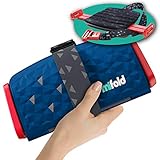
Overview: The Mifold Comfort in Ocean Blue provides a compact safety solution for children 4+ years old, 40-100 lbs, and 43.5-59 inches tall. This innovative backless booster rethinks traditional design by pulling the vehicle’s seat belt down to the child’s level instead of raising the child. The ocean blue color offers a fresh, modern look that appeals to kids while remaining subtle enough for any car interior.
What Makes It Stand Out: True to its name, this booster excels at grab-and-go convenience, folding smaller than a laptop for effortless storage in backpacks and glove boxes. The Comfort version introduces a padded cushion, improved shell design for better support, anti-slip pads, and an intuitive shoulder belt guide. It requires zero installation—simply position it and thread the belt. This makes it invaluable for families sharing vehicles, using ride-shares, or managing school carpools.
Value for Money: At $67.49, it’s priced for families who value portability and flexibility. While more expensive than basic boosters, it serves multiple purposes: travel seat, carpool spare, and backup for unexpected situations. The cost is offset by eliminating the need for several dedicated boosters across different vehicles. For active families, the convenience factor justifies the premium.
Strengths and Weaknesses: Strengths include ultra-compact storage, lightweight design, quick setup, and ability to fit three across in tight spaces. Weaknesses include limited cushioning for long trips, no back support for sleeping children, and reliance on proper adult belt positioning. The minimalist design may feel less secure to some parents compared to traditional, bulkier boosters.
Bottom Line: The Ocean Blue Mifold Comfort is a must-have for travel-savvy families. It provides certified safety in a remarkably portable package. Use it as your go-to travel and carpool seat, but keep a traditional booster for daily highway driving to maximize comfort and protection.
4. BubbleBum Inflatable Booster Car Seat – Foldable, Lightweight, Backless Travel Booster Seat for Kids, Portable Carseat for Toddler, Fits 3 Across, Compact for Uber - Ages 4-11 Year Old, - Black

Overview: The BubbleBum Inflatable Booster reimagines travel safety for children aged 4-11, weighing 40-100 lbs. This backless booster inflates to provide a cushioned, secure seating position and deflates to an incredibly compact package. It meets all US federal safety standards and has undergone independent crash testing that exceeds requirements, offering parents confidence without bulk. The black color is practical and resists showing dirt.
What Makes It Stand Out: Its inflatable nature makes it the most packable booster available—smaller than a rolled-up jacket when deflated. It fits in diaper bags, suitcases, or glove boxes effortlessly. The soft design eliminates hard plastic edges that cause discomfort on long rides. Award-winning design includes a lifetime support commitment. It fits three across even in compact cars, making it perfect for carpools. The gentle cushion is ideal for sensitive children who resist rigid seats.
Value for Money: At $35.99, the BubbleBum offers exceptional value. It’s significantly cheaper than rigid travel boosters while delivering comparable safety. The affordability makes it accessible for families needing multiple seats or a dedicated travel option. For vacationing families or occasional carpoolers, the low price point combined with high portability creates outstanding value.
Strengths and Weaknesses: Strengths include ultimate portability when deflated, comfortable inflatable cushion, independent safety testing, slim profile, and budget-friendly price. Weaknesses involve potential for punctures, need to inflate/deflate for each use, less stability than rigid boosters, and possibility of slow leaks. It requires adult supervision to ensure proper inflation and belt positioning.
Bottom Line: The BubbleBum Inflatable is unbeatable for travel-focused families. It provides certified safety at a fraction of the size and cost of traditional boosters. While not ideal as a primary daily seat due to inflation requirements, it’s perfect for vacations, ride-shares, and backup situations where storage space is at a premium.
5. BubbleBum Teleport Backless Booster Car Seat, Kids Booster Seat for Car 40-100 lbs, Telescopic Portable Carseat, Ideal for Everyday Use and Foldable for Travel, 4 Year Old + Child/Toddler - Black

Overview: The BubbleBum Teleport bridges the gap between daily-use rigidity and travel-friendly portability. Designed for children 4+ years and 40-100 lbs, this booster features a telescopic design that extends for use and compacts to 40% of its size for transport. It meets both US FMVSS 213 and EU R129/04 safety standards, representing top-tier certification. The black finish and sleek design suit any vehicle.
What Makes It Stand Out: The Teleport’s telescopic mechanism allows it to function as a stable, everyday booster while folding compactly with a shoulder strap for easy carrying. Setup involves three simple steps: extend the seat, raise the belt guides, and attach the abdominal shield. This shield is a unique feature that helps position the lap belt correctly. The machine-washable cover and non-slip base add practical daily-use benefits. It offers rigid booster stability without permanent bulk.
Value for Money: At $56.69, it positions between inflatable and premium compact boosters. The price is justified by its dual-purpose nature—serving as both a primary daily seat and a travel solution. Families needing one booster to handle school runs and vacation travel will find it cost-effective. The high safety certifications and durable construction suggest longevity, improving long-term value.
Strengths and Weaknesses: Strengths include rigid structure for stability, telescopic portability, high safety certifications, easy-clean cover, and straightforward setup. Weaknesses include being heavier than inflatable options, not as compact as Mifold when folded, potential wear on telescopic joints over time, and a higher price than basic boosters. The abdominal shield may require adjustment for some vehicle belt configurations.
Bottom Line: The BubbleBum Teleport is the versatile all-rounder families need. It provides daily-use stability with genuine travel convenience. If you want one booster that performs excellently at home and on the road, this is your best bet. The telescopic design solves the storage problem without sacrificing the solid feel of a traditional booster.
6. Bubblebum Booster Car Seat, Inflatable Booster Seat for Kids, Travel Carseat, Backless Portable Child Safety Seats for Car, Inflatable Seats for Cars 40-100 lbs, for 4 Year Old + Toddler, Kid - Pink

Overview: The Bubblebum Booster Car Seat revolutionizes travel safety for children aged 4+ weighing 40-100 pounds. This inflatable, backless booster seat in pink deflates to fit in any bag, making it ideal for taxis, rentals, and carpools. It transforms from compact package to functional car seat in seconds, offering unprecedented portability without sacrificing federal safety compliance.
What Makes It Stand Out: Unlike competitors, Bubblebum proves its safety claims through independent crash testing by BabyGearLab, exceeding basic requirements. Its narrow profile allows three boosters across a standard backseat—a game-changer for families with multiple children. The lightweight design weighs mere ounces deflated, while maintaining structural integrity when inflated, making it the ultimate travel companion.
Value for Money: At $35.99, this seat costs less than a single taxi ride with a car service’s provided seat. Traditional boosters cost $40-80 and can’t match its portability. For families who travel frequently or use rideshares, the Bubblebum pays for itself in convenience alone, while delivering certified protection that meets all US safety standards.
Strengths and Weaknesses: Strengths include exceptional portability, proven crash test performance, space-saving narrow design, and quick inflation. Weaknesses: inflatable design may feel less substantial than rigid boosters, requires manual inflation that could be inconvenient, and the pink color shows dirt easily. It’s also backless only, limiting support for younger riders.
Bottom Line: Perfect for families prioritizing portability and travel convenience. The Bubblebum is a must-have for urban families, frequent travelers, and carpooling parents who need a certified safe seat that disappears into a backpack. Not ideal as a primary daily seat, but unbeatable for on-the-go safety.
7. Hiccapop UberBoost Inflatable Booster Car Seat | Blow up Narrow Backless Booster Car Seat for Travel | Portable Booster Seat for Toddlers, Kids, Child | Black/Gray

Overview: The Hiccapop UberBoost inflatable booster seat addresses the modern family’s mobility needs for children 40-100 pounds. This black/gray backless booster transforms from pocket-sized package to full-sized safety seat in under 20 seconds. Designed for rideshares, rentals, and carpools, it eliminates the nightmare of transporting traditional rigid boosters during travel.
What Makes It Stand Out: The non-skid base provides exceptional stability on any upholstery—leather, vinyl, or cloth—preventing dangerous sliding during sudden stops. Its narrow profile fits three across or nests between two traditional seats. Positioning clips ensure proper seatbelt placement across the lap, preventing dangerous stomach-level belt positioning that can cause internal injuries.
Value for Money: Priced at $36.99, it competes directly with the Bubblebum while offering distinctive stability features. The non-skid base alone justifies the cost compared to basic inflatable options. For urban families spending $50+ weekly on rideshares, this seat eliminates rental fees and provides consistent safety across all vehicles.
Strengths and Weaknesses: Strengths include rapid inflation, superior base stability, certified FMVSS213 compliance, and positioning clips for proper belt fit. Weaknesses: manual inflation required, backless design offers less side support, and some children may find it less “substantial” feeling than traditional boosters. The black/gray color is practical but limited in variety.
Bottom Line: An excellent choice for safety-conscious parents needing portable solutions. The non-skid base sets it apart from other inflatables, making it ideal for frequent travelers and carpoolers. While not replacing your primary seat, it’s an essential tool for modern, mobile families.
8. Graco® TurboBooster® LX Backless Booster with Affix Latch | Backless Booster Seat for Big Kids Transitioning to Vehicle Seat Belt (Rio)

Overview: The Graco TurboBooster LX represents traditional booster engineering refined for modern families. This backless booster serves children 40-100 pounds and 43-57 inches tall, featuring an innovative Affix LATCH system that secures the seat to the vehicle even when unoccupied. The Rio color pattern adds style to substance.
What Makes It Stand Out: The front-adjust LATCH system is a standout feature rarely found in backless boosters, preventing the seat from becoming a projectile during accidents or sharp turns. This self-buckling aid stays firmly in place, building child independence while maintaining safety. The integrated cup holder keeps essentials within reach, reducing driver distraction.
Value for Money: At $52.99, it’s pricier than basic boosters but offers features justifying the premium. The LATCH system provides security that $30-40 boosters lack, potentially preventing vehicle damage and injury. For primary vehicles where the seat remains installed, the durability and stability offer long-term value exceeding cheaper alternatives.
Strengths and Weaknesses: Strengths include secure LATCH installation, steady positioning for self-buckling, Graco’s trusted brand reputation, and easy-clean cup holder. Weaknesses: less portable than inflatables, higher price point, and the LATCH system adds complexity for quick vehicle transfers. It’s heavier and bulkier than travel-focused options.
Bottom Line: Ideal for families seeking a primary booster that stays mainly in one vehicle. The LATCH system provides peace of mind and practical daily benefits. While not suited for travel, it’s the superior choice for everyday use in your main car, justifying its higher price through enhanced safety and convenience.
9. Cosco Topside Backless Booster Car Seat, Lightweight Booster Seats for Cars 40-100 lbs, Backless Booster Seat for Car, Leo (Pack of 2)

Overview: The Cosco Topside Backless Booster delivers exceptional value as a two-pack bundle, serving children 40-100 pounds and 43.4-57 inches. These lightweight, no-frills boosters prioritize affordability and basic safety without compromising federal compliance. The Leo pattern provides a neutral, kid-friendly aesthetic suitable for any vehicle interior.
What Makes It Stand Out: The unbeatable two-for-$39.98 pricing makes this the clear budget champion—essentially $20 per seat. Their featherlight construction allows effortless transfers between vehicles, perfect for families with multiple cars or grandparents needing occasional-use seats. The extra-plush padding exceeds expectations for this price tier, maintaining child comfort during longer journeys.
Value for Money: At effectively $19.99 each, these seats redefine budget safety. Individual comparable boosters cost $30-50, making this pack a 50%+ savings. For families needing seats for second cars, relatives, or carpools, the value is unmatched. The hand-washable cover extends lifespan, protecting your investment.
Strengths and Weaknesses: Strengths include incredible affordability, lightweight portability, comfortable padding, and two-pack convenience. Weaknesses: no LATCH system means potential projectile risk when unoccupied, basic features lack cup holders, hand-wash only covers require maintenance, and the backless design offers minimal side impact protection.
Bottom Line: The smartest purchase for families needing multiple basic boosters on a budget. Perfect for secondary vehicles, grandparents’ cars, or occasional use. While lacking advanced features, they meet all safety standards at an unbeatable price. Purchase without hesitation for backup or secondary seating needs.
10. Hiccapop UberBoost Inflatable Booster Car Seat | Blow up Narrow Backless Booster Car Seat for Travel | Portable Booster Seat for Toddlers, Kids, Child | Pink/Black

Overview: The Hiccapop UberBoost in pink/black offers the same exceptional portability as its black/gray sibling, tailored for children 40-100 pounds who prefer a splash of color. This inflatable booster transforms from compact travel pouch to full seat in 20 seconds, making it indispensable for rideshares, vacations, and carpool arrangements where traditional seats prove impractical.
What Makes It Stand Out: Identical to the standard version, this model features the critical non-skid base preventing dangerous seat movement on any upholstery type. The positioning clips ensure proper lap belt placement, eliminating the stomach-level positioning that causes internal injuries. The pink/black colorway adds personality while maintaining the practical narrow profile fitting three across.
Value for Money: At $39.99, it commands a $3 premium over the black/gray version for color customization. While slightly more expensive, it remains competitively priced against the Bubblebum and other inflatables. For children who’ll actually use the seat willingly, the color option may prevent battles and prove invaluable during travel.
Strengths and Weaknesses: Strengths include the stable non-skid base, rapid inflation, certified safety compliance, and child-appealing color scheme. Weaknesses: manual inflation required, backless design limits support, slightly higher price for color, and inflatable construction may puncture if mishandled. The pink shows wear more than darker options.
Bottom Line: Functionally identical to the black/gray version, choose based on color preference and price sensitivity. The $3 premium is negligible for improved child cooperation. An essential travel tool for families prioritizing portability without sacrificing certified safety. Not a primary seat replacement, but unbeatable for mobility.
Why Backless Boosters Are the Carpooling Champion’s Choice
When you’re coordinating multiple families, every pound matters. Backless boosters typically weigh between 2-5 pounds, making them genuinely portable compared to their 15-20 pound high-back counterparts. This portability transforms the carpool experience. A child can realistically carry their own seat to a waiting vehicle, fostering independence and reducing the logistical burden on drivers. The compact profile also means you can stash multiple boosters in your trunk without sacrificing grocery space or playing automotive Tetris every morning.
Beyond physical weight, backless boosters simplify the handoff process. There’s no assembly required, no adjustable headrests to align, and no complicated recline mechanisms. You place it on the seat, buckle your child, and go. For families where children split time between multiple vehicles or where grandparents occasionally handle pickup duty, this simplicity isn’t just convenient—it’s essential for consistent safety.
Understanding the Safety Profile of Backless Boosters
The safety conversation around backless boosters often gets clouded with emotion, but the data tells a nuanced story. These seats are rigorously tested and meet the same federal safety standards (FMVSS 213) as every other child restraint system sold in the United States. Their primary function is precise: to position the vehicle’s seat belt correctly on a child’s body, ensuring the lap belt sits low across the hips and the shoulder belt crosses the chest at the proper angle.
What makes them safe isn’t additional padding or side-impact wings—it’s geometry. A well-designed backless booster elevates your child just enough to achieve adult belt geometry. The vehicle’s own structure, including its seatback and headrest, then provides the crash protection. This is why vehicle compatibility becomes more critical with backless boosters than with self-contained high-back models. The seat itself is a positioning device, and its effectiveness depends entirely on how well it works with your specific vehicle’s design.
Key Weight and Portability Factors to Consider
“Lightweight” exists on a spectrum, and your ideal weight depends on who’s doing the carrying. A 2-pound seat might be perfect for a kindergartener to manage independently, while a 5-pound option could still feel manageable for an adult juggling multiple items. Consider the carrying experience beyond just the number. Look for seats with integrated handles or grip-friendly contours that make them easier to grasp with small hands or while wearing winter gloves.
The seat’s shape affects portability too. A narrow, contoured base slides more easily into crowded trunks and stores more compactly in closets or mudrooms. Some designs feature a slight taper toward the bottom, allowing them to stack reasonably well when you need to transport multiple seats for a team event or group outing. Think about where the seat will live when not in use—under a bench at school, in a hallway cubby, or in your garage—and choose a profile that fits that storage reality.
Critical Safety Features That Matter Most
While all certified boosters meet minimum standards, certain features push a seat into the “excellence” category for carpooling families. First, examine the belt guide design. The best models use a bright-colored or textured shoulder belt guide that’s easy for kids to locate and use independently. This seemingly small detail reduces the chance of improper routing during rushed buckling.
The lap belt positioning clip is another non-negotiable. This feature anchors the lap belt portion, preventing it from riding up over the soft abdomen during a crash. Some boosters integrate this subtly into the base design, while others use a more prominent clip. For carpooling, prioritize models where this clip is easy to engage but secure enough that it won’t detach when a child shifts in the seat.
The seat’s base should have substantial anti-slip material. Unlike high-back boosters that gain stability from contacting the vehicle seatback, backless models rely entirely on their base grip and the child’s weight to stay put. A quality booster uses high-friction rubber or silicone that genuinely grips upholstery, not just textured plastic that slides on leather or vinyl.
Size and Fit: Getting the Geometry Right
A booster that’s too wide for your child creates a dangerous gap between their hip and the belt guide, potentially routing the shoulder belt incorrectly. Conversely, a seat that’s too narrow forces the lap belt inward, compromising comfort and proper positioning. The sweet spot is a seat that fits your child’s current size while offering a little growth room.
Pay attention to the seating surface depth. A deeper seat provides better thigh support, which matters for longer carpool commutes and keeps kids from slouching—a common problem that pushes the lap belt upward. However, excessive depth can make it difficult for shorter children to bend their knees comfortably over the vehicle seat edge, leading them to scoot forward and compromise belt fit. Most children need a seat depth between 12-14 inches for optimal comfort and safety.
Installation Simplicity: What to Look For
The ideal carpool booster requires zero installation. You should be able to place it on the seat and have it ready for buckling. Avoid models that require LATCH connections for stability, as these add complexity and vary between vehicles. While LATCH can be beneficial for high-back boosters, it defeats the purpose of grab-and-go portability for carpooling.
Some boosters include a simple strap system that secures the seat when unoccupied, preventing it from becoming a projectile in a crash. This feature adds minimal weight but significant safety when the seat is empty. For carpooling, this is worth the slight increase in complexity. The strap should be intuitive enough that a quick glance at a diagram makes its use obvious, even for caregivers unfamiliar with the specific model.
Age, Weight, and Height Requirements Explained
The law in most states requires children to use a booster until age 8 or 4’9” tall, but safety experts recommend continuing until the vehicle seat belt fits properly without assistance. For backless boosters specifically, most manufacturers set a minimum weight of 40 pounds and a minimum age of 4 years old. However, maturity matters as much as metrics. A child must be able to sit relatively still and maintain proper position throughout the ride.
Height minimums typically start around 38-40 inches, but the real test is the “five-step” fit check. Can your child sit with their back against the vehicle seat with knees bending naturally at the edge? Does the lap belt sit low across the upper thighs? Does the shoulder belt rest between neck and shoulder? If you answer yes to all five steps, your child is ready for a booster. If not, they need more time in a harnessed seat, regardless of age or weight.
Backless vs. High-Back Boosters: Making the Right Choice
The high-back versus backless debate isn’t about safety superiority—it’s about situational suitability. High-back boosters provide head support and side-impact protection independent of the vehicle, making them ideal for cars without adequate headrests or for children who sleep heavily in the car. They also help with shoulder belt positioning in vehicles with unusual belt geometry.
Backless boosters shine when portability is paramount and the vehicle provides the missing elements. If you’re carpooling in modern vehicles with adjustable headrests and your child stays awake and upright, a backless booster delivers equivalent safety with far greater convenience. The decision becomes a risk assessment: does your carpooling scenario involve varied vehicles with unknown headrest situations, or consistent transportation in well-equipped cars? For families primarily using their own vehicles or a regular carpool rotation with known cars, backless boosters often make more practical sense.
Car-Specific Compatibility Considerations
Not every backless booster works in every vehicle, and this compatibility issue intensifies with backless models. The vehicle seat’s contour and angle dramatically affect stability. Deep bucket seats can cause a booster to tilt, while flat bench seats might allow too much side-to-side movement. The solution isn’t universal—some boosters are designed with a more flexible base that conforms to varied seat shapes, while others have a rigid structure that works best on flat surfaces.
Headrest requirements are equally critical. Your vehicle must have a headrest that reaches at least to the top of the child’s ears when they’re seated in the booster. Without this, a backless booster is not an appropriate choice, period. Before committing to a backless model for carpooling, test it in every vehicle where it might be used. Have your child sit in it, then check headrest height, belt fit, and seat stability. This 60-second test prevents costly mistakes.
The Importance of Proper Belt Positioning
The entire safety equation hinges on belt positioning, which is why the best boosters make correct routing foolproof. The lap belt must lie flat across the upper thighs, not the abdomen. A subtle ridge or channel in the booster base can help maintain this position even when a child moves. The shoulder belt should cross the middle of the collarbone, never touching the neck or slipping off the shoulder.
Some boosters include a shoulder belt adjuster that can move the belt anchor point down for shorter children. While useful, these add a step to the buckling process and can be forgotten in a rush. For carpooling, a better solution is often a booster with a slightly taller profile that naturally positions the belt correctly for a broader height range. The goal is a design where the belt naturally wants to sit in the right place, requiring minimal adjustment or thought from the child or driver.
Materials and Construction Quality
Lightweight doesn’t have to mean flimsy. Premium boosters use high-density polyethylene or polypropylene for the base, providing rigid structure without excess weight. The seating surface should have some give for comfort but enough firmness to prevent sagging that could alter belt geometry over time. Look for seats that feel substantial when you pick them up—hollow, thin-walled construction flexes under pressure and can compromise safety.
The cover material matters more than you might think. For carpooling, you need something that wipes clean easily but also withstands frequent removal for washing. Double-stitched seams and reinforced attachment points indicate durability. Dark colors and subtle patterns hide scuffs and stains better, keeping the seat looking presentable when it’s being passed between vehicles and families regularly.
Cleaning and Maintenance for Busy Families
A carpool booster sees more action than a typical seat, which means more spills, crumbs, and mystery stains. The best designs feature completely removable, machine-washable covers that detach without tools. Avoid seats with covers that require unthreading the belt guides or removing hardware—this level of hassle means the cover rarely gets cleaned properly.
The base should be smooth with minimal crevices where debris accumulates. Some boosters have a slight lip around the edge that contains spills and makes wiping the surface easier. For deep cleaning, you should be able to submerge the entire plastic base in soapy water without worrying about waterlogging foam inserts or damaging electronic components (which have no place in a proper backless booster anyway).
Legal Requirements Across Different States
Booster laws vary significantly by state, and ignorance isn’t a defense. Most states require boosters until age 8, but some extend to age 9 or 10. Others focus on height (commonly 4’9”) regardless of age. A few states still lack specific booster laws, relying on general child restraint statutes. For carpooling families crossing state lines, this creates a compliance minefield.
The practical solution is to exceed the strictest standard you might encounter. If you’re carpooling within a single state, know your local law precisely. But if your routes could take you across state borders, following the 4’9” height guideline and age 8 minimum covers you in virtually all jurisdictions. Keep a copy of the booster’s certification label and your child’s measurements in your carpool documentation—some schools and activity centers now require this proof before allowing children to ride.
Carpooling Etiquette and Best Practices
Using a backless booster in a carpool requires coordination and communication. Establish a clear protocol: who provides the seat, where it’s stored during the day, and who’s responsible for cleaning. Some carpools designate a “seat parent” who keeps all boosters in their vehicle, while others have each child bring their own. The right model depends on your group’s logistics, but the key is consistency.
Label everything. Use permanent marker on the bottom of the seat to list the child’s name, emergency contact, and any specific installation notes. A small carabiner attached to the handle can hold a laminated card with buckling instructions for substitute drivers. These small steps prevent confusion and ensure every driver, even a last-minute replacement, can secure your child correctly.
Common Mistakes Parents Make (And How to Avoid Them)
The most frequent error is transitioning too early. A child who meets the minimum weight but lacks the maturity to sit properly puts themselves at risk. Watch for slouching, leaning to pick up dropped toys, or tucking the shoulder belt behind their back. If these behaviors appear, return to a harnessed seat for a few months and try again.
Another mistake is assuming all vehicles are compatible. Testing the booster in your own car but not in the carpool vehicle leads to surprises. Always test in the actual car where the seat will be used. Also, avoid the temptation to buy an oversized booster “to grow into.” A seat that’s too large allows a child to shift out of position and can misroute the seat belt, defeating the purpose entirely.
Budget Considerations Without Compromising Safety
Price doesn’t dictate safety—all certified seats pass the same tests—but it does influence durability and convenience features. Budget-friendly boosters ($20-40) provide basic protection and may be slightly heavier or have simpler covers. Mid-range options ($40-70) often hit the sweet spot for carpooling, offering lighter weight, better base grips, and easier-clean fabrics.
Premium boosters ($70+) typically add features like ergonomic shaping, premium materials, or integrated storage compartments. For a seat that lives in one vehicle, these extras might justify the cost. For a carpool seat that gets banged around and swapped frequently, durability and simplicity often trump luxury features. Consider buying two mid-range seats rather than one premium model—having a backup for grandparents or unexpected vehicle changes provides more value than a single high-end seat.
Transitioning from Harnessed Seats to Backless Boosters
The shift from a five-point harness to a backless booster represents a developmental milestone, not just a size upgrade. Start the conversation early, explaining that boosters work differently and require more “big kid” responsibility. Practice buckling and unbuckling in your driveway before the first carpool day. This builds confidence and ensures your child understands how the shoulder belt should feel.
Create a transition ritual. Let your child help choose their booster color or add a small, non-structural accessory like a seat pad. This ownership increases their commitment to sitting properly. For the first few weeks, check their fit every single time they buckle up. Catch and correct mistakes immediately to establish good habits before they become dangerous patterns.
Frequently Asked Questions
How do I know if my car’s headrests are adequate for a backless booster?
The vehicle headrest must reach at least to the top of your child’s ears when they’re seated. Adjustable headrests should be raised to this level. If your vehicle has integrated headrests that are too low or no headrests at all in the seating position, a backless booster is not safe to use there.
Can a backless booster be used in the front seat?
Never place a backless booster in a front seat with an active airbag. The force of deployment can cause catastrophic injury. Some vehicles allow disabling the passenger airbag for specific situations, but the back seat remains the safest location for all children under 13.
What’s the maximum weight for backless boosters?
Most backless boosters accommodate children up to 100-120 pounds, but weight isn’t the limiting factor. The critical measurement is proper belt fit. If the vehicle seat belt fits correctly without the booster, your child has outgrown it, regardless of the stated weight limit.
How do I clean a booster that’s been in multiple cars and is covered in crumbs?
Remove the cover and machine wash on gentle cycle. Shake the base upside down over a trash can to dislodge debris, then wash with warm soapy water. Avoid harsh chemicals that could degrade the plastic. Let everything air dry completely before reassembly to prevent mold.
Is it safe to use a secondhand backless booster for carpooling?
Only if you know its complete history. Boosters involved in moderate to severe crashes should be replaced. Check for stress marks, cracks, or damaged belt guides. Ensure the certification label is intact and the seat hasn’t been recalled. When in doubt, buy new—the cost is minimal compared to the risk.
My child falls asleep in the car. Is a backless booster still appropriate?
Backless boosters offer no head or neck support for sleeping children. If your child regularly naps during carpool, a high-back booster better maintains proper head position. For occasional light sleepers, a backless booster can work if the vehicle headrest provides adequate support.
Do backless boosters expire?
Yes, typically after 6-10 years from the manufacture date, which is stamped on the seat. Plastic degrades over time, especially with temperature fluctuations in parked cars. For a heavily-used carpool seat, plan on replacement closer to the 6-year mark.
Can I take a backless booster on an airplane?
Backless boosters are not FAA-approved for use during flight because they’re designed for vehicle seat belts, not aircraft lap belts. However, they’re excellent for use in rental cars at your destination and can be carried onto the plane as a personal item.
How many backless boosters can fit across a standard back seat?
Most vehicles accommodate three narrow backless boosters across, but it depends on the specific booster width and your car’s seat contour. Measure your back seat width and compare it to the booster dimensions. Remember to account for buckle access—seats can be technically narrow but still impractical if you can’t reach the buckles.
What should I do if the shoulder belt rubs my child’s neck even with the booster?
This indicates poor geometry for your specific vehicle-child combination. First, ensure the booster is positioned correctly and your child is sitting all the way back. If the problem persists, that booster isn’t compatible with your vehicle. Try a different model with a different belt guide position or consider a high-back booster with adjustable shoulder belt routing.