As parents become increasingly aware of what goes into the products their children use daily, the conversation around car seat safety has evolved far beyond crash test ratings. In 2026, the spotlight is firmly on chemical safety, with flame-retardant-free car seats emerging as the gold standard for health-conscious families. The shift isn’t just a trend—it’s a response to mounting research about the potential developmental impacts of certain chemical flame retardants and a wave of new manufacturing innovations that prove safety doesn’t require compromise.
Navigating this landscape can feel overwhelming, especially when you’re balancing the non-negotiable need for crash protection with the desire to minimize your child’s chemical exposure. This comprehensive guide cuts through the marketing noise and technical jargon to equip you with everything you need to know about selecting, installing, and maintaining a flame-retardant-free car seat in 2026. We’ll explore the science, decode the regulations, and help you identify the features that truly matter for your family’s unique needs.
Top 10 Flame-Retardant-Free Car Seats
Detailed Product Reviews
1. Chicco OneFit LX ClearTex All-in-One Car Seat with LeverLock Installation, Slim Design, Convertible Car Seat, Seat for Infants and Children 5-100 lbs | Ebony/Black

Overview: The Chicco OneFit LX ClearTex is an all-in-one convertible car seat designed to grow with your child from infancy through the booster years. Accommodating children from 5 to 100 pounds across three modes—rear-facing harness, forward-facing harness, and belt-positioning booster—this seat eliminates the need for multiple purchases. The slim profile and space-saving CupFolders make it ideal for families with multiple children or smaller vehicles.
What Makes It Stand Out: The ClearTex fabric system delivers flame-retardant-free materials that are GREENGUARD Gold Certified for low chemical emissions, ensuring healthier air quality around your child. The innovative LeverLock Self-Tensioning System simplifies forward-facing installation by automatically applying correct belt tension. Advanced Side Impact Protection (ASIP) meets rigorous FMVSS 213a standards, while the extra rear-facing legroom and extensive headrest adjustment range provide superior comfort and longevity.
Value for Money: At $319.99, the OneFit LX represents solid value when considering it replaces three separate seats. While pricier than basic convertible models, the 10-year lifespan, premium safety features, and space-efficient design justify the investment for families planning to use one seat long-term.
Strengths and Weaknesses: Pros include exceptional versatility, comprehensive safety certification, chemical-free materials, and space-saving design perfect for three-across configurations. Cons involve a steeper learning curve for installation transitions, considerable weight limiting portability, and a price point that may exceed budget-conscious buyers’ expectations.
Bottom Line: An excellent choice for families seeking a single, safe, and space-conscious solution that prioritizes chemical-free materials and adapts to your child’s entire car seat journey.
2. Chicco KidFit ClearTex Plus 2-in-1 Belt-Positioning Booster Car Seat, Backless and High Back Booster Seat, for Children Aged 4 Years and up and 40-100 lbs. | Obsidian/Black

Overview: The Chicco KidFit ClearTex Plus is a 2-in-1 belt-positioning booster designed for children aged four years and up, weighing 40-100 pounds. It transitions from a high-back booster to a backless mode, providing extended usability as your child grows. The seat focuses on proper belt positioning and impact protection for older children who have outgrown harnessed seats.
What Makes It Stand Out: Superior DuoGuard protection provides dual layers of head and torso safety, while the unique 10-position height adjustment operates from the waist rather than the neck, ensuring optimal belt fit and comfort. The Grab & Go convenience features premium LATCH connectors with a SuperCinch one-pull tightener for stability, plus quick-release functionality for effortless one-hand removal and transfer between vehicles.
Value for Money: Priced at $109.99, this booster sits in the mid-to-premium range. While more expensive than basic boosters, the advanced safety features, LATCH stability system, and washable, chemical-free materials justify the cost for parents prioritizing security and convenience.
Strengths and Weaknesses: Pros include excellent head/torso protection, stable LATCH installation, machine-washable ClearTex fabrics without flame retardants, and fold-away cup holders that create a narrow profile. Cons are that it only functions as a booster (no harness option), LATCH is not required for safety making it an optional feature, and children may outgrow it sooner than all-in-one alternatives.
Bottom Line: A top-tier booster seat offering premium safety features and portability that make it ideal for families needing a secure, easy-to-transfer option for school-age children.
3. Chicco Fit360 ClearTex Rotating Convertible Car Seat with 360 Degree Rotation for Rear-Facing and Forward-Facing, LeverLock Self-Tensioning Lock System | Carbon/Grey
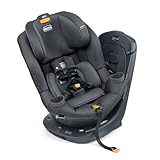
Overview: The Chicco Fit360 ClearTex is a premium rotating convertible car seat engineered for convenience and safety. Supporting children from 4 to 65 pounds in both rear and forward-facing modes, its standout 360-degree rotation simplifies loading and unloading. The seat combines innovative access features with robust safety certifications for a comprehensive travel solution.
What Makes It Stand Out: The one-hand 360° rotation allows effortless face-to-face positioning for securing your child, eliminating awkward reaching and back strain. The Quick-Secure Harness System features a magnetic chest clip, flex-forward buckle, harness pockets, and a 15-position headrest for unparalleled ease of use. The LeverLock system ensures secure installation in both modes, while built-in ventilation maintains comfort.
Value for Money: At $439.99, this is a significant investment. However, for parents valuing daily convenience and reduced physical strain, the premium features justify the cost over standard convertible seats. The time saved and ergonomic benefits during thousands of loading/unloading cycles add substantial value.
Strengths and Weaknesses: Pros include revolutionary rotation convenience, superior harness system, excellent ventilation, chemical-free ClearTex materials, and Advanced Side Impact Protection. Cons are the high price point, substantial weight and size that may limit vehicle compatibility, and the fact it doesn’t convert to a booster, requiring a later purchase.
Bottom Line: Perfect for parents prioritizing convenience and ergonomic ease, this rotating seat transforms daily routines despite its premium price and limited long-term versatility.
4. Clek Foonf Convertible Car Seat with Rigid Latch System, Crumple Zone Safety System, Adjustable Headrest, Reclining Design, Anti-Rebound Bar & Flame Retardant-Free (Highlands Ziip)

Overview: The Clek Foonf is a premium convertible car seat built for extended rear-facing safety and engineering excellence. Designed for children up to 50 pounds rear-facing and 65 pounds forward-facing, it exceeds conventional limits with international best practices in mind. The seat emphasizes structural integrity and energy management in collisions.
What Makes It Stand Out: The revolutionary REACT Crumple Zone system mimics vehicle crumple zones to absorb collision energy, dramatically reducing forces transferred to your child. The rigid-LATCH system enables lightning-fast, foolproof installation, while the steel anti-rebound bar prevents dangerous seat rotation. A solid metal substructure with dual foam layers provides tank-like protection uncommon in consumer car seats.
Value for Money: At $559.99, the Foonf commands a premium price that reflects its aerospace-level engineering and materials. For safety-conscious parents who prioritize extended rear-facing and collision physics, the investment delivers peace of mind that budget seats cannot match. The robust construction ensures longevity.
Strengths and Weaknesses: Pros include exceptional 50-pound rear-facing capacity, innovative crumple zone technology, effortless rigid-LATCH installation, superior build quality, and flame-retardant-free fabrics. Cons involve the highest price in its class, extreme weight limiting portability, lack of rotation feature, and absence of booster conversion, requiring eventual replacement.
Bottom Line: The ultimate choice for parents seeking maximum safety engineering and extended rear-facing capability, justifying its premium cost through unparalleled protection and build quality.
5. Clek Liing Infant Car Seat with Adjustable Load Leg, Compact, Lightweight Design, 7 Recline Positions, Easy-to-Use Rigid Latch, and Flame Retardant-Free (Railroad Ziip)

Overview: The Clek Liing is a premium infant car seat engineered for newborns with a focus on safety, simplicity, and compact design. Suitable from birth, it features a rigid-LATCH system and adjustable load leg for superior installation security. At just 16.9 inches wide, it enables three-across seating while providing extra front-seat legroom.
What Makes It Stand Out: The rigid-LATCH system combined with an adjustable metal load leg reduces crash forces by over 40% through anti-rotation and energy absorption—best-in-class safety for infants. Seven recline positions adjust even with the base installed, ensuring perfect angle on any vehicle seat. The compact, lightweight carrier integrates with most stroller brands for seamless travel systems.
Value for Money: At $499.99, the Liing is a luxury infant seat investment. While significantly pricier than standard infant carriers, its superior safety performance, effortless installation, and space-saving design justify the cost for parents prioritizing newborn protection and vehicle space optimization.
Strengths and Weaknesses: Pros include industry-leading safety with load leg technology, foolproof rigid-LATCH installation, compact width for three-across, multiple recline options, and flame-retardant-free materials. Cons are the premium price for short 12-18 month usage period, separate stroller purchase required, and limited weight range requiring eventual upgrade.
Bottom Line: An exceptional infant seat for safety-focused parents seeking premium installation ease and space efficiency, delivering unparalleled newborn protection despite its high cost and limited lifespan.
6. Clek Fllo Convertible Car Seat - Compact Design for 3-Across Seating, Extended Rear-Facing with Anti-Rebound Bar and Flame Retardant-Free (Railroad Ziip)

Overview:
The Clek Fllo is a premium convertible car seat engineered for extended rear-facing safety and space-constrained vehicles. Supporting children up to 50 pounds rear-facing, it exceeds American standards and aligns with international best practices. Its narrow 17-inch width makes three-across seating feasible, while the steel anti-rebound bar prevents dangerous rotation during collisions.
What Makes It Stand Out:
The Fllo’s Energy Absorbing Crumple Technology (EACT) mimics automotive crumple zones, diverting crash forces away from your child. The steel-reinforced substructure and dual foam layers provide exceptional protection, while the zipper-removable, flame-retardant-free fabric ensures chemical safety and easy cleaning. This combination of advanced safety engineering and health-conscious materials is rare in the market.
Value for Money:
At $429.99, the Fllo sits in the premium tier, yet justifies its cost through extended usability (potentially 5+ years) and multi-child compatibility. Families requiring three-across seating would otherwise need a larger vehicle, making this a cost-effective alternative. Comparable seats with similar safety credentials often exceed $500.
Strengths and Weaknesses:
Strengths include exceptional safety technology, compact footprint, extended rear-facing capacity, and chemical-free fabrics. The steel anti-rebound bar adds significant rotational protection. Weaknesses include substantial weight (25+ pounds), complex initial installation, and lack of rigid LATCH in rear-facing mode. The premium price may strain budgets.
Bottom Line:
The Clek Fllo excels for families prioritizing extended rear-facing safety and three-across flexibility. While expensive and heavy, its advanced protection systems and space-saving design make it a worthwhile investment for safety-conscious parents with multiple children.
7. Clek Oobr High Back Booster Seat with Adjustable Headrest, Reclining Design, Latch System, and Retardant-Free Fabric (Mammoth Ziip)

Overview:
The Clek Oobr redefines booster seat safety with its rigid-LATCH system and high-impact copolymer construction. Designed for children transitioning from harnessed seats, this high-back booster provides superior stability and comfort. Its ability to convert to a backless booster extends usability, while the reclining feature and adjustable headrest ensure proper positioning across various vehicle seat angles.
What Makes It Stand Out:
Unlike most boosters that simply rest on the vehicle seat, the Oobr’s rigid-LATCH anchors create a secure connection, eliminating dangerous movement during crashes and daily use. The energy-absorbing foam-reinforced headrest provides genuine side-impact protection, while the recline mechanism maintains proper belt positioning even in sloped vehicle seats. The flame-retardant-free Mammoth Ziip fabric eliminates chemical exposure concerns.
Value for Money:
At $419.99, the Oobr commands a premium price typical of Clek products. However, its convertible design (high-back to backless) effectively replaces two separate seats, spanning roughly 4-10 years of age. The rigid-LATCH stability and advanced materials rival those in luxury vehicles, justifying the cost for safety-focused families who can afford the investment.
Strengths and Weaknesses:
Strengths include unmatched stability via rigid-LATCH, genuine side-impact protection, recline functionality, and chemical-free fabrics. The conversion capability adds exceptional longevity. Weaknesses include significant weight and bulk, making it impractical for travel or frequent transfers. The high cost may exceed many family budgets, and the rigid-LATCH can be incompatible with some vehicle seat designs.
Bottom Line:
The Clek Oobr is the benchmark for premium booster seats. While its price and weight limit portability, its rigid-LATCH security and advanced safety features make it an unparalleled choice for families seeking maximum protection during the booster years.
8. Clek Foonf Convertible Car Seat with Rigid LATCH, Crumple Zone safety system, Adjustable Headrest, Reclining Design, Anti-Rebound Bar & Flame Retardant-Free (Railroad Ziip)

Overview:
The Clek Foonf represents the pinnacle of convertible car seat engineering, combining extended rear-facing capability with revolutionary forward-facing safety technology. Built with a solid metal substructure and dual foam layers, this seat accommodates children rear-facing to 50 pounds and forward-facing with advanced energy management. The rigid-LATCH system ensures effortless, secure installation.
What Makes It Stand Out:
The Foonf’s REACT (Rigid-Latch Energy Absorbing Crumple Technology) system is a game-changer, creating a crumple zone within the seat base that significantly reduces crash forces transmitted to the child. This automotive-inspired innovation, combined with the anti-rebound bar for rear-facing use, provides comprehensive protection in both modes. The tank-like construction and flame-retardant-free fabrics demonstrate uncompromising safety and health priorities.
Value for Money:
At $559.99, the Foonf is among the most expensive convertible seats available. However, its 9-year expiration and dual-mode functionality potentially cover a child from birth to 65 pounds. The REACT technology and rigid-LATCH system are unique at any price point, making it a worthwhile investment for parents who prioritize cutting-edge safety above cost considerations.
Strengths and Weaknesses:
Strengths include revolutionary REACT crumple zone, rigid-LATCH for both modes, exceptional build quality, extended rear-facing capacity, and chemical-free materials. The seat’s engineering is truly best-in-class. Weaknesses include extreme weight (over 30 pounds), very high price, and challenging rear-facing installation in compact vehicles. The bulk may prove impractical for multi-car families.
Bottom Line:
The Clek Foonf is the ultimate choice for safety-obsessed parents seeking the most advanced protection technology available. While its cost and heft demand serious commitment, no other seat matches its combination of innovative safety features and premium construction.
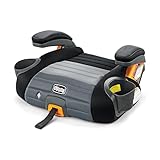
9. Chicco GoFit ClearTex Plus Backless Booster Car Seat, Latch Attachment, Quick-Release Latch Removal, Portable Car Booster Seat for Children at Least 4 Years Old and 40-110 lbs | Obsidian/Black
Overview:
The Chicco GoFit ClearTex Plus delivers practical booster seating at an accessible price point. Designed for children 40-110 pounds, this backless booster focuses on portability and convenience without sacrificing essential safety. The LATCH system with quick-release handle provides stability during entry and exit, while the lightweight design and built-in carry handle make it ideal for travel and carpooling.
What Makes It Stand Out:
At just $64.99, the GoFit offers flame-retardant-free materials and GREENGUARD Gold Certification—features typically found in premium seats. The innovative quick-release LATCH mechanism allows one-handed removal, solving a common frustration with booster seat transfers. Integrated belt guides ensure proper vehicle seatbelt positioning, while dishwasher-safe cup holders and machine-washable components simplify maintenance.
Value for Money:
This booster represents exceptional value, costing a fraction of premium alternatives while meeting all federal safety standards. Families needing multiple boosters for grandparents’ cars, carpools, or travel can purchase several for the price of one high-end model. The durability and easy-clean features extend its practical lifespan, making it one of the best cost-per-use options available.
Strengths and Weaknesses:
Strengths include unbeatable price, lightweight portability, flame-retardant-free materials, easy cleaning, and convenient LATCH stability. The quick-release handle is genuinely innovative. Weaknesses include backless-only design lacking side-impact protection, minimal padding for long trips, and lower weight/height limits compared to high-back boosters. It offers fewer adjustment options than premium models.
Bottom Line:
The Chicco GoFit ClearTex Plus is an outstanding value for families seeking a safe, portable booster for occasional use or travel. While it lacks the advanced protection of high-back models, its chemical-free materials, smart features, and unbeatable price make it a must-have secondary seat.
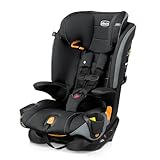
10. Chicco MyFit ClearTex 2-in1 Harness Booster Car Seat, 5-Point Harness Car Seat and High Back Booster, for Children 26.5-100 lbs. | Obsidian/Black
Overview:
The Chicco MyFit ClearTex bridges the gap between budget and premium booster seats with its versatile 2-in-1 design. This forward-facing seat transitions seamlessly from a 5-point harness for toddlers to a high-back booster for older children, accommodating 26.5-100 pounds. Advanced Side Impact Protection and GREENGUARD Gold Certification provide premium safety features at a mid-range price.
What Makes It Stand Out:
The MyFit delivers genuine side-impact protection meeting FMVSS 213a standards—a rarity in its price class. The 9-position headrest and 4-position recline ensure proper fit and comfort across a wide age range. Its slim profile enables three-across installation in many vehicles, while the ClearTex fabric provides flame-retardant-free safety without the premium price tag.
Value for Money:
At $249.99, the MyFit costs significantly less than premium competitors while offering comparable safety credentials and greater longevity than single-mode seats. The 2-in-1 design eliminates the need to purchase separate harness and booster seats, effectively covering 3-10 years of age. Easy-install features reduce user error, enhancing real-world safety value.
Strengths and Weaknesses:
Strengths include advanced side-impact protection, flame-retardant-free materials, easy installation with leveling systems, 2-in-1 versatility, and space-saving design. The harness-to-booster conversion provides exceptional longevity. Weaknesses include forward-facing only (no rear-facing option), bulkier than dedicated boosters, and fewer premium features like rigid-LATCH. The harness may be outgrown sooner than convertible seats.
Bottom Line:
The Chicco MyFit ClearTex offers an excellent balance of advanced safety, chemical-free materials, and extended usability at a reasonable price. While it lacks rear-facing capability, its side-impact protection and 2-in-1 design make it a smart choice for forward-facing toddlers through booster age.
Understanding Flame Retardants in Car Seats
The Hidden Chemical Concerns
Traditional car seats have long relied on chemical flame retardants to meet federal flammability standards, specifically the FMVSS 302 regulation that governs interior materials in motor vehicles. These additives—commonly including halogenated compounds, phosphorus-based chemicals, and certain foam treatments—are designed to slow ignition and reduce fire spread. However, these chemicals don’t stay bound to the materials. They migrate out through normal use, accumulating in vehicle dust and potentially exposing children through skin contact and inhalation.
Research published in environmental health journals has detected these compounds in nearly 100% of car seats tested, with higher concentrations in older models. The concern isn’t just theoretical; some legacy flame retardants have been linked to endocrine disruption, neurodevelopmental delays, and thyroid hormone changes in animal studies. While direct causal relationships in humans require more research, the precautionary principle has driven both regulatory changes and parental demand for alternatives.
Regulatory Landscape in 2026
The car seat industry in 2026 operates under a fascinating dual system. Federal flammability standards (FMVSS 302) remain in effect, but they’ve been reinterpreted to allow innovative compliance methods that don’t require chemical additives. California’s Technical Bulletin 117-2013, which eliminated open-flame tests for furniture, has influenced car seat manufacturers to adopt similar smoke-based testing approaches.
Additionally, the newly implemented Children’s Product Chemical Safety Act in several states now requires transparent labeling of any intentionally added chemicals of concern. This means manufacturers must disclose flame retardant use on product labels and websites, making it easier for parents to identify truly chemical-free options. The Consumer Product Safety Commission has also updated its guidance to recognize that modern vehicle fire dynamics—where fires typically start externally and spread slowly—reduce the real-world benefit of chemical retardants in car seats compared to the risks they may pose.
What “Flame-Retardant-Free” Really Means
The term “flame-retardant-free” isn’t just marketing fluff—it has specific implications in 2026. A legitimately flame-retardant-free car seat contains no intentionally added chemical flame retardants in any component that contacts the child or could release particles into the vehicle environment. This includes the cover fabric, foam padding, harness webbing, and even the shell’s interior coating.
However, this doesn’t mean the seat is flammable. Manufacturers achieve compliance through inherently fire-resistant materials like wool blends, certain dense polyester weaves, and innovative fabric constructions that char rather than ignite. The key distinction is “inherent” versus “added”—the fire resistance is a property of the material itself, not a chemical treatment applied later.
Natural vs. Synthetic Material Innovations
The market has bifurcated into two primary approaches. The natural camp utilizes organic wool, which contains high keratin and moisture content making it naturally flame-resistant while also regulating temperature and wicking moisture. Some manufacturers blend wool with organic cotton to create soft, breathable covers that pass flammability tests without chemicals.
The synthetic approach employs advanced polymer engineering. High-density polyethylene (HDPE) and certain polypropylene formulations can be manufactured with tight molecular structures that resist ignition. Some brands use recycled polyester with specific weave densities that create a self-extinguishing char layer. Both approaches have merit—natural materials offer breathability and temperature regulation, while synthetics often provide easier cleaning and faster drying.
Why Parents Are Making the Switch in 2026
The migration toward flame-retardant-free options accelerated dramatically after the 2025 NHSTA report revealed that modern vehicle fire fatalities have decreased by 67% since 2000, primarily due to improved fuel system designs and automatic engine shutoff features. This data shifted the risk-benefit calculation for many safety experts and parents alike.
Beyond statistics, parents report tangible improvements. Children with sensitive skin or eczema often show reduced irritation. The elimination of chemical odors—particularly noticeable in hot weather—creates a more pleasant vehicle environment. Many flame-retardant-free seats also feature superior breathability, reducing the sweaty-back syndrome that makes long car rides uncomfortable for toddlers. The peace of mind factor is significant; knowing your child isn’t inhaling chemical off-gassing during their daily commute resonates with families prioritizing long-term health.
Key Safety Certifications Beyond Flammability
When evaluating flame-retardant-free options, savvy parents look beyond the absence of chemicals to affirmative safety credentials. The JPMA (Juvenile Products Manufacturers Association) certification now includes a chemical transparency component, verifying both safety testing and full ingredient disclosure.
Austria’s stringent OEKO-TEX Standard 100 certification has become the gold standard for fabric safety, testing for over 1,000 harmful substances. Look for Class I certification, which is specific to baby products. The GREENGUARD Gold certification ensures low chemical emissions, testing for 360+ VOCs in realistic vehicle temperature conditions that can reach 150°F.
Crash safety remains paramount. Ensure any seat meets or exceeds FMVSS 213 standards. Some manufacturers voluntarily submit to the rigorous German ADAC testing or Swedish Plus Test, which focuses on neck load forces—particularly relevant for rear-facing seats. These additional certifications indicate a manufacturer that invests in comprehensive safety beyond minimum requirements.
Essential Features to Evaluate
Fabric Technology and Breathability
The cover fabric is your child’s primary interface with the seat, making it critical to assess beyond just flame resistance. Look for moisture-wicking properties that draw sweat away from the body—essential for maintaining comfort and preventing skin irritation during extended trips. Mesh panel integration in high-sweat zones (back and bottom) can improve airflow by up to 40%.
Consider the fabric’s durability and pilling resistance. A seat that looks worn after six months isn’t just aesthetically unpleasing; fabric degradation can compromise the protective barrier. Some manufacturers now embed silver ions or use plant-based antimicrobial treatments to prevent odor-causing bacteria without harmful chemicals. Test the fabric feel yourself—if it feels plasticky or stiff, it may not breathe well, regardless of marketing claims.
Frame Construction and Impact Protection
The internal architecture of a flame-retardant-free seat should be scrutinized just as heavily as traditional options. Look for reinforced steel frames in convertible seats, particularly in the base and headrest areas. Some manufacturers have pioneered “honeycomb” aluminum structures that absorb impact energy while remaining lightweight.
Side-impact protection has evolved beyond simple foam wings. Advanced designs now feature adjustable side-impact pods that can be positioned based on the child’s height and the vehicle’s seat geometry. Energy-absorbing EPP (expanded polypropylene) foam is preferable to EPS (expanded polystyrene) as it recovers better after compression and doesn’t off-gas harmful chemicals. Some premium models incorporate crumple zones similar to vehicle design, engineered to deform in a controlled manner during impact.
Harness System Innovations
The five-point harness remains the safest configuration, but execution varies significantly. Look for harness straps with twist-prevention stitching and smooth adjuster mechanisms that don’t require Herculean strength to tighten. The “pinch test”—where you shouldn’t be able to pinch excess webbing at the shoulder—should be easy to achieve with one hand.
Magnetic chest clips have gained popularity but require careful evaluation. Ensure they meet NHTSA requirements for release force (no easier than traditional clips) and won’t attract metal debris that could compromise the buckle. Some 2026 models feature no-rethread harness systems that adjust with the headrest, eliminating the common installation error of incorrect harness height. Pay attention to the crotch buckle position—multiple slot options accommodate both chunky-thighed infants and slender preschoolers properly.
Installation and Vehicle Compatibility
LATCH System Evolution
The LATCH (Lower Anchors and Tethers for Children) system has been updated for 2026 vehicles and seats. The new 80-pound combined weight limit (child + seat) is standard, but many flame-retardant-free seats now feature premium LATCH connectors with dual-direction release buttons that prevent accidental disengagement. Some manufacturers have introduced color-coded path indicators that show exactly where the belt should route for different modes.
Check your vehicle’s LATCH anchor depth. Some European and Asian vehicles have recessed anchors that don’t play well with certain connector styles. Top tether usage is non-negotiable for forward-facing installations—it reduces head excursion by 4-6 inches in crash tests. If your vehicle lacks tether anchors (common in older trucks), consult a certified CPST (Child Passenger Safety Technician) about retrofit options or alternative installation methods.
Airbag and Seat Position Considerations
The safest position remains the rear seat, center position, away from side airbags. However, modern curtain airbags are designed to be child-safe, deploying upward rather than outward. If you must place a seat in a captain’s chair with integrated side airbags, ensure the vehicle manual explicitly approves child seat installation there.
For vehicles with inflatable seat belts (common in many Ford and Mercedes models), you must verify compatibility. These belts require specific locking mechanisms, and some car seat manufacturers prohibit their use entirely. The 2026 Genesis models introduced active seat belt tensioners that pre-crash tighten—ensure your car seat’s belt path can accommodate this feature without interference. Always perform the “inch test” after installation—grasping the seat at the belt path, it shouldn’t move more than one inch side-to-side or front-to-back.
Longevity and Convertible Designs
Investing in a flame-retardant-free seat often comes at a premium, making longevity a critical value consideration. Look for seats with high rear-facing weight limits (minimum 40 pounds, with many 2026 models offering 50-pound limits) and tall shell heights. The average 4-year-old weighs 40 pounds, so extended rear-facing capability keeps children in the safest orientation longer.
Convertible seats that transition to high-back boosters should maintain structural integrity through multiple modes. Check that the harness stores cleanly when not in use—loose straps can become projectiles in a crash. Some innovative designs now feature modular components, allowing you to replace just the fabric cover or harness webbing after expiration or accidents, extending the usable life of the main structure. However, never use a seat beyond its 7-10 year expiration date, as plastic degradation occurs regardless of chemical composition.
Maintenance and Cleaning Best Practices
Flame-retardant-free fabrics often require gentler care than chemically-treated alternatives. Always remove the cover according to manufacturer instructions—many use hidden zippers and hook-and-loop systems that aren’t immediately obvious. Machine wash on cold with fragrance-free, dye-free detergent; hot water can shrink natural fibers and degrade synthetic water-resistant coatings.
Never use fabric softeners, which coat fibers and can compromise both breathability and inherent flame resistance. Air drying is preferable to machine drying, which can break down elastic components and cause warping. For stubborn stains, spot-clean with a mild soap solution rather than harsh stain removers. Some manufacturers offer replacement covers—consider purchasing one when you buy the seat, as colorways are often discontinued. After cleaning, reinstall the cover while slightly damp to ensure a snug, wrinkle-free fit that won’t interfere with harness adjustment.
Debunking Common Myths
Myth #1: “Flame-retardant-free means less safe in a fire.” Reality: Modern vehicles burn so slowly and detection systems are so advanced that the real-world fire risk to properly restrained children is minimal compared to crash risks. Inherent flame resistance provides adequate protection without chemical additives.
Myth #2: “Natural fabrics aren’t as durable.” Reality: High-quality wool blends often outlast synthetic covers, resisting pilling and maintaining shape better through multiple washes. The key is construction quality, not material type.
Myth #3: “These seats are only for crunchy, affluent parents.” Reality: While early adoption was price-prohibitive, mainstream manufacturers now offer flame-retardant-free options across multiple price points, with some budget-friendly models under $200.
Myth #4: “You can just buy an organic cover for any seat.” Reality: Aftermarket covers aren’t crash-tested with your seat and can interfere with harness fit and energy absorption. The entire seat must be designed as a flame-retardant-free system.
Myth #5: “Chemical-free seats can’t be recycled.” Reality: Many 2026 models use mono-material construction (single polymer type throughout) making them fully recyclable through manufacturer take-back programs, unlike mixed-material traditional seats.
Budget Considerations and Value Assessment
The price spectrum for flame-retardant-free car seats in 2026 ranges from $180 to $450, with premium models reaching $600. Determine your must-have features versus nice-to-haves. A $250 seat with steel frame, EPP foam, and wool cover offers better value than a $400 seat with similar specs but adds Bluetooth connectivity you’ll never use.
Consider the cost-per-year of use. A $300 convertible seat used rear-facing for 3 years and forward-facing for 3 more costs $50 annually—far less than replacing an infant seat ($150) plus a toddler seat ($200) plus a booster ($80). Check if your insurance offers car seat replacement coverage after accidents; some policies now specifically cover premium flame-retardant-free models. Flexible Spending Accounts (FSAs) and Health Savings Accounts (HSAs) often qualify car seats as medical expenses, providing tax advantages that offset higher upfront costs.
The Future of Car Seat Safety: 2026 and Beyond
The trajectory is clear: chemical transparency is becoming the baseline expectation, not a premium feature. Emerging technologies include phase-change materials that regulate temperature without chemical coatings, and bio-based polymers derived from castor oil that are inherently flame-resistant. Several manufacturers are piloting QR codes on seats that link to full chemical ingredient lists and batch-specific test results.
The next frontier is “smart” integration without compromising safety. We’re seeing prototypes with embedded sensors that monitor harness tension and chest clip position, alerting parents via dashboard indicators. However, experts caution that electronics must be isolated from crash forces and electromagnetic interference testing is still evolving. As autonomous vehicle technology advances, car seats may integrate with vehicle systems to optimize positioning based on real-time crash probability algorithms. For now, focus on fundamental safety and chemical transparency—the flashy tech will mature in future model years.
Frequently Asked Questions
1. Are flame-retardant-free car seats legal in all 50 states?
Yes, absolutely. These seats meet the same federal FMVSS 302 flammability standard as traditional seats—they simply use inherently fire-resistant materials rather than chemical additives. No state prohibits their use, and several states now require chemical disclosure, making them easier to identify.
2. Will my child be less protected in a vehicle fire?
Real-world data shows vehicle fires are extremely rare, and when they occur, modern fire detection and suppression systems provide ample warning. Flame-retardant-free seats use materials that char and self-extinguish, providing adequate protection for the time needed to safely extract your child. Crash protection remains the primary safety concern.
3. How can I verify a seat is truly flame-retardant-free?
Look for specific certification language on labels and manufacturer websites. Reputable brands will explicitly state “no added flame retardants” and provide OEKO-TEX Standard 100 or GREENGUARD Gold certifications. Contact customer service and ask for a Chemical Content Declaration—the transparent brands will provide it immediately.
4. Do these seats cost significantly more?
Not necessarily. While early models commanded premium prices, 2026 offerings span all price tiers. You can find excellent flame-retardant-free options between $200-$300, comparable to mid-range traditional seats. The price reflects features and materials, not just chemical composition.
5. Can I use aftermarket covers or blankets to avoid flame retardants?
Never. Aftermarket products haven’t been crash-tested with your specific seat and can interfere with harness fit, compression characteristics, and energy absorption. They may also void your warranty. The entire seat must be designed as an integrated, flame-retardant-free system.
6. Are natural wool covers hot and itchy for my baby?
High-quality merino wool blends used in car seats are nothing like traditional wool sweaters. They’re processed to be ultra-soft, breathable, and temperature-regulating. Many parents report their children sweat less in wool covers compared to synthetic fabrics, especially in hot climates.
7. Do flame-retardant-free seats expire sooner than traditional ones?
No, expiration dates (typically 7-10 years from manufacture) are based on plastic and structural component degradation, not chemical composition. In fact, some natural materials may age better than chemically-treated foams that can break down over time. Always follow the manufacturer’s specific expiration date.
8. Are these seats harder to clean?
They require different care, not necessarily more difficult care. Most wool-blend covers are machine washable but need cold water and air drying. Synthetic flame-retardant-free covers often clean similarly to traditional seats. The key is following manufacturer instructions precisely rather than using harsh chemicals or hot water.
9. Can I use a flame-retardant-free seat for a preemie or low-birth-weight infant?
Yes, provided the seat is rated for your child’s specific weight and has appropriate infant inserts. Some flame-retardant-free models offer specialized preemie padding with medical-grade, chemical-free fabrics. Always consult your pediatrician and ensure proper harness fit at the lowest settings.
10. Will my insurance cover replacement after an accident?
Most auto insurance policies cover car seat replacement after moderate to severe crashes, regardless of type. However, confirm with your provider. Some insurers now specifically recognize flame-retardant-free seats as “enhanced safety equipment” and may offer higher replacement value. Keep your receipt and register your seat with the manufacturer to streamline claims.