There’s something undeniably magical about a baby’s christening day—the quiet reverence, the gentle light streaming through stained glass, and the precious sight of your little one dressed in pristine white. The christening gown and its matching bonnet aren’t merely garments; they’re vessels of tradition, faith, and family heritage that transform a sacred ceremony into an unforgettable memory. Choosing the perfect ensemble requires more than a quick browse online—it demands an understanding of centuries-old customs, modern fabric technology, and the delicate balance between comfort and ceremonial beauty.
Whether you’re a first-time parent navigating these waters or a godparent seeking the ideal gift, this comprehensive guide illuminates every facet of selecting christening gowns with coordinating bonnets. We’ll explore the nuances that separate ordinary outfits from extraordinary heirlooms, ensuring your decision honors both your child and the significance of the occasion.
Top 10 Christening Gowns with Matching Bonnets
Detailed Product Reviews
1. White Cotton Christening Baptism Gown with Lace Border with Bonnet - 6 Month

Overview: This 100% cotton christening gown offers a timeless, traditional aesthetic perfect for sacred ceremonies. Measuring 24 inches in length and designed for 6-month-old infants, it features delicate floral eyelet lace trim across the bodice and hemline, creating an heirloom-quality appearance. The included matching bonnet completes the classic look, making it suitable for christenings, baptisms, baby blessings, and other formal occasions.
What Makes It Stand Out: The gown’s pure cotton construction sets it apart from polycotton blends, offering superior breathability and comfort for delicate infant skin. The intricate eyelet border detailing provides a handcrafted, vintage-inspired elegance that photographs beautifully. The manufacturer thoughtfully includes storage recommendations, suggesting their Heirloom Preservation Bag for long-term keeping—a detail that underscores the garment’s keepsake potential. The plastic hanger and poly bag packaging ensures it arrives in pristine condition.
Value for Money: At $69.99, this gown sits in the mid-range price point. The investment is justified by the 100% natural fiber composition and heirloom-worthy construction. While polycotton alternatives may cost $10-20 less, they lack the breathability and traditional appeal of pure cotton. Compared to silk gowns that often exceed $100, this offers comparable elegance at a more accessible price point for families seeking a balance of quality and affordability.
Strengths and Weaknesses: Pros: Natural breathable cotton fabric; traditional eyelet lace detailing; includes matching bonnet; heirloom preservation guidance provided; versatile for multiple sacred occasions. Cons: Cotton requires careful ironing and may wrinkle; limited to 6-month size in this listing; requires specific storage to maintain quality; higher maintenance than synthetic blends.
Bottom Line: This gown is an excellent choice for families prioritizing natural fabrics and traditional craftsmanship. The heirloom potential and classic design justify the price, making it ideal for those wanting a keepsake piece that can be passed down through generations.
2. White Polycotton Christening Baptism Gown with Lace Trim & Bonnet, 03

Overview: This polycotton blend christening gown delivers classic elegance with practical durability for ceremonial occasions. The 24-inch length accommodates infants around 3 months (size 03), featuring a satin-ornamented bodice complemented by lace trim and a satin hem. The matching bonnet provides a cohesive, formal appearance appropriate for baptisms, christenings, and baby blessings.
What Makes It Stand Out: The polycotton fabric blend offers an intelligent compromise between the luxurious feel of natural fibers and the easy-care benefits of synthetics. The satin ornamentation on the bodice creates a refined focal point, while the satin hem adds weight and graceful draping. This combination produces a polished look that maintains its shape throughout lengthy ceremonies and photographs exceptionally well under various lighting conditions.
Value for Money: Priced at $69.99, this gown matches its cotton counterpart while offering enhanced practicality. The polycotton composition resists wrinkling better than pure cotton and typically requires less meticulous care, saving time for busy parents. While lacking the heirloom cachet of natural fibers, it provides comparable visual impact to more expensive gowns. Families seeking a beautiful ceremonial outfit without premium silk prices will find this fairly valued.
Strengths and Weaknesses: Pros: Wrinkle-resistant polycotton blend; satin details add elegance; includes matching bonnet; good length for 3-month infants; suitable for multiple formal occasions. Cons: Synthetic blend less breathable than pure cotton; may not be considered a true heirloom piece; limited size availability; satin elements may require delicate washing.
Bottom Line: This gown suits practical families wanting ceremonial beauty without high-maintenance care. The polycotton blend offers durability and ease, making it perfect for single-event use or passing to siblings, though it lacks the heirloom prestige of natural fiber alternatives.
3. Long White Embroidered Shantung Christening Baptism Gown with Matching Bonnet - L (9-12 Month)
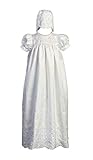
Overview: This long white christening gown crafted from embroidered shantung offers a luxurious option for 9-12 month old infants. The shantung fabric—known for its subtle slubbed texture and elegant drape—creates a sophisticated silhouette enhanced by intricate embroidery. The included matching bonnet completes this formal ensemble, making it appropriate for christenings, baptisms, and dedication ceremonies.
What Makes It Stand Out: Shantung fabric provides a distinctive textural element that elevates this gown beyond standard cotton or polyester options. The embroidery work adds dimensional artistry that catches light beautifully in photographs. Designed for older infants (9-12 months), it fills an important size gap often overlooked in ceremonial wear. The longer length creates a dramatic, traditional flowing effect that works particularly well for formal church settings.
Value for Money: At $49.98, this gown offers exceptional value—significantly undercutting competitors while delivering premium fabric characteristics. Shantung typically commands higher prices, often retailing for $80-120 in specialty boutiques. The lower price point may reflect streamlined packaging or direct sourcing, but doesn’t appear to compromise the core quality. For families seeking luxury aesthetics on a moderate budget, this represents outstanding value.
Strengths and Weaknesses: Pros: Luxurious shantung fabric; beautiful embroidery; includes bonnet; accommodates older infants (9-12 months); dramatic longer length; most affordable option reviewed. Cons: Minimal product details provided; care instructions not specified; shantung may require professional cleaning; limited information on closure types; may be too long for some ceremony settings.
Bottom Line: This gown is a budget-friendly luxury choice for families with older infants. The shantung fabric and embroidery deliver high-end appeal at an unexpectedly low price, though the sparse product details require confident buyers comfortable with some uncertainty.
4. Lito Girls Cotton Christening Gown Dresses with Bonnet Set - Baby or Infant Girl’s Christening Dress,White,0-3 Month
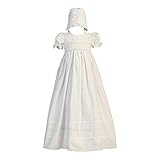
Overview: This Lito-brand cotton christening gown set, made in the USA, provides heirloom-quality craftsmanship for newborns to 3-month-old infants. The design features short cap sleeves trimmed with lace, smocked embroidered detailing on the bodice, and a matching bonnet. Its domestic production and machine-washable care instructions offer a rare combination of traditional quality and modern convenience.
What Makes It Stand Out: The “Made in USA” label distinguishes this gown in a market dominated by imported ceremonial wear, often ensuring stricter quality control and fair labor practices. The smocked embroidery demonstrates traditional garment-making techniques rarely found in mass-produced gowns. Short cap sleeves provide better arm mobility for young infants compared to sleeveless designs, while the machine-washable care (cold water, hang dry) eliminates expensive dry-cleaning concerns.
Value for Money: At $70.99, this gown commands a slight premium over imports, justified by domestic manufacturing and heirloom construction. Similar imported gowns retail for $55-65, making the $5-15 upcharge reasonable for USA-made quality and ethical production. The machine-washability adds long-term value by reducing maintenance costs. For families prioritizing American craftsmanship and practical care, the price represents fair market value.
Strengths and Weaknesses: Pros: Made in USA; 100% cotton; smocked embroidery; machine washable; short cap sleeves with lace; includes bonnet; heirloom quality with modern convenience. Cons: Highest price point reviewed; limited to smaller infants (0-3 months); requires hang drying; cotton may still need light ironing; premium may not matter to all buyers.
Bottom Line: This gown is ideal for families willing to pay a modest premium for American-made quality and practical care. The smocked embroidery and washable fabric make it a sensible heirloom that balances tradition with real-world convenience for busy parents.
5. Girls Cotton Christening Gown Dresses with Bonnet Set - Baby or Infant Girl’s Christening Dress, White, 6-12 Months
Overview: This cotton christening gown set mirrors the quality and design of its 0-3 month counterpart, sized for 6-12 month old infants. Featuring short cap sleeves with lace trim, smocked embroidered bodice detailing, and a coordinating bonnet, it offers the same Made in USA craftsmanship and machine-washable convenience. The design accommodates active older infants while maintaining ceremonial elegance.
What Makes It Stand Out: Extending the same premium features to an older infant size addresses a common gap in christening wear, as many gowns target newborns exclusively. The smocked embroidery continues to showcase traditional American garment-making techniques, while the short cap sleeves provide freedom of movement for babies who are more mobile. The machine-washable care instruction remains a standout feature, particularly for this age group where spit-up and drooling are still common.
Value for Money: At $70.99, this gown maintains the same pricing as its smaller size, offering consistent value. The domestic manufacturing premium is justified by quality assurance and ethical production standards. For families with older infants, finding ceremonial wear of this quality is challenging—many competitors either don’t offer this size or use cheaper fabrics. The total ownership cost remains low thanks to home laundering capability, avoiding $15-25 dry cleaning fees per use.
Strengths and Weaknesses: Pros: Made in USA; 100% cotton; smocked embroidery; machine washable; available in larger infant size (6-12 months); includes bonnet; practical for active babies. Cons: Premium pricing; requires hang drying; limited design color options; cotton wrinkling possible; availability may be restricted in this size range.
Bottom Line: This gown is perfect for families needing ceremonial wear for older infants who don’t want to compromise on quality or convenience. The American-made construction and washable fabric make it a practical heirloom investment for this often-overlooked size category.
6. Silk Heirloom Gown with Two Hats (Boy and Girl) Christening Baptism Special Occasion Family Outfit with Two Matching Hats - M (6-12 Month, 13-17 lbs) White

Overview: The Silk Heirloom Gown offers exceptional versatility for families planning christenings or special occasions. This pearl-colored raw silk creation includes both a boy’s hat and a girl’s bonnet, allowing the same gown to serve multiple children. Designed for babies 6-12 months, the gown features four horizontal pleats across the chest that flow into a pleated skirt, creating classic, simple lines. The natural silk fibers produce a subtle sheen while remaining more wrinkle-resistant than typical silks due to its handmade construction.
What Makes It Stand Out: The dual-hat inclusion is this product’s most distinctive feature, providing unmatched gender flexibility that few competitors offer. The 100% handmade raw silk construction ensures each piece is unique while offering practical wrinkle resistance—a rare combination in formal infant wear. The pearl colorway deviates from stark white, adding warmth and sophistication to photographs.
Value for Money: At $89.97, this gown sits in the mid-range for silk christening wear. While more expensive than polyester alternatives, it’s significantly less than designer silk gowns that can exceed $200. The two-hat system effectively provides two outfits in one, making it economical for families with siblings of different genders.
Strengths and Weaknesses: Strengths include versatile gender-neutral design, premium natural silk fabric, heirloom-quality construction, and practical wrinkle resistance. Weaknesses involve silk’s delicate care requirements, the higher price point compared to synthetic options, and limited size availability.
Bottom Line: This gown is ideal for families seeking a versatile, high-quality heirloom piece that can be passed down regardless of gender. The thoughtful design justifies the investment for multi-child households.
7. Bow Dream Baby Girls 4Pcs Gown and Bonnet Christening Baptism Dress Lace Baby Dress with Shoes White 0-3 Months

Overview: The Bow Dream 4-piece set delivers a complete christening ensemble for newborns at an accessible price point. This lace gown includes a matching bonnet, shoes, and bloomer—everything needed for a baby’s special day. The cotton lining ensures breathability against delicate skin, while the lace exterior provides traditional elegance. Sized for 0-3 months, it’s designed specifically for early infancy celebrations.
What Makes It Stand Out: This set’s comprehensiveness is unmatched in its price category. Including shoes and a bloomer eliminates the need for separate purchases, saving time and ensuring perfect coordination. The manufacturer explicitly lists numerous occasion suitability, from weddings to pageants, emphasizing its versatility beyond baptism.
Value for Money: At $39.99, this represents exceptional value. Purchasing dress, bonnet, shoes, and bloomer separately would easily exceed $60-80. The breathable cotton lining adds comfort value that many budget options sacrifice.
Strengths and Weaknesses: Major strengths include affordability, complete 4-piece set, versatile occasion suitability, and breathable lining. Notable weaknesses are the limited 0-3 month size range, potential fragility of lace construction, and quality that may not match premium heirloom standards.
Bottom Line: Perfect for budget-conscious families needing a complete, photo-ready outfit for a single event. While not an heirloom piece, it delivers practicality and style for early infancy milestones.
8. Girls Cotton Christening Gown Dresses with Bonnet Set - Baby or Infant Girl’s Christening Dress, White, 12-18 Months
Overview: This cotton christening gown combines American craftsmanship with practical maintenance for modern parents. Designed for 12-18 month olds, it features short cap sleeves with delicate lace trim and intricate smocked embroidery detail that adds texture and traditional charm. The included bonnet completes the classic look. As a domestically produced option, it appeals to families prioritizing local manufacturing and quality assurance.
What Makes It Stand Out: The “Made in USA” label distinguishes it in a market dominated by imports. Machine washability (cold water, hang dry) offers significant convenience over dry-clean-only silk and organza alternatives that dominate formal infant wear. The smocked embroidery provides handcrafted appearance with enhanced durability for active babies.
Value for Money: Priced at $70.99, it commands a modest premium over imported cotton gowns but remains reasonable for American-made quality. The price reflects fair labor practices and stringent quality control standards often absent in lower-cost imports, making it a responsible purchase.
Strengths and Weaknesses: Key strengths include domestic production, easier care requirements, quality embroidery, and included bonnet. Weaknesses involve higher cost than imported options, cotton’s less formal appearance compared to silk, and the hang-dry requirement that still demands some care attention.
Bottom Line: An excellent choice for parents valuing American manufacturing and practical maintenance without sacrificing traditional style. The balance of quality and convenience justifies the moderate premium.
9. White Embroidered Organza Christening Baptism Gown with Matching Bonnet - Size S (3-6 Month)

Overview: This embroidered organza gown offers lightweight elegance specifically suited for warmer climate christenings and spring baptisms. The size small fits babies 3-6 months, featuring delicate embroidery on sheer organza fabric that creates a floating, ethereal effect. Made in the USA, it includes a matching bonnet for a perfectly coordinated look. The breathable material prevents overheating during lengthy ceremonies while maintaining formal appearance.
What Makes It Stand Out: Organza’s translucent quality creates a distinctive silhouette that photographs beautifully with natural light. The domestic production ensures quality stitching on this challenging sheer fabric, which many imports handle poorly. Its lightweight nature makes it ideal for spring and summer baptisms where heavier fabrics like silk or satin would cause discomfort.
Value for Money: At $50.98, it’s competitively priced for American-made formal wear. Organza gowns from imported brands often cost $40-60 without matching bonnets, making this a strong value proposition given its domestic origin and included accessories.
Strengths and Weaknesses: Strengths include breathable warm-weather fabric, elegant embroidered details, domestic manufacturing, and included bonnet. Weaknesses involve organza’s inherent fragility and tendency to snag, potential sheerness requiring proper undergarments, and limited sizing availability that may not suit all families.
Bottom Line: A solid choice for families prioritizing comfort in warm weather without sacrificing traditional aesthetic. The Made in USA quality adds reassurance to this reasonably priced option.
10. 32" Hand Smocked White Cotton Christening Baptism Gown with Bonnet, SM
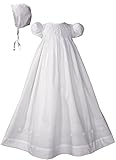
Overview: This 32-inch hand-smocked cotton gown represents the pinnacle of traditional christening craftsmanship for discerning families. Designed as a precious heirloom piece, it features intricate pin tucking on both bodice and skirt, accompanied by a matching bonnet and conveniently attached slip. The 100% cotton construction adheres to classic baptismal attire standards while the extensive hand-smocking demonstrates remarkable artisanal skill rarely seen in contemporary garments.
What Makes It Stand Out: Hand-smocking is increasingly rare in modern garment production, making this a true collector’s piece with genuine heirloom potential. The generous 32-inch length provides a dramatic, traditional silhouette that works beautifully for babies of varying sizes within the small range. The attached slip eliminates separate layering concerns, ensuring proper drape and modesty while simplifying dressing for busy parents.
Value for Money: At $189.99, this represents a premium investment in traditional craftsmanship. However, authentic hand-smocking by skilled artisans justifies the cost—similar artisan gowns from specialty boutiques often exceed $250. The heirloom potential spreads value across generations, making it economical for families who preserve ceremonial garments as keepsakes.
Strengths and Weaknesses: Strengths include exceptional hand-craftsmanship, traditional 32-inch length, attached slip convenience, and true heirloom quality that improves with age. Weaknesses involve high initial cost, cotton’s susceptibility to staining during messy ceremonies, and delicate handwork requiring careful handling and storage.
Bottom Line: For families seeking authentic, traditional craftsmanship and a museum-quality keepsake rather than a one-time outfit, this gown delivers unmatched artisanal value. The investment pays emotional dividends as a treasured family heirloom for decades.
The Sacred Significance of Christening Attire
Christening garments carry profound symbolic weight that extends far beyond their aesthetic appeal. The flowing white fabric represents purity, innocence, and the cleansing nature of baptism itself. When you dress your baby in these ceremonial robes, you’re participating in a ritual that connects your family to generations of believers who’ve marked this milestone with similar reverence. The matching bonnet, often overlooked, serves as a crown of humility—framing your baby’s face while reminding observers of the sacred nature of the commitment being made.
Understanding this deeper meaning transforms your shopping journey from a simple transaction into a thoughtful selection process. You’re not just buying clothes; you’re investing in a tangible piece of your family’s spiritual narrative that may one day be passed down to your grandchildren.
A Brief History of Christening Gowns Through the Ages
The tradition of elaborate christening attire dates back to the 18th century when infant baptism became increasingly common across Christian denominations. Victorian-era gowns often featured intricate hand-embroidered details, silk ribbons, and delicate lace that took months to complete. These garments were designed to be gender-neutral, allowing families to reuse them for multiple children—a practical consideration that birthed the heirloom tradition we cherish today.
The 20th century saw a shift toward shorter gowns and simpler designs, particularly in the post-war era when practicality trumped ornamentation. Today’s market offers a beautiful fusion: you can choose historically accurate reproductions with period-appropriate detailing or contemporary interpretations that honor tradition while embracing modern sensibilities about comfort and ease of care.
Understanding Fabric Choices: From Silk to Organic Cotton
The Luxury of Natural Fibers
Silk remains the gold standard for traditional christening gowns, offering an unparalleled drape and luminous sheen that photographs beautifully. However, pure silk requires delicate handling and professional cleaning, making it better suited for heirloom pieces rather than everyday practicality. Silk blends provide a compromise—maintaining that luxurious appearance while adding durability.
Cotton batiste stands as the workhorse of christening fabrics: lightweight, breathable, and soft against sensitive skin. This finely woven material accepts embroidery beautifully and becomes softer with each careful washing. For families prioritizing comfort, especially for longer ceremonies, cotton batiste offers the perfect balance of tradition and baby-friendly wearability.
Modern Organic Options
The rise of eco-conscious parenting has revolutionized christening wear. Organic cotton and bamboo-derived fabrics now offer the same ethereal appearance as conventional materials without pesticide residues or harsh chemical processing. These fabrics particularly benefit babies with eczema or sensitive skin conditions. Linen, once considered too coarse for infants, now appears in ultra-soft, pre-washed varieties that bring rustic elegance to baptismal attire.
Decoding Traditional vs. Contemporary Styles
Traditional christening gowns typically feature ankle-length hemlines, long sleeves, and generous fullness achieved through tucked skirts and layered petticoats. These designs echo the Victorian originals with their high necklines, pearl buttons, and extensive handwork. The matching bonnets follow suit with deep brims and elaborate trim that frames the face like a portrait.
Contemporary styles, while respecting the white color palette, experiment with shorter lengths (often called “christening dresses” or “rompers”), cap sleeves, and simpler silhouettes. Some modern designs incorporate subtle color accents—pale blue sashes for boys or ivory embroidery for girls—though purists argue this dilutes the symbolism. The bonnets have evolved too, with some parents opting for simpler headbands or minimalist caps that stay secure on active babies.
The Art of Selecting the Perfect Silhouette
A gown’s silhouette dramatically impacts both appearance and comfort. The classic A-line shape flatters every baby and allows for easy movement and diaper access. Empire waist designs draw attention to your baby’s face while providing ample room for the lower body. For particularly petite infants, a sheath-style gown prevents overwhelming their frame, while larger babies benefit from the proportional balance of a full, gathered skirt.
Consider your baby’s age and mobility. A three-month-old who sleeps through the ceremony can wear a more elaborate, heavier gown, while an eight-month-old crawler needs lightweight fabrics and a shorter hemline that won’t impede movement. The bonnet’s shape should complement the gown—an oversized bonnet pairs beautifully with a voluminous skirt, while a streamlined cap balances a simpler dress.
Sizing Secrets: Ensuring a Comfortable Fit
Christening gown sizing follows its own unique logic, often labeled by age ranges (0-3 months, 3-6 months) rather than standard clothing sizes. Always check the actual measurements against your baby’s current length and weight, adding an inch for growth if you’re purchasing weeks in advance. Remember that gowns are designed to be slightly oversized—the romantic, flowing look requires extra length.
The bonnet presents its own fitting challenges. Measure your baby’s head circumference at the widest point, typically just above the eyebrows and ears. A proper bonnet should fit snugly enough to stay put during the ceremony but not so tight that it leaves marks. Look for adjustable features like ribbon ties or elastic inserts that accommodate last-minute growth spurts.
Color Symbolism Beyond Classic White
While white dominates christening wear for its purity symbolism, subtle variations carry their own meanings. Ivory suggests warmth and tradition, particularly flattering for babies with olive or darker skin tones. Some families incorporate “something blue” through pale blue ribbons or embroidery, honoring the tradition of representing the Virgin Mary and warding off evil spirits.
For families blending cultural traditions, cream or candlelight white can honor both Christian baptism and naming ceremonies from other faiths. The key is maintaining the overall impression of lightness and innocence while respecting your family’s unique heritage. Any color deviation should be minimal and meaningful rather than purely decorative.
Quality Indicators: What Expert Eyes Look For
Examine the construction with a discerning eye. Quality gowns feature French seams or fully enclosed seams that prevent fraying and protect delicate skin from irritation. Hand-stitched hems lie flatter and create a more refined drape than machine-stitched alternatives. Check that buttons are securely attached with reinforced stitching and that buttonholes are neatly finished.
The lace quality reveals much about overall craftsmanship. Look for lace with finished edges rather than raw cutwork that will unravel. Hand-applied lace molds to curves naturally, while machine-applied versions often pucker or gape. For the bonnet, inspect the ties—silk ribbon ties should be double-stitched at the base, and any elastic should be covered to prevent skin contact.
The Matching Bonnet: More Than Just an Accessory
The bonnet’s role extends far beyond completing the outfit. Historically, it protected a baby’s head during the ceremony and in processions to and from church. Today, it frames your baby’s face for photographs and prevents the gown from looking incomplete. A well-designed bonnet echoes the gown’s key details—matching lace patterns, complementary trim, and consistent fabric quality.
Consider the bonnet’s practicality. Deep brims shade your baby’s eyes from harsh church lighting and camera flashes. Secure ties prevent the bonnet from slipping during the ceremony, while a soft cotton lining protects against irritation. Some bonnets feature removable brims, allowing you to adjust the formality level or repurpose the bonnet for other occasions.
Essential Features: Buttons, Bows, and Embellishments
Pearl buttons remain the traditional choice, their cool smoothness and lustrous appearance elevating the gown’s elegance. However, functional pearl buttons can be heavy; many quality gowns use them decoratively while employing hidden snap closures for practicality. Fabric-covered buttons offer a lightweight alternative that maintains a cohesive look.
Bows and sashes should be proportionate to your baby’s size—oversized bows overwhelm tiny frames, while too-small details get lost on larger babies. The placement matters: back bows create a classic silhouette, while side sashes add asymmetrical interest. Ensure any detachable elements secure firmly and won’t pose choking hazards.
Budget Considerations: Investment vs. Affordability
Christening gowns span an enormous price range, from under $50 to well over $500. Establish your budget early, considering how many times the gown might be worn. A family planning multiple children might justify a higher investment in an heirloom piece, while a one-time use suggests a more modest expenditure.
Affordable options don’t necessarily compromise beauty. Many mid-range gowns use quality cotton batiste with machine-made lace that still photographs beautifully. Focus your budget on fit and fabric quality rather than extensive handwork if finances are constrained. Remember to budget for the bonnet—some retailers include it, while others charge separately, sometimes adding $30-50 to your total.
Timing Your Purchase: When to Start Shopping
Begin your search 8-12 weeks before the ceremony. This timeline allows for delivery delays, necessary alterations, and pre-washing to soften the fabric. If you’re commissioning a custom gown, extend this to 16 weeks—handwork takes time, and rushed orders often compromise quality.
Shopping too early poses risks: babies grow unpredictably, and a gown purchased three months in advance might not fit. Conversely, last-minute shopping limits your options and increases stress. The sweet spot emerges when your baby’s growth pattern becomes somewhat predictable, typically around the 2-3 month mark for younger infants.
Heirloom Potential: Choosing for Future Generations
If you envision your grandchild wearing this gown, prioritize timeless design over trendy details. Classic embroidery motifs—crosses, doves, wheat sheaves—transcend fashion cycles. Avoid dated elements like oversized synthetic bows or trendy color accents that future generations might find dated.
Document everything. Include a note with the gown detailing the fabric content, care instructions, and the story of its selection. Store the gown and bonnet in acid-free tissue paper within a breathable cotton garment bag—never plastic, which traps moisture and yellows fabric. This documentation transforms a beautiful dress into a treasured family artifact with provenance.
Care and Preservation: Protecting Your Investment
Immediate post-ceremony care determines the gown’s longevity. Treat any stains promptly—formula, drool, and even holy water can leave marks. Use a gentle, pH-neutral detergent and never wring the fabric. For silk or heavily embellished gowns, professional preservation services offer expertise in removing stains invisible to the naked eye that will yellow over time.
Long-term storage requires vigilance. Refold the gown annually to prevent permanent creases, and inspect for insect damage. Cedar chests seem romantic but can stain fabric; instead, use acid-free boxes stored in climate-controlled spaces. The bonnet needs similar care, with tissue paper supporting its shape to prevent crushing.
Photography Considerations: Capturing Timeless Memories
Your photographer will thank you for certain choices. Matte fabrics photograph better than shiny ones, which reflect camera flashes and create hot spots. Overly elaborate gowns can dwarf your baby in photos; ensure the design enhances rather than overwhelms your child’s presence.
The bonnet’s brim angle affects facial lighting. A slightly upturned brim catches natural light beautifully, while a deep, forward brim creates dramatic shadows. Discuss your gown choice with your photographer beforehand—they might suggest timing the ceremony to optimize natural lighting or recommend specific poses that showcase the gown’s details.
Where to Shop: Navigating Your Options
Specialty boutiques offer expertise and personalized service, often allowing you to touch fabrics and try gowns on your baby. Department stores provide convenience and return policies but limited selection. Online retailers offer the widest variety, though you sacrifice the ability to assess quality firsthand.
Regardless of venue, verify return policies. Babies grow overnight, and a gown that fit perfectly last week might be too small today. Look for retailers offering extended return windows for christening wear. Read reviews specifically mentioning fabric feel, true-to-size fit, and the quality of matching bonnets—some sets include beautifully coordinated pieces, while others feel like afterthoughts.
Frequently Asked Questions
How far in advance should I purchase a christening gown? Aim for 8-12 weeks before the ceremony for ready-made gowns, and 16 weeks for custom pieces. This allows time for delivery, potential alterations, and pre-washing while accounting for your baby’s growth.
What’s the difference between a christening gown and a baptism dress? The terms are often used interchangeably, though “gown” typically refers to longer, more traditional styles, while “dress” may indicate shorter, contemporary designs. Both serve the same ceremonial purpose.
Should the bonnet match the gown exactly? Ideally, yes. A matching bonnet creates a cohesive, polished look. Look for identical fabric, lace patterns, and trim details. If purchasing separately, bring the gown to ensure a perfect match.
Can a christening gown be worn by both boys and girls? Absolutely. Traditional gowns are inherently gender-neutral. If you prefer differentiation, focus on accessories—blue ribbons for boys, floral accents for girls—while keeping the gown itself classic white.
How do I clean a christening gown after the ceremony? For cotton gowns, hand-wash in cool water with gentle detergent. Silk or heavily embellished gowns require professional cleaning. Never store a gown without cleaning it first, as invisible stains will yellow over time.
What size should I buy if my baby is between sizes? Size up rather than down. A slightly larger gown creates the intended flowing effect and allows for last-minute growth. The bonnet can often be adjusted with ribbon ties to fit a range of head sizes.
Are expensive gowns worth the investment? It depends on your priorities. Higher prices typically reflect handwork, premium fabrics, and heirloom quality. If you plan to pass the gown down, invest more. For one-time use, beautiful mid-range options exist.
How can I ensure the bonnet stays on during the ceremony? Look for bonnets with secure ribbon ties and a comfortable fit. Practice putting it on your baby before the big day. Some parents use a tiny amount of double-sided fashion tape designed for sensitive skin as a backup.
What should my baby wear under the christening gown? A simple white onesie or slip prevents the gown from irritating delicate skin. Avoid colored undergarments that might show through. Some gowns come with matching slips—check before purchasing separately.
Can I alter a christening gown if it doesn’t fit perfectly? Minor alterations are possible, but challenging due to delicate fabrics and intricate details. Hemming is relatively straightforward, but taking in seams risks damaging lace or embroidery. Purchase as close to the correct size as possible to minimize alterations.