Picture this: you’re cruising down the highway on a brilliant summer afternoon, your little one snoozing peacefully in the back seat. But unbeknownst to you, harmful UV rays are bombarding their delicate skin through the side window, turning your vehicle into a mobile solar oven. Side-window glare isn’t just an uncomfortable nuisance—it’s a serious safety concern that affects your child’s health, comfort, and even their willingness to stay in the car seat. While most parents obsess over windshield shades, the side windows pose a unique threat that demands specialized protection.
This comprehensive guide cuts through the marketing noise and delivers evidence-based insights on selecting the perfect car seat sunshade for side-window glare. We’ll explore everything from UV-blocking technologies and installation methods to legal considerations and durability factors. Whether you’re a first-time parent or upgrading your gear for a growing family, you’ll discover how to evaluate options like a seasoned pro, ensuring your backseat becomes a cool, protected sanctuary without compromising driver visibility or vehicle aesthetics.
Top 10 Car Seat Sunshades for Side-Window Glare
Detailed Product Reviews
1. Munchkin Brica Sun Safety Car Window Shade with Heat Alert, Helps Block UVA/UVB Rays, 2 Pack, Black

Overview: The Munchkin Brica Sun Safety Car Window Shade delivers targeted sun protection with an innovative temperature monitoring feature. This two-pack includes 15 x 19-inch shades constructed from Safe-View premium mesh, designed to block harmful UVA/UVB rays while preserving driver visibility. The integrated White Hot Indicator provides a critical safety alert when interior temperatures become dangerously high.
What Makes It Stand Out: The heat alert indicator distinguishes this product from competitors, offering visual warning of unsafe conditions for children and pets. Dual installation options—adjustable clips or suction cups—ensure compatibility across various vehicle window shapes. The one-push retract button enables effortless operation, while the premium mesh maintains clarity without compromising UV protection.
Value for Money: At $15.41 for two units, this mid-range option justifies its price through unique safety features. The temperature monitoring capability provides peace of mind that budget alternatives lack, making it a worthwhile investment for safety-conscious families who prioritize child and pet protection.
Strengths and Weaknesses: Strengths include the innovative heat indicator, versatile mounting system, excellent visibility preservation, and convenient retraction mechanism. Weaknesses involve potential suction cup failure over time and size limitations that may not fully cover larger windows. The heat indicator requires direct sunlight to activate effectively, which may reduce functionality in shaded parking situations.
Bottom Line: An excellent choice for parents prioritizing safety monitoring alongside sun protection. The heat alert feature makes it particularly valuable for families frequently traveling with young children or pets.
2. Sfee Car Window Shade for Side Windows, 2 Pack Sun Shade Retractable for Car Blocks Heat and UV Rays Glare Protection Roller Sunshade Visor for Baby, Kids, Pets, Passengers

Overview: Sfee’s retractable shades offer robust UV protection through premium higher-density fabric mesh. Each 15.7 x 17.7-inch shade employs six rubber suction cups for enhanced stability, targeting families seeking reliable sun blockage without obscuring visibility. The adjustable height design accommodates most sedan, SUV, and truck windows.
What Makes It Stand Out: The higher-density mesh fabric provides superior UV blocking compared to standard materials while maintaining optical clarity. Six suction cups (versus typical four) deliver exceptional mounting security, minimizing detachment risk during travel. Dual attachment methods offer installation flexibility for various window configurations.
Value for Money: Priced at $15.89, this slightly premium option justifies cost through material quality and enhanced attachment system. The durable dense mesh and extra suction cups suggest extended service life, representing solid long-term value compared to budget alternatives requiring frequent replacement.
Strengths and Weaknesses: Strengths include effective dense mesh construction, secure six-cup mounting, user-friendly one-button retraction, and helpful manufacturer guidance for maintaining suction cups. Weaknesses involve slightly smaller coverage area than some competitors and potential fabric heat retention. The provided tip about reshaping deformed cups indicates possible shipping/storage issues.
Bottom Line: A dependable, well-engineered solution for families wanting enhanced UV protection with secure mounting. The extra suction cups and quality mesh justify the modest premium over basic retractable models.
3. Wuyaoyao 2PCS Car Window Shades, 19.69"×12.13" Static Cling Auto Side Window Sunshade, Sun Blocker for Glare, Heat & UV Protection, Auto Side Window Screens for Baby, Universal Car Accessories
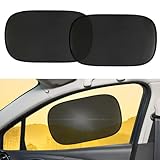
Overview: Wuyaoyao provides a budget-friendly static-cling alternative measuring 19.69 x 12.13 inches. These nylon mesh shades eliminate hardware entirely, adhering directly to glass without suction cups or adhesives. The flexible metal frame enables easy folding and compact storage in the included carrying bag, suiting occasional users and travelers.
What Makes It Stand Out: The static-cling installation method enables tool-free application and removal without residue, distinguishing it from mechanical alternatives. The collapsible metal frame design provides durability uncommon in cling-based products. The sub-$9 price point makes this the most accessible option for entry-level buyers.
Value for Money: At $8.29 for two shades, this offers outstanding value—less than half the cost of retractable systems. While lacking convenience features like automatic retraction, the substantial savings appeal to budget-minded consumers who accept manual installation and removal.
Strengths and Weaknesses: Strengths include unbeatable pricing, simple installation, true portability, and elimination of suction cup failure risks. The metal frame adds durability to the folding mechanism. Weaknesses involve static cling weakening in cold weather or over time, smaller coverage area, and manual placement requiring careful adjustment to avoid gaps.
Bottom Line: Perfect for cost-conscious consumers seeking basic UV protection without mechanical complexity. The static-cling design and compact storage make it ideal for intermittent use or as a reliable backup solution.
4. EcoNour Car Side Window Sun Shade (2 Pack) | Retractable Roller Sunshade for Kids | Baby Car Window Shades for UV and Sun Glare Protection | Baby Travel Accessories (15"x17")

Overview: EcoNour targets the premium segment with retractable shades emphasizing child safety and interior comfort. These 15 x 17-inch shades feature non-toxic PVC construction, promising UV protection and temperature reduction. The design prioritizes privacy alongside sun blocking, creating a secluded environment for young passengers.
What Makes It Stand Out: The non-toxic, child-safe PVC material addresses parental concerns about chemical exposure. The privacy feature prevents outside visibility into the car interior, adding security. The manufacturer provides specific guidance about closing windows after installation to maximize cooling effectiveness, demonstrating attention to detail.
Value for Money: At $19.99, this is the priciest two-pack reviewed, positioning itself as a premium option. The non-toxic certification and dual privacy-sun protection functions justify the higher cost for health-conscious parents willing to invest in quality materials and comprehensive features.
Strengths and Weaknesses: Strengths include safe non-toxic materials, effective privacy screening, sturdy suction cup mounting, and smooth retraction mechanism. The brand offers clear usage tips for optimal performance. Weaknesses center on premium pricing and moderate size that may not suit larger windows. The PVC material may trap more heat than breathable mesh alternatives.
Bottom Line: A top-tier choice for parents prioritizing material safety and privacy. While significantly pricier, the non-toxic construction and quality build make it a worthwhile investment for health-conscious families seeking premium protection.
5. EcoNour Car Window Shades for Baby (4 Pack) | Protects Baby from Window Sun & Heat | Sun Shade Side Windows for Kids | Automotive Sun Protection from UV | Child Safety Accessories | XXXX-Small-20 x12

Overview: EcoNour offers versatility with a four-pack set designed specifically for car seat protection. The package includes two transparent and two semi-transparent 20 x 12-inch shades, allowing customization based on visibility and UV-blocking priorities. These static-cling shades target infant and toddler car seat areas rather than providing full window coverage.
What Makes It Stand Out: The mixed transparency options deliver unprecedented flexibility—transparent shades for monitoring children, semi-transparent for maximum UV protection and privacy. The four-pack quantity covers multiple windows or vehicles at a price comparable to two-pack alternatives. Car seat-specific sizing addresses a niche need often overlooked by full-window solutions.
Value for Money: At $9.99 for four shades, this provides exceptional per-unit value. The versatility eliminates purchasing separate products for different situations, making it highly economical for families with specific car seat protection needs who want options without multiple purchases.
Strengths and Weaknesses: Strengths include transparency versatility, excellent value, portability, and tear-resistant materials. The static-cling design avoids hardware failure. Weaknesses involve limited coverage area unsuitable for full-window protection, potential cling degradation, and lack of retractable convenience. The smaller size leaves significant portions of larger windows exposed.
Bottom Line: Ideal for parents focused specifically on protecting infants in car seats. The transparency options and unbeatable value make it a smart choice for targeted UV protection rather than comprehensive window coverage.
6. VaygWay Baby Window Sun Shade- Car Accessories Side Sun Visor- Kids Pets Seat 2 Pk- Sun Glare UV Rays Protection

Overview: The VaygWay set delivers a budget-friendly sun protection solution for families with children and pets. These 25" x 15" mesh shades feature a twist-to-fold mechanism and promise universal compatibility with most side and rear windows. Designed for practical parents, they aim to block harmful rays while maintaining rear visibility and keeping passengers comfortable during travel.
What Makes It Stand Out: The collapsible design distinguishes this from rigid alternatives. The twist-to-fold system allows the shades to shrink to a fraction of their size for storage in the included pouch, making them ideal for travel or occasional use. Unlike permanent fixtures, these deploy only when needed without leaving hardware on windows, and the simple water-only cleaning requirement adds convenience for busy families.
Value for Money: At $13.29 for two ($6.64 each), these represent excellent entry-level value. Magnetic alternatives typically cost $12-15 per unit, making this set significantly cheaper. While lacking premium features like UPF ratings or retractable mechanisms, the price point makes them accessible for families wanting simple protection without commitment. The durability claims of premium UV guard mesh suggest longevity that enhances the value proposition.
Strengths and Weaknesses: Strengths: Budget-friendly pricing; space-saving twist-fold storage; universal sizing fits most vehicles; easy cleaning with water; durable mesh construction; travel-friendly pouch included. Weaknesses: No specified UPF rating; generic fit may leave gaps on some windows; requires manual placement each use; unclear attachment method; limited size options available.
Bottom Line: Perfect for budget-conscious families needing occasional sun protection. The VaygWay shades deliver core functionality at an unbeatable price, though they lack the precision fit and certified protection of premium alternatives. Ideal as a starter set or backup option for travel and pet owners.
7. Aokway Car Side Window Sunshades, Driver Car Window Screen Mesh, Universal Fit for Camping and UV Protection (Black, Front Side 2pcs)

Overview: Aokway’s magnetic sunshades target front-seat windows with a clever magnetic attachment system. Measuring 23.6" x 19.6", these shades prioritize quick installation for drivers and front passengers. The product includes unusually detailed compatibility warnings, emphasizing the need for steel window frames and adequate magnetic surface area beyond rubber seals.
What Makes It Stand Out: The 3-second magnetic installation is the headline feature. Unlike suction-based shades requiring cleaning and positioning, these snap into place with strong magnets. The Safe-View premium mesh maintains outward visibility while blocking UV rays, and the ability to slide or fold them aside when not in use adds practical flexibility for drivers who need variable coverage during camping trips or daily commutes.
Value for Money: At $12.34 for two front shades, this is aggressively priced for magnetic technology. Competing magnetic shades run $15-20, making Aokway a cost-effective choice—provided your vehicle is compatible. The value proposition hinges entirely on passing the pre-purchase magnet test, but successful buyers get premium convenience at budget pricing.
Strengths and Weaknesses: Strengths: Lightning-fast installation; maintains driver visibility; compact flat storage; strong magnetic hold on compatible vehicles; front-seat specific design; camping-friendly portability. Weaknesses: Requires steel window frames—won’t work on aluminum or composite; magnets may weaken in extreme heat; size may not suit all vehicles; no UPF rating specified; magnetic field could interfere with electronics.
Bottom Line: An excellent choice for steel-framed vehicles, offering unbeatable convenience. However, the mandatory compatibility check makes it a risky buy without testing first. If your car passes the magnet test, this delivers premium convenience at a budget price. Essential pre-purchase verification required.
8. Ovege Car Window Shades Magnetic 2pcs Universal Car Window Screen Mesh Side Window Sun Shade Automotive Window Sunshades for Driver Passenger (Front Seat 2pcs-)

Overview: Ovege’s magnetic shades compete directly with similar offerings but differentiate through larger dimensions. At 27.5" x 19", these front-seat shades provide expanded coverage for bigger windows in SUVs and larger sedans. The semi-transparent mesh promises UV protection while emphasizing that drivers should avoid full coverage during operation for safety reasons.
What Makes It Stand Out: The generous sizing accommodates larger vehicle windows that competitor products might miss. The high-density mesh material specifically targets UV ray blockage while allowing partial visibility. Clear safety guidance about gathering shades while driving demonstrates thoughtful product development for driver safety, addressing a common concern with front-window shades.
Value for Money: Priced at $14.99, these sit in the middle of the magnetic shade spectrum. They cost slightly more than Aokway but offer larger coverage area. For owners of vehicles with expansive windows, the extra $2-3 premium over smaller alternatives delivers tangible benefits in sun protection and reduces the likelihood of coverage gaps.
Strengths and Weaknesses: Strengths: Larger size covers more window area; quick magnetic installation; high-density UV-blocking mesh; clear safety instructions; versatile for driver/passenger use; works on steel surfaces. Weaknesses: Steel frames only—compatibility limited; may be oversized for compact cars; magnetic strength concerns in high temperatures; no certified UPF rating; requires pre-purchase measurement.
Bottom Line: Best suited for mid-size to larger vehicles with steel window frames. The expanded coverage justifies the modest price increase over competitors. Always measure first and test your window frame with a magnet before purchasing to avoid disappointment. A solid middle-ground magnetic option.
9. EcoNour Car Window Shades for Baby (2 Pack) - Upgraded | Shades for Side Window | Comes with Enhanced Suction Cups & Large Clips for Durability | Baby Car Accessories (15" x 17")

Overview: EcoNour offers a retractable roller shade system designed specifically for baby protection. The upgraded model features enhanced suction cups and larger clips to address common failure points. At 15" x 17", these shades target side windows with a one-touch retract mechanism that allows adjustable coverage levels for customized sun protection.
What Makes It Stand Out: The retractable design provides unparalleled adjustability—users can deploy partial or full shade as needed. Six white suction cups distribute holding force more evenly than traditional two-cup designs, while the enhanced clips prevent breakage when windows roll up and down. This directly addresses the primary durability complaints of older suction-based shades.
Value for Money: At $16.99, these command a premium over static shades but offer functionality similar to $25-30 retractable models. The upgraded hardware justifies the cost if it prevents the replacement cycle cheaper suction shades often require. For parents wanting adjustable protection without magnetic compatibility concerns, the price is reasonable for the enhanced durability claims.
Strengths and Weaknesses: Strengths: Adjustable retractable design; six suction cups for secure hold; enhanced clips prevent breakage; one-touch operation; works on any window surface; compact when rolled up. Weaknesses: Smaller size limits coverage area; suction cups can still fail in extreme heat; requires clean window surface; more complex than static shades; higher price point than basic options.
Bottom Line: Ideal for parents prioritizing adjustability and convenience over maximum coverage. The upgraded hardware addresses traditional suction shade weaknesses, making this a reliable mid-range choice. Best for smaller sedans and SUVs where the 15" x 17" dimensions provide adequate coverage for child passengers.
10. Baby Uma Car Window Shades (2 Pack) - 15.4″ x 25.8″, UPF 50+ Car Window Covers, 99% UVB + 94% UVA Protection, Static Cling Sun Shade with Travel Bag (Large)

Overview: Baby Uma positions itself as the premium UV protection choice with certified UPF 50+ rating and specific UVB/UVA blockage percentages (99%/94%). The large 15.4" x 25.8" static cling shades target safety-conscious parents wanting verified sun protection without hardware installation. Available in three sizes, the large option suits bigger windows while maintaining a hardware-free design.
What Makes It Stand Out: The certified UPF 50+ rating with detailed UVB/UVA percentages provides measurable protection that competitors rarely specify. Static cling technology eliminates compatibility issues entirely—no magnets, suction cups, or adhesives required. The triple protection claim (UV, glare, privacy) adds versatility, while three size options ensure better fit than one-size-fits-all alternatives.
Value for Money: At $17.99, this is the most expensive option but offers certified protection that justifies the premium. Comparable UPF-rated shades from specialty brands often exceed $25. For parents prioritizing verified UV blockage over convenience features, the price represents solid value, especially considering the included travel bag and size options.
Strengths and Weaknesses: Strengths: Certified UPF 50+ protection; quantified UVB/UVA blockage; static cling works on any window; three size options for better fit; no hardware to fail; includes travel bag; provides privacy. Weaknesses: Static cling may lose adhesion over time; highest price in comparison group; requires precise measuring for best fit; no adjustability once installed; may need reapplication in extreme temperatures.
Bottom Line: The top choice for UV protection purists. Baby Uma’s certified ratings and size options make it worth the premium for parents prioritizing sun safety above all else. While lacking the convenience of magnetic or retractable designs, it delivers the most reliable protection with the fewest compatibility concerns. Measure carefully before ordering.
Why Side-Window Glare Demands Your Attention
Side-window exposure presents a fundamentally different challenge than front windshield glare. While windshields receive direct protection from factory-installed UV filters, side windows typically block less than 50% of UVA rays—the aging, cancer-causing radiation that penetrates deep into skin. For rear-facing infants who spend hours positioned directly adjacent to these windows, this creates cumulative exposure that pediatric dermatologists warn against. The problem intensifies during morning and afternoon commutes when the sun sits lower on the horizon, blasting directly through side windows at angles that standard roof visors cannot deflect.
Beyond UV concerns, thermal buildup transforms your child’s environment. Unshaded side windows can increase car seat surface temperatures by 20-30°F within 15 minutes, creating discomfort that leads to fussiness, dehydration risks, and dangerous situations where parents might feel tempted to remove protective harnesses. Understanding these dual threats—radiation and heat—frames every decision you’ll make about side-window protection.
The Science Behind UV Radiation and Child Safety
Children’s skin possesses less melanin and a thinner epidermis, making them uniquely vulnerable to photodamage. Research from the Skin Cancer Foundation indicates that sustaining five or more blistering sunburns during childhood doubles lifetime melanoma risk. What many parents miss is that glass doesn’t create the sanctuary they imagine. Standard automotive side windows typically rate around SPF 15 equivalency, while windshields achieve SPF 50+ through laminated construction.
UVA rays, which constitute 95% of Earth’s UV radiation, pass through clouds and untreated glass with alarming efficiency. These rays don’t cause immediate burning but silently damage DNA, accelerate aging, and suppress immune function in developing bodies. Quality car seat sunshades must specifically address UVA filtration, not just visible light reduction. Look for products advertising “broad-spectrum protection” rather than vague “sun blocking” claims.
Types of Car Seat Sunshades: Pros and Cons
Understanding the five primary categories helps narrow your search based on lifestyle, vehicle type, and specific needs. Each design philosophy carries distinct trade-offs between convenience, protection level, and aesthetic impact.
Static Cling Shades
These vinyl sheets adhere through electrostatic charge without adhesives. They install in seconds, remove without residue, and store flat. However, their cling weakens in extreme temperatures, potentially creating a choking hazard if they detach. They typically offer 80-90% UV blockage but may develop air bubbles that reduce effectiveness and obscure your view.
Roller Shades
Retractable designs mount with suction cups or brackets, allowing you to adjust coverage throughout the day. Premium models feature one-touch auto-retraction and reinforced edges. The downside? Suction cups fail in temperature fluctuations, and the roller mechanism can become a projectile in accidents if not properly secured. They also create a permanent visual obstruction even when retracted.
Pop-Up Umbrella Shades
These semi-rigid frames unfold like a windshield shade but sized for side windows. They provide excellent coverage and block nearly 100% of light. The trade-off is bulkiness—they’re difficult to store when not in use and can vibrate against glass at highway speeds, creating an annoying rattle that wakes sleeping babies.
Mesh Screens
Fabric screens stretch over the door frame like a sock, covering the entire window opening. They allow window operation while maintaining protection—perfect for ventilation. Installation requires opening the door, which some parents find inconvenient. Lower-quality meshes may sag or develop holes, and they can interfere with automatic window sensors.
Custom-Fit Window Films
Professional-grade static films cut precisely to your vehicle’s window dimensions. Once installed, they’re permanent, maintenance-free, and block 99% of UV rays without reducing visibility. The investment is significant ($200-400 for professional installation), and removal requires heat guns and expertise. DIY kits exist but demand meticulous application to avoid bubbles and creases.
Critical Features That Separate Good from Great
The difference between a sunshade that lasts one summer versus five years lies in specific engineering details most parents overlook during initial purchase. Prioritize these non-negotiable features before considering aesthetics or price.
UV Protection Rating
Demand specific numbers, not marketing fluff. Reputable manufacturers cite UPF (Ultraviolet Protection Factor) ratings verified by independent labs. UPF 50+ blocks 98% of UV radiation and represents the gold standard. Be skeptical of products claiming “100% UV block” without certification—this is physically impossible and indicates dishonest marketing.
Installation Security
Evaluate attachment mechanisms through the lens of real-world physics. A shade that survives parking lot installation might catastrophically fail during a sudden stop or side-impact collision. Look for redundant attachment systems—combinations of static cling plus corner suction cups, or frames with both adhesive and mechanical fasteners. Test the pull strength yourself; if you can remove it with gentle tugging, so can a curious toddler or crash forces.
Coverage Area
Measure your specific window dimensions, accounting for the curvature at corners. A shade that covers 90% of the glass still leaves a painful sunbeam that tracks across your child’s face as you drive. The best designs extend slightly beyond the glass edges and feature flexible materials that conform to curved surfaces without gaping.
Visibility Impact
Driver awareness remains paramount. Hold potential shades at arm’s length and assess how they distort your view during shoulder checks. Some materials create a moiré pattern or prism effect that disorients depth perception. Dark tints might look cool but can make nighttime driving hazardous. Opt for shades with variable opacity—darker over the child’s seating area, lighter or mesh toward the front for visibility.
Material Deep Dive: What Works Best
The polymer chemistry behind sunshades directly impacts performance, longevity, and safety. Cheap PVC shades off-gas volatile organic compounds (VOCs) in hot cars, exposing children to phthalates and other endocrine disruptors. Instead, prioritize medical-grade polyester or nylon fabrics with vapor-permeable coatings. These materials breathe, reducing condensation buildup while maintaining UV blockage.
Reflective metallized films—often called “bubble shades”—excel at heat rejection by reflecting infrared radiation. However, the metallic layer can interfere with GPS, cell signals, and tire pressure monitoring systems in modern vehicles. If you drive a newer car with integrated sensors, choose carbon-based or ceramic-infused materials that block heat without electromagnetic interference.
For fabric shades, thread count matters. Dense weaves above 200 threads per inch create tiny shadows that block UV while allowing some visible light through, preserving outward visibility for your child. This psychological benefit shouldn’t be underestimated—children who can see outside experience 40% less carsickness and travel anxiety.
Installation Methods: What Actually Stays Put
Temperature fluctuations inside vehicles create a torture test for adhesives and suction mechanisms. Standard suction cups lose grip when surface temperature varies more than 30°F, which happens within five minutes of parking in direct sun. Premium suction cups feature locking levers that create vacuum pressure exceeding atmospheric force by 50%, maintaining hold from -20°F to 140°F.
Static cling effectiveness depends on spotless glass. Even microscopic oil from fingerprints reduces adhesion by 70%. Professional installation requires cleaning with isopropyl alcohol, followed by distilled water application to activate the static charge. For permanent solutions, consider 3M automotive-grade adhesive tapes with foam cores that expand and contract with temperature cycles without losing bond strength.
Magnetic mounting systems represent the newest innovation, using rare-earth magnets embedded in the shade frame that attract to metal door frames. These require no adhesives and remove instantly, but verify your vehicle’s door construction—many modern cars use aluminum or composite materials that magnets won’t adhere to.
Safety Regulations You Must Know
The National Highway Traffic Safety Administration (NHTSA) hasn’t established specific standards for aftermarket sunshades, creating a regulatory Wild West. However, several states prohibit any device that “obstructs the driver’s clear view” or “reduces light transmission below 35%.” This vague language gives law enforcement discretion to ticket based on subjective assessment.
More critically, aftermarket shades can interfere with side-curtain airbag deployment. In a collision, airbags explode outward at 200 mph, shredding anything in their path. Shades mounted with rigid frames or strong adhesives can become shrapnel. Always verify that your chosen shade mounts below the airbag deployment zone—typically the upper third of the window. Some manufacturers now produce “airbag-safe” designs with tear-away seams that split upon airbag contact.
Child passenger safety technicians (CPSTs) warn against shades with strings, cords, or loose edges within a child’s reach. These create strangulation and entanglement hazards. The safest designs feature recessed mounting hardware and materials that tear easily under minimal force, preventing any scenario where the shade could wrap around a child’s neck.
UV Protection Ratings: Decoding the Numbers
UPF ratings follow standardized testing protocols where fabric samples are exposed to calibrated UV lamps measuring both UVA and UVB transmission. A UPF 30 rating permits 1/30th of UV radiation to pass (96.7% blockage), while UPF 50+ allows less than 1/50th (98% blockage). For infant skin, dermatologists recommend nothing below UPF 50+.
Be wary of SPF ratings on sunshades—SPF traditionally measures sunscreen efficacy and only evaluates UVB burning rays. Some manufacturers use SPF numbers to appear impressive while offering minimal UVA protection. Legitimate automotive sunshades should display both UPF ratings and “broad-spectrum” certification.
Independent verification matters. Reputable brands submit products to the Australian Radiation Protection and Nuclear Safety Agency (ARPANSA) or the American Association of Textile Chemists and Colorists (AATCC) for validation. Look for certification logos rather than taking marketing claims at face value. Some manufacturers test new products but change materials in subsequent production runs without retesting, making recent reviews and batch consistency crucial.
Size and Coverage: Getting the Perfect Fit
Manufacturers typically list “universal fit” dimensions that prove anything but universal. Your first step is measuring the visible glass area of your rear side windows, then adding two inches to each dimension for proper overlap. Don’t forget to account for the black ceramic “frit” border around window edges—shades shouldn’t cover this textured area as adhesion fails and visibility laws may be violated.
Curvature presents the biggest sizing challenge. Many modern vehicles feature dramatically curved side glass for aerodynamics. Flexible static-cling shades conform best, while rigid roller shades leave significant gaps at corners. Some premium brands offer vehicle-specific templates for popular models like the Honda CR-V, Toyota Camry, and Ford Explorer, ensuring edge-to-edge coverage without guesswork.
For parents using rotating car seats or multiple children, consider shades that cover the entire rear door window rather than just the lower portion. This allows you to adjust seat positions without losing protection. Remember that your child’s eye level changes as they grow—a shade adequate for a rear-facing infant may leave a forward-facing toddler’s face fully exposed.
Visibility and Driver Safety Concerns
The most protective sunshade becomes worthless if it compromises your ability to merge lanes safely. Human peripheral vision detects motion through contrast sensitivity, which many sunshades inadvertently destroy. Dark tints reduce contrast by 60-80%, making it harder to spot cyclists, pedestrians, or merging vehicles during shoulder checks.
Test visibility by mounting the shade and performing several driving maneuvers in a safe area. Pay attention to how the shade affects your judgment of distance and speed. Some materials create a “fish-eye” distortion that makes objects appear farther away than reality. Others produce a honeycomb pattern that tricks your brain into missing small, fast-moving objects like motorcycles.
At night, even lightly tinted shades can amplify glare from headlights, creating starburst patterns that temporarily blind you. The best compromise uses graduated opacity—darker over the child’s seating area, transitioning to near-clear toward the front of the window. Some advanced shades feature photochromic technology that automatically lightens in low-light conditions, though these command premium prices.
Durability and Longevity Factors
A sunshade’s lifespan depends on material degradation from UV exposure, temperature cycling, and mechanical stress. Cheap PVC shades become brittle and yellow within six months of summer use as plasticizers evaporate. Quality polyester fabrics with UV inhibitors maintain flexibility and color for three to five years.
Examine edge construction carefully. Heat-sealed edges prevent fraying but can separate when repeatedly flexed. Sewn edges with reinforced stitching last longer but may develop threads that snag on window seals. The gold standard uses ultrasonic welding—high-frequency vibrations fuse fabric edges without threads or heat damage.
Hardware durability separates premium from disposable options. Roller shade springs should withstand 10,000 cycles (equivalent to five years of daily use). Suction cup rubber must resist ozone cracking and UV hardening. Test this by flexing the cup aggressively; if you see white stress marks, the material will fail within months. Brass or stainless steel hardware outlasts plastic components that become brittle and snap in cold weather.
Maintenance and Cleaning Best Practices
Dirty sunshades lose 30-40% of their UV-blocking effectiveness as grime creates microscopic gaps. However, improper cleaning damages protective coatings. Never use ammonia-based window cleaners on static-cling shades—they dissolve the static layer and cause clouding. Instead, use distilled water with a drop of baby shampoo, applying with a microfiber cloth in gentle circular motions.
Fabric shades require quarterly deep cleaning to remove sunscreen residue, food particles, and biological contaminants. Machine wash on delicate cycle using fragrance-free detergent, then air dry completely before reinstalling. Never use fabric softeners—they leave a film that attracts dust and reduces UPF ratings. For stubborn stains, spot-treat with diluted white vinegar, testing first on an inconspicuous corner.
Store removable shades flat or loosely rolled, never folded. Creases create permanent weak points where UV transmission increases by 15-20%. During winter months, remove and store shades in a climate-controlled environment to prevent material fatigue from freeze-thaw cycles. If you live in regions with snow, salt spray from roads can etch reflective coatings—rinse shades monthly with fresh water.
Legal Regulations and Window Tinting Laws
All 50 states regulate aftermarket window modifications, but enforcement varies wildly. California Vehicle Code Section 26708 prohibits any object placed on side windows that “obstructs or reduces the driver’s clear view,” yet thousands of parents use shades daily without issue. The key is interpretation—officers generally tolerate shades covering the rear portion of backseat windows but may cite drivers whose shades extend into their peripheral vision zone.
Tinting laws add complexity. Most states limit rear side window tint to 35% light transmission for safety reasons. A sunshade rated UPF 50+ typically reduces visible light by 60-70%, technically violating these statutes. However, enforcement usually targets permanent tints, not removable shades. Still, some jurisdictions like New York and Illinois have ticketed drivers for “excessive window coverings” during safety checkpoints.
Commercial vehicles face stricter scrutiny. If you drive for rideshare services or have commercial plates, some states prohibit any aftermarket window coverings. Check your local Department of Motor Vehicles regulations and consider keeping product documentation in your glove box proving the shade’s removability if questioned.
DIY Solutions vs. Commercial Products
The internet abounds with Pinterest-worthy DIY sunshade tutorials using emergency blankets, cardboard, and duct tape. While creative, these solutions introduce significant safety risks. Cardboard becomes a rigid projectile in crashes, while reflective Mylar blankets generate intense heat concentrations that can damage window tint and interior trim. Most concerning, DIY shades lack fire-retardant treatments—cigarette embers or electrical sparks can ignite these materials in seconds.
That said, a well-executed DIY approach using proper materials can rival commercial products at fraction of cost. Purchase UPF 50+ swimsuit fabric by the yard from reputable suppliers, then sew pocket hems for removable fiberglass rods that create tension without rigidity. Use rare-earth magnets sewn into fabric corners for attachment. This method costs $15-25 per window but demands sewing skills and material knowledge.
Commercial products justify their price through rigorous testing, warranty support, and liability insurance. If a factory-made shade fails and causes injury, you have legal recourse. DIY failures leave you solely responsible. For most parents, the $30-60 investment in a proven commercial shade represents cheap insurance compared to potential medical or legal costs.
Common Selection Mistakes to Avoid
First-time buyers consistently prioritize aesthetics over function, choosing shades that match their vehicle’s interior color scheme rather than evaluating UV specifications. Another frequent error is assuming “one size fits all” works for their specific vehicle. Those universal shades leave dangerous gaps or require trimming that voids warranties.
Parents often buy shades with cute patterns or characters for their toddler’s amusement. These printed designs use inks that fade rapidly and may contain heavy metals. The fading isn’t just cosmetic—it indicates UV barrier breakdown. Stick with solid colors from reputable manufacturers who certify ink safety.
Perhaps the costliest mistake is purchasing shades that block too much visible light. While this seems protective, it causes night-vision adaptation issues when driving at dusk. Your eyes struggle to adjust between the darkened backseat and bright roadway, creating dangerous lag in visual processing. The best shades block UV and infrared while preserving 50-60% visible light transmission.
Cost-Value Analysis for Smart Shopping
Budget sunshades ($10-20) typically last one season before degrading, costing $60-100 over a child’s car seat years. Mid-range options ($30-50) offer two-year lifespans with better UV ratings and safer materials. Premium shades ($60-100+) provide five-year durability, superior optics, and airbag-safe designs.
Calculate cost-per-use: a $50 shade used daily for three years costs $0.05 per use. Compare this to a $15 shade replaced annually at $0.14 per use. The premium option saves money long-term while providing better protection. Consider also the hidden costs of cheap shades—window tint damage from adhesive residue, interior fading from inadequate UV blockage, and potential medical expenses from sun exposure.
For families with multiple children, invest in professional window film installation. At $300-400, it seems expensive, but amortized over five years and multiple kids, it becomes the most economical and effective solution. Many automotive tint shops offer lifetime warranties and can remove the film when you sell the vehicle, potentially increasing resale value.
Frequently Asked Questions
1. Can I use windshield shades cut down to fit side windows? Windshield shades lack the flexibility and attachment mechanisms needed for vertical side windows. Their rigid construction creates dangerous projectiles in accidents, and most don’t provide adequate UV protection for the angles of side-window exposure. Use products specifically engineered for side-window applications.
2. Do sunshades affect my car’s resale value? Quality removable shades leave no trace and have zero impact. Professional window films can actually increase resale value in sunny climates. However, shades with adhesive residue or suction cup rings that damage window tint can decrease value by $100-200. Always remove shades and clean windows thoroughly before trade-in appraisals.
3. How do I know if a sunshade is airbag-safe? Look for products tested to FMVSS 226 standards (ejection mitigation) and featuring tear-away seams or mounting below the airbag deployment zone. Reputable manufacturers provide crash-test videos. When in doubt, consult a certified Child Passenger Safety Technician who can evaluate the specific shade with your vehicle’s airbag system.
4. Will sunshades prevent my child from getting enough vitamin D? UVB rays necessary for vitamin D synthesis don’t penetrate glass effectively, so your child wasn’t getting vitamin D through windows regardless. Dietary sources and brief outdoor exposure provide adequate vitamin D without the risks of UV damage during car travel. Sunshades don’t change this equation.
5. Can I roll down windows with sunshades installed? Mesh screen designs allow full window operation. Static cling and roller shades must be removed before lowering windows to prevent damage and entanglement. Some custom-fit films permit partial lowering, but check manufacturer specifications. Never assume a shade is window-down compatible without explicit confirmation.
6. How often should I replace car seat sunshades? Replace static cling shades annually as the static layer degrades. Fabric shades last 2-3 years with proper care. Roller shades require replacement when retraction mechanisms fail or suction cups harden. Inspect shades monthly for cracks, yellowing, or edge separation—these indicate UV protection loss.
7. Are darker shades always better for UV protection? No. UV protection depends on material treatment, not color. A light-colored UPF 50+ shade blocks more UV than a dark-tinted shade with no rating. Dark shades increase interior heat absorption and reduce visibility. Focus on certified UPF ratings rather than visual darkness.
8. Can sunshades damage my window tint? Yes. Adhesive-based shades can pull off factory tint during removal. Suction cups trap heat and moisture, causing tint bubbling. Static cling shades are safest for tinted windows. If your vehicle has aftermarket tint, consult the tint installer before adding any shade, as it may void the tint warranty.
9. Do I need sunshades in winter or cloudy climates? Absolutely. UVA radiation penetrates clouds and glass year-round. Snow reflection increases UV exposure by up to 80%. Winter sun sits lower, creating more direct side-window glare during commute hours. Year-round protection is essential, especially in high-altitude regions where UV intensity increases by 10-12% per 1,000 feet.
10. How do I clean sunshades without damaging UV coating? Use distilled water with a drop of pH-neutral baby shampoo. Apply with a microfiber cloth using light pressure. Never use ammonia, alcohol, or abrasive cleaners. Rinse thoroughly and air dry flat. For deep cleaning, soak fabric shades in lukewarm water with gentle detergent, never exceeding 30°C to preserve protective coatings.