Traveling with young children is an adventure that requires the precision of a military operation and the patience of a saint. Between managing tiny travelers, navigating airport security, and ensuring all essentials make it to your destination, your child’s car seat often becomes an afterthought—until you’re standing at the check-in counter wondering how to protect your $300+ investment from the unforgiving world of baggage handling. The right airline-approved car seat bag isn’t just an accessory; it’s your car seat’s bodyguard against the brutal journey through conveyor belts, cargo holds, and tarmac tosses.
Yet with countless options flooding the market, each promising to be the “ultimate travel solution,” how do you separate genuinely protective gear from glorified laundry bags? This comprehensive guide cuts through the marketing noise to equip you with everything you need to know about selecting, using, and maximizing a car seat bag for checked travel. Whether you’re a first-time flying parent or a seasoned family traveler looking to upgrade your gear, you’ll discover the critical features that matter, the airline policies that could trip you up, and the insider strategies that ensure your child’s safety seat arrives intact and ready for the road.
Top 10 Airline-Approved Car Seat Bags for Checked Travel
Detailed Product Reviews
1. J.L. Childress Gate Check Bag for Car Seats - Travel Bag for Airplane, Fits All Baby & Infant Car Seats, Airport Accessories for Gate Check, Flying Essentials, AirTag Compatible - Red

Overview:
The J.L. Childress Gate Check Bag in red is a purpose-built solution for families traveling with car seats. Designed specifically for gate checking, this lightweight polyester bag provides essential protection against dirt, grease, and moisture during air travel. Its universal design accommodates all infant and baby car seats, making it a versatile choice for parents who travel occasionally and want reliable coverage without added bulk.
What Makes It Stand Out:
The integrated AirTag holder sets this bag apart from basic carriers, offering modern tracking capabilities for peace of mind. The bright red color scheme with bold “Gate Check” logo ensures high visibility on busy tarmacs, while the lockable drawstring closure provides security against accidental openings. The built-in storage pouch allows the bag to compact down when not in use, fitting easily into diaper bags or stroller baskets.
Value for Money:
At $15.99, this bag delivers exceptional value for occasional travelers. It’s significantly cheaper than padded alternatives while offering adequate protection for gate-checked items. The durability features like reinforced stitching extend its lifespan, making it a cost-effective alternative to renting car seats at your destination. For families taking one or two trips annually, this hits the sweet spot of affordability and functionality.
Strengths and Weaknesses:
Strengths: AirTag compatibility for tracking; highly visible red design; lightweight and compact; universal fit; lockable closure; easy-to-clean material.
Weaknesses: No padding for impact protection; limited to gate check use; drawstring closure less secure than zipper; single carry handle can be awkward when not gate-checking.
Bottom Line:
This is an excellent budget-friendly option for families who primarily gate-check their car seat and want basic protection with modern tracking features. While it won’t protect against heavy impacts, it excels at keeping your seat clean and identifiable during air travel.
2. J.L. Childress Gate Check Bag for Car Seats - Travel Bag for Airplane - Includes AIRTAG Holder - Fits All Baby Car Seats, Infant Carriers & Child Booster Seats, Neon Yellow
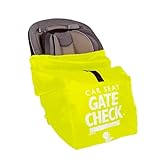
Overview:
The neon yellow version of J.L. Childress’s original gate check bag brings the same trusted design that has protected car seats since 2007. This American family business creation offers a lightweight, durable solution for parents wanting to shield their infant carriers, convertible seats, or boosters from the rigors of airport handling. The specialized material formulation resists tears while remaining compact enough for any carry-on.
What Makes It Stand Out:
As the original inventor, J.L. Childress brings 15+ years of refinement to this design. The limited edition neon yellow provides even better visibility than standard colors, crucial for quick identification at busy gates. The silicone AirTag holder offers secure tracking device placement, while double-stitched seams resist tears and scuffs from baggage handling equipment. The webbing handle provides reliable lifting points.
Value for Money:
Priced at $15.99, this bag represents outstanding value from a reputable family business. Its compact storage design means it won’t consume valuable luggage space between uses, saving money compared to checking seats without protection. For budget-conscious families who prioritize brand heritage and gate-specific functionality, this delivers proven performance without premium pricing.
Strengths and Weaknesses:
Strengths: Proven original design; superior visibility in neon; compact attached pouch; double-stitched durability; family business support; AirTag holder included; lightweight material.
Weaknesses: Explicitly not recommended for baggage check; no padding; drawstring less protective than zipper; limited carrying options beyond the handle.
Bottom Line:
Ideal for families committed to gate-checking who value brand heritage and maximum visibility. This bag offers proven protection at an unbeatable price point, though it sacrifices padding for portability and should not be used for baggage check.
3. YOREPEK Padded Car Seat Travel Bag Backpack for Airplane, Heavy Duty Car Seat Bags for Air Travel, Carseat Cover for Airplane Travel with Shoulder Strap, Car Seats Carrier for Airport, Black
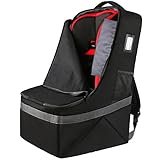
Overview:
The YOREPEK Padded Car Seat Travel Bag elevates protection with its backpack-style design and comprehensive features. Measuring 17"x17"x28", it accommodates most major car seat brands (except some larger models like Evenflo Evolve 360 and UPPABABY Knox) and transforms car seat transport into a hands-free experience. The black water-resistant polyester construction offers professional aesthetics alongside functional durability for frequent flyers.
What Makes It Stand Out:
The padded backpack straps with waist belt distribute weight ergonomically, allowing parents to navigate airports while managing children and luggage simultaneously. Interior wings and a fixing strap secure the car seat firmly, preventing shifting during transit. Side elastic pockets provide bonus storage for diapers, clothes, or towels, making this a versatile travel companion beyond just seat protection. Protective feet elevate the bag from wet surfaces.
Value for Money:
At $29.99, this bag sits in the mid-range price bracket but delivers premium features typically found in more expensive options. The hands-free design alone justifies the cost for parents traveling solo or with multiple children. Compared to rental car seat fees ($50+ per trip), it pays for itself quickly while offering superior protection to basic bags. The dual zipper adds convenience worth the premium over drawstring models.
Strengths and Weaknesses:
Strengths: Comfortable backpack straps with waist belt; interior securing system; side storage pockets; water-resistant material; hands-free mobility; protective feet; dual zipper opening.
Weaknesses: Doesn’t fit some larger models (Evenflo Evolve 360, UPPABABY Knox); no front padding; black color less visible than bright alternatives; slightly bulkier when stored than unpadded bags.
Bottom Line:
A smart investment for frequent flyers seeking hands-free convenience and solid protection. The backpack design is a game-changer for multitasking parents, though you should verify compatibility with your specific car seat model before purchasing.
4. J.L. Childress Padded Backpack Car Seat Bag - Travel Bag for Airplane, Fits Most Baby & Infant Car Seats, Boosters, & Carriers, Airport Accessories for Gate Check or Baggage Check - Ultimate, Black

Overview:
The J.L. Childress Ultimate Padded Backpack Bag represents the premium tier of car seat travel protection. Designed for both gate check and baggage check scenarios, this black bag features thick padding on all sides, safeguarding your car seat’s critical safety components from impact damage during any journey. Its universal design fits most infant carriers, convertibles, and boosters, making it versatile for growing families.
What Makes It Stand Out:
As the original padded car seat travel bag, it boasts thick, comprehensive padding that cheaper alternatives lack. The ergonomic harness-style backpack straps are fully adjustable, distributing heavy loads comfortably across shoulders. Thoughtful details include a clear ID pocket with included card, dual zipper opening for easy access, and a top carry handle for versatile transport options. The padding protects safety features that could be compromised by rough handling.
Value for Money:
At $34.22, this is the most expensive option but justifies its price through superior protection and versatility. The ability to safely check the seat as baggage expands its utility beyond gate-check-only bags. For families traveling frequently or with expensive car seats, the investment protects a $200+ asset, making it financially prudent despite the higher upfront cost. The durability ensures multiple years of use.
Strengths and Weaknesses:
Strengths: Thick all-around padding; versatile for gate or baggage check; ergonomic adjustable backpack straps; dual zipper access; clear ID pocket; top carry handle; premium construction.
Weaknesses: Highest price point; black color reduces visibility; may be overkill for occasional travelers; bulkier than unpadded options when not in use.
Bottom Line:
The best choice for frequent travelers or those with premium car seats needing maximum protection. While pricier, its durability and versatility make it a worthwhile long-term investment that adapts to various travel scenarios and protects your child’s safety equipment.
5. V VOLKGO Car Seat Travel Bag For Airplane with Padded Backpack Shoulder Straps, Gate Check Bag, Car Seat Bags for Air Travel Carseat Travel Cover, Carseat Travel Bag Cover for Airplane Travel

Overview:
The V VOLKGO Car Seat Travel Bag offers budget-conscious families a practical backpack-style solution for air travel. Priced aggressively at $14.37, this bag accommodates most standard car seats within its 34"x18"x18" dimensions. The water-resistant fabric with reinforced stitching provides basic protection against dirt and moisture during transit, making it an accessible entry point for hands-free car seat transport.
What Makes It Stand Out:
This bag’s primary appeal is its unbeatable price combined with backpack functionality. Two adjustable padded shoulder straps enable hands-free carrying, a feature typically reserved for more expensive models. The water-resistant material helps shield against spills and light rain, while reinforced stitching adds durability uncommon at this price point. The simple, no-frills design focuses on core functionality without unnecessary complexity.
Value for Money:
Exceptional value at $14.37—the lowest price while still offering backpack straps. It’s perfect for occasional travelers or those wanting to test the backpack style without significant investment. While it lacks premium features like padding or AirTag holders, it delivers core functionality at a fraction of competitor prices, making it accessible for all budget levels. The cost savings could fund other travel necessities.
Strengths and Weaknesses:
Strengths: Extremely affordable; padded backpack straps; water-resistant fabric; reinforced stitching; lightweight; simple design.
Weaknesses: No padding for impact protection; lacks dedicated tracking device pocket; basic construction; limited visibility without bright colors; no interior securing straps; minimal extra features.
Bottom Line:
An outstanding entry-level option for budget-minded families who want hands-free convenience. It covers the basics well enough for gate checking, though frequent flyers should consider investing more for enhanced protection, durability, and additional features that justify higher price points.
6. Guiseapue Car Seat Travel Bag for Airplane: Car Seat Bags for Air Travel Fit All Car Seats, Infant Carriers & Booster Seats, Carseat Cover Fit Doona Graco Evenflo, Airplane Travel Essentials Flying

Overview: The Guiseapue Car Seat Travel Bag offers an ultra-affordable solution for protecting your car seat during air travel. Measuring 34x18x18 inches, this universal bag accommodates virtually all major brands including Doona, Graco, Evenflo, and Britax. Constructed from durable nylon with reinforced tear-resistant stitching, it provides essential protection against dirt, moisture, and scuffs.
What Makes It Stand Out: At under ten dollars, this bag democratizes car seat protection for budget-conscious families. The built-in PVC-protected ID box prevents your contact information from smudging, while the lockable drawstring closure ensures basic security. Its standout feature is the integrated storage pouch, allowing the entire bag to compress into a compact package that fits in diaper bags or stroller baskets.
Value for Money: Exceptional value at $9.99. This is the most cost-effective option available, costing less than a single day’s car seat rental at most destinations. While it lacks premium features, it delivers fundamental protection that exceeds expectations for the price point.
Strengths and Weaknesses: Strengths include unbeatable price, universal compatibility, lightweight design, and compact storage. The reinforced construction offers decent durability for occasional use. Weaknesses are minimal padding, thinner material compared to premium options, and a drawstring closure that’s less secure than zipper systems. It’s best suited for gate checking rather than checked baggage.
Bottom Line: Perfect for occasional travelers seeking basic protection without financial strain. If you travel once or twice a year, this budget-friendly bag offers remarkable functionality that belies its price tag.
7. J.L. Childress Gate Check Bag for Car Seats - Travel Bag for Airplane, Fits All Baby & Infant Car Seats, Airport Accessories for Gate Check, Flying Essentials, AirTag Compatible - Black
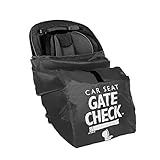
Overview: The J.L. Childress Gate Check Bag is specifically engineered for families who prefer gate-checking their car seats. This lightweight yet durable polyester bag fits all infant and toddler car seats, offering targeted protection for this specific travel scenario. The bold “Gate Check” branding and large ID box ensure airport staff can quickly identify and return your bag at the gate.
What Makes It Stand Out: The integrated AirTag holder sets this bag apart, allowing you to track your valuable car seat throughout your journey. The lockable drawstring closure provides security while remaining TSA-friendly, and the reinforced stitching with sturdy carry handle ensures durability. The built-in pouch keeps the bag compact when not in use.
Value for Money: At $20.99, this mid-range option delivers excellent value for frequent gate-checkers. The AirTag compatibility alone justifies the premium over basic bags, providing peace of mind that’s invaluable when traveling with children. It’s significantly less expensive than fully padded alternatives while offering superior functionality to budget options.
Strengths and Weaknesses: Strengths include AirTag tracking, clear gate check identification, durable construction, lockable closure, and easy cleaning. The bag is lightweight and packs down small. Weaknesses include lack of padding for checked baggage protection, limited to gate check use, and the drawstring may not be as secure as zipper closures for rough handling.
Bottom Line: An excellent choice for families who consistently gate-check their car seats. The tracking feature and airport-friendly design make it a smart investment for regular travelers.
8. J.L. Childress Padded Infant Car Seat Bag - Travel Bag for Airplane, Fits Most Baby & Infant Car Seats, Compatible with UPPAbaby, Nuna, & Chicco, Airport Accessories, AirTag Compatible- Premier, Black

Overview: The J.L. Childress Padded Infant Car Seat Bag provides premium protection specifically designed for infant carriers. This fully padded bag safeguards your expensive infant seat whether gate-checking or checking it as luggage. Compatible with most major brands including Nuna, UPPAbaby, and Chicco, it combines robust protection with carrying convenience.
What Makes It Stand Out: The adjustable padded backpack straps are a game-changer, allowing hands-free transport through busy airports while managing luggage and children. The straps tuck away during travel to prevent damage. Dense foam padding throughout, combined with a scratch-resistant base, offers comprehensive protection. The built-in AirTag holder adds modern tracking capability.
Value for Money: At $41.99, this is a solid investment for protecting high-end infant seats worth hundreds of dollars. The cost is justified if you travel frequently or own a premium car seat. However, occasional travelers might find it expensive for limited use.
Strengths and Weaknesses: Strengths include excellent padding, ergonomic backpack straps, durable construction, AirTag compatibility, and lockable zippers. The specialized design fits most infant seats perfectly. Weaknesses are the price point, limited to infant seats (won’t accommodate convertible seats or boosters), and potential fit issues with certain base configurations like rebound bars.
Bottom Line: Ideal for parents of infants who travel regularly and want maximum protection for their investment. The backpack feature alone makes navigating airports significantly easier.
9. Infant Car Seat Travel Bag for Airplane Compatible with All Nuna Pipa Car Seat and Base,Chicco KeyFit 30 and Base, Padded Car Seat Bags for Air Travel,Car Seat Gate Check Bag with Side Pocket, Black

Overview: This versatile Infant Car Seat Travel Bag offers a compelling middle-ground option with premium features at a moderate price point. Measuring 23.6 x 22.83 x 15.75 inches, it accommodates most major brands while providing padded protection and innovative storage solutions for traveling families.
What Makes It Stand Out: The steel cable reinforced handle provides exceptional carrying strength, while reflective strips enhance nighttime visibility. Multiple storage options include a front pocket for diapers and clothing, plus side elastic nets for water bottles or umbrellas. Five protective bumper feet on the bottom prevent scratches and keep the bag stable. The ergonomic design prioritizes comfort during transport.
Value for Money: At $31.49, this bag delivers outstanding value. You’re getting padding, multiple pockets, steel cable reinforcement, and safety features typically found in more expensive options. It strikes an excellent balance between protection, functionality, and affordability.
Strengths and Weaknesses: Strengths include robust construction, excellent storage options, padded protection, steel cable handle, reflective safety strips, lockable zippers, and bumper feet. The wide compatibility is another plus. Weaknesses include unknown brand reputation compared to established names like J.L. Childress, and the dimensions may be slightly small for some larger convertible seats.
Bottom Line: A feature-rich, budget-conscious choice for families wanting more than basic protection. The storage pockets and reinforced handle make it particularly practical for extended travel.
10. J.L. Childress Padded Backpack Car Seat Bag - Travel Bag for Airplane, Fits Most Baby & Infant Car Seats, Boosters, & Carriers, Accessories for Gate or Baggage Check, AirTag Compatible - Deluxe, Black

Overview: The J.L. Childress Deluxe Padded Backpack Car Seat Bag represents the pinnacle of travel protection for families. This premium bag fits infant carriers, convertible seats, and booster seats, making it a versatile long-term investment. Extra-thick padding, padded interior wings, and durable 600D polyester provide maximum protection against travel hazards.
What Makes It Stand Out: The lifetime warranty demonstrates exceptional confidence in product quality. Ergonomic backpack straps detach and tuck away, offering hands-free convenience without compromising protection during transit. The built-in AirTag holder enables precise tracking. Dual zipper opening and a clear ID pocket add security and convenience. The wipeable fabric ensures easy maintenance.
Value for Money: At $52.99, this is the most expensive option but justified for frequent flyers. The universal fit accommodates seats as your child grows, eliminating the need for multiple bags. The lifetime warranty ensures long-term value, making it cost-effective over years of travel.
Strengths and Weaknesses: Strengths include superior padding, universal compatibility, premium materials, lifetime warranty, AirTag tracking, ergonomic design, and versatile carrying options. Weaknesses are the high price point and potential overkill for families who travel infrequently. The bag’s size may be excessive for compact infant carriers.
Bottom Line: The ultimate choice for serious travelers seeking maximum protection and versatility. If you fly multiple times yearly, this premium bag pays for itself through durability and universal functionality.
Why You Need a Car Seat Bag for Air Travel
Checking a car seat without protection is like sending a smartphone through baggage claim in a paper envelope. Baggage handlers operate under strict time constraints, meaning your car seat will be stacked, tossed, and potentially crushed beneath heavier luggage. A quality car seat bag serves as your first line of defense against structural damage, fabric tears, and contamination from dirt, grease, and mystery liquids lurking in cargo holds. Beyond physical protection, these bags shield your seat from extreme temperature fluctuations and moisture that can compromise safety components you can’t see. The investment in proper protection pales compared to replacing a compromised car seat or, worse, discovering hidden damage that could fail in a collision.
Understanding Airline Policies for Checked Car Seats
Decoding “Airline-Approved” Terminology
The phrase “airline-approved” creates more confusion than clarity. No governing body certifies car seat bags for flight, and airlines don’t maintain approved bag registries. What matters is whether the bag’s dimensions and design comply with airline size restrictions and security protocols. Most carriers allow car seats as free checked items, but they must be packaged in a way that prevents damage to other baggage and allows for security screening. Focus on bags that advertise “meets airline requirements” rather than seeking mythical official approval stamps that don’t exist.
Size and Weight Restrictions You Must Know
While car seats fly free, their bags must respect the same dimensional limits as regular checked luggage—typically 62 linear inches (length + width + height) for standard bags without oversize fees. Weight limits usually mirror standard allowances (50 pounds for economy), though some carriers offer more generous allowances for child safety equipment. The critical nuance: the bag’s weight counts toward your total allowance only if you’re checking it inside another piece of luggage. A standalone checked car seat generally doesn’t impact your baggage weight limit, but policies vary wildly between budget carriers and legacy airlines.
Key Features That Define Quality Car Seat Bags
Material Matters: Durability vs. Weight
The material choice represents the most critical decision in your selection process. Ballistic nylon (1680D or higher) offers exceptional tear resistance and abrasion protection, though it adds weight. Polyester (600D-1200D) provides a lighter alternative with reasonable durability. Ripstop fabrics incorporate reinforcement threads in a crosshatch pattern that prevents small tears from spreading. Avoid cotton canvas—it absorbs moisture, adds unnecessary weight, and lacks the tear strength of modern synthetics. The sweet spot for frequent travelers combines high-denier nylon with a polyurethane coating for water resistance without excessive bulk.
Closure Systems: Zippers, Straps, and Beyond
A bag’s closure system determines how securely your car seat stays contained and how easily security agents can inspect it. YKK zippers represent the gold standard for durability, but their placement matters more than brand. Dual-zipper designs allow opening from either end, facilitating TSA inspections without complete unpacking. Heavy-duty straps with reinforced stitching provide backup security if zippers fail during transit. Some designs incorporate compression straps that serve double duty: they secure the seat and reduce overall bulk. Avoid drawstring-only closures—they offer minimal protection against spillage and make security screening a nightmare.
Wheel Systems: When Mobility Makes All the Difference
Navigating a terminal while juggling children, carry-ons, and a car seat bag transforms wheels from luxury to necessity. Inline skate wheels offer durability and smooth rolling but add rigidity and weight to the bag’s base. Spinner wheels provide superior maneuverability but contain more moving parts that can break. The best designs feature replaceable wheels—look for accessible axle bolts rather than riveted constructions. Consider wheel housing: recessed wheels survive baggage handling better than protruding ones, though they reduce interior space slightly.
Types of Car Seat Bags: Finding Your Perfect Match
Padded Backpack-Style Bags
These designs distribute weight across both shoulders, freeing your hands for child-wrangling and document management. Quality versions feature adjustable, padded shoulder straps with sternum clips for load stabilization and waist belts for weight transfer. The backpack format excels for gate checking, where you’ll carry the seat through the terminal. However, the ergonomic benefits disappear if you overload the bag with extra gear, as most parents inevitably do. Look for models with rigid back panels that prevent the car seat from digging into your spine.
Wheeled Transport Bags
Wheeled options transform your car seat into manageable luggage, essential for solo parents or those with multiple children. The best designs incorporate telescoping handles with multiple height settings and ergonomic grips. Be wary of bags where wheels add excessive external dimensions, potentially triggering oversize fees. Internal frame structures maintain shape and protect wheels from crushing forces. These bags shine for long terminal walks but struggle with stairs and jet bridges, so ensure they include backup carrying straps.
Lightweight Stuff Sack Options
Minimalist drawstring bags weigh mere ounces and pack down to pocket size when empty. They offer basic protection against dirt and scuffs but provide virtually no impact protection. These suit families who gate-check car seats (where you retain control) or those prioritizing storage space at their destination. Some premium lightweight options include reinforced corners and water-resistant coatings, bridging the gap between protection and portability. Consider these only if you’re comfortable accepting higher risk for convenience.
Hard-Shell Cases for Maximum Protection
Polycarbonate hard-shell cases deliver fortress-level protection for your car seat, essentially creating checked luggage for your safety equipment. These cases withstand tremendous compression forces and protect against punctures. However, they typically cost as much as a budget car seat, weigh 10-15 pounds empty, and require significant storage space. They make sense only for frequent flyers with premium car seats or for families transporting multiple seats who can amortize the cost and storage impact across several trips.
Size Compatibility: Ensuring Your Car Seat Fits
Measuring Your Car Seat Correctly
Don’t rely on manufacturer specifications alone—car seats have irregular shapes that don’t translate to simple dimensions. Measure at the widest points, including any protruding features like cup holders or side impact protection wings. Measure height from the highest point (often the headrest) to the base. For depth, measure from the front of the seat cushion to the furthest back point. Add 2-3 inches to each dimension to ensure the seat fits comfortably without forcing zippers. Pro tip: photograph your measurements and keep them in your phone for quick reference while shopping.
Universal vs. Model-Specific Designs
Universal bags promise to fit “most” car seats, and quality ones actually deliver through clever design features like expandable gussets and adjustable interior straps. They accommodate future car seat upgrades and work for families with multiple seat types. Model-specific bags offer precision fits that minimize movement and maximize protection but become obsolete when you change seats. For most families, a well-designed universal bag with interior adjustment features provides the best long-term value and flexibility.
Protection Features That Actually Work
Padding Placement and Thickness
Strategic padding beats overall thickness every time. Focus on bags with reinforced padding at corners and edges—where impact forces concentrate. Base padding matters most, as this surface contacts conveyor belts and tarmac. Look for 1/2-inch to 3/4-inch high-density foam in these critical zones. Side padding should protect the car seat’s most vulnerable components, typically the headrest area and harness system. Avoid bags with thin, quilted padding that compresses to nothing under pressure. Multi-layer constructions with air mesh exteriors provide impact absorption without excessive weight.
Weather Resistance and Waterproofing
Waterproof and water-resistant aren’t interchangeable terms. Water-resistant bags repel light rain and spills, suitable for covered baggage handling. Fully waterproof bags use welded seams and waterproof zippers, protecting against submersion and heavy downpours. Consider your typical travel patterns: tropical destinations, winter travel, and budget airlines with outdoor boarding justify waterproof investments. Look for bags with elevated bases that keep the bottom dry when placed on wet surfaces. Interior waterproof linings provide backup protection if the outer shell fails.
Portability and Storage Considerations
Handle Designs for Comfortable Carrying
Multiple handle configurations transform a cumbersome bag into manageable luggage. Top handles should be padded and reinforced with bar-tack stitching. Side handles enable two-person lifts and easier loading into rental cars. Some designs incorporate hideaway handles that zip into pockets when not in use, preventing snagging during baggage handling. Handle placement should balance the loaded bag’s weight near its center of gravity, preventing it from tipping during transport. Test handle comfort with weight—stiff, narrow handles dig into hands under load.
Compact Storage Solutions
Your car seat bag becomes dead weight at your destination. Bags that pack into their own pocket or compress to briefcase size earn their keep, especially for resort vacations where storage space is premium. Look for designs that fold flat without permanent creases that weaken material. Some premium bags transform into beach totes or day packs at your destination, providing utility beyond transport. Consider where you’ll store the bag during your trip—hotel closets, cruise ship cabins, and vacation rentals offer vastly different space constraints.
Security Features for Peace of Mind
Locking Mechanisms and TSA Compliance
TSA agents must inspect car seats, so traditional locks create delays and potential damage when they’re cut. TSA-approved locks allow agents to open bags with master keys, but many car seat bags lack lockable zippers. The best compromise: locking zipper pulls that thread through fabric loops, deterring casual theft while allowing agents to simply unzip. Some designs incorporate tamper-evident seals that show if the bag was opened. Remember, locks protect against opportunistic theft, not determined criminals—never pack valuables in your car seat bag.
Identification and Tracking Solutions
Bright, unique colors help identify your bag on the carousel, but they won’t help if it gets lost in the system. Multiple clear ID windows allow you to display contact information inside and out, protecting privacy while ensuring visibility. Some bags include built-in luggage tags with privacy flaps. For true peace of mind, slip an Apple AirTag or Tile tracker into an interior pocket—car seat bags rarely include dedicated tracking pockets, so create your own secure compartment. Photograph your packed car seat before closing the bag; this documentation proves invaluable for damage claims.
Budget Considerations: Finding Value Without Compromise
Car seat bags range from $15 basic sacks to $200+ premium transports. The sweet spot for most families falls between $40-$80, where you get durable materials, thoughtful features, and reasonable warranties without luxury markups. Consider your flight frequency: occasional travelers can justify less expensive options, while monthly flyers should invest in premium durability. Factor in replacement costs—a $60 bag protecting a $400 car seat pays for itself if it prevents even one insurance claim. Watch for lifetime warranties that cover airline damage; some manufacturers specifically exclude this, revealing their confidence level.
How to Properly Pack Your Car Seat for Flight
Step-by-Step Packing Process
Start by removing the car seat cover and harness pads if detachable—these can be washed separately and reduce bulk. Place the seat base-down in the bag to protect the most critical safety components. Thread the harness straps through the shell to prevent tangling and secure the buckle in a closed position. Wrap bubble wrap or thick towels around the headrest and any protruding features. Use interior straps to immobilize the seat completely—movement causes damage. If space allows, pack diapers or soft items around the seat for additional cushioning, but don’t overload the bag, as this stresses seams and zippers.
Protecting Vulnerable Components
The harness system represents your car seat’s most damage-prone element. Buckle the chest clip and crotch buckle together to prevent strap loss. Wind excess harness webbing and secure it with rubber bands or zip ties. The LATCH connectors need protection—wrap them in cloth or place them inside the seat shell to prevent them from puncturing the bag or seat. For infant seats, remove the base and pack it separately or upside-down on top of the carrier to distribute forces. Photograph the LATCH strap routing before disassembly to ensure correct reinstallation.
Gate Checking vs. Baggage Check-In: Strategic Decisions
Gate checking your car seat reduces handling stages and keeps it in your sight longer, but it exposes the seat to jet bridge elements and last-minute gate chaos. Baggage check-in subjects your seat to more handling but allows you to pack it properly in a protective bag without rushing. For padded backpack-style bags, gate checking makes sense—you’ll carry it anyway. For wheeled bags, check them at the counter to avoid navigating narrow jet bridges. Consider your itinerary: tight connections favor gate checking, while direct flights make counter checking more convenient. Always attach a gate-check tag to the bag handle, not the seat itself.
Insurance, Liability, and Airline Responsibility
Airlines classify car seats as “fragile items,” limiting their liability to repair or replacement cost, often capped at amounts far below your seat’s value. This classification also removes the automatic liability for damage that applies to standard luggage. Your travel insurance may exclude car seats, considering them “sports equipment” or “baby gear.” Credit card baggage protection often has similar exclusions. The workaround: declare your car seat’s value at check-in and purchase excess valuation coverage, typically $1-2 per $100 of value. Keep your receipt and register your seat with the manufacturer before travel—this documentation accelerates claims and proves ownership.
Maintenance and Care for Longevity
Post-trip care extends your bag’s lifespan dramatically. Empty and shake out debris immediately upon arrival—airport grime contains abrasive particles that wear fabric. Spot clean with mild soap and water; never machine wash, as agitation destroys water-resistant coatings and strains seams. Allow thorough air drying before storage to prevent mildew. Inspect zippers and wheels after each trip; address minor issues before they become failures. Store the bag fully unzipped and uncompressed in a climate-controlled space. For bags with rigid components, avoid folding or creasing that creates stress points. Annual treatment with fabric guard spray maintains water resistance.
Common Mistakes That Could Ruin Your Car Seat
Overpacking represents the cardinal sin of car seat transport. That extra space seems perfect for diapers and jackets, but exceeding the bag’s design weight strains seams and transfers impact forces to your seat. Using a damaged bag is equally risky—a small tear becomes a catastrophic failure under baggage handler treatment. Checking an expired or recalled seat hoping for insurance replacement constitutes fraud and could leave you without a seat at your destination. Forgetting to document your seat’s condition pre-flight makes damage claims nearly impossible. Finally, assuming all car seat bags offer equal protection leads to heartbreaking discoveries at baggage claim—thickness and material quality vary enormously.
Frequently Asked Questions
Will any duffel bag work for checking my car seat, or do I need a specialized bag?
While a heavy-duty duffel offers better protection than nothing, specialized car seat bags include features like interior straps, reinforced corners, and proper dimensions that generic bags lack. The structural support and padding placement in purpose-built bags protect critical safety components that duffels ignore.
Do airlines really check car seat bags for free?
Most airlines check car seats free of charge as “child safety equipment,” but the bag itself may incur fees if it contains additional items. Keep the bag dedicated to the car seat only, and declare it as a child safety seat at check-in to avoid surprise charges.
Can I gate-check a car seat in a bag, or does it need to be uncovered?
You can absolutely gate-check a bagged car seat—in fact, most airlines prefer it, as the bag protects the seat and prevents straps from catching on equipment. Attach the gate-check tag to the bag’s handle, and ensure the bag allows for quick visual inspection if needed.
What’s the difference between water-resistant and waterproof car seat bags?
Water-resistant bags repel light rain and spills, suitable for covered baggage systems. Waterproof bags use welded seams and waterproof zippers to protect against submersion and heavy exposure. For most travel, water-resistant suffices, but tropical or winter travel justifies waterproof protection.
Should I remove the car seat cover before packing?
Yes, removing detachable covers and harness pads reduces bulk and prevents them from getting lost or damaged. Pack them separately in a sealed plastic bag inside the car seat bag, or carry them in your luggage to wash at your destination.
How do I know if my car seat was damaged during flight?
Perform a thorough inspection before leaving the airport. Check for cracks in the shell, bent LATCH connectors, frayed harnesses, and smooth buckle operation. Test the harness adjuster mechanism. If anything seems off, report it immediately to the airline and photograph the damage.
Can I pack other baby items in the car seat bag to save luggage space?
This risky practice violates most airline policies about free car seat checking and can damage your seat. Light, soft items like diapers might be acceptable, but heavy or hard objects transfer impact forces to the seat and could void the bag’s warranty.
Do I need to lock my car seat bag?
TSA agents must be able to inspect car seats, so locks often cause more problems than they solve. Use tamper-evident zip ties or TSA-approved locks only if the bag has lockable zippers. Focus on identification and tracking instead of locking.
How long do car seat bags typically last?
With proper care, a quality bag should survive 20-30 flights. Frequent flyers may see wear sooner. Signs it’s time to replace: frayed straps, failing zippers, tears in high-stress areas, or compressed padding that no longer rebounds.
Is it worth buying a premium car seat bag for occasional travel?
For families flying once or twice yearly, a mid-range bag ($40-$60) offers the best value. Premium bags justify their cost through durability for frequent travelers. However, even occasional travelers should avoid the cheapest options, as a single failure could destroy a $300+ car seat.