The first time you see your newborn’s chest rise and fall in the quiet hours of the night, it becomes a rhythm you can’t unhear. Every pause feels monumental, every breath a small miracle. It’s no wonder that in 2026, parents are increasingly turning to technology for peace of mind, with wearable baby monitors that track oxygen levels leading the charge in nursery innovation. These tiny devices promise to bridge the gap between parental intuition and medical vigilance, but navigating this rapidly evolving landscape requires more than a quick scan of feature lists.
As these monitors become standard registry items rather than niche medical devices, understanding what actually matters—from sensor accuracy to data security—has never been more critical. This guide cuts through the marketing noise to equip you with expert-level knowledge about oxygen-tracking wearables, helping you make an informed decision without getting lost in brand-specific promises. Whether you’re a first-time parent or adding to your growing family, here’s everything you need to know before bringing one of these devices into your home.
Top 10 Wearable Baby Monitors with Oxygen Tracking
Detailed Product Reviews
1. Owlet Dream Sock® - FDA-Cleared Smart Baby Monitor - Track Live Pulse (Heart) Rate, Oxygen in Infants - Receive Notifications - Mint

Overview:
The Owlet Dream Sock in Mint represents the gold standard in consumer baby monitoring technology. As the first FDA-cleared smart baby monitor of its kind, this wearable device provides hospital-grade tracking of your infant’s pulse rate and oxygen saturation levels for babies 1-18 months old. The system includes a soft fabric sock that securely houses the sensor, a base station for real-time alerts, and a comprehensive mobile app for detailed insights into your baby’s sleep patterns and health metrics.
What Makes It Stand Out:
FDA clearance sets this device apart from competitors, ensuring medical-grade accuracy and reliability. The dual WiFi and Bluetooth connectivity creates a robust safety net, automatically switching to Bluetooth with backup battery power during outages. Real-time notifications through both the Base Station and app provide multiple alert pathways, ensuring parents never miss critical changes in their baby’s vitals.
Value for Money:
At $299, this is a premium investment in peace of mind. While significantly more expensive than non-FDA-cleared alternatives, the medical validation and proven track record justify the cost for anxious parents or those with medically fragile infants. The option to upgrade to Owlet360 for advanced insights adds ongoing value.
Strengths and Weaknesses:
Strengths include FDA clearance, reliable dual connectivity, comprehensive sleep analytics, and proven brand reputation. Weaknesses involve the premium price point, potential need for subscription upgrades, occasional connectivity issues reported by users, and battery life that may require nightly charging.
Bottom Line:
For parents prioritizing medical-grade accuracy and regulatory approval, the Owlet Dream Sock delivers unmatched peace of mind despite its premium pricing.
2. Owlet Dream Sock - FDA-Cleared Smart Baby Monitor - Track Live Pulse (Heart) Rate, Oxygen in Infants - Receive Notifications - Bedtime Blue

Overview:
The Owlet Dream Sock in Bedtime Blue offers identical functionality to its mint counterpart at a more attractive price point. This FDA-cleared wearable monitor tracks live pulse rate and oxygen levels for infants 1-18 months, delivering the same medical-grade accuracy and comprehensive monitoring that has made Owlet the industry leader. The system includes the sensor-equipped sock, a notification base station, and access to the intuitive Owlet Dream App for real-time health data and sleep trend analysis.
What Makes It Stand Out:
Beyond sharing the same FDA clearance and dual WiFi/Bluetooth connectivity as other Dream Socks, the Bedtime Blue color provides a calming, neutral aesthetic that complements modern nursery decor. The color variation offers parents a stylistic choice without compromising on the core technology that makes Owlet stand out: real-time vitals monitoring with automatic outage protection and instant multi-channel alerts.
Value for Money:
At $264.99, this represents a $34 savings over the mint version for identical technology. This price adjustment makes the proven Owlet ecosystem more accessible while maintaining the same medical-grade monitoring capabilities. Parents get the full FDA-cleared experience without paying a premium for color preference, making this an excellent entry point into the Owlet family.
Strengths and Weaknesses:
Strengths mirror the mint version: FDA clearance, reliable alerts, comprehensive app data, and backup connectivity. Weaknesses include the same premium pricing relative to competitors, potential subscription costs for advanced features, and the need for consistent charging. Some users report occasional false alarms during active sleep.
Bottom Line:
The Bedtime Blue variant delivers identical peace of mind at a smarter price, making it the most cost-effective way to own the FDA-cleared Owlet Dream Sock.
3. Babytone Baby Sleep Monitor with Base Station- Smart Sleep Sock, Tracking Heart Rate and Movement, Wearable Baby Foot Monitor with Bluetooth and APP, for 0-36 Months Newborn
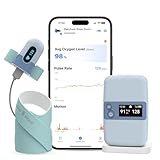
Overview:
The Babytone Baby Sleep Monitor positions itself as a budget-conscious alternative to premium brands, offering heart rate and movement tracking for babies 0-36 months. This wearable foot monitor includes a base station with a display screen, Bluetooth connectivity, and a companion app for data synchronization. Designed for parents seeking basic vital monitoring without the premium price tag, the system stores data internally and syncs when connected, ensuring no information is lost during connectivity gaps.
What Makes It Stand Out:
The 16-hour battery life significantly outperforms many competitors, covering full nights without mid-sleep charging. The stand-alone monitor with built-in memory stores four sessions independently of the app, providing flexibility for parents who prefer not to be tethered to their phones. The wider age range (0-36 months) extends usability, while the comfortable, washable nylon sock comes in two sizes for optimal fit.
Value for Money:
At $139.99, this monitor costs less than half of FDA-cleared alternatives. While it lacks oxygen monitoring and regulatory approval, it provides essential heart rate and movement tracking that satisfies many parents’ needs. The absence of mandatory subscription fees adds long-term value, making it an economical choice for extended use.
Strengths and Weaknesses:
Strengths include exceptional battery life, affordability, stand-alone functionality, wider age range, and no subscription requirements. Weaknesses involve the lack of FDA clearance, absence of oxygen saturation monitoring, potentially less accurate sensors, and limited brand recognition compared to established competitors.
Bottom Line:
For budget-focused families wanting reliable heart rate and movement monitoring without premium costs, the Babytone offers solid value despite missing advanced features.
4. Owlet Dream Duo (Gen 2) Smart Baby Monitor Bundle – HD Video Camera + Wearable Sock Tracks Baby’s Oxygen, Heart Rate & Sleep

Overview:
The Owlet Dream Duo (Gen 2) Bundle combines the FDA-cleared Dream Sock with a high-definition video camera, creating a comprehensive monitoring ecosystem. This integrated solution tracks your baby’s pulse rate, oxygen levels, and sleep patterns while providing crystal-clear video streaming. Designed for parents who want complete visibility, the system delivers real-time health alerts through the Base Station and app, plus live video feed accessible from anywhere via the Owlet Dream App.
What Makes It Stand Out:
The seamless integration of medical-grade vitals monitoring with HD video sets this bundle apart. Parents can correlate physical movements with physiological changes, providing deeper insights into their baby’s wellbeing. The included 48 hours of free video clip storage captures important moments, while the option to upgrade to Owlet360 extends storage and adds advanced analytics. The bundle ensures compatibility and unified control through a single app.
Value for Money:
At $314.99, the Duo costs only slightly more than the standalone Dream Sock, essentially adding the camera for just $15-50 depending on the sock color chosen separately. This represents significant savings over purchasing components individually. For parents planning to buy both video and vitals monitoring, the bundle delivers premium features at a discounted package price.
Strengths and Weaknesses:
Strengths include comprehensive monitoring, cost-effective bundling, FDA-cleared vitals tracking, HD video quality, and integrated app experience. Weaknesses involve the highest price point in this comparison, potential subscription pressure for full features, and reports of occasional video lag during peak usage times.
Bottom Line:
The Dream Duo is the ultimate solution for parents wanting both vitals and visual monitoring, offering excellent bundle value despite the premium investment.
5. Owlet Dream Sock - FDA-Cleared Smart Baby Monitor - Track Live Pulse (Heart) Rate, Oxygen in Infants - Receive Notifications - Dusty Rose

Overview:
The Owlet Dream Sock in Dusty Rose delivers the same FDA-cleared monitoring technology as other color variants, tracking live pulse rate and oxygen levels for infants 1-18 months. This wearable smart monitor includes the sensor-equipped sock, alert base station, and comprehensive Dream App access. The soft, gender-neutral dusty rose color offers a subtle alternative to brighter options while maintaining the identical medical-grade functionality that defines the Owlet brand.
What Makes It Stand Out:
The dusty rose colorway provides a sophisticated, muted aesthetic that appeals to parents preferring understated nursery accessories. Beyond aesthetics, it shares the same standout features: FDA clearance ensuring clinical accuracy, dual WiFi and Bluetooth connectivity with automatic failover during outages, and real-time alerts through multiple channels. The system continues monitoring even when internet or power fails, using Bluetooth and backup battery power.
Value for Money:
Priced at $264.93, this variant aligns with the Bedtime Blue model’s competitive pricing, offering a $34 savings over the mint version. This pricing strategy makes FDA-cleared monitoring more accessible while giving parents color flexibility. The value proposition remains strong: medical-grade accuracy, proven reliability, and comprehensive sleep analytics without paying premium for color preference.
Strengths and Weaknesses:
Strengths include FDA clearance, reliable dual connectivity, trusted brand reputation, and comprehensive data tracking. Weaknesses mirror other Owlet socks: premium pricing compared to non-FDA alternatives, potential additional costs for Owlet360 subscription, battery life requiring daily charging, and occasional false alarms during movement.
Bottom Line:
The Dusty Rose variant provides the same trusted monitoring at a more palatable price, making it an excellent choice for style-conscious parents seeking FDA-cleared peace of mind.
6. eufy Security Baby Monitor Baby Smart Sock with 2.4 GHz Wi-Fi, Track Sleep Patterns, Naps, Heart Rate, No Monthly Fee
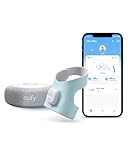
Overview: The eufy Security Baby Monitor Smart Sock offers parents a connected way to track their infant’s vital signs without recurring costs. This Wi-Fi-enabled device monitors heart rate, sleep patterns, and naps, sending data directly to your smartphone for real-time peace of mind. Designed for babies 0-18 months, the washable sock comes in three sizes to grow with your child.
What Makes It Stand Out: The standout feature is the absence of monthly subscription fees, making it a budget-friendly long-term investment. The optimized algorithms and Fresnel lens provide accurate readings, while customizable alert sensitivity lets parents tailor notifications to their preferences. With 48 hours of historical data available, you can spot trends and share insights with pediatricians.
Value for Money: At $169.99, this monitor sits in the sweet spot between basic Bluetooth models and premium bundles. You get Wi-Fi connectivity and app access without the subscription tax that competitors charge, delivering solid value for tech-savvy parents who want remote monitoring capabilities.
Strengths and Weaknesses: Strengths include no monthly fees, reliable Wi-Fi connection, comprehensive sleep tracking, and comfortable three-size design. Weaknesses are the limited 0-18 month age range and lack of integrated video monitoring, requiring a separate camera purchase for complete surveillance.
Bottom Line: The eufy Smart Sock is an excellent choice for parents seeking connected monitoring without ongoing costs. It delivers core health tracking features reliably, though you’ll need to pair it with a separate video monitor for full nursery coverage.
7. Owlet Dream Duo (Gen 3) Smart Baby Monitor All-in-One Bundle - 2K HD Video Baby Monitor with Alerts & Owlet Dream Sock Tracks Baby’s Oxygen, Heart Rate & Sleep | Health Insights via App | Mint

Overview: The Owlet Dream Duo (Gen 3) represents the pinnacle of smart baby monitoring, combining an FDA-cleared smart sock with a premium 2K HD video camera in one integrated system. This all-in-one bundle tracks oxygen levels, heart rate, sleep patterns, and provides crystal-clear video streaming with two-way audio, giving parents comprehensive insights from anywhere.
What Makes It Stand Out: This is the only system with independently certified cybersecurity through the SGS Cybersecurity Mark, addressing modern privacy concerns. The dual-band Wi-Fi and Bluetooth ensure stable connectivity, while customizable alerts for cry detection, motion, temperature, and humidity create a truly personalized monitoring experience. The 2K video quality with night vision sets a new standard.
Value for Money: At $379.99, this premium investment delivers professional-grade monitoring. While significantly more expensive than competitors, it eliminates the need for multiple devices and subscriptions, justifying the cost for parents who want the best technology and security assurances available.
Strengths and Weaknesses: Strengths include FDA clearance, superior video quality, robust cybersecurity, comprehensive health tracking, and reliable dual connectivity. The primary weakness is the high price point, which may exceed many family budgets. The complexity might also overwhelm parents wanting simpler solutions.
Bottom Line: For parents seeking the most advanced, secure, and comprehensive monitoring system regardless of cost, the Dream Duo Gen 3 is unmatched. It’s a premium solution that delivers exceptional peace of mind through cutting-edge technology.
8. Babytone Baby Sock Monitor, Tracks Real-Time Heart Rate and Movement, with Notification and Sleep Patterns, Smart Baby Monitor No WiFi with Bluetooth and Free APP, for 0-36 Months Newborn

Overview: The Babytone Baby Sock Monitor offers a privacy-focused alternative to Wi-Fi-enabled monitors, using low-radiation Bluetooth to track your baby’s heart rate and movement. Designed for infants 0-36 months, this washable smart sock provides real-time wellness monitoring without internet connectivity, making it ideal for security-conscious families.
What Makes It Stand Out: The commitment to minimal radiation exposure and offline operation appeals to parents concerned about electromagnetic exposure and hacking risks. The ability to export detailed sleep reports as PDF or CSV files is unique at this price point, allowing you to share data with healthcare providers or track long-term trends. Three sock sizes accommodate babies up to 30.6 pounds.
Value for Money: Priced at $159.99, this monitor offers excellent value for privacy-minded parents. The lack of monthly fees and the extended 0-36 month age range mean you’ll use it longer than competitors. While you sacrifice remote access, you gain security and save significantly versus Wi-Fi models.
Strengths and Weaknesses: Strengths include low radiation Bluetooth, no Wi-Fi security concerns, extended age range, data export capability, and affordable pricing. Weaknesses are the lack of remote smartphone access when away from home and limited onboard storage of just four detailed recordings, requiring frequent data syncing.
Bottom Line: The Babytone is perfect for parents prioritizing privacy and electromagnetic safety over remote connectivity. It delivers reliable health tracking at a reasonable price, though you’ll need to stay within Bluetooth range for real-time monitoring.
9. Babytone Baby Sleep Sock Monitor, Tracking Heart Rate and Movement for Infant, Wearable Foot Monitor Smart Sock with Bluetooth and APP, for 0-36 Months Newborn

Overview: The Babytone Baby Sleep Sock Monitor is the most affordable entry in the smart sock category, offering essential heart rate and movement tracking for budget-conscious parents. This Bluetooth-enabled device works with the ViHealth app to provide overnight monitoring for babies 0-36 months, with built-in memory that stores data independently of your phone.
What Makes It Stand Out: The stand-alone memory function sets it apart, storing up to four sessions directly on the device and automatically syncing when connected. This ensures you never lose data, even if your phone dies or disconnects overnight. The extremely competitive price point makes smart monitoring accessible to more families, while the three-size sock design ensures accurate readings across a wide weight range.
Value for Money: At $129.99, this is exceptional value for parents wanting basic vitals monitoring without frills. The extended 0-36 month usability and lack of subscription fees maximize your investment. While it lacks Wi-Fi and video integration, it covers the essentials at a fraction of premium competitors’ costs.
Strengths and Weaknesses: Strengths include unbeatable price, built-in memory, long age range, comfortable fit, and PDF/CSV export capabilities. Weaknesses are Bluetooth-only connectivity limiting range, basic app features compared to Wi-Fi alternatives, and no oxygen saturation monitoring.
Bottom Line: This is the ideal starter monitor for parents wanting peace of mind without breaking the bank. It reliably tracks core metrics with the safety net of onboard memory, making it a practical choice for straightforward sleep monitoring.
10. Owlet Dream Duo (Gen 2) Smart Baby Monitor Bundle – HD Video Camera + Wearable Sock Tracks Baby’s Oxygen, Heart Rate & Sleep

Overview: The Owlet Dream Duo (Gen 2) bundle delivers FDA-cleared health monitoring at a more accessible price point than the latest generation. This system pairs the proven Dream Sock with an HD video camera and Base Station, tracking oxygen levels, heart rate, and sleep trends while providing both app notifications and bedside alerts through lights and sounds.
What Makes It Stand Out: As the first FDA-cleared smart baby monitor, Owlet set the standard that competitors follow. The included Base Station offers a dedicated alert system that works even without your phone, providing an extra layer of reliability. With 48 hours of free video clip storage and the option to upgrade, you get flexibility without forced subscriptions.
Value for Money: At $309.99, this Gen 2 bundle saves $70 compared to the Gen 3 while retaining core functionality. You’re getting FDA-cleared monitoring, HD video, and the reliable Base Station for a premium-but-reasonable price. The trade-off is slightly lower video resolution and fewer advanced features.
Strengths and Weaknesses: Strengths include FDA clearance, proven reliability, Base Station backup alerts, HD video quality, and flexible storage options. Weaknesses are HD versus 2K video, older generation technology, and the 1-18 month age limitation versus some competitors’ longer ranges.
Bottom Line: The Gen 2 Dream Duo is a smart compromise, offering Owlet’s trusted monitoring technology at a reduced price. It’s perfect for parents wanting FDA-cleared peace of mind with video monitoring without paying for the absolute latest features.
Understanding Wearable Baby Monitors with Oxygen Tracking
What Are These Devices and How Do They Work?
Wearable baby monitors with oxygen tracking represent a significant leap from traditional audio and video systems. These compact devices attach directly to your infant’s body—typically on the foot, ankle, or chest—and use advanced sensors to continuously monitor blood oxygen saturation (SpO2) along with other vital signs like heart rate, skin temperature, and movement. Unlike hospital pulse oximeters with finger clips, these consumer-grade devices employ reflectance pulse oximetry, where light-emitting diodes (LEDs) shine through the skin and sensors detect how much light is absorbed by oxygenated versus deoxygenated blood.
The data streams wirelessly to a base station or smartphone app, providing real-time updates and alerts if readings fall outside preset thresholds. In 2026, most models have evolved from simple alarm systems to sophisticated health tracking platforms that build baseline patterns over days and weeks, helping parents distinguish between normal fluctuations and potential concerns.
The Technology Behind Oxygen Monitoring
The core technology powering these devices—photoplethysmography (PPG)—has matured considerably. Modern wearables utilize multi-wavelength LEDs (typically red and infrared) that penetrate infant skin more effectively than earlier generations. The reflected light patterns are analyzed by proprietary algorithms that filter out motion artifacts, ambient light interference, and poor contact issues that plagued first-generation models.
What sets 2026 devices apart is their ability to maintain accuracy during active sleep phases when babies kick and squirm. Advanced signal processing distinguishes between true desaturation events and temporary signal loss. Some high-end models now incorporate accelerometer data to correlate movement with physiological changes, reducing false alarms by up to 60% compared to 2023 versions. However, it’s crucial to understand that even the best consumer devices operate within a ±2-3% margin of error, which can be significant when monitoring infants.
Why Oxygen Tracking Matters for Infant Health
Brief Primer on Infant Respiratory Health
Infant respiratory patterns differ dramatically from adults. Newborns naturally experience periodic breathing—short pauses lasting up to 10 seconds followed by rapid breaths. This is normal. What isn’t normal are prolonged apneic episodes (pauses exceeding 20 seconds) or significant drops in blood oxygen saturation below 90%. Conditions like apnea of prematurity, respiratory syncytial virus (RSV), or undiagnosed congenital heart defects can manifest through oxygen desaturation.
For healthy full-term infants, the risk of sudden oxygen drops is extremely low—approximately 0.05% according to 2025 pediatric studies. However, for premature babies, those with diagnosed sleep apnea, or infants recovering from respiratory illness, monitoring becomes medically relevant. The key is understanding whether you’re buying peace of mind or a necessary medical tool.
When Monitoring Becomes Essential vs. Optional
The line between “nice to have” and “medically necessary” is where parents must exercise judgment. If your pediatrician has recommended home monitoring due to prematurity, chronic lung disease, or a diagnosed condition, you’re in the essential category. These situations may warrant prescription-grade devices with documented clinical accuracy and FDA clearance.
For the vast majority of healthy infants, oxygen tracking falls into the optional category—a tool for anxiety management rather than medical necessity. This doesn’t diminish its value; parental sleep and mental health are legitimate considerations. The danger lies in false security: no consumer device prevents SIDS, and over-reliance can delay seeking medical attention when instinct tells you something is wrong. The best approach treats these monitors as supplement to, not replacement for, safe sleep practices and parental observation.
Key Features to Evaluate in 2026 Models
Core Monitoring Capabilities
Beyond basic SpO2 tracking, today’s devices bundle multiple sensors. Look for monitors offering heart rate variability (HRV) analysis, which provides deeper insight into autonomic nervous system development. Skin temperature monitoring helps detect fevers early, while movement tracking can indicate restlessness or unusual stillness. The most advanced models include sleep stage analysis, distinguishing between active and quiet sleep phases.
Resolution matters more than range. A device that updates every second provides more actionable data than one sampling every 10 seconds. Pay attention to measurement range—quality monitors should detect oxygen levels from 70-100% saturation, as this covers both normal values (95-100%) and concerning drops that require attention.
Connectivity and Smart Features
In 2026, Bluetooth 5.3 is the standard, offering more stable connections with lower power consumption. WiFi-enabled models allow remote monitoring from anywhere, but introduce security considerations we’ll address later. The sweet spot for most families is a hybrid system: Bluetooth for primary monitoring with WiFi backup for alerts when you leave the room.
Look for devices with smart notification hierarchies. The best systems differentiate between informational updates (“baby is stirring”), cautionary alerts (“oxygen at 92%”), and emergency alarms (“oxygen below 85% for 15 seconds”). Customizable thresholds are essential—every baby is different, and rigid factory settings generate unnecessary anxiety.
Battery Life and Power Management
Nothing defeats the purpose of a monitor faster than a dead battery at 3 AM. 2026 models have improved significantly, with most lasting 16-24 hours on a single charge. However, battery performance degrades over months of nightly charging. Examine charging methods: wireless charging pads are convenient but may wear out faster than magnetic connectors. Some models offer battery swapping, letting you keep a charged spare ready.
Consider power management features like low-battery warnings that give you at least 2 hours of cushion, and automatic shutoff when not properly positioned to conserve energy. Solar charging cases, while gimmicky-sounding, can provide emergency backup during travel or power outages.
Accuracy and Reliability: What Parents Must Know
Understanding Sensor Technology Limitations
Even the most sophisticated consumer wearable isn’t a medical device. The FDA classifies most of these as “general wellness” products, meaning they haven’t undergone the rigorous testing required for hospital equipment. The reflectance pulse oximetry used in wearables is inherently less accurate than transmission pulse oximetry (finger clips) because it measures reflected rather than transmitted light.
Skin pigmentation affects accuracy—melanin absorbs light differently, and many devices were trained on datasets lacking diversity. Motion artifact remains the biggest challenge; a vigorously kicking baby can produce readings that fluctuate wildly. Cold extremities reduce peripheral blood flow, making foot-worn devices less reliable if the nursery is cool. Understanding these limitations helps you interpret readings appropriately rather than panicking over every dip.
Clinical Validation vs. Marketing Claims
Manufacturers love throwing around terms like “clinically tested” or “pediatrician recommended.” These phrases have no regulatory meaning. True clinical validation involves peer-reviewed studies comparing the device against FDA-cleared reference monitors in diverse infant populations. Ask for published sensitivity and specificity numbers—how often does it correctly identify true events versus false alarms?
In 2026, look for devices that have undergone third-party validation by organizations like the ISO (International Organization for Standardization) or have partnerships with pediatric research institutions. Some manufacturers now publish their validation data transparently. If a company can’t provide specific accuracy metrics, consider that a red flag. Remember, a device that’s 95% accurate sounds great until you realize that means 5 out of 100 readings could be dangerously wrong.
Safety First: Wearable Design Considerations
Material Safety and Skin Sensitivity
Your baby will wear this device for 12-16 hours daily. The materials must be hypoallergenic, free from BPA, phthalates, and latex. Medical-grade silicone is the gold standard—soft, flexible, and breathable. Examine the entire construction: Are there small parts that could detach? Is the charging port sealed to prevent moisture ingress during diaper leaks?
In 2026, leading manufacturers have adopted dermatologist-tested adhesives for disposable components and antimicrobial coatings for reusable parts. However, even hypoallergenic materials can cause reactions in sensitive babies. Look for devices with replaceable sensor modules so you can switch materials if irritation occurs. Weekly skin checks under the device are non-negotiable.
Secure Attachment Mechanisms
The eternal challenge: secure enough to maintain sensor contact, gentle enough not to constrict. Foot-worn socks should use soft, adjustable straps with breakaway safety features that release if snagged. Chest-worn patches must balance adhesion with easy removal—adhesives that are too strong can damage delicate newborn skin.
Consider your baby’s age and activity level. A newborn who barely moves has different needs than a 9-month-old who rolls constantly. Some systems offer multiple attachment options (sock, band, patch) that grow with your child. The best designs include contact sensors that alert you if the device loosens, rather than sending false oxygen alerts.
Data Privacy and Security in the Connected Nursery
Understanding Data Transmission and Storage
Your baby’s biometric data is incredibly sensitive. In 2026, most monitors transmit data via encrypted channels, but encryption strength varies. Look for AES-256 encryption—the same standard banks use. The data pathway matters: Does information go directly from device to your phone, or does it route through the manufacturer’s cloud servers? The latter introduces vulnerability.
Investigate data retention policies. Some companies anonymize and keep data indefinitely for “product improvement,” while others delete it after 30 days. You should have the option to export and delete your data completely. Be wary of devices that require constant internet connectivity; they should function in local-only mode if you prefer keeping data off the cloud entirely.
What to Look for in Privacy Policies
Read the privacy policy before purchasing—yes, actually read it. Key red flags include vague language about “third-party partners,” requirements to create accounts with personal information, and clauses allowing data sharing for marketing purposes. In 2026, the best manufacturers have adopted transparent privacy frameworks that let you opt out of data sharing while retaining full functionality.
Check for GDPR or CCPA compliance even if you’re outside those jurisdictions; it indicates a higher privacy standard. Some companies now offer “privacy-preserving” models that process data locally on the base station, sending only encrypted alerts to your phone. These cost more but give you complete data sovereignty.
Smart Home Integration and App Ecosystems
Compatibility with Existing Devices
Your baby monitor shouldn’t exist in a vacuum. In 2026’s connected home landscape, integration with platforms like Apple HomeKit, Google Home, and Amazon Alexa is table stakes for premium models. This allows you to create automations—dimming lights when baby falls asleep, or broadcasting alerts through your whole-home audio system.
But compatibility isn’t just about brand names. Check if the monitor’s API is open, allowing integration with health platforms like Apple Health or Google Fit. This matters if you want to correlate baby’s sleep patterns with feeding schedules tracked in other apps. Some systems now integrate with smart thermostats, automatically adjusting room temperature based on baby’s skin temperature readings.
App User Experience and Features
You’ll interact with the app more than the device itself. The interface should be intuitive at 2 AM when you’re bleary-eyed. Look for customizable dashboards that let you prioritize the metrics you care about. Historical data visualization should reveal patterns, not just raw numbers—trend lines showing oxygen stability over weeks are more valuable than minute-by-minute data dumps.
Multi-user access is crucial for caregivers. The best apps allow differentiated permissions: parents get full control, while grandparents or babysitters see only basic status. In 2026, leading apps include sleep coaching modules, developmental milestone tracking, and even AI-powered insights that flag subtle changes warranting pediatrician discussion. However, avoid apps that feel like social networks—your baby’s health data isn’t content to be shared.
Comfort and Wearability: The Baby’s Perspective
Size, Weight, and Ergonomic Design
A device weighing 20 grams might seem negligible, but on a 7-pound newborn, that’s proportionally like you wearing a half-pound ankle weight. The best 2026 designs distribute weight evenly and keep profiles low-profile to prevent snagging on crib sheets. For foot-worn devices, the sensor module should sit on the top of the foot where it’s least likely to cause pressure points.
Consider the thermal profile—does the device generate heat during operation? Quality monitors use low-power sensors that remain at ambient temperature. Look for breathable designs with ventilation channels, especially for babies in warmer climates or those who run hot. The device should be forgettable for your baby; if they’re constantly kicking at it, the design has failed.
Adapting to Different Sleep Positions
Babies are contortionists. They’ll sleep with feet tucked under them, arms flung overhead, or rolled halfway to their side. The monitor must maintain contact across all positions. Foot-worn socks work well for back-sleepers but can lose contact when babies curl up. Chest patches offer more consistent contact but may irritate stomach-sleepers (though back-sleeping remains the safe-sleep standard).
Some 2026 models incorporate multiple sensor arrays that activate based on position detection. If the primary sensor loses contact, secondary sensors maintain monitoring. This redundancy is valuable but increases cost. Test the device during supervised naps across different positions before relying on it overnight.
Price Points and Value Assessment for 2026
Understanding the Cost Spectrum
Wearable oxygen monitors range from $150 for basic models to $400+ for premium systems with advanced analytics. The price jump typically reflects sensor quality, algorithm sophistication, and build materials—not necessarily accuracy. A $300 device isn’t necessarily twice as accurate as a $150 one; you’re often paying for convenience features and brand reputation.
Consider the total cost of ownership. Many devices require proprietary replacement socks or patches every 3-6 months at $30-50 per set. Factor in these recurring costs over your intended usage period (typically 12-18 months). Some manufacturers have shifted to subscription models, charging $5-15 monthly for advanced analytics and cloud storage. Evaluate whether these ongoing fees deliver proportional value.
Subscription Models and Hidden Fees
The subscription trend is divisive. On one hand, it funds continuous algorithm improvements and new features. On the other, it locks basic functionality behind paywalls. The best models offer robust core features without subscription, with optional premium tiers for data insights. Be wary of devices that require subscriptions for fundamental alerts or historical data access.
Look for lifetime warranty options. Given that these devices experience nightly wear and tear, a $400 monitor with a 3-year warranty offers better value than a $200 model you replace annually. Some companies now offer trade-in programs when upgrading, which can offset costs.
Wearable Monitors vs. Traditional Systems
Pros and Cons Comparison
Traditional audio/video monitors excel at detecting environmental hazards—intruders, fire, or unsafe crib items. They provide visual confirmation that baby is breathing without physiological data. Their limitation is subjective assessment; you can’t see subtle breathing changes on a 1080p screen at 3 AM.
Wearable monitors excel at objective data but create a false sense of precision. They can detect bradycardia (slow heart rate) and oxygen desaturation that visual monitoring would miss. However, they can’t tell you why—is baby positioned awkwardly, or is something medically wrong? The ideal 2026 nursery uses both: wearables for physiological monitoring, and a simple video monitor for visual context when alerts sound.
When to Use Both
If you opt for a wearable, pair it with a basic audio monitor as backup. Technology fails—batteries die, Bluetooth glitches, apps crash. A $30 audio monitor provides redundancy. For twins or multiples, wearables become even more valuable since you can’t watch two video feeds simultaneously. In this scenario, a wearable system with a central hub that monitors both babies is worth the premium.
Consider your living situation. In a small apartment, you might hear baby without any monitor. In a multi-story house, wearables provide coverage when you’re far from the nursery. For travel, wearables are more portable than camera systems, though they introduce TSA considerations due to lithium batteries.
Medical-Grade vs. Consumer-Grade: Critical Distinctions
FDA Clearance and Regulatory Considerations
This is perhaps the most misunderstood aspect of baby monitors. Most consumer wearables are not FDA-cleared medical devices. They’re registered as Class I wellness devices, exempt from rigorous clinical validation. This means manufacturers can claim they “track oxygen” without proving they detect medically significant events accurately.
True medical-grade monitors (like the Masimo MightySat or some prescription pulse oximeters) have 510(k) clearance, meaning they’ve demonstrated substantial equivalence to existing medical devices. They cost more ($500-800) and require physician involvement, but offer legally defensible accuracy. For most families, this is overkill. However, if your baby has a diagnosed condition requiring monitoring, insurance may cover a medical-grade device—ask your pediatrician before spending out-of-pocket on a consumer model.
When You Need a Prescription Device
Prescription monitors come with clinical support: training, interpretation guidance, and direct data sharing with your healthcare team. Consumer devices leave you alone to interpret data and decide when to call the doctor. This autonomy is empowering until it’s terrifying at 2 AM with a reading you don’t understand.
If your baby has experienced an apparent life-threatening event (ALTE), has chronic lung disease, or was born before 32 weeks, discuss prescription options. Many NICUs now discharge babies with loaner medical monitors, transitioning families to consumer devices only after stabilization. Don’t let brand marketing convince you a consumer device is “medical-grade”—these are legally distinct categories with vastly different validation requirements.
Installation and Setup Best Practices
Optimal Placement and Positioning
Proper placement is non-negotiable for accurate readings. For foot-worn socks, position the sensor over the top of the foot, aligned with the toes—not the ankle. The foot should be flat against the sensor with no gaps. For chest patches, place them slightly left of center on the torso, avoiding the sternum where bone can interfere with readings.
Take baseline readings when baby is calm and awake. Healthy infants should show 97-100% oxygen saturation. If your device consistently reads below 95% on a healthy baby, it’s likely a placement issue, not a medical emergency. Use the app’s placement guide—most 2026 models include augmented reality overlays in their setup wizards showing exactly where to position the device.
Calibration and Initial Testing
Consumer devices don’t require clinical calibration, but they do need environmental acclimation. Let the device sit in the nursery for an hour before first use to adjust to room temperature. Test it during supervised daytime naps for 3-5 days before overnight reliance. This reveals connectivity dead zones and helps you understand normal variation in your baby’s readings.
Create a log during this period: note baby’s behavior, sleep position, and corresponding readings. This baseline helps you identify true anomalies later. Some apps automate this with learning modes that establish personal thresholds over 7-10 days. Don’t disable these features—they’re crucial for reducing false alarms.
Interpreting Alerts and Avoiding Alarm Fatigue
Understanding False Positives
False positives are the Achilles’ heel of baby monitoring. A 2025 study found that parents using oxygen-tracking wearables received an average of 4.2 false alarms per week, with 23% of parents disabling alerts within the first month due to alarm fatigue. Common causes include: poor sensor contact during movement, cold feet reducing peripheral circulation, and algorithm misinterpretation of normal periodic breathing.
Learn your device’s alert patterns. A brief dip to 88% that immediately recovers is likely artifact; sustained desaturation below 90% for 20+ seconds warrants attention. The best systems use “smart alerting” that considers multiple parameters—if oxygen drops but heart rate remains stable and baby is moving, it’s probably a false alarm. Customize alert delays: a 15-second delay on oxygen alerts can eliminate 70% of false positives without compromising safety.
Customizing Alert Thresholds
Rigid factory settings don’t account for individual variation. Some healthy babies naturally run at 95-96% saturation while others consistently hit 99-100%. Use your baseline data to set personalized thresholds. Most 2026 apps allow you to adjust both the trigger value and the duration required before alerting.
Set up tiered notifications: a gentle phone vibration for minor dips, a distinct sound for moderate concerns, and a full-alarm escalation for sustained events. Share these settings with all caregivers so everyone understands what each alert means. Review and adjust thresholds monthly as your baby grows—newborns have different patterns than 6-month-olds.
2026 Trends and Emerging Technologies
AI-Powered Insights and Predictive Analytics
Artificial intelligence has transformed from marketing buzzword to practical feature. Leading 2026 monitors use machine learning to identify your baby’s unique physiological signature, distinguishing between “my baby always desaturates slightly when rolling to their side” and “this is an unusual pattern requiring attention.” Some systems now offer predictive alerts, detecting subtle changes that precede waking or distress, giving you a 2-3 minute heads-up.
The most advanced models integrate with feeding and diaper logs, correlating physiological data with care patterns. They might notice that baby’s oxygen stability improves on days with more tummy time, or that certain sleep sacks correlate with better readings. This moves beyond monitoring into actionable parenting insights—though take these AI suggestions as interesting data points, not medical advice.
Next-Generation Sensor Developments
The next frontier is non-contact monitoring. Experimental 2026 models use radar technology to detect chest movements and oxygen status without any wearable, though these remain less accurate and aren’t yet mainstream. For wearables, flexible electronic tattoos that adhere like second skin are in limited release, offering unparalleled comfort and contact quality.
Battery-free sensors powered by body heat and movement are emerging, eliminating charging entirely. These are currently expensive and limited to medical settings, but consumer versions are expected by late 2026. Keep an eye on multi-gas sensors that track carbon dioxide buildup in addition to oxygen—particularly relevant as mattress breathability remains a safe-sleep concern.
Making the Final Decision: A Parent’s Checklist
Assessing Your Family’s Specific Needs
Start with honest self-assessment. Rank your priorities: anxiety reduction, medical monitoring, sleep tracking, or convenience. If anxiety is primary, a simple, reliable device with minimal false alarms trumps feature-rich complexity. If you need medical-grade tracking, skip consumer models entirely and consult your doctor.
Consider your technical comfort level. Some systems require smartphone proficiency and regular app updates; others work with simple base stations. Think about your support network—will grandparents struggle with a complex app? Factor in your living situation, baby’s health status, and budget reality. The “best” monitor is the one you’ll actually use consistently.
Questions to Ask Before Purchasing
Before clicking buy, get answers to these questions: What is the return policy if it doesn’t work for your baby? Is there a trial period to test accuracy? How long is the warranty, and what does it cover? Are there documented accuracy studies you can review? Can you speak with customer support at 11 PM when something goes wrong? Does the company have a pediatric advisory board?
Check recent app store reviews, focusing on comments about reliability and customer service. Search for FDA warning letters or consumer safety complaints. A reputable company will be transparent about limitations and actively engage with user feedback. Remember, you’re not just buying a device; you’re entering a relationship with a company that will have intimate data about your child.
Frequently Asked Questions
1. Can wearable oxygen monitors prevent SIDS?
No device has been proven to prevent Sudden Infant Death Syndrome. These monitors can alert you to oxygen desaturation or heart rate changes, but SIDS is a diagnosis of exclusion made after death. The American Academy of Pediatrics explicitly states that home monitors should not be used to prevent SIDS. They should complement, not replace, safe sleep practices: alone, on their back, in a crib.
2. At what age should I stop using an oxygen-tracking monitor?
Most parents discontinue use between 6-12 months when babies develop more stable breathing patterns and can roll both ways. There’s no medical consensus on a stop date. Consider weaning off when you can watch your baby sleep without constant anxiety, or when false alarms outnumber useful alerts. Some monitors are sized for toddlers up to 24 months, but utility decreases as children become more mobile.
3. How do I know if the readings are accurate?
Compare occasional readings with a pediatrician’s office pulse oximeter during well visits. At home, healthy babies should show 97-100% saturation when calm and awake. Consistently low readings on a healthy baby indicate placement issues, not medical problems. If readings seem off, check: sensor placement, skin temperature, device cleanliness, and battery level. Trust your instincts—if baby looks fine but the monitor panics, it’s likely a false alarm.
4. Will insurance cover the cost of these monitors?
Consumer-grade wellness monitors are rarely covered. However, if your pediatrician prescribes a medical-grade monitor for a diagnosed condition, insurance may cover partial or full cost. You’ll need documentation of medical necessity. Some flexible spending accounts (FSAs) and health savings accounts (HSAs) allow purchase of consumer monitors with a doctor’s letter of medical necessity. Check your specific plan details.
5. Can these monitors burn or irritate my baby’s skin?
Quality devices use low-power LEDs that generate minimal heat—typically less than 1°C above ambient temperature. However, any device worn continuously can cause pressure irritation or contact dermatitis. Check skin daily for redness or breakdown. Rotate placement slightly if using socks or bands. Discontinue use immediately if you notice blisters, welts, or persistent redness. Medical-grade silicone and breathable designs minimize but don’t eliminate risk.
6. How do these devices affect safe sleep guidelines?
The monitor itself shouldn’t interfere with safe sleep if properly designed. Ensure no cords run into the crib, and the wearable is snug enough not to become a strangulation hazard. Some pediatricians express concern that monitors may encourage unsafe practices like loose bedding (“the monitor will alert me if there’s a problem”). Remember: the monitor is a supplement to safe sleep rules, not a reason to relax them.
7. What’s the difference between Bluetooth and WiFi models for reliability?
Bluetooth models offer lower latency (alerts reach your phone faster) and work without internet, but have limited range—typically 30-50 feet through walls. WiFi models allow monitoring from anywhere but depend on your home network stability. A dropped internet connection means lost monitoring. The most reliable 2026 systems use Bluetooth as primary with WiFi as automatic backup, switching seamlessly if you leave Bluetooth range.
8. How do I handle false alarms without becoming desensitized?
First, optimize placement and settings during daytime testing. Set appropriate alert delays—15-20 seconds for oxygen dips filters most artifacts. Learn your device’s patterns: does it always alert when baby rolls to their stomach? Adjust thresholds accordingly. Keep a log of false alarms to identify triggers. If you’re getting more than 1-2 false alarms per week, contact customer support—your unit may be defective. Never ignore alerts; always visually check baby, but use judgment about when to escalate.
9. Are there risks to exposing my baby to wireless radiation?
These devices emit extremely low-power Bluetooth or WiFi signals—far below FCC safety limits and comparable to background household radiation. The power output is typically 1-10 milliwatts, while a cell phone emits 500-1000 milliwatts. No peer-reviewed studies have shown health risks from these low-power devices. If concerned, choose a Bluetooth-only model and keep the base station 3+ feet from the crib.
10. How do I clean and maintain the device for accuracy?
Clean the sensor window weekly with a soft, dry cloth—never use alcohol or cleaning solutions which can damage optics. Wash fabric components according to manufacturer instructions, typically gentle cycle and air dry. Replace adhesive patches per schedule (usually every 1-2 weeks) even if they still stick, as adhesive buildup affects sensor contact. Store the device at room temperature; extreme cold or heat degrades battery and sensor performance. Recalibrate or reset the device monthly per manufacturer guidelines to maintain algorithm accuracy.