Gone are the days when baby monitors simply crackled with audio from the next room. Today’s tech-savvy parents are building registries that would make Silicon Valley engineers nod in approval, and at the heart of this nursery revolution sits the smart baby monitor with sleep-tracking capabilities. As we look toward 2026, these devices have evolved from simple viewing screens into comprehensive wellness platforms that offer predictive insights into your baby’s sleep patterns, breathing rhythms, and developmental milestones.
If you’re curating a modern baby registry that balances innovation with genuine parental peace of mind, understanding the nuanced landscape of AI-powered monitoring isn’t just helpful—it’s essential. This guide dives deep into the features, technologies, and considerations that separate cutting-edge sleep-tracking monitors from the sea of connected cameras masquerading as smart devices. Whether you’re a data-driven parent who wants every decibel analyzed or simply seeking reassurance through thoughtful technology, here’s what you need to know before clicking “add to registry.”
Top 10 Smart Baby Monitors with Sleep-Tracking
Detailed Product Reviews
1. Owlet Dream Duo (Gen 3) Smart Baby Monitor All-in-One Bundle - 2K HD Video Baby Monitor with Alerts & Owlet Dream Sock Tracks Baby’s Oxygen, Heart Rate & Sleep | Health Insights via App | Mint

Overview: The Owlet Dream Duo represents the pinnacle of smart baby monitoring, combining the FDA-cleared Dream Sock with a premium 2K HD camera in one integrated system. This all-in-one bundle delivers comprehensive health tracking and crystal-clear video streaming through a single, secure platform designed for parents who demand complete peace of mind.
What Makes It Stand Out: The Dream Duo is the only system offering FDA-cleared pulse oximetry alongside professional-grade video monitoring. Its independently certified cybersecurity (SGS Mark) sets it apart in a category plagued by privacy concerns. The customizable alert system covers everything from oxygen levels to room humidity, while dual-band WiFi ensures reliable connectivity.
Value for Money: At $379.99, this premium bundle costs less than purchasing the sock ($299) and camera ($99) separately, offering modest savings. While expensive, it eliminates the need for multiple apps or devices, potentially replacing several baby gadgets. For anxious parents, the medical-grade reassurance justifies the investment compared to piecing together less integrated solutions.
Strengths and Weaknesses: Strengths include FDA clearance for medical accuracy, exceptional video quality, robust security certification, and comprehensive data tracking. Weaknesses involve the high price point, potential for false alarms causing parental anxiety, reliance on stable WiFi, and the sock’s limited 18-month usability. Some users report connectivity hiccups during network issues.
Bottom Line: The Dream Duo is the gold standard for tech-savvy parents wanting maximum monitoring capability. If your budget allows and you value certified health tracking with premium video, this integrated system delivers unmatched confidence, making it worth every penny for peace of mind.
2. Owlet Dream Sight (Gen 3) Smart Video Baby Monitor | 2K HD Camera w/Night Vision | Detects Crying, Motion & Temperature | Customizable Alerts | Two-Way Talk | Secure Wi-fi
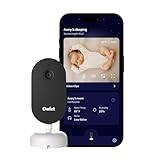
Overview: The Owlet Dream Sight (Gen 3) delivers premium video monitoring without the health-tracking sock, making it an attractive option for parents who prioritize security and video quality. This camera-only solution maintains Owlet’s commitment to cybersecurity while providing sharp 2K HD streaming and intelligent alert customization.
What Makes It Stand Out: As the first and only baby monitor with the SGS Cybersecurity Mark, the Dream Sight addresses growing concerns about camera hacking. Its dual-band WiFi and Bluetooth connectivity ensure stable streaming, while the granular alert system lets parents fine-tune notifications for cries, motion, temperature, and humidity with precision control.
Value for Money: At $99.99, the Dream Sight sits at the higher end of standalone camera monitors but justifies its price through security certification and video quality. While you can find cheaper 2K cameras, none offer Owlet’s cyber-hardened infrastructure. For parents already owning the Dream Sock, it seamlessly integrates for a unified experience without requiring a separate app ecosystem.
Strengths and Weaknesses: Strengths include best-in-class security, excellent 2K video with night vision, reliable dual-band connectivity, and thoughtful alert customization. Weaknesses are the lack of health monitoring features, premium pricing compared to non-secure alternatives, and dependency on the Owlet app. The 130° field of view, while adequate, is narrower than some competitors offering 180°.
Bottom Line: The Dream Sight excels for security-conscious parents seeking a high-quality video monitor from a trusted brand. If health tracking isn’t a priority, this camera delivers professional-grade monitoring with peace of mind that cheaper alternatives simply cannot match.
3. eufy Security Baby Monitor Baby Smart Sock with 2.4 GHz Wi-Fi, Track Sleep Patterns, Naps, Heart Rate, No Monthly Fee
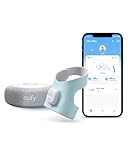
Overview: The eufy Security Baby Monitor Smart Sock offers a compelling middle-ground solution for parents wanting health tracking without the premium price tag of Owlet. This sock-only system monitors heart rate and sleep patterns through a comfortable, washable design that grows with your baby from newborn to 18 months.
What Makes It Stand Out: eufy’s standout feature is its no-monthly-fee model, providing full access to historical data and sleep reports without subscription costs. The system uses optimized algorithms and a fresnel lens for accurate readings, while customizable sensitivity settings let parents tailor sleep tracking to their baby’s patterns. Instant notifications for detached socks or vital changes ensure you’re always informed.
Value for Money: At $169.99, this sock costs significantly less than Owlet’s FDA-cleared version while delivering similar wellness tracking capabilities. The absence of recurring fees enhances long-term value, though the lack of a camera means you’ll need a separate video solution. For parents comfortable with wellness tracking versus medical-grade monitoring, the savings are substantial.
Strengths and Weaknesses: Strengths include affordability, comfortable three-size design, no subscription requirements, and 48-hour historical data. Weaknesses involve the lack of FDA clearance, 2.4GHz WiFi limitation (no 5GHz), absence of oxygen monitoring, and no integrated camera. Brand recognition lags behind Owlet, potentially affecting resale value and long-term app support.
Bottom Line: The eufy Smart Sock is ideal for budget-minded parents who want sleep and heart rate tracking without ongoing costs. Pair it with an affordable camera for a complete system that saves hundreds compared to premium alternatives.
4. Babytone Baby Monitor - Smart Sleep Sock & 2.5K HD Camera, Track Heart Rate and Movement, Cry/Motion Detect, Two-Way Audio and Night Vision Baby Monitor with APP

Overview: The Babytone Baby Monitor positions itself as a budget-friendly all-in-one challenger to Owlet, combining a smart sock with a 2.5K HD camera at a price point that undercuts competitors significantly. This system targets value-conscious parents unwilling to sacrifice features for affordability.
What Makes It Stand Out: The Babytone’s 2.5K camera resolution exceeds even Owlet’s 2K offering, paired with 8x zoom and remote pan/tilt functionality for superior visual monitoring. The sock includes a standalone display screen showing real-time heart rate without requiring a smartphone, storing up to four sessions locally. This dual-mode operation provides backup when your phone is unavailable.
Value for Money: At $159.99, this is the most affordable sock-and-camera bundle available, costing less than Owlet’s camera alone. The free app with video playback and historical data adds value, though long-term software support remains unproven. For parents wanting maximum features on minimal budget, the price-to-performance ratio is exceptional.
Strengths and Weaknesses: Strengths include the highest camera resolution in its class, standalone sock operation, generous zoom capability, and three sizing options. Weaknesses are the lack of FDA clearance, unknown brand reliability, potential app stability issues, and absence of oxygen monitoring. The 16-hour battery life requires nightly charging, and cybersecurity measures aren’t independently verified.
Bottom Line: The Babytone is a feature-packed gamble for budget-focused parents comfortable with an unproven brand. If you prioritize specifications over established reputation, it delivers remarkable value, though reliability concerns warrant careful consideration.
5. Owlet Dream Sock® - FDA-Cleared Smart Baby Monitor - Track Live Pulse (Heart) Rate, Oxygen in Infants - Receive Notifications - Mint

Overview: The Owlet Dream Sock (FDA-Cleared) focuses exclusively on medical-grade health monitoring, providing the same trusted pulse oximetry technology found in the Dream Duo without the camera component. This sock-only solution delivers real-time oxygen and heart rate tracking for infants 1-18 months through a secure, dual-connectivity system.
What Makes It Stand Out: As an FDA-cleared device, the Dream Sock meets rigorous medical accuracy standards that wellness trackers cannot match. Its Base Station provides visual and audible alerts independent of your smartphone, while backup battery power ensures continuous monitoring during outages. The system seamlessly integrates with the Owlet Dream app for detailed sleep trends and expert guidance.
Value for Money: At $299, this is a premium-priced health monitor that rivals the cost of some complete systems. However, for parents prioritizing medical-grade accuracy over video, it represents Owlet’s core technology without camera markup. The proven reliability and FDA clearance justify the expense for families with health concerns, though budget shoppers will find better value in non-medical alternatives.
Strengths and Weaknesses: Strengths include unmatched FDA clearance, proven reliability, outage-resistant operation, comprehensive health data, and expert sleep tips. Weaknesses involve the high price for a single-function device, lack of video monitoring requiring separate purchase, potential false alarms, and limited 18-month lifespan. Some users report sock fit issues with smaller babies.
Bottom Line: The Dream Sock is essential for parents wanting medical-grade monitoring without video distractions. If your primary concern is certified health tracking and you’re willing to invest in proven technology, this delivers unparalleled peace of mind that justifies its premium cost.
6. Owlet Dream Sock - FDA-Cleared Smart Baby Monitor - Track Live Pulse (Heart) Rate, Oxygen in Infants - Receive Notifications - Bedtime Blue

Overview:
The Owlet Dream Sock represents a breakthrough in infant monitoring as the first FDA-cleared smart baby monitor designed for healthy infants 1-18 months (6-30 lbs). This wearable device tracks live pulse rate and oxygen levels through a soft fabric sock, transmitting real-time data to the Owlet Dream App. The system includes a Base Station that provides immediate audio and visual alerts, ensuring parents stay informed even without their phone nearby.
What Makes It Stand Out:
FDA clearance sets this device apart from all non-medical competitors, guaranteeing validated accuracy and safety standards. The dual-alert system notifies parents through both the Base Station and smartphone app when readings fall outside preset zones. Its WiFi and Bluetooth compatibility ensures redundant connectivity, maintaining monitoring during internet outages via Bluetooth and backup battery power—a critical reliability feature.
Value for Money:
At $264.99, the Dream Sock commands a premium price, but FDA validation and proven reliability justify the investment for concerned parents. Compared to uncertified alternatives, you’re paying for regulatory oversight and medical-grade peace of mind. While the optional Owlet360 subscription adds advanced insights, core functionality works without ongoing fees, making the initial cost the primary financial barrier.
Strengths and Weaknesses:
Strengths include medical-grade accuracy, reliable dual-alert system, comprehensive sleep trend data, and continued operation during outages. The soft, washable sock ensures infant comfort. Weaknesses include the high upfront cost, subscription requirement for premium features, and restriction to healthy infants within specific age/weight ranges. Some parents may experience anxiety from constant monitoring.
Bottom Line:
For parents seeking the most reliable, medically-validated infant health monitor available, the Owlet Dream Sock is the gold standard. The premium price purchases genuine peace of mind through FDA-cleared technology and robust alert systems that cheaper alternatives cannot replicate.
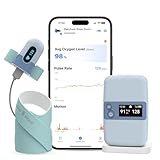
7. Babytone Baby Sleep Monitor with Base Station- Smart Sleep Sock, Tracking Heart Rate and Movement, Wearable Baby Foot Monitor with Bluetooth and APP, for 0-36 Months Newborn
Overview:
The Babytone Baby Sleep Monitor offers an affordable entry into wearable infant monitoring, tracking heart rate and movement for babies 0-36 months. This smart sock system includes a sensor device, Base Station with standalone display, and companion app for comprehensive sleep analysis. Designed for budget-conscious parents, it delivers core monitoring functions without premium pricing, accommodating infants longer than most competitors.
What Makes It Stand Out:
The stand-alone monitor screen provides immediate feedback without requiring constant smartphone access, beeping for unexpected results and storing four sessions internally. This independence adds practical convenience. The impressive 16-hour sensor battery life and 7-day Base Station endurance ensure complete overnight coverage. The 0-36 month age range significantly extends usability compared to the typical 18-month limitation.
Value for Money:
At $139.99, this monitor delivers exceptional value—nearly half the cost of FDA-cleared alternatives. While lacking medical certification, it provides practical monitoring for parents wanting basic insights. The ability to export data in PDF/CSV/JPG formats adds unexpected value for pediatrician consultations. For families prioritizing affordability over regulatory validation, this represents a sensible compromise.
Strengths and Weaknesses:
Strengths include affordability, stand-alone operation, excellent battery life, wider age range, and comfortable washable socks. The app provides useful sleep pattern insights. Weaknesses include lack of FDA clearance, potentially less accurate readings than medical-grade devices, and a less established brand reputation. The movement tracking (versus oxygen monitoring) may miss critical respiratory events, limiting its clinical utility.
Bottom Line:
The Babytone is an excellent budget-friendly monitor for parents seeking basic sleep and heart rate tracking. While not a medical device, it offers solid functionality and exceptional battery life at an accessible price point, making it ideal for families wanting supplemental monitoring without premium costs.
8. Owlet Dream Duo (Gen 2) Smart Baby Monitor Bundle – HD Video Camera + Wearable Sock Tracks Baby’s Oxygen, Heart Rate & Sleep

Overview:
The Owlet Dream Duo combines the FDA-cleared Dream Sock with a high-definition video camera, creating a comprehensive infant monitoring ecosystem. This second-generation bundle tracks oxygen, heart rate, sleep patterns, and provides live video streaming through a single integrated app. Designed for parents wanting complete visibility, it merges medical-grade health data with visual confirmation in one seamless system.
What Makes It Stand Out:
This is the only system combining FDA-cleared wearable monitoring with HD video in one package. The integration eliminates app-switching and provides richer context—seeing your baby when an alert triggers. Real-time notifications sync across both devices, alerting through the Base Station, app, and video feed simultaneously. The included 48 hours of free video clip storage captures important moments without immediate subscription pressure.
Value for Money:
At $314.99, the Duo saves approximately $50 compared to purchasing the sock and camera separately. While still a significant investment, you’re getting two premium devices that work seamlessly together. The unified ecosystem justifies the cost for parents who would otherwise buy separate health and video monitors, reducing clutter and simplifying monitoring workflows.
Strengths and Weaknesses:
Strengths include FDA-cleared health tracking, HD video integration, unified alert system, night vision, and complimentary video storage. The comprehensive solution reduces need for multiple devices. Weaknesses include the highest price point in the Owlet lineup, subscription requirement for extended storage via Owlet360, and potential over-monitoring for low-risk infants. Setup involves more components and cabling than standalone options.
Bottom Line:
For parents seeking the ultimate all-in-one monitoring solution, the Dream Duo delivers unparalleled peace of mind through combined health metrics and video surveillance. The bundle savings and seamless integration justify its premium price for families wanting complete situational awareness.
9. Nanit Essentials Smart Baby Monitor with Floor Stand – 1080p HD Wi-Fi Camera, Sensor-Free Breathing Monitoring, Sleep Tracking, Two-Way Audio, Night Vision, Motion & Cry Notifications, White

Overview:
The Nanit Essentials Smart Baby Monitor redefines infant monitoring with a sensor-free approach, using advanced computer vision to track breathing and sleep patterns through a 1080p HD camera. This premium system includes an ASTM-certified floor stand, Sound + Light machine, and comprehensive app ecosystem. Designed for tech-forward parents, it eliminates wearables while delivering rich insights through proprietary algorithms.
What Makes It Stand Out:
Nanit’s breathing wear technology detects chest movements without physical sensors, offering unmatched convenience and eliminating wearable discomfort or loss. The camera provides crystal-clear 1080p video with two-way audio, night vision, and split-screen capability. The integrated Sound + Light machine features 11 soothing sounds and customizable colors controlled via app. Exceptional security includes 256-bit AES encryption and two-factor authentication.
Value for Money:
At $499.99, this is the most expensive option, but includes the floor stand ($80 value) and Sound + Light machine ($50 value). The sensor-free design means no replacement wearables, saving long-term costs. However, Nanit Insights subscription is essentially required for full functionality, adding ongoing expense that significantly increases total ownership cost beyond the steep initial investment.
Strengths and Weaknesses:
Strengths include superior video quality, innovative sensor-free monitoring, comprehensive environmental tracking (temperature, humidity), cry/cough detection, and robust security. The included accessories add value. Weaknesses include extremely high upfront cost, subscription dependency, potentially less reliable breathing detection than direct sensors, and requirement for stable WiFi with no Bluetooth backup.
Bottom Line:
The Nanit Essentials excels for parents prioritizing video quality and convenience over direct biometric monitoring. The sensor-free design and premium features justify the cost for tech-savvy families, despite the mandatory subscription requirement that compounds the already premium price.
10. Owlet Dream Sock - FDA-Cleared Smart Baby Monitor - Track Live Pulse (Heart) Rate, Oxygen in Infants - Receive Notifications - Dusty Rose

Overview:
The Owlet Dream Sock in Dusty Rose delivers identical FDA-cleared monitoring to the standard version, tracking live pulse rate and oxygen levels for healthy infants 1-18 months. This wearable system includes the sensor sock, Base Station, and Owlet Dream App, providing medical-grade peace of mind in a sophisticated neutral colorway. The dusty rose hue offers nursery-coordinating style without compromising clinical functionality.
What Makes It Stand Out:
Beyond sharing the same FDA clearance and reliable dual-connectivity as its colorful counterpart, this variant provides sophisticated styling that blends seamlessly with modern nursery decor. The medical-grade accuracy, real-time alerts through Base Station and app, and continued Bluetooth operation during outages remain unchanged. This aesthetic option expands Owlet’s appeal to design-conscious parents who prefer muted tones over brighter colors.
Value for Money:
At $264.93, this mirrors standard Dream Sock pricing, representing a premium investment justified by FDA validation and proven reliability. The color choice doesn’t affect performance or cost, making it purely a personal preference decision. Compared to non-cleared alternatives, the price premium purchases regulatory oversight and validated accuracy that budget options cannot legally claim, regardless of color.
Strengths and Weaknesses:
Strengths include identical medical-grade monitoring, reliable dual-alert system, comprehensive sleep data, WiFi/Bluetooth redundancy, and a more versatile aesthetic. The soft, washable sock maintains infant comfort. Weaknesses mirror the standard version: high upfront cost, optional subscription for advanced Owlet360 features, restriction to healthy infants within specific parameters, and potential for parental anxiety from continuous monitoring.
Bottom Line:
The Dusty Rose Dream Sock delivers the same exceptional, FDA-cleared monitoring as the original in a more neutral, design-friendly package. For parents seeking medically-validated peace of mind with nursery-coordinating style, this colorway provides the perfect blend of clinical safety and sophisticated aesthetics.
The Evolution from Audio to AI-Powered Sleep Analytics
The journey from analog audio monitors to 2026’s intelligent sleep-tracking systems represents one of the most significant leaps in consumer nursery technology. Early digital monitors introduced video feeds and basic temperature sensors, but they remained reactive devices—alerting you only after your baby cried. Modern systems now employ predictive algorithms that recognize subtle pre-wake movements, REM cycle transitions, and even the micro-expressions that precede a midnight fuss.
This transformation matters for registry-building parents because it shifts the fundamental value proposition. Instead of merely broadcasting nursery conditions, today’s monitors function as developmental partners, compiling longitudinal data that helps you understand your baby’s unique sleep architecture. The technology has matured from novelty to clinical-grade insight, with some systems now offering metrics that pediatric sleep specialists actually trust.
Understanding Sleep-Tracking Technology in Baby Monitors
Computer Vision vs. Sensor-Based Tracking
Sleep-tracking in baby monitors typically deploys one of two methodologies: computer vision analysis or dedicated biometric sensors. Computer vision systems use advanced camera arrays and infrared depth mapping to track chest movements, limb twitches, and position changes without any physical contact. These algorithms can calculate respiration rate by measuring pixel-level fluctuations in the baby’s pajamas or mattress surface.
Sensor-based approaches, meanwhile, rely on wearable accessories or under-mattress pads that detect motion, temperature shifts, and even heart rate variability. For registry planners, the key distinction lies in invasiveness versus accuracy. Non-contact vision systems excel at long-term trend analysis but may struggle with swaddled infants, while sensor methods provide medical-grade precision but introduce potential comfort and safety considerations.
The Science of Sleep Stage Detection
2026’s most sophisticated monitors don’t just log sleep duration—they attempt to map sleep stages. By analyzing movement patterns, breathing regularity, and environmental factors, AI models estimate when your baby transitions between active sleep (similar to adult REM) and quiet sleep (deep sleep). This matters because sleep stage distribution directly correlates with brain development and memory consolidation in infants.
Parents should understand that consumer-grade sleep staging remains probabilistic, not diagnostic. The algorithms are trained on population data but must adapt to your baby’s individual baseline. Look for systems that emphasize trend analysis over absolute numbers, as these provide more actionable insights for establishing healthy sleep routines.
Core Features That Define 2026’s Smart Monitors
Multi-Modal Environmental Sensing
Beyond basic temperature and humidity, next-generation monitors integrate air quality sensors that detect VOCs (volatile organic compounds), CO2 levels, and particulate matter. Some units now include lux meters to quantify light exposure and even sound pressure level logging to identify disruptive noise patterns. For registry inclusion, prioritize monitors that correlate environmental data with sleep quality metrics, not just those that display readings.
Two-Way Communication with AI Moderation
Modern two-way audio has evolved beyond simple speakerphone functionality. AI-powered noise suppression filters out white noise machines and air purifiers while amplifying genuine cries. More advanced systems feature “smart talkback” that can play customized soothing sounds or your pre-recorded voice messages triggered by specific cry patterns. When evaluating registry options, test how the system handles ambient nursery noise versus parental voice clarity.
Adaptive Night Light and Sound Integration
The best 2026 monitors include circadian-rhythm-aware night lights that shift from melatonin-preserving amber to gentle dawn-simulation when morning approaches. These integrate with the sleep-tracking algorithm to create optimized wake-up environments. Sound machines now feature dynamic adjustment, raising volume subtly during known fussy periods and lowering it during deep sleep phases.
AI and Machine Learning: The Brain Behind Modern Monitoring
On-Device Processing vs. Cloud Analysis
The AI revolution in baby monitors hinges on where the computation happens. On-device processing keeps your baby’s data local, reducing latency and eliminating cloud dependency during internet outages. However, cloud-based analysis leverages more powerful servers for complex pattern recognition across thousands of data points.
For privacy-conscious registry builders, hybrid models offer the best compromise: real-time alerts processed locally with optional encrypted cloud sync for long-term trend analysis. Ask whether the AI learns from your specific baby’s patterns (personalized modeling) or relies solely on generic infant datasets.
False Positive Reduction Through Contextual Awareness
2026’s machine learning models distinguish between a startle reflex and a genuine distress cry by incorporating contextual clues. Did the room temperature drop? Was there a loud external noise? Has the baby been in active sleep for an unusually long period? This contextual awareness reduces false alarms by up to 87% compared to 2023 models, according to recent consumer technology studies.
When researching registry candidates, look for monitors that publish their false positive rates and explain their contextual data inputs. The most transparent manufacturers provide white papers detailing their validation studies against polysomnography (clinical sleep study) benchmarks.
Connectivity Standards: Wi-Fi 6E and Beyond
Bandwidth Demands of 4K HDR Streaming
Modern smart monitors transmit 4K HDR video at 60fps while simultaneously uploading sleep analytics and downloading firmware updates. This requires Wi-Fi 6E connectivity, which operates in the 6 GHz band with minimal interference from other household devices. For apartment-dwelling parents, this means your neighbor’s baby monitor won’t disrupt your feed.
Registry tip: Verify your home router supports Wi-Fi 6E. If you’re still on Wi-Fi 5, factor a router upgrade into your nursery tech budget, as older networks create bottlenecks that degrade video quality and increase latency.
Matter Protocol Integration for Seamless Smart Homes
The Matter standard finally delivers on the promise of universal smart home compatibility. Monitors certified for Matter 1.2 or higher automatically integrate with Apple HomeKit, Google Home, and Amazon Alexa without proprietary hubs. This matters for registries because it future-proofs your investment—your monitor won’t become obsolete when you switch phone ecosystems or voice assistants.
Look for Thread border router compatibility, which creates a mesh network for more reliable connectivity than traditional Wi-Fi, especially in larger homes where the nursery might be far from your main router.
Smart Home Ecosystem Integration
Voice Assistant Synergy and Privacy
2026’s monitors offer granular voice control: “Show me the baby’s breathing pattern for the last hour” or “Dim the nursery light to 10%.” However, true integration means the monitor can trigger other smart devices based on sleep status. When the baby enters deep sleep, the monitor might signal your smart thermostat to lower the temperature by two degrees and your robot vacuum to begin its cleaning cycle.
Crucially, evaluate how voice commands are processed. The best systems use local wake word detection, so audio never leaves your device until you explicitly request cloud-based actions. This prevents accidental activation from TV dialogue or conversations.
IFTTT and API Access for Power Users
For the truly tech-savvy, API access allows custom integrations. Imagine receiving a Slack notification at work when your baby’s first nap extends beyond 90 minutes, or having your Philips Hue lights flash subtly when the monitor detects irregular breathing. While most parents won’t code their own solutions, registry inclusion of an API-enabled monitor ensures your setup grows with your technical ambitions.
Privacy and Security in an Age of Connected Nurseries
End-to-End Encryption Standards
Your baby’s sleep data and video feed require bank-level security. Look for AES-256 encryption with perfect forward secrecy, meaning even if someone intercepted today’s data stream, they couldn’t decrypt yesterday’s recordings. 2026 monitors should use TLS 1.3 for all communications and offer hardware security modules (HSM) for key storage.
Registry red flag: Avoid monitors that mention “encrypted in transit” without specifying the standard. This often means basic SSL, which is vulnerable to modern attack vectors. Demand “end-to-end encryption” explicitly.
Data Sovereignty and Deletion Policies
Where is your baby’s data stored, and for how long? EU-based servers offer stronger GDPR protections, while some manufacturers now provide “data pods”—personal cloud appliances that keep everything in your home. For registry planning, prioritize companies with transparent data retention policies and one-click deletion options.
Consider monitors that offer “privacy zones” where you can mask areas of the video feed (like a sibling’s bed or window view) to prevent recording anything outside the crib area.
Video Quality and Night Vision Advancements
Infrared vs. Low-Light Color Night Vision
Traditional infrared night vision produces grayscale images that can obscure important details like lip color or breathing movements. 2026’s starlight sensors capture full-color video in near-darkness using advanced CMOS technology and computational photography. This allows the AI to detect subtle color changes that might indicate breathing difficulties or circulation issues.
For registry selection, verify the lux rating—the lower the number, the better the low-light performance. Premium monitors achieve usable color video at 0.001 lux, roughly equivalent to a moonless night with starlight.
Field of View and Digital Pan-Tilt-Zoom
A 140-degree field of view captures the entire crib plus surrounding areas, but digital PTZ (pan-tilt-zoom) lets you inspect details without physically moving the camera. The best systems use lossless digital zoom by cropping from a high-resolution sensor rather than interpolating pixels. Some monitors now feature AI-directed framing that automatically centers on your baby as they move, eliminating manual adjustment.
Audio Monitoring: Beyond Simple Sound Detection
Cry Pattern Recognition and Classification
Advanced audio analysis distinguishes between hunger cries, pain cries, and fussy whimpering by analyzing frequency modulation, amplitude, and harmonic structure. The AI cross-references cry patterns with sleep stage data—hunger cries typically occur during light sleep transitions, while pain cries can happen in any state.
Registry consideration: Can you customize alert thresholds? Some babies are naturally loud sleepers; you want a system that learns your baby’s vocal baseline rather than triggering on every grunt.
Acoustic Echo Cancellation for Clear Communication
Two-way audio fails when the monitor’s speaker creates feedback loops. Modern acoustic echo cancellation (AEC) algorithms use adaptive filters that continuously model the nursery’s acoustic environment, subtracting the monitor’s own output from what the microphone hears. This enables natural conversations where you can hear your baby even while speaking.
Wearable vs. Non-Wearable Sleep Tracking Systems
The Sock, Band, and Diaper Clip Ecosystem
Wearable trackers attach to the baby’s body, providing heart rate and oxygen saturation data through photoplethysmography (PPG). The trade-off involves comfort, charging requirements, and the psychological barrier of putting electronics on your newborn. Non-wearable systems eliminate these concerns but sacrifice direct biometric data.
For registries, consider a hybrid approach: a primary non-wearable camera for continuous monitoring with an optional wearable for high-risk periods like illness or travel. Some manufacturers offer both as an integrated system where the wearable syncs with the camera’s AI for enhanced accuracy.
Mattress Sensor Pads: The Middle Ground
Under-mattress sensor pads detect micro-movements and breathing through ballistocardiography—measuring mechanical forces transmitted through the crib. These avoid skin contact while delivering respiration data, but they require specific mattress types and can be fooled by ceiling fans or nearby foot traffic. When adding to your registry, verify compatibility with your chosen crib mattress.
Data Analytics and Parental Insights Dashboards
Longitudinal Trend Analysis and Milestone Correlation
The real value of sleep tracking emerges over weeks and months. Dashboards should display not just daily sleep totals but developmental trajectories: Is your baby’s total sleep time decreasing appropriately as they approach 6 months? Are naps consolidating as expected? The best systems correlate sleep data with feeding logs, diaper changes, and even weather patterns to identify subtle influences.
Look for monitors that export data in standard formats (CSV, JSON) rather than locking it into proprietary apps. This allows you to share insights with pediatricians or import into your own analysis tools.
Predictive Sleep Scheduling and Wake Window Optimization
AI models can predict optimal nap times based on your baby’s circadian rhythm and previous sleep performance. These predictions improve over time, potentially reducing overtired meltdowns by suggesting bedtimes within a 15-minute optimal window. For registry selection, prioritize systems that explain their recommendations—transparency builds trust in the algorithm’s suggestions.
Power Management and Battery Innovation
Battery Chemistry and Safety
Lithium iron phosphate (LiFePO4) batteries have largely replaced traditional lithium-ion in premium monitors due to superior thermal stability—crucial for devices operating near a sleeping baby. These batteries offer 2,000+ charge cycles and don’t degrade when left plugged in continuously.
For portable parent units, consider monitors with hot-swappable batteries or wireless charging pads that keep the display powered without cable wear. Some systems now feature energy harvesting, using ambient light or RF signals to trickle-charge internal cells, extending operational life during power outages.
UPS and Failover Capabilities
What happens when the power fails? Advanced monitors include integrated uninterruptible power supplies (UPS) that seamlessly switch to battery backup while sending you a notification. The best systems differentiate between power loss and internet outage, providing different alert types so you know whether to rush home or simply reset your router.
Installation Flexibility and Mounting Options
No-Drill Solutions for Renters
Magnetic mounting systems using high-strength neodymium magnets attached with command-strip-style adhesives allow camera positioning without damaging walls. These support 10+ pound loads while remaining removable. Some monitors include flexible gooseneck stands that clamp to crib rails or shelves, offering infinite positioning without permanent installation.
Registry tip: Verify the mount’s range of motion. Can you easily adjust the angle as your baby grows from stationary newborn to standing toddler? The best mounts offer 360-degree rotation and 180-degree tilt with one-handed adjustment.
Multi-Room and Travel Configurations
Modular systems allow you to move the camera between rooms or pack it for travel while maintaining your historical data. Look for monitors with quick-release mounts and carrying cases designed for TSA-friendly transport. Some manufacturers sell “travel modules” with built-in LTE backup, ensuring connectivity even when hotel Wi-Fi fails.
Price Tiers and Value Proposition for Registries
The $200-$400 Mid-Range Sweet Spot
This tier offers 2K video, reliable sleep tracking, and basic smart home integration without premium AI features. These monitors suit parents who want data insights but don’t need API access or clinical-grade metrics. For registries, this range balances gift-giver budgets with meaningful functionality.
$400-$700 Premium Segment Features
Premium monitors justify their cost through advanced AI training on diverse infant populations, superior optics, and enterprise-grade security. They typically include lifetime cloud storage, priority customer support, and compatibility with upcoming Matter protocol updates. Consider this tier if you plan to have multiple children—these devices often support firmware updates for 5+ years.
Subscription Models: Avoiding Hidden Costs
Many monitors require monthly subscriptions for full feature access. A $300 monitor might cost $1,000 over three years with $20/month fees. For registry transparency, prioritize monitors with either no subscription requirement or clearly stated lifetime service tiers. Some manufacturers offer “registry bundles” that include 2-3 years of premium service at a reduced rate.
Future-Proofing Your 2026 Registry Choice
Modular Upgrade Paths and Hardware Extensibility
The best monitors feature USB-C ports that support future sensor modules—perhaps a SIDS-risk detection add-on or air quality sensor upgrade. Software-defined radio (SDR) chips allow firmware updates to support new wireless standards. When building your registry, check if the manufacturer has a history of supporting legacy devices with new features.
Open-Source Firmware and Community Development
A niche but growing trend: monitors with open-source firmware that allow developer communities to create custom features. While not for everyone, this ensures your device improves over time even if the manufacturer discontinues support. For tech-savvy registries, this represents ultimate future-proofing, though it may void warranties.
Frequently Asked Questions
1. How accurate is sleep-tracking compared to medical-grade monitoring?
Consumer sleep-tracking provides directional insights, not medical diagnoses. These systems are validated against polysomnography with 85-92% accuracy for sleep/wake detection but cannot replace pediatric medical devices. Use them to identify patterns and support parental intuition, not as clinical tools.
2. Will a smart monitor help my baby sleep better?
The monitor itself doesn’t improve sleep, but the data helps you optimize timing, environment, and routines. Many parents report 20-30 minute average bedtime reductions after using predictive scheduling features for two weeks. The key is acting on insights, not just collecting data.
3. What’s the minimum internet speed required for 4K streaming?
For stable 4K streaming at 30fps, you need 25 Mbps upload speed at the monitor location and similar download speed on your viewing device. For 60fps or multi-device viewing, aim for 50 Mbps. Test your nursery’s Wi-Fi speed before finalizing your registry choice.
4. Can I use these monitors for co-sleeping or bedside sleeper arrangements?
Most computer vision-based monitors require 3-5 feet of distance for optimal framing. For co-sleeping, look for “close-range mode” that adjusts lens focal length and reduces IR intensity. Wearable trackers work independently of distance but may be less comfortable in shared sleep spaces.
5. How do I handle data privacy when using a baby monitor?
Enable two-factor authentication, use a unique password, and regularly update firmware. Consider monitors with local storage options and disable cloud sync for sensitive periods. Some parents create a separate IoT network VLAN to isolate the monitor from other smart home devices.
6. What’s the typical lifespan of a smart baby monitor?
Premium monitors receive firmware updates for 5-7 years, though hardware obsolescence occurs around year 4 as new connectivity standards emerge. Battery-operated components may need replacement after 2-3 years. Look for manufacturers with documented update policies when building your registry.
7. Are there any health risks from constant video monitoring?
Visible light cameras pose no known health risks. Infrared LEDs used for night vision operate at 850nm or 940nm wavelengths, which are non-ionizing and considered safe. However, position cameras at least 3 feet from the crib to minimize any theoretical exposure and avoid direct eye-level mounting.
8. How do smart monitors handle multiple children in the same room?
Advanced systems support multi-zone tracking, creating separate profiles for each crib or bed. The AI assigns movements to the correct child based on position calibration. For twins, consider monitors with dual-lens setups or wide-angle cameras that maintain individual tracking accuracy.
9. What happens to my data if the monitor company goes out of business?
Reputable companies offer data export tools and open their APIs before shutting down. When building your registry, check the company’s financial stability and whether they have an escrow plan for customer data. Avoid startups without venture backing or established acquisition history.
10. Can grandparents or caregivers access the monitor without giving them full control?
Modern systems offer role-based access controls. You can grant view-only permissions with restricted features—perhaps allowing grandparents to see video but not adjust settings or receive alerts. Look for monitors with temporary access links that expire automatically, perfect for babysitters or visiting relatives.