Picture this: You’re expecting your third child, and as you stare at the back seat of your trusty Honda Civic or Toyota Corolla, a cold realization hits—there’s no way three standard car seats will fit. Panic sets in as you imagine the forced upgrade to a minivan you can’t afford, or worse, compromising on safety. You’re not alone. This moment of truth hits thousands of families annually, and thankfully, 2026’s engineering marvels have transformed what was once impossible into a manageable puzzle.
The world of narrow convertible car seats has evolved dramatically, with manufacturers now designing specifically for the 3-across configuration without sacrificing the safety features and comfort your growing family demands. This comprehensive guide walks you through everything you need to know before making this critical investment—because the right choice means keeping your compact car, your sanity, and most importantly, your children safe.
Top 10 Slim Convertible Seats 3-Across for Compact Cars
Detailed Product Reviews
1. Graco Slimfit 3 in 1 Convertible Car Seat | Slim & Comfy Design Saves Space in Your Back Seat, Darcie

Overview: The Graco Slimfit 3-in-1 Convertible Car Seat in Darcie offers a compelling blend of versatility and space efficiency for growing families. This seat adapts through three stages: rear-facing harness (5-40 lb), forward-facing harness (26.5-65 lb), and highback booster (40-100 lb), potentially serving your child for a decade. The slim design addresses a common pain point for parents juggling multiple car seats or passengers.
What Makes It Stand Out: The rotating dual cup holders are the star feature, reducing width by 10% when tucked away—a clever solution for tight back seats. Graco’s ProtectPlus Engineering exceeds standard testing protocols for side impact and other collision scenarios. The No-Rethread Simply Safe Adjust Harness System enables one-motion adjustment of both headrest and harness across 10 positions, eliminating the tedious rethreading process as your child grows.
Value for Money: At $239.99, this seat sits in the mid-range premium category. The price is justified by its 10-year lifespan, advanced safety engineering, and space-saving innovation. Comparable 3-in-1 seats without the slim profile often cost $200-$280, making this competitively priced for its feature set.
Strengths and Weaknesses: Strengths include exceptional space efficiency, comprehensive safety testing, seamless adjustability, and long-term usability. The rotating cup holders provide flexibility without sacrificing convenience. Weaknesses are minimal: the 10% reduction may not suffice for very tight vehicles, and the cup holders become inaccessible when rotated inward. Some users report the fabric shows wear over time.
Bottom Line: An excellent investment for families prioritizing safety and space. The Darcie colorway offers a neutral aesthetic that complements most vehicle interiors while delivering Graco’s trusted protection.
2. Graco SlimFit3 LX 3-in-1 Slim Car Seat, Rear Facing, Forward Facing to Highback Booster Car Seat, Kunningham

Overview: The Graco SlimFit3 LX represents the brand’s dedicated solution for families needing three car seats across a single back row. Measuring just 16.7 inches wide, this 3-in-1 seat maintains the same weight capacity progression as its siblings while optimizing for spatial efficiency. It’s engineered for parents who refuse to compromise on safety when space is at a premium.
What Makes It Stand Out: Unlike general slim designs, the SlimFit3 LX is explicitly engineered for three-across installations in most vehicles. The LX designation brings refined features while maintaining Graco’s ProtectPlus safety engineering. The 10-position No-Rethread Simply Safe Adjust system ensures proper fit without manual harness rethreading, and the spacious seat interior paradoxically provides ample child comfort despite the narrow external footprint.
Value for Money: At $299.99, this is a $60 premium over the standard Slimfit. For families requiring three car seats, this upcharge is negligible compared to purchasing a larger vehicle. The seat’s 10-year service life and premium safety certification deliver strong ROI, though single-child families may find the standard Slimfit sufficient.
Strengths and Weaknesses: Strengths include true three-across compatibility, superior safety engineering, effortless adjustability, and Graco’s reputation for durability. The seat doesn’t sacrifice child comfort for slimness. Weaknesses include the higher price point and potential over-engineering for families with one or two children. Limited color options may disappoint some buyers.
Bottom Line: The ultimate choice for multi-child families. If you need to fit three car seats safely and comfortably, the SlimFit3 LX justifies every penny of its premium pricing.
3. Graco Slimfit 3-in-1 Convertible Car Seat, Ultra-Space-Saving Design, Jarret, Suitable for Rear and Forward-Facing, Highback Booster Seat with 10-Position Headrest

Overview: The Graco Slimfit in Jarret finish delivers identical functionality to the Darcie variant, offering a complete 3-in-1 solution from infancy through booster years. This seat transitions seamlessly from rear-facing (5-40 lb) to forward-facing (26.5-65 lb) to highback booster (40-100 lb). The Jarret colorway provides an alternative aesthetic while maintaining the same space-conscious engineering that defines the Slimfit line.
What Makes It Stand Out: The signature rotating cup holder mechanism reduces the seat’s width by 10%, creating valuable back seat real estate. Graco’s ProtectPlus Engineering ensures this slim profile doesn’t compromise safety, exceeding the latest side impact testing standards. The one-motion No-Rethread Simply Safe Adjust system, combined with 10 headrest positions, eliminates installation guesswork and ensures optimal fit at every growth stage.
Value for Money: Priced at $239.99, the Jarret variant offers identical value to its Darcie counterpart. The investment makes sense for families seeking a single-seat solution for 10 years of use. Market comparison shows similar-rated 3-in-1 seats without space-saving features typically range from $220-$270, positioning this competitively.
Strengths and Weaknesses: Strengths mirror the Darcie model: intelligent space-saving design, premium safety certification, hassle-free adjustment, and exceptional longevity. The Jarret fabric offers a slightly darker, stain-concealing palette. Weaknesses include the modest 10% width reduction and cup holder accessibility limitations when rotated. The seat’s depth may challenge compact car trunk space when rear-facing.
Bottom Line: Choose between Jarret and Darcie based purely on color preference. Both deliver Graco’s trusted safety and smart space efficiency for growing families.
4. Baby Trend Trooper™ Slim 3-in-1 Convertible Car Seat, Dash Black

Overview: The Baby Trend Trooper targets budget-conscious families seeking three-across capability without premium pricing. This 3-in-1 seat covers rear-facing infant (4-18 lb), rear-facing toddler (18-40 lb), and forward-facing (30-65 lb) modes. While it lacks a dedicated booster stage, it provides solid protection through the toddler years. The lightweight design and installation aids make it particularly appealing for families managing multiple seats.
What Makes It Stand Out: The rear-facing recline flip foot with integrated bubble level indicator simplifies achieving the correct installation angle—a feature often missing in budget seats. At 17.75 inches wide, it genuinely fits three across in most vehicles. The lightweight shell enables LATCH installation up to 55 lb, exceeding many competitors’ limits. Enhanced side impact protection with deep side wings provides peace of mind despite the lower price point.
Value for Money: At $119.99, the Trooper delivers remarkable value. It’s roughly half the cost of premium alternatives while maintaining three-across compatibility and extended rear-facing capability. The missing highback booster stage is the primary compromise, requiring a separate purchase later.
Strengths and Weaknesses: Strengths include unbeatable affordability, user-friendly installation aids, true three-across fit, and higher LATCH weight limits. The seat is surprisingly lightweight for transfers between vehicles. Weaknesses include the absence of a booster mode, potentially shorter overall lifespan, less plush padding, and Baby Trend’s less extensive safety testing reputation compared to Graco. Fabric durability may not match premium brands.
Bottom Line: An outstanding budget option for families prioritizing immediate space and cost savings. Ideal for secondary vehicles or as part of a multi-seat strategy, though booster-stage planning is necessary.
5. Safety 1st Ellaris 3-in-1 Convertible Car Seat, Slim Fit Design, Rear & Forward-Facing, 5-Position Headrest, 3-Across Fit, Travel-Friendly with Machine-Washable Seat Pad, Smokey Haze

Overview: The Safety 1st Ellaris positions itself as the ultimate budget-friendly, travel-ready convertible seat. This 3-in-1 accommodates rear-facing infant (5-30 lb), rear-facing toddler (30-40 lb), and forward-facing (30-65 lb) configurations. The Smokey Haze colorway and compact design target families seeking affordability without completely sacrificing functionality. Its travel-friendly features distinguish it from stationary-focused competitors.
What Makes It Stand Out: The Ellaris excels in maintenance and portability. The machine-washable AND dryer-safe seat pad is a parent-friendly standout, while dishwasher-safe cup holders simplify cleaning. Being airplane-ready addresses a common gap in convertible seat design. The hook-style LATCH system, though basic, facilitates easier installation than some budget alternatives. The three-across slim fit addresses space constraints.
Value for Money: At $99.99, this is the most affordable option reviewed. The price reflects some compromises—only 5 headrest positions versus competitors’ 10, and meeting federal standards rather than enhanced testing. For families needing a secondary seat, travel solution, or absolute budget primary, the value is exceptional.
Strengths and Weaknesses: Strengths include unbeatable price, travel certification, easy-clean features, and genuine three-across capability. The seat is remarkably lightweight for airport navigation. Weaknesses include limited adjustability (5 positions), lower weight limits, basic safety certification, hook-style LATCH (less secure than premium systems), and thinner padding. Long-term durability questions remain.
Bottom Line: Perfect for specific scenarios: travel, secondary vehicles, or ultra-tight budgets. As a primary daily driver seat, consider investing more for enhanced safety testing and adjustability.
6. Diono Radian 3R, 3-in-1 Convertible Car Seat, Rear Facing & Forward Facing, 10 Years 1 Car Seat, Slim Fit 3 Across, Jet Black
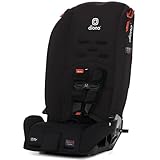
Overview: The Diono Radian 3R in Jet Black is a premium convertible car seat engineered for families seeking a single-seat solution from birth through booster age. Accommodating children from 5 to 120 pounds across four distinct modes, this seat emphasizes extended rear-facing capability up to 50 pounds and features a space-saving slim design that fits three across most vehicles.
What Makes It Stand Out: The reinforced automotive-grade steel core shell provides exceptional structural integrity unmatched by standard plastic frames. The 50-pound rear-facing limit exceeds most competitors, offering enhanced safety during crucial developmental years. Its signature slim-fit design achieves three-across installation without sacrificing comfort or safety, making it ideal for growing families with multiple children.
Value for Money: At $199.99, the Radian 3R delivers remarkable long-term value. Spanning ten years of use eliminates the need for multiple car seat purchases. While premium-priced, the steel construction, extended weight limits, and all-in-one functionality justify the investment compared to buying separate infant, convertible, and booster seats.
Strengths and Weaknesses: Strengths include superior steel reinforcement, industry-leading rear-facing capacity, space-efficient design, and premium ComfortPlus memory foam. The ten-year lifespan provides exceptional durability. Weaknesses include significant weight from the steel frame, making transfers challenging. Installation can be complex initially, and the higher price point may strain tight budgets. Some users report the narrow seat base feels compact for larger toddlers.
Bottom Line: The Diono Radian 3R is an outstanding investment for safety-conscious families planning multiple children or needing three-across capability. Its robust construction and extended-use design make it a top-tier choice despite minor installation and portability trade-offs.
7. Safety 1st Ellaris 3-in-1 Convertible Car Seat, Slim Fit Design, Rear & Forward-Facing, 5-Position Headrest, 3-Across Fit, Travel-Friendly with Machine-Washable Seat Pad, Peacock Blue

Overview: The Safety 1st Ellaris 3-in-1 Convertible Car Seat in Peacock Blue offers budget-conscious families a versatile travel-friendly solution. Supporting children from 5 to 65 pounds through rear-facing and forward-facing modes, this seat combines essential safety features with practical convenience at an accessible price point.
What Makes It Stand Out: Remarkable affordability meets thoughtful design with machine-washable and dryer-safe seat pads plus two dishwasher-safe cup holders. The hook-style LATCH system simplifies installation, while its airplane-ready compact design makes travel seamless. The slim profile fits three-across in most vehicles, a rare feature in this price category.
Value for Money: At $99.99, the Ellaris represents exceptional value. Few seats under $100 offer three-across compatibility and travel certification. While weight limits are modest compared to premium options, the cost savings versus buying separate infant and toddler seats make it a smart financial choice for families prioritizing practicality over extended-range specifications.
Strengths and Weaknesses: Strengths include unbeatable price, easy-clean convenience, travel certification, simple LATCH installation, and space-saving slim design. The five-position headrest provides adequate adjustment. Weaknesses include lower weight limits (40 lb rear-facing max, 65 lb forward-facing), limited to three modes rather than four, and basic materials lacking premium padding. The 40-pound rear-facing limit falls short of best-practice recommendations.
Bottom Line: The Safety 1st Ellaris is perfect for budget-focused families needing a reliable, easy-maintenance seat for one or two children. While not suited for extended rear-facing advocates, its travel features and three-across capability make it an outstanding value proposition.
8. Diono Radian 3R, 3-in-1 Convertible Car Seat, Rear Facing & Forward Facing, 10 Years 1 Car Seat, Slim Fit 3 Across, Gray Slate
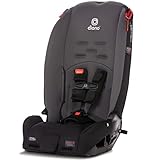
Overview: The Diono Radian 3R in Gray Slate delivers the same premium all-in-one functionality as its Jet Black counterpart, offering families a neutral color alternative. This convertible car seat serves children from 5 to 120 pounds over ten years, emphasizing extended rear-facing up to 50 pounds and a space-efficient slim design for three-across installations.
What Makes It Stand Out: The reinforced automotive-grade steel core provides exceptional crash protection beyond conventional plastic frames. Its 50-pound rear-facing capacity exceeds typical limits, enhancing safety during critical early years. The signature slim-fit design uniquely combines three-across compatibility with premium features, ideal for families requiring multiple seats without vehicle upgrades.
Value for Money: Priced at $199.99, the Gray Slate variant matches the Jet Black model’s excellent long-term value proposition. The decade-long service life eliminates multiple car seat purchases, justifying the upfront cost. The steel construction and extended weight ranges make it financially prudent compared to buying separate infant, convertible, and booster seats over time.
Strengths and Weaknesses: Strengths mirror the Jet Black version: superior steel reinforcement, class-leading rear-facing limits, compact three-across design, and included ComfortPlus memory foam. The ten-year lifespan ensures durability. Weaknesses include substantial weight from the steel frame, complicating transfers between vehicles. Initial installation requires patience, and the premium price may challenge tighter budgets. The narrower seat profile may feel restrictive for broader children.
Bottom Line: The Diono Radian 3R Gray Slate is an excellent choice for safety-focused families wanting a single, durable seat for multiple children or three-across needs. Its robust build and extended-use design justify the investment, despite minor portability and installation considerations.
9. Graco Tranzitions 3-in-1 Harness Booster Car Seat, Forward Facing Car Seat, Highback, to Backless Booster, Cinder

Overview: The Graco Tranzitions 3-in-1 Harness Booster in Cinder serves toddlers through youth in a lightweight, portable package. Designed for forward-facing use from 26.5 to 65 pounds, it transitions to highback and backless booster modes up to 100 pounds, making it ideal for active families needing flexibility without infant-stage capabilities.
What Makes It Stand Out: The No-Rethread Simply Safe Adjust Harness System enables simultaneous headrest and harness adjustment in one motion, simplifying fit modifications as children grow. Weighing significantly less than convertible seats, its portability excels for carpooling or travel. The nine-position headrest provides extensive customization rarely found in booster-focused seats.
Value for Money: At $149.99, the Tranzitions offers solid value for the toddler-to-youth age range. While it cannot accommodate infants, it eliminates the need for separate highback and backless boosters. Parents of children already forward-facing will appreciate the cost-effective longevity, though families needing rear-facing should consider all-in-one alternatives.
Strengths and Weaknesses: Strengths include lightweight portability, intuitive no-rethread adjustment, nine headrest positions, and seamless transitions between harness and booster modes. The compact design fits most vehicles easily. Weaknesses include the lack of rear-facing capability, limiting use to children over 26.5 pounds. The forward-facing-only design reduces overall versatility compared to true all-in-one seats, and the 40-pound minimum for booster mode may require some children to use the harness longer.
Bottom Line: The Graco Tranzitions is an excellent option for parents of toddlers seeking a portable, easy-adjust seat that grows through the booster years. Its lightweight design and simple transitions make it perfect for active families, provided infant accommodation isn’t required.
10. Disney Baby Ellaris 3-in-1 Convertible Car Seat, Slim Fit Design, Rear & Forward-Facing, 5-Position Headrest, 3-Across Fit, Travel-Friendly with Machine-Washable Seat Pad, Minnie Charm

Overview: The Disney Baby Ellaris 3-in-1 Convertible Car Seat in Minnie Charm combines Safety 1st’s practical design with Disney-themed aesthetics. Supporting children from 5 to 65 pounds through rear-facing and forward-facing modes, this seat offers the same core functionality as the standard Ellaris while appealing to young Disney enthusiasts with its character-inspired design.
What Makes It Stand Out: The Minnie Mouse-themed fabric distinguishes this model from standard versions, making it engaging for children without sacrificing safety features. It retains the practical benefits of machine-washable pads, dishwasher-safe cup holders, hook-style LATCH, and airplane-ready certification. The slim three-across design remains a key feature in this specialized version.
Value for Money: At $149.99, the Disney Baby Ellaris commands a $50 premium over the standard model purely for character branding. While the underlying safety and convenience features remain identical, families must weigh the aesthetic appeal against the price difference. For Disney fans, the emotional value may justify the cost, but budget-focused buyers will find better value in the Peacock Blue version.
Strengths and Weaknesses: Strengths include the engaging Disney design, easy-clean convenience, travel certification, simple installation, and space-saving profile. The five-position headrest provides adequate adjustment. Weaknesses include the significant price increase for cosmetic changes only, modest weight limits (40 lb rear-facing, 65 lb forward-facing), and basic materials. The branding may not appeal as children mature.
Bottom Line: The Disney Baby Ellaris is ideal for Disney-loving families willing to pay extra for themed aesthetics. It delivers the same reliable functionality as the standard model, making it a worthwhile splurge for character fans, though the standard version offers superior pure value.
The 3-Across Puzzle: Why Compact Cars Demand Specialized Solutions
The average compact car’s rear seat width ranges from 48 to 52 inches, while most convertible car seats measure 19-21 inches at their widest point. Do the math, and you’ll see the problem immediately. But width tells only part of the story. The real challenge involves seat belt geometry, LATCH anchor placement, door angle constraints, and the cascading effect of how each seat influences its neighbors’ installation angles. Modern slim convertibles address these variables through strategic engineering—tapered bases, rotating designs, and innovative belt paths that maximize every millimeter of available space.
Understanding the “Slim” Designation: More Than Just Marketing
Not every car seat marketed as “slim” deserves the title. True slim-profile convertibles typically measure 16.5 inches wide or less at the base, with some premium designs dipping below 16 inches. The secret lies in vertical space utilization rather than just horizontal shrinkage. These seats often feature recessed side impact protection that sits within the frame rather than protruding outward, and base designs that nestle into contoured vehicle seats rather than sitting atop them.
Critical Measurements Every Parent Must Know
Before browsing any options, arm yourself with three key numbers: your vehicle’s rear hip room measurement (found in your owner’s manual), the distance between your seat belt buckles, and the width of your door opening at the narrowest point. Many parents forget that installation requires maneuvering the seat through the door, not just fitting it between buckles. Measure at the seat bight (where the back cushion meets the bottom cushion) and halfway up the seatback, as these dimensions often differ significantly.
Vehicle Compatibility: Will It Actually Fit Your Car?
The most expensive slim convertible becomes worthless if it conflicts with your specific vehicle’s quirks. Compact cars vary wildly in their back seat architecture—a Subaru Impreza’s flat bench presents different challenges than a Mazda3’s deeply contoured seats. The angle of your rear windshield also matters; overly reclined seats may press against the glass in smaller sedans.
Measuring Your Back Seat Like a Pro
Create a paper template using cardboard cut to the footprint of potential seats. Slide it through your doors and position it on your bench to visualize real-world fit. Mark where seat belt buckles fall and check if the template overlaps any LATCH anchors you’ll need for neighboring seats. This low-tech method prevents costly returns and reveals clearance issues that product dimensions alone won’t show.
Door Angle and Seat Belt Geometry
Pay special attention to your seat belt stalk length and angle. Short, rigid stalks can make it nearly impossible to thread the belt through certain convertible seat paths in a 3-across setup. Some vehicles feature buckles that sit recessed into the seat, creating additional clearance, while others have protruding stalks that consume precious inches. Test this by buckling an existing seat and noting how much lateral space the belt and buckle assembly occupies.
Safety First: Non-Negotiable Standards for 2026
All car seats sold in the US must meet FMVSS 213 federal safety standards, but the slim designation adds complexity. Narrow seats must compensate for reduced width with enhanced structural integrity and innovative energy absorption. Look for designs that have undergone rigorous side-impact testing despite their trim profiles.
Federal Regulations vs. Real-World Performance
FMVSS 213 establishes minimum crash test requirements, but the Insurance Institute for Highway Safety (IIHS) provides the real-world evaluation that matters. Their “Best Bet” ratings for booster modes and LATCH ease-of-use assessments reveal which slim models truly excel in daily use. In 2026, pay attention to new testing protocols that evaluate how seats perform when installed in contact with one another—critical for 3-across configurations.
Side Impact Protection in Narrow Profiles
Manufacturers employ several strategies to maintain safety in slim designs: dual-layer foam construction, reinforced steel frames that channel crash forces vertically rather than laterally, and patented headwing designs that extend only when needed. Some premium models feature active side impact protection that deploys energy-absorbing panels during a collision while remaining compact during normal use.
Installation Mastery: The Key to a Secure Fit
A seat that installs easily in isolation becomes frustratingly difficult when sandwiched between two others. The installation sequence matters tremendously—typically, the middle seat installs first, followed by the outboard positions. However, some vehicle-seat combinations require reverse order to achieve proper belt tension.
LATCH Limitations in 3-Across Configurations
Here’s a critical fact: LATCH weight limits (usually 65 pounds combined child+seat weight) apply per seating position, but in 3-across setups, you might exceed the total LATCH anchor capacity of your vehicle. Most cars have only two sets of lower anchors, forcing the third seat to use seat belt installation. Even when LATCH is available, the narrow spacing often makes it physically impossible to access the anchors with three seats installed. Mastering seat belt installation isn’t optional—it’s essential.
Seat Belt Installation Techniques
The “lock-off” mechanism becomes your best friend in 3-across configurations. Premium slim convertibles feature built-in lock-offs that clamp the seat belt, eliminating the need to switch the retractor to locking mode—a nearly impossible task when you can’t pull the belt freely. Practice the “pinch test” after installation: attempt to pinch the belt webbing at the belt path; if you can gather any slack, it’s too loose.
The “Pool Noodle” Trick and Other Pro Tips
Achieving the proper recline angle often requires creative solutions. A tightly rolled towel or pool noodle section placed in the seat bight can tip the seat to the correct angle without compromising safety. For forward-facing installations, some CPSTs recommend installing the seat, then having a heavy adult sit in it while tightening the belt to compress the vehicle seat cushion fully.
Weight and Height Limits: Planning for Longevity
The best slim convertibles function as the only seat your child will need from birth to booster age. Look for rear-facing limits of at least 40 pounds and forward-facing harness heights of 17-19 inches. The seat’s shell height determines how long it lasts—measure from the seat bight to the top of the headrest in its highest position. A difference of just two inches can add two years of usable life.
Comfort vs. Space: Finding the Sweet Spot
Narrow seats shouldn’t mean cramped kids. Premium designs maximize internal dimensions while minimizing external width. Look for seats with adjustable hip room—some models feature rotating or expanding side panels that create more shoulder space as children grow. Deep side wings provide head support for napping without adding external bulk.
Fabric Choices and Breathability
Mesh panel placements matter more than material marketing claims. Seats designed for compact cars often position breathable panels where the child contacts the seat most—behind the back and under the thighs. Avoid plush fabrics that compress over time, as this changes the seat’s geometry and effective depth. Removable, machine-washable covers are non-negotiable, but check how easily they remove when the seat is installed.
Recline Options and Headrest Adjustments
Multiple recline positions serve two purposes: achieving the proper angle for newborns and creating clearance from the front seats. In compact cars, seats with recline mechanisms that adjust from the front are invaluable—you won’t have access to the back of the seat once it’s installed. Headrests should adjust with the harness in one motion to ensure proper positioning at all times.
Ease of Use: Features That Save Your Sanity
Daily operations become maddening when you can’t reach buckles or adjust harnesses. Look for seats with front-access harness adjusters and buckle pockets that hold the harness out of the way while loading your child. The “harness holder” feature, while seemingly minor, prevents the daily struggle of fishing straps from behind your child’s back in a cramped space.
Material Quality and Durability for Daily Grind
The plastic used in seat shells varies dramatically. High-quality seats use polypropylene with integrated UV stabilizers that prevent brittleness from sun exposure—a real concern when seats press against windows in compact cars. Steel-reinforced frames add weight but provide critical longevity. Feel the shell’s flex; quality seats feel rigid with minimal give, even at pressure points.
Budget Considerations: Investment vs. Value
Slim convertibles range from $200 to $500+, but price doesn’t always correlate with 3-across suitability. The most expensive models often include features irrelevant to compact car families—extra-large canopies, rotating bases that require more space, or integrated sensors. Focus your budget on installation ease, narrow footprint, and height limits. A $250 seat that lasts until booster age offers better value than a $400 seat you’ll replace sooner.
Travel-Friendly Features for Modern Families
Frequent flyers need seats that excel both in cars and airports. Look for models under 20 pounds with carrying handles or grip points. Some slim designs feature fold-flat capabilities that make them easier to maneuver through tight airplane aisles—ironic that the same features helping in compact cars benefit air travel.
Airplane Compatibility and FAA Approval
All US car seats are FAA-approved for use in aircraft, but not all fit well. The magic number is 16 inches wide—anything narrower fits in coach seats without armrest interference. Measure the seat’s depth too; overly deep seats prevent the tray table behind from lowering. Request bulkhead seating when flying with a slim convertible to avoid this issue entirely.
Portability for Ride-Sharing and Travel
Quick installation becomes paramount when moving seats between Uber rides or rental cars. Seats with clear belt path labeling and color-coded installation guides reduce setup time from 15 minutes to under 5. Some families purchase a dedicated travel bag with backpack straps, transforming their slim seat into carry-on luggage.
Common Installation Mistakes That Compromise Safety
The number one error in 3-across installations is “borrowing” LATCH anchors—using the inner anchor from one seating position for an adjacent seat. This is explicitly prohibited and dangerous. Second is failing to check that each seat remains independently secure after installing all three. Always perform the “inch test” on each seat individually: grasp at the belt path and attempt to move it side-to-side and front-to-back. If it moves more than one inch, it’s not secure.
Cleaning and Maintenance: Keeping Seats Pristine
In compact cars, seats endure more wear from constant contact with doors and siblings’ feet. Choose models with wipe-clean shell surfaces under the fabric—this prevents grime buildup on the hard components. Monthly vacuuming of crevices prevents food particles from affecting harness adjustment mechanisms. Never submerge harness straps; they lose strength when washed. Instead, spot-clean with a damp cloth and mild soap.
Future-Proofing Your Purchase
Your 3-across needs will evolve. Newborns require deep recline and infant inserts. Toddlers need extended rear-facing capability. Preschoolers need high forward-facing harness slots. The ideal slim convertible adapts to all stages without requiring replacement. Check that infant inserts remove completely—some designs leave bulky components that reduce interior space unnecessarily. Confirm the seat converts to a high-back booster with adequate belt guide positioning; some slim models compromise on booster geometry.
Expert Tips from CPSTs (Child Passenger Safety Technicians)
Professional installers recommend installing the most difficult seat first—usually the center position. Use a “seat belt extender” temporarily to create slack for threading, then remove it for final tightening. Keep a small, sturdy step stool in your trunk; the elevated angle makes it easier to apply leverage when tightening belts in cramped quarters. Photograph your installation from multiple angles before finalizing; this helps you recreate the setup if you must remove seats temporarily.
Frequently Asked Questions
How do I know if a “slim” car seat will truly fit three across in my specific vehicle?
Measure your rear seat’s width at three points: the narrowest part of the seat bight, at the buckle level, and at the top of the seatback. Compare these to the seat’s external dimensions, but also create a cardboard template to test physical fit through your doors. Remember that published widths often measure the base only; headwings and side impact protection may extend further.
Are narrow car seats less safe than standard-width models?
No, provided they meet the same FMVSS 213 federal standards. Slim seats compensate for reduced width through enhanced vertical structure, advanced materials, and innovative energy management. Many undergo the same rigorous testing as wider models, including side-impact evaluations. The key is proper installation—an incorrectly installed wide seat is far less safe than a correctly installed narrow one.
Can I fit three slim convertibles with my newborn twins and toddler?
Absolutely, but installation sequence matters. Place the rear-facing newborn seats in the outboard positions first, then install the forward-facing toddler seat in the middle. This arrangement allows you to achieve the necessary 45-degree recline angle for infants while using the more upright toddler seat as a “anchor” in the center. Some families prefer placing one infant seat in the middle and the toddler behind the passenger seat for easier access.
Should I use LATCH or seat belt installation for 3-across configurations?
Plan on using seat belt installation for at least two of the three positions. Most vehicles only have two sets of lower anchors, and LATCH weight limits often restrict its use as children grow. Seat belt installation, when done correctly with lock-offs, is equally safe and sometimes more secure in compact cars. Master the seat belt method regardless of LATCH availability.
How do I buckle the center seat when I can barely reach it?
This is the most common frustration. Choose a center seat with a front-adjust harness and buckle holder clips. Some parents use a carabiner to extend the crotch buckle temporarily while loading. Practice the “reach-around” technique: kneel on the outboard seat, brace yourself on the door frame, and use your fingertips to guide the buckle. For daily sanity, consider which child is most cooperative and place them in the center.
Will slim convertible seats fit my children until they’re ready for boosters?
It depends on your children’s growth patterns. Look for seats with high rear-facing weight limits (40+ pounds) and tall shell heights. Measure your child’s seated height (bottom to top of head) and compare it to the seat’s internal height measurements. Many slim models accommodate children to 45-49 inches tall in harness mode, which typically lasts until age 5-7. Children with longer torsos may outgrow seats before reaching weight limits.
Can I use second-hand slim convertible seats to save money?
We strongly advise against used seats unless you know the complete history. Car seats expire after 6-10 years, and any involvement in a moderate or severe crash compromises their integrity. With slim models, microscopic stress fractures in the narrow structural components are harder to detect. If you must use a hand-me-down, verify the manufacture date, confirm it was never in a crash, and check that all parts—including the manual—are present.
How do I clean between three tightly-packed seats?
Prevention beats cleanup. Use waterproof seat protectors under each car seat to catch crumbs and spills. A flexible crevice tool on your vacuum cleaner reaches between seats. For deep cleaning, you may need to remove one seat temporarily—photograph the installation first. Some parents keep a small handheld vacuum in the car for weekly maintenance. Avoid removing seat covers more than necessary, as reassembly in tight quarters is challenging.
Do slim car seats work for airplane travel?
Most excel at air travel precisely because they’re narrow. The FAA recommends seats no wider than 16 inches for easiest fit. Before flying, measure the seat’s depth to ensure it won’t interfere with the tray table behind you. Install the seat in the airplane using the seat belt only—never use LATCH. Position it in a window seat to avoid blocking other passengers during installation.
When should I consult a Child Passenger Safety Technician?
Always consult a CPST before finalizing a 3-across setup, ideally before purchasing seats. Many offer pre-purchase consultations where they’ll assess your vehicle and recommend compatible models. Post-installation checks are invaluable—what feels secure to you might have subtle issues a trained eye catches. Find certified technicians through Safe Kids Coalition or the National Child Passenger Safety Board; many work at fire stations, hospitals, or dedicated fitting stations.