Picture this: you’re investing in a premium travel system for your firstborn, dropping a significant chunk of your nursery budget on what you believe is the perfect single stroller. Fast forward 18 months later, and baby number two is on the way. Suddenly, that “perfect” stroller becomes obsolete, relegated to the resale market at a fraction of what you paid. This is the expensive mistake modular travel systems were designed to prevent. These ingenious engineering marvels adapt and evolve with your family, transforming from a sleek single stroller into a fully functional double without requiring you to start from scratch.
As we look ahead to 2026, the modular travel system market has reached unprecedented levels of sophistication. We’re no longer talking about clunky, compromised conversions that feel like an afterthought. Today’s systems are architecturally designed from the ground up to serve one child beautifully and two children seamlessly. But with this evolution comes complexity—understanding which features truly matter versus which are clever marketing can mean the difference between a decade-long workhorse and a pricey regret. Let’s dive deep into what separates exceptional modular systems from the merely adequate.
Top 10 Modular Travel Systems for Double Strollers
Detailed Product Reviews
1. Evenflo Pivot Xpand Modular Travel System with LiteMax Infant Car Seat (Ayrshire Black)

Overview: The Evenflo Pivot Xpand in Ayrshire Black is a forward-thinking travel system designed for growing families. At $549.99, this modular stroller pairs with the LiteMax Infant Car Seat and features a unique expansion capability that transforms it from a single to double stroller without adapters or tools. The sleek black finish offers a timeless, gender-neutral aesthetic that resists showing dirt and wear from daily use.
What Makes It Stand Out: The slide-and-lock expansion system is the star feature, allowing parents to accommodate a second toddler or infant seat in seconds. This tool-free conversion eliminates the need to purchase a separate double stroller, saving money and storage space. The frame maintains stability even when expanded, and the modular design accepts the infant car seat directly for seamless transitions from vehicle to strolling.
Value for Money: At $549.99, this system commands a premium but delivers long-term value. Traditional double strollers cost $400-600, while this single-to-double solution eliminates that future purchase. The LiteMax car seat inclusion adds approximately $150-200 in value, making the effective stroller price reasonable for a high-quality, expandable frame that grows with your family.
Strengths and Weaknesses: Strengths include the innovative expansion mechanism, durable construction, and included infant car seat. The system eliminates adapter hassles and provides future-proof flexibility. Weaknesses include limited feature details in the listing, potentially missing premium amenities like upgraded suspension or storage. The expanded configuration may add weight and bulk, and the price point exceeds basic travel systems.
Bottom Line: Ideal for planning parents who anticipate a second child, this travel system justifies its cost through adaptability. The expansion feature eliminates the need to buy twice, making it a smart investment for growing families prioritizing convenience and long-term use.
2. Pivot Xpand Modular Travel System with LiteMax Infant Car Seat with Anti-Rebound Bar (Ayrshire Black)

Overview: This premium Pivot Xpand system at $549.99 includes the enhanced LiteMax Infant Car Seat with Anti-Rebound Bar, representing Evenflo’s commitment to safety and versatility. The Ayrshire Black colorway provides a sophisticated, practical finish that coordinates with any style while masking everyday grime. This package delivers comprehensive features for families planning for one or multiple children.
What Makes It Stand Out: The Anti-Rebound Bar sets this apart, absorbing crash forces and providing additional stability during collisions—a critical safety enhancement. The toddler seat’s lay-flat carriage mode offers superior comfort for napping infants, while the three-position adjustable canopy accommodates children up to 43 inches. With 23 possible configurations, parents can customize facing directions and seating arrangements with unprecedented flexibility.
Value for Money: This system delivers exceptional value at $549.99. The anti-rebound bar technology typically appears in car seats costing $50-100 more alone. Combined with the expandable frame, reversible seating, and premium tires with suspension, you’re receiving features found in $700+ competitors. The tool-free expansion and included accessories eliminate separate purchases that could add $200-300.
Strengths and Weaknesses: Strengths include superior safety features, unmatched configuration options, smooth-riding tires with suspension, and the expandable design. The lay-flat mode and adjustable canopy enhance child comfort. Weaknesses involve potential complexity—23 configurations may overwhelm some users. The system is heavier than non-expandable models, and the premium price exceeds budget travel systems.
Bottom Line: This is the ultimate choice for safety-conscious parents wanting maximum versatility. The anti-rebound bar and expansion capability justify every dollar, making it perfect for families prioritizing security, adaptability, and long-term value in one comprehensive package.
3. Evenflo Pivot Xpand Modular Travel System with LiteMax Infant Car Seat (Sabino Gray)

Overview: The Pivot Xpand in Sabino Gray offers the same expandable functionality as its Ayrshire Black counterpart but at a more accessible $499.99 price point. This travel system includes the LiteMax Infant Car Seat and the signature slide-and-lock frame expansion that transforms it from single to double stroller. The neutral gray tone provides a modern, versatile aesthetic that complements various styles while remaining practical for daily use.
What Makes It Stand Out: This model delivers the core Xpand innovation—tool-free, adapter-free expansion to accommodate a second child—instantly doubling its value proposition. The $50 savings compared to the black version makes this particularly attractive for budget-conscious families. The modular frame accepts the infant car seat directly, creating a lightweight travel system for newborns that grows into a full-featured stroller for toddlers.
Value for Money: At $499.99, this represents strong value in the expandable travel system category. You’re getting the same frame expansion capability that eliminates a future $400-600 double stroller purchase. While feature details are limited in the listing, the core functionality and included LiteMax car seat (valued at $150-200) make this a financially sound choice for families planning ahead without paying premium colorway pricing.
Strengths and Weaknesses: Strengths include the expandable design, cost savings over other Xpand models, and neutral color. The system provides future-proof flexibility and includes an infant car seat. Weaknesses include sparse feature documentation, potentially lacking premium amenities like upgraded suspension or the anti-rebound bar. The expanded configuration adds weight, and long-term durability questions remain without full specifications.
Bottom Line: This Sabino Gray version delivers the essential Xpand advantage at a discount. For families wanting expandable convenience without unnecessary frills, it offers smart economics. Choose this if you prioritize function over premium features and appreciate the practical gray finish.
4. Evenflo Pivot Modular Travel System with LiteMax Infant Car Seat (Casual Gray)
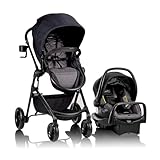
Overview: The Evenflo Pivot Modular Travel System in Casual Gray provides a streamlined, non-expandable option at $309.99 for families confident they’ll remain a single-child household. This lightweight combo includes the LiteMax Infant Car Seat and offers six versatile modes, converting from infant car seat frame to toddler seat to pramette mode. The casual gray finish delivers a clean, contemporary look that resists showing wear.
What Makes It Stand Out: This system excels in simplicity and value, offering six practical configurations without the complexity or weight of expandable models. The toddler seat’s lay-flat pramette mode provides excellent comfort for infants, while the Stability Base ensures secure car seat installation. Parents receive premium extras typically sold separately: oversized storage basket, large cruiser tires with tread, parent cup holder, and child snack tray—all included at no additional cost.
Value for Money: At $309.99, this represents outstanding value. Comparable modular travel systems without expansion capability typically range $350-450. The inclusion of the LiteMax car seat ($150-200 value) means the stroller frame costs effectively $110-160. When factoring in the included accessories (worth $50-75), you’re receiving a feature-rich system at a budget-friendly price point that’s hard to match.
Strengths and Weaknesses: Strengths include lightweight design, affordable pricing, included accessories, and easy mode transitions. The lay-flat pramette and Stability Base enhance safety and comfort. Weaknesses include non-expandable design—families adding a second child must purchase a new system. The six modes offer less versatility than Xpand models, and the tires may lack advanced suspension.
Bottom Line: Perfect for single-child families or those on a tight budget, this system delivers essential features without expansion premiums. If you don’t need double capacity, it provides maximum functionality for minimum investment, making it a practical, economical choice.
5. Evenflo Pivot Modular Travel System with LiteMax Infant Car Seat (Desert Tan)

Overview: The Desert Tan version of Evenflo’s Pivot Modular Travel System mirrors its Casual Gray sibling at $329.99, offering the same six-mode functionality and LiteMax Infant Car Seat in a warm, earthy tone. This non-expandable system targets single-child families seeking versatility without the weight or cost of double-capable strollers. The tan finish provides a stylish alternative to standard gray or black while maintaining practical stain resistance.
What Makes It Stand Out: Beyond the attractive Desert Tan colorway, this system delivers the same core advantages: lightweight modular design, lay-flat pramette mode, and comprehensive included accessories. The warm tan hue offers a unique aesthetic that stands out from typical stroller colors while coordinating beautifully with neutral wardrobes. It provides identical functionality to the Casual Gray model, giving parents a style choice without compromising features.
Value for Money: Priced at $329.99—$20 more than the Casual Gray—this system’s value depends on color preference. The core package remains exceptional: LiteMax car seat ($150-200 value) plus stroller with six modes and premium accessories for an effective stroller cost of $130-180. While the color premium is modest, budget shoppers may prefer the gray version. For those loving the tan aesthetic, the slight upcharge doesn’t diminish the overall strong value proposition.
Strengths and Weaknesses: Strengths include the same lightweight frame, versatile modes, included accessories, and appealing tan color. The Stability Base and lay-flat pramette ensure safety and comfort. Weaknesses include the non-expandable limitation and $20 color premium over the gray version. With only six configurations, it lacks the ultimate flexibility of Xpand models, and families planning for second children will need to reinvest.
Bottom Line: Choose Desert Tan if you love the color and accept the small premium. It delivers identical performance to the excellent Casual Gray model, making it perfect for single-child families prioritizing style, functionality, and budget-consciousness in one attractive package.
6. Baby Trend Morph Single to Double Modular Stroller, Dash Black

Overview: The Baby Trend Morph redefines adaptability for growing families with its innovative single-to-double modular design. This versatile stroller system accommodates multiple configurations, allowing parents to customize their strolling experience as their family expands. The frame includes a built-in standing board and seat bench, enabling two children to ride simultaneously without purchasing additional accessories. The included modular seat transforms into a bassinet for infants, providing a comfortable resting solution from birth through toddler years.
What Makes It Stand Out: The integrated standing platform sets this apart from competitors requiring separate buggy boards. The seamless conversion between single and double modes with over six possible seating arrangements offers unmatched flexibility. Forward and rear-facing options, combined with an adjustable footrest that grows with your child, ensure extended usability. Integrated adapters eliminate the hassle of purchasing separate conversion kits.
Value for Money: At $299.99, the Morph significantly undercuts premium modular strollers that often exceed $500. This price point delivers exceptional long-term value, essentially providing three products in one: single stroller, double stroller, and standing board solution. For budget-conscious families planning multiple children, this represents substantial savings.
Strengths and Weaknesses: Strengths include remarkable versatility, built-in standing board, bassinet conversion, adjustable footrest, and parent convenience tray. The compact fold relative to its capabilities is impressive. Weaknesses include basic wheel suspension compared to premium brands, plastic components that may feel less durable, and a heavier frame at 28 pounds. Limited premium features like leatherette handles or all-terrain wheels are absent.
Bottom Line: The Baby Trend Morph is an outstanding value proposition for expanding families. While it lacks luxury finishes, its functional versatility and smart design make it a practical, cost-effective choice that genuinely grows with your family.
7. Evenflo Shyft Intuiti Travel System with Revolve180 LiteMax™ NXT Rotating Rear-Facing Lightweight Preemie and Infant Car Seat 3-30 lbs. (Black Shale)

Overview: The Evenflo Shyft Intuiti Travel System elevates convenience with its revolutionary rotating car seat and luxury stroller features. Engineered for modern parents, this system combines a fully-featured stroller with the Revolve180 LiteMax NXT car seat, designed for infants as small as 3 pounds. The modular frame supports six distinct modes, accommodating newborns through toddlers with both parent-facing and forward-facing options.
What Makes It Stand Out: The star feature is the one-hand 180° rotating car seat, eliminating awkward twisting and back strain during loading. All-wheel suspension with high-traction rubber tires delivers a remarkably smooth ride across varied terrain. Luxury touches include a three-position articulated leatherette handle, UPF 50+ height-adjustable canopy, and linked rear brakes. The system accommodates children up to 43 inches tall, extending usability.
Value for Money: At $549.99, this mid-range travel system justifies its price through innovative engineering and premium amenities. Comparable rotating car seat systems often cost $600+ separately, making this bundled package competitively priced for safety-conscious parents seeking convenience.
Strengths and Weaknesses: Strengths include the groundbreaking rotation mechanism, superior suspension, preemie suitability (3 lbs), luxurious finishes, and versatile 6-mode stroller. The lightweight car seat design eases transport. Weaknesses include the 30-pound weight limit restricting extended rear-facing use, limited color options, and a potentially bulky stroller fold. The rotating base requires adequate vehicle seat space.
Bottom Line: The Evenflo Shyft Intuiti excels in convenience and comfort. For parents prioritizing easy car seat access and smooth rides, this system’s innovative rotation feature and quality construction make it a worthwhile investment.
8. Chive and Rue - All-in-One Convertible Single-to-Double Modular Stroller with 20+ Customizable Modes & All-Terrain Wheels, and Lightweight Infant Car Seat Travel System (Dove)
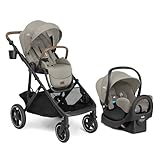
Overview: The Chive and Rue travel system positions itself as the ultimate adaptable solution for active families, boasting over 20 customizable modes and all-terrain capability. This premium system pairs a robust modular stroller with an ultra-lightweight infant car seat weighing under 8 pounds. Designed for families who refuse to compromise, it transitions seamlessly from single to double configuration while tackling any environment.
What Makes It Stand Out: PunctureProof all-terrain rubber tires with front-wheel and in-seat suspension conquer sticks, stones, and bumps effortlessly. The height-adjustable seat offers three positions for enhanced parent-child bonding. The Rue car seat includes an integrated anti-rebound bar in its base, providing advanced safety by limiting rotation during impact. At under 8 pounds, the car seat is exceptionally portable.
Value for Money: Priced at $649.99, this premium system competes with luxury brands like UPPAbaby and Bugaboo. While expensive, the extensive mode options, all-terrain performance, lightweight seat, and included anti-rebound base justify the cost for families seeking one system for all scenarios.
Strengths and Weaknesses: Strengths include unmatched versatility (20+ modes), superior all-terrain performance, ultra-light car seat, anti-rebound safety feature, and height adjustability. The Dove colorway offers sophisticated aesthetics. Weaknesses include the highest price point in this comparison, potentially excessive features for urban-only users, and a complex learning curve for mode transitions. The stroller’s weight may challenge some users.
Bottom Line: For adventurous families demanding maximum versatility and terrain capability, the Chive and Rue delivers exceptional performance. The investment pays off for those needing one system to handle everything from city streets to country trails.
9. Baby Trend Infant and Toddler Double Stroller & Car Seat Combo, 2 Pc Set, Khaki - Portable and Lightweight Stroller Duo and Car Seat Travel System Tandem

Overview: Baby Trend’s tandem travel system provides a complete double stroller and car seat solution for families with two young children. This 3-in-1 system accommodates children from newborn to 40 pounds, offering extended usability through childhood. The tandem design positions one child behind the other, maintaining a manageable footprint for navigating doorways and store aisles while delivering comprehensive travel functionality.
What Makes It Stand Out: This system excels as an all-in-one package for twins or close-age siblings, eliminating the need to purchase separate components. The 5-point safety harness with one-hand adjustment ensures secure, convenient fastening. The lightweight construction and easy-fold mechanism simplify transport and storage, addressing common pain points with double strollers. The 40-pound weight capacity per seat extends longevity.
Value for Money: At $346.99, this represents exceptional value for a complete double travel system. Competitors often charge $500+ for similar tandem setups, making this an accessible option for budget-conscious families requiring double capacity without sacrificing essential safety features.
Strengths and Weaknesses: Strengths include affordable pricing, tandem narrow design, high weight capacity, simple fold mechanism, and trusted brand reputation. The system covers infancy through toddlerhood comprehensively. Weaknesses include basic suspension resulting in a bumpier ride, limited maneuverability compared to side-by-side or premium strollers, and minimal storage space. The tandem configuration may cause rear-seat visibility issues.
Bottom Line: This Baby Trend double system delivers practical functionality at an unbeatable price for families needing immediate double capacity. While it lacks premium features, its affordability and comprehensive coverage make it a sensible choice for twins or siblings close in age.
10. Baby Trend Infant and Toddler Double Stroller & Car Seat Combo, 2 Pc Set, Stormy - Lightweight and Compact Travel Stroller and Carseat Tandem for Babies, Infants, and Toddlers

Overview: The Baby Trend Stormy travel system offers a practical tandem solution for families needing double capacity with versatile seating options. This 2-piece set includes the Sit N’ Stand double stroller and EZ-Lift infant car seat, accommodating children from birth through toddler years. The rear seat converts to a standing platform, providing flexibility for siblings of different ages to ride comfortably.
What Makes It Stand Out: The convertible rear seat transforms from traditional seating to a standing platform, ideal for older toddlers who want independence. The car seat features an ergonomic grip and plush padding for infant comfort, while the handle doubles as an anti-rebound bar for enhanced safety. The two-panel ratcheting canopy on the front seat plus fixed rear canopy provide comprehensive sun protection.
Value for Money: At $329.99, this is the most affordable double travel system in this lineup, offering remarkable value for families prioritizing budget. The inclusion of safety features like the anti-rebound bar and 5-point harnesses at this price point demonstrates exceptional value engineering.
Strengths and Weaknesses: Strengths include outstanding affordability, versatile Sit N’ Stand design, safety-conscious features like the anti-rebound bar, compact one-hand fold, and lightweight construction. The Stormy color provides a neutral, modern aesthetic. Weaknesses include basic wheel performance on uneven terrain, limited storage capacity, and a narrower rear seat that may feel cramped. The tandem design restricts some visibility and interaction.
Bottom Line: For budget-minded families seeking maximum versatility in a double system, the Baby Trend Stormy delivers impressive functionality. The Sit N’ Stand design grows with your family, making this an intelligent, economical choice for parents of two.
Why Modular Travel Systems Are the Smart Investment for Growing Families
The financial logic is compelling: a quality modular system typically costs 30-40% less than buying separate single and double strollers over your child-rearing years. But the real value extends far beyond dollars saved. These systems maintain consistent handling characteristics whether you’re pushing one child or two, eliminating the learning curve that comes with switching between completely different stroller models. Your muscle memory for folding, unfolding, and maneuvering remains intact—a subtle but significant benefit when you’re juggling a toddler and an infant.
Environmental consciousness also plays a role. In an era where sustainability influences purchasing decisions, buying one frame that serves your family for 5-7 years reduces manufacturing demand and keeps bulky stroller frames out of landfills. The cognitive load is lighter too; you’re not researching, purchasing, and learning a whole new system while sleep-deprived with a newborn and energetic toddler.
Understanding the “Single to Double” Transformation
The magic of modular systems lies in their chassis architecture. Unlike traditional strollers with fixed seating positions, these frames feature expandable wheelbases, adjustable handlebars, and modular mounting points that accommodate additional seats, bassinets, or car seat carriers. The transformation isn’t merely additive—it’s a complete reimagining of how weight distribution and maneuverability work.
How Modular Frames Adapt to Your Family’s Needs
Premium systems utilize a “growth platform” approach. The base frame remains constant while you add components. This means the fundamental engineering—center of gravity, wheel alignment, and suspension geometry—is calculated for both configurations from day one. When you attach a second seat, the frame automatically adjusts its weight distribution, often shifting the center of balance rearward to compensate for the additional front load. This prevents the dreaded “tip-forward” instability that plagues poorly designed convertible strollers.
Key Features That Define Premium Modular Systems
Distinguishing between marketing fluff and genuine innovation requires understanding the mechanical elements that make or break these systems. The difference between a $600 and $1,200 modular stroller isn’t just branding—it’s materials science, precision engineering, and thoughtful ergonomics.
Frame Strength and Engineering
Look for aircraft-grade aluminum (typically 6061 or 7005 series) rather than standard steel or lower-grade aluminum. These alloys provide exceptional strength-to-weight ratios, crucial when you’re adding a second seat and potentially 40+ pounds of additional payload. The welds should be smooth and consistent, not spot-welded, and the joints should feature reinforced gussets at stress points. A telltale sign of quality: the frame warranty—premium manufacturers offer lifetime frame warranties because they engineer for durability.
Wheel Systems and Terrain Mastery
Wheel configuration reveals everything about a stroller’s intended use. True all-terrain systems feature air-filled pneumatic tires (10-12 inches in diameter) with sealed bearings and adjustable suspension. City-oriented models use foam-filled or EVA tires that never go flat but sacrifice some shock absorption. The critical spec is the front wheel locking mechanism—premium systems offer both swivel and locked positions that can be engaged with a toe-tap, not manual manipulation.
Folding Mechanisms: One-Hand vs Two-Hand
The folding mechanism is where engineering meets real-world parenting. One-hand folds sound convenient until you realize they often compromise frame rigidity. The sweet spot is a two-step, one-hand fold where you trigger a safety latch, then pull a handle. This prevents accidental folding while maintaining structural integrity. Watch for self-standing folds—the ability for the folded stroller to stand upright prevents fabric damage and saves trunk space.
Safety Standards and Certifications for 2026
Safety standards evolve, and 2026 brings enhanced testing protocols specifically for convertible systems. The ASTM F833 standard now includes dynamic stability testing for double configurations, simulating real-world tipping scenarios with uneven weight distribution.
Understanding ASTM and JPMA Ratings
ASTM International sets the baseline safety requirements, but JPMA (Juvenile Products Manufacturers Association) certification means a product has undergone additional third-party testing. For modular systems, pay attention to the “convertible configuration” clause in the certification—some products are only certified in single mode. The 2026 updates also include stricter requirements for finger entrapment in folding mechanisms and chemical testing for PFAS in fabrics.
Brake Systems: From Flip-Flops to Hiking Boots
Brake engagement should be intuitive and accessible. The best systems feature a single-action brake pedal that locks both rear wheels simultaneously, with a color indicator (green/red) visible from the handlebar. For 2026, look for “progressive braking”—a system that allows partial engagement for controlled descent on hills, similar to a bicycle brake. This is particularly valuable when managing the increased weight of a double configuration.
Car Seat Compatibility: The Foundation of Your System
Your travel system is only as good as its car seat integration. The “click” should be audible and tactile, requiring deliberate effort to release. Passive locking systems that rely solely on gravity are red flags.
Infant Car Seat Adapters: What to Look For
Premium adapters feature steel reinforcement plates and multiple locking points. They should attach to the frame without tools and include visual confirmation indicators. Some 2026 models incorporate electronic sensors that beep when the car seat is properly secured—a feature that seems gimmicky until you’re sleep-deprived at 2 AM. The adapter should also position the car seat at the correct recline angle to prevent airway obstruction.
European Belt Path vs American Installation
European belt path routing (where the shoulder belt wraps behind the car seat) provides more secure installation without a base, valuable for taxis and travel. American systems prioritize base installation. The best modular systems accommodate both methods through adapter design, giving you flexibility for different travel scenarios.
Configuration Psychology: Front, Back, or Side-by-Side?
The arrangement of seats dramatically affects sibling interaction, weight distribution, and maneuverability. Each configuration solves different problems while creating new ones.
Tandem vs Side-by-Side: The Great Debate
Tandem (inline) configurations dominate the modular market because they maintain standard doorway width (typically 24-26 inches). The rear seat sits higher than the front, creating a “stadium seating” effect that gives the back child a view. However, this shifts the center of gravity upward, making the stroller feel tippier when turning. Side-by-side configurations offer better weight distribution and sibling interaction but struggle with narrow aisles and doorways.
Seat Positioning and Sibling Dynamics
The ability to reverse seat direction is more than a novelty—it impacts child development. Face-to-face configurations allow siblings to interact, while both-facing-parent mode maintains connection with younger children. Premium systems offer “infinite recline” positions independent of seat direction, meaning you can recline a sleeping newborn while their toddler sibling sits upright facing forward.
Weight Limits and Longevity: Planning for Years, Not Months
Manufacturers often advertise impressive weight capacities, but the devil is in the details. The stated limit might apply only to the main seat, with the second seat having a lower threshold.
Understanding True Weight Capacity
Look for the “combined weight rating”—the total payload the frame can safely handle including children, storage, and accessories. Premium 2026 systems rate for 100-120 pounds combined, while budget models might only handle 75-80 pounds. Consider your children’s growth curves: a 95th percentile toddler can reach 40 pounds by age 3, leaving little capacity for a newborn sibling.
From Newborn to Preschooler: The Growth Timeline
The best systems accommodate newborns without requiring a separate bassinet purchase. Look for seats that recline flat (170-180 degrees) with adjustable leg rests that create a bassinet-like environment. The footrest should extend to support a 4-year-old’s legs, and the canopy should raise to accommodate a tall preschooler—subtle details that extend usable life by years.
The Fold Factor: Trunk Space and Real-World Storage
A stroller that doesn’t fit your trunk is worthless, regardless of features. The folded dimensions in double configuration are what matter—many systems fold compactly as a single but become unwieldy with two seats attached.
Standing Folds and Self-Standing Features
Self-standing folds protect the handlebar grips and fabric from ground contact. The mechanism should keep the stroller stable on its end without wobbling. Some 2026 models feature “fold direction selection”—you can fold with seats facing either direction without removing them, a significant time-saver. Measure your trunk’s depth and width, then subtract 2-3 inches for wiggle room. Remember: folded height matters too for SUV cargo areas with sloping lids.
Terrain Tackling: Wheels, Suspension, and Your Daily Route
Your stroller’s wheel and suspension system should match your actual daily environment, not your aspirational one. A family navigating city sidewalks has different needs than one hitting forest trails.
All-Terrain vs City-Smart Wheel Profiles
True all-terrain systems feature air-filled tires with adjustable suspension damping. You should be able to stiffen suspension for smooth pavement or soften it for gravel paths. City systems use foam-filled tires with minimal suspension but excel at curb hopping and tight turns. The hybrid approach—large foam-filled tires with advanced polymer suspension—offers 80% of all-terrain capability without the maintenance of pneumatic tires.
Suspension Systems Explained
Premium suspension isn’t just springs—it’s progressive damping that adjusts to load. When you add a second child, the suspension should automatically compensate, preventing bottoming out. Look for “adjustable rebound” in the specifications, which controls how quickly the suspension returns after compression. This prevents the bouncy, pogo-stick feeling that plagues poorly damped systems.
Material Matters: Fabrics, Frames, and Long-Term Durability
The materials used in your stroller determine not just longevity but also daily user experience. Cheap fabrics fade, stain, and tear; low-grade frames develop wobble and creak.
UPF Ratings and Weather-Resistant Fabrics
Canopy fabric should carry a UPF 50+ rating, blocking 98% of UV radiation. But equally important is the “breathability factor”—look for fabrics with moisture-wicking backings that prevent heat buildup. Premium 2026 models use solution-dyed acrylics (like marine canvas) that resist fading and mildew. The fabric should be removable for washing without requiring a PhD in engineering.
Aluminum Grades and Frame Construction
Frame tubing thickness matters more than diameter. High-quality systems use butted tubes—thicker at stress points, thinner elsewhere—to save weight without sacrificing strength. The finish should be anodized, not painted. Anodizing penetrates the aluminum, creating a scratch-resistant surface that won’t chip. Check for plastic components in high-stress areas; premium systems use glass-filled nylon or aluminum castings, not simple ABS plastic.
The Accessory Ecosystem: From Cup Holders to Bug Nets
A modular system’s value multiplies through its accessories. The best ecosystems include weather shields, bug nets, parent consoles, and rider boards that integrate seamlessly without adapters.
Look for “universal mounting rails” on the frame that accept accessories from third-party manufacturers. This open-architecture approach future-proofs your investment. The accessory attachment points should be metal-reinforced, not plastic clips that fatigue over time. Consider the storage basket’s expandability—some systems offer zippered extensions that increase capacity when in double mode.
Budget Breakdown: Understanding True Cost of Ownership
The sticker price is just the beginning. Calculate the “cost per year of use” by dividing the total investment by the expected lifespan (typically 5-7 years for premium systems).
Initial Investment vs Long-Term Value
A $1,000 modular system used for 6 years costs $167 annually. Compare that to buying a $400 single stroller, then a $600 double stroller two years later—$1,000 total but with feature redundancy and the hassle of resale. Factor in accessory costs: a complete system with two seats, bassinet, and weather protection can approach $1,500. But this still undercuts buying separate premium single and double systems.
Resale Value Considerations
Premium modular systems from established brands retain 40-60% of their value after 3-4 years of use. Budget models often drop to 10-20% resale value. The modular nature helps—selling individual components (second seat, bassinet) separately can yield higher total return than selling a complete system. Keep original packaging and manuals; they significantly boost resale appeal.
Lifestyle Matching: Finding Your Perfect Fit
The “best” modular system is the one that disappears into your daily routine, not the one with the longest feature list. Honest assessment of your lifestyle prevents costly mismatches.
Urban Navigators vs Suburban Cruisers
Urban parents should prioritize narrow width (under 25 inches), tight turning radius, and curb-climbing ability. Suburban families need larger storage baskets, all-terrain capability for park visits, and comfort for longer walks. The 2026 market has blurred these lines with “hybrid” systems, but they inevitably involve compromises. A true urban system will feel under-wheeled on gravel trails; a suburban tank will be miserable in narrow store aisles.
Travel and Airplane Compatibility
If air travel is frequent, verify the folded dimensions against airline cargo hold specifications. Most systems fit in oversized check-in, but few fit in overhead bins. Weight matters more than size for gate-checking; systems under 25 pounds (without seats) are manageable. Some 2026 models feature “travel mode” where wheels detach with one button, reducing folded size by 30%.
Testing Before Investing: The Hands-On Evaluation
Online research only takes you so far. A 20-minute hands-on test drive reveals nuances no specification sheet can capture. Bring your car seat to verify adapter fit. Load the storage basket with 15 pounds of weight to test balance. Fold and unfold it five times rapidly—frustration will surface quickly. Push it one-handed while simulating a phone call. Turn tight circles in both directions. If possible, test it with both seat configurations attached, even if you’re not currently expecting. The weight difference is dramatic and eye-opening.
Maintenance and Care: Protecting Your Investment
A well-maintained modular system can serve multiple children and still command strong resale value. Neglect turns a premium purchase into a squeaky, wobbly liability.
Lubricate wheel bearings annually with silicone-based lubricant (never petroleum-based, which degrades plastic). Check tire pressure monthly for pneumatic tires—under-inflation causes premature wear and poor handling. Clean fabric with manufacturer-approved solutions; household cleaners can degrade water-resistant coatings. Inspect frame joints quarterly for loosening; most quality systems allow you to tighten bolts with standard tools. Store indoors when possible; UV exposure and temperature fluctuations accelerate wear on plastics and fabrics.
Frequently Asked Questions
How do I know if a modular system will really fit in my car trunk?
Measure your trunk’s smallest dimension (usually height in sedans), then compare against the stroller’s folded dimensions. Add 2 inches for wiggle room. Many retailers allow home trials—take the folded stroller to your car before purchasing. Don’t forget to test with both seats attached; some systems require seat removal for folding, which changes everything.
What’s the realistic weight difference between single and double configurations?
Expect a 12-18 pound increase when adding the second seat and adapters. The frame itself is engineered heavier from the start to accommodate this future load. A premium single-to-double system typically weighs 28-32 pounds as a single and 40-45 pounds fully configured. This is 5-8 pounds heavier than a dedicated single stroller, but the versatility outweighs the penalty.
Can I use the system for a newborn and a 4-year-old simultaneously?
Yes, but verify the upper seat’s weight limit and dimensions. Many systems cap the second seat at 35-40 pounds, which might not accommodate a larger preschooler. Look for systems with “toddler seat” options that support up to 50 pounds. The younger child should ride in the main seat (usually more reclined), while the older child uses the more upright second seat.
How does maneuverability change in double mode?
Expect a 30-40% increase in turning radius and a noticeable difference in weight distribution. The stroller will feel rear-heavy, especially with a lighter child in front and heavier child in back. Premium systems compensate with adjustable handlebar height and advanced suspension. Practice tight turns in an empty parking lot before navigating crowded spaces.
Are second seats included in the base price or sold separately?
Nearly all modular systems sell the second seat separately, typically $150-$250. Some “complete” bundles include it, but verify what’s in the box. The car seat adapter is also usually separate ($30-$60). Calculate total system cost when comparing prices.
How do I clean the fabrics without voiding the warranty?
Most premium brands now specify that fabrics are machine washable on gentle cycle, but always air dry. Avoid bleach and fabric softeners, which degrade water-resistant coatings. For spot cleaning, use mild soap and water. Some 2026 models feature “wipe-clean” fabrics with embedded stain resistance that never needs washing—worth the upgrade if available.
Will my stroller become obsolete if I have twins instead of a second child later?
Quality modular systems accommodate twins from birth using two bassinets or infant car seats. The key is verifying the frame’s minimum configuration weight—some systems require a minimum load for stability. Check that both seats can recline flat for newborns. Most twin parents prefer side-by-side configurations, but tandem systems work well for infant twins if seats can face each other.
What’s the lifespan of the wheels and suspension?
With proper maintenance, premium wheels last the stroller’s lifetime. Pneumatic tires need replacement every 2-3 years depending on mileage. Suspension components (bushings, springs) typically last 4-5 years before showing wear. Signs of failure: squeaking that persists after lubrication, excessive play in wheel axles, or suspension that bottoms out easily.
Can I jog with a modular travel system?
Most modular systems are not designed for jogging despite large wheels. The frame geometry and wheel alignment prioritize maneuverability over straight-line stability at running speeds. Some brands offer a “jogging upgrade kit” with a fixed front wheel and enhanced suspension, but this is rare. If running is a priority, consider a dedicated jogging stroller instead.
How do I know when it’s time to transition from single to double configuration?
Most parents switch when the older child is 18-24 months old and the younger is born. However, consider your older child’s behavior. If they’re consistently asking to walk or ride on a board, you might delay the second seat purchase. Conversely, if your toddler still naps reliably in the stroller, the second seat becomes essential. Some families use the second seat configuration only for specific outings, keeping the single setup for quick errands.