Picture this: a table of four-year-olds huddled around a colorful game board, not arguing over who gets the blue token, but actively discussing how to help their shared character reach the finish line together. One child suggests moving left to avoid a hazard, another reminds the group about a tool they can use, and a third patiently waits their turn while practicing deep breaths when the dice roll doesn’t go as planned. This isn’t fantasy—it’s the transformative power of cooperative board games in action, and by 2026, these tools will be essential equipment in every preschool’s social-emotional learning toolkit.
The landscape of early childhood education has evolved dramatically, recognizing that academic readiness means nothing without the foundational skills of emotional regulation, empathy, and collaborative problem-solving. While traditional competitive games taught turn-taking and rule-following, they often missed the crucial element of shared success. Cooperative board games fill this gap by aligning everyone’s interests toward a common goal, creating natural opportunities for preschoolers to practice navigating emotions, communicating needs, and celebrating collective achievements—all while having genuine fun. As we look toward 2026, understanding how to select and implement these games effectively will separate good SEL programs from exceptional ones.
Top 10 Cooperative Board Games for Preschool Social-Emotional Learning
Detailed Product Reviews
1. Peaceable Kingdom Friends and Neighbors: The Helping Game Emotional Development Cooperative Game for Kids

Overview: Peaceable Kingdom’s Friends and Neighbors is a cooperative board game designed for children ages 3 and up that transforms emotional learning into an interactive, compassionate experience. Through gameplay, children help characters facing everyday challenges like fear of the dark or sadness from being stuck in the rain, earning tokens from a “helping bag” as they progress.
What Makes It Stand Out: This game uniquely combines storytelling with actionable empathy exercises. The included Friends and Neighbors storybook and social-emotional intelligence parent guide provide structured conversation starters that extend learning beyond the game board. Its non-competitive design eliminates the stress of winning or losing, focusing entirely on collaborative problem-solving and emotional recognition.
Value for Money: At $19.95, the game offers solid value with four game boards, 14 tokens, a helping bag, and comprehensive educational materials. While slightly pricier than basic board games, the specialized parent guide and dual-purpose components justify the cost for families prioritizing emotional development.
Strengths and Weaknesses: Strengths include exceptional educational content, high-quality components, and genuine cooperative mechanics that build community. The parent guide is a standout resource. Weaknesses include limited replay value for older children and a maximum of four players, which may not suit larger families. The gameplay is simple, potentially losing appeal after repeated sessions.
Bottom Line: An excellent investment for preschoolers learning empathy, particularly valuable for parents seeking guided emotional conversations with their children.
2. Junior Learning Social Skills Board Games, 4 Games, Ages 5-8, Empathy & Manners, Grade 1-2

Overview: Junior Learning’s four-game set targets essential social skills for children aged 5-8, covering empathy, friendship, manners, and emotional understanding. Designed for grades 1-2, this collection offers versatile gameplay through action-based and sentence-building activities, making it ideal for both classroom and family environments.
What Makes It Stand Out: The set’s versatility is its greatest asset—four distinct games in one package provides comprehensive skill coverage. The alignment with educational standards ensures relevance for teachers, while varied gameplay mechanics keep children engaged. The inclusion of both competitive and cooperative elements accommodates different learning styles and group dynamics.
Value for Money: At $13.99 for four complete board games, this set delivers exceptional value. Individual social skills games often retail for $15-20 each, making this collection a budget-friendly option for educators and parents seeking breadth over specialization.
Strengths and Weaknesses: Strengths include remarkable variety, curriculum alignment, and inclusion of all necessary components. The multi-game format prevents boredom and addresses diverse social competencies. Weaknesses include potentially lower production quality compared to premium single games and less thematic cohesion. Some games may feel simplistic for advanced learners, and the instruction cards could be clearer for non-teacher users.
Bottom Line: A cost-effective, comprehensive toolkit for early elementary social-emotional learning, perfect for classrooms and value-conscious families.
3. PP OPOUNT Social Emotional Learning Game, Funny Faces with 28 Expressions & 12 Emotion Flashcards, Ages 3+
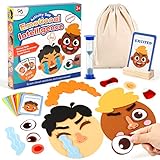
Overview: The PP OPOUNT Social Emotional Learning Game offers a hands-on approach to exploring feelings through 28 felt expression pieces and 12 double-sided emotion flashcards. Designed for ages 3+, this open-ended activity encourages children to construct facial expressions while learning coping strategies, making it particularly effective for tactile learners.
What Makes It Stand Out: Unlike traditional board games, this set’s tactile felt components allow children to physically manipulate facial features, creating a kinesthetic learning experience. The flashcards provide not just emotion identification but concrete coping suggestions, bridging recognition with actionable strategies. Its open-ended design supports therapeutic applications and creative free play.
Value for Money: Priced at $19.99, the value hinges on its unique materials and therapeutic potential. While more expensive than simple card games, the durable felt pieces and professional-quality coping guidance justify the cost for families and counselors seeking tangible emotional learning tools.
Strengths and Weaknesses: Strengths include innovative tactile design, evidence-based coping strategies, and versatility for individual or group use. The soft, safe materials suit young children. Weaknesses include potential for felt pieces to wear over time and lack of structured gameplay, which may confuse some users. The storage solution could be improved, and younger children might need adult guidance to maximize learning.
Bottom Line: An outstanding resource for hands-on emotional learning, ideal for therapy settings and children who benefit from sensory-based educational tools.
4. Peaceable Kingdom Feed The Woozle Cooperative Game for 2 to 5 Kids Ages 3+ - Learn Social Skills While Completing Physical Challenges
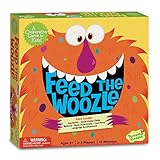
Overview: Feed the Woozle is a cooperative physical challenge game where 2-5 players ages 3+ work together to feed a friendly monster 12 silly snacks. With three adjustable difficulty levels, this game grows with children, developing dexterity, body awareness, and social skills through active, laughter-filled play.
What Makes It Stand Out: The game’s physical component sets it apart—children walk with snacks balanced on a spoon, spin for silly movements, and engage in full-body learning. The three-level progression system ensures longevity, while the whimsical Woozle figure and absurd snack names create immediate engagement. No reading requirement makes it truly accessible to preschoolers.
Value for Money: At $23.95, this is a premium-priced children’s game, but the sturdy components, adaptable gameplay, and multi-year usability justify the investment. Comparable cooperative games with physical elements often cost $25-30, positioning this as reasonable for its category.
Strengths and Weaknesses: Strengths include exceptional engagement through movement, clever difficulty scaling, and high-quality, durable pieces. It excels at teaching turn-taking and cooperation. Weaknesses include the potential for small snack pieces to be lost and the higher price point. Physical space is required, limiting portability. Some challenges may frustrate younger players without adult support.
Bottom Line: A dynamic, adaptable game perfect for active preschoolers and mixed-age groups, delivering lasting value through its progressive difficulty.
5. Who’s Feeling What? ,Social Emotional Learning Games, Communication Games for Kids, Emotion Toys, Feeling Toys for Kids, 49 Pieces, Age 3+

Overview: Who’s Feeling What? is a versatile SEL matching game designed for ages 3+ that helps children identify and articulate emotions through interactive gameplay. Inspired by distance learning, the set includes 12 double-sided caller cards and 12 double-sided emotion prompt cards, allowing families and educators to create unlimited game board configurations for constantly fresh experiences.
What Makes It Stand Out: The game’s modular design ensures no two sessions are identical, maintaining engagement over time. The comprehensive SEL activity guide provides structured lesson plans for both home and classroom use. As a Learning Resources product, it carries teacher-trusted credibility and aligns with established educational methodologies.
Value for Money: At $14.99, this game offers excellent value, particularly for educators. The reusable, reconfigurable format provides endless variations without additional purchases, outperforming single-use activity books in cost-effectiveness.
Strengths and Weaknesses: Strengths include remarkable versatility, professional educational backing, and suitability for group settings. The double-sided cards maximize content density. Weaknesses include the need for adult facilitation to reach full potential and potential card durability concerns with heavy classroom use. The game board design requires setup time, which may test younger attention spans.
Bottom Line: An adaptable, educator-approved tool for structured social-emotional learning, ideal for teachers and proactive parents seeking reusable SEL activities.
6. Key Education Publishing Social Skills Activities for Kids, 15 File Folder Games With Social Emotional Learning Activities, Emotional Regulation Tools for kids Preschool to Grade 2

Overview: The Key Education Publishing Social Skills Activities set offers 15 file folder games designed for preschool through Grade 2 children, including those with special needs. This comprehensive kit targets essential social competencies like conversation skills, emotional regulation, and cooperative play through hands-on, interactive learning that encourages open-ended exploration.
What Makes It Stand Out: The file folder format is brilliantly portable and organized, making it ideal for both classroom centers and home use. Each game folds into its own mini folder with coordinating pieces and illustrated answer keys. Designed by former Special Education teachers, the activities are intentionally structured for customization, allowing parents and educators to adapt scenarios for specific remediation needs and social problem-solving.
Value for Money: At $19.99 for 15 complete games, this set delivers exceptional value. Comparable SEL resources often cost $5-10 per individual activity. The reusable, durable construction ensures years of use across multiple children, making it a cost-effective investment for families, therapists, and teachers seeking comprehensive coverage.
Strengths and Weaknesses: Strengths include the evidence-based design, versatility for different learning settings, and comprehensive skill coverage spanning multiple developmental domains. The hands-on nature engages kinesthetic learners effectively and builds socially appropriate vocabulary. Weaknesses include the potential for small pieces to be lost, the need for adult facilitation for younger users, and a design that may feel juvenile for children at the upper end of the grade range.
Bottom Line: This is an outstanding resource for early childhood SEL development. Its thoughtful design, professional pedigree, and practical format make it highly recommended for parents, educators, and therapists working with young children on social-emotional competencies.
7. Broytain Emotional Board Games for Kids,Ladders and Snakes Board Game,Learning Resources,Social Skills Emotional Regulation Toys for Toddlers,Classroom Travel Indoor Outdoor Family Games

Overview: Broytain’s Emotional Board Game reimagines the classic Snakes and Ladders concept as an emotional intelligence tool for toddlers and young children. This simple board game uses familiar gameplay mechanics to teach emotion recognition and regulation through interactive challenges and scenario-based learning that promotes critical thinking.
What Makes It Stand Out: The game transforms a well-known format into a meaningful learning experience requiring minimal setup—just a board, dice, and four pieces. With 80 diverse challenge cards (blue, red, and random categories), it encourages critical thinking about emotional situations. Its versatility for indoor, outdoor, classroom, or family settings makes it highly adaptable for various learning environments and group sizes.
Value for Money: Priced at $19.99, it sits at the market average for children’s board games. While not the cheapest SEL tool available, its multi-setting usability and durable components justify the cost. However, it offers fewer specialized resources than some competitor products at this price point, which may limit its long-term utility for comprehensive skill development.
Strengths and Weaknesses: Strengths include immediate playability, engaging format, and suitability for group learning. The game’s physical nature appeals to active learners and builds decision-making skills through emotional highs and lows. Weaknesses include limited depth for older children, unspecified component durability, and a format that may not suit children who struggle with competitive games. The toddler designation seems optimistic for complex emotional concepts.
Bottom Line: A solid choice for families seeking an accessible, game-based introduction to emotional regulation. Best suited for ages 4-7, it successfully balances entertainment with education, though educators may want supplemental materials for comprehensive SEL coverage.
8. Learning Resources Feelings & Emotions Puzzle Cards, 48 Pieces, Ages 3+, Social Skills, speech therapy materials, Social Emotional Learning Toys and Games for Kids

Overview: Learning Resources Feelings & Emotions Puzzle Cards provide a hands-on approach to social-emotional learning for children ages 3 and up. This set includes 24 double-sided puzzles (48 pieces total) that match emotions with real-life photographic images, making abstract feelings tangible and relatable for preschoolers and early learners.
What Makes It Stand Out: The unique puzzle shapes ensure only correct matches are possible, creating a self-correcting learning experience that builds confidence and independent problem-solving skills. The combination of colorful illustrations with real-world photos helps children bridge the gap between emotional vocabulary and actual expressions. Designed for little hands, the durable pieces withstand repeated use in classrooms, therapy settings, or home learning.
Value for Money: At $11.99, this is one of the most affordable quality SEL tools available. Costing less than 50 cents per puzzle, it delivers exceptional value. Comparable emotion flashcard sets often lack the interactive, problem-solving component that makes these puzzles more engaging while still being budget-friendly for parents and educators.
Strengths and Weaknesses: Strengths include affordability, durability, portability, and the self-correcting design that promotes independent learning. The visual approach works well for pre-readers and children with language delays. Weaknesses include limited complexity for older children, potential repetition once mastered, and a narrower scope than comprehensive SEL kits. The 3+ age rating may be ambitious for true independent use without initial guidance.
Bottom Line: An excellent entry-level tool for teaching emotional recognition. Highly recommended for preschool teachers, speech therapists, and parents seeking an affordable, effective way to build foundational emotional awareness in young children.
9. SkillEase CHILL Anger Management for Kids, Ages 5-9, Therapy Games, Social Emotional Learning, Fun Social Skills Board Game for Therapists & Families

Overview: SkillEase CHILL Anger Management for Kids is a specialized board game developed by a speech therapist and mother to help children ages 5-9 navigate anger and emotional regulation. This professionally-designed game transforms therapeutic concepts into playful, engaging activities centered around reaching the Ice Castle while practicing emotional control.
What Makes It Stand Out: The professional credentials behind this game set it apart—created by Chani Birnbaum, MA CCC-SLP, it combines clinical expertise with practical parenting experience. The game specifically targets anger management rather than general emotions, offering focused strategies like deep breathing, empathy, and positive thinking through relatable, real-life scenarios that children can actually apply in challenging situations.
Value for Money: At $29.99, this is a premium-priced product, but the specialized expertise justifies the cost. Individual therapy sessions cost significantly more, making this a cost-effective tool for ongoing practice. For families specifically addressing anger issues, the targeted approach offers better value than generalized SEL products that may not address their child’s primary need.
Strengths and Weaknesses: Strengths include professional design, specific focus on anger, engaging gameplay, and suitability for therapy, classroom, or home use. It empowers children with actionable coping strategies and promotes self-awareness. Weaknesses include the higher price point, narrow age range, and singular focus on anger rather than broader emotional intelligence. Children without significant anger challenges may find it less relevant.
Bottom Line: A worthwhile investment for children struggling with anger management. Its expert design and focused approach make it particularly valuable for therapists and families dealing with specific emotional regulation challenges who need professional-grade tools.
10. 52 Essential Social Situations - Social Skills Activities for Kids (3-6th Grade) - Social Emotional Learning & Growth Mindset for Family, Classroom, Counseling - Conversation Card Games for Kids 8-12

Overview: 52 Essential Social Situations is an award-winning conversation card game designed for children in grades 3-6. This comprehensive SEL tool helps kids navigate complex social scenarios through role-playing and discussion, addressing everything from peer pressure and bullying to teamwork and conflict resolution in age-appropriate ways.
What Makes It Stand Out: Winner of the Brain Child Award, this set includes free online curriculum with social scripts, talking points, and facilitator guides created by counselors. Cards are organized by difficulty and SEL topic, allowing for customized use in morning meetings, one-on-one interventions, or family discussions. The included skills assessment and performance checklists enable tracking from back-to-school through graduation, providing measurable outcomes.
Value for Money: At $24.99, this product delivers exceptional value. The combination of physical cards and extensive digital resources rivals materials costing twice as much. The ability to track progress over multiple years makes it a smart long-term investment for teachers, counselors, and parents dedicated to consistent SEL development and assessment.
Strengths and Weaknesses: Strengths include comprehensive scenario coverage, professional-grade resources, adaptability for various settings, and age-appropriate content that grows with the child. The discussion-based approach builds deeper understanding and critical thinking. Weaknesses include the need for active facilitation, limited appeal for children who prefer game-based learning over conversation, and potential for cards to wear with heavy use.
Bottom Line: The gold standard for structured social skills development in school-aged children. Its professional quality, extensive resources, and proven effectiveness make it an essential tool for educators and parents serious about SEL who want measurable results.
Why Social-Emotional Learning Matters in Early Childhood
The preschool years represent a critical window for brain development, particularly in the prefrontal cortex responsible for emotional regulation and social reasoning. Research consistently shows that children who develop strong SEL competencies before kindergarten demonstrate 11% higher academic achievement later in school and are 33% more likely to maintain positive peer relationships. These aren’t soft skills—they’re neurological building blocks that shape how children process stress, resolve conflicts, and contribute to community.
Early childhood educators now understand that SEL isn’t a separate curriculum block but an integrated approach that should permeate every learning experience. Cooperative board games provide the perfect vehicle because they transform abstract concepts like empathy and patience into concrete, repeatable practice. When a child chooses to help a teammate instead of advancing their own position, they’re not just playing a game—they’re literally rewiring neural pathways that will serve them for decades.
The Cooperative Game Advantage for Preschoolers
Unlike traditional games that pit players against each other, cooperative games fundamentally change the emotional landscape of play. The amygdala, our brain’s threat-detection center, remains calmer when children perceive they’re working with rather than against peers. This reduced stress response frees up cognitive resources for higher-order thinking and emotional processing.
Competition vs. Cooperation: The Neuroscience Behind Play
When preschoolers engage in competitive play, their brains release cortisol in response to perceived threats to status or success. While manageable in small doses, chronic competitive stress can actually inhibit the development of prosocial behaviors. Cooperative games trigger oxytocin and dopamine releases instead—neurochemicals associated with bonding and shared pleasure. This biochemical shift means children associate social interaction with safety and reward, creating positive feedback loops that encourage continued collaborative engagement.
Essential SEL Skills Developed Through Cooperative Play
Cooperative board games target multiple developmental domains simultaneously, making them among the most efficient tools in an educator’s arsenal. They create authentic scenarios where children must practice skills in real-time, with immediate natural consequences that reinforce learning far more effectively than direct instruction.
Emotional Regulation and Frustration Tolerance
The unpredictable nature of games—dice rolls, card draws, spinning wheels—provides low-stakes opportunities for children to experience disappointment. In a cooperative setting, peers model coping strategies in real-time. When one child calmly says, “That’s okay, we can try again next turn,” they demonstrate emotional contagion in its most positive form. The shared goal creates a buffer against individual frustration; it’s not “I lost” but “we can still win together.”
Empathy and Perspective-Taking
Preschoolers are naturally egocentric—that’s developmentally appropriate, not a character flaw. Cooperative games gently challenge this worldview by making other players’ perspectives valuable. A child must consider what cards their teammates hold, what spaces they can reach, and what challenges they might face. This practice in mental perspective-taking builds the foundation for genuine empathy, moving beyond “how would I feel?” to “what might they be thinking?”
Communication and Active Listening
Victory in cooperative games depends on information sharing. Children quickly learn that withholding ideas hurts the team, while clear, kind communication moves everyone forward. The turn structure naturally builds in wait time, forcing children to practice listening before speaking. For children with language delays, the visual and tactile components of board games provide alternative communication channels, ensuring everyone contributes meaningfully.
Problem-Solving and Collaborative Thinking
Perhaps most powerfully, cooperative games teach that multiple minds create better solutions. When children propose different strategies, they learn to evaluate ideas based on merit rather than who suggested them. This collective intelligence approach mirrors real-world teamwork and builds intellectual humility—the understanding that being smart includes knowing when to listen to others.
Key Features to Evaluate in Preschool Cooperative Games
Not all cooperative games serve SEL development equally. The market has exploded with options, creating a paradox of choice for educators and parents. Understanding which features genuinely support preschool development versus which are mere marketing claims will be crucial in 2026’s increasingly crowded marketplace.
Age-Appropriate Complexity and Cognitive Load
The sweet spot for preschool cooperative games lies in what developmental psychologists call “the zone of proximal development”—challenging enough to require thought, simple enough to avoid overwhelming frustration. Look for games with decision points that can be understood in 2-3 steps maximum. If a child needs to remember more than three rules simultaneously, cognitive load increases and emotional regulation decreases. The best games use visual cues on the board itself, reducing reliance on working memory.
Theme and Narrative Engagement
Four-year-olds don’t care about abstract strategy—they care about stories. Games that embed SEL practice within compelling narratives (rescuing animals, building a community garden, solving a mystery) create emotional investment that sustains attention. The theme should align with preschoolers’ real-world experiences and values, avoiding overly fantastical or violent narratives that don’t translate to daily social situations. The most effective themes reinforce prosocial values like caretaking, stewardship, and community support.
Component Safety and Durability
Preschool games face rigorous testing—chewing, throwing, stepping on, and spilling. Components should be large enough to avoid choking hazards (minimum 1.75 inches in diameter), made from non-toxic materials, and constructed from thick, laminated cardboard or solid wood. In 2026, we’re seeing more games using recycled materials with rounded edges and washable surfaces. Consider whether components can be easily replaced; some manufacturers offer spare part programs specifically for educational settings.
Game Length and Attention Span Alignment
The golden rule: game duration should match 75% of your group’s average attention span. For most preschoolers, this means 10-15 minutes maximum. Games with flexible endpoints—where you can play “one more round” or stop after completing a mini-goal—offer better adaptability than fixed-length games. Watch for games with downtime between turns; if a child waits more than 30 seconds without engagement, you’ve lost them.
Understanding Cooperative Game Mechanics
The underlying architecture of a game determines its SEL impact. Savvy educators in 2026 look beyond surface-level themes to understand how mechanics either support or undermine collaborative values.
Shared Win Conditions vs. Collective Loss Prevention
Two primary cooperative structures exist: games where players work toward a positive goal (building something, reaching a destination) and games where players prevent a negative outcome (stopping a flood, avoiding a monster). Research suggests shared positive goals better support SEL development because they frame success as creation rather than avoidance. Collective loss prevention games can inadvertently teach anxiety and threat-monitoring if not carefully balanced with positive reinforcement.
Role Specialization and Inclusive Participation
The most sophisticated preschool cooperative games assign different abilities to different players, ensuring everyone contributes uniquely. One child might move pieces, another might hold special cards, a third might make final decisions. This structure prevents dominant personalities from taking over and gives children with different skill sets moments to shine. Critically, these roles should rotate between games, not within a single session, to avoid confusion.
Scalable Difficulty and Growth Potential
Preschool groups vary wildly in ability, even within the same age range. Games with built-in difficulty scaling—extra challenges you can add or remove—grow with children throughout the year. This feature also allows mixed-age play, where older siblings or advanced peers can play alongside younger children with appropriate challenge levels for everyone.
Integrating Games Into Preschool Environments
Owning great cooperative games means nothing without thoughtful implementation. The most successful SEL programs in 2026 treat games as curriculum tools, not free-play items.
Classroom Implementation Strategies
Introduce new games during small group time (4-6 children) rather than whole-group instruction. This allows for targeted facilitation and ensures every child participates actively. Create a “game menu” with visual labels showing which skills each game practices, allowing children to make informed choices about their SEL practice. Establish clear rituals around setup and cleanup—these routines themselves teach responsibility and respect for community resources.
Home Learning Extensions
Send home simple one-page guides that explain which SEL skills a particular game targets and conversation starters for families. For example: “While playing, notice when your child suggests a move that helps someone else. Ask, ‘How did you know that would help?’” This bridges school and home learning, creating consistent messaging. Some forward-thinking programs in 2026 are creating lending libraries where families can check out games weekly.
Facilitating Effective Debrief Conversations
The real learning happens after the game ends. Use a three-question protocol: “What was tricky for our team?” “How did someone help you?” “What should we try differently next time?” Avoid yes/no questions. Document children’s responses over time to track SEL growth—many educators create simple visual portfolios showing how a child’s problem-solving suggestions become more sophisticated across months of gameplay.
Avoiding Common Pitfalls in Game Selection
Even well-intentioned purchases can backfire. Understanding the red flags saves budget and prevents classroom frustration.
The “Fake Cooperative” Trap
Some games appear cooperative but contain hidden competitive elements—individual scoring, “best helper” awards, or single winners within a team framework. These undermine trust and confuse young children. Scrutinize rulebooks for any mention of individual performance metrics. True cooperative games measure success only by team achievement.
Overwhelming Component Overload
Games with dozens of pieces create management nightmares and distract from SEL practice. Each component should serve a clear purpose. If you can’t explain a component’s function in one sentence, it’s probably unnecessary. In 2026, minimalist design is trending for good reason—fewer pieces mean more focus on social interaction.
Mismatched Theme Maturity
A game about complex space missions or medieval politics might look beautiful but fails to connect with preschoolers’ lived experiences. Themes should reflect children’s immediate world: families, nature, neighborhoods, simple adventures. The best games allow children to easily map game scenarios to their real social challenges.
The Adult’s Role as a Play Facilitator
Your participation style dramatically impacts SEL outcomes. Research shows that adult-led gameplay produces different learning than child-directed play—both have value, but require different facilitation techniques.
In adult-facilitated sessions, model think-aloud strategies: “I’m feeling stuck. I think I’ll ask Sarah what she sees.” This makes internal processes visible. Resist the urge to direct every move; instead, ask open questions: “What could we try?” “Who has an idea?” When conflicts arise—and they will—pause the game and coach through the moment: “I see two ideas. Let’s hear both completely before we choose.”
During child-directed play, observe and document. Take notes on which children naturally emerge as facilitators, who struggles with frustration, how language is used to persuade. Use these observations to inform future small-group pairings and individual SEL goals.
Beyond the Game Box: Extending SEL Learning
The most impactful educators treat games as springboards, not destinations. Create “game journals” where children draw their favorite moments or dictate stories about characters. Set up dramatic play areas themed around popular cooperative games, allowing children to practice roles and scenarios in unstructured ways. Connect game experiences to daily challenges: “Remember when we worked together in the game? Let’s try that with our cleanup time.”
Budget-Conscious Selection Strategies
Quality cooperative games represent an investment, but strategic purchasing maximizes impact. Prioritize games with high replay value—those with random elements that create different experiences each time. Consider starting with 3-4 core games that target different SEL domains rather than buying many superficial options. Join cooperative buying programs with other preschools to secure bulk discounts. Many manufacturers now offer “educator packs” with multiple copies at reduced rates.
Inclusive Design Features for Diverse Learners
2026’s best cooperative games embrace universal design principles. Look for games with color-independent cues (symbols, textures) for children with color vision deficiency. Ensure text is minimal and uses large, clear fonts for emerging readers. Components should be manipulable by children with fine motor challenges—large, chunky pieces trump small tokens. Games that incorporate movement accommodate children with ADHD or sensory needs. Audio components should have visual alternatives for hearing-impaired players.
Looking Ahead: 2026 Trends in Educational Game Design
The next wave of cooperative games integrates digital components thoughtfully—QR codes that trigger storytelling, apps that track progress without replacing physical interaction. We’re seeing increased representation in game art, showing diverse families, abilities, and cultures. Sustainability has become standard, with companies using biodegradable materials and minimal packaging. Perhaps most exciting is the rise of “modular games” where educators can customize scenarios to target specific SEL goals for individual children or small groups.
Frequently Asked Questions
How do I know if my preschooler is ready for cooperative games versus simple parallel play activities?
Readiness emerges between ages 3 and 4, marked by three key indicators: showing interest in peers’ activities (not just alongside them), demonstrating basic turn-taking in conversations, and expressing disappointment when others are upset. Start with very simple cooperative games that last under 10 minutes, and observe whether the child engages with the shared goal or focuses solely on individual components. If they frequently leave the activity or become frustrated by others’ participation, continue building foundational skills through parallel play with occasional guided cooperative moments.
What should I do if one child dominates decision-making during cooperative gameplay?
This common scenario actually presents a rich teaching opportunity. Implement a “talking piece” rule where only the person holding a designated object can suggest a move. Rotate this piece each turn, ensuring everyone contributes. Alternatively, assign specific roles like “Path Finder” or “Card Helper” that give each child authority over different game aspects. After the game, facilitate a brief discussion: “Did you notice how we had many ideas? How did it feel when everyone shared?” Dominance often stems from anxiety about losing; reassure the child that in cooperative games, everyone’s ideas make the team stronger.
Can cooperative games really help children with autism or social communication challenges?
Absolutely, when selected thoughtfully. Many children on the autism spectrum excel at cooperative games because they provide explicit rules, predictable structures, and clear visual information—all reducing social ambiguity. Focus on games with strong visual/spatial components and minimal reliance on subtle social cues or deception. The structured turn-taking creates safe practice for initiating communication. However, avoid games requiring extensive verbal persuasion or negotiation initially. Instead, choose games where cooperation is demonstrated through actions rather than complex language. Document which mechanics resonate with the child; many educators find these children become the most enthusiastic cooperative game advocates.
How many cooperative games should a preschool classroom own to create a robust SEL program?
Quality trumps quantity. A well-curated collection of 6-8 distinct games provides sufficient variety without creating decision paralysis. Aim for a balanced portfolio: 2-3 games targeting emotional regulation, 2 focused on communication skills, 2 emphasizing problem-solving, and 1-2 flexible options that combine multiple domains. This allows you to rotate games seasonally while ensuring each SEL competency receives dedicated practice. Remember that children benefit from repeated play with the same game; mastery allows them to focus on social dynamics rather than mechanics. Adding 1-2 new games per year keeps the collection fresh without overwhelming storage or training needs.
What’s the ideal group size for cooperative games in a preschool setting?
Most games are designed for 2-4 players, which aligns perfectly with optimal preschool groupings. Smaller groups (2-3 children) allow for deeper individual participation and are ideal for introducing new games or supporting children with higher social-emotional needs. Groups of 4 work well once children understand the game mechanics and can practice more complex collaboration. Avoid playing with more than the recommended maximum; adding extra players often creates downtime that leads to disengagement and behavior challenges. For whole-class activities, run multiple simultaneous small-group games with adult facilitation rather than forcing a large-group adaptation.
How can I assess whether a cooperative game is actually improving a child’s SEL skills?
Create simple observational rubrics focusing on specific, observable behaviors. For emotional regulation, track instances of self-calming strategies used during gameplay. For empathy, note when a child acknowledges a teammate’s feelings or adjusts their suggestion based on another’s reaction. For communication, count unsolicited contributions and responses to peers’ ideas. Take 2-minute video clips monthly during gameplay and review them with the child, asking them to reflect on their social choices. The most meaningful assessment happens longitudinally; look for transfer of skills to non-game contexts like conflict resolution on the playground or collaborative building in the block area.
Are digital cooperative games as effective as physical board games for SEL development?
Current research strongly favors physical games for preschool SEL. The tactile manipulation of pieces, face-to-face eye contact, and full-body engagement activate multiple sensory pathways that digital interfaces can’t replicate. Physical games also create natural pauses for conversation and reflection that screen-based games often eliminate. However, hybrid approaches are emerging where digital components enhance storytelling or track progress without replacing physical interaction. If using digital games, prioritize those used cooperatively by two children sharing one device, maintaining social interaction. For children under 6, limit digital cooperative play to 10% of total SEL game time.
How do I handle cheating or rule-breaking in cooperative games?
First, reframe your perspective: rule-testing is developmentally appropriate and provides SEL data. Instead of punitive responses, treat violations as problem-solving opportunities. Pause the game and ask the group: “We agreed on this rule. What happens if we don’t follow it?” Let children experience natural consequences—maybe the game becomes too easy or confusing. If a child repeatedly breaks rules, they may be communicating that the game is too challenging or that they need more individual attention. Offer to be their “game partner” for a session, or modify the rules to increase their success. Document patterns; frequent cheating often indicates anxiety about performance or a need for greater autonomy.
Can cooperative games prepare children for the competitive aspects of elementary school?
This is a common misconception—that cooperative play shelters children from reality. In truth, cooperative games build the exact skills needed for healthy competition: emotional regulation (so losing doesn’t devastate), empathy (so winning doesn’t require humiliating others), and collaborative problem-solving (so competition remains task-focused rather than personal). Children who master cooperative games actually handle competitive situations better because they internalize that their worth isn’t tied to winning. Think of cooperative games as teaching the alphabet of social interaction; once children can read basic cooperation, they’re better equipped to understand the nuanced literature of healthy competition.
What maintenance and organization strategies keep cooperative game collections functional long-term?
Implement a “game hospital” system where broken or incomplete games are stored for repair rather than immediately discarded. Teach children to inventory pieces before returning games to shelves—this builds responsibility and creates natural counting/math practice. Photograph completed setups and tape the image inside box lids for easy setup reference. Store games vertically like books with labels visible to reduce handling. Create a simple checkout system (even a clipboard with game names) to track which games are most popular and which need rotation. Schedule quarterly “game review” sessions where educators play each game to assess wear and plan replacements. Budget 15% of your initial investment annually for replacement costs.