When winter weather traps energetic toddlers indoors or you’re looking for a screen-free way to channel preschooler energy, foam building blocks emerge as a parent’s secret weapon. These lightweight, soft giants transform living rooms into construction zones, obstacle courses, and imaginative landscapes—all while building crucial gross-motor skills. Unlike traditional wooden blocks that pose injury risks during active play, foam varieties let kids build, climb, knock down, and roughhouse without the tears (or emergency room visits).
But not all foam blocks are created equal. The market is flooded with options that range from premium educational tools to flimsy novelty items that collapse after one enthusiastic tower. As a parent or educator, navigating foam density ratings, safety certifications, and material compositions can feel overwhelming. This comprehensive guide cuts through the marketing noise, giving you the expert knowledge to select blocks that will withstand years of creative destruction while supporting your child’s physical and cognitive development.
Top 10 Foam Building Blocks for Indoor Gross-Motor Fun
Detailed Product Reviews
1. TODIBY Foam Blocks Climbing for Kids: Toddler Toys for Indoor and Outdoor Fun - Soft PU Leather Play Structure for Crawling and Sliding - Ideal for Playhouse and Play Gym Activities
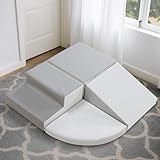
Overview: The TODIBY 4-piece foam climbing set provides a compact soft play solution for toddlers 3 and up. Featuring triangles, trapezoids, cubes, and sectors covered in PU leather, this versatile system supports crawling, sliding, and imaginative exploration both indoors and outdoors.
What Makes It Stand Out: The Velcro attachment system enables quick assembly and endless reconfiguration, fostering creative problem-solving. Eco-friendly, non-toxic materials meet stringent safety standards, while the wipe-clean PU leather cover simplifies maintenance. Each uniquely shaped piece serves multiple functions, encouraging children to design their own adventures.
Value for Money: At $79.98, this mid-range set offers solid value for quality materials and safety certifications. While the four-piece count limits simultaneous users, the price undercuts many competitors with similar quality. It’s an economical choice for smaller spaces or single-child households seeking a starter system.
Strengths and Weaknesses: Strengths include easy cleaning, durable construction, shape variety, and stable Velcro connections. Weaknesses are the limited piece count restricting complex builds, and PU leather feeling less cozy than fabric. The set functions best as an introduction to foam climbing rather than a complete play gym.
Bottom Line: Perfect for parents wanting a safe, low-maintenance entry into climbing toys. The TODIBY set excels in quality and simplicity, though families desiring extensive configurations should consider larger sets. Ideal for toddlers needing indoor activity options.
2. FDP SoftScape Toddler Builder Block Set, Colorful Soft Foam Playtime Building Blocks for Infants and Kids Learn Gross Motor Skills, Great for Home, Daycare, Preschool (12-Piece Set) - Contemporary
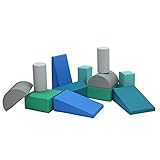
Overview: The FDP SoftScape 12-piece foam block set delivers a substantial building system for institutional and home environments. These dense foam blocks promote gross motor development and collaborative play in classrooms, daycares, or spacious playrooms.
What Makes It Stand Out: GREENGUARD Gold and CertiPUR-US certifications ensure minimal emissions and superior indoor air quality—critical for health-conscious environments. The 12-piece configuration encourages group interaction, while dense foam construction provides excellent support for climbing, stacking, and building activities.
Value for Money: At $165.30, this premium investment reflects its commercial-grade quality and rigorous safety standards. For settings requiring certified materials and multiple simultaneous users, the cost is competitive and justified. Home users may find it expensive unless prioritizing institutional certifications.
Strengths and Weaknesses: Strengths include top-tier safety certifications, dense supportive foam, group play capacity, and easy cleaning. Weaknesses are the high price point and bulky storage requirements. The contemporary color scheme may not suit all aesthetics, and basic shapes lack specialized climbing elements for adventurous play.
Bottom Line: An excellent choice for educators and parents prioritizing certified safety above all. While expensive, the quality and peace of mind justify the investment for multi-child environments. Best suited for those needing commercial-grade standards and group play options.
3. IFNOW Climbing Toys for Toddlers Indoor,7-Piece Foam Toddler Climbing Blocks Set, Colourful Soft Play Climbing,Play Gym Climber Structures for Toddler,Climb and Crawl Play Set with Widended Velcro
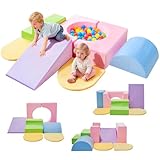
Overview: The IFNOW 7-piece climbing set offers a colorful, architectural play structure with specialized shapes including staircases, arches, and a slope. Designed for toddlers 3+, this set balances physical development with creative configuration possibilities for both indoor and classroom use.
What Makes It Stand Out: The widened 4-inch Velcro system provides superior stability over standard attachments. Removable velvet fabric covers are machine washable—a parent-friendly feature rarely found in foam toys. High-elastic foam delivers firm support with comfortable cushioning for active play, while bright colors engage young minds.
Value for Money: At $79.99, this set delivers strong value with seven distinct pieces at a competitive price. Washable covers add practical value that offsets replacement costs, making it more economical than sets requiring professional cleaning or surface-only maintenance over time.
Strengths and Weaknesses: Strengths include machine-washable covers, enhanced Velcro safety, high-elastic foam, and vibrant colors. The specific shapes inspire structured play. Weaknesses are that specialized shapes may limit open-ended creativity compared to basic blocks, and velvet fabric may show wear faster than leather alternatives with heavy use.
Bottom Line: A smart purchase for families prioritizing easy maintenance and secure assembly. The washable covers alone justify the cost. Perfect for active toddlers requiring frequent cleaning, though creative builders might prefer more generic shapes for unlimited configurations.
4. BanaSuper Kids Climbing Foam Blocks Playset - 7 Piece Toddler Climbing Toys, Indoor Gross Motor Development Montessori Gross Motor Toy for Babies & Toddlers (Colorful)

Overview: The BanaSuper 7-piece playset emphasizes safety innovations with practical design, offering a climbing system focused on stability and child-proofing. Arriving vacuum-compressed, it expands to full size within 48 hours without requiring any assembly or tools.
What Makes It Stand Out: Unique safety features include non-slip bottoms preventing sliding on hard floors and hidden child-proof zippers that eliminate access to foam and small parts. Skin-friendly fabric and soothing colors create a sensory-friendly experience while maintaining durability for active play and exploration.
Value for Money: At $105.99, this mid-priced set offers good value through safety innovations and quality materials. The no-assembly design and compact storage add convenience, though the price runs slightly above basic 7-piece competitors without these specialized safety features.
Strengths and Weaknesses: Strengths include excellent safety features, easy maintenance with washable fabric, and compact vacuum-compressed shipping. The set requires no tools or complicated setup. Weaknesses include the 48-hour expansion wait time and limited color vibrancy compared to brighter alternatives. The safety focus reduces some configurability compared to Velcro-based systems.
Bottom Line: Highly recommended for safety-conscious parents, especially those with hard floors. The non-slip design and child-proofing provide exceptional peace of mind. Ideal for households prioritizing safety above all, though creative builders might want more connection options for complex structures.
5. LOLO TOYS Large Building Foam Blocks for Toddlers – Giant Jumbo Big Building Blocks (30 Pieces)

Overview: The LOLO TOYS set delivers 30 giant foam blocks in six colors, creating a massive building system for toddlers. These jumbo blocks support construction play and bath time activities, offering versatility beyond traditional climbing sets for children aged 1 and up.
What Makes It Stand Out: The sheer quantity—30 pieces—enables large-scale creations at an unbeatable price. Waterproof, floatable EVA foam extends play to bath time, while the included storage bag keeps pieces organized. The larger size is specifically designed for toddler grip and swallowing precautions.
Value for Money: At $44.99, this set offers exceptional value, costing significantly less per piece than competitors. Multi-environment versatility and included storage enhance the bargain, making it accessible for budget-conscious families wanting maximum play options without sacrificing safety.
Strengths and Weaknesses: Strengths include outstanding piece count, affordability, waterproof design for bath use, and travel-friendly storage. The larger size prevents choking hazards. Weaknesses are basic block shapes lack specialized climbing elements, and the sheer volume requires significant storage space. Foam density may be lower than premium climbing-specific sets.
Bottom Line: The ultimate budget-friendly option for families wanting maximum pieces and versatility. Perfect for creative building and water play, though less suitable for dedicated climbing challenges. An excellent starter set or supplement to specialized climbing toys, offering unmatched quantity for the price.
6. Foam Building Blocks for Kids: 12-Pieces PU Leather Colorful Foam Blocks - Building Toys for Toddler - Giant Stacking Blocks Toys - Soft Indoor Playset for Birthday Gift Preschool Learning (Classic)

Overview: This premium 12-piece foam block set targets discerning parents seeking durable, safe building toys for toddlers. The collection features large, colorful cubes wrapped in PU leather, designed for both individual and group play in homes or preschools. With six vibrant colors, these blocks aim to stimulate creativity while meeting stringent safety standards for young children.
What Makes It Stand Out: The removable, washable PU leather covers distinguish this set from fabric-covered alternatives, offering superior hygiene and longevity. Each block regains its shape quickly after compression, and the kid-friendly materials exceed standard safety requirements. The giant size makes them ideal for small hands while preventing choking hazards, and the six-color palette enhances early color recognition skills.
Value for Money: At $69.99 for 12 pieces, this set sits at the higher end of the price spectrum. However, the PU leather construction justifies the cost through enhanced durability and easy maintenance compared to fabric-covered blocks. The investment pays off for families prioritizing longevity and cleanliness, though budget-conscious buyers might find better quantity-to-price ratios elsewhere.
Strengths and Weaknesses: Strengths include premium PU leather covers, machine-washable convenience, excellent safety credentials, and large, toddler-friendly dimensions. The blocks’ ability to regain shape after compression demonstrates quality construction. Weaknesses include the limited 12-piece count restricting complex builds, and the premium price point may deter some buyers. The PU leather, while durable, may feel less soft than fabric alternatives for some children.
Bottom Line: Ideal for parents prioritizing quality over quantity, this set delivers durability and safety. The washable PU leather covers and sturdy construction make it worth the premium for long-term use, though families wanting more building variety should consider larger sets.
7. UHAPPYEE Foam Blocks for Toddlers, 18 PCS 5.5 inch Foam Soft Cubes for Kids, Colourful Building Blocks, Stacking Block Sets, Throwing Toys

Overview: This 18-piece foam cube set offers a balanced approach to toddler building play, providing more pieces than standard sets without breaking the bank. Each 5.5-inch block features a soft sponge core with a non-toxic, BPA-free fabric cover, making them suitable for stacking, building, and even safe throwing games. The set aims to stimulate imagination through colorful, versatile play.
What Makes It Stand Out: The 18-block quantity provides excellent building versatility at a competitive price point. Their dual-purpose design as both building and throwing toys adds value for active toddlers. The 5.5-inch size strikes a perfect balance between being substantial enough for stable structures yet manageable for small hands. Six bright colors aid early color identification while encouraging creative exploration.
Value for Money: At $66.99 for 18 pieces, this set offers strong value with a per-block cost lower than premium alternatives. The multi-functional design as building and throwing toys extends play value. While fabric covers require more maintenance than PU leather, the machine-washable feature at 86°F helps maintain hygiene. The set competes well against smaller, more expensive options.
Strengths and Weaknesses: Strengths include generous 18-piece count, versatile throwing/building design, competitive pricing, and washable covers. The blocks are lightweight and safe for tumbling. Weaknesses involve potential deformation during shipping requiring 1-2 days to regain shape, fabric covers being less durable than PU leather, and basic construction lacking premium features. The compressed packaging may inconvenience eager children.
Bottom Line: A solid mid-range choice offering quantity and versatility. The 18-piece count and throwing-toy functionality make it ideal for active play, though parents should anticipate initial shape recovery time and more frequent washing than leather alternatives.
8. ENVIROLITE SPLOCKS - Soft Foam Blocks - Colorful Building Block Set - Foam Bricks for Sensory Play - Develop Fine Motor Skills - Assorted Colors - 8" x 4" x 2" - 60 Count

Overview: This massive 60-count foam brick set revolutionizes toddler block play through sheer volume and sustainability focus. SPLOCKS feature a unique rectangular brick shape (8" x 4" x 2") rather than traditional cubes, enabling more diverse construction possibilities. Designed for sensory exploration and cognitive development, this set transforms any space into a creative building zone for multiple children simultaneously.
What Makes It Stand Out: The 60-piece quantity dwarfs competitors, making it perfect for classrooms and large families. ENVIROLITE’s commitment to sustainability through energy-efficient production and waste minimization appeals to eco-conscious parents. The brick shape encourages different building techniques than standard cubes, enhancing spatial reasoning. These blocks also provide calming deep-pressure sensations, supporting emotional regulation.
Value for Money: At just $40 for 60 pieces, this set delivers exceptional value with the lowest per-block cost. The educational benefits for fine motor skills, problem-solving, and critical thinking justify the investment for serious play-based learning environments. While lacking removable covers, the foam construction is durable enough for institutional use, making it a budget-friendly choice for high-traffic settings.
Strengths and Weaknesses: Strengths include unmatched quantity, sustainable manufacturing, unique brick dimensions, calming sensory benefits, and outstanding price. The set supports collaborative play and complex structures. Weaknesses include lack of washable covers, potentially less premium feel than PU leather options, and rectangular shape may not suit all building preferences. Storage requires significant space.
Bottom Line: The ultimate bulk option for educational settings and large families. Unbeatable quantity and price make it perfect for sensory rooms and preschools, though parents wanting easy-clean features should look elsewhere. Ideal for those prioritizing scale and sustainability over individual block luxury.
9. TODIBY 6-Piece Foam Climbing Blocks for Toddlers: Colorful Climbing Gym PU Leather Baby Foam Building Blocks Indoor Toy

Overview: This specialized 6-piece foam climbing set targets active toddlers ready to explore beyond simple stacking. The collection includes stairs, half-moons, a square, and a slide, creating a mini climbing gym for indoor use. Designed for children three and up, these blocks combine building creativity with physical development, offering a unique patented design that encourages both imaginative construction and gross motor skill development.
What Makes It Stand Out: The climbing-specific shapes differentiate this from standard block sets, enabling children to build functional climbing structures. The patented design includes a pink stair, lilac purple stair, azure blue half-moons, purple square, and blue slide, creating an integrated play system. PU leather covers provide premium durability and easy cleaning essential for active, sweaty play. The set excels at developing hand-eye coordination and spatial awareness.
Value for Money: At $124.94, this is the premium option in the category. The specialized climbing design and high-quality PU leather justify the cost for parents prioritizing physical development and durability. While expensive compared to basic block sets, the unique functionality offers value unavailable elsewhere. The investment makes sense for families wanting a soft indoor climbing solution without permanent fixtures.
Strengths and Weaknesses: Strengths include innovative climbing shapes, premium PU leather, patented design, excellent motor skill development, and professional-grade durability. The set works well in homes, playrooms, and preschools. Weaknesses include high price, limited 6-piece count restricting building variety, and specialized design may not appeal to children preferring traditional block play. Requires more space than cube sets.
Bottom Line: Perfect for parents seeking to combine building play with physical activity. The climbing-specific design and premium materials justify the high price for families prioritizing gross motor development. However, those wanting versatile building options should consider larger cube sets.
10. B. toys – Sensory Foam Building Blocks for Toddlers – 3 Pieces Climbing Set with Cylinder, Ramp & Block – Easy-Grip Handles, Machine Washable Covers – Soft Play Shapes for Babies & Toddlers 12+ Months

Overview: From trusted brand B. toys, this compact 3-piece climbing set introduces infants 12+ months to sensory foam play. The set includes a cylinder, ramp, and block that combine for endless configurations. Designed with easy-grip handles and machine-washable covers, these blocks prioritize convenience for parents while delivering safe, squishy fun for the youngest builders. The space-saving compressed packaging expands to full size after unboxing.
What Makes It Stand Out: B. toys’ reputation for quality and safety provides immediate trust. The easy-grip handles are unique among these products, enabling toddlers to maneuver pieces independently. Machine-washable covers zip off conveniently, simplifying maintenance. The space-saving compression technology is perfect for apartment dwellers. The 12+ month age rating makes this the youngest-targeted set, focusing on early sensory development.
Value for Money: At $56.99 for three pieces, the price reflects brand premium and specialized features. While expensive per block, the trusted brand name, handle design, and convenience features justify the cost for parents of young infants. The set competes well against generic options when factoring in safety testing and design innovation. For families with limited space, the compression feature adds hidden value.
Strengths and Weaknesses: Strengths include reputable brand, easy-grip handles, convenient washable covers, space-saving design, and appropriate sizing for 12+ months. The lightweight foam allows independent play. Weaknesses include minimal 3-piece count limiting complex builds, higher price per piece, and limited color variety. The small scale may not grow with children as well as larger sets. Younger age focus reduces long-term utility.
Bottom Line: An excellent entry-level climbing set for infants and young toddlers. B. toys’ brand reliability and parent-friendly features like handles and washable covers make it worth the premium for the youngest age group. However, families wanting longevity should invest in larger sets that grow with their child.
Why Foam Building Blocks Are Essential for Indoor Gross-Motor Development
The Science Behind Active Play
Gross-motor skills involve the large muscle groups that control walking, jumping, throwing, and balancing. During early childhood, these skills develop through repetitive, varied movement—not structured exercise. Foam building blocks create natural opportunities for squatting to pick up pieces, reaching overhead to stack, balancing while carrying large blocks, and navigating around growing structures. Each play session becomes a full-body workout disguised as fun.
Research from early childhood development experts shows that children need at least three hours of active play daily. Foam blocks make this achievable indoors by encouraging dynamic movement patterns. When a child lifts a jumbo block, they’re engaging core stabilizers. When they stretch to place a piece atop a tower, they’re developing shoulder girdle strength. The soft material removes fear, so kids attempt challenging physical feats they’d avoid with harder materials.
Age-Appropriate Benefits for Every Stage
For toddlers (12-24 months), foam blocks support emerging skills like walking while carrying objects and basic stacking. The lightweight nature means they can successfully manipulate pieces without frustration, building confidence alongside muscle control. Preschoolers (3-5 years) use blocks for more complex gross-motor challenges: building forts they can crawl through, creating balance beams, and engaging in cooperative building that requires spatial negotiation.
School-age children benefit from the problem-solving aspects—calculating how many blocks they can carry at once, designing stable structures that require climbing to build, and creating games with rules that involve running, jumping, and throwing soft blocks at targets. The versatility means a single quality set grows with your child for years.
Safety First: Non-Negotiable Certifications and Standards
Decoding CPSIA Compliance
The Consumer Product Safety Improvement Act (CPSIA) sets mandatory standards for children’s products in the United States. Genuine compliance means more than a vague “meets safety standards” claim on packaging. Look for specific language mentioning third-party testing by CPSC-accredited laboratories. Reputable manufacturers provide a Children’s Product Certificate (CPC) that you can often request or find on their website.
Pay special attention to phthalate content limits (0.1% for specific types) and lead content restrictions (100 ppm total lead content). Foam blocks should also meet ASTM F963 toy safety standards, which cover everything from flammability to small parts testing. Don’t hesitate to contact manufacturers directly—transparency is a hallmark of quality brands.
International Safety Marks to Trust
If you’re considering imported sets, look for EN71 certification (European toy safety standard) or AS/NZS ISO 8124 (Australia/New Zealand). These standards often exceed US requirements in certain areas. The CE mark alone isn’t sufficient—it indicates conformity with health and safety directives but doesn’t guarantee third-party testing.
For eco-conscious families, OEKO-TEX Standard 100 certification ensures textiles and foams are free from harmful substances down to the component level. While not legally required, this voluntary certification demonstrates a manufacturer’s commitment to going beyond baseline safety.
Foam Density and Durability Demystified
What Those Density Numbers Really Mean
Foam density, measured in pounds per cubic foot (PCF) or kilograms per cubic meter (kg/m³), directly impacts durability and performance. For active play blocks, aim for 1.8-2.2 PCF (28-35 kg/m³). Lower density feels softer but compresses permanently under weight, leading to misshapen blocks within months. Higher density offers better resilience but becomes heavy for younger children.
Density also affects safety. Too-soft foam allows blocks to collapse unexpectedly under a child’s weight, creating fall hazards. Optimal density provides enough give to prevent injury during collisions but maintains structural integrity when built into towers or forts. Test reports should list compression deflection values—look for 25% compression ratings between 10-15 psi for the sweet spot of softness and support.
Spotting Superior Construction Quality
Examine product photos for uniform cell structure—quality foam shows consistent, tiny bubbles without visible gaps or irregular patterns. Blocks should have sharp, clean edges that resist crumbling. The surface should feel smooth but not slippery, with a slight “grab” that helps structures stay together.
Durability testing involves more than weight capacity. Quality blocks withstand repeated squashing, twisting, and being stepped on without tearing at the seams (if covered) or developing permanent dents. Read between the lines of reviews, looking for mentions of blocks “keeping their shape after months of use” rather than just “soft and fun.”
Size Selection Strategy for Your Space
Jumbo Blocks vs. Standard Sizes
Jumbo blocks (8-12 inches per side) excel for gross-motor play. Kids can build structures large enough to crawl inside, carry one or two pieces at a time (building strength), and the scale makes them naturally active. However, a set of 30 jumbo blocks requires significant storage space and works best in dedicated playrooms or basements.
Standard blocks (4-6 inches) offer more building variety and suit smaller spaces like apartments or multi-purpose living areas. While less dramatic for climbing, they still promote active play through frequent bending, reaching, and walking back and forth during building sessions. Many families find a hybrid approach ideal—one set of jumbos for big projects and smaller blocks for detailed work.
Space Planning Calculations Made Simple
Measure your available play area and calculate that blocks will spread across approximately 3-4 times the storage footprint during active use. A 50-piece jumbo set stored in a 2’x2’x2’ container needs roughly 6’x6’ of clear floor space for uninhibited building.
Consider ceiling height too—enthusiastic builders will stack jumbo blocks nearly to their full reach. Leave at least 12 inches of clearance above your child’s maximum reach to allow for on-tiptoe placement. Also, account for a 3-foot safety perimeter around the building zone where falling blocks won’t hit furniture or siblings.
Educational Value Beyond the Build
STEM Skills in Action
Gross-motor play with foam blocks builds foundational engineering concepts. Children intuitively test hypotheses about balance, weight distribution, and structural integrity. When a tower collapses, they’re experiencing real-world physics. The soft material means they can test ideas without fear of injury, encouraging risk-taking in problem-solving.
Spatial reasoning develops as children visualize structures and plan piece placement. Large-scale building requires understanding proportion and scale in three dimensions—a skill that translates directly to mathematics and geometry later. Documenting builds through photos or drawings extends learning, connecting physical activity with representation and communication.
Social-Emotional Growth Through Play
Collaborative building projects teach negotiation, turn-taking, and shared goal-setting. When two children want to place the final block, they must communicate and compromise. The physical nature of foam blocks makes emotional regulation tangible—kids learn to control their movements around others’ creations, developing impulse control.
Leadership emerges naturally as children assign roles (“You be the builder, I’ll bring blocks”). Success and failure happen visibly and immediately, providing rich opportunities for resilience building. A collapsed fort becomes a chance to rebuild stronger, teaching persistence through physical action.
Material Science: EVA vs. PU Foam
EVA Foam Advantages and Limitations
Ethylene-Vinyl Acetate (EVA) dominates the foam block market for good reason. It’s lightweight, waterproof, and offers excellent shock absorption. High-quality EVA contains no BPA, phthalates, or latex, making it hypoallergenic. The closed-cell structure resists mold and mildew—crucial for blocks that will inevitably have juice spilled on them.
However, EVA has limitations. It can off-gas a slight odor when new (look for “low-VOC” or “odor-free” claims). In direct sunlight, EVA becomes brittle over time, so store sets away from windows. Temperature extremes cause temporary hardness changes—blocks feel firmer in cold rooms and softer in heat.
When Polyurethane Makes Sense
Polyurethane (PU) foam offers superior durability and a more “memory foam” feel. It’s less common in building blocks but appears in premium sets designed for therapeutic use. PU foam provides better compression recovery, meaning blocks spring back to shape after being sat on or stepped on.
The trade-offs include higher cost, heavier weight, and potential allergen concerns. Some PU foams contain isocyanates, though finished products are generally considered safe. PU also absorbs water, making cleaning more challenging. Consider PU only if you need maximum durability for multiple children over many years and can ensure the set stays dry.
Shape Variety and Creative Potential
Essential Shapes Every Set Needs
While basic bricks have their place, diverse shapes exponentially increase gross-motor engagement. Arches encourage crawling through tunnels. Cylinders become hurdles to step over or balance on. Triangular wedges transform into ramps for rolling balls or crawling up inclines.
Look for sets including at least six shape types: standard bricks, squares, rectangles, cylinders, arches, and wedges. This variety supports more dynamic play scenarios. Some sets include X-shaped connectors or interlocking pieces—these are fine for fine-motor practice but often frustrate younger children during active play. For gross-motor focus, prioritize simple, non-interlocking shapes that stack easily and quickly.
The Power of Open-Ended Play
The best foam blocks serve as “loose parts”—materials with no predetermined use. A rectangular block might be a car one minute, a phone the next, then a airplane taking off. This flexibility keeps children physically active as they act out different scenarios, running, jumping, and gesturing with blocks as props.
Avoid sets that come with instruction booklets showing specific builds. While these seem educational, they limit creativity and reduce gross-motor engagement. Children following diagrams sit still and focus on precise placement rather than moving dynamically around their creations. Choose sets that arrive in a simple box with no prescribed outcomes, leaving play entirely to the imagination.
Storage Solutions That Won’t Drive You Crazy
Space-Saving Storage Hacks
Mesh laundry bags work surprisingly well for foam blocks—air circulates preventing odor, and kids can easily toss blocks in during cleanup. For jumbo sets, consider a pop-up hamper with reinforced sides. The flexible structure accommodates odd shapes while collapsing flat when empty.
Wall-mounted cargo nets in a playroom corner create a vertical storage solution that becomes part of the fun. Kids practice throwing blocks into the net (gross-motor skill) while cleaning. For basement play areas, a simple wooden pallet leaned against the wall provides slatted storage that keeps blocks organized and accessible.
Making Cleanup Part of the Fun
Turn tidying into a target game—place the storage bin across the room and have kids toss blocks in, counting successful throws. Set a timer and challenge them to “beat the clock,” turning speed cleaning into a cardio activity. Create a “block monster” (a decorated storage bin) that “eats” blocks when fed.
Establish a consistent cleanup song that signals the transition from building to storing. The key is making the process active rather than a chore. When children associate putting blocks away with movement and play, resistance disappears and they develop responsibility through positive experience.
Cleaning and Maintenance Best Practices
Daily Sanitizing Routines That Work
A 50/50 solution of water and white vinegar in a spray bottle effectively sanitizes foam without harsh chemicals. Lightly mist blocks and wipe with a microfiber cloth—never saturate foam, as excess moisture seeps into cells and becomes difficult to dry. For quick daily cleans, keep disinfectant wipes handy for spot-cleaning visibly dirty blocks.
During flu season or after playdates, a deeper sanitizing pass is wise. Place blocks in a bathtub with warm water and a few drops of mild dish soap. Swish gently, drain, and press blocks between towels to remove excess moisture. Air-dry completely in a well-ventilated area before storage—damp foam develops mildew within 24-48 hours.
Deep Cleaning for Long-Term Use
Every few months, blocks need thorough degreasing, especially if they’ve been handled with messy hands. Create a paste of baking soda and water, rub gently on surface stains, then rinse with a damp cloth. For stubborn marks, a melamine foam eraser (like Mr. Clean Magic Eraser) works wonders, but test on one block first as it can slightly dull bright colors.
Inspect blocks during cleaning for tears, permanent compression, or separation at seams. Remove damaged blocks immediately—small foam pieces pose choking hazards, and compressed blocks create unstable structures. Quality sets allow individual piece replacement, so check if your manufacturer sells singles before needing them.
Smart Budgeting for Maximum Value
Cost Per Play Analysis
A $150 set used daily for three years costs about 14 cents per play session—a better value than most toys. Calculate cost per piece (total price ÷ number of blocks), but also consider cost per cubic inch of foam. A set with 50 jumbo blocks might seem expensive compared to 100 small blocks, but the larger pieces offer more gross-motor engagement per dollar.
Watch for hidden value in mixed sets. A package containing 30 blocks plus accessories like a storage bag or idea cards might justify a higher price if those extras solve real problems. However, avoid paying premium prices for licensed characters—generic blocks in bright colors offer the same developmental benefits without the marketing markup.
Longevity and Resale Value
High-density foam blocks retain their shape and appearance for years, making them excellent candidates for resale. Brands known for durability command 40-60% of retail price on secondary markets. Keep original packaging and documentation to maximize resale value.
Consider purchasing during off-season sales. Retailers often discount large foam block sets in January and July, when indoor play items see less demand. Some manufacturers offer educator discounts—worth exploring if you’re buying for a daycare or preschool. Investing in a quality set once beats replacing cheap sets annually, both financially and environmentally.
Red Flags: What to Avoid When Shopping
Vague Product Descriptions to Distrust
Beware of listings that don’t specify foam density, exact dimensions, or safety certifications. Phrases like “safe for kids” without mentioning specific standards are meaningless. Quality manufacturers proudly display their testing credentials. Another red flag: “foam blocks” that don’t list the foam type—this often indicates low-grade polyethylene foam that compresses permanently.
Be skeptical of “unbeatable prices” on massive sets. A 100-piece jumbo set for under $80 likely uses sub-1.5 PCF foam that won’t last three months of active play. Similarly, avoid blocks marketed as “inflatable” or “air-filled”—these puncture easily and require constant maintenance, defeating the purpose of durable active play equipment.
Common Manufacturing Pitfalls
Blocks with fabric covers might seem cozy, but covers tear and harbor bacteria. Uncovered foam is easier to clean and inspect for damage. Watch for blocks with strong chemical smells upon opening—this indicates inadequate off-gassing time at the factory and potentially harmful VOCs. Quality blocks have minimal odor that dissipates within hours.
Check product photos for seam quality. Blocks with visible glue lines or uneven edges suggest poor quality control. The edges should be crisp and uniform. If buying online, zoom in on customer review photos—these unfiltered images reveal true manufacturing standards better than professional product shots.
Designing Your Ultimate Block Play Space
Activity Zones That Keep Kids Engaged
Divide your space into distinct zones to maximize gross-motor engagement. A “construction zone” with flat flooring for stable building, a “demolition zone” with a soft rug where crashing structures is encouraged, and a “transport zone” connecting them where kids carry blocks. This setup naturally incorporates walking, running, and controlled movement.
Use painter’s tape to mark building areas on the floor—this visual boundary helps contain the chaos while allowing freedom within limits. Place a full-length mirror along one wall; watching their own movements fascinates children and improves body awareness. Ensure 360-degree access around the main building area so kids can approach structures from all sides, promoting varied movement patterns.
Surface and Safety Padding Basics
Foam blocks work best on low-pile carpet or foam play mats. Hard surfaces like wood or tile cause blocks to slide, frustrating young builders and reducing stability. If you have hard floors, invest in a 4’x6’ play mat with a non-slip bottom—this defines the building area and provides cushioning for inevitable tumbles.
While foam blocks are soft, falling onto them from height still hurts. Place an extra 1-inch thick foam mat in areas where children might climb on their structures. Check that all furniture corners within the play zone have padding, as energetic builders often forget to watch where they’re going. Overhead, ensure ceiling fans are off and out of reach during active play sessions.
Extending Play Value with Creative Challenges
Gross-Motor Obstacle Course Ideas
Transform block play into a full-body workout by creating timed obstacle courses. Set up a “block carry” station where kids transport five blocks from one end of the room to another, navigating around chairs. Use cylindrical blocks as hurdles to step over or crawl under. Build a low tunnel with arch blocks that children must duck-walk through.
Create a “balance beam” by lining up rectangular blocks in a straight line for kids to walk across. The slight foam give makes this more challenging than a rigid beam, engaging core muscles. Add a “target throw” station where kids toss square blocks into a laundry basket from increasing distances. These activities build coordination, strength, and cardiovascular fitness while feeling like pure play.
Collaborative Family Building Projects
Adult participation dramatically increases gross-motor engagement. Try “mirror building” where you and your child build identical structures on opposite sides of the room, requiring frequent running back and forth to check progress. “Blindfolded building” (with safe guidance) challenges spatial awareness and communication while keeping bodies active.
Host family “demolition parties” where everyone builds their own structure, then takes turns rolling a soft foam cylinder to knock them down—like bowling meets block play. This teaches controlled force, turn-taking, and celebrates destruction as part of the creative cycle. Document builds with photos, then challenge kids to recreate them from memory, combining physical activity with cognitive recall.
When to Introduce and When to Retire Foam Blocks
Developmental Readiness Indicators
Most children show interest in foam blocks around 10-12 months, when they begin standing and cruising. Start with 2-3 large, soft blocks for mouthing and banging together. By 18 months, toddlers can stack two blocks—this is the perfect time to introduce a small set. The key indicator is purposeful release: when a child can intentionally let go of an object rather than just dropping it.
For gross-motor focused play, wait until confident walking (around 14-16 months). Before that, blocks serve more as sensory objects. Signs your child is ready for active block play include carrying objects while walking, climbing onto low furniture, and showing interest in knocking over your builds. If they immediately crawl inside an open box, they’re ready for block forts.
Recognizing When They’ve Outgrown Blocks
Children typically transition away from foam blocks around age 7-8, when they crave more complex building systems or sports activities. Signs it’s time to retire the set: consistently building only small, static structures; preferring to sit rather than move during play; or showing more interest in the storage container than the blocks themselves.
However, don’t pack them away too soon. Even older children benefit when blocks are repurposed—for example, as props in dramatic play or as padding for indoor forts built from other materials. If space allows, keep the set accessible but stored; interest often resurfaces during school breaks or when younger friends visit. A quality foam block set that survives early childhood becomes a valuable resource for years of creative, active play.
Frequently Asked Questions
How do I know if foam blocks are truly non-toxic?
Look for specific certifications like CPSIA compliance, EN71-3 (European chemical safety), and OEKO-TEX Standard 100. Reputable brands publish their lab test results online. Avoid vague “non-toxic” claims without documentation. New blocks should have minimal smell; a strong chemical odor indicates residual VOCs.
What’s the ideal number of blocks for a 3-year-old?
Start with 30-50 pieces for one child. This allows building substantial structures without overwhelming cleanup. For multiple children, add 15-20 blocks per additional child to reduce sharing conflicts. You can always expand the set later as skills grow.
Can foam blocks really support my child’s weight for climbing?
Quality high-density foam blocks (1.8+ PCF) can support up to 50 pounds when properly stacked, but they’re designed for low climbing (under 2 feet). Always supervise climbing activities and ensure structures are stable. For higher climbing, use dedicated foam play equipment with reinforced cores.
How do I clean foam blocks without damaging them?
Use a damp (not wet) cloth with mild soap or a 50/50 vinegar-water solution. Never submerge blocks or put them in a washing machine. For deep cleaning, a bathtub soak with gentle soap is okay, but press out excess water and air-dry completely for 24-48 hours to prevent mold.
Are foam blocks suitable for children with sensory processing issues?
Absolutely. Foam blocks provide proprioceptive input through lifting and stacking, and the soft texture is gentle for tactile-sensitive children. Start with fewer pieces to avoid sensory overload, and consider unscented blocks. The predictable, quiet collapse of foam structures is less jarring than wooden blocks falling.
What’s the difference between “puzzle blocks” and “building blocks”?
Puzzle blocks interlock with specific connections, limiting gross-motor play to assembly. Building blocks stack freely, encouraging large-scale construction and active movement. For gross-motor development, choose pure building blocks without interlocking mechanisms.
How long should a quality foam block set last?
With proper care, high-density foam blocks should maintain their shape and function for 3-5 years of daily use. Signs of aging include permanent dents, tears, or loss of color. Rotate sets between children or families to extend individual lifespan.
Can I use foam blocks outdoors temporarily?
Brief outdoor use is fine, but prolonged sun exposure degrades EVA foam, causing brittleness and color fading. Moisture can seep into cut edges. If you must use them outside, choose a shaded spot and bring them in immediately after play. Never leave them outside overnight.
Do foam blocks help with fine-motor skills too?
Yes, but they’re optimized for gross-motor development. The large size naturally emphasizes big movements, but precise placement and balancing develop hand-eye coordination. For focused fine-motor work, supplement with smaller manipulatives. Foam blocks excel at integrating both skill types in natural play.
What should I do with blocks my child has outgrown?
Donate to preschools, daycares, or children’s hospitals—they often accept gently used foam blocks. Check with local early intervention programs or occupational therapy clinics. If blocks are still in excellent condition, sell them to recoup costs. Avoid passing along damaged blocks, as compressed or torn foam poses safety risks.