Embarking on a cross-country adventure or even a three-hour drive to the grandparents’ house transforms your vehicle into a mobile living space where every inch matters and every spill feels catastrophic. When your child has outgrown their forward-facing harness seat but isn’t quite tall enough for the vehicle’s seat belt alone, backless boosters with retractable cup holders emerge as the unsung heroes of family travel. These clever devices do far more than simply elevate your child—they reimagine the backseat experience by solving the eternal puzzle of where to stash that half-crushed juice box while keeping your little one safely positioned.
Unlike their bulkier high-back counterparts, these streamlined seats offer unprecedented portability without sacrificing the critical belt positioning that keeps your child secure. The retractable cup holder—often dismissed as a mere convenience feature—actually plays a pivotal role in maintaining proper seat belt geometry by preventing your child from leaning forward to reach drinks stored elsewhere. As a certified Child Passenger Safety Technician who’s installed hundreds of seats and logged thousands of family road trip miles, I’ve seen firsthand how the right backless booster can mean the difference between a peaceful journey and a safety compromise.
Top 10 Backless Boosters for Road Trips
Detailed Product Reviews
1. BubbleBum Inflatable Booster Car Seat – Foldable, Lightweight, Backless Travel Booster Seat for Kids, Portable Carseat for Toddler, Fits 3 Across, Compact for Uber - Ages 4-11 Year Old, - Black

Overview: The BubbleBum Inflatable Booster revolutionizes family travel by offering a genuinely portable safety solution for children aged 4-11 (40-100 lbs). This backless booster deflates to fit in a glove box or backpack, making it ideal for rideshares, rental cars, and carpools where traditional boosters are impractical. Unlike rigid alternatives, it weighs mere ounces and eliminates the burden of hauling heavy equipment during spontaneous trips.
What Makes It Stand Out: Its inflatable design is the true game-changer—no other certified booster packs this small while maintaining safety compliance. Independent crash testing exceeds federal standards, providing peace of mind that portability doesn’t compromise protection. The slim profile allows three boosters across most back seats, solving space constraints for large families. Award-winning recognition from NAPPA and JPMA validates its innovative approach to child safety.
Value for Money: At $35.99, the BubbleBum sits in the mid-range for backless boosters but delivers unmatched travel convenience. Traditional boosters cost $25-50 but lack portability. For families who travel frequently or use rideshares, the ability to always have a certified seat available justifies the premium over basic models. The lifetime support commitment adds long-term value.
Strengths and Weaknesses: Strengths: Extreme portability, exceeds safety standards, comfortable inflatable cushion eliminates hard edges, fits three across, award-winning design, excellent for travel and carpools. Weaknesses: Inflatable design risks punctures (though repair kit included), backless only (no side impact protection), requires inflation before each use, less stable than LATCH-equipped boosters, child must be mature enough to sit properly.
Bottom Line: The BubbleBum is essential for traveling families who prioritize portability without sacrificing safety. While not a daily driver replacement, it’s the perfect secondary seat for travel, carpools, and emergencies.
2. Cosco Topside Backless and Topside Booster Car Seats, Leo and Grape, 40-100 lbs, 43-57 in

Overview: The Cosco Topside delivers straightforward, reliable booster functionality for children 40-100 lbs and 43-57 inches tall. This backless booster focuses on core essentials: raising your child to proper seatbelt height without unnecessary complexity. Its lightweight design enables effortless transfers between vehicles, making it practical for families with multiple cars or frequent carpool arrangements.
What Makes It Stand Out: Simplicity is its signature strength. The Cosco Topside eschews complicated mechanisms in favor of a proven, no-frills approach that parents can trust. The hand-washable fabric cover with extra-plush padding addresses comfort without adding bulk. Its compact footprint maximizes backseat space, while the Grape and Leo color options provide aesthetic variety rarely found in basic boosters.
Value for Money: While no price is listed, Cosco’s reputation for budget-friendly child safety gear suggests excellent value. Comparable basic boosters retail for $20-30, positioning this as an affordable primary or secondary seat. The durability and ease of cleaning extend its useful lifespan, offering solid return on investment for families seeking reliable functionality without premium features.
Strengths and Weaknesses: Strengths: Extremely lightweight and portable, simple intuitive design, washable plush cover, compact size fits small vehicles well, trusted brand reliability, easy child access. Weaknesses: Lacks advanced safety features like side impact protection, no LATCH anchors for stability, basic design may not suit long trips, limited height adjustment, backless only configuration, minimal padding compared to premium models.
Bottom Line: The Cosco Topside is a practical workhorse booster that excels as a secondary seat or budget-friendly primary option. Choose it for simplicity and portability, not advanced features.
3. Chicco KidFit ClearTex Plus 2-in-1 Belt-Positioning Booster Car Seat, Backless and High Back Booster Seat, for Children Aged 4 Years and up and 40-100 lbs. | Obsidian/Black

Overview: The Chicco KidFit ClearTex Plus serves as a versatile 2-in-1 solution that transitions from high-back to backless booster as your child grows. Designed for kids 40-100 lbs, it combines advanced safety engineering with premium convenience features. The high-back mode provides crucial head and torso protection, while the backless option extends usability for older children.
What Makes It Stand Out: Superior DuoGuard protection with 10-position height adjustment from the waist ensures proper fit and enhanced safety. The premium LATCH system with SuperCinch tightener stabilizes the seat, preventing it from becoming a projectile when unoccupied. ClearTex fabrics eliminate flame-retardant chemicals while meeting safety standards, addressing health-conscious parents’ concerns. Dishwasher-safe CupFolders and machine-washable fabrics simplify maintenance.
Value for Money: At $109.99, this booster commands a premium but justifies it through dual-stage functionality. Purchasing separate high-back and backless boosters would cost $80-120 combined. The LATCH system, adjustable recline, and chemical-free materials add significant value. For families seeking one booster to last from ages 4-11, the investment pays dividends.
Strengths and Weaknesses: Strengths: 2-in-1 convertible design, LATCH stabilization, DuoGuard head protection, 10-position height adjustment, flame-retardant-free materials, machine-washable fabrics, integrated cup holders, recline feature. Weaknesses: Higher price point, bulkier than travel-specific boosters, LATCH installation takes extra time, may not fit three across in smaller vehicles, heavier for frequent transfers.
Bottom Line: The Chicco KidFit ClearTex Plus is a premium, long-term investment that grows with your child. Its safety features and convertible design make it ideal as a primary daily-use booster.
4. Owleys Car Booster Seat for 5+ Year Old, Backless, Travel Car Booster Seat for 4 Year Old, Portable for Toddlers 3-5

Overview: The Owleys Booster targets parents seeking premium comfort and style for children aged 5+ (though the 3-5 mention creates confusion). This backless booster emphasizes luxury materials and aesthetic integration with modern vehicle interiors. Its wide, padded design accommodates growing children while maintaining portability for families who value both form and function in their car accessories.
What Makes It Stand Out: Waterproof eco-leather upholstery distinguishes it from fabric-covered competitors, enabling effortless wipe-down cleaning after spills. The sophisticated design language matches premium car interiors better than typical plastic boosters. Rigorous crash-testing to FMVSS 213 standards ensures safety isn’t sacrificed for style. The wide seat base provides enhanced comfort during extended journeys.
Value for Money: Priced at $191.50, this is a luxury backless booster costing nearly double premium 2-in-1 models. The eco-leather and design aesthetics justify the price for style-conscious families, but functionally it performs similarly to $30-50 boosters. Value derives from material quality and visual appeal rather than additional safety features. Best suited as a secondary seat where appearance matters.
Strengths and Weaknesses: Strengths: Premium eco-leather construction, extremely easy to clean, stylish aesthetic, wide comfortable seat, crash-tested safety, portable design, waterproof surface. Weaknesses: Extremely high price for backless-only design, no LATCH system, no side impact protection, confusing age recommendations, limited adjustability, poor value for budget buyers.
Bottom Line: The Owleys booster serves a niche market prioritizing aesthetics and easy cleaning. For most families, the premium price outweighs benefits, but it’s perfect for luxury vehicles and design-conscious parents.
5. Car Booster Seat Cushion Non-Slip Breathable Ergonomic,Backless Driver Back Support Pad for Men Women Truck SUV RV Sedan Vehicle Driving Home Office Wheelchair

Overview: IMPORTANT: This is an adult seat cushion, NOT a child safety booster. Designed for drivers seeking improved visibility and posture, this ergonomic cushion elevates seating position for better road sightlines. It serves adults in vehicles, office chairs, and wheelchairs, featuring a low-front/high-back design to reduce pressure points during extended sitting periods.
What Makes It Stand Out: The specialized ergonomic geometry addresses adult-specific needs: enhancing driving visibility while preventing the “sagging” common in standard cushions. Fade-resistant, breathable materials maintain comfort during long commutes. Anti-slip granules provide stability across multiple applications—from vehicles to office chairs. The adjustable height feature allows customization for different users and seating positions.
Value for Money: At $11.21, this cushion offers exceptional affordability for ergonomic support. Comparable adult seat cushions range from $15-40, making this a budget-friendly entry point. While construction quality may not match premium brands, the price enables experimentation with ergonomic seating solutions without significant financial risk.
Strengths and Weaknesses: Strengths: Very affordable, versatile multi-use design, improves driving visibility, breathable materials, non-slip base, lightweight and portable, ergonomic shape reduces pressure. Weaknesses: NOT for child safety, minimal padding thickness, durability concerns at low price point, limited elevation range, may compress over time, aesthetic is purely functional.
Bottom Line: This adult cushion effectively addresses driver comfort and visibility at an unbeatable price. Do not purchase for child passenger safety—it provides no crash protection or belt positioning for children.
6. Car Seat Booster Cushion for Crossroad 2009, Memory Foam Height Increase Pad for Enhanced Driving Vision Comfort Wedge Design,Black
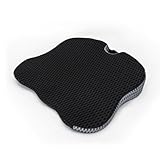
Overview: This black memory foam booster cushion delivers a targeted solution for shorter drivers of the Crossroad 2009, adding up to 3.15 inches of height for dramatically improved road visibility. The wedge-shaped design positions you closer to pedals while reducing leg strain, transforming your driving experience through ergonomic engineering. Its sleek black aesthetic integrates seamlessly with most vehicle interiors, making it both a functional and visually discreet upgrade.
What Makes It Stand Out: The combination of high-density memory foam with an intelligent AirFlow U-Cut design sets this cushion apart. The center ventilation channel specifically targets tailbone pressure relief—a feature rarely found in standard booster seats. The 4D mesh cover provides exceptional breathability, while the non-slip rubber bottom with adjustable straps ensures it remains firmly anchored during sudden stops or sharp turns. This isn’t just a height booster; it’s a complete comfort system engineered for extended driving sessions.
Value for Money: At $41.77, this cushion sits in the mid-range price category but delivers premium features typically found in $60+ alternatives. The durable memory foam core maintains its shape far longer than cheaper polyester fillers, while the machine-washable cover extends the product’s lifespan significantly. For Crossroad 2009 owners specifically, the model-tailored design eliminates guesswork, offering better value than universal cushions that may not fit properly.
Strengths and Weaknesses: Strengths: Provides substantial 8cm height increase; premium memory foam conforms perfectly to body shape; innovative U-Cut ventilation reduces tailbone pressure; breathable, washable cover maintains hygiene; secure anti-slip design with straps prevents shifting.
Weaknesses: “Crossroad 2009” branding may deter owners of other vehicles despite likely compatibility; wedge angle might feel too aggressive for some users; memory foam can feel firm in cold weather until warmed by body heat.
Bottom Line: An excellent investment for shorter Crossroad 2009 drivers seeking enhanced visibility and comfort. The thoughtful ergonomic features and secure design justify the price, making daily commutes and long journeys significantly more comfortable and safe.
7. Car Seat Booster Cushion for Crossroad 2009, Memory Foam Height Increase Pad for Enhanced Driving Vision Comfort Wedge Design,Grey

Overview: This grey variant offers identical performance to its black counterpart, providing shorter drivers with a crucial 8cm elevation boost for superior road visibility in the Crossroad 2009. The neutral grey tone provides a contemporary alternative that complements lighter interior color schemes while delivering the same ergonomic wedge design. It addresses both safety concerns and comfort needs through strategic positioning and premium materials.
What Makes It Stand Out: The cushion’s dual-purpose engineering impresses—simultaneously lifting your vantage point while actively reducing driving fatigue through targeted pressure relief. The high-density memory foam core adapts to your unique body contours, while the specialized ventilation channel and 4D mesh cover work in tandem to prevent the heat buildup common in synthetic cushions. The adjustable strap system with non-slip base demonstrates attention to real-world safety concerns that cheaper boosters ignore.
Value for Money: Priced at $41.77, this grey version represents strong value against generic competitors. You’re paying for intelligent design features like the U-Cut tailbone relief and breathable cover—amenities that budget $25 cushions simply omit. The washable cover and robust construction ensure multi-year durability, spreading the investment across thousands of comfortable miles. Color options at no extra price point add consumer flexibility without cost penalty.
Strengths and Weaknesses: Strengths: Significant height improvement for enhanced safety; body-contouring memory foam prevents pressure points; superior breathability via mesh cover and ventilation channel; secure installation with anti-slip base and straps; neutral grey color suits various interiors.
Weaknesses: Model-specific labeling may unnecessarily limit its audience; wedge design requires adjustment period for some users; firmness level may not suit those preferring plush seating; height addition could interfere with sunroof clearance for very tall drivers.
Bottom Line: Highly recommended for Crossroad 2009 owners needing a visibility boost. The grey colorway offers aesthetic versatility while the premium comfort features and secure design make it a worthwhile upgrade that enhances both safety and driving enjoyment.
Why Backless Boosters Are Road Trip Game-Changers
Backless boosters represent the sweet spot between safety and practicality for traveling families. Their minimalist design philosophy addresses the three biggest challenges of road trip seating: space constraints, transferability, and child independence. When you’re packing a vehicle for a week-long expedition, every cubic foot becomes precious real estate. A backless booster that weighs under five pounds and slides easily between luggage pieces offers flexibility that high-back models simply cannot match.
The psychological benefit for children shouldn’t be underestimated either. Kids who’ve spent years in restrictive harness seats often view the backless booster as a “big kid” graduation, which can dramatically reduce backseat power struggles. This perceived freedom, combined with the responsibility of managing their own retractable cup holder, gives them a sense of autonomy that makes them more cooperative passengers during marathon driving days.
The Science Behind Proper Belt Positioning
The fundamental purpose of any booster seat—backless or otherwise—is to position the vehicle’s lap and shoulder belt correctly on a child’s skeletal structure. Without a booster, the lap belt rides across the soft abdomen, and the shoulder belt cuts across the neck, creating both immediate discomfort and catastrophic injury risk in a crash. A quality backless booster raises the child approximately 4-6 inches, aligning the lap belt low across the hip bones (the iliac crest) and the shoulder belt midway between the shoulder and neck.
During sudden deceleration, which occurs in fractions of a second during a collision, properly positioned belts distribute forces across the pelvis and ribcage—areas designed to withstand immense pressure. The retractable cup holder indirectly supports this positioning by eliminating the need for children to twist, lean, or unbuckle to retrieve drinks, maintaining that critical belt alignment throughout the journey.
Space-Saving Benefits for Packed Vehicles
Modern minivans and SUVs, despite their cavernous appearances, fill up alarmingly fast when you’re packing for a family of four or more. Backless boosters nestle into narrow middle seats where high-back models simply cannot fit, allowing you to maintain three-across seating configurations. Their low profile also enables you to slide suitcases, coolers, and gear bags right up to the seat edge, maximizing cargo capacity.
The retractable cup holder contributes to this spatial efficiency by folding flush with the seat base when not in use. Unlike fixed cup holders that jut outward and create awkward gaps in your packing puzzle, these streamlined designs let you position items closer to the seat without risking damage to the mechanism or creating pressure points that could compromise the booster’s structural integrity.
Understanding Retractable Cup Holder Mechanics
The engineering behind retractable cup holders reveals surprising sophistication for such a seemingly simple feature. Most designs employ either a spring-loaded pivot arm or a telescoping slide mechanism that extends with gentle pressure and retracts with a firm push. The best models include detents at full extension that prevent accidental collapse, even when a full water bottle applies downward force.
Material choice in these mechanisms directly impacts durability. Look for glass-filled nylon or high-density polypropylene pivot points rather than basic plastics, which can develop stress fractures after repeated use. The sliding tracks should feel smooth, not gritty, and should extend fully without wobbling—lateral movement indicates poor tolerances that will worsen over time.
Why Retractable Beats Fixed Cup Holders
Fixed cup holders, while simpler in design, create permanent protrusions that complicate vehicle entry and exit. Children climbing over a fixed cup holder can snap it off entirely or, worse, use it as a handhold that compromises the booster’s stability. Retractable designs solve this by disappearing when not needed, preserving the seat’s clean lines and reducing tripping hazards during loading and unloading.
From a safety perspective, retractable holders keep beverages closer to the child’s center of gravity. When a drink sits in a fixed outboard holder, the child must reach laterally, potentially pulling the shoulder belt away from optimal positioning. Retractable models that position the cup directly in front of the child maintain better belt alignment and reduce distraction-related fumbling.
Potential Drawbacks to Consider
No design is perfect, and retractable cup holders introduce their own maintenance challenges. Crumbs, sticky liquids, and small toys can infiltrate the sliding mechanism, causing it to jam or operate sluggishly. The pivot points can loosen over time, creating wobble that makes children less likely to use them properly.
In hot climates, the mechanism’s internal springs can lose tension if the booster is left in a parked vehicle for extended periods. This thermal degradation isn’t immediate, but after two or three summers, you might notice the holder no longer stays extended reliably. Some manufacturers address this with metal torsion springs rather than steel coil springs, offering better heat resistance at a higher price point.
Safety First: Non-Negotiable Features
When evaluating backless boosters, certain safety features transcend brand marketing and represent true engineering necessities. The belt positioning clip or guide must be adjustable to accommodate children of different torso heights. A static guide forces the shoulder belt into a suboptimal path for shorter or taller children, negating the booster’s primary safety function.
The seat base should include grippy material on the underside—not just smooth plastic. Look for silicone or rubberized patterns that create friction against the vehicle seat cushion. This prevents the booster from becoming a projectile in a crash when unoccupied and keeps it stable during normal driving, reducing the child’s tendency to squirm out of position.
Belt Positioning Guides Explained
Modern backless boosters employ three main types of shoulder belt guides: static clips, sliding adjusters, and armrest-integrated guides. Static clips, while simple, offer no customization and often work best for children in the middle of the height range. Sliding adjusters provide 3-4 inches of vertical adjustment, crucial for families with multiple children sharing the seat or for kids in growth spurts.
Armrest-integrated guides represent the most advanced design, creating a smooth, continuous path for the shoulder belt that mimics the geometry of high-back boosters. These designs typically include a reinforced “shelf” that prevents the belt from sliding off the armrest during movement, maintaining proper positioning even when your child dozes off and slumps slightly.
Side Impact Considerations Without a Back
The most common criticism of backless boosters involves side impact protection—or the apparent lack thereof. While it’s true they don’t provide the head wings of high-back models, they still offer significant protection by maintaining proper belt positioning during lateral collisions. The key is ensuring your vehicle has adequate head restraints that extend at least to the top of the child’s ears when seated.
Some backless boosters now incorporate energy-absorbing foam in the seat base that compresses during side impacts, reducing the force transmitted to the pelvis. This technology, borrowed from premium high-back designs, adds minimal weight but provides measurable protection in crash testing. The retractable cup holder’s position becomes relevant here too; if it extends too far laterally, it could contact the door panel during a side impact, though this remains an extremely rare occurrence.
Age, Weight, and Height Requirements Decoded
Most backless boosters specify a minimum weight of 40 pounds and a minimum age of 4 years, but these numbers tell only part of the story. The critical measurement is the child’s seated height—specifically, the distance from their tailbone to the top of their shoulders. This measurement determines whether the vehicle’s shoulder belt will align correctly with the booster’s guide.
Height requirements typically range from 38 to 63 inches, but the shoulder-to-lap ratio matters more than overall height. A child with a long torso and short legs might fit a backless booster earlier than a peer with long legs and a short torso, even at the same total height. Always measure your child sitting against a wall, marking both the shoulder position and the natural waistline.
The Maturity Factor: Is Your Child Ready?
Beyond physical measurements, behavioral readiness determines backless booster success. Your child must be able to sit relatively still for extended periods—no slouching, no leaning to pick up dropped toys, no turning around to talk to siblings. The retractable cup holder actually serves as a good maturity test: if your child can reliably extend, use, and retract it without constant reminders, they’re likely ready for the responsibility a backless booster demands.
During test drives around town, observe whether your child stays within the vehicle seat’s boundaries. Children who constantly wiggle to the edge of the cushion compromise the belt geometry and need more time in a harness seat, regardless of their size. The booster should position them so their knees bend naturally at the seat edge—if they’re sliding forward to achieve this, they’re not tall enough yet.
Installation Mastery for Maximum Protection
Proper installation of a backless booster differs significantly from harness seats. There’s no LATCH system or complicated strap routing—the seat simply sits on the vehicle cushion. However, this simplicity masks critical nuances that many parents miss. First, the vehicle head restraint must be adjusted or removed to prevent pushing the child’s head forward. Most vehicles allow headrest removal or reversal for this purpose.
The booster must sit flat against the vehicle seat back with no gaps. If your vehicle seat has deep contours or aggressive side bolsters (common in sportier vehicles), the booster may rock or tilt. Some manufacturers include adjustable “legs” or stabilizing bars that extend to fill these gaps, creating a level surface that’s essential for proper function.
Vehicle Seat Compatibility Issues
Not all vehicle seats play nicely with backless boosters. Bucket seats with pronounced side bolsters can squeeze the booster base, causing it to flex upward at the edges. This flexing creates instability and can even crack the plastic over time. Bench seats with center hump ridges pose similar challenges, though placing the booster slightly off-center often solves this.
Leather or vinyl upholstery presents a slipperier surface than cloth, requiring extra attention to the booster’s underside grip material. In hot weather, these materials become even more lubricated, increasing the risk of the booster sliding during sharp turns or emergency maneuvers. A simple solution involves placing a thin, rubber mesh shelf liner between the booster and vehicle seat—a hack that doesn’t compromise safety if done correctly.
The “Pinch Test” and Other Verification Methods
After positioning your child in the booster, perform the pinch test on the shoulder belt: grasp the webbing at the collarbone level and attempt to pinch it vertically. If you can gather any material between your fingers, the belt is too loose. The lap belt should lie flat and low, contacting the tops of the thighs, not the soft belly. You should be able to slide just one finger between the belt and your child’s hip bone.
Have your child reach for their retractable cup holder while you observe the belt path. If the shoulder belt slides off the armrest or pulls away from their chest, the guide position needs adjustment or the child needs to sit more upright. Some boosters include built-in level indicators that help verify the seat isn’t tilted, though these are less common on backless models.
Comfort Features That Prevent Backseat Complaints
A comfortable child is a quiet child, and on an eight-hour driving day, that correlation becomes invaluable. Premium backless boosters incorporate contoured seating surfaces that distribute pressure across the buttocks and thighs rather than concentrating it on the sit bones. This ergonomic shaping prevents the numbness and fidgeting that leads to complaints after the first hundred miles.
Armrest design significantly impacts comfort during long trips. Look for armrests with rounded edges and slight padding rather than hard plastic ridges that dig into elbows. The armrest height should align with the vehicle’s door armrest, creating a continuous support surface that prevents awkward postures. Some models offer adjustable armrests that raise or lower 2-3 inches, accommodating different vehicle geometries.
Cushioning Materials and Long-Distance Comfort
The foam density used in booster seats varies dramatically between price points. Basic models use expanded polypropylene (EPP) foam, which is lightweight and impact-absorbing but can feel firm during extended sitting. Premium options incorporate memory foam top layers that conform to the child’s shape while maintaining the structural EPP base underneath.
The cover material affects comfort as much as the foam. Moisture-wicking fabrics like bamboo-derived rayon or performance polyester keep kids cooler in summer and prevent the sticky, sweaty feeling that makes them squirm. These materials also dry faster after spills, which is crucial when you’re living out of a vehicle for days. Avoid covers with large seams or decorative stitching that creates pressure points during long sits.
Armrest Design and Ergonomics
The retractable cup holder’s integration with the armrest determines how naturally your child can access drinks without breaking their seated posture. Ideally, the cup holder should extend from the front edge of the armrest, not the side, allowing the child to reach straight forward rather than diagonally. This forward extension maintains better spinal alignment and reduces twisting that can compromise belt positioning.
Armrest width matters too—narrow armrests force elbows inward, creating tension in the shoulders and upper back. Wider armrests provide better lateral support and create a more natural resting position. However, excessively wide armrests can interfere with the shoulder belt path, so the sweet spot typically measures 3-4 inches across.
Durability and Material Quality Assessment
A backless booster designed for road trips must withstand repeated installations, removals, and the general abuse that comes with travel. The plastic shell should feel rigid when twisted—any flexing indicates insufficient material thickness or poor ribbing structure underneath. High-quality models use gas-assist injection molding that creates hollow but incredibly strong structures, reducing weight while maintaining rigidity.
The plastic type itself reveals much about longevity. Look for “PP” (polypropylene) or “HDPE” (high-density polyethylene) markings molded into the underside. These plastics resist cracking and maintain their properties across temperature extremes. Avoid models that feel overly glossy or brittle, as these often use lower-grade polystyrenes that degrade in UV light and become fragile after a few seasons in a hot car.
Plastic Grades and Structural Integrity
The underside of the booster reveals its engineering quality. Premium models feature a web of reinforcing ribs that distribute loads across the entire base, preventing stress concentrations that lead to cracks. These ribs should be at least 2-3mm thick and connect to form continuous load paths. Some manufacturers even incorporate metal reinforcement bars in high-stress areas around the belt guides.
The retractable cup holder mechanism housing deserves particular scrutiny. This area experiences repeated loading and unloading cycles, making it a common failure point. Quality designs use metal bushings at pivot points rather than plastic-on-plastic contact. The housing should be integrally molded into the main shell, not a separate piece glued or screwed on, as integrated designs distribute forces more effectively.
Fabric Choices for Spill-Prone Passengers
Road trip reality involves spilled juice, crushed crackers, and mysterious sticky substances that defy identification. Cover fabrics must withstand both staining and repeated washing without shrinking or losing color. Solution-dyed acrylic fabrics (like those used in marine applications) offer the best stain resistance, as the color permeates the entire fiber rather than sitting on the surface.
Look for covers that remove completely via zippers or snaps, not those that require unthreading straps or complex disassembly. Machine-washable covers should specify cold water washing and air drying—heat from dryers can shrink covers and make reinstallation a wrestling match. Some premium covers incorporate antimicrobial treatments that inhibit odor-causing bacteria growth, a blessing during multi-day trips where drying time is limited.
Cleaning and Maintenance Strategies
Establish a cleaning routine that prevents minor spills from becoming major biohazards. At each fuel stop, do a quick visual inspection of the cup holder area, wiping away any drips or crumbs with a damp microfiber cloth. Keep a small spray bottle with diluted castile soap and water in your glove compartment for spot cleaning—these natural soaps cut through stickiness without leaving chemical residues.
The retractable mechanism requires periodic maintenance to function smoothly. Every few weeks, extend the cup holder fully and use compressed air to blow out debris from the slide tracks. A single grain of sand can score the plastic slides and create permanent roughness. Follow up with a dry silicone lubricant spray applied to a cloth (never directly into the mechanism) to keep the action smooth.
Deep Cleaning Between Road Trips
After a long journey, remove the cover completely and shake out the booster shell outdoors—you’ll be amazed how many goldfish crackers and raisins hide in the crevices. Soak the cover in a bathtub with oxygen-based bleach (not chlorine bleach, which degrades elastic fibers) for an hour before washing. This treatment breaks down organic stains without harsh chemicals.
For the plastic shell, use a soft brush and warm soapy water to scrub all surfaces, paying special attention to the belt guide slots where grime accumulates. Never use abrasive cleaners or scouring pads, as these create microscopic scratches that harbor bacteria and weaken the plastic. A final wipe-down with isopropyl alcohol sanitizes without leaving residue.
Quick Spill Response Tactics
When a full cup of chocolate milk cascades into the retractable mechanism mid-drive, immediate action prevents permanent damage. Pull over safely and extend the cup holder fully, using baby wipes to absorb as much liquid as possible from the tracks. If you have it, sprinkle cornstarch or talc into the mechanism to absorb residual moisture—these powders vacuum out easily later and prevent sticky residue formation.
Keep a dedicated “spill kit” in your door pocket: microfiber cloths, a small bottle of water, zip-top bags for soggy trash, and a travel-size pack of enzyme-based cleaner. These biological cleaners contain beneficial bacteria that digest organic matter, eliminating odors at the source rather than masking them.
Portability and Storage Solutions
The true advantage of backless boosters emerges when you need to switch vehicles at your destination. Whether you’re renting a car, taking a taxi, or hopping into a relative’s vehicle, a 5-pound booster with a retractable cup holder slips into a large tote bag or backpack. Compare this to wrestling a 20-pound high-back booster through airport security or into a crowded shuttle bus.
Many families develop a “booster bag” system—a dedicated duffel that holds the booster, a small blanket, a travel pillow, and a few entertainment items. This approach keeps everything organized and prevents the booster from getting damaged by other luggage. The bag also provides a clean surface to set the booster on during transfers, avoiding dirt and grease from parking lot surfaces.
Transferring Between Vehicles
Develop a consistent routine for moving the booster that takes under two minutes. First, unbuckle the child and have them step out. Grasp the booster by the armrests (never by the retractable cup holder mechanism) and lift straight up. Shake it vigorously to dislodge any debris before placing it in the new vehicle. Position it against the seat back, check for levelness, and have your child sit in it to verify belt positioning before driving.
The retractable cup holder should be retracted during transfers to prevent snagging on door frames or other obstacles. If you’re flying and checking the booster as luggage, secure the cup holder with a small piece of painter’s tape to prevent it from extending in the cargo hold and getting snapped off by baggage handling equipment.
Hotel Room to Rental Car Transition
Hotel shuttle buses and rental car shuttles present unique challenges. The retractable cup holder proves invaluable here, as it allows you to hand your child a water bottle while waiting in line without juggling extra gear. When installing in an unfamiliar rental car, take extra time to verify the head restraint position and seat contour compatibility—rental fleets vary widely in their seat designs.
Some families purchase a second, identical booster for destination use, shipping it ahead via parcel service. This approach costs less than airline baggage fees and eliminates the daily transfer hassle. When shipping, place the booster in its original box if possible, as the packaging is designed to protect the exact stress points that fail during transit.
Budget Considerations and Value Proposition
Backless boosters with retractable cup holders span a price range from $25 to over $100, with meaningful differences at each tier. Budget models ($25-40) typically offer basic belt positioning and simple cup holder mechanics but may use lower-grade plastics and thinner foam. Mid-range options ($40-70) introduce better adjustability, improved fabrics, and more robust cup holder designs. Premium boosters ($70+) justify their price with metal-reinforced mechanisms, aerospace-grade foam, and covers that genuinely survive years of use.
The cost-per-mile calculation favors mid-range and premium models for frequent travelers. A $30 booster that cracks after two seasons of summer heat and winter cold costs more over time than a $80 booster that lasts through three children. The retractable cup holder mechanism alone often justifies a $20-30 price premium, as replacing an entire booster because the cup holder broke negates any initial savings.
Premium vs Budget: What Matters Most
For road trips specifically, invest in the best cup holder mechanism you can afford. A failed cup holder forces you to hand drinks back and forth from the front seat, creating distraction and potential spill disasters. Premium models also tend to have wider, more stable bases that work better on contoured vehicle seats—a common issue in modern car designs.
Where you can save money is on fancy fabrics and colors. While moisture-wicking covers are nice, a simple cotton-polyester blend with a removable, washable cover serves just as well if you’re diligent about cleaning. The core safety features—belt positioning accuracy and structural integrity—don’t vary as much with price as marketing suggests, since all seats must meet the same FMVSS 213 federal standards.
Longevity and Multi-Child Households
In families with multiple children, a durable backless booster becomes a hand-me-down asset. Look for models with neutral colors and timeless designs that won’t feel dated when passed to a younger sibling. The retractable cup holder mechanism should have a published cycle rating—quality models specify 5,000+ extension/retraction cycles, which translates to several years of daily use.
Consider purchasing one premium booster for your primary vehicle and a mid-range model for travel. This strategy gives you the best cup holder for daily use while maintaining a lightweight, replaceable option for trips where loss or damage is more likely. Some parents keep a spare budget booster in the garage as an emergency backup for playdates or unexpected carpools.
Legal Requirements and State-by-State Variations
All 50 states require children to use a booster seat until they reach specific age, height, or weight thresholds, but these numbers vary dramatically. Texas requires boosters until age 8, while Wyoming mandates them only until age 9, but many states add height requirements (typically 4'9") that supersede age limits. This patchwork creates confusion for interstate travelers.
The good news: all states recognize out-of-state compliance. If your child is legal in your home state, you’re legal driving through another state, even if that state’s requirements are stricter. However, if you’re involved in a crash, local standards might influence insurance or liability determinations, making it prudent to understand the strictest standards along your route.
Reciprocity Laws for Interstate Travel
The Driver License Compact, which governs traffic law reciprocity, doesn’t specifically address child restraint laws, but courts have consistently upheld the principle of “home state compliance.” This means a Texas family driving through New York (which requires boosters until age 8) with a 7-year-old not in a booster would technically be non-compliant, but enforcement is rare and typically results in a warning rather than a citation.
For peace of mind, maintain a copy of your home state’s child restraint law in your glove compartment, along with your child’s measurements demonstrating they exceed minimum requirements. Some families travel with a letter from their pediatrician confirming the child’s readiness for a backless booster, though this is more for personal reassurance than legal necessity.
Common Mistakes Parents Make
The most frequent error involves premature graduation from a harness seat. Parents eager to simplify travel see the backless booster as a milestone, but moving too early creates serious risk. Your child must meet both the minimum weight (typically 40 pounds) AND demonstrate the maturity to sit correctly 100% of the time. A child who slumps when sleeping needs a high-back booster that provides lateral head support.
Another critical mistake is allowing the vehicle’s shoulder belt to rest behind the child’s back or under their arm. This “routing error” eliminates upper body restraint entirely. The retractable cup holder can contribute to this problem if it extends too high, creating a gap that tempts children to reroute the belt incorrectly. Always verify the belt path after your child retrieves a drink.
The “Good Enough” Installation Trap
Because backless boosters lack LATCH, parents often assume placement is foolproof. However, a booster that tilts even 5 degrees from horizontal changes the belt geometry enough to reduce effectiveness. Use a small bubble level app on your smartphone to verify flatness, shimming under the base with thin cutting boards or specially designed booster levelers if needed.
Many parents also forget to buckle the booster itself when unoccupied. An unbuckled booster becomes a projectile in a crash, potentially striking other occupants. Get in the habit of buckling the seatbelt through the booster’s belt guides even when your child isn’t riding, securing it as if a child were seated there.
Testing Fit Before You Buy
Never purchase a backless booster without a hands-on test in your actual vehicle. Retail store displays can’t replicate your seat contours, head restraint positions, or belt geometry. Most reputable retailers allow in-store returns, but testing first saves the hassle. Bring your child, a tape measure, and your vehicle’s manual to the store.
Place the booster in the position you’ll actually use—often the third row or a specific side for sibling separation. Have your child sit in it for at least five minutes while you verify all fit criteria. Then, without adjusting anything, have them practice extending and retracting the cup holder 10 times. If they struggle or the mechanism feels gritty, move on to another model.
The 5-Minute Sit Test
During your test, your child should be able to maintain a neutral spine without conscious effort. Watch for signs of discomfort: fidgeting, shifting weight, or complaining about pressure points. Check that their feet rest flat on the floor or on a footrest—dangling legs cause slouching that pulls the lap belt upward onto the abdomen.
The retractable cup holder should operate smoothly when the vehicle is parked level, but test it again with the vehicle on a slight incline. Some mechanisms rely on gravity to retract and may stick when the vehicle faces uphill. The best designs use spring tension that works reliably regardless of vehicle pitch.
Frequently Asked Questions
Can my child use a backless booster with a retractable cup holder on an airplane?
No, backless boosters are not FAA-approved for use during flight because they don’t provide restraint in turbulence. However, you can check them as luggage or gate-check them for use in rental cars at your destination. The retractable cup holder makes them more portable for airport navigation.
How do I know if my vehicle’s seat belts are compatible with a backless booster?
Check that the shoulder belt anchor point sits at or above your child’s shoulder when seated in the booster. The belt should retract smoothly without sticking, and the lap belt must be able to get low and tight across the thighs. Some older vehicles have lap-only belts in the center rear position—these cannot be used with backless boosters.
Will the retractable cup holder break if my child leans on it?
Quality mechanisms are rated for significant lateral loads, but no cup holder is designed to support body weight. Teach your child to avoid using it as an armrest or brace when climbing in. If the holder begins to wobble or droop when extended, discontinue use and contact the manufacturer—this indicates internal wear that could lead to complete failure.
How often should I replace a backless booster with a retractable cup holder?
The seat itself has no expiration date, but the retractable mechanism does have a functional lifespan. If the cup holder becomes difficult to operate or no longer locks in the extended position, replace the entire unit. Most manufacturers recommend inspecting the booster every six months for cracks or wear, and replacing after any moderate to severe crash.
Can I use a seat protector mat under the backless booster?
Thin, rubberized mats designed specifically for car seats are generally safe, but thick, cushioned mats can compress during a crash, allowing the booster to move excessively. If you must use a mat, choose one no thicker than 1/8 inch and trim it so it doesn’t extend beyond the booster’s base. Never use towels or blankets as makeshift protectors.
What’s the best position in the vehicle for a backless booster?
The center rear position is statistically safest, away from side impact zones, but only if you can achieve a proper fit. Many center seats have lap-only belts or are too narrow for the booster base. The outboard positions are acceptable if your vehicle has side curtain airbags and the child sits properly. Never place a backless booster in the front seat.
How do I clean sticky residue from inside the retractable cup holder mechanism?
Extend the holder fully and use cotton swabs dipped in isopropyl alcohol to clean the slide tracks. Work the mechanism in and out repeatedly while applying alcohol to dissolve sticky buildup. For severe cases, a can of electronics duster with a straw attachment can blast debris from hard-to-reach areas. Avoid water-based cleaners that can rust internal springs.
Are backless boosters with retractable cup holders suitable for three-across seating?
Their slim profile makes them ideal for three-across configurations, but the retractable cup holder adds width when extended. Test that the holder doesn’t interfere with adjacent seats or buckles. Some families designate the middle child as the one without a cup holder, or rotate cup privileges to minimize width issues.
Can the retractable cup holder accommodate different bottle and cup sizes?
Most designs handle containers from 2.5 to 3.5 inches in diameter, covering standard water bottles and juice boxes. Oversized tumblers or drinks with handles may not fit properly. The best designs include adjustable rubber fingers inside the holder that grip smaller containers securely while expanding to accept larger ones without tipping.
My child has special needs. Are backless boosters with retractable cup holders appropriate?
Children with certain physical or behavioral needs may require the additional support of a high-back booster or specialized restraint. However, for children with sensory sensitivities, the minimalist design of a backless booster can be less overwhelming. The retractable cup holder provides a predictable, repetitive motion that some children find calming. Consult with your child’s occupational therapist and a CPST for personalized recommendations.