When you’re running on two hours of sleep and your baby is crying for a bottle, every second counts. Microwave bottle sterilizers have revolutionized the way busy parents tackle the non-negotiable task of keeping feeding equipment safe and germ-free. Unlike traditional boiling methods that can take upwards of 20 minutes or electric sterilizers that require lengthy cooldown periods, microwave sterilizers promise hospital-grade sanitation in mere minutes. But not all speed claims are created equal, and understanding what truly makes a microwave sterilizer fast—and safe—is the difference between a game-changing parenting hack and a disappointing kitchen gadget that gathers dust.
This comprehensive guide cuts through the marketing hype to deliver evidence-based insights on what defines genuine speed in microwave sterilization. We’ll explore the engineering principles that separate lightning-fast models from their mediocre counterparts, decode the features that matter most for time-pressed families, and arm you with expert knowledge to make an informed decision that matches your lifestyle. Whether you’re sterilizing four bottles for daycare prep or need a single pacifier sanitized at 3 AM, understanding these nuances ensures you’ll never compromise on safety while racing against the clock.
Top 10 Microwave Bottle Sterilizers for Speed
Detailed Product Reviews
1. Dr. Brown’s Microwave Steam - for Baby Bottles, Nipples, Bottle Parts, Pacifiers, Teethers and Breast Pump Parts
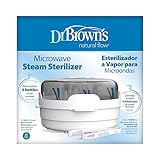
Overview: Dr. Brown’s Microwave Steam Sterilizer delivers rapid sanitization for busy parents. This hard-container unit harnesses steam power to eliminate harmful bacteria from baby bottles, nipples, pacifiers, and breast pump parts in as little as two minutes. Specifically engineered to accommodate up to four Dr. Brown’s bottles simultaneously, the custom-molded design ensures optimal positioning for thorough sterilization while leaving room for additional accessories.
What Makes It Stand Out: The two-minute sterilization cycle stands as one of the fastest on the market, saving precious time during hectic feeding schedules. The included tongs demonstrate thoughtful design, allowing you to safely remove hot items without contamination. Its compact footprint maximizes microwave efficiency while maintaining generous capacity.
Value for Money: At $16.99, this sterilizer sits in the mid-range price bracket. While brand-optimized for Dr. Brown’s bottles, it functions effectively with other standard-sized bottles. The durable construction promises longevity, making it more economical than disposable options for daily home use.
Strengths and Weaknesses: Strengths include lightning-fast sterilization, secure bottle positioning, versatile accessory compatibility, and safety tongs. The hard-shell design offers better protection than bag alternatives. Weaknesses involve limited capacity for larger bottle collections and potential fit issues with extra-wide bottles. The unit requires dedicated storage space and periodic descaling maintenance.
Bottom Line: Ideal for Dr. Brown’s bottle users seeking speed and reliability. This sterilizer excels as a primary home solution, combining efficiency with brand-specific optimization. While not the most versatile for all bottle types, its performance justifies the investment for targeted use.
2. Medela Quick Clean Microwave Sterilizer Bags for Bottles and Breast Pump Parts, Reusable Up to 20 Times Per Bag, Food-Grade Material, Made Without BPA, Pack of 12

Overview: Medela’s Quick Clean Microwave Sterilizer Bags provide hospital-grade sanitization in a travel-friendly format. Each pack includes twelve bags reusable up to twenty times, delivering 240 total sterilization cycles. Designed for busy parents, these bags disinfect bottles and breast pump parts in just three minutes using standard microwave steam.
What Makes It Stand Out: Medela’s reputation for breast pump excellence extends to these BPA-free, food-grade bags manufactured under strict medical standards. The versatility shines for working mothers transitioning between home and office, doubling as organizational storage between uses. The clear usage tracking system helps monitor remaining cycles effectively.
Value for Money: Price information is unavailable, but Medela products typically command a premium. With 240 uses per pack, the per-cycle cost remains low compared to daily-use hard containers. For exclusive pumpers or frequent travelers, the convenience factor significantly enhances value.
Strengths and Weaknesses: Strengths include exceptional portability, trusted brand quality, multi-purpose functionality, and clear usage guidelines. The bags collapse flat for diaper bag storage. Weaknesses involve eventual wear and potential for leaks after multiple uses. They lack the structural stability of rigid sterilizers and require careful handling when hot. Some users report difficulty fitting larger pump flanges.
Bottom Line: A must-have for breastfeeding mothers who pump regularly. These bags excel for travel and workplace pumping scenarios. While the initial investment may be higher than generic alternatives, Medela’s quality assurance and convenience make them worth considering for active lifestyles.
3. Gemdom 15 Pack Microwave Steam Sterilizer Bags Plus, Large Size for Baby Bottles Soothers, Teethers, Breast Pump Parts, Training Cups and Accessories, 20 Uses Per Bag, Baby Travel Essential

Overview: Gemdom’s 15-Pack Microwave Steam Sterilizer Bags offer exceptional capacity with 300 total uses. These large-format bags accommodate multiple baby items simultaneously, sterilizing bottles, soothers, teethers, and breast pump parts through quick steam cycles. The built-in tracking system helps parents monitor usage efficiently.
What Makes It Stand Out: The sheer quantity—15 bags with 20 uses each—provides unmatched longevity in the bag sterilizer category. The integrated usage counter eliminates guesswork about bag replacement timing. Their generous dimensions handle bulky pump parts and multiple bottles with ease.
Value for Money: At $9.99, this represents extraordinary value at roughly three cents per sterilization cycle. No competitor matches this cost-effectiveness for volume. For budget-conscious families or those preferring frequent bag changes, this pack delivers months of reliable service.
Strengths and Weaknesses: Strengths include unbeatable price-per-use ratio, large capacity, usage tracking convenience, and travel-friendly flexibility. The ample bag count allows dedicated bags for different item types. Weaknesses stem from the lesser-known brand status and potentially thinner material than premium alternatives. Some users may find the bags less durable near the 20-use limit. No included tongs means handling hot items requires caution.
Bottom Line: The ultimate budget champion for families wanting maximum sterilization cycles. Gemdom bags perform reliably for both home and travel use. While lacking brand prestige, the functional design and incredible value make this pack nearly impossible to beat for cost-conscious parents.
4. NUK Micro Express Microwave Baby Bottle and Accessory Sterilizer, a Fast & Effective Sterilization, Using Natural Steam

Overview: NUK’s Micro Express Microwave Sterilizer brings German-engineered precision to bottle sanitization. This rigid container system sterilizes up to four feeding bottles plus accessories in four minutes using natural steam. The design accommodates most commercially available bottles, making it a versatile choice for multi-brand households.
What Makes It Stand Out: Third-party testing confirms 99.9% germ elimination, providing documented peace of mind. The practical handle design allows safe removal from hot microwaves without burns. Its extra-large capacity efficiently handles bottle components alongside the bottles themselves.
Value for Money: At $29.99, this premium-priced sterilizer competes with high-end models. The universal compatibility adds value for families using various bottle brands. Durable construction ensures years of service, offsetting the higher initial cost compared to disposable bag systems.
Strengths and Weaknesses: Strengths include proven efficacy, broad bottle compatibility, safe handling features, and generous capacity. The stable base prevents tipping during operation. Weaknesses include a slower cycle than some competitors and the highest price point in this comparison. The bulky design demands significant microwave and storage space. Some users report lid sealing challenges over time.
Bottom Line: A top-tier choice for families prioritizing verified performance and universal compatibility. This sterilizer serves as an excellent primary home unit for mixed-brand bottle collections. The premium price buys documented safety and robust construction, making it worth the investment for discerning parents.
5. Silicone Travel Bottle Sterilizer Bags | 2000ml Microwave Steam Sterilizer Bags for Baby Bottles, Breast Pump & Pacifiers, Reusable Steam Sterilizing Bags for Travel and Home Use (Clear Milk White)
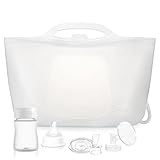
Overview: These Silicone Travel Bottle Sterilizer Bags revolutionize portability with unlimited-reuse construction. Made from flexible food-grade silicone, each 2000ml bag holds three bottles plus parts, rolling up compactly for diaper bag storage. The sterilization process takes three to seven minutes depending on microwave power.
What Makes It Stand Out: The unlimited-use silicone design eliminates the 20-use limitation of standard bags, offering eco-friendly sustainability. The upright-standing capability with a flat base prevents spills during loading. Their collapsible nature makes them ideal for vacations, office use, or grandparents’ homes.
Value for Money: At $9.99, these silicone bags represent exceptional long-term value. While the per-count pricing suggests multiple bags, the unlimited reuse means one purchase could last indefinitely. This dramatically reduces cost-per-use while minimizing environmental impact.
Strengths and Weaknesses: Strengths include infinite reusability, superior portability, stable upright design, and large capacity. The silicone material withstands repeated heating without degradation. Weaknesses involve uncertainty about included quantity and potential for silicone odor retention. The flexible walls require careful handling when hot, and the wider opening may release more steam during removal.
Bottom Line: The most sustainable and travel-friendly sterilization solution available. These silicone bags excel for families constantly on the move who want to avoid disposable products. While newer to market, their innovative design and unlimited reuse potential make them a compelling eco-conscious choice for modern parents.
6. dearlomum Microwave Steam Sterilizer Bag for Baby Bottles 8 Count (20 Uses Per Bag), Reusable Travel Sterilization Pouches, Disinfection Container for Baby Pacifiers and Breast Pump Accessories
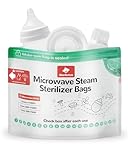
Overview: The dearlomum Microwave Steam Sterilizer Bags offer a portable solution for sanitizing baby essentials. This pack includes eight BPA-free bags, each reusable up to 20 times, providing 160 total sterilization cycles. Designed for bottles, pacifiers, teethers, and breast pump accessories, these pouches deliver steam sterilization anywhere with microwave access.
What Makes It Stand Out: These bags feature unusually detailed safety protocols, including wattage-specific heating times (1.5 minutes for 1100W+, 3 minutes for 800-1000W, 5 minutes for 500-700W) and color-coded handling zones to prevent burns. The temperature tolerance from -4°F to 230°F ensures durability, while digital identifiers help track usage. The design includes designated green and red zones for safe handling after heating.
Value for Money: At $7.99 for eight bags ($1.00 per bag) yielding 160 uses, this offers solid mid-range value. While not the cheapest per-use option, the comprehensive safety features and clear instructions justify the slight premium over budget alternatives. It’s ideal for parents prioritizing safety guidance over bulk savings.
Strengths and Weaknesses: Strengths include exceptional safety instructions, BPA-free construction, travel portability, and a usage tracking system. The wattage-specific timing ensures proper sterilization regardless of microwave power. Weaknesses involve the smaller 8-count pack size and potentially overwhelming detail for some users. The requirement for precise water measurements and wattage adjustments may confuse tired parents.
Bottom Line: Perfect for safety-conscious families who travel frequently. The detailed guidance prevents user error, making it worth the modest premium for peace of mind, though those needing higher volume should consider larger packs.
7. Microwave Steam Sterilizer Bags 12pc for Baby Bottles, Soothers,
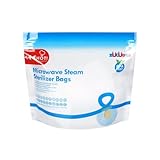
Overview: This 12-pack of Microwave Steam Sterilizer Bags provides a convenient travel solution for sanitizing baby items. Each large-capacity bag supports up to 20 uses, delivering 240 total sterilization cycles. Compatible with bottles, soothers, teethers, training cups, and breast pump parts, these pouches make hygiene simple on the go.
What Makes It Stand Out: The extra-wide base accommodates larger accessories that standard bags struggle with, while the easy tracking system uses simple tick marks to monitor uses. Constructed to premium standards, these max-strength bags prioritize durability. The 12-count bundle offers more units than typical entry-level packs without a price increase.
Value for Money: At $7.99 ($0.67 per bag), this represents excellent value, providing 240 uses for under eight dollars. The cost per sterilization cycle is among the lowest available, making it ideal for budget-conscious parents. The larger pack size eliminates frequent repurchasing while maintaining travel convenience.
Strengths and Weaknesses: Strengths include superior quantity for the price, large size, wide base for bulky items, simple tracking system, and travel portability. The “no questions asked” satisfaction guarantee adds confidence. Weaknesses include less detailed usage instructions compared to some competitors and a generic brand that may lack the premium feel of specialized options.
Bottom Line: Outstanding value for families needing frequent sterilization without breaking the bank. The 12-pack hits the sweet spot of affordability and capacity, making it our top pick for most parents seeking reliable travel sterilization.
8. Microwave Steam Sterilizer - Removes 99.9% of Dirt Quickly and Naturally with The Power of steam, White/Grey
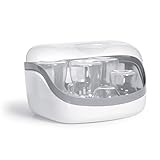
Overview: This traditional Microwave Steam Sterilizer offers a permanent alternative to disposable bags. The white/grey unit holds up to four wide-mouth or five standard bottles plus accessories, using natural steam power to eliminate 99.9% of harmful bacteria. A removable basket and tongs provide safe handling of sanitized items.
What Makes It Stand Out: Unlike bag systems, this durable container provides unlimited uses without replacement, making it an eco-friendly long-term solution. The included accessories—removable basket and tongs—enhance safety and convenience. Its capacity for multiple bottles simultaneously suits families with twins or several children.
Value for Money: At $24.99, the initial investment exceeds bag systems but eliminates ongoing costs. For parents sterilizing daily over months or years, it pays for itself quickly. The cost per use becomes negligible over time, offering superior long-term value compared to single-use or limited-use alternatives.
Strengths and Weaknesses: Strengths include unlimited reusability, large capacity, sturdy construction, and included safety tools. It removes 99.9% of dirt and bacteria effectively using just tap water. Weaknesses include bulkiness that limits travel use, higher upfront cost, and requiring dedicated storage space. It’s impractical for on-the-go families and needs thorough drying between uses to prevent mildew.
Bottom Line: Ideal for home-based families with consistent sterilization needs. While not travel-friendly, its durability and unlimited use make it the most economical and environmentally responsible choice for stationary use.
9. Haakaa On-The-Go Silicone Microwave Steam Sterilizer Bags for Travel, 40oz/1250ml Reusable Silicone Steaming Bags for Baby Bottles, Breast Pump, Accessories, Pacifiers, Teethers,Grey/1PC

Overview: The Haakaa On-The-Go Silicone Microwave Steam Sterilizer Bag revolutionizes travel sterilization with food-grade silicone construction. This single 40oz/1250ml bag provides unlimited reuse for sanitizing bottles, breast pumps, pacifiers, and teethers. Its flexible design rolls compactly for transport while maintaining sturdy stability during use.
What Makes It Stand Out: As a plastic-free, BPA-free silicone alternative, this bag appeals to eco-conscious parents. The multifunctional design doubles as a food steamer, adding kitchen versatility. A secure seal prevents leaks, while the top handle ensures safe microwave removal. The 1250ml capacity accommodates two wide-neck bottles or various accessories.
Value for Money: At $18.99 for one bag, the upfront cost seems high compared to multi-bag packs. However, unlimited reusability eliminates replacement expenses, making it cost-effective over time. For parents prioritizing sustainability and versatility, the premium is justified, though those needing high-volume simultaneous sterilization may find capacity limiting.
Strengths and Weaknesses: Strengths include durable silicone construction, true unlimited reuse, travel-friendly compactness, multifunctional food steaming capability, and safe handling features. The plastic-free design eliminates chemical concerns entirely. Weaknesses include limited capacity (only two bottles), high initial price, and requiring purchase of multiple units for larger families. The single-bag format lacks backup options.
Bottom Line: Perfect for eco-minded parents seeking a versatile, reusable solution. While capacity is modest, its durability and dual-purpose design make it a smart investment for minimalists and travelers committed to reducing plastic waste.
10. Max Strength Pro Microwave Steam Sterilizer Bags 20pc for Baby Bottles, Soothers, Teethers, Breast Pump Parts, Training Cups, Accessories, Reusable Large Bags, 20 Uses Per Bag, Easy Tracking System

Overview: The Max Strength Pro Microwave Steam Sterilizer Bags deliver maximum quantity for high-demand families. This generous 20-pack provides 400 total uses, each large bag accommodating bottles, soothers, teethers, training cups, and breast pump parts. The extra-wide base handles bulky accessories with ease.
What Makes It Stand Out: No other bag system offers this volume—20 bags at 20 uses each creates an impressive 400-cycle supply. The max strength construction ensures durability throughout all uses, while the extra-wide base distinguishes it from standard narrow designs. The easy tracking system maintains usage accuracy across the extensive inventory.
Value for Money: At $14.95 ($0.75 per bag), the cost per bag is slightly higher than budget options, but the sheer volume delivers unmatched long-term value. For families sterilizing multiple times daily or those wanting to share with caregivers, this bulk pack eliminates repurchasing for months. The per-use cost remains extremely competitive.
Strengths and Weaknesses: Strengths include exceptional quantity, large size, wide base for accessories, durability, tracking system, and travel portability. The satisfaction guarantee provides purchase security. Weaknesses include higher total price point and requiring storage space for 20 bags. Some users may not need this volume before expiration concerns arise.
Bottom Line: The ultimate choice for heavy users, multi-child families, or group purchases. While storage space is needed, the convenience of a long-lasting supply and robust construction makes this the most practical bulk option available.
Understanding Microwave Bottle Sterilizers: The Science of Speed
Microwave bottle sterilizers leverage a brilliantly simple principle: harnessing microwave energy to rapidly heat water into pressurized steam that eliminates 99.9% of harmful bacteria and viruses. The magic happens when electromagnetic waves excite water molecules, creating intense heat that reaches 212°F (100°C) in under two minutes in optimal conditions. This steam then circulates through a sealed chamber, penetrating every nook and cranny of bottles, nipples, and pump parts far more efficiently than boiling water alone.
What separates average sterilizers from speed demons is their thermal conductivity design. Premium models feature strategically placed water reservoirs that maximize surface area exposure to microwave radiation, while precision-engineered vents create convection currents that distribute steam evenly. This eliminates cold spots where microbes might survive and reduces the time needed to maintain sterilizing temperature. The fastest units achieve sterilization threshold in just 90 seconds of microwave time, though total cycle time includes heating and recommended standing periods for safety.
Why Speed Matters: The Critical Window for Baby Bottle Sterilization
The urgency behind rapid sterilization isn’t just parental convenience—it’s microbiology. Harmful pathogens like Cronobacter sakazakii, which can survive in dry formula powder, begin multiplying on bottle surfaces within hours. For newborns under three months, premature babies, or infants with compromised immune systems, this creates a critical vulnerability window where every minute of delay increases risk.
Speed also impacts the practical rhythm of parenting. A sterilizer that completes its cycle in under five minutes allows you to respond to hunger cues immediately rather than leaving a distressed baby waiting. It transforms bottle prep from a planned, batch-processed chore into an on-demand solution. Fast cycles also mean less time for heat to degrade bottle materials, preserving the integrity of plastic bottles and preventing nipple warping that can occur during prolonged exposure to high temperatures.
Key Features That Define the Fastest Microwave Sterilizers
Steam Generation Efficiency: The Heart of Rapid Sterilization
The single most important factor in sterilization speed is how quickly the unit converts water to steam. Look for models with shallow, wide water trays rather than deep reservoirs. A larger surface area allows microwaves to heat more water molecules simultaneously, cutting steam generation time by up to 40%. Advanced designs incorporate heat-conductive materials like aluminum in the water tray base, which absorbs microwave energy and transfers it to water more efficiently than plastic alone.
The volume of water required also directly impacts speed. The best fast-acting sterilizers need just 5-7 ounces (150-200ml) of water to generate enough steam for a full load, while slower models may require 10 ounces or more. This smaller volume reaches boiling point faster, and less steam condenses on bottle surfaces, reducing the time needed for the entire chamber to reach sterilizing temperature.
Capacity vs. Speed: Finding Your Optimal Balance
Here’s where many parents get tripped up: maximum capacity doesn’t equal maximum speed. A sterilizer designed to hold six bottles will inevitably take longer to heat through than a compact two-bottle unit, simply because there’s more mass to bring up to temperature. The fastest performers strike a strategic balance, typically accommodating 4-5 bottles while maintaining a chamber volume that allows rapid steam saturation.
Consider your actual usage patterns. If you primarily sterilize bottles one at a time for immediate use, a smaller, faster unit that processes two bottles in 3 minutes beats a larger one that takes 8 minutes for six bottles. For parents who batch-prepare for daycare or overnight feeds, a mid-capacity sterilizer that completes a full load in 5-6 minutes offers the best speed-to-volume ratio. The key is matching the sterilizer’s capacity to your routine rather than automatically opting for the largest size.
Material Matters: How Construction Affects Heating Time
The materials used in sterilizer construction create significant speed differentials. BPA-free polypropylene is the standard for the main chamber, but thickness matters. Ultra-thin walls (around 2mm) heat faster and allow more microwave energy to reach the water tray, but may warp over time. Premium models use reinforced polypropylene at 3-3.5mm thickness, offering durability without sacrificing speed.
The water tray material is even more critical. As mentioned, aluminum-backed trays accelerate heating, but some high-end models use stainless steel for even better conductivity. Avoid sterilizers with all-plastic water reservoirs—they’re consistently 30-50% slower. The lid design also impacts speed; locking clamps that create a tight seal build pressure faster, while vent placement should promote cyclonic steam flow rather than letting it escape prematurely.
Safety First: Non-Negotiable Features for Peace of Mind
Speed without safety is a dangerous compromise. The fastest sterilizers incorporate automatic pressure-release valves that prevent dangerous steam buildup while maintaining enough pressure for rapid sterilization. Look for lids with cool-touch handles and steam guards that direct venting away from your hands when opening. Heat-resistant tongs should be included for removing hot items without contamination.
Overheat protection is crucial for speed-focused units. Because they reach temperature so quickly, there’s a higher risk of running dry if you forget to add water. Quality sterilizers include thermal fuses that cut microwave energy if temperatures exceed safe thresholds. Additionally, BPA-free construction isn’t enough—ensure all plastics are also free from phthalates and PVC, as rapid heating can cause these chemicals to leach more readily than in slower methods.
The 3-Minute Myth: Realistic Expectations for Sterilization Cycles
Marketing materials love to boast about “3-minute sterilization,” but this is rarely the full story. That timing typically refers only to the microwave heating phase. For true sterilization, the entire chamber must maintain steam temperature for at least 2-3 minutes after reaching threshold. Then, you need a 2-minute standing time before opening to avoid steam burns and allow items to cool enough for safe handling.
Real-world total cycle time breaks down as: 30-90 seconds to reach steam temperature, 2-3 minutes of sustained sterilization, and 2 minutes of mandatory standing time. This puts the fastest realistic cycles at 5-6 minutes from start to finish. Any claim shorter than this is likely cutting corners on sterilization time or safety standing periods. The most honest manufacturers list “total cycle time” rather than just microwave time, giving you accurate expectations for planning.
Compatibility Considerations: Will It Fit Your Microwave and Bottles?
A sterilizer that doesn’t fit your microwave is useless, no matter how fast it claims to be. Measure your microwave’s turntable diameter and interior height before purchasing. Most microwave sterilizers require at least 11 inches of turntable space and 6.5 inches of vertical clearance. Compact microwaves (under 0.9 cubic feet) often can’t accommodate standard sterilizers, forcing you into smaller, less efficient models.
Bottle compatibility is equally important. Wide-neck bottles (like Dr. Brown’s Options+ or Tommee Tippee Closer to Nature) require taller chambers or specialized racks. Standard-neck bottles fit in virtually any sterilizer but may need adapters to stay upright. The fastest sterilizers feature adjustable tines that accommodate mixed loads of bottles, pump parts, and accessories without reconfiguration, saving precious setup time.
Beyond Bottles: Multi-Functionality and Its Impact on Speed
Modern parents need more than just bottle sterilization. The most versatile fast sterilizers include modular inserts that transform them into steamers for baby food jars, sterilizers for breast pump parts, or even sanitizers for teething toys and pacifiers. However, this flexibility can impact speed if not designed intelligently.
Look for models where additional functions don’t require extra water or extended cycles. The best designs use the same 5-7 ounce water fill for all functions, with interchangeable racks that position items optimally for steam penetration. Some advanced units even include a “quick steam” mode for small items like pacifiers that completes in just 3 minutes total cycle time. This multi-functionality actually enhances overall time efficiency by eliminating separate appliances.
Maintenance Matters: Keeping Your Sterilizer Performing at Peak Speed
Limescale buildup is the silent killer of sterilization speed. In hard water areas, mineral deposits can insulate the water tray, reducing heat transfer efficiency by up to 60% within a month of regular use. The fastest sterilizers include removable, dishwasher-safe water trays that make descaling easy. Perform a vinegar rinse (50/50 white vinegar and water) every two weeks, running a full cycle without bottles to dissolve deposits.
Check the seal integrity monthly. A worn gasket lets steam escape, forcing longer cycles to maintain temperature. Clean the vent holes weekly with a pipe cleaner to prevent clogging from milk residue or mineral deposits. Store the sterilizer with the lid slightly ajar to prevent mold growth in residual moisture, which can contaminate future cycles and require re-sterilization—defeating the purpose of speed.
Common Mistakes That Slow Down Your Sterilizer
Overloading is the number one speed killer. Cramming too many items blocks steam circulation, creating cold spots that require extended cycles to sterilize properly. Follow the manufacturer’s load guidelines exactly, leaving space between items for steam flow. Place bottles neck-down but ensure the nipple holes aren’t sealed against the rack, which traps air and prevents steam entry.
Using cold water from the fridge adds 30-60 seconds to heating time. Room temperature water reaches steam point faster. Similarly, washing bottles in cold water before sterilization means starting with a colder thermal mass. A quick hot water rinse shaves valuable seconds off the cycle. Don’t open the microwave door immediately after the timer—this releases steam and drops chamber temperature, potentially requiring a second cycle for proper sterilization.
Microwave Sterilizers vs. Electric: The Speed Showdown
Electric steam sterilizers typically require 8-12 minutes to reach temperature plus 30-60 minutes of cooldown before contents are safe to handle. Their advantage is “set and forget” operation, but they can’t match microwave speed. Microwave sterilizers win hands-down for pure velocity, with total cycles under 6 minutes and cooldown periods of just 2-3 minutes.
However, electric models maintain sterilization for up to 24 hours if unopened, while microwave contents begin recontaminating once opened. For parents who sterilize once daily and need bottles ready throughout the day, this sustained sterility might offset the speed advantage. The hybrid solution? Use microwave sterilizers for immediate needs and urgent situations, relying on electric models for overnight batch preparation when immediate access isn’t critical.
Environmental Impact: Speed and Sustainability
Faster sterilization isn’t just time-efficient—it’s energy-efficient. A microwave sterilizer uses approximately 0.02 kWh per cycle, while electric sterilizers consume 0.15-0.25 kWh. Over a year of daily use, that’s a difference of about 50 kWh, or roughly $8-12 in electricity savings. The reduced water usage (5-7 ounces vs. 1-2 liters for boiling) also conserves resources.
However, speed can create waste if it encourages disposable mentality. The environmental benefit diminishes if you’re running half-full cycles multiple times daily instead of one efficient batch cycle. The greenest approach is using a fast sterilizer at full capacity 2-3 times daily, combining speed with strategic batching. Choose models made from recyclable materials and avoid those with built-in obsolescence features like non-replaceable gaskets.
Travel-Friendly Speed: Compact Options for On-the-Go Parents
Hotel microwaves are notoriously underpowered (often 600-700 watts compared to home units of 1000+ watts). Travel-specific sterilizers are engineered for these conditions, using less water (3-4 ounces) and smaller chambers that heat efficiently even in low-power microwaves. They typically process 1-2 bottles in 4-5 minutes despite the reduced wattage.
Look for collapsible designs that flatten to under 2 inches thick for suitcase packing. The best travel sterilizers double as waterproof storage bags, keeping sterilized items clean until use. Some include battery-powered UV-C lights for situations where microwave access is unavailable, though these take 10-15 minutes. For maximum travel speed, pre-measure water into travel bottles and pack a small funnel to avoid spills during setup.
Cost-Per-Use: Calculating the True Value of Speed
A $30 basic sterilizer that takes 10 minutes per cycle seems cheaper than a $60 fast model that completes cycles in 5 minutes. But calculate the time value: if you run 3 cycles daily for a year, the fast model saves you 91 hours annually. Even at minimum wage, that’s over $1,300 in time value. The premium pays for itself in weeks.
Factor in longevity. Cheaper models often warp or develop seal failures within 6-8 months of heavy use, requiring replacement. A quality fast sterilizer with replaceable parts can last through multiple children. Also consider hidden costs: slower sterilizers may tempt you to buy multiple units for different locations, while one fast, portable model serves all needs. The fastest sterilizer isn’t just about speed—it’s about total cost of ownership over your parenting journey.
Expert Tips for Maximizing Sterilization Speed
Preheat your microwave for 30 seconds before inserting the sterilizer. This eliminates the initial ramp-up period and can shave 15-20 seconds off the cycle. Use the “sensor cook” function if your microwave has one—it detects steam release and automatically adjusts time, preventing over/under-sterilization.
Arrange bottles in a radial pattern with nipples and rings in the center. This creates a chimney effect, drawing steam upward through the load efficiently. For ultimate speed with a single bottle, place it in the exact center of the rack with the minimum water amount—this can reduce a standard cycle to just 4 minutes total. Keep a dedicated sterilizer-only water container on the counter; repeatedly opening the tap and measuring adds 30-45 seconds of prep time that compounds daily.
When Speed Isn’t Everything: Exceptions to the Fast-Track Rule
Certain situations demand slower, more deliberate sterilization. For premature babies under 32 weeks gestational age, many NICUs recommend electric sterilizers that maintain sterility longer, as the immune risk outweighs speed benefits. When sterilizing glass bottles, slower heating prevents thermal shock that can cause cracking—choose models with glass-specific settings that extend heating time by 1-2 minutes.
If you’re using specialty bottles with anti-colic valves containing delicate silicone membranes, ultra-fast steam can degrade these components faster. In these cases, a slightly longer cycle (6-7 minutes) at marginally lower pressure actually preserves equipment longevity. Similarly, when sterilizing expressed breast milk storage containers, excessive heat can degrade the plastic’s protective barriers. The rule: match speed to the specific item’s material and your baby’s unique health needs, not just the clock.
Frequently Asked Questions
How long does a microwave bottle sterilizer actually take from start to finish?
The fastest models achieve total cycle times of 5-6 minutes, including 2-3 minutes of microwave time, 2 minutes of sustained steam sterilization, and a 2-minute standing period for safety. Be wary of claims under 5 minutes, as they may compromise safety or effectiveness.
Can I use a microwave sterilizer in a 700-watt dorm or office microwave?
Yes, but cycles will take 1-2 minutes longer. Travel-specific sterilizers are engineered for low-wattage microwaves and perform better in these conditions. Avoid overloading and use the minimum water amount to compensate for reduced power.
Does hard water affect sterilization speed?
Absolutely. Limescale buildup can reduce heating efficiency by up to 60% within weeks. Descale every two weeks with a vinegar solution to maintain peak speed. Consider using distilled water if your water hardness exceeds 180 mg/L.
Is it safe to open the sterilizer immediately when the microwave beeps?
Never. The chamber contains pressurized steam at 212°F. Wait the full recommended standing time (usually 2 minutes) to avoid severe burns and allow items to cool to a safe handling temperature. Opening early also drops temperature prematurely, potentially leaving items unsterilized.
Can I sterilize just one bottle, or do I need a full load for speed?
Most fast sterilizers are optimized for full loads, but you can sterilize a single bottle efficiently. Use the minimum water amount and place the bottle centrally. Some models have a “quick” setting for partial loads that reduces time by 1-2 minutes.
Why does my sterilizer take longer than the manual states?
Variations in microwave wattage, starting water temperature, and load configuration all affect time. Ensure you’re using the exact water amount specified, pre-rinse bottles with hot water, and check that vents aren’t blocked. A 15-30 second variance is normal; more indicates a problem.
Are faster sterilizers harder on bottle materials?
Not when designed properly. Quality fast sterilizers use controlled steam release to prevent temperature spikes that cause warping. However, repeatedly subjecting bottles to any sterilization method degrades them over time. Inspect bottles weekly for clouding or nipple stickiness, replacing them every 3-4 months with heavy use.
Can I add essential oils or cleaning solutions to the water for freshness?
No. Additives can create toxic fumes when heated, damage the sterilizer, and leave harmful residues on bottles. For odor control, clean the sterilizer itself with vinegar monthly. Any scent after sterilization indicates incomplete cleaning of bottles before sterilization.
How do I know if my microwave is powerful enough for a speed-focused sterilizer?
Most sterilizers require at least 800 watts for optimal performance. Check your microwave’s rating on the door label or manual. If you have a lower-wattage unit, choose sterilizers specifically marketed as “low-wattage compatible” and expect 20-30% longer cycles.
Will a faster sterilizer save enough time to be worth the extra cost?
For most parents, absolutely. Running 2-3 cycles daily, a fast sterilizer saves 5-10 minutes per day—that’s 30-60 hours over a year of use. Beyond time value, the convenience of on-demand sterilization reduces stress and allows more responsive parenting, which is invaluable during the demanding newborn phase.