Traveling with a little one can transform even the most seasoned flyer into a bundle of nerves, especially when navigating the unique challenges of air travel with car seats. Forget the cramped legroom or delayed flights for a moment – the real puzzle begins long before boarding: finding a car seat that’s not only safe for the skies but also practical for the journey to and from the airport. It’s that moment when you’re juggling a carry-on, a diaper bag, and a wiggly toddler, realizing the car seat you use daily might be too bulky for the plane seat or lack the critical certification you didn’t know existed. The stress of potential gate-check damage or the horror of realizing your seat isn’t FAA-approved mid-flight is all too real for many parents.
The good news? Understanding the specific requirements and features that make a car seat truly air-travel friendly can turn that pre-flight anxiety into confident preparation. It’s not just about checking a box for “approved for aircraft use”; it’s about finding a balance between uncompromising safety, manageable portability, and features that simplify the entire travel experience. Whether you’re a frequent flyer or planning a rare family vacation, investing time to learn what actually matters in an aircraft-compatible car seat saves headaches, protects your child, and ensures your adventure starts smoothly from the moment you step into the terminal. Let’s cut through the confusion and focus on the essentials every parent needs to know.
Top 10 Car Seats for Air Travel
Detailed Product Reviews
1. WAYB Pico Travel Car Seat with Premium Carrying Bag- Lightweight, Portable, Foldable - Perfect for Airplanes, Rideshares, and Road Trips - Forward Facing for Kids 26.5–50 lbs and 33.5–45"

Overview:
The WAYB Pico is a FAA- and NHTSA-approved portable car seat designed for children aged 2+ (26.5–50 lbs, 33.5–45 inches), ideal for air travel, rideshares, and road trips. Its ultra-lightweight aerospace-grade aluminum frame and compact fold make it a standout solution for mobile families seeking safety without bulk.
What Makes It Stand Out:
Pico’s exceptional portability—weighing just 8 lbs and collapsing to 11.6"x14.5"x18.9"—allows it to fit in overhead bins. The included backpack-style carrying bag, made from recycled materials, and FAA certification (with visible sticker) ensure seamless air travel. Unique safety-conscious packaging discourages unnecessary returns, reducing landfill waste.
Value for Money:
Priced premium, Pico justifies its cost by eliminating rental fees and replacing multiple travel solutions. While competitors offer bags or seats separately, Pico integrates both into one certified safety device, saving long-term expenses despite a higher initial investment.
Strengths and Weaknesses:
Strengths: Unmatched portability; rigorous dual safety certifications; eco-friendly carry bag; comfortable AstroKnit fabric. Weaknesses: Strict weight/height limits exclude some toddlers; complex size variations based on manufacture date; non-returnable once opened complicates sizing errors.
Bottom Line:
A top-tier investment for frequent travelers prioritizing safety and convenience. Ideal for families needing a single, certified seat for planes and cars, though meticulous size verification before purchase is essential to avoid disposal.
2. YOREPEK Padded Car Seat Travel Bag Backpack for Airplane, Heavy Duty Car Seat Bags for Air Travel, Carseat Cover for Airplane Travel with Shoulder Strap, Car Seats Carrier for Airport, Black
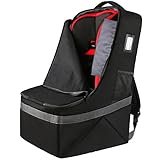
Overview:
The YOREPEK Car Seat Travel Bag is a 17"x17"x28" backpack-style cover designed to protect car seats during air travel. Made from water-resistant polyester, it secures seats via internal straps and wings while offering hands-free carrying for parents navigating airports.
What Makes It Stand Out:
Its ergonomic backpack system—with padded shoulder straps and a waist belt—provides true hands-free mobility, a rarity among travel bags. The interior fixing strap and side elastic pockets add functionality, while the compact foldable design ensures easy storage between trips.
Value for Money:
A budget-friendly option that prevents rental fees and shields seats from damage. Though less padded than premium alternatives, its durability and practical features deliver solid value for occasional travelers seeking basic protection without overspending.
Strengths and Weaknesses:
Strengths: Comfortable backpack carry; water-resistant fabric; foldable storage; transparent ID slot. Weaknesses: Limited padding (none on front); incompatible with larger models like UPPABABY Knox; interior space may snug for bulkier seats.
Bottom Line:
A practical, affordable choice for parents needing reliable airport protection. Best suited for standard-sized car seats and frequent flyers who prioritize portability over heavy-duty cushioning.
3. Guiseapue Car Seat Travel Bag for Airplane: Car Seat Bags for Air Travel Fit All Car Seats, Infant Carriers & Booster Seats, Carseat Cover Fit Doona Graco Evenflo, Airplane Travel Essentials Flying

Overview:
Guiseapue’s 34"x18"x18" car seat bag boasts universal compatibility with major brands (Doona, Graco, Evenflo, etc.) and features durable nylon construction. It includes a drawstring closure and ID window, targeting travelers needing robust protection for infant carriers or boosters.
What Makes It Stand Out:
The tear-resistant nylon and reinforced stitching promise exceptional durability against airport handling. The PVC-protected ID box prevents smudged contact details, while the compact foldable design tucks into an attached pouch for effortless storage in diaper bags.
Value for Money:
Competitively priced for its heavy-duty build, this bag avoids costly car seat replacements due to damage. Though similar to rivals, its claimed “fits all” sizing and reinforced seams offer marginally better longevity, making it a cost-effective long-term solution.
Strengths and Weaknesses:
Strengths: Wide compatibility; superior tear resistance; compact storage pouch; secure drawstring closure. Weaknesses: Drawstring may loosen during transit; no backpack straps limit hands-free use; “fits all” claim overstated for oversized models.
Bottom Line:
A dependable, durable bag for most standard car seats, ideal for families prioritizing scratch and moisture protection. Skip if your seat is unusually large or you require backpack functionality.
4. Mifold Hifold Adjustable Kids High Back Booster Car Seat with Strap – Slate Grey

Overview:
The Mifold Hifold is a compact, adjustable high-back booster seat for children 4+ (40–100 lbs, 43.5–59 inches). Its innovative “multi-fit” technology allows 243 adjustment settings, catering to growing kids during travel or daily commutes.
What Makes It Stand Out:
Hifold’s space-saving “multi-fold” design collapses smaller than traditional boosters, while its four-point adjustability (seat, body, head width/height) ensures precise seatbelt fit. Global safety certification (excluding Australia/Taiwan) and award-winning ergonomics enhance its travel appeal.
Value for Money:
Mid-priced for its class, Hifold pays for itself by replacing multiple booster seats as kids grow. Its portability eliminates the need for spare seats in grandparents’ cars or ride-shares, offering long-term savings despite a steeper upfront cost than basic boosters.
Strengths and Weaknesses:
Strengths: Unrivaled adjustability; ultra-portable with carry strap; lightweight EPE foam; global usability. Weaknesses: Not suitable for toddlers under 40 lbs; narrow design may discomfort wider children; limited availability in some regions.
Bottom Line:
A smart buy for families needing a future-proof, travel-friendly booster. Highly recommended for carpooling, road trips, or fitting three kids across a backseat, but verify height/weight compatibility first.
5. J.L. Childress Padded Backpack Car Seat Bag - Car Seat Travel Bag for Airplane, Cover Fits Most Baby & Infant Carriers & Boosters, Airport Accessories for Gate Check or Baggage Check - Ultimate, Black
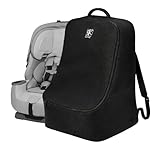
Overview:
The J.L. Childress Ultimate Bag is a premium, thickly padded backpack cover for car seats, engineered for rigorous airport handling. Designed for gate or baggage check, it accommodates most infant carriers and boosters with reinforced protection.
What Makes It Stand Out:
Exceptional all-around padding sets it apart, safeguarding critical car seat components from impacts. The ergonomic backpack harness—padded and adjustable—allows hands-free mobility, while dual zippers and a clear ID pocket add thoughtful convenience for frequent flyers.
Value for Money:
Priced at the higher end, it justifies cost through superior durability and peace of mind. For families investing in high-end car seats, this bag prevents damage-related replacements, outperforming thinner alternatives despite a modest price premium.
Strengths and Weaknesses:
Strengths: Maximum padding for impact protection; comfortable backpack straps; dual-zip access; universal compatibility (measure first). Weaknesses: Bulky when packed; heavier than minimalist bags; premium cost may deter casual travelers.
Bottom Line:
The gold standard for car seat protection during air travel. Worth every penny for parents prioritizing maximum safety for expensive car seats, especially on frequent flights. Measure your seat to ensure fit.
6. J.L. Childress Gate Check Travel Bag for Car Seats - Car Seat Travel Bag for Airplane, Fits All Baby & Infant Carriers, Airport Accessories for Gate Check, Flying Essentials, AirTag Compatible - Red

Overview: This specialized red travel bag is engineered exclusively for gate-checking car seats during air travel. Crafted from durable polyester with reinforced stitching, it offers essential protection against airport handling while prioritizing parent convenience and peace of mind. Its universal fit accommodates nearly all infant and toddler car seats. What Makes It Stand Out: The built-in AirTag holder is a game-changer, enabling real-time tracking of your car seat through the airport system. Combined with the highly visible red color, bold “Gate Check” logo, and large white ID window, it ensures quick identification by staff. The lockable drawstring provides secure, dust-proof closure, and the wipeable fabric simplifies post-travel cleanup. Value for Money: Priced competitively within the car seat travel bag market, its robust construction and unique AirTag integration justify the cost. It outperforms basic, non-secure sacks by preventing damage and loss, potentially saving hundreds in replacement costs. The long-term durability and included storage pouch enhance its value significantly. Strengths and Weaknesses: Strengths: AirTag compatibility for tracking; highly visible design ensuring correct handling; secure lockable closure; wipeable, durable material; compact storage pouch. Weaknesses: Limited color option (only red); AirTag sold separately; bright color may show dirt easily despite being wipeable. Bottom Line: An indispensable, thoughtfully designed solution for frequent flying families. The AirTag holder and high-visibility features directly address critical pain points of car seat travel, making it a top-tier investment for protecting your gear and reducing airport stress. Highly recommended.
7. BubbleBum Inflatable Booster Car Seat – Foldable, Lightweight, Backless Travel Booster Seat for Kids, Portable Carseat for Toddler, Fits 3 Across, Compact for Uber - Ages 4-11 Year Old, - Black

Overview: This award-winning inflatable booster seat revolutionizes child travel safety by offering certified protection in an ultra-portable package. Designed for children 40-100 lbs., it deflates to pocket size, fitting effortlessly into bags for rideshares, rentals, or travel, eliminating the burden of bulky traditional boosters. What Makes It Stand Out: Its standout feature is exceptional portability—packing smaller than any rigid booster while maintaining independent crash-test certification exceeding federal standards. The slim profile comfortably fits three across in most vehicles, and the soft, edge-free cushion ensures child comfort on long journeys, reducing restlessness. Value for Money: While pricier than basic boosters, its certified safety, extreme portability, and lifetime support commitment deliver excellent value. It replaces the need for multiple seats during travel or carpooling, effectively paying for itself by enabling safe, spontaneous use of rideshares or rentals without lugging heavy gear. Strengths and Weaknesses: Strengths: Unmatched portability; rigorous independent crash testing; comfortable, edge-free design; fits three across; award-winning reliability. Weaknesses: Requires manual inflation/deflation; less structural rigidity than hard-shell boosters (though certified safe); limited weight range (40-100 lbs.). Bottom Line: A must-have for mobile families prioritizing safety without sacrificing convenience. Its proven safety credentials and transformative portability solve real-world travel challenges, making it a worthy investment for ensuring your child’s protection anywhere, anytime. Highly recommended for travelers.
8. Safety 1st Ellaris 3-in-1 Convertible Car Seat, Slim Fit Design, Rear & Forward-Facing, 5-Position Headrest, 3-Across Fit, Travel-Friendly with Machine-Washable Seat Pad, Peacock Blue

Overview: The Safety 1st Ellaris is a versatile convertible car seat built to grow with your child from infancy (5 lbs.) through childhood (65 lbs.), offering rear-facing, forward-facing, and high-back booster modes. Its slim profile and travel-ready features make it ideal for families needing long-term, adaptable safety. What Makes It Stand Out: The true 3-across fit in most vehicles is its defining feature, maximizing rear-seat capacity for larger families. Coupled with an effortless 5-position headrest and harness adjustment, it ensures comfort through rapid growth spurts. The airplane-ready design and machine-washable/dryer-safe pad add significant practicality for active households. Value for Money: Offering exceptional longevity with three distinct usage stages, it provides strong long-term value. While not the cheapest convertible seat, its space-saving slim fit, certified side-impact protection, and easy-cleaning features justify the price compared to seats requiring earlier replacement or lacking travel convenience. Strengths and Weaknesses: Strengths: Genuine 3-across compatibility; extensive 5-65 lb. weight range; simple LATCH installation; machine-washable pad; robust safety certifications including side-impact. Weaknesses: Limited color options; rear-facing weight limit (40 lbs.) may be restrictive for larger toddlers; cup holders are basic. Bottom Line: An excellent choice for families seeking a durable, space-efficient car seat that adapts seamlessly from infancy to school age. Its reliable safety, ease of use, and practical travel features make it a smart, cost-effective cornerstone for your child’s journey. Highly recommended.
9. V VOLKGO Car Seat Travel Bag For Airplane with Padded Backpack Shoulder Straps, Gate Check Bag, Car Seat Bags for Air Travel Carseat Travel Cover, Carseat Travel Bag Cover for Airplane Travel

Overview: This functional travel bag prioritizes hands-free portability for car seats during air travel, featuring integrated padded backpack straps. Sized for universal compatibility, it protects car seats from gate checking to baggage claim using durable, water-resistant materials. What Makes It Stand Out: The adjustable backpack straps are the key differentiator, transforming cumbersome car seat carrying into a manageable, ergonomic task through crowded airports—far superior to basic handle-only bags. The water-resistant fabric and reinforced stitching provide reliable defense against transit hazards like rain or rough handling. Value for Money: Positioned as a mid-range option, it delivers solid value through its focus on portability. The backpack system justifies a slight premium over simpler sacks, as it significantly reduces physical strain. Durability ensures it withstands multiple trips, outperforming flimsy alternatives prone to tearing. Strengths and Weaknesses: Strengths: Comfortable backpack carrying system; water-resistant protection; universal fit for most car seats; straightforward design. Weaknesses: Lacks advanced features like AirTag pockets or high-visibility branding; no dedicated storage pouch for when not in use; minimal security features beyond basic closure. Bottom Line: A practical, no-frills solution ideal for parents prioritizing ease of transport over tech extras. While it doesn’t offer tracking or ultra-bright colors, its reliable build and backpack straps make car seat hauling genuinely manageable. Recommended for straightforward, budget-conscious travel protection.
10. Hiccapop UberBoost Inflatable Booster Car Seat | Travel Booster Car Seat | Portable Booster Seat for Toddlers, Kids, Child (Navy/Gray)
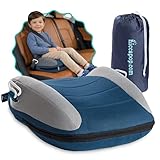
Overview: The UberBoost is a portable, inflatable booster seat designed for quick trips in rideshares, taxis, or rental cars. Certified to FMVSS 213 safety standards, it inflates in seconds for children 40-100 lbs., offering a safe, comfortable alternative to leaving your child unprotected in unfamiliar vehicles. What Makes It Stand Out: Its rapid inflation (under 20 seconds) and ultra-compact packed size enable true on-the-go safety—storing in purses or backpacks. The non-skid base prevents shifting during travel, while integrated positioning clips ensure the seat belt rests correctly on the child’s lap, enhancing safety beyond basic fit. Value for Money: Excellent value for occasional travelers or rideshare users who need certified safety without permanent installation. It’s cheaper than buying a second rigid booster and outperforms uncertified travel cushions. The durable design withstands frequent use, making it cost-effective for families avoiding rental car seat fees. Strengths and Weaknesses: Strengths: Extremely portable and quick to deploy; certified safety; non-skid stability; positioning clips for proper belt fit; fits three across; comfortable cushioning. Weaknesses: Requires manual inflation (no pump); less structural support than hard-shell boosters in severe impacts (though certified); narrow weight range. Bottom Line: An essential, safety-certified tool for parents using rideshares or rentals. Its clever design solves the critical problem of unprotected short trips, offering peace of mind without bulk. Highly recommended for ensuring your child’s safety wherever the journey begins.
Understanding Air Travel Car Seat Requirements
FAA Certification: The Non-Negotiable Foundation
Before considering any other feature, verifying official FAA approval is paramount. This isn’t a vague suggestion; it’s a strict safety regulation. Look for a specific label permanently affixed to the car seat stating it is “Approved for Use in Motor Vehicles and Aircraft.” This label is your assurance the seat has undergone rigorous testing to withstand the unique forces encountered during flight, particularly turbulence and emergency maneuvers. Never assume a car seat is aircraft-safe based on its motor vehicle certification alone – the standards and testing protocols differ significantly. Always double-check this label before purchasing or packing for your trip.
Navigating Airline-Specific Policies and Restrictions
While the FAA sets the safety baseline, individual airlines dictate the practical rules of engagement. Policies regarding car seat usage vary considerably – some airlines allow their use in specific seat types (like bulkhead rows), while others have restrictions based on the child’s age, the type of aircraft, or even the route (domestic vs. international). Crucially, most airlines require you to reserve a separate seat for your child if you plan to use your car seat onboard; it cannot be placed in an empty seat without prior arrangement. Always check the specific car seat policy of your airline well in advance of booking, as these details are rarely prominently advertised but are essential for a smooth journey.
Decoding the Seat Size and Weight Limitations
Aircraft seats are notoriously narrow, significantly smaller than standard car seats designed for vehicles. A car seat that fits perfectly in your SUV might simply not fit at all between the armrests of an economy class seat. Pay close attention to the car seat’s width measurement at its widest point (usually the base). Many airlines unofficially suggest a maximum width of around 16-17 inches for a comfortable fit, though checking your specific aircraft’s seat width online beforehand is wise. Additionally, be mindful of both the child’s weight and height limits for the car seat itself in the aircraft configuration, as these might differ slightly from vehicle use due to the different seating geometry.
Key Features for Practical Air Travel
Optimizing Portability and Maneuverability
The journey to the gate is half the battle. Consider how you’ll transport the car seat through the airport. Is it lightweight enough for you to carry comfortably, especially if you’re also managing luggage and a child? Does it feature a sturdy, comfortable carrying handle? Some models offer clever solutions like compact folding mechanisms or even integrated stroller functionality (though check airline stroller gate-check policies). Avoid overly bulky bases if you plan to gate-check the seat, as they add significant weight and size. Prioritize designs that balance safety with the practical reality of navigating crowded terminals.
Harness System Ease-of-Use in Confined Spaces
Strapping a wriggly toddler into a car seat in the spacious backseat of your car is one thing; doing it in the tight confines of an airplane seat with limited legroom and reclined neighbors is a whole different challenge. Look for harness systems that are exceptionally intuitive and easy to adjust, even with one hand. Features like pinch-free harnesses, color-coded adjustments, and low-resistance buckles make a world of difference when you’re trying to secure your child quickly and calmly before takeoff. Avoid overly complex routing systems that are difficult to manage in cramped quarters.
Durability and Gate-Check Protection Strategies
Gate-checking your car seat is often the most practical option, but it exposes it to the rigors of baggage handling. While no car seat is indestructible, some designs inherently offer better protection. Consider models with robust, impact-absorbing shells and minimal protruding components that could snap off. Crucially, invest in a dedicated, sturdy car seat travel bag with a hard shell protector. Soft bags offer little defense against crushing or impact. Ensure the bag has clear identification windows for the FAA label and your contact information. Taping the gate-check tag directly to the car seat frame (over the FAA label) provides an extra layer of security against loss.
Installation and Usage Considerations Onboard
Mastering Aircraft Seat Installation Techniques
Installing a car seat on an airplane is fundamentally different from installing it in a car. Airplane seats lack the LATCH system (Lower Anchors and Tethers for Children) found in vehicles. You must secure the car seat using the aircraft’s lap belt. This requires threading the seat belt through the correct path on the car seat (clearly marked in the manual for aircraft use) and locking the belt mechanism – often by pulling it fully extended until it clicks into place, then allowing it to retract snugly. Practice this installation method at home with a similar belt setup before your flight to avoid fumbling during boarding.
Compatibility with Different Aircraft Seat Configurations
Not all airplane seats are created equal. Bulkhead rows often offer more space in front of the seat, which can be beneficial for larger car seats or longer-legged children, but they frequently have fixed armrests that might not lift, complicating installation. Standard economy seats have limited legroom and space between rows. Exit row seats are almost always off-limits for car seat installation due to safety regulations. Research the specific aircraft model for your flight (sites like SeatGuru can help) to understand the seat configuration and potential space limitations. This knowledge helps you choose the optimal seat assignment when booking.
Managing Child Comfort During Extended Flights
Safety is primary, but comfort significantly impacts the flight experience for everyone. A child who is uncomfortable or confined is more likely to fuss. Look for car seats with adequate recline options (adjustable even when installed on the plane) to help your child sleep. Consider padding – some seats have removable, machine-washable covers, which is invaluable for travel. Avoid seats with excessive padding that might compress over time, potentially loosening the harness fit. Ensure the seat allows your child’s feet some room to move or rest comfortably, not dangling awkwardly, to prevent discomfort during long periods of sitting.
Age, Size, and Developmental Stage Factors
Infant-Only Seats vs. Convertible/Travel Systems
Infant car seats (rear-facing only) are popular for air travel due to their integrated carrying handles and often compact size, making them easier to maneuver through airports. However, their usable lifespan is limited by the child’s height and weight (typically up to 30-35 lbs). Convertible seats (rear-facing to forward-facing) and all-in-one seats offer longer usability but tend to be bulkier. Travel systems (infant seat + base + stroller) provide ultimate convenience on the ground but add significant bulk for gate-checking the base. Weigh the convenience of a single infant seat against the longevity and potential space savings of a convertible designed for aircraft use.
The Critical Importance of Proper Fit for the Child
A car seat is only safe if it fits your specific child correctly within the aircraft seat. This means the child’s head must be fully supported by the car seat shell (not tipping forward excessively when asleep), and the harness straps must lie flat and snug across the shoulders and hips. For rear-facing seats, ensure there’s adequate space between the car seat back and the airplane seatback in front to prevent the seat from rotating forward in turbulence. Consult your car seat manual for specific height and weight limits for aircraft installation, as they might differ slightly from vehicle use. Never force a larger child into a seat that’s too small.
Transitioning to Booster Seats and Older Children
Once a child outgrows the height or weight limits for a harnessed car seat, typically around age 4-8 depending on the seat, the dynamics change. Booster seats themselves are not approved for aircraft use because they rely on the vehicle’s seat belt geometry, which differs significantly on airplanes. For children who have outgrown harnessed seats but are still too small for the aircraft seat belt to fit properly (lap belt too high on the abdomen, shoulder belt across the neck), the safest option is often to continue using a harnessed convertible or all-in-one seat onboard until they meet the airline’s age/size requirements for using the aircraft seat belt alone (usually around 40+ lbs and 4+ feet tall, but verify with your airline).
Cost, Value, and Long-Term Planning
Balancing Upfront Investment with Longevity
Car seats certified for aircraft use often carry a premium price tag compared to standard models. However, viewing this as a one-time investment for multiple trips can shift the perspective. Consider the seat’s potential lifespan: will it accommodate your child through their entire air travel years, or will you need to replace it soon? A slightly more expensive seat that grows with your child (e.g., a convertible with high rear-facing limits) might offer better long-term value than a cheaper infant seat you’ll outgrow in a year. Factor in the cost of potential damage from inadequate gate-check protection – a good travel bag is a necessary secondary investment.
Evaluating Warranty and Manufacturer Support
Given the stresses of travel and potential gate-check hazards, understanding the manufacturer’s warranty is crucial. Does it cover damage incurred during normal travel use or gate-checking? What is the process for replacement if the seat is lost or significantly damaged by the airline? Reputable manufacturers often have specific policies regarding travel incidents. Research this before you buy. Additionally, consider the availability and clarity of customer support – having access to knowledgeable help for installation questions related to aircraft use can be invaluable.
Considering Resale Value and Sustainability
If you anticipate a relatively short usage period (e.g., for an infant seat), researching the resale market for specific models can be worthwhile. Some well-regarded, durable aircraft-approved seats hold their value better than others. Conversely, if longevity is key, prioritize robust construction and timeless design over fleeting trends. Think about the environmental impact too; choosing a seat built to last reduces waste. Always follow safety guidelines regarding car seat lifespan (typically 6-10 years from manufacture date) and never sell or give away a seat that has been in a crash, is expired, or has missing parts.
Pro Tips for Stress-Free Implementation
Pre-Flight Verification and Documentation
Don’t wait until you’re at the gate to confirm your car seat’s suitability. Before packing, meticulously check:
- The FAA approval label is present and legible.
- The seat’s width is compatible with your aircraft type (research online).
- Your airline’s specific policy allows its use on your booked flight configuration.
- You have reserved a separate seat for your child. Consider taking a clear photo of the FAA label on your phone as a digital backup. Print a copy of your airline’s car seat policy to have on hand if gate agents seem unsure.
Streamlining the Gate-Check and Retrieval Process
When gate-checking, use a heavy-duty car seat bag with a hard shell. Attach the airline’s gate-check tag securely to the car seat’s frame, ideally over the FAA label area (so the tag covers it but the label remains visible underneath if needed). Use a bright, unique luggage tag with your contact information on the frame itself, not just the bag. At baggage claim, head straight to the gate-check return area immediately upon disembarking; car seats are usually among the first items returned. Inspect it thoroughly for damage before leaving the airport.
Packing Essentials for Onboard Car Seat Use
Pack a small, easily accessible bag with items specifically for the car seat during the flight:
- A lightweight, absorbent changing pad (for quick cleanups).
- Wipes and a small trash bag.
- Comfort items like a favorite small blanket (that won’t obstruct harness straps).
- Snacks and drinks in spill-proof containers.
- Entertainment that can be clipped to the seat (avoiding loose items that become projectiles in turbulence). Keep this bag within easy reach under the seat in front of you, not stowed overhead.
Frequently Asked Questions
Frequently Asked Questions
Can I use any car seat on an airplane if it has the FAA label? Yes, any car seat displaying the permanent FAA approval label stating it’s “Approved for Use in Motor Vehicles and Aircraft” is permitted for use on airplanes in the United States. Always verify the label is present and intact.
Do airlines provide car seats for children? No, airlines do not provide car seats for passenger use. You must bring your own FAA-approved car seat if you wish to use one for your child during the flight.
Is it necessary to buy a separate seat for my child to use a car seat? Yes, in virtually all cases. To install your car seat on the aircraft, you must have purchased a separate seat for your child. You cannot install it in an empty seat without a ticket assigned to that seat.
What happens if my car seat doesn’t fit in the airplane seat? If your car seat is too wide, you may need to try a different seat assignment (like bulkhead, if available) or, as a last resort, gate-check it. Gate-checking is always an option if installation proves impossible, but the seat must be properly protected.
Can I use a car seat on a lap infant during the flight? No. For safety reasons, the FAA requires children under a certain age/size (typically under 2 years old for lap infants) to be held on an adult’s lap with the adult’s seatbelt secured. A car seat requires its own purchased seat.
Are booster seats allowed on airplanes? No. Booster seats require the proper geometry of a vehicle seat belt (lap and shoulder belt positioned correctly), which is not present on aircraft. Children who have outgrown harnessed seats but are too small for the aircraft seat belt alone should continue using a harnessed car seat.
How do I protect my car seat when gate-checking it? Use a sturdy, dedicated car seat travel bag, preferably with a hard shell exterior. Ensure it has a clear window to display the FAA label. Securely attach the airline’s gate-check tag to the car seat frame itself, not just the bag.
Can I use the LATCH system on an airplane? No. Airplanes do not have the LATCH (Lower Anchors and Tethers for Children) system found in vehicles. Car seats must be secured using the aircraft’s lap belt only.
What if my car seat gets damaged during gate-check? Immediately report any damage to airline staff at the baggage claim area. You will need your receipt for the car seat and proof of damage. Compensation policies vary significantly by airline; check their contract of carriage beforehand.
Is rear-facing safer than forward-facing on an airplane? Yes, rear-facing is universally considered the safest position for young children in any moving vehicle, including airplanes, as it better supports the head, neck, and spine during turbulence or impact. Keep children rear-facing as long as possible within the seat’s limits.