Bringing a newborn home is equal parts magical and nerve-wracking. That tiny bundle of joy fills your world with wonder, but it also brings a tidal wave of new responsibilities and anxieties, especially when it comes to ensuring their safety while they sleep. You’ve probably felt that heart-pounding moment of checking if they’re still breathing, even when logic tells you they’re perfectly fine. In those vulnerable first months, a reliable baby monitor isn’t just a convenience—it becomes an essential lifeline, offering peace of mind that lets you catch your own much-needed rest. It bridges the physical distance between nursey and your exhausted self, transforming uncertainty into calm reassurance during those long, quiet nights.
Choosing the right monitor, however, can feel surprisingly overwhelming. The market is flooded with options boasting advanced features, sleek designs, and technical jargon that might as well be a foreign language to sleep-deprived parents. You might find yourself wondering: Is video really necessary, or will audio suffice? How crucial is crystal-clear night vision? What about security risks with Wi-Fi models? And honestly, how much should you even spend on something you’ll likely outgrow in a year or two? Sorting through the hype to find a monitor that genuinely meets your newborn’s specific needs—and fits seamlessly into your chaotic new reality—is where the real challenge lies. Let’s cut through the noise and focus on what truly matters for keeping your little one safe and sound.
Top 10 Baby Monitors for Newborns
Detailed Product Reviews
1. HelloBaby No WiFi Baby Monitor 5" Screen 30-Hour Battery Pan-Tilt-Zoom Video Upgrade with Camera and Audio, Night Vision, VOX, 2-Way Talk, 8 Lullabies and 1000ft Range, HB6550
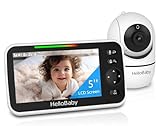
Overview: The HelloBaby HB6550 is a dedicated non-WiFi video baby monitor offering secure, local monitoring with a 5-inch color display. It targets privacy-conscious parents seeking reliable, hack-resistant surveillance without internet dependency, featuring robust hardware including pan-tilt-zoom functionality and extended battery life.
What Makes It Stand Out: Its invisible infrared night vision—undetectable to babies—provides crystal-clear nighttime feeds without disruptive red glows. The 355° horizontal and 120° vertical remote camera movement, coupled with noiseless operation and 1000ft FHSS encrypted range, ensures comprehensive room coverage and military-grade security. Multi-camera support (up to 4) and practical extras like room temperature alerts add versatility.
Value for Money: Priced mid-range, it outperforms budget WiFi monitors vulnerable to hacking while avoiding subscription fees of cloud-based systems. The 30-hour battery, lullabies, and durable build justify the cost for parents prioritizing uninterrupted, secure monitoring over app-based features.
Strengths and Weaknesses: Strengths: Exceptional night vision; robust encryption; intuitive pan-tilt-zoom; long battery life; no subscriptions. Weaknesses: Slightly bulky display; limited to local monitoring (no remote app access); setup requires manual pairing.
Bottom Line: Ideal for security-focused parents needing reliable, hack-proof monitoring with extensive room coverage. Its privacy-first design and thoughtful features make it a top choice for nurseries where WiFi connectivity is undesirable.
2. Kidsneed Baby Monitor with Camera and Audio - 5 inch 720P Video Baby Monitor, No WiFi, 48H Battery Life, Night Vision, Two Way Talk, Remote Pan Tilt Zoom, Thermal Monitor,1000 ft Range (530)
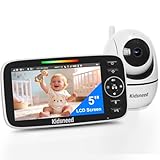
Overview: The Kidsneed 530 delivers a privacy-centric, non-WiFi baby monitoring experience with a 5-inch 720P display, emphasizing extended battery life and environmental safety via thermal monitoring. It caters to mobile parents needing all-day portability without compromising on video quality or security.
What Makes It Stand Out: A standout 48-hour battery (5000mAh) in audio-only mode and integrated thermal sensor for real-time room temperature tracking distinguish it. The 355° pan-tilt-zoom offers expansive coverage, while FHSS 2.4GHz transmission ensures secure, interference-free feeds up to 1000ft—ideal for large homes or outdoor use.
Value for Money: Competitively priced, it offers superior battery endurance over rivals like the HelloBaby HB6550. The thermal monitor adds safety value absent in many mid-tier models, and the lack of subscriptions enhances long-term savings versus WiFi alternatives.
Strengths and Weaknesses: Strengths: Industry-leading 48-hour battery; precise thermal monitoring; crisp 720P video; secure signal; portable design. Weaknesses: Night vision slightly less refined than HelloBaby’s; no lullaby feature; screen quality dims in direct sunlight.
Bottom Line: A compelling pick for parents valuing marathon battery life and room-temperature awareness. Its balance of security, portability, and safety features makes it perfect for active households needing dependable, wire-free monitoring.
3. HelloBaby 4.3’’ Video Baby Monitor with 30 Hours Battery, Remote Pan-Tilt-Zoom Baby Monitor No WiFi, Baby Monitor with Camera and Audio, Night Vision, ECO Mode, Two-way Talk, 8 Lullabies, 1000ft Range

Overview: This compact HelloBaby model features a 4.3-inch IPS screen and prioritizes efficiency with ECO mode, targeting budget-aware parents who need secure, non-WiFi monitoring in smaller living spaces without sacrificing core functionality.
What Makes It Stand Out: The energy-efficient ECO mode (screen auto-off during silence) extends battery life to 30 hours, while the IPS display ensures vibrant colors and wide viewing angles. Like its sibling model, it uses 2.4GHz FHSS encryption for unhackable local monitoring and includes unique extras like sound-activated screen wake and 8 lullabies.
Value for Money: Slightly more affordable than the 5-inch HB6550, it retains critical features—pan-tilt-zoom, night vision, and two-way talk—at a lower price. The 30-hour battery and lack of fees deliver exceptional longevity-focused value for cost-conscious buyers.
Strengths and Weaknesses: Strengths: Outstanding 30-hour ECO-mode battery; responsive sound activation; reliable night vision; temperature monitoring. Weaknesses: Smaller screen limits visibility; slower pan-tilt motor; no multi-camera support; shorter zoom range.
Bottom Line: Best suited for parents in apartments or nurseries where space is limited and battery longevity is paramount. Its smart power management and privacy features offer solid performance for everyday monitoring needs.
4. VTech Upgraded Audio Baby Monitor with Rechargeable Battery, Long Range, and Crystal-Clear Sound

Overview: The VTech DM111 is a streamlined audio-only monitor emphasizing simplicity, privacy, and mobility. It’s designed for parents who prioritize clear sound and portability over video, featuring a rechargeable battery and belt clip for on-the-go use.
What Makes It Stand Out: Its DECT 6.0 technology guarantees zero interference and military-grade privacy, with a 1000ft range and visual sound indicators during mute mode. The built-in rechargeable battery (8 hours runtime) and instant plug-and-play setup eliminate app complexities and subscription hassles.
Value for Money: As the most affordable option here, it excels for basic monitoring needs. The durable build, decades-long brand trust, and no hidden costs make it a cost-effective solution for secondary rooms or travel where video isn’t essential.
Strengths and Weaknesses: Strengths: Unbeatable privacy/security; lightweight portability; crystal-clear audio; rapid setup; belt clip convenience. Weaknesses: No video or night vision; limited to audio-only; shorter battery life than video monitors; no temperature tracking.
Bottom Line: An excellent choice for minimalist parents, nurseries near parents’ rooms, or as a supplementary monitor. Its reliability and privacy focus make it a no-frills workhorse for audio-centric monitoring.
5. VTech VM901 Smart WiFi Baby Monitor with 1080p FHD Camera and 5" HD IPS Display, Free App, Remote Pan Tilt Zoom, Night Vision, Motion Detection Alerts

Overview: The VTech VM901 merges high-definition video with smart connectivity, offering 1080p remote access via WiFi while retaining local viewing. It targets tech-savvy parents needing flexibility between secure direct mode and app-based monitoring without recurring fees.
What Makes It Stand Out: True 1080p resolution with 120° wide-angle coverage and 7× sharper night vision than basic models deliver exceptional clarity. Seamless dual-mode operation (local WiFi or direct) and free app access with remote pan-tilt-zoom provide unmatched versatility—no monthly subscriptions required.
Value for Money: Positioned at a premium price, it justifies cost with superior video quality, remote accessibility, and future-proof features like motion alerts. Competes favorably against subscription-dependent brands (e.g., Nest) by offering full functionality free of ongoing fees.
Strengths and Weaknesses: Strengths: Outstanding 1080p clarity; flexible direct/WiFi modes; smooth remote controls; free app; wide-angle lens. Weaknesses: WiFi dependency risks hacking (vs. non-WiFi models); requires stable home network; premium price.
Bottom Line: The top recommendation for parents wanting high-definition remote access without subscriptions. Ideal for larger homes or frequent travelers who prioritize visual detail and app convenience alongside robust security.
6. Simyke Upgrade Video Baby Monitor with 2 Cameras and Audio 2.8" Screen,Night Vision,APP,Wireless,2-Way Talk,1200ft Long Range,Feeding Timer,Temperature Sensor,VOX/ECO,5 Lullabies,Portable,Easy Setup

Overview: The Simyke dual-camera video baby monitor offers comprehensive remote monitoring via a 2.8" screen and companion app, featuring night vision, two-way talk, and environmental sensors for infant care.
What Makes It Stand Out: Its dual-camera system (1200ft range) and app integration provide flexible viewing angles, while unique additions like feeding timers, temperature sensors, and five lullabies enhance practicality. VOX/ECO mode intelligently conserves power by activating only during sound detection.
Value for Money: Priced mid-range, it justifies cost through versatility—replacing multiple tools (thermometer, sound machine) and eliminating subscription fees. However, the small screen and mandatory 2.4GHz WiFi for app use may deter those seeking simplicity.
Strengths and Weaknesses: Strengths: Dual cameras, robust range, app connectivity, and rich features like lullabies. Weaknesses: Limited screen size, app dependency for remote viewing, and potential connectivity hiccups on crowded WiFi bands.
Bottom Line: Ideal for tech-savvy parents wanting app integration and dual-room monitoring; less suited for those prioritizing screen clarity or offline reliability. A solid mid-tier choice with notable versatility.
7. HelloBaby Baby Monitor 6" World First IPS Screen 30H Battery, Secure No WiFi, Pan Tilt Video Camera with Night Vision, VOX, 2-Way Talk, 1000ft, Portable Video Audio Monitor Ideal for Mom, Elderly, Pet

Overview: HelloBaby HB6560 features a groundbreaking 6" IPS screen, 30-hour battery life, and secure non-WiFi connectivity, designed for uninterrupted, private baby monitoring up to 1000ft away.
What Makes It Stand Out: The world’s first 6" IPS screen reduces eye strain with wide viewing angles, while 355° pan/tilt and invisible infrared night vision ensure complete room coverage without disturbing sleep. Its 2.4GHz FHSS encryption guarantees zero internet vulnerability.
Value for Money: Premium-priced but justified by the large screen, exceptional battery life, and military-grade security. Outperforms cheaper models in usability for grandparents or frequent travelers, though lacks app access.
Strengths and Weaknesses: Strengths: Unmatched screen quality, robust battery, secure offline operation, and smooth pan/tilt. Weaknesses: No app functionality, higher cost than basic monitors, and bulkier portability.
Bottom Line: The top recommendation for privacy-focused families needing a large, reliable display—especially valuable for low-light viewing and multi-generational households. Skip if app remote access is essential.
8. VTimes Baby Monitor with Camera and Audio, Video Baby Monitor No WiFi Night Vision 2.4" LCD Screen Portable Baby Camera Monitor Alarm Lullaby Temperature Sensor and 1000ft, Ideal for Baby/Elderly/Pet

Overview: This compact, non-WiFi baby monitor delivers essential surveillance via a 2.4" screen, featuring night vision, temperature sensing, and eco-mode for straightforward, secure monitoring up to 1000ft.
What Makes It Stand Out: Its ultra-simple plug-and-play setup and 2.4GHz FHSS encryption prioritize security without complex configurations. ECO mode intelligently wakes the screen during baby sounds, conserving battery while ensuring responsiveness.
Value for Money: An affordable entry point for budget-conscious buyers. It covers core needs reliably but lacks advanced features like pan/tilt or app support, making it ideal for secondary monitoring (e.g., nurseries, elderly care).
Strengths and Weaknesses: Strengths: Secure offline use, intuitive operation, portable size, and responsive ECO mode. Weaknesses: Small screen, no zoom/pan capabilities, and limited feature depth compared to pricier models.
Bottom Line: A dependable, no-frills option for basic monitoring needs—perfect for travel, backup use, or those wary of WiFi-connected devices. Avoid if room coverage or screen size are priorities.
9. Owlet Dream Sock® - FDA-Cleared Smart Baby Monitor - Track Live Pulse (Heart) Rate, Oxygen in Infants - Receive Notifications - Mint

Overview: The Owlet Dream Sock is an FDA-cleared wearable smart monitor tracking infant heart rate and oxygen levels in real-time, designed to alert parents of potential health anomalies during sleep.
What Makes It Stand Out: Unlike camera monitors, it provides medical-grade vitals monitoring with predictive sleep technology. Its sock design avoids camera blind spots, and 94% of users report improved parental sleep quality due to reliable alerts.
Value for Money: Premium-priced but invaluable for high-anxiety or medically cautious parents. Includes predictive insights and upgrade paths (Owlet360), though excludes visual monitoring—best paired with a camera system.
Strengths and Weaknesses: Strengths: Life-saving vitals tracking, FDA clearance, sleep trend analysis, and proven stress reduction. Weaknesses: No video/audio, limited size range (6–30 lbs), and requires charging.
Bottom Line: Essential for parents seeking proactive health monitoring; not a standalone solution. Pair with a camera monitor for complete coverage. Unmatched peace of mind for critical infant health metrics.
10. HelloBaby 6”IPS Large Screen, Video Baby Monitor with Upgraded 4000mAh Battery, 2-Way Talk, Night Vision, Pan-Tilt-Zoom, No WiFi, ECO Mode

Overview: HelloBaby’s upgraded monitor boasts a vibrant 6" IPS screen, 4000mAh battery, and pan-tilt-zoom functionality, delivering secure, WiFi-free monitoring with enhanced usability for extended nighttime use.
What Makes It Stand Out: The 2X zoom and 318° pan/120° tilt offer precise room coverage, while the massive battery (combined with ECO mode) enables full-night operation. The large IPS screen ensures crisp visuals from any angle, rivaling smartphone displays.
Value for Money: Competitively priced for its screen size and battery capacity. Outperforms Product 7 in zoom functionality and battery endurance, making it ideal for larger nurseries or parents needing all-night reliability without recharging.
Strengths and Weaknesses: Strengths: Superior screen clarity, extended battery, smooth zoom controls, and secure offline operation. Weaknesses: Still no app access, and the bulkier design limits portability versus smaller models.
Bottom Line: The definitive choice for parents prioritizing screen quality and battery life over app features. A significant upgrade from standard monitors—highly recommended for primary nursery use.
Understanding Your Newborn’s Unique Monitoring Needs
The first few months with a newborn present specific challenges that influence your monitoring choices. Their tiny size, irregular breathing patterns, and complete dependence mean you need a tool designed for close, reliable observation.
Why Newborns Demand Specialized Attention
Newborns sleep in shorter cycles and spend more time in lighter sleep stages compared to older infants. They also exhibit periodic breathing – brief pauses followed by faster breaths – which is normal but can cause significant alarm for new parents. A monitor that clearly shows subtle chest movements or provides reliable audio cues becomes invaluable for distinguishing normal newborn behavior from potential concerns, reducing unnecessary panic during those fragile early weeks.
The Critical Role of Peace of Mind for Parental Well-being
Parental exhaustion is real and dangerous. Constantly tiptoeing into the nursery to visually check on your sleeping newborn disrupts your own crucial recovery sleep. A dependable monitor acts as your remote eyes and ears, allowing you to relax knowing you’ll be alerted if something is amiss. This isn’t just about convenience; it directly impacts your mental health, patience, and ability to care for your baby effectively. Quality rest for you translates to better care for them.
Core Monitor Types: Finding Your Foundation
Not all baby monitors serve the same purpose. Understanding the fundamental categories is the first step toward making an informed decision based on your home layout and personal preferences.
Audio-Only Monitors: Simplicity and Reliability
These classic units transmit sound from the nursery to a dedicated parent unit. They excel in simplicity, often featuring long battery life, minimal setup, and generally lower cost. Without video processing, they tend to have fewer connectivity issues and zero screen glare in a dark room. They’re ideal for smaller homes, parents prioritizing pure sound alerts, or those concerned about screen dependency. However, they lack visual confirmation, which can be frustrating when trying to discern if cries are hungry, sleepy, or distressed.
Video Monitors: Seeing is Believing (and Reassuring)
Video monitors provide a live feed of the nursery, offering the ultimate peace of mind. Seeing your baby’s subtle movements, color, and overall state eliminates guesswork associated with audio-only models. Most modern video units include two-way talk, temperature sensors, and lullabies. They are particularly beneficial for larger homes, parents who want visual confirmation of breathing or position, or those with multiples. Consider potential downsides like screen distraction, higher cost, and potential privacy concerns with Wi-Fi models.
Smart Monitors and Hybrid Systems: Beyond Basic Observation
These leverage your home Wi-Fi network, streaming video and audio directly to your smartphone app. They offer incredible flexibility—monitor from anywhere with internet, receive customizable alerts, and often integrate with other smart home devices. Features like movement tracking, detailed sleep analytics, and remote pan/tilt/zoom are common. However, they rely heavily on your home network stability, raise significant security considerations, and can drain your phone battery. They suit tech-savvy parents who value remote access and advanced data, but require careful setup for security.
Essential Features for Newborn Safety and Sanity
Certain features are non-negotiable when monitoring the delicate sleep patterns of a newborn. Prioritizing these ensures your monitor actively contributes to a safe sleep environment.
Non-Negotiable Night Vision Quality
Newborns sleep most of the day, meaning you’ll rely heavily on night vision. Look for monitors with true infrared (IR) night vision that provides a clear, detailed black-and-white image without a visible red glow that could disturb sleep. Avoid models with poor low-light performance that show only a blurry, grainy mess – you need to clearly see your baby’s face and chest movements in total darkness. Effective range in night vision mode is equally important.
Reliable Range and Signal Stability
Your monitor must work consistently throughout your home, especially between nursery and common areas like the kitchen or master bedroom. Check the manufacturer’s stated range, but be aware real-world obstacles like walls, metal studs, and appliances can significantly reduce it. Look for units operating on the 1.9 GHz or 5.8 GHz frequency bands, which generally experience less interference from Wi-Fi routers and cordless phones than older 2.4 GHz models, ensuring fewer dropouts during critical moments.
Clear Audio Transmission and Noise Filtering
Crisp, static-free audio is vital. Background noise like household sounds or pets can mask your newborn’s cries. Advanced models feature noise filtering or voice activation (VOX) that only transmits sound above a certain threshold, preventing constant white noise from draining the parent unit battery and ensuring you hear only relevant sounds. Two-way talk clarity is also important for soothing without rushing into the room.
Prioritizing Security and Privacy in the Digital Age
With increasing connectivity comes heightened vulnerability. Protecting your baby’s privacy from potential hackers is paramount, especially with Wi-Fi enabled monitors.
Understanding Wi-Fi Monitor Vulnerabilities
Internet-connected monitors are potential entry points for hackers if not secured properly. Risks include unauthorized access to live video feeds, audio eavesdropping, or even hijacking the device. Never assume a monitor is secure out-of-the-box. Research the manufacturer’s reputation for security updates and data handling practices before purchasing any Wi-Fi model.
Critical Security Best Practices
Always change the default password to a strong, unique one. Enable WPA2 or WPA3 encryption on your home Wi-Fi network. Keep the monitor’s firmware updated religiously to patch security holes. Disable remote access features if you don’t absolutely need them. Consider placing the monitor on a separate network segment (like a guest network) if your router supports it. These steps are not optional; they are essential for safeguarding your family’s privacy.
Practical Considerations for New Parent Life
Beyond core features and security, think about how the monitor will integrate into your exhausting, ever-changing newborn routine. Practicality is key when sleep is scarce.
Battery Life and Power Options
Parent unit battery life is crucial for nighttime checks or moving around the house. Look for units offering 8+ hours of continuous use. Consider models with rechargeable batteries versus disposable ones for cost and convenience. Also, check if the nursery camera requires a constant power outlet nearby – battery-powered nursery units exist but often have significant limitations for continuous monitoring.
Ease of Use During Sleep Deprivation
When you’re operating on three hours of broken sleep, complex menus or finicky interfaces are the last thing you need. Prioritize monitors with intuitive physical buttons on the parent unit (instead of only touchscreens), clear volume controls, and simple pairing processes. A mute button for the parent unit speaker that doesn’t disable alerts is a lifesaver for middle-of-the-night feedings.
Physical Design and Nursery Integration
Consider the camera’s size and mounting options. Can it securely sit on a shelf, mount on a wall, or attach to a crib (following all safety guidelines, never placing it inside the crib)? Ensure cords are short or well-secured to prevent any potential hazard. For the parent unit, think about size for carrying in a pocket and screen brightness adjustment to avoid blinding yourself in a dark room.
Navigating Safety Certifications and Standards
Not all monitors are built to the same safety standards. Verifying certifications provides an extra layer of assurance, especially for a product used so close to your newborn.
Recognizing Legitimate Safety Marks
Look for monitors certified by independent testing laboratories like UL (Underwriters Laboratories), ETL (Intertek), or CSA (Canadian Standards Association). These marks indicate the device meets rigorous electrical safety standards, reducing fire or shock risks. Avoid units without any recognized safety certification, particularly inexpensive imports sold online.
Understanding RF Exposure Guidelines
Baby monitors emit low levels of radiofrequency (RF) energy. Reputable manufacturers design their products to comply with strict FCC (or equivalent) limits for RF exposure, which are set well below levels known to cause harm. While the science on long-term, low-level exposure is ongoing, choosing a monitor from a trusted brand that adheres to these standards provides peace of mind. Distance is your friend – place the nursery unit at least 3-6 feet away from the crib.
Setting Up for Optimal Performance and Safety
Correct installation is as important as the monitor itself. A poorly placed camera or misconfigured settings can render even the best monitor ineffective or unsafe.
Strategic Camera Placement Principles
Position the camera so it has a clear, unobstructed view of the entire crib/mattress, focusing on your baby’s chest area. Mount it high on a wall or sturdy shelf, well out of baby’s reach (at least 3 feet away and 6 feet high), to prevent pulling hazards or curious exploration later. Avoid pointing it directly at a window to prevent glare or infrared reflection issues. Ensure all cords are completely inaccessible.
Calibration and Environmental Adjustments
Take time to adjust settings before relying on the monitor. Test night vision in complete darkness. Fine-tune the sensitivity of motion or sound alerts to avoid constant false alarms from rustling blankets or distant traffic, but ensure real cries trigger the alert. Position temperature/humidity sensors away from direct sunlight or vents for accurate readings. Revisit settings periodically as your baby grows and their sleep environment changes.
Maximizing Longevity and Value
Newborns grow incredibly fast, but a well-chosen monitor can serve you well beyond the early months, offering better value for your investment.
Planning for Growth Beyond the Bassinet Stage
Consider how the monitor will adapt as your baby transitions from bassinet to crib, then eventually to a toddler bed. Does the camera have a wide enough viewing angle? Can it pan/tilt or zoom? Is the range sufficient for a larger room? Features like room temperature monitoring remain useful long after newbornhood. Investing in a slightly more versatile model can prevent needing a replacement within a year.
Maintenance and Care for Lasting Reliability
Regularly clean the camera lens with a soft, dry cloth to prevent blurry images. Check battery contacts for corrosion. Keep the parent unit screen protected. Store the monitor properly during the day if not in use (some parents prefer turning it off during awake times). Following the manufacturer’s care instructions extends the device’s lifespan and ensures consistent performance when you need it most.
Frequently Asked Questions
Frequently Asked Questions
Can I use my smartphone as a baby monitor?
While apps exist, they lack dedicated hardware reliability, drain battery rapidly, pose significant security risks, and aren’t designed for constant monitoring. Dedicated monitors offer better performance, security features, and battery life specifically for this critical task.
How far away can the parent unit be from the nursery camera?
Range varies significantly by model and home layout. Non-Wi-Fi monitors typically offer 500-1000+ feet line-of-sight, but interior walls, especially concrete or metal, can reduce this to 100-300 feet. Always check real-world user reviews for range performance in typical homes, not just the manufacturer’s ideal claim.
Are baby monitors with breathing movement detection reliable for newborns?
Technology claiming to track breathing via video or sound is not a medical device and should never replace safe sleep practices or parental supervision. These features can produce false alarms or miss events. Rely on safe sleep guidelines (firm mattress, no loose bedding) as your primary safety measure, not tech promises.
Is Wi-Fi interference a major problem for baby monitors?
It can be, especially on crowded 2.4 GHz networks. Monitors using 1.9 GHz or 5.8 GHz DECT technology generally avoid Wi-Fi interference. If using a Wi-Fi monitor, ensure your home network is robust, consider prioritizing the monitor on your router, and avoid placing the camera far from your Wi-Fi access point.
Should I get a monitor with a temperature sensor?
Yes, it’s highly recommended. Newborns cannot regulate their body temperature well. A reliable sensor helps ensure the nursery stays within the safe range (68-72°F or 20-22°C), preventing overheating (a SIDS risk factor) or the baby getting too cold, promoting safer, more comfortable sleep.
How do I prevent my pet from triggering false alarms?
Look for monitors with adjustable motion or sound sensitivity settings. Set motion detection zones to exclude the floor area where pets roam. Some advanced models use AI to distinguish between human and pet movement. Placing the camera higher up can also help focus the view solely on the crib.
Is screen brightness on the parent unit a big deal?
Absolutely, especially for nighttime use. A screen that’s too bright will destroy your night vision and make it harder to fall back asleep after checking. Prioritize monitors with automatic brightness adjustment or multiple manual dimming levels specifically designed for dark environments.
Can baby monitors cause RF radiation exposure to my newborn?
All electronic devices emit some RF. Reputable baby monitors operate well below established safety limits (FCC, ICNIRP). To minimize exposure as a precaution, place the nursery camera unit at least 3-6 feet away from the crib – distance dramatically reduces exposure levels, which are already very low.
What’s the single most important feature for a newborn monitor?
Reliable, clear audio transmission is paramount. You must hear your newborn’s cries consistently, even faint whimpers. While video is helpful, audio is the critical alert system. Ensure the monitor has strong signal stability and good noise filtering to deliver clear sound without dropouts.
When should I stop using a dedicated baby monitor?
There’s no fixed age. Transition when your child consistently sleeps through the night, understands not to call out unnecessarily, and your home layout allows you to hear them naturally. Many parents phase out video monitoring around 18-24 months but may keep an audio monitor longer, especially for toddlers prone to night waking. Trust your parental instincts on timing.