Bringing home your newborn transforms everyday routines into moments of profound significance—and bath time is no exception. That first gentle wash isn’t just about cleanliness; it’s a sensory experience that builds trust, soothes your little one, and creates intimate bonding opportunities for exhausted but overjoyed parents. Yet, standing over the sink or a standard tub with a slippery newborn can trigger heart-pounding anxiety. Where do you safely support their head? How deep should the water be? The right bathing setup isn’t a luxury; it’s a non-negotiable pillar of infant safety and parental peace of mind during those fragile early months.
Choosing the ideal bathing solution feels overwhelming amidst a sea of products promising simplicity, but the stakes couldn’t be higher. Drowning is a leading cause of unintentional injury-related death for infants, often occurring silently in mere inches of water. This isn’t about finding the “cutest” tub; it’s about understanding why certain features prevent slips, support developing spines, and adapt as your baby grows from a wobbly newborn to a wriggly toddler. Forget fleeting trends—this guide cuts through the noise to focus solely on evidence-based considerations that prioritize safety, practicality, and the real, messy reality of parenting. Let’s navigate the essentials together, so bath time becomes a cherished ritual, not a source of stress.
Top 10 Baby Bathtubs for First-Time Parents
Detailed Product Reviews
1. Frida Baby 4-in-1 Grow-with-Me Baby Bathtub, Baby Tub for Newborns to Toddler with Removable Bath Seat & Backrest for Bath Support in Tub

Overview: The Frida Baby 4-in-1 Grow-with-Me Bathtub is a versatile solution designed to accommodate infants from newborns up to toddlers, eliminating the need for multiple tubs. Its core functionality hinges on a removable sling seat and adjustable backrest system. What Makes It Stand Out: Its seamless transition capability is unmatched; the machine-washable sling securely cradles newborns, then converts into a supportive toddler seat. Enhanced safety features like the stay-put hooks, no-slip feet, and integrated drain plug with drying hook significantly streamline bath time while prioritizing security. Value for Money: Priced mid-to-high range, it offers exceptional long-term value by replacing several single-stage tubs. While initial cost is higher than basic infant tubs, the durability and extended usability through the toddler years (approx. 2+ years) make it a cost-effective investment compared to buying separate newborn and toddler tubs. Strengths and Weaknesses: Strengths: Truly adaptable design, excellent safety features, easy draining/cleaning, comfortable for baby, space-efficient storage. Weaknesses: Toddler seat may feel snug for larger 2+ year olds, plastic can feel less premium than some competitors, requires careful hook alignment for sling stability. Bottom Line: Highly recommended for parents seeking a single, safe, and practical bathing solution that genuinely grows with their child from day one through toddlerhood, offering significant convenience and long-term savings.
2. Baby Bathtub, Collapsible Newborn Bathtub for Infant to Toddler 0-24 Months with Soft Cushion and Thermometer,Portable Travel Newborn Tub with No-Slip Feet, Baby Shower Gifts,Grey

Overview: The Bunwag Collapsible Baby Bathtub prioritizes portability and temperature safety for infants aged 0-24 months. Its standout feature is a compact foldable design combined with an integrated water thermometer. What Makes It Stand Out: The space-saving collapsible nature makes it ideal for small homes or frequent travelers, packing flat effortlessly. The built-in temperature sensor and thermosensitive drain plug (changes color if water is unsafe) provide crucial real-time safety feedback, a feature rare in collapsible tubs. The soft cushion adds comfort. Value for Money: Positioned as a premium collapsible option, its value lies in the unique thermometer integration and portability. It costs more than basic foldable tubs but justifies it with enhanced safety tech. Less versatile than rigid “grow-with-me” tubs for long-term use, but excellent value for travel or supplemental use. Strengths and Weaknesses: Strengths: Excellent portability, vital temperature monitoring, soft cushioning, safe PP+TPE materials, compact storage. Weaknesses: Limited depth/space for older toddlers, thermometer accuracy can vary, cushion may shift, not as stable as rigid-frame tubs on some surfaces. Bottom Line: An excellent choice for parents needing a safe, travel-friendly tub with temperature assurance, particularly as a secondary tub or for space-constrained homes; ideal as a baby shower gift focused on modern safety.
3. Angelcare Baby Bath Support (Gray) | Ideal for Babies Less Than 6 Months Old

Overview: The Angelcare Baby Bath Support is a specialized mesh sling designed solely for newborns and infants up to 6 months (or 9kg/20lbs), used directly in a standard adult bathtub. What Makes It Stand Out: Its unique ergonomic mesh design warms quickly in water, providing comforting support while allowing rapid drainage and drying. The simple, fuss-free design securely cradles baby, freeing both parental hands for washing, and the top loop enables easy hanging storage – a significant convenience factor. Value for Money: As a low-cost, single-purpose accessory, it offers tremendous value for the newborn phase. It’s significantly cheaper than full bathtub systems and excels at its specific task. However, its very limited lifespan (approx. 6 months) means it doesn’t replace the need for a larger infant/toddler tub later. Strengths and Weaknesses: Strengths: Exceptionally comfortable and calming for newborns, promotes hands-free bathing, hygienic quick-dry mesh, extremely easy storage, very affordable. Weaknesses: Very short usability window (only for young infants), requires an existing standard bathtub, minimal head/neck support compared to some infant tubs. Bottom Line: Highly recommended as a budget-friendly, simple, and effective solution for safe, comfortable newborn baths in a standard tub, but understand it’s a short-term aid, not a complete bathing system.
4. The First Years Rain Shower Baby Spa Bathtub Set – Includes Infant Sling, Soothing Spray Shower Head, Fresh Water Tank and Built-in Soft Brush – 3-in-1 Newborn to Toddler Design –Baby Bath Essentials
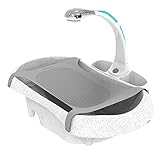
Overview: This 3-in-1 bathtub transforms bath time into a spa-like experience with a built-in rain shower feature, targeting newborns through toddlers. It includes a sling, spray shower head, water tank, and brush. What Makes It Stand Out: The integrated “spa” elements are its USP: the rotating rain shower head (with built-in soft brush) and separate fresh water tank create a gentle, continuous rinse without bucket refills, mimicking a shower. The 3-stage conversion (newborn sling, infant incline, toddler seat) supports growth visually and functionally. Value for Money: It commands a premium price due to the shower mechanism and accessories. The novelty and potential for calmer bath times add value, but the reliance on 6 AA batteries and complexity compared to simpler tubs may deter some. Offers unique sensory benefits justifying cost for parents prioritizing bath-time enjoyment. Strengths and Weaknesses: Strengths: Highly engaging “spa” experience reduces bath-time stress, effective continuous rinse system, good 3-stage adaptability, soft sling, built-in brush convenience. Weaknesses: Battery dependency, shower mechanism adds bulk/complexity, tank requires filling, plastic quality feels less robust than premium tubs, higher price point. Bottom Line: Recommended for parents seeking to make bath time a soothing, enjoyable ritual with innovative features, accepting the trade-offs of battery use and higher cost for the unique spa-like benefits.
5. Frida Baby Control The Flow Bathtub Sprayer Attachment for Baby Bathtub, Shower Head with Scalp Massager, Control Waterflow with 2 Pressure Modes

Overview: This is not a full bathtub, but a specialized sprayer attachment designed to replace the tedious rinsing cup during baby baths in any standard tub or sink. It features controlled water flow and massage attachments. What Makes It Stand Out: The electric suction pump base provides a truly hands-free, continuous water stream directly from the tub’s existing water, eliminating constant cup refills. Precise 2-pressure modes and the toggle on/off offer exceptional control for gentle, tear-free rinsing, while the included scalp massager and soft scrubber adapt to different ages. Value for Money: As a targeted accessory solving a universal bath-time pain point (refilling cups), it offers outstanding value. It’s significantly cheaper than buying a new tub and works with existing setups. The convenience and time saved during daily baths provide a rapid return on investment compared to manual rinsing. Strengths and Weaknesses: Strengths: Eliminates refilling cups (major time-saver), precise gentle rinse control, versatile attachments (scalp massager/scrubber), long hose, strong suction base (on smooth surfaces), grows with child. Weaknesses: Suction may fail on textured tubs, requires batteries, hose management can be fiddly, not a standalone tub solution. Bottom Line: A highly recommended, game-changing accessory for any parent using a standard tub or sink for baby baths; its efficiency and gentleness make rinsing significantly easier and more comfortable, justifying its price as a must-have add-on.
6. Yookidoo Baby Bath Shower Head - Elephant Water Pump with Trunk Spout Rinser - Control Water Flow from 2 Elephant Trunk Knobs for Maximum Fun in Tub or Sink for Newborn Babies

Overview: The Yookidoo Baby Bath Shower Head is a compact, battery-operated portable shower designed specifically for bathing newborns, infants, and toddlers. It features a dual-knob elephant trunk design that allows parents to control water flow with one hand while securely holding the baby with the other, promoting safety and ease during bath time. The gentle stream targets hard-to-reach areas like hair and neck folds. What Makes It Stand Out: Its unique dual-knob activation system enables effortless pausing and resuming of water flow, a critical feature when managing a slippery newborn. The compact, portable design doubles as a bath toy in later stages, enhancing long-term utility. The gentle, controlled stream minimizes water exposure anxiety for babies. Value for Money: Priced moderately, it offers significant value by solving a core bath-time challenge: keeping one hand free for baby support. While basic handheld showers exist, the intentional ergonomic design and dual-knob control justify the cost compared to less specialized alternatives. Strengths and Weaknesses: Strengths: Excellent one-handed operation, gentle water flow, portable, converts to bath toy. Weaknesses: Requires battery maintenance (compartment must be tightly sealed to prevent leaks), potential for knobs to be accidentally bumped by baby, limited water pressure adjustment beyond on/off. Bottom Line: A highly practical, safety-focused tool that simplifies newborn bathing. Despite minor battery concerns, its unique dual-knob control and gentle stream make it a worthwhile investment for new parents seeking convenience and security.
7. Baby Bath Thermometer, Digital Water Temperature Thermometers with 3 Color Backlit and Temperature Warning, Safety Bath Tube Thermometers Floating Toy for Infant, Toddler

Overview: This duck-shaped digital bath thermometer provides instant, accurate water temperature readings using a color-coded backlight system. Made from BPA-free materials with a smooth, safe surface, it floats in the tub and automatically activates upon contact with water, turning off after five minutes out of water to conserve battery life. What Makes It Stand Out: The immediate 3-color backlight (red for hot, orange for cold, green for ideal) eliminates guesswork and hand-testing risks. Its dual function as a floating bath toy engages babies, while the automatic on/off and °F/°C toggle enhance user-friendliness. The compact duck design is both practical and appealing. Value for Money: An affordable essential that prevents burns or discomfort. Its accuracy and speed surpass traditional floating thermometers, and the built-in toy element adds value. The included batteries and simple design offer excellent reliability for the price point compared to basic analog models. Strengths and Weaknesses: Strengths: Instant color-coded readings, automatic operation, safe BPA-free material, doubles as bath toy, easy temperature unit switch. Weaknesses: Small size risks being misplaced or chewed by older toddlers, backlight may be hard to see in bright bathrooms, requires keeping dry when not in use to preserve battery. Bottom Line: A must-have safety tool that transforms bath time with instant, visual temperature feedback. Its toy-like design and foolproof operation make it an exceptional value for ensuring baby’s comfort and preventing accidents.
8. The First Years Sure Comfort Folding Baby Bather - Foldable Baby Bath Seat and Lounger for Home or On the Go - for Sink or Tub Use - Non-Slip Seat - For Up to 15 Lbs
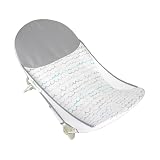
Overview: The Sure Comfort Folding Baby Bather is a space-saving bath seat designed for newborns up to 15 lbs or until they sit unassisted. It fits securely in standard sinks or adult tubs, featuring a supportive incline, non-slip mesh seat, and raised sides to cradle babies comfortably during bath time. What Makes It Stand Out: Its ultra-compact fold-flat design is ideal for small spaces and travel, storing easily in closets or cabinets. The “Easy Times 3” concept – easy to open, use, and stow – delivers remarkable portability without sacrificing stability. The mesh material dries quickly and provides gentle support. Value for Money: Priced accessibly, it outperforms bulky traditional baby tubs by maximizing storage efficiency. While lacking advanced features like adjustable positions, its core functionality, durability, and travel-readiness offer strong value for budget-conscious or space-limited households compared to larger, less portable alternatives. Strengths and Weaknesses: Strengths: Extremely compact storage, lightweight and portable, non-slip grip, quick-drying mesh, fits sinks and tubs. Weaknesses: Lower weight limit (15 lbs) means shorter usage period, fixed incline offers no position adjustment, mesh may feel less plush than padded slings. Bottom Line: An excellent, no-frills solution for parents prioritizing space efficiency and portability. Its reliable support and effortless folding make it a top choice for small homes or frequent travelers seeking a practical newborn bath seat.
9. Ingenuity Foldaway 2-Position Baby Bath Seat, Adjustable Support for Sink or Bathtub, Ages 0-6 Months up to 20 Pounds, Machine-Washable Sling

Overview: The Ingenuity Foldaway 2-Position Baby Bath Seat supports infants from birth up to 20 lbs or 6 months in a sink or tub. It features an adjustable mesh sling with a headrest and high sides for security, plus non-slip grips. The standout is its machine-washable fabric sling and dual-position recline. What Makes It Stand Out: The 2-position recline (newborn cradle and older infant seat) extends usability significantly. The machine-washable sling is a major advantage for hygiene, addressing a common pain point with fixed fabric seats. Its robust frame and high weight limit (20 lbs) enhance longevity. Value for Money: Slightly pricier than basic folders, it justifies cost through extended use (2 positions, 20 lb limit) and the invaluable machine-washable sling. Busy parents will appreciate the easy cleanup, offering better long-term value than non-removable sling models despite the higher initial investment. Strengths and Weaknesses: Strengths: Adjustable recline positions, machine-washable sling, high 20 lb weight limit, secure non-slip feet, supportive headrest. Weaknesses: Bulkier folded size than some competitors, assembly required for sling replacement, fixed frame color options. Bottom Line: A superior investment for parents seeking longevity and ease of maintenance. The adjustable positions and washable sling provide significant practical benefits, making it highly recommended for its enhanced functionality and hygiene.
10. Baby Bathtub with Inflatable Top Edge, Extra Stable Infant Bath Tub, Collapsible & Portable for Baby Bath Time, No Tilt Design for 12M-6Y Newborn, No Assembly for Travel Shower
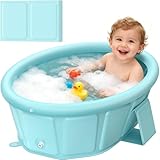
Overview: This collapsible baby bathtub features an innovative inflatable top rim for exceptional stability, eliminating collapse risks. Designed for toddlers 12 months to 6 years, it folds completely flat for storage, includes a side drain plug, and is made from BPA-free PVC. Note: Not for newborns. What Makes It Stand Out: The inflatable rim is the key innovation, locking the frame rigidly in place whether inflated or not, far surpassing typical flimsy foldable tubs. Its true flat-fold design (13.5"x9.5"x3.3") and included hand pump prioritize extreme portability and space-saving without compromising sturdiness. Value for Money: Positioned as a premium travel tub, its unique stability mechanism and compactness justify the cost for frequent travelers or those with minimal storage. It outperforms cheaper collapsible tubs that lack structural integrity, offering toddler-specific safety and convenience worth the investment. Strengths and Weaknesses: Strengths: Unmatched stability via inflatable rim, ultra-compact flat fold, quick drainage, BPA-free PVC, lightweight travel. Weaknesses: Age-restricted (12M+, not for newborns), requires inflation for maximum stability (though works deflated), PVC material may retain odors over time. Bottom Line: The definitive collapsible tub for toddlers and preschoolers prioritizing travel and space efficiency. Its revolutionary inflatable rim solves the core instability flaw of foldable tubs, making it an essential, safety-focused purchase for mobile families.
Understanding Infant Bathing Safety Fundamentals
The Critical Role of Non-Slip Surfaces
A bath surface that grips tiny limbs is non-negotiable. Smooth plastic or silicone bases significantly reduce slipping risks compared to textured mats that can harbor bacteria. Look for integrated suction cups that firmly anchor the tub to your sink or countertop—test their grip on multiple surfaces before trusting them with your baby. Remember, even a slight slide can cause panic and injury for a newborn who lacks head and neck control.
Optimal Water Depth and Temperature Control
Newborns require only 2-3 inches of warm water—never fill a tub beforehand. Always test water temperature (aim for 100°F/38°C) with your elbow or a reliable thermometer before placing your baby in. Built-in temperature indicators are helpful but shouldn’t replace manual checks. Deeper tubs increase drowning risk; prioritize designs where your baby’s head stays well above water when seated reclined.
Secure Head and Neck Support Systems
Infants cannot hold their heads up steadily until 3-4 months. Effective tubs feature contoured headrests or adjustable supports that cradle the neck without forcing unnatural positioning. Avoid designs requiring you to manually prop their head—your hands must be free for washing. Ensure the support is firm yet cushioned, preventing the baby from sinking too deeply into the tub.
Material Matters: Durability, Safety, and Comfort
Evaluating Non-Toxic Plastic Options
Rigid plastics like BPA-free polypropylene offer stability and easy cleaning but can feel cold. Check for certifications indicating compliance with global safety standards (e.g., FDA, EN71). Avoid tubs with sharp seams or overly flexible materials that might warp or tip. Remember, “eco-friendly” claims require scrutiny—demand specific third-party certifications for material safety.
The Benefits of Soft-Sided Designs
Mesh or fabric-lined tubs provide gentle cushioning and conform to baby’s shape, reducing startle reflexes. They’re lightweight and portable but require thorough drying to prevent mold. Ensure the frame is sturdy and the fabric is medical-grade, free from dyes or finishes that could irritate delicate skin. These excel for travel but may lack the rigid support needed for very young newborns.
Silicone: Flexibility Meets Hygiene
Silicone tubs are gaining popularity due to inherent antimicrobial properties and resistance to mildew. They fold compactly for storage yet maintain structural integrity when filled. Opt for food-grade platinum-cured silicone, which avoids harmful additives. The smooth surface is easy to sanitize, but verify the tub has reinforced edges to prevent collapsing during use.
Matching Tub Types to Your Real-Life Needs
Sink Inserts: Maximizing Small Spaces
Ideal for apartments or tiny bathrooms, these compact supports cradle baby securely over your kitchen or bathroom sink. They eliminate bending strain on your back and keep baby at eye level. Ensure compatibility with your sink depth and width—measure carefully. Models with drainage holes prevent water pooling, but never leave baby unattended, even for a second.
Freestanding Infant Tubs: Stability for Growing Babies
These standalone units sit on the floor, accommodating babies from newborns through toddlerhood (often with adjustable recliners). Wider bases prevent tipping, and some include height-adjustable legs. Prioritize models with a gentle incline for newborns and a flatter section for older infants learning to sit. Storage can be bulky, so consider foldable designs if space is limited.
Convertible Systems: Adapting to Developmental Stages
The most versatile (though often pricier) options grow with your child. A newborn sling or recliner transitions into a toddler seat as mobility increases. Look for systems where the infant insert removes completely, leaving a stable, shallow tub for independent sitting. Ensure conversion is tool-free and intuitive—complicated mechanisms become frustrating with a squirmy baby.
Essential Features Beyond the Basics
Ergonomic Design for Parent Comfort
Parent back strain is a real issue. Tubs with elevated sides or contoured edges reduce the need to hunch over. Some feature integrated armrests for your forearms, providing leverage to support baby securely while freeing your hands. Test the height: your elbows should be near your waist when supporting baby’s head.
Drainage Solutions and Drying Efficiency
Stagnant water breeds bacteria. Tubs with built-in drain plugs or perforated bases speed up emptying. For soft-sided tubs, quick-dry fabrics and foldable frames minimize mustiness. Avoid designs with hidden crevices where water can pool—these are breeding grounds for mold and impossible to clean thoroughly.
Portability and Storage Considerations
Frequent travelers need lightweight, compact options that fit in luggage. Freestanding tubs often collapse flat; sink inserts tuck into cabinets. Measure your storage space before purchasing—many parents underestimate how much room a “compact” tub occupies. For shared bathrooms, wall-mounted hooks or slim-profile designs maximize floor space.
Sensory Elements for Calm Bathing
Gentle textures, muted colors, or subtle cradling contours can soothe sensitive babies. Avoid overwhelming patterns or loud noises (like built-in sprayers). Some tubs integrate soft, removable headrests in calming colors (like pale blue or beige) proven to reduce infant stress. Remember, simplicity often wins—too many features can overstimulate.
Practical Usage Tips for Stress-Free Success
Establishing a Safe Bathing Routine
Consistency reduces anxiety for both parent and baby. Gather everything beforehand: washcloth, mild cleanser, clean diaper. Never leave baby alone—even to grab a dropped washcloth. Keep one hand firmly supporting their head/neck at all times until they can sit steadily unassisted. Start with sponge baths until the umbilical cord stump falls off.
Temperature Management Strategies
Bathrooms can feel chilly to newborns. Warm the room 15 minutes before bathing. Keep a soft towel nearby to cover non-bathing areas. If baby shivers, end the bath immediately—it’s not worth the risk. Use a digital thermometer for water checks; your perception of “warm” changes with stress and fatigue.
Frequently Asked Questions
How do I know if a tub is safe for a newborn with no head control?
Look for a contoured, recessed headrest that positions the baby’s head higher than their body, eliminating the need for manual support. The tub should hold the baby securely at a 30-45 degree recline without sliding.
Can I use regular baby soap in any tub material?
Avoid harsh soaps regardless of tub material, as residue can irritate skin or degrade surfaces over time. Use fragrance-free, pH-balanced cleansers and rinse the tub thoroughly after each use to prevent soap scum buildup, especially in textured or silicone surfaces.
When should I transition from a newborn tub to a larger one?
Move to a larger tub when your baby consistently tries to roll over, sits up unassisted, or their ears dip below the waterline in the infant position—usually between 5-8 months. Never force a transition; prioritize stability over age guidelines.
Are bathtub thermometers necessary if I have a built-in indicator?
Yes. Built-in indicators can malfunction or provide inaccurate readings. Always double-check water temperature with a separate, instant-read thermometer placed away from the tap stream before and during bathing.
How often should I replace a baby bathtub?
Inspect for cracks, warping, or weakened suction cups monthly. Replace immediately if structural integrity is compromised. Soft-sided tubs typically last 6-12 months with frequent use; hard plastic can last years if stored properly away from direct sunlight.
Is it safe to use a bathtub with a sling or mesh insert?
Only if the sling is specifically designed for the tub model and provides full body support without sagging. Ensure it’s securely attached and doesn’t create gaps where limbs could slip through. Never use makeshift slings like towels.
How do I clean and sanitize a baby bathtub effectively?
Rinse immediately after use. Weekly, wash with a diluted vinegar solution or baby-safe disinfectant, focusing on crevices and drain areas. For silicone or plastic, a baking soda paste removes stubborn residue. Air-dry completely upside down before storing.
Can I use a baby bathtub in the shower?
Only if the tub is explicitly designed for shower use with enhanced suction or non-slip features rated for wet tiles. Standard sink inserts or freestanding tubs become extreme slipping hazards on shower floors—never risk it.
What’s the biggest mistake first-time parents make with baby bathtubs?
Overfilling the tub. Newborns only need 2-3 inches of water. More water increases drowning risk exponentially and makes temperature control harder. Always err on the side of less water.
How do I handle bath time if I live alone?
Prepare everything before undressing the baby. Use a tub with ultra-secure suction cups so you can safely reach for items without lifting the tub. Consider a hands-free setup like a sink insert where you’re standing upright, minimizing bending strain if you need to grab something quickly.