Watching your little one navigate the world from their stomach might seem simple, but tummy time is actually a powerhouse for early development. It’s where babies build the foundational strength needed for rolling, crawling, sitting, and eventually walking. Yet, let’s be real—many infants initially resist this crucial position, finding it tiring or unfamiliar. That’s where a well-chosen activity gym becomes more than just a toy; it transforms a potentially fussy moment into an engaging adventure, gently encouraging them to lift their head, push up with their arms, and explore their surroundings. The right gym doesn’t just distract; it actively supports muscle development and sensory growth during these vital minutes.
Finding the perfect activity gym, however, can feel overwhelming amidst a sea of colorful options. What truly matters beyond the bright lights and dangling characters? Understanding the specific features that contribute to healthy development—like promoting proper neck control, encouraging reaching, and stimulating visual tracking—is key. This guide cuts through the noise, focusing on the why and how behind selecting an activity gym that genuinely enhances tummy time. We’ll explore the developmental science, break down essential features to prioritize, and provide practical tips to maximize the benefits, ensuring every minute spent on the mat is a meaningful step forward for your baby.
Top 10 Baby Activity Gyms
Detailed Product Reviews
1. Baby Einstein 4-in-1 Kickin’ Tunes Music and Language Play Gym and Piano Tummy Time Activity Mat

Overview:
This versatile activity gym grows with infants from birth to 36 months, transitioning seamlessly between lay-and-play, tummy time, seated play, and portable modes. Its core feature is a kick-activated piano that teaches colors, shapes, and numbers in four languages while promoting motor skill development through sensory engagement.
What Makes It Stand Out:
The multilingual functionality (English, Spanish, French, German) and 70+ melodies with responsive lights/ phrases set it apart. Seven machine-washable sensory toys—including a self-discovery mirror and textured music note—cater to developmental milestones. The tummy time pillow and dual toy bars enhance adaptability across growth stages, making it a registry staple.
Value for Money:
Priced competitively for premium brands, it justifies cost through longevity (0-36 months) and multifunctionality. While cheaper mats lack language features or durability, this offers comprehensive developmental support without needing replacements, providing superior long-term value.
Strengths and Weaknesses:
Strengths: Extensive sensory toys; robust language/motor skill focus; machine-washable mat; sturdy construction. Weaknesses: Requires frequent battery replacements (3 AA); some toys may detach too easily during active play; assembly can be time-consuming initially.
Bottom Line:
An exceptional investment for parents prioritizing educational development. Its adaptability, sensory richness, and multilingual tools make it a top-tier choice despite minor battery dependency, earning strong recommendation for newborn essentials.
2. Baby Einstein Ocean Explorers 4-in-1 Kickin Tunes Jellyfish Jamboree Music & Language Discovery Gym, Pink, Ages 0 Months and Up

Overview:
This ocean-themed activity gym supports development from birth to age 3 through four play modes (lay, sit, tummy time, portable). Featuring a multilingual piano and six detachable sea-life toys, it emphasizes visual tracking and motor skills with vibrant underwater aesthetics.
What Makes It Stand Out:
Janet the Jellyfish plush and themed toys (crab bead chaser, sand dollar) create immersive sensory play. The piano delivers 90+ melodies—more than competitors—with lights and phrases in four languages. Unique crinkle book and shell mirror enhance tactile exploration, while the pink palette appeals to themed nurseries.
Value for Money:
Slightly pricier than basic mats but justified by Baby Einstein’s trusted educational framework. The extended age range (0-36 months) and washable design reduce the need for multiple purchases. Comparable mats often lack its language depth or toy variety, making it cost-effective for developmental focus.
Strengths and Weaknesses:
Strengths: High melody count; engaging ocean-themed toys; easy toy detachment; machine-washable mat. Weaknesses: Limited color options (pink-only); fewer toys than standard Kickin’ Tunes (6 vs. 7); battery drain can be rapid with continuous use.
Bottom Line:
Ideal for parents seeking a visually stimulating, educationally rich gym. Its ocean motif and robust language features justify the premium, though battery vigilance is needed. Highly recommended for holistic early development.
3. dearlomum Baby Play Mat Gym, Funny Play Piano Tummy Time Activity Mat with 5 Infant Sensory Toys, Music and Lights, Boy & Girl Gifts for Newborns 0 to 3 6 9 12 Months (Pink)

Overview:
A budget-friendly tummy time mat designed for 0-12-month-olds, featuring a light-up piano, five sensory toys, and safety guardrails. It focuses on color cognition and motor skills through kick-activated music, with a machine-washable cotton construction.
What Makes It Stand Out:
The extra safety guardrail prevents rolling, a rarity in entry-level mats. Toys like the TV/clock rattles uniquely target responsiveness, while the flower mirror aids self-discovery. Its 24-hour customer service promise (with 1-hour response) adds notable post-purchase reassurance.
Value for Money:
Priced below premium brands, it delivers solid functionality for short-term use (0-12 months). Though less durable than Baby Einstein, it offers comparable sensory play at half the cost. Best for budget-conscious parents prioritizing immediate tummy time needs over multi-year use.
Strengths and Weaknesses:
Strengths: Safety rail; responsive customer service; affordable; soft cotton fabric. Weaknesses: Narrower age range (max 12 months); fewer melodies than competitors; piano sensitivity inconsistent for light kicks.
Bottom Line:
A practical, safety-focused option for newborns. While not as enduring as high-end models, its value for early-stage development and responsive support makes it a worthwhile budget pick.
4. Blissful Diary Baby Play Gym Mat, Play Mat Activity Mat with 6 Detachable Toys for Stage-Based Sensory & Motor Skill Development, Easy to Install & Clean, Baby Essentials Gift, Sage Green

Overview:
This minimalist-designed gym emphasizes stage-based development with six detachable toys and a 33x33-inch sage green mat. Crafted from sustainable materials, it targets sensory perception through sight, sound, and touch for newborns.
What Makes It Stand Out:
The modern sage green aesthetic blends with nursery decor—a rarity in baby gear. Ethically sourced materials and tool-free assembly (under 1 minute) highlight convenience. Toys like the cactus bell and cloth book uniquely merge eco-consciousness with sensory training.
Value for Money:
Mid-range pricing reflects its design focus and sustainability. While Baby Einstein offers more melodies, this excels in aesthetics and portability. Ideal for design-oriented parents seeking a versatile, giftable mat that doubles as decor without sacrificing developmental value.
Strengths and Weaknesses:
Strengths: Chic minimalist style; ultra-portable; non-slip backing; quick setup. Weaknesses: No multilingual features; fewer interactive lights/sounds; smaller size limits older infant use.
Bottom Line:
Perfect for style-conscious parents wanting a functional nursery accent. Its ease of use and eco-materials justify the cost, though developmental features are less comprehensive than educational-focused rivals.
5. Blissful Diary Baby Play Gym & Activity Mat, Oversize Leaf Shaped Baby Play Mat w 6 Detachable Toys, Tummy Time Mat Promote Motor Skills & Sensory Development Mat, Newborn Infant Baby Essentials Gift

Overview:
An oversized (53x37-inch) leaf-shaped mat with six safari-themed toys, designed for extended play up to toddler stages. The non-slip, machine-washable surface supports rolling, sitting, and tummy time while promoting sensory development.
What Makes It Stand Out:
The extra-large leaf design provides rare space for active infants (up to 36+ months), doubling as a monthly photo backdrop. Animal-themed toys (lion/giraffe rattles, elephant soothers) enhance tactile play, and the nature-inspired aesthetic elevates nursery decor beyond typical mats.
Value for Money:
Priced moderately higher for its size and versatility. The extended usability (newborn to toddler) offsets cost versus smaller mats needing replacement. Superior for active babies and photography-focused parents, though less educational than Baby Einstein.
Strengths and Weaknesses:
Strengths: Spacious play area; durable for long-term use; stunning photo backdrop; safari-themed sensory toys. Weaknesses: Bulkier storage; no language/multilingual features; limited color options.
Bottom Line:
A standout for growing families needing durability and aesthetic versatility. Its size and decor appeal make it ideal for active infants, earning top marks as a giftable developmental essential.
6. dearlomum 4-in-1 Baby Play Mat Baby Gym, Activity Mat for Floor Exercise Gym Ball Pit Including 30 Balls with 5 Infant Learning Sensory Baby Toys for Newborn Toddler Boy & Girl Gifts(Elephant)

Overview:
This elephant-themed play mat transforms from a floor gym into a ball pit, tummy time space, and relaxation zone. Designed for newborns to toddlers, it includes 30 ocean balls and five sensory toys to support developmental milestones through interactive play on hardwood or carpeted floors.
What Makes It Stand Out:
The 4-in-1 versatility is exceptional—detachable mesh sides convert it into a ball pit storage system, while hanging toys with varied textures and sounds target motor skills and sensory development. The included koala storage bag and machine-washable materials simplify cleanup, and the non-slip base ensures safety during active play.
Value for Money:
Priced competitively for a bundle including 30 balls and multiple accessories, it outperforms basic mats. The durable, body-safe construction justifies the cost compared to single-function alternatives, though ball quantity may overwhelm tiny spaces. Ideal as a giftable all-in-one solution for new parents.
Strengths and Weaknesses:
Strengths: Effortless setup/storage, thoughtful ball containment, developmental sensory tools, and washable components. Weaknesses: Balls lack size differentiation (choking hazard caution), and the elephant theme may not appeal to all aesthetics. Mesh storage requires precise folding.
Bottom Line:
A highly practical, development-focused gym that excels in adaptability and ease of use. Recommended for parents seeking a durable, multifunctional mat—just supervise ball play closely for safety.
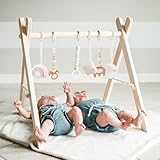
7. Mallify Wooden Baby Gym with 6 Gym Toys, Foldable Baby Play Gym, Natural Pine Wood Play Gym, Frame Activity Center Hanging Bar, Wooden Play Gym
Overview:
Crafted from smooth natural pine wood, this foldable gym features an adjustable frame (19.7" x 19.7" x 17.7" height) and six removable sensory toys. It prioritizes organic materials and stability for tummy time, reaching exercises, and motor skill development from infancy onward.
What Makes It Stand Out:
The premium wooden construction distinguishes it from plastic rivals, offering eco-friendly durability and aesthetic warmth. Removable toys allow customization as babies grow, while the foldable design enables compact storage. Its non-toxic finish and outdoor suitability add unique versatility.
Value for Money:
Higher-priced than fabric mats but justified by heirloom-quality wood and longevity. The included six sensory toys enhance cost efficiency versus buying add-ons separately. However, potential shipping damage (noted in warranty) slightly offsets value.
Strengths and Weaknesses:
Strengths: Exceptional stability, chemical-free materials, elegant design, and tool-free assembly. Weaknesses: Wooden components risk splintering if mishandled; no storage bag included. Requires assembly (minimal) and lacks electronic features.
Bottom Line:
A top-tier investment for eco-conscious parents prioritizing sustainability and durability. Best for those valuing minimalist design over tech features—just verify integrity upon delivery.
8. Baby Einstein Farm Explorers 4-in-1 Kickin’ Tunes Musical Meadow Music & Language Discovery Gym, Ages 0 Months and Up

Overview:
This interactive gym grows with babies (0–36 months) through four modes: lay-and-play, sitting, tummy time, and portable use. It features a multilingual piano, six detachable toys, and a prop pillow across a 18" x 34" mat designed for holistic development.
What Makes It Stand Out:
The multilingual piano (teaching colors/shapes in four languages) and 90+ sound/light responses to movement set it apart. Toys like Dean the Dog plush and crinkle book stimulate varied senses, while the piano detaches for on-the-go play—a rare feature in this category.
Value for Money:
Mid-range pricing reflects premium electronics and extensive content. The 25+ minutes of continuous music and language exposure justify costs better than silent mats, though battery dependence (3 AA) adds long-term expense versus manual alternatives.
Strengths and Weaknesses:
Strengths: Rich auditory/language stimulation, seamless mode transitions, machine-washable mat, and robust toy variety. Weaknesses: Electronics may overwhelm sensitive babies; piano requires frequent battery changes. Mat size is compact for active toddlers.
Bottom Line:
An outstanding choice for parents prioritizing cognitive development through music and language. Highly recommended if seeking tech-enhanced engagement—just monitor volume for newborns.
9. Baby Gym Play Mat, 8-in-1 Tummy Time Mat & Ball Pit with 6 Toys, Washable Baby Activity Play Mat for Visual, Hearing, Sensory, Motor Development, Baby Toys Gift for Toddler Infant 0-3-6-9-12 Months

Overview:
This forest-themed 8-in-1 mat (43" x 39") combines a gym, ball pit (balls not included), tummy time pillow, and activity center. It includes six removable toys targeting sensory growth for infants 0–12 months, with Montessori-inspired developmental focus.
What Makes It Stand Out:
The expansive size and multipurpose fence—folding into a ball pit barrier or play enclosure—offer unmatched adaptability. Machine-washable fabrics and stage-based toys (mirror, cloth book, rattle) cater to evolving needs from newborn to toddler, emphasizing holistic skill-building.
Value for Money:
Competitively priced for its scale and 8 functions. The absence of included balls is a drawback, but high-quality, washable materials and travel-friendly portability deliver solid ROI versus smaller mats. Ideal as a long-term developmental tool.
Strengths and Weaknesses:
Strengths: Generous play area, versatile fence design, skin-safe fabrics, and easy storage. Weaknesses: Ball pit functionality requires purchasing separate balls; toy variety lacks auditory depth. Mirror placement may frustrate very young infants.
Bottom Line:
A spacious, adaptable mat perfect for active babies and space-conscious homes. Recommended for parents wanting one mat to last through crawling—supplement with your own balls for full use.
10. TFDER Baby Gym Play Mat, 8-in-1 Tummy Time Mat & Activity Gym, Washable Ball Pit, Infant Play Mat with Detachable Toys for Sensory Exploration and Motor Skill Development

Overview:
This animal-themed gym (39.4" x 43.3") supports 0–12-month development via tummy time, floor play, and ball-pit modes. It includes three sensory toys, a mirror, teethers, and a pillow, emphasizing phthalate-free safety and portability for indoor/outdoor use.
What Makes It Stand Out:
The foldable surround fence doubles as a roll-proof barrier and ball pit, while non-slip backing enhances safety. Compact storage and quick setup make it travel-friendly, and the focus on washable, chemical-free materials addresses parental safety concerns effectively.
Value for Money:
Offers excellent functionality at an entry-mid price point. Though it lacks included balls, the oversized mat, teethers, and machine-washable design provide broad utility. Outperforms cheaper mats in durability and adaptability for growing infants.
Strengths and Weaknesses:
Strengths: Travel convenience, robust safety features, easy cleaning, and teethers for teething stages. Weaknesses: Limited toy count (only three); ocean balls sold separately. Fence folding mechanism may wear with frequent use.
Bottom Line:
A reliable, safety-focused gym ideal for on-the-go families. Highly recommended for its portability and developmental support—just budget for separate balls to maximize play value.
Why Tummy Time is Non-Negotiable for Development
Tummy time isn’t just a recommended activity; it’s a critical component of your infant’s physical and cognitive foundation. Spending time on their stomach while awake and supervised counteracts the prolonged back-lying that occurs during sleep, which is essential for preventing flat spots on the head (positional plagiocephaly). More importantly, it forces babies to engage muscles they don’t use as intensely in other positions.
Building Core Strength from the Ground Up
The act of lifting the head against gravity is the first major challenge during tummy time. This simple movement builds the neck, shoulder, and upper back muscles crucial for later milestones. As babies push up further on their forearms and eventually hands, they develop the core abdominal strength necessary for rolling over, sitting independently, and crawling. Without this foundational strength built through consistent tummy time, these motor skills can be delayed.
Essential Motor Skill Milestones Supported
Beyond core strength, tummy time directly facilitates key developmental steps. Reaching for toys suspended above encourages bilateral coordination (using both sides of the body together) and refines hand-eye coordination. The effort to shift weight and wiggle limbs while on the tummy lays the groundwork for rolling. Even the subtle movements to track objects across their visual field stimulate crucial neural pathways involved in spatial awareness and later, crawling coordination.
Sensory Stimulation and Cognitive Growth
The tummy time position offers a unique sensory perspective. Babies experience textures differently against their chests and legs, hear sounds from a new angle, and see their environment from a lower vantage point. Activity gyms enhance this by incorporating varied textures, contrasting colors, sounds (like gentle crinkles or chimes), and mirrors. This multi-sensory input is vital for brain development, helping babies process information, understand cause and effect (e.g., kicking makes a toy rattle), and develop early problem-solving skills.
Key Features to Prioritize When Choosing an Activity Gym
Not all activity gyms are created equal when it comes to genuinely supporting tummy time development. Moving beyond mere aesthetics, focus on features designed to encourage the specific movements and engagement that build essential skills. The best options actively promote head lifting, reaching, weight shifting, and prolonged time spent in the position.
Optimal Height and Adjustability for Engagement
The height of suspended toys is paramount. For effective tummy time support, toys should be positioned just within reach when the baby is actively lifting their head and chest. If toys hang too low, the baby might not need to exert enough effort to see or bat at them, missing the strengthening benefit. If too high, frustration sets in. Look for gyms with easily adjustable arches or toy heights that can be modified as your baby grows stronger and gains better head control, ensuring continued challenge.
Toy Variety and Developmental Stages
Toys should evolve with your baby’s capabilities. Early on, high-contrast patterns (black and white) and mirrors are captivating for newborns with developing vision. As they grow, incorporate toys with varying textures (smooth, crinkly, soft), sounds (gentle rattles, chimes), and graspable elements. Toys that encourage batting, swiping, and eventually grasping help refine fine motor skills. Avoid overly complex toys with flashing lights or loud music that can overstimulate or distract from the core physical effort of tummy time.
Surface Texture and Under-Mat Features
The mat itself plays a significant role. A slightly textured or cushioned surface provides better grip for little hands and feet, making it easier for babies to push up. Some mats incorporate gentle contours or rolls that offer subtle support under the chest, making the position more comfortable initially. Consider mats with non-slip bottoms to prevent the entire setup from sliding during enthusiastic kicking or pushing. A washable cover is also a practical necessity.
Safety Considerations That Cannot Be Overlooked
Safety must be the absolute priority when selecting and using any baby equipment, especially during supervised awake time like tummy time. An activity gym should enhance safety by encouraging proper positioning, not introduce risks.
Rigorous Material Safety and Non-Toxic Standards
Ensure all materials, especially fabrics, plastics, and dyes, meet current safety standards (like CPSIA in the US or equivalent regulations elsewhere). Look for certifications indicating the product is free from harmful substances like lead, phthalates, BPA, and formaldehyde. Toys should be securely attached with no small, detachable parts that could pose a choking hazard, even as the baby grows and becomes more interactive.
Stability and Secure Construction
The gym’s frame or arches must be exceptionally stable. Test how easily it tips if a baby pushes against a toy or kicks vigorously. A wide, heavy base or a mat designed to lie completely flat without curling edges significantly reduces tipping risks. All connections between arches and the mat should be robust and secure, with no pinch points. Avoid any models with loose strings, ribbons, or cords that could potentially entangle.
Appropriate Age and Stage Suitability
Activity gyms are designed for specific developmental stages. Using one intended for older babies (e.g., those who can sit or pull up) with a very young infant who has minimal head control can be ineffective and unsafe. Conversely, continuing to use a basic newborn gym with a baby who is rolling or pushing up strongly might lead to frustration or the baby knocking the structure over. Choose a gym that matches your baby’s current abilities and monitor for when it’s time to transition to a different setup or free tummy time on the floor.
Maximizing Developmental Benefits Through Smart Usage
Simply placing your baby under the gym isn’t enough. How you incorporate the activity gym into your tummy time routine significantly impacts its effectiveness in building skills. It’s about creating positive, developmentally appropriate experiences that encourage effort and exploration.
Creating Short, Positive Sessions from the Start
Begin with very brief sessions (1-2 minutes), several times a day, especially in the newborn weeks. The goal is to build tolerance and associate tummy time with positive interaction, not struggle. Gradually increase the duration as your baby gains strength and shows enjoyment, aiming for longer stretches (eventually totaling 30-60 minutes spread throughout the day) by 3-4 months. Never force your baby to stay down if they are crying inconsolably; try again later.
Strategic Toy Placement for Skill Building
Don’t just hang all toys directly in front. Place some slightly to the left and right to encourage head turning and visual tracking, which strengthens neck muscles bilaterally. Position one or two toys just out of immediate reach to motivate reaching and weight shifting. Periodically change the toy locations to keep the experience novel and engage different muscle groups. Engage with your baby at their level, talking, singing, or gently moving a toy to stimulate interaction and effort.
Integrating Parental Interaction and Floor Time
The activity gym is a tool, not a replacement for face-to-face interaction. Get down on the floor at your baby’s level during tummy time. Your presence is the most motivating factor! Talk, make eye contact, and smile. When your baby seems strong enough, place interesting, safe objects (like a high-contrast book or a soft rattle) on the mat beside them to encourage reaching without the overhead support of the gym. This transitions them towards independent floor play.
Practical Considerations for Long-Term Use and Care
Beyond developmental benefits and safety, practical aspects influence how well an activity gym fits into your daily life and how long it remains a useful tool. Considering these factors ensures the investment supports your family’s routine effectively.
Ease of Cleaning and Maintenance
Babies are messy! Spills, drool, and inevitable accidents mean the mat cover will need frequent washing. Opt for a gym with a removable, machine-washable cover made from durable, colorfast fabric. Check if the arches and toys can be easily wiped down with a damp cloth or mild disinfectant. Avoid materials that stain easily or become stiff after washing. Simpler constructions with fewer nooks and crannies are generally easier to clean thoroughly.
Portability and Storage Solutions
Consider where and how often you’ll use the gym. If you need to move it between rooms or take it to grandma’s house, look for lightweight mats that fold or roll compactly and arches that disassemble quickly. Some models feature carrying bags. If storage space is limited at home, prioritize designs that collapse flat. However, ensure that ease of portability doesn’t compromise the stability needed during use.
Durability and Growth Potential
Assess the quality of construction. Will the frame hold up to enthusiastic kicking? Are the toy attachments secure enough to withstand determined pulling as baby grows? While no gym lasts forever, choosing one with robust materials and construction means it will serve its purpose effectively through the critical tummy time months (roughly 0-6 months). Some gyms offer interchangeable toy sets or can be converted into other play modes (like a seated play center), extending their useful life, but ensure the core tummy time functionality remains strong.
Adapting the Activity Gym as Skills Progress
Your baby’s needs during tummy time change rapidly in the first six months. A static gym quickly becomes ineffective. The ideal setup allows for adaptation to keep pace with developing strength and curiosity, ensuring continued engagement and challenge.
Modifying Toy Complexity and Challenge
As head control improves (around 2-3 months), swap out simple high-contrast toys for ones requiring more precise batting or grasping. Introduce toys with cause-and-effect elements – for example, a mirror that flips, a button that makes a soft sound, or a roller that moves when pushed. Gradually increase the distance toys are placed from the baby’s hands to encourage greater reaching and weight transfer onto one arm, a precursor to rolling.
Adjusting Support for Increased Independence
Early on, you might place a small, rolled towel under your baby’s chest for slight elevation, making head lifting easier. As core strength builds (around 3-4 months), remove this support so they push up fully from the mat. Lower the height of the arches slightly so toys require more significant head and chest lifting to see and interact. The goal is to phase out external support as the baby’s own muscles take over.
Transitioning Beyond the Gym Structure
Around 5-6 months, many babies start rolling, pushing up high on hands, or attempting to crawl. The overhead arches of a traditional gym can become a hindrance or get knocked over. This is the signal to transition primarily to free tummy time on the floor or a simple play mat. The activity gym can still be used occasionally for seated play once the baby can sit independently, but its primary tummy time role diminishes as floor-based exploration becomes the focus for further motor development.
Understanding Developmental Red Flags and When to Adapt
While activity gyms are valuable tools, it’s crucial to observe your baby’s response and development. Not every baby takes to tummy time easily, and understanding typical progress versus potential concerns helps you adjust support appropriately.
Recognizing Typical Fussiness vs. Significant Resistance
Some initial fussiness during tummy time is very common, especially for newborns. Crying for a minute or two as they adjust is normal. However, extreme, prolonged crying (beyond what consoling attempts fix), arching the back rigidly, or consistently refusing any tummy time even in very short bursts can sometimes indicate underlying issues like reflux, torticollis (tight neck muscle), or sensory processing differences. Note the pattern and intensity.
When to Consult Your Pediatrician
If your baby shows consistently strong resistance to tummy time despite trying different strategies (shorter sessions, different surfaces, more interaction), seems unable to lift their head at all by 2-3 months, or shows significant asymmetry (always turning head to one side, only using one arm to push), discuss it with your pediatrician. They can assess for conditions like torticollis or gross motor delays and may recommend physical therapy exercises, which can often be incorporated alongside adapted tummy time.
Adapting for Special Needs or Challenges
Babies with certain conditions may require modified approaches. For reflux, waiting 20-30 minutes after feeding and using a slight incline (under pediatrician guidance) might help. For torticollis, specific positioning and exercises directed by a therapist are essential; the activity gym can be used strategically to encourage turning towards the less-preferred side. Always follow professional medical advice for adapting tummy time in these situations.
Frequently Asked Questions
Frequently Asked Questions
When is the best time to start using an activity gym for tummy time? Begin incorporating very short sessions (1-2 minutes) of tummy time on the floor or a simple mat within the first few days or weeks, once the umbilical cord stump has fallen off and healed. Introduce the activity gym slightly later, around 3-4 weeks old, once your baby shows some initial head wobble control and can briefly lift their chin off the surface. Always supervise closely.
How long should my baby spend under the activity gym during tummy time? Start with multiple very short sessions totaling just 5-10 minutes per day. Gradually increase as your baby tolerates it, aiming for longer stretches. By 2-3 months, many babies can handle 10-15 minutes at a time, several times a day, totaling 30-60 minutes spread throughout waking hours. Follow your baby’s cues – stop if they become overly distressed, but encourage persistence if they are just mildly fussing.
Can activity gyms replace floor tummy time? No, activity gyms are a supplement, not a replacement. Floor tummy time (on a firm, flat surface like a play mat or carpet, without the overhead structure) is essential. It allows for full freedom of movement, weight shifting in all directions, and exploration without constraints. Use the gym for part of the tummy time session, but also include dedicated floor time where your baby can push up, wiggle, and eventually pivot freely.
My baby hates tummy time and cries under the gym. What can I do? First, ensure sessions are very short initially. Get down on the floor face-to-face with your baby – your presence is the best motivator. Try placing the gym on your own chest while reclining slightly. Use a mirror or your face as the “toy.” Try different times of day (not right after feeding). If crying is intense and prolonged, stop and try again later. Consult your pediatrician if resistance is extreme or persistent.
Are mirrors on activity gyms safe and beneficial? Yes, mirrors designed specifically for infant activity gyms are safe (shatterproof acrylic) and highly beneficial. They provide captivating visual stimulation for newborns, encourage head lifting to see themselves, and promote self-recognition later on. Ensure the mirror is securely attached and cannot be detached by the baby. Avoid placing it so close that the baby can kick it.
How do I clean the activity gym safely? Always follow the manufacturer’s instructions. Typically, the mat cover should be removable and machine washable (use cold water, gentle cycle, mild detergent, air dry). Wipe down arches and plastic/rubber toys with a damp cloth and mild soap or baby-safe disinfectant wipe. Never submerge electronic components. Ensure all parts are completely dry before reassembling and using again.
When should I stop using the activity gym for tummy time? Phase out the gym for tummy time purposes when your baby consistently rolls over (in either direction), pushes up high on their hands confidently, or starts attempting to crawl (usually around 5-6 months). At this stage, the overhead structure can hinder movement or become a tipping hazard. Transition primarily to free floor tummy time and seated play with the gym if it converts.
Can I use the activity gym once my baby can sit up? Many activity gyms can be repurposed for seated play once your baby has strong, independent sitting skills (usually 6-8 months). Remove any arches that obstruct sitting or could be pulled down. Place toys around the mat for your baby to reach for while sitting. Ensure the structure is stable and won’t tip if pushed. Always supervise seated play.
Do activity gyms help prevent flat head syndrome (plagiocephaly)? Yes, indirectly. By encouraging and making tummy time more enjoyable and sustainable, activity gyms help increase the total time babies spend off their backs while awake. This counteracts the pressure on the back of the head that occurs during sleep and reduces the risk of developing flat spots. Consistent tummy time is a primary preventive strategy.
Are electronic lights and sounds on activity gyms helpful or harmful? Use them sparingly. Gentle, intermittent sounds (like chimes or soft music) can be engaging. However, constant bright flashing lights and loud, repetitive noises can overstimulate infants, distract from the physical effort of tummy time, and potentially disrupt sleep patterns. Prioritize gyms with simple, mechanical cause-and-effect toys (crinkles, rollers, spinners) over those reliant on batteries and electronics for core tummy time engagement.