Watching your baby hit the six-month mark feels like unlocking a whole new chapter. Suddenly, they’re pushing up on wobbly arms, swatting at toys with surprising determination, and discovering the magic of sitting (even if it’s a little precarious at first). This explosive phase of development is where the right activity gym transforms from a simple overhead playmat into a vital tool for nurturing burgeoning motor skills, sensory exploration, and cognitive leaps. It’s no longer just about batting at dangling ribbons; it’s about building the foundational strength and curiosity that propel them toward crawling, cruising, and beyond.
Choosing the perfect activity gym during this dynamic window can feel overwhelming amidst a sea of bright colors and promises. You want something that genuinely supports their evolving needs—not just a fleeting distraction, but a responsive play space that grows with them. Forget fleeting trends or gimmicks; the focus should be on thoughtful design elements that align with your baby’s current physical capabilities and future developmental milestones. This guide cuts through the noise, focusing squarely on the features that matter most for babies who are sitting, pivoting, reaching, and ready to engage with the world in entirely new ways, ensuring your investment truly enriches their play and progress.
Top 10 Activity Gyms
Detailed Product Reviews
1. Baby Einstein 4-in-1 Kickin’ Tunes Music and Language Play Gym and Piano Tummy Time Activity Mat

Overview: This all-in-one activity gym supports infants from birth to 36 months through four developmental stages: lay-and-play, sitting, tummy time, and portable use. It features a multilingual piano, sensory toys, and a machine-washable mat designed to boost motor skills and cognitive growth.
What Makes It Stand Out: The standout element is the interactive piano that teaches colors, shapes, and numbers in four languages (English, Spanish, French, German) with 70+ melodies and lights. Its adaptability across growth stages—flipping up for seated play or detaching for on-the-go use—combined with seven diverse sensory toys (including a self-discovery mirror and crinkle medallion), offers exceptional longevity and engagement.
Value for Money: Priced mid-to-high range, it justifies cost through durability and multifunctionality. Unlike single-stage gyms, it replaces multiple products as baby develops, offering savings long-term. The registry “must-have” status reflects its comprehensive feature set compared to simpler alternatives.
Strengths and Weaknesses:
Strengths: Grows with baby; rich sensory stimulation; multilingual learning; machine-washable mat; promotes tummy time safety.
Weaknesses: “Try me” batteries require replacement (not included); piano complexity may overwhelm newborns; mat size (18"x34") is modest for active crawlers.
Bottom Line: An excellent investment for parents seeking a versatile, education-focused gym that evolves with developmental milestones. Highly recommended despite minor battery logistics.
2. Mallify Wooden Baby Gym with 6 Gym Toys, Foldable Baby Play Gym, Natural Pine Wood Play Gym, Frame Activity Center Hanging Bar, Wooden Play Gym
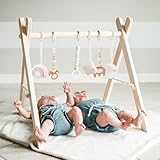
Overview: Crafted from smooth, natural pine wood, this foldable gym prioritizes safety and sustainability. It includes six removable sensory toys and a stable frame designed for indoor/outdoor use, supporting motor skill development from infancy onward.
What Makes It Stand Out: The premium all-wood construction (sanded to a smooth finish) sets it apart, eliminating plastic concerns while ensuring sturdiness. The six textured, removable hanging toys encourage grasping and exploration, and the compact foldability (19.7" legs, 17.7" bar height) suits small spaces without sacrificing stability.
Value for Money: Slightly pricier than plastic alternatives, but the sustainable materials, heirloom-quality build, and adaptability (swap toys as baby grows) deliver long-term value. Ideal for eco-conscious parents willing to invest in durability over electronic features.
Strengths and Weaknesses:
Strengths: Non-toxic wood; stable yet portable; easy assembly; removable toys for customization; elegant neutral aesthetic.
Weaknesses: No electronic/musical elements; toys may ship damaged (common with wood); requires vigilant supervision due to rigid structure.
Bottom Line: A top choice for minimalist, safety-focused families valuing natural materials. Best for those prioritizing tactile play over lights/sounds; recommended with caution about potential shipping damage.
3. Ingenuity Cozy Spot Reversible Duvet Activity Gym & Play Mat with Wooden Toy bar - Loamy, Newborn and up
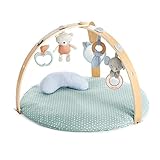
Overview: This plush activity gym features a reversible, cloud-textured duvet mat and a SlimFold wooden toy bar. Designed for ages 0–36 months, it includes a tummy time pillow and five natural-material toys, emphasizing comfort and portability.
What Makes It Stand Out: The patent-pending reversible duvet (dual neutral prints) and ultra-soft “cloud-like” mat provide unmatched comfort, while the SlimFold bar with built-in handles enables one-handed storage. Natural-material toys (silicone, wood, plush) and machine-washable components enhance practicality for modern nurseries.
Value for Money: Competitively priced for its premium materials. The reversible mat extends usability, and natural toys reduce replacement needs. Offers similar versatility to higher-end competitors at a moderate cost, especially valuable for frequent travelers.
Strengths and Weaknesses:
Strengths: Exceptional plush comfort; space-saving foldability; natural-material toys; tummy time pillow included; registry favorite.
Weaknesses: Smaller footprint (19.3"x32.3") than competitors; no electronic features; wooden bar lacks adjustability.
Bottom Line: Ideal for parents seeking a cozy, stylish, and portable gym. Prioritizes tactile comfort over tech—highly recommended for minimalist nurseries and on-the-go families.
4. Baby Gym Play Mat, 8-in-1 Tummy Time Mat & Ball Pit with 6 Toys, Washable Baby Activity Play Mat for Visual, Hearing, Sensory, Motor Development, Baby Toys Gift for Toddler Infant 0-3-6-9-12 Months

Overview: A large (43"x39"), forest-themed play mat with six removable toys, a tummy time pillow, and ball pit capability. It targets sensory development for infants 0–12 months, featuring bright visuals and multi-functional use cases.
What Makes It Stand Out: Its expansive size and ball pit adaptability (though balls not included) offer rare versatility—transforming from gym to play fence or hide-and-seek space. Six engaging toys (including a cloth book and mirror) stimulate multiple senses, while machine-washable fabric ensures easy upkeep for daily use.
Value for Money: Budget-friendly for its size and toy count. Competes with premium gyms by offering “8-in-1” utility at a lower price, though materials feel less premium. Excellent for cost-conscious parents needing space for active play.
Strengths and Weaknesses:
Strengths: Generous play area; multifunctional (gym/ball pit/fence); washable; diverse sensory toys; ideal for photoshoots.
Weaknesses: Ball pit requires separate purchase; toy quality feels basic; oversized for small rooms; “up to 18 months” claim is optimistic.
Bottom Line: A practical, spacious option for active babies and budget-focused households. Best for floor play enthusiasts—recommended with realistic expectations about toy durability.
5. Blissful Diary Baby Play Gym Mat, Play Mat Activity Mat with 6 Detachable Toys for Stage-Based Sensory & Motor Skill Development, Easy to Install & Clean, Baby Essentials Gift, Sage Green

Overview: A minimalist sage green gym with six sensory toys focused on stage-based development. Ethically sourced, portable, and featuring a non-slip base, it blends functionality with modern nursery aesthetics for infants 0–12 months.
What Makes It Stand Out: The muted sage green palette and minimalist design cater to contemporary decor, while the non-woven anti-slip backing prevents sliding during play. Ethically sourced materials and one-minute tool-free assembly enhance its eco-friendly appeal, and the machine-washable mat simplifies cleaning.
Value for Money: Mid-range pricing aligns with its design focus. Less feature-rich than tech-heavy gyms but excels as a stylish, no-fuss essential. Superior as a gift due to elegant packaging and nursery-coordination capabilities.
Strengths and Weaknesses:
Strengths: Chic, neutral aesthetic; non-slip backing; ultra-portable; ethical materials; easy storage; 5-sense toy variety.
Weaknesses: Limited size (33.5"x33.5"); no tummy time pillow; toy engagement peaks early (best 0–9 months).
Bottom Line: Perfect for design-conscious parents wanting a beautiful, functional gym. Recommended as a gift or decor complement, but less ideal for long-term developmental use beyond infancy.
6. Blissful Diary Baby Play Gym & Activity Mat, Oversize Leaf Shaped Baby Play Mat w 6 Detachable Toys, Tummy Time Mat Promote Motor Skills & Sensory Development Mat, Newborn Infant Baby Essentials Gift

Overview: The Blissful Diary Baby Play Gym offers a nature-inspired, leaf-shaped activity mat designed for newborns through infancy. It emphasizes sensory and motor skill development through tummy time and interactive play, featuring six detachable animal-themed toys and a spacious, non-slip base.
What Makes It Stand Out: Its oversized 53x37-inch leaf design provides exceptional play space, doubling as a photo backdrop. The six diverse, high-quality detachable toys—like rattles, a sensory mirror, and cloth book—target sight, sound, touch, and cognitive growth comprehensively. The non-slip backing and machine-washable fabric enhance practicality.
Value for Money: Priced mid-range, it delivers strong value with premium materials, generous size, and versatile functionality. While cheaper mats exist, the included developmental toys and photo-ready aesthetics justify the cost as a long-term investment and ideal gift.
Strengths and Weaknesses: Strengths: Ample space for rolling/sitting; well-rounded sensory toys; easy cleaning; non-slip base; dual-use as photo prop. Weaknesses: Leaf shape may not fit all room aesthetics; some toys lack complexity for older infants beyond 6 months.
Bottom Line: An excellent, thoughtfully designed gym that supports early development while offering aesthetic and practical benefits. Highly recommended for parents seeking a spacious, multifunctional mat that grows with baby’s early milestones.
7. Bright Starts Wild Wiggles Baby Activity Gym & Play Mat with FoldingToy bar, Newborn and up - Green, 18.5” x 29.1” x 29.1”

Overview: The Bright Starts Wild Wiggles is a compact jungle-themed activity gym tailored for newborns, featuring vibrant colors, animal characters, and a foldable toy bar. It prioritizes portability and quick setup for on-the-go families.
What Makes It Stand Out: The FoldAway toy bar is its key innovation, enabling effortless storage without disassembly. The included plush music-playing elephant and satin Taggies on toys provide varied sensory engagement. Its machine-washable mat and travel-friendly size enhance convenience.
Value for Money: Positioned as an affordable option, it excels in portability and ease of storage. While smaller (29x29 inches) than premium mats, the five included toys and foldable design offer solid utility for budget-conscious buyers or frequent travelers.
Strengths and Weaknesses: Strengths: Ultra-portable with compact folding; Taggies textures delight babies; simple machine-wash care; vibrant, engaging design. Weaknesses: Limited play space for active rollers; fewer developmental toys (only 5) compared to competitors; thinner padding may lack cushioning.
Bottom Line: A practical, travel-savvy choice for parents needing a space-saving gym. Best for small homes or caregivers prioritizing convenience over expansive play area—ideal as a secondary mat or newborn gift.
8. TFDER Baby Gym Play Mat, 8-in-1 Tummy Time Mat & Activity Gym, Washable Ball Pit, Infant Play Mat with Detachable Toys for Sensory Exploration and Motor Skill Development

Overview: TFDER’s 8-in-1 Play Mat merges a traditional activity gym with a foldable ball pit enclosure, targeting infants 0-12 months. It focuses on adaptable play for developmental stages, from tummy time to crawling.
What Makes It Stand Out: The foldable side fence uniquely converts the mat into a ball pit (balls sold separately), containing toys and preventing rolls. Oversized dimensions (39x43 inches) and 8 play elements—including sound toys, a mirror, and tummy pillow—support diverse motor and sensory growth.
Value for Money: Mid-priced with exceptional versatility, it justifies cost through dual functionality (gym + ball pit) and longevity. Cheaper mats lack the fence feature, while pricier options rarely include this level of adaptability for active infants.
Strengths and Weaknesses: Strengths: Innovative foldable fence/ball pit; large play area; machine-washable; non-slip base; 8 developmental accessories. Weaknesses: Ball pit requires separate ball purchase; fence may limit parental interaction during play; some toys feel less durable.
Bottom Line: A standout for safety and adaptability, especially for mobile babies. Highly recommended for parents wanting a single mat that evolves from tummy time to contained play—just budget for extra balls.
9. Joryuek Baby Gym & Play Mat, Tummy Time & Activity Mat Toys, Infant to Toddler Play Piano Mat, 0-12 Months (Green)

Overview: The Joryuek Play Mat integrates a musical piano surface with a traditional activity gym, targeting infants 0-12 months. It combines tummy time essentials with interactive sound features to engage developing motor skills.
What Makes It Stand Out: The built-in play piano (activated by kicking or tapping) is its unique hook, encouraging auditory exploration and cause-effect learning. Five removable rattles, a mirror, and spinning toys complement the mat, which folds compactly for travel.
Value for Money: Priced affordably, it offers notable innovation with the piano function rarely found at this tier. While not as plush as premium mats, the added musical element and portability deliver solid bang for buck for playful learning.
Strengths and Weaknesses: Strengths: Engaging piano feature sparks auditory development; lightweight and travel-friendly; machine-washable; non-toxic materials. Weaknesses: Piano may lack volume/durability; smaller size (unspecified but implied compact); fewer developmental zones than competitors.
Bottom Line: A fun, budget-friendly pick for tech-curious parents. Best for fostering early sound recognition—though those prioritizing sensory texture variety might prefer alternatives.
10. LOVEVERY | The Play Gym | Award Winning For Baby , Stage-Based Developmental Activity Gym & Play Mat for Baby to Toddler

Overview: LOVEVERY’s Play Gym is a premium, Montessori-inspired activity system designed for holistic development from newborn to toddler. It emphasizes staged learning through ethically sourced materials and expert-backed activity guides.
What Makes It Stand Out: Five adjustable developmental zones (e.g., visual cards, hide-and-seek) prevent overstimulation, while sustainable accessories like organic teethers and wooden bats promote focused learning. The included activity guide tailors play to baby’s exact age, setting it apart educationally.
Value for Money: At a luxury price point, it justifies cost through exceptional craftsmanship (FSC wood, organic cotton), longevity (12+ months of use), and evidence-based design. Cheaper gyms lack its tailored developmental approach and heirloom quality.
Strengths and Weaknesses: Strengths: Unmatched educational depth; ethically made; modular card system for evolving needs; premium durability. Weaknesses: Very high cost; minimal “fun” elements like music; card storage/accessory management can be fussy.
Bottom Line: The gold standard for development-focused parents willing to invest. Ideal for those prioritizing Montessori principles over flashy features—skip if seeking budget or purely entertainment-driven play.
Understanding the Shift: Why Activity Gyms Evolve After Six Months
The developmental landscape changes dramatically around the six-month mark, rendering basic newborn-style gyms less effective. Babies transition from passive observers to active participants, demanding more from their play environment. Recognizing this shift is crucial for selecting a gym that offers sustained value and meaningful engagement.
The Sitting Milestone and Its Implications
Achieving stable sitting, even with support, fundamentally alters how a baby interacts with an activity gym. They can now use both hands freely to explore toys, push against the mat for balance, and visually track objects with greater precision. A gym designed for this stage must position toys within easy reach while encouraging rotational movement and weight shifting, key precursors to crawling. Overhead arches that were perfect for newborns now need to be adjustable or removable to accommodate this upright posture and prevent frustration.
Beyond Batting: Developing Intentional Play
Six-month-olds move beyond random swipes towards purposeful reaching, grasping, and manipulating objects. Their play becomes more investigative—they’ll mouth toys, shake them to hear sounds, and begin understanding cause-and-effect (e.g., “If I hit this drum, it makes noise!”). An effective post-six-month gym should feature toys that invite this deeper interaction: surfaces with varied textures, elements that click or crinkle, and activities requiring coordinated hand-eye movements. Simple dangling toys give way to those demanding finer motor control and problem-solving.
The Growing Need for Challenge and Variety
Babies this age learn incredibly fast and quickly master simple activities. A static gym loses its appeal within days. The ideal setup incorporates elements that can be repositioned, offers multiple ways to interact with each toy (spinning, flipping, pressing), and ideally, allows for the addition of new components as skills advance. This built-in adaptability prevents boredom and ensures the gym remains a stimulating destination for playtime, not just a place to lie down.
Key Features to Prioritize in Your Selection
With your baby actively sitting and exploring, certain design aspects become non-negotiable for safety, engagement, and longevity. Focusing on these core features ensures the gym meets their immediate needs while offering room to grow.
Adjustable Height and Arch Configuration
Fixed-height arches become useless once sitting begins. Look for gyms where the main play arches can be easily raised significantly higher off the mat—ideally to at least 12-14 inches—or completely removed. This creates the necessary clearance for sitting, pivoting, and reaching without head bumps. Some models offer modular arch systems, allowing you to customize the layout as your baby’s mobility increases, transitioning smoothly from tummy time to seated play.
Diverse Sensory and Motor Skill Components
Move beyond basic rattles. Prioritize gyms offering a rich sensory palette: crinkly fabrics, smooth mirrors, bumpy silicone teethers, soft plush elements, and contrasting high-contrast patterns for visual tracking. Crucially, include toys that develop specific skills: spinners for wrist rotation, flip panels for cause-and-effect understanding, textured rollers for fine motor refinement, and stable bases for pulling up later. A mix of auditory (gentle chimes, soft squeaks) and tactile stimuli keeps exploration exciting and developmentally rich.
Stability and a Spacious Play Surface
As babies push up, pivot, and lunge for toys, the gym must stay firmly planted. A wide, non-slip base or mat is essential to prevent tipping. The play mat itself should be generously sized (at least 36x36 inches) to accommodate wobbly movements and provide ample space for independent exploration without constant boundary collisions. Look for mats with slight cushioning for comfort during tummy time but firm enough support for stable sitting.
Ease of Cleaning and Toy Maintenance
Let’s be real: messes happen. Removable, machine-washable mat covers are a huge practical advantage. Consider how easily individual toys can be detached for thorough cleaning—they’ll inevitably end up in the mouth. Avoid complex assemblies with tiny, hard-to-clean crevices. Smooth plastic parts and washable fabric elements make sanitation simpler and more effective, crucial for germ-conscious parents.
Safety: Non-Negotiable Considerations
Safety must always be the bedrock of any baby product choice, especially as mobility increases. Vigilance is key when selecting and using an activity gym for a more active infant.
Rigorous Choking Hazard Assessment
Scrutinize every component. Ensure all small parts (like beads on a rattle or silicone teethers) are securely attached and significantly larger than the standard choke test cylinder (1.25 inches in diameter, 2.25 inches deep). Avoid toys with easily detachable eyes, noses, or small fabric pieces. Regularly inspect all connections for wear and tear, especially as your baby starts pulling and tugging with greater force.
Secure Anchoring and Tip-Over Prevention
A gym that tips when your baby leans hard against an arch is a major hazard. Verify that the base has substantial weight distribution or reliable non-slip materials (like thick rubber backing) on the underside. Never place the gym on a soft surface like a bed or sofa where tipping consequences are severe. Always use it on a firm, flat floor. If your baby starts attempting to pull up using the arches (which some will try), ensure the entire structure is incredibly stable or consider removing the arches at that stage.
Non-Toxic Materials and Certifications
Demand transparency. Look for clear indications that all plastics, fabrics, paints, and dyes are free from lead, phthalates, BPA, and other harmful chemicals. Reputable manufacturers will prominently display compliance with safety standards like ASTM F963 (U.S.) or EN71 (Europe). Don’t hesitate to research the brand’s material sourcing and testing protocols if specifics aren’t readily available.
Maximizing Longevity: Choosing for Growth
The best investment is a gym that adapts as your baby develops new skills over the next several months, stretching its useful life well beyond the immediate six-month window.
Modular Design and Expandability
Seek systems where core components (arches, toy attachments) can be reconfigured. Can arches be positioned lower for tummy time and higher for sitting? Are there multiple attachment points allowing you to move toys around the mat’s perimeter to encourage pivoting? Some advanced models even offer compatibility with separate play panels or activity centers that clip on, transforming the gym into a more complex play station as skills advance towards cruising.
Transitioning to Independent Sitting and Pulling Up
As your baby masters unsupported sitting and begins weight-bearing on legs, the gym’s role evolves. Features become crucial: a sturdy central activity hub (like a seated play table) that provides support for leaning, or arches low enough and strong enough to safely assist initial pulling-up attempts (always supervise!). Toys positioned around the edge encourage reaching in different directions, building core strength essential for standing. The gym should facilitate, not hinder, these next big steps.
Durability for Vigorous Exploration
Six-month-olds are strong! They’ll bang toys, pull with determination, and test structural limits. Prioritize gyms built with robust materials: thick, puncture-resistant mat fabric; solid plastic toys without thin, brittle parts; and secure, reinforced attachment mechanisms (like thick plastic clips or sturdy loops, not flimsy elastic). Check reviews specifically mentioning durability through the 6-12 month phase. A gym that falls apart quickly isn’t worth the initial savings.
Practical Setup and Usage Tips for Optimal Engagement
Even the best-designed gym won’t fulfill its potential without thoughtful setup and mindful usage. How you introduce and integrate it into playtime significantly impacts its effectiveness.
Strategic Placement for Developmental Benefit
Position the gym where your baby has clear sightlines but isn’t overwhelmed by room distractions initially. Place it perpendicular to a low mirror to encourage self-recognition during seated play. Rotate the mat occasionally so your baby experiences different views and reaches in various directions, promoting balanced muscle development. Avoid placing it directly in front of the TV or high-traffic areas where focus is constantly broken.
Encouraging Exploration Without Overstimulation
Resist the urge to load every toy slot at once. Start with 3-4 diverse toys and rotate them every few days. This maintains novelty and prevents sensory overload, allowing your baby to deeply explore each item. Observe their cues; if they seem overwhelmed (turning away, fussing), simplify the setup. Introduce new toys during calm, alert periods, not when they’re tired or hungry.
Active Participation vs. Independent Play Balance
While independent exploration is vital, your presence transforms the experience. Sit beside them, narrate their actions (“You’re shaking the rattle! Listen to the sound!”), and gently demonstrate cause-and-effect. But also step back and allow them the space to figure things out on their own—this builds problem-solving skills and confidence. Limit gym sessions to 15-20 minutes initially, following your baby’s lead on attention span.
Integrating the Activity Gym into Daily Routines
Making the activity gym a seamless part of your day enhances its value and ensures consistent engagement without it feeling like a chore.
Tummy Time Reinvented
For babies who resist flat tummy time, an activity gym is a game-changer. Position the arches low with engaging toys directly in front. The visual and auditory stimuli provide powerful motivation to lift their head and push up on their arms, strengthening neck and shoulder muscles crucial for later milestones. This makes tummy time less of a struggle and more of an engaging activity.
Post-Nap or Post-Feeding Play Anchor
Use the gym as a designated “awake play” zone after naps or feeds. This helps signal to your baby that it’s active exploration time, differentiating it from sleep or feeding spaces. The familiar, stimulating environment provides a comforting yet exciting transition into wakefulness, encouraging them to engage their senses and body.
Partnering with Other Developmental Activities
Don’t view the gym in isolation. Place it near (but not blocking) other safe exploration zones like a soft play mat for rolling or a supported standing area with a low couch. This allows your baby to naturally transition between activities as their energy and focus shift, creating a dynamic play circuit that supports holistic movement development throughout the day.
Frequently Asked Questions
Frequently Asked Questions
When is the absolute right time to switch to a “6+ month” activity gym? The shift typically aligns with your baby consistently pushing up onto their hands during tummy time or attempting to sit with minimal support (around 5-7 months). If they seem frustrated hitting their head on the arches or can’t reach toys while sitting propped, it’s time to look for a higher-clearance or adjustable model.
Can I safely use an activity gym once my baby starts pulling up? Extreme caution is needed. Only consider it if the gym has exceptionally stable, wide-based arches specifically designed and tested for pulling-up support (check manufacturer guidelines meticulously). Most standard activity gyms are not safe for pulling up. Supervise constantly, and if they use it to pull high, remove the arches immediately—transition to a dedicated pull-up bar or activity table instead.
How crucial is the mirror feature for older babies? Very. Around 6-9 months, babies develop strong self-recognition. A securely mounted, shatterproof mirror encourages social smiling, facial expression experimentation, and understanding of cause-and-effect (“When I move, the baby in the mirror moves!”). Ensure it’s positioned safely within their seated line of sight.
My baby gets bored quickly. How can I make the gym stay interesting? Rotation is key. Only place 3-4 toys on the gym at a time and swap them out every 2-3 days. Change their positions around the mat to encourage pivoting. Introduce one new texture or sound element at a time. Sometimes, simply placing the gym in a slightly different spot in the room provides fresh visual stimulation.
Are electronic lights and sounds beneficial or overstimulating? Use them sparingly and selectively. Simple, calm sounds (like gentle chimes) or soft LED lights triggered by baby’s action (e.g., pressing a button) can enhance cause-and-effect learning. Avoid constant flashing lights or loud, repetitive music, which can overwhelm developing senses and hinder independent exploration focus.
How do I clean toys that have complex shapes or fabric parts? Remove toys from the gym. Hand wash fabric components with mild soap and cool water; air dry thoroughly. For plastic parts with crevices, use a soft brush (like an old toothbrush) and soapy water, ensuring no moisture gets trapped inside sound elements. Always disassemble if possible (check instructions) and never submerge electronic components.
Is a larger play mat always better for active babies? Generally, yes. A minimum of 36x36 inches provides necessary space for wobbly movements, pivoting, and reaching without constant edge collisions. However, ensure the entire gym (mat + arches) still fits comfortably in your intended space without feeling cramped. Prioritize mat size over excessive arch height if space is limited.
What specific safety certifications should I verify beyond general claims? Look explicitly for compliance with ASTM F963-17 (the U.S. toy safety standard) and CPSIA (Consumer Product Safety Improvement Act) for lead/phthalate limits. For European markets, EN71 Parts 1, 2, & 3 are essential. Reputable brands will list these certifications clearly on packaging or their website—don’t rely on vague “meets safety standards” statements.
Can the activity gym replace supervised floor time? No. The activity gym is a valuable tool within a broader play routine. It should complement, not replace, essential unstructured floor time where your baby practices rolling, scooting, and moving freely without structured toys. Use the gym for focused skill-building sessions, but ensure ample time for open-ended exploration on a simple mat.
How long is an activity gym typically useful before outgrowing it? With a well-chosen, adjustable model focused on the 6-12 month phase, expect 4-8 months of primary use. Its peak relevance is during sitting mastery and early crawling. Once your baby is consistently crawling away or attempting to stand unassisted (usually 9-12+ months), the gym’s role diminishes. However, the mat might still be used for independent play with other toys.