The rhythmic chaos of a busy kitchen—dicing vegetables while the oven timer counts down, stepping over a toy truck, and pivoting to prevent a tiny explorer from grabbing a hot pan—is a daily ballet for parents of young children. In this high-stakes environment, a standard baby gate often becomes more of a tripping hazard than a safety solution. Traditional gates that require manual latching or only swing one direction simply can’t keep pace with the constant motion of meal prep, cleanup, and snack runs. This is where auto-close baby gates with dual-swing functionality transform from a nice-to-have into an absolute necessity, offering hands-free security that adapts to the fluid nature of family life without creating new obstacles in your home’s most dangerous room.
These specialized gates represent the intersection of child safety engineering and real-world functionality, designed specifically for spaces where adults, older siblings, and pets need seamless access while maintaining an impenetrable barrier for curious crawlers and toddlers. Understanding their mechanics, installation requirements, and maintenance needs ensures you make an investment that protects your child while preserving your kitchen’s workflow rather than disrupting it.
Top 10 Auto-Close Baby Gates for High-Traffic Kitchens
Detailed Product Reviews
1. keny 29"-42.5" Baby Gate for Stairs, Auto Close Safety Dog Gate, Pressure Mounted Easy Walk Through Pet Gate for Doorways, Durable Stair Gate, 30" Tall, White

Overview: The keny white baby gate offers a practical safety solution for openings 29-42.5 inches wide, standing 30 inches tall. This pressure-mounted barrier requires no drilling and installs in 5-10 minutes, making it ideal for renters or temporary setups. The all-steel construction provides sturdy protection for both toddlers and pets in high-traffic areas like stairways, kitchens, and hallways.
What Makes It Stand Out: The auto-close mechanism automatically shuts the gate when opened under 90 degrees, eliminating the risk of accidental exposure. Its double-lock design presents a formidable challenge for curious children and intelligent pets, while remaining operable with one hand for adults. The inclusion of 4.5" and 6.9" extension kits offers flexibility, though critical fitment gaps exist between 31.8-33.4" and 38.7-40.3" where installation isn’t possible.
Value for Money: At $49.99, this gate sits in the budget-friendly category while delivering premium features like auto-close and steel construction. The price undercuts many competitors with similar specifications, though the pressure-mount limitation and fitment restrictions must be weighed against the savings. For compatible openings, it delivers exceptional functionality per dollar spent.
Strengths and Weaknesses: Pros: Tool-free installation; durable steel frame; convenient auto-close feature; dual-direction swing; affordable price point. Cons: Pressure mounting less secure for stair tops; significant width gaps where it cannot fit; maximum 42.5" width may insufficient for larger openings; no hold-open option.
Bottom Line: This gate excels for doorways and bottom-of-stair applications where pressure mounting suffices. Verify your exact opening measurements against the specified ranges before purchasing. For compliant spaces, it provides reliable safety without permanent wall damage or complex installation.
2. keny 29"-42.5" Baby Gate for Stairs, Auto Close Safety Dog Gate, Pressure Mounted Easy Walk Through Pet Gate for Doorways, Durable Stair Gate, 30" Tall, Black

Overview: Identical in function to its white counterpart, the black keny gate provides the same 29-42.5 inch width coverage and 30-inch height for child and pet safety. This pressure-mounted solution offers tool-free installation in 5-10 minutes, suitable for stairs, doorways, and hallways. The all-steel construction ensures durability while the neutral black finish integrates with modern decor.
What Makes It Stand Out: Beyond color, this model shares the same auto-close functionality that engages below 90 degrees and a child-resistant double-lock mechanism adults can operate one-handed. The dual-direction swing adds convenience in busy households. The 4.5" and 6.9" extensions accommodate various openings, though the same critical fitment gaps (31.8-33.4" and 38.7-40.3") limit compatibility.
Value for Money: Priced at $59.99, this black version commands a $10 premium over the white model solely for aesthetic preference. While the core functionality remains identical, color-conscious buyers pay extra for decor matching. The price remains competitive within the market but offers slightly less value than the white variant.
Strengths and Weaknesses: Pros: Attractive black finish; same robust steel construction; auto-close convenience; simple pressure mounting; dual-lock security. Cons: $10 upcharge for color only; pressure-mount limitations for top stairs; problematic width gaps; no hardware-mount option; lacks hold-open feature.
Bottom Line: Choose the black version if color coordination justifies the additional cost. Otherwise, the white model provides identical safety features at better value. Ensure your opening avoids the prohibited width ranges before committing to this otherwise capable and attractive safety gate.
3. Cumbor 29.7-46" Baby Gate for Stairs, Toddler Safety Essentials for The House, Auto Close Dog Gate for Doorways, Mom’s Choice Awards Winner-Easy Install Pressure Mounted Pet Gates for Dogs, White

Overview: The award-winning Cumbor gate extends from 29.7 to 46 inches wide and stands 30.5 inches tall, offering broader coverage than standard models. This Mom’s Choice Awards recipient provides both pressure and hardware mounting options, accommodating various installation needs from doorways to staircase tops. The steel construction withstands significant impact, making it suitable for active households with children and pets.
What Makes It Stand Out: Recognition by the Mom’s Choice Awards signals trusted quality and thoughtful design. The dual-installation system sets it apart—pressure mounting for tool-free setup in 10 minutes, or hardware mounting for maximum stability exceeding 210 pounds of impact resistance. This versatility makes it genuinely suitable for staircases where pressure mounts falter. The 150N pressure-mount rating demonstrates superior strength compared to typical gates.
Value for Money: At $79.99, this premium gate justifies its price through award-winning design, dual mounting options, and exceptional durability. While more expensive than basic pressure-mount models, the hardware option alone adds value for staircase safety where cheaper alternatives cannot safely install. The extended width range also eliminates many fitment issues.
Strengths and Weaknesses: Pros: Mom’s Choice Award credibility; pressure or hardware installation; superior width range (29.7-46"); high impact resistance; suitable for stair tops. Cons: Highest price point; pressure mount still limited compared to hardware; 30.5" height may not contain larger dogs.
Bottom Line: This gate earns its premium price through versatility and safety credentials. The hardware mounting option makes it ideal for staircase tops, while pressure mounting offers flexibility elsewhere. For households prioritizing certified safety and installation options, the investment delivers peace of mind other gates cannot match.
4. BalanceFrom Easy Walk-Thru Baby and Pet Safety Gate with Hold-Open and Auto-Close – Adjustable Steel Barrier for Stairs, Doorways, and Hallways, No Drilling Installation

Overview: The BalanceFrom gate stands an impressive 36 inches tall, providing enhanced containment for taller pets and adventurous toddlers. Adjusting from 29.1 to 38.5 inches wide, this pressure-mounted barrier installs without drilling. Crafted from lightweight alloy steel at just 13.31 pounds, it offers a unique combination of height and portability while maintaining protective integrity for doorways, stairs, and hallways.
What Makes It Stand Out: The extra six inches of height over standard gates significantly improves safety for larger dog breeds and climbing children. The dual-function closing system provides both auto-close convenience and a hold-open feature for times when unrestricted passage is needed. The proprietary three-step opening mechanism adds security layers that clever toddlers cannot easily defeat, while remaining manageable for adults carrying children or groceries.
Value for Money: Priced at $44.09, this gate delivers exceptional value by combining premium height, dual close modes, and advanced security at a budget-friendly price point. It undercuts most competitors while offering features often reserved for higher-priced models. The lightweight design reduces shipping costs and simplifies handling without compromising stability.
Strengths and Weaknesses: Pros: Superior 36" height; hold-open and auto-close functions; innovative 3-step lock; lightweight portability; excellent price. Cons: Narrower width range (38.5" max); alloy steel may be less robust than carbon steel; pressure mount only; no extension kits mentioned.
Bottom Line: This gate excels for families needing extra height without extra cost. The hold-open feature and advanced lock distinguish it from basic models. While width coverage is moderate, the tall barrier and thoughtful features make it an outstanding value for standard doorways and bottom-of-stair applications where height matters most.
5. BABELIO Safety Gate Door Fits for Stairs, Narrow and Wide Doorways with Auto Close, Easy Install, No Drilling, Pressure Mounted for Baby, Child, Pets, Dog/Puppy, 26’’-40’’, White
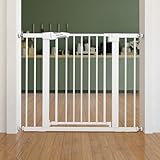
Overview: The BABELIO gate accommodates an impressive range from 26 to 40 inches wide, making it uniquely suitable for both narrow bathroom doors and standard doorways. At 30 inches tall, this pressure-mounted gate installs without tools and includes a comprehensive accessory package. The one-way swing direction specifically addresses staircase safety concerns, preventing dangerous over-stair swinging.
What Makes It Stand Out: The extensive accessory kit includes a 5.5-inch extension, two 2.75-inch extensions, U-bolts, anti-collision grooves, and wall protectors—providing solutions for virtually any installation scenario including banisters. The hold-open feature complements auto-close functionality, while the one-way swing direction is a critical safety detail for stairway installations often overlooked by competitors. The double-lock lever handles balance security with adult convenience.
Value for Money: At $79.99, this gate matches premium pricing but justifies cost through its comprehensive accessory bundle and specialized stair safety features. The ability to fit narrow 26-inch openings adds versatility few gates offer. While pressure-mounted, the included U-bolts and wall protectors enhance stability and wall preservation, offsetting potential damage costs.
Strengths and Weaknesses: Pros: Fits narrow 26" openings; extensive accessory package; one-way swing for stairs; hold-open feature; wall protection included. Cons: Premium price for pressure mount; complex installation with many parts; maximum 40" width lags behind some competitors; pressure mount limitations remain.
Bottom Line: Ideal for staircases and non-standard openings, this gate’s accessory kit and one-way swing demonstrate thoughtful engineering. The narrow-width capability suits older homes with smaller doorways. While priced at the high end for pressure-mounted gates, the included components and safety features make it cost-effective compared to buying accessories separately.
6. Cideny Baby Gate No Drilling, 29"-40" Auto Close Dog Gate Indoor for Doorways & Stairs, Pressure Mounted Adjustable Pet Gate, Easy Walk Through Child Gate for Children & Pets Stroller Friendly, White

Overview: The Cideny Baby Gate offers a budget-friendly pressure-mounted solution for families seeking safety without permanent installation. Designed for doorways and stair openings from 29 to 40 inches, this white metal gate features an auto-close mechanism and dual-lock system to contain children and pets while allowing adult passage.
What Makes It Stand Out: The intelligent auto-close system automatically shuts when opened under 90 degrees, eliminating worries about accidentally leaving it open. The stroller-friendly anti-stumble pedal creates a seamless floor transition, reducing tripping hazards while allowing easy stroller passage. Tool-free pressure mounting makes it ideal for renters, with included sticky pads to secure wall cups without drilling.
Value for Money: At $43.99, this gate delivers exceptional value for budget-conscious families. It competes with gates costing $20-30 more while offering premium features like auto-close and dual-lock mechanisms. The pressure-mounted design saves additional costs associated with hardware and wall repairs, making it particularly attractive for renters or temporary setups.
Strengths and Weaknesses: Strengths include hassle-free installation, one-handed adult operation, auto-close reliability, and the innovative anti-stumble pedal design. The adjustable width accommodates most standard openings. Weaknesses involve pressure mounting limitations—it may not withstand aggressive pushing from large dogs, and the 29"-40" range excludes extra-wide spaces. Long-term durability may be less than hardware-mounted alternatives.
Bottom Line: An excellent entry-level safety gate that delivers core functionality without permanent wall damage. Best for families with small to medium pets and toddlers in rental properties or temporary living situations.
7. keny 29"-42.5" Baby Gate for Stairs, Auto Close Safety Dog Gate, Pressure Mounted Easy Walk Through Pet Gate for Doorways, Durable Stair Gate, 30" Tall, Brown

Overview: The keny Baby Gate positions itself as a robust safety solution with expanded width capability from 29 to 42.5 inches. This 30-inch tall brown steel gate combines pressure-mounted convenience with all-metal construction, targeting families needing slightly wider coverage for stairs, kitchens, and hallways.
What Makes It Stand Out: The gate’s all-steel construction provides superior durability compared to mixed-material alternatives. The auto-close feature activates under 90 degrees, while the double-lock design remains challenging for children and pets yet allows one-handed adult operation. Notable extension kits (4.5" and 6.9") offer customization, though they create problematic width gaps between 31.8-33.4" and 38.7-40.3".
Value for Money: Priced at $59.99, this gate sits in the mid-range category. The steel construction justifies the $15 premium over basic models, offering enhanced longevity and stability. However, the width gap limitations reduce versatility, potentially requiring returns if your opening falls in the excluded ranges. Competitive alternatives offer smoother width adjustments without dead zones.
Strengths and Weaknesses: Strengths include sturdy steel build, two-way swinging door, quick 5-10 minute installation, and reliable auto-close mechanism. The pressure mount enables easy relocation. Major weaknesses are the significant width gaps where the gate cannot be installed, limiting its universal appeal. The brown finish may clash with modern décor, and pressure mounting may prove insufficient for top-of-stair use with aggressive pets.
Bottom Line: A solid choice for standard-to-wide openings that fall within its functional ranges. Verify your measurements carefully before purchasing to avoid the problematic gap zones.
8. Babelio Baby Gate for Stairs, Kitchen & Doorways, No Bottom Bar| One-Handed Operation| Auto-Close| Hardware Mount (Drill Needed) Safety Dog/Pet Gate (Black - B17, 26-43" W, 28" H)

Overview: The Babelio B17 distinguishes itself with hardware-mounted security and a revolutionary no-bottom-bar design. This 28-inch tall black gate accommodates 26-43 inch openings, targeting safety-conscious families prioritizing stability over installation convenience, particularly for top-of-stair applications.
What Makes It Stand Out: The sill-free bottom eliminates tripping hazards entirely—a rare feature in this category. The hardware mount provides rock-solid stability on wood, concrete, or brick walls, making it the gold standard for dangerous stairway locations. A convenient stay-open feature complements the auto-close function, allowing hands-free passage when needed. One-handed operation maintains adult convenience.
Value for Money: At $59.98, this gate offers premium safety features at a mid-range price point. The hardware mounting kit and no-bottom-bar design provide value comparable to $80+ premium gates. While requiring drilling (a drawback for renters), the permanent installation delivers peace of mind that pressure-mounted alternatives cannot match for stairway use.
Strengths and Weaknesses: Strengths include unparalleled stability, trip-free design, flexible width adjustment, and dual-mode operation (stay-open/auto-close). The all-steel construction resists pet impact. Weaknesses center on the mandatory drilling requirement, making it unsuitable for renters. Installation takes longer than pressure-mounted options, and the 28" height may be insufficient for larger dogs or climbing toddlers. Limited color options restrict décor matching.
Bottom Line: The ideal choice for homeowners seeking maximum safety at stairs. The no-bottom-bar design and hardware mounting justify the installation effort for permanent residences.
9. Mumeasy 36" High Extra Tall Dog Gate, 29.6"-40.5" Wide Pressure Mounted Tall Baby Gate for Dog, Auto Close Pet Gate with Door for Stairs,Doorways,House,White
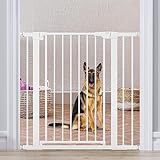
Overview: The Mumeasy Extra Tall Gate addresses the needs of families with escape-artist pets and climbing toddlers. Standing 36 inches high—8 inches taller than standard gates—it fits 29.6 to 40.5-inch openings. This white steel gate offers both pressure and hardware mounting options, providing flexibility for various installation scenarios.
What Makes It Stand Out: The exceptional 36-inch height effectively deters most dogs from jumping and prevents toddlers from climbing over. Dual-mounting capability allows pressure mounting for temporary/rental situations or hardware mounting for permanent, high-security installation at stair tops. The two-action handle lock provides sophisticated security against intelligent pets and clever children while maintaining one-handed adult operation.
Value for Money: At $75.99, this gate commands a premium price that reflects its specialized height and dual-mounting versatility. For families with large dogs or particularly active children, the extra height prevents costly accidents or the need to purchase replacement gates. It essentially combines two products (standard and tall gate) into one, offering long-term value despite the higher upfront cost.
Strengths and Weaknesses: Strengths include superior height deterrence, flexible installation options, robust dual-lock mechanism, and auto-close functionality. The pressure mount installs quickly without wall damage. Weaknesses involve the premium pricing, which may exceed casual users’ budgets. The 40.5" maximum width limits use in extra-wide openings, and the taller design may feel imposing in smaller spaces. Some users report the auto-close spring is overly strong.
Bottom Line: A specialized solution worth the investment for families with large pets or ambitious climbers. The dual-mounting option provides future-proofing as safety needs evolve.
10. Mumeasy 29.7-57" Extra Wide Baby Gate, Auto Close Large Dog Gate for Doorways, No Drilling Pressure Mounted Pet Safety Gate for Stairs, Easy Walk Through Child Gate for Hallways, House, Indoor, Black
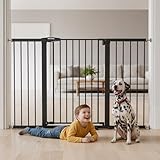
Overview: The Mumeasy Extra Wide Gate dominates the wide-opening category, spanning an impressive 29.7 to 57 inches while maintaining a 30-inch height. This black metal gate targets families with open-concept homes, wide hallways, or irregular staircases, offering pressure-mounted convenience with specialized stairway compatibility.
What Makes It Stand Out: The extreme width range covers nearly any residential opening without extensions. Innovative Y-shaped bolts enable secure installation on round stair railings without drilling—solving a common banister problem. The anti-stumble pedal design minimizes tripping risks in high-traffic areas. Combined with auto-close and childproof double-lock features, it provides comprehensive safety for complex spaces.
Value for Money: At $99.99, this gate represents a premium investment that eliminates the need for multiple gates or costly custom solutions. For wide openings, it’s competitively priced compared to buying two standard gates or professional installation. The included Y-bolt hardware and 3-year warranty add significant value, making it cost-effective for challenging spaces where alternatives fail.
Strengths and Weaknesses: Strengths include exceptional width coverage, innovative Y-bolt stair compatibility, anti-stumble pedal, robust metal construction, and generous warranty. Pressure mounting preserves walls. Weaknesses involve the high price point, which is excessive for standard doorways. The pressure mount may flex across maximum widths, potentially reducing effectiveness against very large dogs. Black finish shows fingerprints and dust more readily than white alternatives.
Bottom Line: The definitive solution for wide openings and challenging staircases. While pricey for standard use, it’s unbeatable for its intended niche and justifies the cost through versatile functionality and included accessories.
Understanding Auto-Close Dual-Swing Baby Gates
What Makes These Gates Different?
Unlike conventional pressure-mounted gates that demand two-handed operation, auto-close dual-swing models employ a spring-loaded hinge system that automatically secures the gate behind you. The dual-swing feature means the gate panel moves both inward and outward, eliminating the frustrating guesswork about which direction it opens. This bidirectional movement is crucial in kitchens where you might approach the threshold from either side with hands full of groceries, dishes, or a wriggling toddler. The mechanism typically includes a hydraulic or magnetic component that controls the closing speed, preventing slamming while ensuring positive engagement with the latch every single time.
Why High-Traffic Kitchens Present Unique Challenges
Kitchens are fundamentally different from stairways or bedroom doorways. They experience concentrated, multi-directional traffic patterns during peak hours—morning breakfast rushes, after-school snack times, and dinner preparation. The floor is often tile or hardwood, which affects gate stability. Baseboards, molding, and uneven surfaces are common. There’s also exposure to humidity, temperature fluctuations, and airborne grease particles that can gum up mechanisms. A gate that works beautifully in a bedroom hallway may fail within months when subjected to the environmental stressors and usage demands of a kitchen threshold.
Key Features That Matter Most
Auto-Close Mechanism Explained
The heart of these gates lies in their closing system. Quality models use a tension-adjustable hydraulic damper similar to commercial door closers. This allows you to fine-tune the closing speed based on your kitchen’s specific conditions. Look for gates with a “soft-close” feature that engages in the final few inches, gently pulling the gate shut rather than letting it slam. The latch itself should be a two-stage mechanism: first catching the gate, then automatically securing it with an audible click you can hear from across the room. This auditory confirmation is invaluable when you’re multitasking and can’t visually verify the gate is locked.
Dual-Swing Directionality Benefits
The ability to swing both ways isn’t just about convenience—it’s about safety. Imagine carrying a scalding casserole dish and needing to exit the kitchen quickly; a one-way gate forces you to backtrack or perform an awkward maneuver. Dual-swing gates eliminate this by allowing you to push through in the most natural direction. The mechanism includes a direction selector, typically a small slider or dial on the hinge, that lets you temporarily lock the swing direction when needed. This is particularly useful during parties or when you want to direct traffic flow away from dangerous areas like the stove.
Width Adjustability and Extensions
Kitchen doorways rarely conform to standard sizes. Architecturally, they often span 32 to 48 inches, with some open-concept designs reaching 60 inches or more. Premium gates accommodate this with telescoping panels and optional extension kits sold separately. When measuring, account for the mounting hardware depth, which can add 1-2 inches per side. The gate should fit snugly without excessive tension that could warp the frame over time. For extra-wide openings, consider models that support multiple extensions on both sides, maintaining the gate’s structural integrity across spans up to 72 inches.
Opening Width for Kitchen Access
The walk-through opening dimension is frequently overlooked until you’re trying to squeeze through with a bulky trash can. Standard gates offer 16-20 inch openings, but kitchen-specific models should provide at least 22-24 inches of clear passage. Some premium designs feature a “wide-open” mode where the gate panel can be temporarily held at 90 degrees to the doorway, creating an unobstructed path when the baby is napping or secured elsewhere. This feature often involves a simple lift-and-swing motion that disengages the auto-close mechanism until you’re ready to reactivate it.
Safety Standards and Certifications
JPMA Certification Importance
The Juvenile Products Manufacturers Association (JPMA) certification isn’t just a sticker—it’s a guarantee that the gate has undergone rigorous third-party testing for structural integrity, latch reliability, and absence of hazardous materials. For kitchen environments, pay special attention to the “high-traffic endurance” testing criteria, which simulates thousands of openings and closings under load. Gates that pass JPMA’s enhanced protocol for commercial-use applications offer superior longevity for residential kitchens that see heavier-than-average use.
ASTM Standards Breakdown
ASTM F1004 is the gold standard for safety gates, but within this specification are different performance grades. Look for gates meeting ASTM F1004-21 or newer, as these include updated requirements for auto-close mechanisms and dual-swing functionality. The standard specifies minimum height (22 inches), maximum bottom spacing (3 inches to prevent head entrapment), and vertical strength testing. For kitchen applications, the “horizontal displacement” test is critical—it ensures the gate won’t bow or flex when leaned on by a determined toddler, which could create a dangerous gap.
Installation Considerations
Hardware-Mounted vs. Pressure-Mounted
In kitchens, pressure-mounted gates are a liability. The constant vibration from dishwasher cycles, foot traffic, and door slamming can gradually loosen them. Hardware-mounted gates, which screw directly into wall studs or door frames, are non-negotiable for kitchen thresholds. The installation kit should include heavy-duty lag bolts, not just wood screws, and metal mounting cups that distribute force across a wider area. For tile backsplashes or granite-topped half-walls, specialized drill bits and anchor systems are required—never mount directly into grout lines, as they’ll crumble under stress.
Wall Protection and Damage Prevention
The repetitive stress of a swinging gate can crack drywall and damage trim. Professional installers use reinforced mounting blocks behind the drywall, creating a solid wood backing that spreads the load. If you’re retrofitting, consider adding decorative mounting plates that serve as both reinforcement and aesthetic enhancement. These plates should be at least 6x6 inches and made of steel or solid hardwood. For renters, some manufacturers offer “damage-free” mounting kits using industrial-strength adhesive plates, though these are only suitable for lighter-weight gates in low-to-moderate traffic areas.
Tools You’ll Need
Beyond a standard drill and level, kitchen gate installation demands specific tools: a stud finder capable of detecting through tile, a diamond-tipped drill bit for masonry, a torque wrench to ensure bolts are tightened to specification without stripping, and a plumb bob to verify vertical alignment across uneven floors. A digital angle finder helps ensure both mounting brackets are perfectly aligned, which is critical for smooth dual-swing operation. Don’t forget a voltage detector—kitchen walls often hide electrical wiring for outlets, under-cabinet lighting, and appliances.
Material Choices and Durability
Metal Gates for Heavy Use
Steel or aluminum gates with powder-coated finishes withstand kitchen abuse best. Look for 16-gauge steel minimum for the frame, with vertical bars spaced no more than 2.5 inches apart. The powder coating should be rated for outdoor use, as it provides superior resistance to humidity and cleaning chemicals. Avoid painted finishes, which chip and can be ingested if your child teethes on the bars. Metal gates also perform better with auto-close mechanisms, as they maintain their shape and don’t warp with temperature changes.
Wooden Gates for Kitchen Aesthetics
If you prefer wood to match cabinetry, choose solid hardwoods like maple or oak, not pine or composite materials. The wood must be sealed with a non-toxic, food-safe finish that won’t off-gas when exposed to heat. Check that the grain runs vertically on rails to maximize strength. Wooden gates require quarterly maintenance—tightening joints and resealing surfaces—to prevent warping from steam and moisture. They’re also heavier, which can strain auto-close mechanisms over time, so ensure the hinges are rated for the specific weight.
Plastic Components: What to Avoid
While some gates use high-impact plastic for latch housings or decorative elements, avoid models with structural plastic components. Polymers degrade under UV exposure (even indirect sunlight through windows) and become brittle with temperature cycling. The latch mechanism should be entirely metal, as plastic catches wear down and fail to engage properly. If the gate has plastic end caps, verify they’re made of thermoplastic elastomer (TPE) rather than rigid PVC, which can crack and create choking hazards.
Measuring Your Kitchen Space
Standard Kitchen Doorway Measurements
Begin by measuring the opening at three points: top, middle, and bottom. Kitchen doorways often taper due to settling or irregular framing. Use the narrowest measurement as your baseline. Next, measure the depth of any baseboard or quarter-round molding, as this affects mounting bracket placement. For openings with casement trim, decide whether you’ll mount on the trim itself (easier but less stable) or notch the trim to mount flush against the wall stud (more work but superior strength). Remember to measure the height from floor to any countertop overhang—some gates won’t fit under breakfast bars that extend into the doorway.
Irregular Spaces and Solutions
Open-concept kitchens with partial walls or peninsulas require creative solutions. For angled openings, look for gates with adjustable hinge angles up to 30 degrees off perpendicular. Some manufacturers offer “configurable” systems with multiple panels that can be arranged in zigzag patterns. For extra-wide spans between a wall and a cabinet, consider mounting one side to the cabinet’s interior using reinforcement plates. Never mount to cabinet doors, which lack structural integrity. When dealing with pony walls or half-walls, you may need to extend the wall height with a custom mounting post secured to the floor and ceiling.
High-Traffic Lifestyle Adaptations
Hands-Free Operation Techniques
Mastering the foot-pedal technique is essential for true hands-free operation. Practice approaching the gate at a slight angle, using your toe to depress the foot pedal (if equipped) or applying gentle pressure to the gate panel while your momentum carries you through. Some parents install a small wedge of wood on the floor that, when stepped on, holds the gate open for 5-10 seconds before the auto-close engages. This is particularly useful when making multiple trips with groceries. For those with mobility limitations, look for gates with low-profile thresholds that wheelchairs or walkers can roll over without disengaging the mechanism.
Pet Integration Strategies
Households with both babies and pets face unique challenges. Cats can often squeeze through the vertical bars of standard gates, rendering them ineffective. Solutions include adding “cat barriers”—plexiglass panels that clip onto the lower portion of the gate—or choosing models with tighter bar spacing (under 2 inches). For large dogs that might jump, ensure the gate height exceeds their standing reach by at least 6 inches. Some gates offer a small pet door (4x6 inches) with a separate locking panel, but this creates a potential finger-trap hazard for curious toddlers and should only be used with constant supervision.
Multi-Generational Household Considerations
When grandparents or elderly relatives share the home, gate operation must be intuitive and low-effort. Avoid gates with complex two-button release systems. Instead, opt for lever-style handles that require minimal grip strength. The auto-close tension should be adjustable to a lighter setting for those with less upper body strength, while still maintaining secure latching. Consider adding contrasting tape or paint to the gate frame to improve visibility for those with vision impairments, and ensure the latch click is audible enough for hearing aid users to detect.
Maintenance and Longevity
Cleaning in a Kitchen Environment
Weekly cleaning is mandatory in kitchens where grease aerosolizes and settles on every surface. Use a degreasing solution of warm water and mild dish soap, applied with a microfiber cloth. Never spray cleaner directly onto the gate, as liquid can seep into the hinge mechanism and degrade the hydraulic fluid. For stubborn buildup, a paste of baking soda and water works without scratching finishes. Avoid harsh chemicals like ammonia or bleach, which can corrode metal components and damage seals. After cleaning, wipe the gate dry and operate it several times to work out any moisture from the latch.
Lubricating Hinges and Mechanisms
The auto-close mechanism requires annual lubrication with silicone-based grease, not petroleum products which attract dust and gum up over time. Disengage the gate from its mounting brackets and lay it flat. Remove the hinge caps and apply a pea-sized amount of grease to each pivot point. Cycle the gate open and closed twenty times to distribute the lubricant. For the latch, use a dry graphite lubricant that won’t collect kitchen grime. If the gate starts squeaking or closing slower than usual, this indicates the hydraulic damper is failing and needs replacement—a service most manufacturers offer for gates under warranty.
When to Replace Your Gate
Even the best gate has a finite lifespan in kitchen conditions. Replace immediately if you notice any of these warning signs: the gate no longer plumbs vertically when closed (indicating frame warping), the latch requires multiple attempts to engage, visible rust or corrosion on metal components, or any crack in welds or joints. Most gates last 3-5 years in high-traffic kitchens, but heavy use with multiple children may shorten this to 2-3 years. Keep your receipt and register the product with the manufacturer, as many offer pro-rated replacement programs for failed mechanisms.
Common Mistakes to Avoid
Improper Height Selection
Many parents choose gates based on their child’s current height, not their projected growth over the next two years. A gate that’s easily cleared by a 24-month-old is a wasted investment. The top rail should be at least 3/4 of your child’s height when standing on tiptoes. For most toddlers, this means a gate height of 30-36 inches minimum. Remember that children learn to climb by using the gate’s horizontal rails as footholds—opt for designs with vertical bars only and no cross-rails that facilitate scaling.
Ignoring Baseboard Molding
That decorative 4-inch baseboard along your kitchen wall will sabotage an otherwise perfect installation. Mounting brackets placed over molding create a gap between the gate and the wall, reducing stability and creating a finger-trap hazard. The solution is either to remove a section of baseboard and install a mounting block flush with the wall, or use adjustable mounting cups that accommodate the molding angle. Some premium gates include shim kits specifically for this purpose, but verify the included shims match your molding’s profile before beginning installation.
Overlooking Swing Clearance
A dual-swing gate needs adequate clearance on both sides to open fully. Measure the arc of swing, accounting for the gate’s width plus handle projection. In compact kitchens, an opened gate might block appliance access or create a pinch point against islands. Use the direction-selector feature to restrict swing toward the less-trafficked side during busy cooking periods. Also consider the “backswing”—when the gate closes, it travels through a space that must remain clear of bar stools, pet bowls, and small appliances.
Budget Planning
Price Range Expectations
Quality auto-close dual-swing gates for kitchen use start around $80-120 for basic metal models suitable for standard doorways. Mid-range options with premium finishes, wider extensions, and enhanced safety certifications run $150-250. Professional-grade gates designed for commercial daycare settings or extreme high-traffic home use can exceed $300. Factor in an additional $30-50 for specialized installation hardware, especially for masonry or tile mounting. While budget gates under $60 exist, they typically lack reliable auto-close mechanisms and use thinner gauge materials that fail quickly under kitchen conditions.
Value vs. Premium Features
The sweet spot for most families lies in the $140-180 range, where you get robust metal construction, JPMA certification, and a reliable hydraulic damper. Premium features like decorative wood cladding, integrated pet doors, or extra-wide openings up to 60 inches can justify higher prices if they solve specific problems. However, avoid paying extra for “smart” features like Bluetooth connectivity or app controls—these add failure points and don’t enhance safety. Instead, invest in gates with lifetime warranties on mechanical components and readily available replacement parts, which provide better long-term value than flashy technology.
Frequently Asked Questions
Are auto-close gates reliable enough for busy kitchens?
Absolutely, when you choose a JPMA-certified model with a hydraulic damper rather than a simple spring mechanism. The key is proper installation and quarterly maintenance. High-quality gates undergo 50,000+ cycle testing, equivalent to 10 years of typical kitchen use. However, reliability depends on keeping the mechanism clean and properly tensioned.
Can adults open them easily when carrying groceries?
Yes, that’s their primary design advantage. With practice, you can operate most models with a gentle hip bump or elbow nudge. Look for gates with a “stay-open” feature that temporarily holds the gate at 90 degrees, allowing multiple trips without fighting the auto-close each time. The handle height should be between 32-36 inches for comfortable access without bending.
Will the auto-close mechanism wake a sleeping baby?
Quality gates include speed-adjustable dampers that prevent slamming. Set the closing speed to its slowest setting, which typically results in a gentle click rather than a bang. Some parents add a small felt pad where the latch engages to further muffle sound. If silence is critical, consider disabling the auto-close during nap times using the built-in hold-open feature.
What’s the minimum doorway width for dual-swing gates?
Most dual-swing gates require at least 28 inches of clear opening to function properly. Below this width, the gate panel may not have enough swing arc to engage the latch reliably. For narrower spaces, a single-swing gate with auto-close is actually more dependable. Always check the manufacturer’s minimum width specification, as some models need 30+ inches for optimal performance.
Can these gates be installed on tile or uneven floors?
Yes, but it requires specialized hardware. Use diamond-tipped drill bits for ceramic or porcelain tile, and never drill into grout lines. For uneven floors, adjustable bottom spacers or “foot levelers” compensate for slopes up to 1 inch per foot. Some gates include telescoping bottom rails that adapt to floor irregularities while maintaining the safety threshold height.
How do I clean grease off the gate mechanism?
Prevention is better than cure. Install the gate at least 3 feet from the stove to minimize grease exposure. For cleaning, use a degreasing solution applied to a cloth, not sprayed directly. Remove the gate monthly and clean the hinge area with cotton swabs dipped in isopropyl alcohol. Never submerge the mechanism or use pressure washers, as this forces contaminants into sealed bearings.
Are they safe for both babies and large dogs?
It depends on the dog’s determination and size. For dogs over 80 pounds, choose gates rated for “extra-large pet” applications with reinforced latches. Some dogs learn to paw at the release mechanism; opt for gates with covered, child-proof handles that require two-handed operation. Never rely on any gate to contain aggressive or highly anxious dogs, as they can break through even heavy-duty models.
What’s the typical lifespan in a high-traffic area?
Expect 3-5 years of reliable service with proper maintenance. Heavy use (20+ openings daily) may reduce this to 2-3 years. The auto-close mechanism usually fails first, but many manufacturers sell replacement damper kits for $15-25. Gates showing rust, latch inconsistency, or frame flexing should be replaced immediately, regardless of age.
Can I temporarily disable the auto-close feature?
Most quality gates include a hold-open feature activated by sliding a selector or engaging a small lever. This is useful during parties or when actively supervising the child in the kitchen. However, never prop the gate open with external objects, as this can damage the hinge tension. Some models allow you to completely remove the gate panel from its mounting brackets for storage, leaving only the low-profile brackets in place.
Do building codes affect kitchen baby gate installation?
While no specific codes govern baby gates, they must not obstruct required egress paths. In most jurisdictions, kitchens need a clear exit route to the home’s exterior. Ensure your gate doesn’t block this path or impede access to electrical panels. If you’re in a rental, hardware-mounted gates are considered “fixtures” and typically require landlord approval, though most property managers accommodate safety modifications when properly installed and restored upon move-out.