Nothing ruins a perfect splash-day faster than watching your carefully applied sunscreen wash away the moment your little one’s toes hit the water. You know the scene: you’ve wrestled a squirming baby into a swim diaper, slathered on what you thought was water-resistant protection, and within minutes of that first splash, suspicious white streaks are floating away like tiny surrender flags. The sun’s UV rays don’t take a break when your baby does, and neither should their sunscreen.
Understanding what makes a baby sunscreen truly water-resistant—and how to apply it so it actually stays put—transforms pool parties from anxiety-inducing ordeals into carefree memory-making. The science behind modern formulations has evolved dramatically, but so have the marketing claims that can mislead even the most diligent parents. Let’s dive deep into what separates the stay-put champions from the wash-away pretenders, so you can make informed decisions about protecting your little one’s delicate skin during every splash, swim, and sandcastle session.
Top 10 Water Resistant Baby Sunscreens
Detailed Product Reviews
1. Thinkbaby SPF 50+ Baby Sunscreen, 3 Oz. – Safe, Natural Mineral Sun Cream for Babies - Water Resistant, Broad Spectrum UVA/UVB Sun Protection – Vegan Sunscreen for Kids

Overview: Thinkbaby’s SPF 50+ mineral sunscreen delivers premium sun protection specifically formulated for infants’ delicate skin. This 3-ounce tube offers broad-spectrum UVA/UVB defense using a zinc oxide-based formula that’s completely free from harsh chemicals, making it ideal for parents seeking the cleanest possible ingredients for their babies.
What Makes It Stand Out: This sunscreen pioneered clean baby suncare as the first mineral formula to meet Whole Foods Premium Care standards. Its Leaping Bunny certification guarantees cruelty-free production, while the comprehensive exclusion list (no PABA, parabens, phthalates, oxybenzone, avobenzone, or petroleum) sets a high bar for purity. The vegan formula begins working immediately upon application and provides 80 minutes of water resistance.
Value for Money: At $3.68 per ounce, this sits in the premium tier. However, the rigorous certifications and clean ingredient profile justify the cost for safety-conscious parents. While more expensive than conventional chemical sunscreens, you’re paying for verified purity and peace of mind, making it comparable to other mineral sunscreens with fewer credentials.
Strengths and Weaknesses: Strengths include exceptional ingredient transparency, multiple third-party certifications, non-greasy application, and immediate protection. The 80-minute water resistance matches FDA maximum standards. Weaknesses include the higher price point for the small 3-ounce size, potential white cast typical of mineral formulas, and limited availability in some retail channels.
Bottom Line: For parents prioritizing ingredient purity and environmental ethics, Thinkbaby 3oz delivers uncompromising protection. It’s worth the premium for newborns and babies with extra-sensitive skin.
2. Coppertone WaterBabies Baby Sunscreen Lotion SPF 50, Hypoallergenic Sunscreen for Babies, Water Resistant, Pediatrician Recommended, 8 Fl Oz Bottle

Overview: Coppertone WaterBabies represents the trusted mainstream choice for baby sun protection, offering broad-spectrum SPF 50 coverage in a generous 8-ounce bottle. As the number one pediatrician-recommended sunscreen brand, it provides reliable UV defense designed specifically for infants’ sensitive skin with a hypoallergenic formulation.
What Makes It Stand Out: The brand’s decades-long reputation and pediatrician endorsement give parents confidence. This lotion maintains its protective efficacy for 80 minutes of water exposure, making it practical for beach and pool days. The gentle formula delivers up to 98% protection against damaging UV rays while remaining specifically designed for baby’s delicate skin barrier.
Value for Money: At just $1.11 per fluid ounce, this offers exceptional value. The large 8-ounce size lasts significantly longer than typical 3-ounce tubes, reducing frequent repurchases. This pricing makes daily sunscreen application financially sustainable for families, positioning it as the most budget-friendly option without sacrificing basic safety standards.
Strengths and Weaknesses: Major strengths include the trusted brand reputation, pediatrician recommendation, excellent water resistance, and unbeatable price point. The larger size is practical for regular use. Potential weaknesses include that it may contain more synthetic ingredients than mineral-only alternatives, lacks the “clean beauty” certifications some parents seek, and the formula isn’t vegan or reef-safe certified.
Bottom Line: Coppertone WaterBabies is the pragmatic choice for families wanting proven, affordable protection. It’s ideal for parents who trust established brands and prioritize value over specialized certifications.
3. Thinkbaby SPF 50+ Baby Sunscreen, 6 Oz. – Safe, Natural Mineral Sun Cream for Babies - Water Resistant – Broad Spectrum UVA/UVB Sun Protection – Vegan Sunscreen for Kids

Overview: This 6-ounce version of Thinkbaby’s acclaimed mineral sunscreen offers the same premium, clean protection as its smaller counterpart but in a more economical size. Formulated with babies’ sensitive skin in mind, it delivers broad-spectrum SPF 50+ defense using natural zinc oxide without any harsh chemicals, making it perfect for daily use.
What Makes It Stand Out: Like the 3-ounce version, this sunscreen boasts impressive credentials: it’s the first baby mineral sunscreen to pass Whole Foods Premium Care requirements and carries Leaping Bunny certification. The vegan, reef-safe formula excludes PABA, parabens, phthalates, oxybenzone, and petroleum derivatives. It provides immediate protection upon application and maintains water resistance for the FDA-maximum 80 minutes.
Value for Money: At $3.33 per ounce, this larger tube offers better value than the 3-ounce version while maintaining the same high-quality, clean formulation. Though still premium-priced compared to conventional brands, the cost per ounce savings add up for families using sunscreen daily. The larger size reduces packaging waste and reorder frequency.
Strengths and Weaknesses: Strengths include the same rigorous ingredient standards and certifications as the smaller size, better economy for regular users, non-greasy texture, and absence of chemical sunscreen actives. The 6-ounce size is more practical for families. Weaknesses include the higher upfront cost, potential for white cast, and that it remains more expensive than mainstream chemical sunscreen options.
Bottom Line: The 6-ounce Thinkbaby is the smart choice for committed users of clean sunscreen. It delivers the same exceptional purity with improved value, making it ideal for families who’ve made mineral sunscreen their standard.
4. Aveeno Baby Continuous Protection Zinc Oxide Mineral Sunscreen Lotion for Sensitive Skin, Broad Spectrum SPF 50, Tear-Free, Sweat- & Water-Resistant, Paraben-Free, Travel-Size, 3 fl. oz

Overview: Aveeno’s mineral sunscreen combines dermatologist-trusted zinc oxide protection with their signature soothing oat formula in a convenient 3-ounce travel tube. Designed for the most sensitive infant skin, this broad-spectrum SPF 50 lotion offers tear-free, gentle application that locks in moisture while providing robust sun defense.
What Makes It Stand Out: The National Eczema Association Seal of Acceptance distinguishes this sunscreen as suitable for babies with eczema-prone skin. The inclusion of naturally-sourced oat provides calming benefits beyond basic sun protection. The formula is specifically engineered to be as mild as water, ensuring it won’t sting or irritate, while remaining sweat and water-resistant for 80 minutes.
Value for Money: At $4.39 per fluid ounce, this is the priciest option reviewed. However, the specialized formulation for extremely sensitive and eczema-prone skin justifies the premium for affected families. The travel-friendly TSA-compliant size adds convenience but reduces overall value compared to larger bottles.
Strengths and Weaknesses: Key strengths include the eczema-safe formulation, tear-free guarantee, oat’s skin-soothing properties, and pediatrician-recommended brand status. It’s fragrance-free and non-greasy. The main weakness is the highest cost per ounce, and the small size may require frequent repurchases for daily users. Some parents might prefer a larger, more economical option.
Bottom Line: Aveeno Baby is the premier choice for infants with eczema, allergies, or ultra-sensitive skin. While expensive, its specialized formulation provides peace of mind that generic sunscreens cannot match for these conditions.
5. BLUE LIZARD Baby Mineral Sunscreen with Zinc Oxide, SPF 50+, Water Resistant, UVA/UVB Protection with Smart Cap Technology - Fragrance Free, 3 Ounce Tube
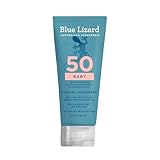
Overview: BLUE LIZARD’s baby mineral sunscreen delivers SPF 50+ protection in a smartly-designed 3-ounce tube featuring innovative UV-detection technology. This vegan formula uses zinc oxide to provide broad-spectrum defense while incorporating botanical ingredients like calendula extract and organic aloe to nourish delicate skin.
What Makes It Stand Out: The patented Smart Cap Technology sets this apart—the cap and bottle turn blue in harmful UV light, reminding parents to apply protection. This practical feature eliminates guesswork about sun intensity. The formula is free from parabens, fragrances, and harsh chemical actives, while the addition of calendula and aloe provides natural skin-soothing benefits that exceed basic sun protection.
Value for Money: At $3.31 per ounce, this positions itself competitively between premium and mainstream mineral sunscreens. The Smart Cap feature adds tangible value without significantly increasing cost. While not as cheap as Coppertone, it’s more affordable than Aveeno and comparable to Thinkbaby, offering a good balance of innovation and clean ingredients.
Strengths and Weaknesses: Strengths include the innovative UV-sensing cap, clean vegan formula, botanical skin-nourishing ingredients, and maximum water resistance. The fragrance-free formulation suits sensitive skin. Potential weaknesses include smaller brand recognition compared to Coppertone or Aveeno, limited retail availability, and the 3-ounce size may not last long for daily users.
Bottom Line: BLUE LIZARD is perfect for tech-savvy parents who appreciate innovative safety features. The Smart Cap provides real-world utility, making it a clever choice for reliable mineral protection.
6. Blue Lizard BABY Mineral Sunscreen with Zinc Oxide, SPF 50+, Water Resistant, UVA/UVB Protection with Smart Cap Technology - Fragrance Free, 5 oz. Tube

Overview: Blue Lizard BABY Mineral Sunscreen delivers SPF 50+ broad-spectrum protection using zinc oxide, making it an excellent chemical-free option for infants. The 5-ounce tube features Smart Cap Technology that turns blue in harmful UV light, reminding parents to apply protection. Formulated specifically for delicate baby skin, this vegan sunscreen excludes parabens, fragrances, and harsh chemical active ingredients.
What Makes It Stand Out: The patented Smart Cap Technology is genuinely innovative, providing a visual cue when UV rays are present. The formula combines mineral protection with nourishing ingredients like Calendula Extract and Organic Aloe, soothing delicate skin while shielding it. Unlike many mineral sunscreens that feel thick and pasty, this lotion spreads relatively easily and offers maximum 80-minute water resistance for extended pool or beach time.
Value for Money: At $2.99 per ounce, this sits in the mid-range for mineral baby sunscreens. While pricier than chemical alternatives, you’re paying for zinc oxide-based protection without concerning ingredients. The 5-ounce size provides adequate product for regular use throughout a summer season, making it reasonably economical for mineral sunscreen devotees.
Strengths and Weaknesses: Strengths include true mineral protection, gentle formulation, water resistance, and the educational Smart Cap feature. The tube packaging allows precise application control. Weaknesses include the typical mineral sunscreen white cast that requires thorough rubbing, a thicker texture some kids dislike, and a price point that exceeds budget chemical options. The cap technology, while helpful, may lose novelty over time.
Bottom Line: For parents prioritizing mineral-based, reef-safe protection for their baby’s sensitive skin, Blue Lizard BABY offers reliable performance with thoughtful features that justify its moderate premium pricing.
7. Coppertone Kids Sunscreen Lotion SPF 70, Water Resistant Sunscreen for Kids, 8 Fl Oz Bottle

Overview: Coppertone Kids Sunscreen Lotion SPF 70 provides robust sun protection in an affordable, family-sized package. From the pediatrician-recommended #1 brand, this 8-ounce bottle delivers high SPF protection designed to stay put during active play. The dermatologically tested formula excludes dyes and PABA, focusing on dependable broad-spectrum coverage for children.
What Makes It Stand Out: The SPF 70 rating offers exceptional UVB protection for extended outdoor activities like swimming, sports, and beach outings. Coppertone’s reputation as the most pediatrician-recommended sunscreen brand provides parental confidence. The lotion’s “Stays on Strong” formulation maintains protection through sweat and water exposure, while the large bottle size eliminates frequent repurchasing for families with multiple kids.
Value for Money: At just $1.13 per ounce, this represents outstanding value—among the lowest prices for brand-name sun protection. The 8-ounce volume serves busy families well, and the cost per ounce makes generous application less financially stressful. Compared to mineral alternatives costing 2-3 times more, this chemical sunscreen delivers proven protection at a fraction of the price.
Strengths and Weaknesses: Strengths include high SPF rating, trusted brand recognition, excellent water resistance, and unbeatable affordability. The lotion spreads easily without heavy residue. Weaknesses center on chemical active ingredients that may irritate highly sensitive or eczema-prone skin. It’s formulated for “kids” rather than babies specifically, and some parents prefer mineral options for younger children. The formula isn’t reef-safe.
Bottom Line: An excellent budget-friendly workhorse for active older children, though parents of infants or those preferring mineral-based protection should look elsewhere.
8. Coppertone WaterBabies Sunscreen Spray SPF 50, Spray On Sunscreen for Babies, Water Resistant, Pediatrician Recommended, 6 Oz, Pack of 2
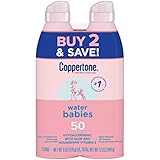
Overview: Coppertone WaterBabies Sunscreen Spray SPF 50 offers convenient spray-on protection in a twin-pack configuration, delivering 12 total ounces of pediatrician-recommended sunscreen. Designed specifically for babies, this hypoallergenic formula provides broad-spectrum SPF 50 protection with 80-minute water resistance. The spray format targets parents seeking quick, mess-free application for squirmy infants and toddlers.
What Makes It Stand Out: The spray delivery system revolutionizes application for wriggly babies who resist lotion rubbing. The twin-pack packaging provides exceptional value and ensures backup supply for diaper bags and home use. As the #1 pediatrician-recommended brand, Coppertone WaterBabies carries institutional trust. The hypoallergenic formulation minimizes reaction risks for delicate infant skin.
Value for Money: At $1.12 per ounce for the twin pack, this is the most economical option per ounce among reviewed products. The bulk packaging delivers substantial savings over individual purchases. However, spray application risks product waste through overspray and wind dispersal, potentially reducing actual value. The low price point allows liberal reapplication, crucial for effective sun protection.
Strengths and Weaknesses: Strengths include unbeatable convenience for application, trusted brand, excellent water resistance, and outstanding bulk value. The spray works well for hard-to-reach areas. Critical weaknesses include inhalation risks when spraying near babies’ faces, difficulty ensuring complete even coverage, and environmental concerns about aerosolized chemicals. The formula likely contains chemical filters rather than pure mineral blockers.
Bottom Line: The spray format solves application challenges for active babies, but parents must weigh convenience against coverage certainty and potential inhalation risks.
9. Blue Lizard BABY Mineral Sunscreen Stick with Zinc Oxide, SPF 50+, Water Resistant, UVA/UVB Protection - Easy to apply, Fragrance Free, .5 oz

Overview: Blue Lizard BABY Mineral Sunscreen Stick provides targeted zinc oxide protection in a portable, mess-free stick format. This 0.5-ounce stick delivers SPF 50+ broad-spectrum coverage using only mineral active ingredients, making it ideal for sensitive facial areas and spot application. The fragrance-free, vegan formula excludes parabens and chemical sunscreens, prioritizing purity for delicate baby skin.
What Makes It Stand Out: The 100% zinc oxide formulation eliminates all chemical sunscreen ingredients, reducing irritation risks for extremely sensitive or allergy-prone babies. The stick design enables precise application around eyes, nose, and ears without product waste or dripping. Its reef-friendly composition excludes Oxybenzone and Octinoxate, appealing to environmentally conscious families. The compact size fits perfectly in diaper bags and pockets for on-the-go protection.
Value for Money: At $17.48 per ounce, this is premium-priced, reflecting the pure mineral formulation and convenient format. While expensive for full-body coverage, the stick excels as a specialized product for face and touch-up applications. Using it strategically for high-exposure areas while pairing with a lotion for larger body parts maximizes value. The price is justified for parents prioritizing ingredient purity over cost.
Strengths and Weaknesses: Strengths include pure mineral protection, precise stick application, portability, reef-safe formula, and suitability for sensitive skin. The small size prevents product spoilage. Weaknesses include extremely high per-ounce cost, impracticality for full-body application, and the small 0.5-ounce size requiring frequent replacement with regular use. Some users report the stick dragging on skin.
Bottom Line: An excellent specialty product for facial protection and travel, but too costly to serve as a primary sunscreen for entire-body application.
10. Neutrogena Pure & Free Baby Mineral Sunscreen Stick with Broad Spectrum SPF 50 & Zinc Oxide, Water-Resistant, Hypoallergenic, Paraben-, Dye- & PABA-Free Baby Face & Body Sunscreen, 0.47 oz

Overview: Neutrogena Pure & Free Baby Mineral Sunscreen Stick delivers dermatologist-developed mineral protection in an ultra-portable 0.47-ounce stick. Featuring Broad Spectrum SPF 50 and zinc oxide-based Purescreen Technology, this hypoallergenic formula is specifically designed for babies with the most sensitive skin conditions. The National Eczema Association Seal of Acceptance distinguishes it as safe for eczema-prone infants.
What Makes It Stand Out: The Purescreen Technology uses naturally-sourced zinc oxide to absorb, reflect, and scatter UV rays without chemical filters. Receiving the NEA Seal of Acceptance represents rigorous testing for sensitive skin, providing unparalleled assurance for parents managing eczema or severe allergies. The weightless, non-greasy feel distinguishes it from heavier mineral sunscreens. As a dermatologist-recommended brand, Neutrogena carries significant medical credibility.
Value for Money: At $19.09 per ounce, this commands the highest per-ounce price among reviewed products. The premium reflects specialized formulation and medical endorsements. While economically impractical for daily full-body use, its value shines for babies with specific skin conditions requiring guaranteed gentle ingredients. For typical babies, more economical mineral options exist. Strategic use on face and problem areas stretches the investment.
Strengths and Weaknesses: Strengths include NEA approval, pure mineral formulation, trusted dermatologist brand, hypoallergenic properties, and convenient stick application. The formula’s elegance minimizes white cast. Weaknesses include the highest cost per ounce, tiny product size, and limited practicality for comprehensive coverage. Some parents may overpay for medical endorsements their child doesn’t require.
Bottom Line: The premier choice for babies with eczema or extreme sensitivities, but overpriced for families without specific dermatological needs.
Why Water Resistance Matters for Baby Sun Protection
The Splash-Day Challenge: Sunscreen That Won’t Quit
Babies and toddlers don’t just dip their toes in the water—they immerse themselves completely, emerging every few minutes to build sandcastles, snack on watermelon, and repeat the cycle endlessly. Standard sunscreens begin breaking down within minutes of water exposure, creating dangerous protection gaps during the very moments when UV reflection from water and sand intensifies exposure. Water-resistant formulations use sophisticated film-forming technology that adheres to skin even through submersion, towel-drying, and sweat. For infants under six months, the American Academy of Pediatrics recommends avoiding direct sun entirely, but for older babies who’ve discovered the joy of splashing, water-resistant protection isn’t just convenient—it’s critical for safety.
Understanding Water Resistance Ratings
Those “40 minutes” or “80 minutes” claims on sunscreen labels aren’t marketing fluff—they’re the result of rigorous FDA-mandated testing. In these tests, subjects apply sunscreen, then immerse themselves in a whirlpool bath for either two 20-minute sessions (40 minutes total) or four 20-minute sessions (80 minutes total). After each immersion, the sunscreen must still maintain its labeled SPF value. However, here’s what most parents miss: this testing assumes no towel drying. The moment you rub that soft hooded towel across your baby’s back, you’ve compromised even the most water-resistant formula. This reality makes proper reapplication strategy just as important as the initial application.
Mineral vs. Chemical: The Baby Sunscreen Debate
Why Pediatricians Recommend Mineral Formulas
When it comes to infant skin, nearly every pediatric dermatologist lands on the same side of the fence: mineral (physical) sunscreens are superior. Unlike chemical filters that absorb UV radiation and can potentially cause skin reactions or systemic absorption concerns, mineral sunscreens containing zinc oxide and titanium dioxide sit on top of the skin and physically deflect harmful rays. This mechanism means they begin working immediately upon application—no waiting 15-20 minutes for activation. For babies with developing organ systems, the “non-absorbed” nature of mineral blockers provides peace of mind that no amount of convenience can outweigh.
The Science Behind Zinc Oxide and Titanium Dioxide
Zinc oxide offers the broadest UVA/UVB protection of any sunscreen ingredient, covering the entire spectrum naturally. Titanium dioxide excels at blocking UVB rays but needs zinc oxide’s help for complete UVA protection. Modern formulations use micronized or non-nano particles that protect without leaving a ghostly white cast, though truly nano-free options exist for parents concerned about particle size. The magic happens when these minerals are suspended in emollient bases that create a flexible, water-repellent film. High-quality formulas use coated particles that resist clumping when wet, maintaining even coverage through multiple dunkings.
Decoding SPF: What Numbers Actually Mean for Infants
The SPF 30 vs. 50 Debate for Babies
The jump from SPF 30 to 50 seems significant—until you understand the math. SPF 30 blocks approximately 97% of UVB rays, while SPF 50 blocks about 98%. That single percentage point requires substantially more active ingredients, which can increase potential irritation without providing meaningful additional protection. For babies, dermatologists generally recommend SPF 30-50 as the sweet spot. Anything higher often contains chemical boosters that aren’t necessary for the limited time infants should spend in direct sun. Remember, SPF only measures UVB protection; without “broad spectrum” labeling, you’re getting incomplete defense.
Broad Spectrum: The Non-Negotiable Feature
UVA rays penetrate deeper into skin, causing long-term damage that manifests years later. They’re also the primary culprits behind photosensitivity reactions in young children. Broad spectrum protection ensures defense against both UVA and UVB radiation. For water-resistant baby sunscreens, this becomes even more critical because UVA rays penetrate water surfaces, reflecting and intensifying around your submerged baby. Look for the “Broad Spectrum” statement on the front label—it’s an FDA-regulated claim that guarantees a specific level of UVA protection relative to UVB.
Key Ingredients That Make Sunscreens Water-Resistant
Film-Forming Agents Explained
The true heroes of water resistance are ingredients you’ve probably never noticed: polymers like VP/eicosene copolymer, acrylates copolymer, and dimethicone crosspolymer. These create an invisible, flexible mesh that locks mineral particles against the skin while repelling water. Think of them as microscopic life rafts that keep zinc oxide afloat during swimming. The best formulations balance these film formers with skin-conditioning agents so the barrier remains breathable and comfortable. Cheap formulas over-rely on heavy waxes that feel greasy and can clog sensitive baby pores.
The Role of Beeswax and Silicones
Natural water resistance often comes from beeswax, which creates a breathable barrier that water beads off of. Synthetic silicones like dimethicone offer similar protection with a silkier feel. The controversy around silicones stems from environmental concerns, but for baby skin safety, they’re among the most inert, non-reactive ingredients available. They don’t penetrate the skin barrier and provide exceptional water repellency. Premium formulas often combine both: beeswax for natural adhesion and silicones for a smooth, non-sticky finish that won’t attract sand to every crease of your baby’s chubby thighs.
The Ingredient Red Flag List for Baby Skin
Fragrances and Essential Oils to Avoid
That “baby fresh” scent might smell delightful, but fragrance is the number one cause of contact dermatitis in infants. Essential oils like lavender, citrus, and tea tree—often marketed as natural preservatives—are phototoxic and can cause severe reactions when exposed to sunlight. Water-resistant formulas need preservatives to prevent microbial growth in moist environments, but these should be gentle, non-irritating options like phenoxyethanol or sodium benzoate. If you see “parfum” or any essential oil listed, especially citrus derivatives, put that bottle back on the shelf.
Parabens and Other Controversial Preservatives
While the paraben panic has led to widespread removal from baby products, some water-resistant formulas still use them for their antimicrobial power in water-heavy environments. More concerning are formaldehyde-releasing preservatives like DMDM hydantoin or quaternium-15, which can trigger allergic reactions. For water-resistant baby sunscreens, look for preservative systems that balance efficacy with gentleness—think tocopherol (vitamin E), rosemary extract, or stabilized vitamin C. These antioxidant preservatives not only protect the formula but offer additional skin benefits.
Application Mastery: Getting Water-Resistant Sunscreen to Actually Stick
The 15-Minute Rule Before Water Exposure
Even the most advanced water-resistant sunscreen needs time to form its protective film. Applying at least 15 minutes before swimming allows solvents to evaporate and polymers to create their water-repelling matrix. For babies, this means slathering them up at home, before the excitement of the pool or beach begins. Apply in a cool, dry environment—sweat interferes with adhesion. Work in sections, using gentle but firm pressure to ensure the formula bonds with skin rather than sitting on top. Pay special attention to often-missed spots: the hairline, tops of ears, back of neck, and the delicate skin under swim diaper edges.
How Much is Enough? The Teaspoon Rule for Babies
The “shot glass” rule for adults doesn’t translate to baby bodies. For infants and toddlers, use approximately one teaspoon for the face and neck, one teaspoon for each arm, two teaspoons for the torso (front and back), and two teaspoons for each leg. Most parents apply only 25-50% of the recommended amount, effectively reducing their SPF 50 to an SPF 12. For water-resistant formulas, adequate application is even more critical—thin layers wash away faster and provide uneven protection. Don’t forget the hands; babies constantly touch their faces and can inadvertently remove protection from both areas.
Reapplication Realities: Timing is Everything
Post-Swim Protocols
Here’s where most parents go wrong: waiting until their baby is completely dry to reapply. By then, your little one has already been unprotected for 10-15 minutes. The FDA testing protocol assumes immediate reapplication after towel drying. Keep a dry towel specifically for blotting (not rubbing) excess water, then reapply immediately. The clock resets with each application—an 80-minute water-resistant sunscreen gives you 80 minutes of protection from the moment you apply it, not from when you first entered the water. Set a phone timer; memory alone fails when you’re managing snacks, toys, and a slippery toddler.
Dry vs. Wet Skin Application Techniques
Modern water-resistant formulas can be applied to damp skin in a pinch, but dry skin always provides better adhesion. If you must apply to wet skin, press the sunscreen firmly with your palm rather than spreading it. The warmth and pressure help disrupt water droplets and allow the formula to bond. Some newer “wet skin” sprays exist, but these are chemical-based and inappropriate for babies. For mineral formulas, gently pat skin with a microfiber towel (which absorbs water without friction) before applying. The goal is skin that’s not dripping, not necessarily bone-dry.
Sensitive Skin Strategies: Beyond the Basics
Eczema-Prone Baby Considerations
For babies with atopic dermatitis, water-resistant sunscreens present a double challenge: they need to stay put without triggering flare-ups. Look for formulas enriched with ceramides, colloidal oatmeal, or allantoin—these ingredients repair the skin barrier while providing sun protection. Avoid alcohol-based ingredients that can sting and dry already compromised skin. The application technique matters too: apply in the direction of hair growth to minimize mechanical irritation, and consider a patch test on a small eczema-free area 48 hours before full-body application. Some parents find success applying a thin layer of their baby’s regular eczema cream, waiting 10 minutes, then layering sunscreen on top.
Allergy-Testing New Formulas
Never debut a new water-resistant sunscreen on vacation day one. Conduct a proper allergy test by applying a small amount to the inside of your baby’s forearm for three consecutive days. Water-resistant formulas contain more complex ingredient systems than daily lotions, increasing the potential for reactions. Watch for delayed hypersensitivity—redness, tiny bumps, or itching that appears 24-48 hours after application. If your baby has never reacted to skincare products but has food allergies, be extra cautious; cross-reactivity can occur with ingredients like nut oils or soy derivatives sometimes used as emollients.
Packaging Practicality: Tubes, Sticks, and Sprays
Why Spray Sunscreens Raise Concerns for Babies
The convenience of spray sunscreens is undeniable, but pediatricians overwhelmingly advise against them for infants. Inhalation risk is the primary concern—babies breathe more rapidly than adults, and those fine particles deposit directly into developing lungs. Additionally, sprays make it nearly impossible to achieve the even, adequate coverage that water-resistant protection demands. You can’t see where you’ve applied, leading to patchy protection that fails dramatically when wet. The propellants and alcohol carriers can also dry and irritate baby skin. If you must use a spray for convenience, spray it into your hands first, then apply—a method that defeats the purpose and still risks contamination.
Stick Formats for Targeted Protection
Sunscreen sticks are the unsung heroes for water-resistant baby protection. Their wax-based formulas are inherently more water-resistant than lotions, and they allow precise application to the most vulnerable areas: nose, cheeks, ears, and shoulders. Look for sticks with at least 20% zinc oxide and nourishing bases like shea butter or coconut oil. The application technique involves drawing several layers in a crisscross pattern, then patting to blend. Sticks are also invaluable for touch-ups without the mess of squeezing tubes with sandy hands. Keep one in your diaper bag for unexpected splash park detours.
Environmental and Ethical Considerations
Reef-Safe Formulations
The “reef-safe” label has become marketing gold, but its meaning varies wildly. For true reef safety, avoid oxybenzone and octinoxate (chemical filters) entirely. For mineral sunscreens, the concern shifts to particle size—non-nano zinc oxide and titanium dioxide are considered safer for coral ecosystems. However, the base ingredients matter too: some emulsifiers and preservatives can be harmful to marine life. Look for third-party certifications like the Haereticus Environmental Laboratory’s “Protect Land + Sea” certification, which tests the entire formula, not just active ingredients. For pool use, reef safety is less critical, but these formulas are often gentler on baby skin anyway.
Cruelty-Free and Sustainable Packaging
Water-resistant sunscreens require robust packaging that prevents formula degradation. Tubes with flip caps are more practical than screw tops at the beach (no lost caps in the sand). Some brands now use post-consumer recycled plastic or sugarcane-derived bioplastic tubes. While these eco-friendly options don’t affect performance, they align with values many parents hold. Check for Leaping Bunny or PETA cruelty-free certifications if animal testing concerns you—many mineral sunscreen brands proudly display these logos. Remember, a sunscreen that works and you’ll actually use is ultimately more sustainable than one that fails and gets thrown away half-full.
Price vs. Performance: Investing Wisely
Understanding Cost Per Wear
A $25 tube of premium water-resistant baby sunscreen might seem extravagant compared to a $10 drugstore option, but the math tells a different story. Higher-priced formulas often use micronized zinc oxide that spreads more easily, meaning you use less product per application. They also typically contain better film-forming polymers that maintain protection longer, reducing the total number of applications needed during a beach day. Calculate cost per application: a 3-ounce tube that lasts 15 full-body applications costs $1.66 per use, while a cheaper formula that washes off prematurely and requires constant reapplication might cost more in the long run—and leave your baby vulnerable.
When Premium Ingredients Justify Higher Prices
Expensive doesn’t always mean better, but certain premium ingredients genuinely enhance water-resistant performance for baby skin. Liposomal delivery systems encapsulate zinc oxide in phospholipids that fuse with skin, creating unprecedented adhesion. Ceramide complexes repair the skin barrier while protecting it. Colloidal oatmeal soothes while silicones provide water resistance. These multi-tasking ingredients justify higher price points by delivering benefits beyond basic sun protection. Conversely, avoid paying premium prices for fancy botanical extracts that offer no sun protection and may increase allergy risk. Focus your budget on proven film-forming technology and gentle, effective mineral blockers.
Common Application Mistakes That Ruin Water Resistance
The Rubbing Error That Removes Protection
Vigorous rubbing feels like you’re working the sunscreen in, but for water-resistant formulas, it’s the kiss of death. Aggressive friction breaks the film-forming polymers before they set, creating microscopic gaps in protection. Instead, use gentle, gliding strokes in one direction, then pat to even out the layer. Think of applying frosting to a cake—smooth, even pressure without back-and-forth motion. This is especially critical on areas that will be towel-dried later. Teach caregivers and grandparents this technique; well-meaning rough application can compromise even the best sunscreen.
Layering with Insect Repellent
Summer days often require both sunscreen and bug protection, but combining them is a recipe for disaster. DEET, the most effective insect repellent, degrades sunscreen ingredients and reduces SPF by up to 30%. It also compromises water-resistant films. If you must use both, apply sunscreen first, wait 15 minutes for it to set, then apply insect repellent to exposed areas only (never under clothing). Better yet, use physical barriers like long-sleeved rash guards and mosquito netting over strollers. For babies over two months, picaridin-based repellents are less damaging to sunscreen than DEET, but still require the same separation protocol.
The Removal Ritual: Taking It Off Safely
Oil-Based Cleansers for Stubborn Formulas
Water-resistant sunscreen doesn’t just resist water—it resists soap and water too. Attempting removal with regular baby wash often leads to frustrated scrubbing that irritates skin. Instead, use an oil-based cleanser or plain mineral oil. Oils dissolve the film-forming polymers and silicones without stripping the skin’s natural lipids. Massage a small amount of oil onto dry skin, focusing on creases where sunscreen accumulates. Add warm water to emulsify, then follow with your regular gentle baby cleanser to remove any residue. This two-step process prevents the post-sunscreen dryness that can trigger eczema flares.
Post-Sun Skincare for Infant Skin
After a day of sun and water, baby skin needs recovery support, even with perfect sunscreen application. A lukewarm bath with colloidal oatmeal soothes any latent irritation. Follow with a fragrance-free moisturizer containing ceramides or hyaluronic acid to replenish hydration. If you notice any pinkness (a sign of beginning sun damage), apply a thin layer of pure aloe vera gel (not the green, alcohol-laden drugstore kind) before moisturizing. For babies who’ve been in chlorinated pools, consider a vitamin C serum formulated for infants to neutralize chlorine’s oxidative stress—apply it before the moisturizer on completely dry skin.
Testing Water Resistance at Home
The Simple Splash Test Parents Can Do
You don’t need a lab to verify water resistance claims. Apply sunscreen to your baby’s forearm, wait 15 minutes, then splash water on the area. Truly water-resistant formulas will bead up dramatically; inadequate ones will show immediate whitening or runny patches. For a more rigorous test, have your baby sit in a lukewarm bath for 10 minutes, then check if the water has a milky appearance (sunscreen washing off) or remains clear. While not scientific, this test reveals whether your sunscreen will survive a splash pad session. Document your findings in a notes app to remember which formulas perform for future purchases.
What “40 Minutes” vs “80 Minutes” Really Means
The difference between 40-minute and 80-minute ratings isn’t just double the protection time—it’s double the confidence in extreme conditions. For casual backyard pool play with frequent shade breaks, 40-minute resistance suffices. For beach days with intense sun reflection, continuous water play, and active toddlers, 80-minute formulas provide better insurance. However, both ratings require the same reapplication after towel drying. The rating primarily indicates how well the formula maintains its SPF value during sustained water exposure. For babies with very fair skin or a family history of melanoma, the 80-minute option offers that extra margin of safety that helps everyone relax and enjoy the day.
Frequently Asked Questions
1. Can I use water-resistant sunscreen on my newborn if we’re just sitting in the shade by the pool?
Pediatricians recommend keeping infants under six months completely out of direct sun, even in shade near reflective water surfaces. Their skin’s protective barrier is still developing, making them more susceptible to both sun damage and sunscreen ingredients. If shade is absolutely unavoidable, protective clothing and a stroller canopy are safer than sunscreen. After six months, water-resistant mineral sunscreen becomes appropriate for limited, protected exposure.
2. How do I know if my baby’s water-resistant sunscreen has gone bad?
Separation, graininess, or a change in smell indicate formula breakdown. Water-resistant sunscreens are particularly vulnerable to temperature extremes—never leave them in a hot car. Most have a shelf life of 2-3 years unopened, but once opened, use within 12 months. Write the opening date on the tube with a permanent marker. If the texture has changed or it applies differently than you remember, replace it. Compromised film-forming agents won’t protect effectively.
3. My baby has a dairy allergy. Should I avoid sunscreens with lactobacillus or milk proteins?
While topical application differs from ingestion, severely allergic babies can react to protein residues in skincare. Some “probiotic” sunscreens include fermented ingredients for skin barrier support. If your baby has a severe milk allergy, choose formulas without lactobacillus ferment, whey protein, or colostrum. Contact the manufacturer directly if ingredients are unclear. When in doubt, select a minimalist formula with fewer than 12 ingredients total.
4. Does water-resistant sunscreen block vitamin D absorption in babies?
Yes, sunscreen reduces vitamin D synthesis, but this shouldn’t concern parents. Babies need only minimal sun exposure for adequate vitamin D—far less than what’s required for sun damage. The American Academy of Pediatrics recommends vitamin D supplementation (400 IU daily) for all breastfed babies and many formula-fed babies, precisely because sun exposure isn’t a safe or reliable method. Never compromise sun protection for vitamin D concerns.
5. What’s the difference between “water-resistant” and “very water-resistant”?
The FDA eliminated “waterproof” and “sweatproof” claims in 2011, standardizing on “water-resistant 40 minutes” or “water-resistant 80 minutes.” “Very water-resistant” isn’t an FDA-regulated term and holds no standardized meaning. Some brands use it to imply 80-minute protection, but without the official testing and labeling, it’s meaningless marketing. Always look for the specific minute rating on the front label, not descriptive adjectives.
6. Can I apply water-resistant sunscreen over my baby’s eczema cream?
Yes, but timing and product selection matter. Apply a thin layer of eczema cream (like a ceramide-based moisturizer) and wait 10-15 minutes for it to absorb. Then apply your water-resistant mineral sunscreen using a patting motion rather than rubbing. Avoid petroleum jelly-based eczema treatments before sunscreen—they create a barrier that prevents sunscreen adhesion. Some brands now offer eczema-specific sunscreens that combine both functions, eliminating the need for layering.
7. How do I protect my baby’s scalp and hair part without using spray sunscreen?
Sunscreen sticks are ideal for hair parts and exposed scalp areas. Apply directly to the part line using short strokes, then use a clean makeup brush or your fingertip to blend and ensure even coverage. For balding babies or fine hair, a mineral powder sunscreen applied with a fluffy brush provides water-resistant protection without greasiness. Wide-brimmed sun hats with UPF 50+ ratings offer superior protection and should be your first line of defense.
8. Will water-resistant sunscreen stain my baby’s swimwear?
Mineral sunscreens can leave white marks on dark fabrics, especially when they contain high concentrations of zinc oxide. To minimize staining, let the sunscreen dry completely (15-20 minutes) before dressing your baby. If stains occur, pre-treat with a mixture of dish soap and baking soda before washing. Avoid chlorine bleach, which can react with minerals and set stains. Some brands offer “non-staining” formulas, but these typically contain chemical filters inappropriate for babies.
9. My baby hates having sunscreen applied. Any tricks for squirmy splash-day prep?
Make it a game with a “sunscreen song” or let them “help” by holding the tube (closed). Apply to their favorite stuffed animal first. For face application, try the “dot method”—place small dots on cheeks, nose, and forehead, then let them pat the dots while you blend. Distraction is key: a special splash-day toy that only appears during sunscreen time works wonders. Apply in the car on the way to the pool when they’re contained in their car seat. Consistency helps; the same routine every time creates predictability that reduces resistance.
10. Are there any natural alternatives to commercial water-resistant sunscreens?
DIY sunscreens cannot provide reliable, tested water resistance or SPF protection. The film-forming technology and precise particle dispersion required for safe, effective sun protection demand laboratory manufacturing. Some parents use raspberry seed oil or carrot seed oil, but these offer negligible SPF and zero water resistance. For babies, the risk of sunburn and long-term damage far outweighs any desire for “natural” alternatives. Choose a mineral sunscreen with minimal, recognizable ingredients rather than attempting homemade versions. Your baby’s skin deserves proven protection, not experimental formulations.