Parenting in the digital age comes with a unique paradox: we’re more connected to our children than ever before, yet the anxiety of whether they’re breathing comfortably in the next room can still keep us awake at 3 AM. For tech-savvy parents who already use data to optimize their workouts, finances, and productivity, it’s only natural to want the same intelligent insights into their baby’s sleep patterns. Smart baby monitors with integrated sleep-tracking apps represent a seismic shift from the crackly audio monitors of the past, offering a sophisticated blend of computer vision, sensor technology, and AI-powered analytics that transform raw data into actionable parenting intelligence.
But here’s the thing—not all sleep-tracking monitors are created equal, and the most expensive option isn’t always the smartest choice for your family. The market is flooded with devices promising to decode your infant’s every twitch and breath, leaving many parents overwhelmed by specs like “breathing radar,” “sleep score algorithms,” and “encrypted cloud storage.” This guide cuts through the marketing jargon to explore what actually matters when investing in a sleep-tracking baby monitor, how to interpret the wealth of data these devices collect, and where to draw the line between helpful technology and information overload.
Top 10 Smart Baby Monitors with Sleep-Tracking Apps
Detailed Product Reviews
1. Babytone Baby Monitor - Smart Sleep Sock & 2.5K HD Camera, Track Heart Rate and Movement, Cry/Motion Detect, Two-Way Audio and Night Vision Baby Monitor with APP

Overview: The Babytone Baby Monitor offers a compelling hybrid approach by combining a smart sleep sock with a 2.5K HD camera, delivering comprehensive monitoring without the premium price tag of medical-grade systems. This dual-system setup tracks heart rate and movement through a comfortable fabric sock while providing crystal-clear video surveillance, making it an attractive option for tech-savvy parents seeking all-in-one convenience.
What Makes It Stand Out: The 8x digital zoom on the camera exceeds most competitors’ capabilities, while the standalone sock monitor with its own screen provides redundancy during internet outages. Three sock sizes (S/M/L) accommodate babies from 5.5 to 30.6 pounds—broader than many alternatives. The free MIPC app eliminates subscription fees for basic functionality, and the 16-hour battery life covers full overnight sessions without mid-sleep charging interruptions.
Value for Money: At $159.99, this system undercuts the Owlet Dream Duo by over $200 while delivering similar core features. Parents get both health tracking and high-resolution video for the price of some camera-only systems. The inclusion of a standalone monitor adds value typically reserved for premium tiers, making it a smart mid-range investment.
Strengths and Weaknesses: Strengths include dual monitoring modalities, impressive camera zoom, size versatility, no mandatory subscription, and excellent battery life. Weaknesses involve the lack of FDA clearance (though it tracks the same metrics), a less established brand reputation, and potential app reliability concerns compared to market leaders. The sock requires proper positioning for accurate readings.
Bottom Line: This Babytone system excels as a feature-rich, cost-effective alternative for parents wanting both health metrics and video without medical-grade pricing. While not a medical device, its comprehensive monitoring, robust hardware, and consumer-friendly pricing make it ideal for families prioritizing peace of mind and value.
2. iFamily WiFi Baby Monitor with App – Smartphone Baby Monitor with 5" HD Monitor & 2K Camera, Night Vision, 2-Way Talk, Motion Tracking&Alerts, Temp Sensor, Lullabies,Secure WiFi Lock

Overview: The iFamily WiFi Baby Monitor delivers exceptional video-focused monitoring at a budget-friendly price point, combining a dedicated 5-inch display with smartphone connectivity and a sharp 2K camera. This system prioritizes visual surveillance and environmental sensing over wearable health tracking, making it perfect for parents primarily concerned with room monitoring rather than biometric data.
What Makes It Stand Out: The dual-viewing option—both a parent unit and app access—provides flexibility most WiFi-only monitors lack. Motion tracking automatically follows your baby’s movements, while the integrated temperature sensor adds environmental awareness. The secure WiFi lock feature addresses common security concerns, and multi-user sharing lets grandparents join monitoring without complicated setup.
Value for Money: At $79.99, this monitor dramatically undercuts competitors while offering features typically found in $150+ systems. The 2K resolution matches premium cameras, and the inclusion of a dedicated screen eliminates smartphone dependency. Optional cloud storage and microSD support provide cost-effective recording solutions without mandatory fees.
Strengths and Weaknesses: Strengths include outstanding affordability, dual viewing modes, motion tracking, temperature monitoring, flexible storage options, and robust night vision. Weaknesses are the absence of health tracking (no sock sensor), WiFi dependency for app features, potential lag during network congestion, and cloud storage requiring a subscription. The 5-inch screen, while decent, is smaller than some dedicated units.
Bottom Line: For video-centric monitoring on a budget, the iFamily system is nearly unbeatable. It sacrifices biometric tracking but delivers premium camera features, reliable connectivity, and thoughtful security at an entry-level price. Ideal for parents confident in visual cues who want professional-grade surveillance without the premium cost.
3. Owlet Dream Duo (Gen 3) Smart Baby Monitor All-in-One Bundle - 2K HD Video Baby Monitor with Alerts & Owlet Dream Sock Tracks Baby’s Oxygen, Heart Rate & Sleep | Health Insights via App | Mint

Overview: The Owlet Dream Duo represents the gold standard of consumer baby monitoring, merging an FDA-cleared wearable sock with a premium 2K camera in one seamless ecosystem. This third-generation system delivers hospital-grade biometric tracking alongside crystal-clear video, targeting parents who demand medical-validation and cybersecurity assurance for their most precious responsibility.
What Makes It Stand Out: FDA clearance sets it apart from all non-medical competitors, providing validated oxygen and pulse rate monitoring. The SGS Cybersecurity Mark offers independently certified protection—a unique feature in this category. Dual-band WiFi plus Bluetooth ensures uninterrupted connectivity, while customizable alert sensitivity prevents notification fatigue. The system tracks wakings and sleep trends, providing actionable insights beyond basic monitoring.
Value for Money: At $379.99, this is a significant investment, but justified for parents of premature babies, those with health concerns, or families wanting maximum peace of mind. The medical-grade accuracy and security certification justify the premium over consumer-grade alternatives. Compared to hospital monitors or separate medical devices, it’s competitively priced.
Strengths and Weaknesses: Strengths include FDA clearance, oxygen tracking, robust cybersecurity, dual connectivity, customizable alerts, wide-angle 2K video, and professional sleep insights. Weaknesses involve the high price point, potential overkill for healthy full-term infants, and limited advanced features requiring Owlet360 subscription. The sock sizing may require upgrades as baby grows.
Bottom Line: If medical-grade accuracy and cybersecurity are non-negotiable, the Dream Duo justifies every penny. It’s over-engineered for average needs but essential for high-risk infants or anxiety-prone parents. The premium delivers validated data, robust connectivity, and unparalleled peace of mind that consumer alternatives cannot legally claim.
4. Babytone Baby Sleep Monitor with Base Station- Smart Sleep Sock, Tracking Heart Rate and Movement, Wearable Baby Foot Monitor with Bluetooth and APP, for 0-36 Months Newborn
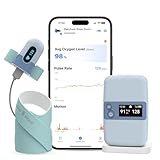
Overview: This Babytone system focuses exclusively on wearable monitoring, pairing a smart sleep sock with a dedicated base station for parents who prioritize biometric data over video surveillance. Designed for 0-36 months, it tracks heart rate and movement while storing data locally, offering a streamlined alternative to camera-inclusive bundles at a more accessible price.
What Makes It Stand Out: The base station’s integrated screen provides instant visual feedback without smartphone dependency—a rare feature in this price range. Data export capabilities in PDF/CSV/JPG formats allow parents to share records with pediatricians, offering clinical utility most consumer monitors lack. The sensor’s 16-hour battery and base station’s 7-day endurance eliminate frequent charging concerns.
Value for Money: At $139.99, it’s $20 less than Babytone’s camera bundle and $135 less than the Owlet Dream Sock alone. For parents who don’t need video, this delivers core health tracking with professional data management features. The standalone functionality means monitoring continues even during internet outages, adding reliability value.
Strengths and Weaknesses: Strengths include the dedicated base station, exceptional battery life, versatile data export, comfortable washable sock, and affordable biometric-focused monitoring. Weaknesses are the lack of camera integration (must purchase separately), only two sock sizes versus competitors’ three, no FDA clearance, and limited brand recognition. Bluetooth range may restrict placement options.
Bottom Line: Perfect for parents who trust visual checks but want continuous health data backup. The base station and export features make it feel more professional than app-only solutions, while the price remains approachable. Choose this if biometric tracking is your priority and you’re willing to add a separate camera later or rely on occasional in-person checks.
5. Owlet Dream Sock® - FDA-Cleared Smart Baby Monitor - Track Live Pulse (Heart) Rate, Oxygen in Infants - Receive Notifications - Mint

Overview: The Owlet Dream Sock stands alone as the first and only FDA-cleared wearable baby monitor, delivering medical-grade pulse rate and oxygen tracking without video components. This specialized device targets health-conscious parents who want validated biometric monitoring above all else, particularly those with infants who have medical considerations or parents seeking maximum peace of mind during sleep.
What Makes It Stand Out: FDA clearance provides legal medical validation that no consumer competitor can match. The dual WiFi and Bluetooth connectivity includes backup battery power, ensuring alerts during power or internet failures—critical for medical monitoring. Owlet’s sleep trend analysis and expert tips offer professional guidance, while the base station provides audible and visual alerts independent of smartphones.
Value for Money: At $275 for a sock-only system, it’s expensive compared to camera bundles, but medical-grade accuracy commands premium pricing. For parents who would otherwise rent hospital equipment or undergo expensive sleep studies, it’s cost-effective. However, adding a separate camera pushes total investment over $400, making the bundle more sensible for most.
Strengths and Weaknesses: Strengths include FDA clearance, reliable oxygen tracking, connectivity redundancy, professional sleep insights, and proven alert reliability. Weaknesses are the high price for single-function monitoring, requirement to purchase camera separately, subscription needed for Owlet360 advanced analytics, and limited to 1-18 months (6-30 lbs). The sock requires careful fit for accuracy.
Bottom Line: This is a medical device disguised as a consumer product—ideal for high-risk infants or parents needing validated health data. If you require oxygen monitoring due to prematurity, respiratory issues, or severe anxiety, the FDA clearance justifies the cost. For typical healthy babies, the premium is harder to rationalize without video integration.
6. Philips Avent Premium Connected Baby Monitor, Smart Baby Monitor with App, 1080p Camera, SenseIQ Sleep & Breathing Motion Tracking, Cry Detection & Translation, Two-Way Audio, Night Vision, SCD973/37

Overview: The Philips Avent Premium Connected Baby Monitor represents a sophisticated approach to infant monitoring, eliminating the need for wearable sensors through its innovative SenseIQ technology. This system combines a 1080p HD camera with a dedicated 5-inch parent unit, offering comprehensive sleep and breathing motion tracking via advanced pixel analysis. Designed for parents seeking detailed insights without direct contact sensors, it provides real-time monitoring through a companion app while maintaining a stable 1300-foot range connection.
What Makes It Stand Out: The standout feature is undoubtedly the wearable-free monitoring system that analyzes millions of pixels per second to detect micro-movements for breathing and sleep tracking. The scientifically-backed cry detection and translation technology, which identifies five distinct cry types through an external service provider, offers unprecedented insight into infant communication. The versatile 2-in-1 mounting solution adapts effortlessly between wall and crib placement, while the combination of a dedicated HD screen and app access provides flexible monitoring options.
Value for Money: At $349.99, this premium monitor sits in the higher tier of the market, yet justifies its price through unique non-contact monitoring technology and dual viewing options. Comparable systems requiring wearables often cost $200-300 plus ongoing sensor replacements, making this a cost-effective long-term solution for parents prioritizing convenience and comprehensive features.
Strengths and Weaknesses: Strengths include the innovative wearable-free design, excellent 1080p video quality with night vision, reliable long-range connectivity, and insightful cry translation capabilities. Weaknesses involve the premium price point, dependence on an external service for cry translation, potential privacy concerns with cloud-based pixel analysis, and the lack of FDA clearance for medical-grade monitoring.
Bottom Line: The Philips Avent Premium is ideal for tech-savvy parents seeking comprehensive monitoring without the hassle of wearables. While expensive, its unique features and dual-screen flexibility make it a worthwhile investment for those prioritizing convenience and detailed sleep insights.
7. eufy Security Baby Monitor Baby Smart Sock with 2.4 GHz Wi-Fi, Track Sleep Patterns, Naps, Heart Rate, No Monthly Fee
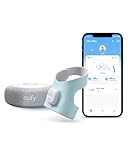
Overview: The eufy Security Baby Monitor Smart Sock offers an accessible entry into wearable infant monitoring, tracking vital sleep metrics and heart rate through a comfortable sock design. Operating on 2.4 GHz Wi-Fi without monthly fees, this system provides parents with comprehensive wellness data via smartphone app. Designed for infants 0-18 months, it includes three sock sizes to grow with your baby, delivering customizable alerts and daily sleep reports based on optimized algorithms.
What Makes It Stand Out: The zero-subscription model immediately distinguishes it from competitors, eliminating ongoing costs while delivering robust tracking capabilities. The Fresnel lens optimization enhances data accuracy, while the ability to specifically track naps alongside nighttime sleep provides a complete picture of infant rest patterns. The customizable alert system allows parents to personalize notifications based on their preferences, reducing unnecessary interruptions.
Value for Money: At $169.99, this monitor offers exceptional value in the smart sock category, undercutting many competitors by $100 or more while avoiding subscription fees. The inclusion of three sock sizes and optimized tracking algorithms provides long-term utility through 18 months of age, making it a financially sound choice for budget-conscious families seeking comprehensive monitoring.
Strengths and Weaknesses: Strengths include the affordable price point, no monthly fees, comfortable washable design, specific nap tracking, and customizable alerts. Weaknesses involve Wi-Fi dependency for full functionality, potential for sock detachment causing false alarms, limited range compared to dedicated parent units, and the lack of built-in video monitoring requiring separate purchase.
Bottom Line: This eufy Smart Sock excels for parents wanting reliable health tracking without financial commitment. While it lacks video integration, its accuracy and cost-effectiveness make it a smart standalone choice or complement to existing camera systems.
8. Owlet Dream Duo (Gen 3) Smart Baby Monitor All-in-One Bundle - 2K HD Video Baby Monitor with Alerts & Owlet Dream Sock Tracks Baby’s Oxygen, Heart Rate & Sleep | Health Insights via App | Bedtime Blue

Overview: The Owlet Dream Duo (Gen 3) represents the pinnacle of integrated baby monitoring, combining an FDA-cleared Dream Sock with a premium 2K HD camera for comprehensive health and video surveillance. This all-in-one system delivers real-time oxygen level and pulse rate tracking alongside crystal-clear video streaming through dual-band WiFi and Bluetooth connectivity. The cybersecurity-certified platform ensures secure data transmission while providing customizable smart alerts for cry, sound, motion, temperature, and humidity.
What Makes It Stand Out: FDA clearance elevates this beyond consumer tech to medical-grade monitoring, providing validated accuracy for oxygen and heart rate readings. The independently certified SGS Cybersecurity Mark addresses growing parental concerns about data privacy. Dual connectivity ensures continuous monitoring even during internet outages, while the 2K video resolution with night vision and 4x zoom surpasses standard 1080p offerings. The comprehensive alert customization allows granular control over notification sensitivity and frequency.
Value for Money: At $379.99, this premium bundle commands the highest price but delivers unmatched integration of medical-grade biometrics and superior video quality. Purchasing comparable FDA-cleared monitoring and 2K camera systems separately would exceed $450, making this bundle economically sensible for parents seeking the most comprehensive solution available.
Strengths and Weaknesses: Strengths include FDA clearance, exceptional 2K video quality, robust cybersecurity certification, dual connectivity for reliability, and extensive customization. Weaknesses center on the premium price, potentially overwhelming feature set for some users, sock fit challenges for certain infants, and the requirement for consistent Wi-Fi for optimal app functionality.
Bottom Line: For parents prioritizing medical-grade accuracy and premium video in one system, the Dream Duo is unparalleled. The high cost is justified by FDA clearance and cybersecurity, making it the ultimate choice for comprehensive, secure monitoring.
9. Owlet Dream Sock - FDA-Cleared Smart Baby Monitor - Track Live Pulse (Heart) Rate, Oxygen in Infants - Receive Notifications - Bedtime Blue

Overview: The Owlet Dream Sock stands as the first FDA-cleared smart baby monitor, delivering medical-grade pulse rate and oxygen tracking for infants 1-18 months without requiring a camera system. This standalone wearable connects via WiFi and Bluetooth to provide real-time health data through the Owlet Dream App, with a Base Station offering immediate visual and audible alerts. The system continues monitoring during internet or power outages through Bluetooth and backup battery power, ensuring constant protection.
What Makes It Stand Out: FDA clearance distinguishes this from all non-medical consumer monitors, providing clinically validated accuracy that parents can trust. The dual connectivity with outage protection addresses a critical failure point in purely Wi-Fi-dependent systems. The Base Station provides at-a-glance status indication without requiring phone access, while the ability to track historical trends over 48 hours helps identify patterns in infant health and sleep.
Value for Money: Priced at $264.99, this specialized health monitor sits between basic smart socks and premium camera bundles. The FDA clearance justifies the premium over $150-200 alternatives, while the standalone design allows parents to invest in a preferred camera system separately. For health-focused monitoring, this offers professional-grade accuracy without recurring costs.
Strengths and Weaknesses: Strengths include FDA clearance, reliable dual connectivity, outage protection, comprehensive health data, and the convenient Base Station. Weaknesses involve the lack of integrated video requiring separate purchase, higher cost than non-cleared alternatives, potential sock discomfort for sensitive babies, and limited functionality beyond health metrics.
Bottom Line: The Owlet Dream Sock is the gold standard for health monitoring, providing peace of mind through medical-grade accuracy. While video requires separate investment, its reliability and FDA clearance make it essential for parents prioritizing biometric data over all-in-one convenience.
10. Babytone Smart Baby Monitor – Baby Breathing Monitors with Rollover & Overheating Alarms, Long Battery Life, Real-Time Temperature Tracking, Free App for Infants & Newborns 0-24 Months (Sleep Clip)

Overview: The Babytone Smart Baby Monitor offers a budget-conscious, non-WiFi alternative for safety-focused parents, utilizing a low-radiation sleep clip to monitor breathing, rollover, and temperature for infants 0-24 months. This Bluetooth-enabled device attaches directly to diapers, providing up to seven days of continuous monitoring on a single charge. The system delivers instant alerts for stomach sleeping, irregular breathing patterns, and temperature fluctuations through the Vihealth app, storing 10 days of historical data without requiring internet connectivity.
What Makes It Stand Out: The WiFi-free design addresses radiation concerns while extending battery life dramatically compared to connected competitors. The rollover detection specifically targets SIDS risk factors by alerting when infants sleep on their stomachs. The extended seven-day battery life minimizes maintenance, while the Bluetooth connectivity maintains local data privacy. The adjustable alert thresholds provide customization rarely found in budget monitors.
Value for Money: At $79.99, this monitor delivers exceptional value for safety-conscious families, costing less than half of most smart socks while offering unique position monitoring. The absence of subscription fees and long battery life reduce ongoing costs, making it an economical choice for extended use up to 24 months. For parents prioritizing basic safety over advanced biometrics, this is nearly impossible to beat.
Strengths and Weaknesses: Strengths include the affordable price, WiFi-free low-radiation design, extended battery life, specific rollover detection, and customizable alerts. Weaknesses involve limited Bluetooth range, lack of heart rate or oxygen monitoring, dependency on smartphone proximity, and potentially less comfortable clip design compared to sock alternatives.
Bottom Line: The Babytone Sleep Clip is perfect for parents seeking essential safety monitoring without complexity or cost. While it lacks advanced biometrics, its unique rollover detection and WiFi-free design make it an excellent budget choice for basic infant safety.
Why Sleep Tracking Matters for Modern Parents
Sleep isn’t just rest for your baby—it’s the foundation of cognitive development, immune system strengthening, and emotional regulation. During the first year alone, infants cycle through critical brain development processes that occur predominantly during sleep. For parents, understanding these patterns isn’t about achieving perfection; it’s about identifying trends that can inform feeding schedules, nap timing, and even detect potential health concerns early.
The challenge? Human memory is notoriously unreliable when you’re running on four hours of fragmented sleep. A 2 AM wake-up might feel like it lasted forever, but was it 10 minutes or 40? Did your baby actually sleep less last night, or does it just feel that way? Sleep-tracking technology provides objective data that eliminates guesswork, creating a clear picture of sleep duration, quality, and consistency over time. This becomes invaluable during pediatrician visits when you’re asked about sleep habits, or when troubleshooting issues like frequent night wakings or short naps.
How Smart Baby Monitors Revolutionize Infant Care
The evolution from basic audio monitors to today’s AI-powered systems mirrors the shift from flip phones to smartphones. Early monitors simply transmitted sound; modern devices act as comprehensive nursery command centers. Using advanced computer vision, these monitors can detect subtle chest movements, differentiate between a cough and a cry, and even recognize when your baby is in REM versus deep sleep—all without any physical contact.
What makes this revolutionary isn’t just the data collection, but the contextual intelligence. Instead of staring at a screen waiting for movement, parents receive curated insights: “Baby’s sleep latency increased by 15 minutes this week—consider adjusting bedtime routine.” This proactive approach transforms monitoring from reactive surveillance into predictive care, giving parents confidence to make informed decisions rather than anxiety-driven ones.
Core Features That Define Premium Sleep-Tracking Monitors
AI-Powered Sleep Pattern Recognition
The heart of any smart monitor is its artificial intelligence engine. Look for systems that use machine learning algorithms trained on pediatric sleep data, not just generic movement detection. These AI models analyze video feeds to identify sleep stages, track sleep onset times, and detect deviations from established patterns. The sophistication varies widely—some systems simply log movement, while others build personalized sleep profiles that adapt as your baby grows.
Key question to ask: Does the AI improve over time with your specific baby, or does it rely on static, one-size-fits-all parameters? The best systems learn your child’s unique baseline and alert you only when deviations are statistically significant, not just different from some generic infant average.
Real-Time Breathing and Movement Monitoring
Contact-free breathing monitoring uses either computer vision or ultra-low power radar technology to track chest movements measured in millimeters. This is fundamentally different from simple motion detection—it’s measuring the actual physical expansion and contraction of your baby’s torso. Premium systems can detect breathing rates, pause durations, and even subtle changes in respiratory patterns.
The technology should function reliably through swaddles, sleep sacks, and in various sleeping positions. Be wary of systems that require precise camera angles or specific clothing; true innovation works within the messy reality of actual parenting, not a perfectly staged nursery.
Environmental Sensors: Beyond Just Video
Temperature and humidity sensors are table stakes, but advanced monitors now track air quality (VOCs), ambient light levels, and even sound pressure levels. Why does this matter? A nursery that’s 75°F might feel fine, but combined with 70% humidity, it could be disrupting your baby’s sleep. These environmental data points correlate with sleep quality metrics, helping you identify that your baby sleeps 30% longer when humidity stays between 40-50%.
Decoding Sleep Analytics: What the Data Actually Means
Understanding Sleep Cycles in Infants
Unlike adults who cycle through sleep stages every 90 minutes, newborns have shorter, 50-60 minute cycles with more REM sleep. Your monitor’s app should visualize these cycles clearly, showing active sleep (when babies twitch, smile, and move) versus quiet sleep (deep, restorative rest). This distinction is crucial because picking up your baby during active sleep might unnecessarily disrupt a natural sleep cycle.
Quality sleep-tracking apps educate parents on these differences, explaining why a 30-minute nap isn’t “failure”—it might be one complete infant sleep cycle. They should show sleep onset latency (how long it takes to fall asleep), number of night wakings, and total sleep time, but contextualize these numbers against age-appropriate norms.
Interpreting Sleep Quality Metrics
Beware of oversimplified “sleep scores.” A single 0-100 number might seem appealing, but it masks important nuance. Look for apps that break down metrics into digestible components: sleep efficiency (time asleep vs. time in bed), fragmentation index (how often sleep is interrupted), and consistency scores (how similar tonight’s pattern is to the last week).
The real power comes from trend analysis, not nightly numbers. One bad night means nothing; five nights of increasing sleep latency might suggest a schedule adjustment is needed. Premium apps use statistical significance to highlight what actually matters, filtering out noise to prevent data anxiety.
Connectivity and Integration: Building Your Smart Nursery
Wi-Fi vs. Non-Wi-Fi: Security Considerations
Wi-Fi-enabled monitors offer remote viewing from anywhere, but they introduce potential security vulnerabilities. Non-Wi-Fi models use dedicated FHSS (Frequency-Hopping Spread Spectrum) connections that are inherently harder to hack but limit you to a 1000-foot range. The choice depends on your lifestyle: if you travel frequently and want to check in from hotels, Wi-Fi is essential. If you’re primarily home-based and prioritize security, non-Wi-Fi offers peace of mind.
For Wi-Fi models, investigate whether they use peer-to-peer connections or route through cloud servers. Peer-to-peer is faster and more private but may offer fewer features. Cloud-based systems enable historical data analysis but require trusting the company’s security infrastructure.
Smart Home Ecosystem Compatibility
Tech-savvy parents should consider how a monitor integrates with existing smart home setups. Does it support Alexa, Google Home, or Apple HomeKit? Can you view the feed on a smart display while cooking? More importantly, can you create automations—like dimming lights when the baby falls asleep or adjusting the thermostat when nighttime wakings increase?
API availability is the mark of a truly integrated device. Some manufacturers offer IFTTT support or direct API access, letting power users create custom workflows. This might include logging sleep data to a personal spreadsheet or triggering smart blinds to block morning light during nap time.
Privacy and Security: Non-Negotiable Features
End-to-End Encryption Standards
Your baby’s sleep data is sensitive. Ensure any monitor you consider uses AES 256-bit encryption for data in transit and at rest. This should be standard, not optional. Ask whether the company has undergone third-party security audits and if they publish the results. Transparency here is non-negotiable.
Be particularly cautious with monitors that offer “AI-enhanced” features requiring video uploads to cloud servers for processing. Some newer models process AI locally on the device, keeping footage in your home and only sending metadata to the app—a far more privacy-conscious approach.
Data Storage and GDPR/CCPA Compliance
Where is your data stored, and for how long? Reputable companies comply with GDPR (Europe) and CCPA (California) regulations, giving you the right to delete your data completely. Investigate whether the company anonymizes data for research purposes—some do this by default, while others require explicit opt-in.
Consider models that offer local storage options, such as SD card slots, allowing you to keep footage entirely private. Cloud storage should be optional, not mandatory, and ideally encrypted with keys only you control.
Video Quality and Night Vision: What You Actually Need
4K resolution sounds impressive, but it’s overkill for a baby monitor and consumes excessive bandwidth. 1080p with excellent low-light performance is the sweet spot. More important than resolution is the lens quality and sensor size—a larger sensor captures more light, producing clearer images in dim nurseries.
Night vision technology matters greatly. Traditional infrared LEDs create a gray, washed-out image and can produce a faint red glow. Advanced monitors use starlight sensors or low-lux CMOS sensors that amplify ambient light, producing color night vision without visible illumination. This lets you see if your baby’s face is flushed or if that blanket is actually blue, not just guess from grayscale.
Audio Features: More Than Just Two-Way Talk
Cry Detection and Sound Analysis
Sophisticated audio processing can differentiate between fussing, crying, and environmental noises. This matters because not every sound requires intervention. The best systems use natural language processing trained on infant vocalizations, providing insights like “hunger cry detected” versus “overtired cry.”
Look for adjustable sensitivity and smart notifications that learn which sounds you respond to. Some apps can even track cry duration and intensity over time, correlating with sleep data to identify patterns—perhaps your baby cries 40% longer when room temperature exceeds 72°F.
White Noise and Lullaby Integration
Instead of a separate sound machine, premium monitors include customizable sound libraries. The key is control: can you adjust volume remotely, set timers, or create conditional rules? Advanced systems let you trigger white noise automatically when movement is detected, helping babies self-soothe back to sleep before fully waking.
Sound quality matters more than variety. A single, well-engineered brown noise track beats 50 tinny lullabies. Check the speaker’s frequency response—fuller, deeper sounds mask household noise more effectively.
Wearable vs. Non-Wearable Sleep Tracking Technologies
Contact-Free Monitoring Explained
Camera-based systems use computer vision algorithms to track micro-movements. They’re completely passive—no sensors touching your baby—which reduces false alarms from shifting socks or loose bands. The trade-off is they require clear line-of-sight and can be affected by lighting conditions.
Radar-based monitors emit ultra-low power radio waves that penetrate fabric and measure chest movement. They work in complete darkness and through blankets, but some parents have concerns about any emissions near their infant, despite FCC approval and power levels far below a smartphone.
Smart Clothing and Sensor Pads
Wearables like smart socks or chest bands offer medical-grade accuracy for heart rate and oxygen levels but must fit properly and stay charged. They’re excellent for newborns but become impractical once your baby can remove them. Sensor pads placed under the mattress eliminate wearables but only work in cribs and can’t transition to toddler beds.
Consider your baby’s age and temperament. A contact-free system offers longevity from newborn through preschool years, while wearables might provide peace of mind during the highest-risk SIDS period (2-4 months).
Battery Life and Power Management
For portable parent units, 8-10 hours is minimum; 12+ hours covers a full day of use. But battery degradation is real—check if the battery is replaceable or if you’re stuck with a device that becomes a wired-only unit after 18 months.
Camera power is equally important. Battery-powered cameras offer placement flexibility but require frequent charging. Hardwired cameras with battery backup provide reliability during power outages. The best hybrid systems use power-over-ethernet (PoE) for primary power with a small internal battery for short-term portability.
App User Experience: The Parent Dashboard
Customizable Alerts and Notifications
Alert fatigue is real. You need granular control: notify me about breathing pauses over 15 seconds, but only log minor movements. Can you set quiet hours where non-critical alerts are suppressed? Do notifications differentiate between informational updates and urgent alarms?
The app should learn your preferences. If you always ignore “light sleep detected” alerts, a smart system will eventually stop sending them. Look for snooze functions, escalation rules (text if I don’t acknowledge within 30 seconds), and the ability to customize alert tones.
Multi-User Access and Caregiver Permissions
Modern parenting involves grandparents, nannies, and partners. The app should support unlimited users with role-based permissions. Maybe grandma can view video but not change settings; the nanny can see sleep schedules but not access historical health data.
Cloud-based systems should handle multiple simultaneous viewers gracefully. Some cheaper monitors lag or drop frames when more than two devices connect, which becomes problematic when both parents and a caregiver are checking in.
Price vs. Value: Making the Smart Investment
Price ranges from $100 basic cameras to $400+ premium systems. The sweet spot for reliable sleep tracking with AI analytics is $250-$350. Below this, AI features are often gimmicky; above, you’re paying for brand premium or features you’ll rarely use.
Calculate cost-per-use: a $300 monitor used daily for three years costs about $0.27 per day—less than a cup of coffee. More importantly, consider the value of avoided anxiety. If the monitor prevents one unnecessary middle-of-the-night nursery check per week, that’s 52 hours of saved sleep annually.
Setup and Installation: What to Expect
Most systems promise “5-minute setup,” but reality varies. Wi-Fi models require network configuration, firmware updates, and account creation—plan for 20-30 minutes. Non-Wi-Fi models are genuinely plug-and-play but may need careful positioning for optimal coverage.
Camera placement is critical for sleep tracking. It should be 3-4 feet from the crib, angled to see the baby’s torso, and away from direct sunlight or heating vents that create false motion alerts. Premium systems include augmented reality setup guides in their apps, showing exactly where to place the camera for best results.
Troubleshooting Common Issues
False alarms are the number one complaint. Usually caused by poor placement, insufficient lighting, or overly sensitive settings. If you’re getting breathing alerts when your baby is fine, first check if a mobile’s shadows are triggering motion detection, or if the camera is picking up your own movement reflected in a mirror.
Connectivity drops often stem from Wi-Fi congestion. Baby monitors are bandwidth-intensive; they need priority on your network. Some routers offer QoS (Quality of Service) settings to prioritize monitor traffic. For persistent issues, consider a dedicated 2.4GHz network just for IoT devices.
When to Trust Tech and When to Trust Your Instincts
Here’s the hard truth: no monitor, no matter how advanced, replaces parental intuition. These devices are decision-support tools, not decision-makers. If your baby seems off but the monitor shows normal breathing, trust your gut and check physically. If the monitor alerts but your baby looks peaceful, use it as a prompt for closer observation, not panic.
The goal is informed confidence, not tech dependency. Use the data to spot trends and validate hunches, but never let it override what you see, hear, and feel as a parent. The best monitor is the one that helps you sleep better, not the one that gives you more reasons to worry.
Frequently Asked Questions
1. Can sleep-tracking monitors prevent SIDS?
No device can prevent SIDS, and no manufacturer should claim to. These monitors track breathing and movement patterns but are not medical devices. They provide peace of mind and can alert you to irregularities, but they’re not substitutes for safe sleep practices: always place babies on their backs, use a firm sleep surface, and keep the crib bare.
2. At what age should I start using a sleep-tracking monitor?
Most parents begin using them from birth, especially for preterm or high-risk infants. However, the highest utility is typically between 2-6 months when sleep patterns are establishing and SIDS risk peaks. Many families discontinue active tracking around 12-18 months when toddlers transition to beds.
3. Will the monitor’s Wi-Fi slow down my internet?
Modern monitors use efficient compression and typically consume 1-2 Mbps—negligible for most broadband connections. However, if you have multiple cameras streaming simultaneously or a slow upload speed, you might notice impacts. Some routers let you prioritize traffic to minimize issues.
4. How accurate is AI sleep stage detection compared to medical sleep studies?
Consumer monitors are about 75-85% accurate compared to polysomnography (the gold standard). They’re excellent for tracking trends and patterns but shouldn’t be used for diagnosing sleep disorders. Think of them as sophisticated baby books, not medical equipment.
5. Can I use a sleep-tracking monitor with a bassinet or only in a crib?
Most contact-free systems work with bassinets, cribs, and even pack-and-plays as long as the camera has clear view of your baby’s torso. Wearable devices are more limited—sensor pads usually require a standard crib mattress, while smart socks work in any sleep setup.
6. What happens to my data if the company goes out of business?
This is a critical question. Reputable companies offer data export features, letting you download your baby’s sleep history as CSV or PDF files. Always choose a monitor with local storage capability or manual export options to avoid losing months of data if the cloud service shuts down.
7. Are there any health concerns with radar-based breathing monitors?
Radar monitors operate at power levels thousands of times lower than FCC limits—comparable to a Wi-Fi router. No peer-reviewed studies have shown health risks. However, if concerned, opt for camera-based vision systems that use only light, or traditional wearables that use low-energy Bluetooth.
8. How do I handle false alarms without becoming desensitized?
First, optimize placement and settings to minimize false alarms. Then, use the app’s alert customization to tier notifications: urgent alarms (breathing pause) should be unmistakable, while informational alerts (sleep stage change) can be silent logs. If you get a false alarm, document the conditions and adjust settings accordingly.
9. Can grandparents or caregivers access the monitor without a smartphone?
Some systems offer web portals or compatibility with smart displays like Amazon Echo Show or Google Nest Hub. However, most require a smartphone app. For less tech-savvy caregivers, consider monitors with dedicated parent units that function like traditional handheld screens while still offering app access for you.
10. Will using a sleep tracker make me more anxious?
It can, especially initially. Data anxiety is real. The key is focusing on weekly trends rather than nightly numbers and customizing alerts to reduce noise. Give yourself a two-week adjustment period. If you find yourself obsessively checking the app, disable real-time notifications and review data only once daily. The technology should serve your peace of mind, not undermine it.