Your nine-month-old has just discovered the delightful game of dropping food from the high chair—watching with glee as each piece plummets to the floor. While this might test your patience, it’s actually a brilliant cognitive milestone in action. Your baby is exploring object permanence, the profound understanding that things continue to exist even when they can’t be seen. This developmental leap, first identified by Jean Piaget, transforms how infants interact with their world, moving them from passive observers to active experimenters.
In Montessori environments, object permanence boxes serve as carefully designed tools that honor this natural developmental drive. Unlike flashy electronic toys that overwhelm with stimuli, these simple wooden structures offer purposeful, self-correcting experiences that build concentration, fine motor control, and foundational problem-solving skills. But not all permanence boxes are created equal—and at nine months, your baby’s specific needs differ dramatically from those of a six-month-old or toddler. Let’s explore what makes these materials essential, what features matter most, and how to choose one that truly supports your child’s unfolding mind.
Top 10 Montessori Object Permanence Boxes for 9-Month-Olds
Detailed Product Reviews
1. Adena Montessori Object Permanence Box with Tray Three Balls Montessori Toys for 6-12 Months Baby 1 Year Old Infant Toddler Typical

Overview: This object permanence box delivers classic Montessori learning through a three-ball system designed for infants discovering that hidden objects still exist. The set includes a wooden tray with a drop slot and three balls of different materials—wood, plastic, and soft EVA foam—each measuring 1.77 inches, making them safe for mouthing and grasping. The straightforward design focuses babies on the core concept: place ball in hole, watch it disappear, then discover it in the tray.
What Makes It Stand Out: The mixed-material balls create a multi-sensory experience that most competitors lack. Babies explore distinct textures, weights, and temperatures—smooth cool wood, lightweight plastic, and squishy foam—enhancing tactile development beyond just object permanence. The bright primary colors provide high visual contrast for developing eyes, while the simple mechanism encourages repeated experimentation without frustrating young learners.
Value for Money: At $14.79, this sits in the sweet spot for quality Montessori materials. You’re getting genuine sensory variety and solid wood construction that withstands vigorous infant play. Comparable single-material sets often cost the same or more, while cheaper plastic versions lack the tactile richness. The durability means it can serve multiple children, making it a smart investment for families planning future siblings.
Strengths and Weaknesses: Strengths include excellent sensory diversity, appropriately sized balls that prevent choking hazards, and a sturdy wooden tray that stays stable during use. The design grows with your child—from random dropping to purposeful placement. Weaknesses: the plastic ball feels less premium than the wooden components, and the bright color scheme may clash with minimalist nursery aesthetics. The EVA foam ball, while safe, may show wear faster than wood.
Bottom Line: An excellent foundational Montessori toy that delivers on its developmental promises. The mixed materials provide exceptional sensory value, making it worth the modest investment for parents serious about Montessori principles.
2. Fisher-Price Wood Montessori Toy Object Permanence Box Sort & Find, American Montessori Society Seal of Excellence, Wooden Shape-Sorter Learning Activity for Baby Ages 1+ Years (Amazon Exclusive)
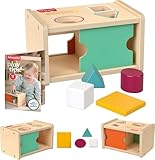
Overview: Fisher-Price reimagines object permanence as a shape-sorting adventure with this exclusive wooden box featuring four distinct shapes and sliding doors on all four sides. Unlike traditional ball-drop designs, this version challenges toddlers to match shapes to slots, then slide panels to retrieve them—demonstrating permanence through interactive peekaboo play. The 360-degree access keeps mobile toddlers engaged from any angle.
What Makes It Stand Out: The American Montessori Society Seal of Excellence lends immediate credibility that generic brands can’t match. The shape-sorting element adds a cognitive layer beyond simple object permanence, introducing geometry and problem-solving earlier. The included tip card from Fisher-Price Play Lab provides science-backed guidance for maximizing developmental benefits—a rare value-add that helps parents become better educators.
Value for Money: At $9.53, this is the budget champion without sacrificing quality. FSC-certified wood and non-toxic water-based paints ensure safety standards equal to pricier options. While simpler ball-drop boxes cost more, you’re getting shape-sorting versatility that extends the toy’s relevance into the toddler years. The brand reputation and AMS endorsement alone justify the price.
Strengths and Weaknesses: Strengths include superior brand trust, eco-conscious materials, multi-directional play, and the expert guidance card. The sliding doors are intuitive for older babies but may challenge younger ones. The main weakness: shapes are harder to manipulate than balls for 6-12 month-olds, making the “1+” age rating accurate but limiting for younger infants. The four-shape variety is adequate but less than some dedicated shape sorters.
Bottom Line: The best value for parents seeking trusted brand quality and extended play potential. Ideal for toddlers already mastering basic object permanence, though less suitable for younger infants than ball-drop alternatives.
3. Adena Montessori Object Permanence Box with Tray Three Balls Montessori Toys for 6-12 Months Baby 1 Year Old Infant Toddler Wooden Pink Door for Girl

Overview: Functionally identical to Adena’s standard model, this variant features a pink-accented door and differently colored balls—yellow wood, red plastic, and blue foam—marketed specifically toward girls. The core mechanism remains unchanged: babies drop balls through the hole and discover them in the retrieval tray, cementing the concept that objects persist even when unseen. The same 1.77-inch diameter ensures safety across all materials.
What Makes It Stand Out: Little beyond aesthetics distinguishes this from its sibling product. The pink door might appeal to parents seeking gender-specific nursery coordination, but the developmental benefits mirror the standard version exactly. The ball color variation (yellow, red, blue) offers slightly different visual stimulation than the original’s blue, green, and pink combination, though this is purely cosmetic.
Value for Money: Priced at $14.98—nineteen cents more than the standard version—you’re paying a premium for the pink door and different ball colors. The identical construction and materials mean the value proposition is equal, making the price difference arbitrary. If the specific color scheme appeals to you, the minimal upcharge won’t break the budget, but it’s not adding functional value.
Strengths and Weaknesses: Strengths match the standard Adena model: excellent material variety, sturdy wood construction, and true Montessori alignment. The gendered marketing is the primary weakness—there’s no developmental reason girls need pink doors, and such labeling feels dated. The foam ball may compress over time, and the plastic component lacks the premium feel of wood. Otherwise, it’s a solid, well-sized tool for infants.
Bottom Line: Choose this only if the pink door specifically fits your aesthetic preferences. Functionally, it’s indistinguishable from the standard version, making the gendered marketing unnecessary for most families.
4. Adena Montessori Wooden Toy for 6-12 Month Baby 3 Balls, Object Permanence Box with Tray Colorful Learning Education Toy for Toddler Kid 1-2 Year Old, Preschool Developmental Girl and Boy Gift

Overview: Adena’s premium offering ditches the mixed-material approach for three solid wooden balls in sophisticated Morandi hues—Hedge Green, Flax, and White. The same drop-and-retrieve mechanism teaches object permanence, but the muted, calming color palette creates a distinctly different sensory environment. Marketed as a gender-neutral gift, this version targets design-conscious parents who value aesthetics alongside developmental benefits.
What Makes It Stand Out: The Morandi color scheme is unique in the object permanence box market, offering a minimalist, Instagram-ready alternative to bright primary colors. All-wooden construction provides consistent weight and texture, creating a more uniform sensory experience that some Montessori purists prefer. The sophisticated aesthetic transforms a learning tool into nursery décor, appealing to parents who curate their child’s environment.
Value for Money: At $15.99, this commands a $1.20 premium over Adena’s standard model. You’re paying for aesthetic refinement and all-wood construction. For design-focused families, the visual harmony justifies the cost. However, functionally identical alternatives exist for less. The value depends entirely on whether the muted palette aligns with your parenting philosophy—some babies respond better to high-contrast colors.
Strengths and Weaknesses: Strengths include beautiful, unique aesthetics; consistent wooden texture; smooth finishes; and sturdy construction. The calming colors may promote longer focus sessions for sensitive children. Weaknesses: the subdued palette might not stimulate visually as effectively as bright colors for all infants. Lack of material variety reduces sensory learning opportunities compared to mixed-material sets. The premium price buys style, not additional function.
Bottom Line: A style-forward choice for parents prioritizing nursery aesthetics. While developmentally solid, the premium price primarily buys visual refinement rather than enhanced learning.
5. Busy edition Montessori Toys for Babies 6-12 Months, Wooden Object Permanence Box, 9 Month Old Baby Toys, Preschool Developmental Toy for Infant, Toddler Ball Drop Toy Girl Boy Gift

Overview: This generic-branded object permanence box mirrors Adena’s design with three wooden balls and a retrieval tray, targeting the same 6-12 month developmental window. The marketing emphasizes safety and broad age appeal (6-36 months), positioning it as a versatile gift option. The 1.77-inch wooden balls follow standard safety protocols, while the design promises durability for extended use across multiple developmental stages.
What Makes It Stand Out: The extended age range claim (6-36 months) suggests longevity beyond typical object permanence boxes, though the mechanism itself doesn’t evolve. The safety-first messaging—premium materials, smooth edges, age-appropriate sizing—addresses parental anxiety directly. As a gift-focused product, it arrives ready for presentation, making it convenient for grandparents or friends seeking educational presents.
Value for Money: At $15.99, it matches Adena’s premium Morandi version but lacks that product’s unique aesthetic. You’re paying standard pricing for what appears to be a white-label equivalent of Adena’s basic model. Without brand recognition or distinctive features, the value hinges on build quality matching the claims. Comparable unbranded versions often sell for $12-14, making this slightly overpriced without proven differentiation.
Strengths and Weaknesses: Strengths include solid safety emphasis, standard Montessori design, and gift-ready positioning. The wooden construction appears durable, and the simple mechanism works reliably. Weaknesses: no brand heritage means uncertain quality control; marketing claims about extended age range are overstated since the toy’s core function remains static; lacks the material variety or design innovation of competitors at this price point. The generic nature makes long-term support questionable.
Bottom Line: A competent but unremarkable option that serves its purpose safely. Choose it for gifting convenience, but established brands offer better value or unique features at this price.
6. Montessori Mama Object Permanence Box - Montessori Toys for Babies 6-12 Months, Developmental Ball Drop Wooden Toy, Infant Toddler 1 Year Old Learning Essential

Overview: The Montessori Mama Object Permanence Box is a thoughtfully crafted wooden toy designed specifically for babies 6-12 months to master the fundamental concept of object permanence. This ball drop toy features an improved design with larger, child-safe balls and a slower reveal mechanism that gives infants adequate time to process the disappearance and reappearance of objects, strengthening cognitive connections.
What Makes It Stand Out: The deliberate slower ball reveal mechanism distinguishes this from generic alternatives, emphasizing the permanence concept rather than just cause-and-effect. The significantly larger balls address parental safety concerns about choking hazards, while the meticulously sanded, rounded edges and solid wood construction demonstrate exceptional attention to child safety and durability.
Value for Money: At $14.99, this toy occupies a sensible mid-range price point. The investment is justified through authentic Montessori-aligned design, enhanced safety features absent in budget options, and retail-ready packaging that eliminates gift-wrapping hassle. Comparable solid wood Montessori materials typically cost more, making this a reasonable compromise between quality and affordability.
Strengths and Weaknesses: Strengths include superior safety standards with non-toxic materials, authentic Montessori methodology, durable construction, and attractive gift presentation. Weaknesses include a relatively narrow 6-12 month age window and the inevitable risk of losing balls, which would compromise the toy’s functionality. Some rapid learners may also master the concept quickly, limiting long-term engagement.
Bottom Line: This is an excellent choice for parents committed to authentic Montessori principles. The safety enhancements and thoughtful design make it a worthwhile investment for your baby’s critical cognitive development phase.
7. Adena Montessori Coin Box,Object Permanence Box for 1 Year Old Baby Coins,Wooden Ball Drop Developmental Toys for 6-12 Month Infant Toddler,Learning Kids Gifts(Yellow-Green Door)

Overview: The Adena Montessori Coin Box reimagines the classic object permanence toy with versatile functionality for babies 6-12 months. This multi-purpose wooden box combines coin dropping, shape sorting, and storage capabilities, featuring six colored discs and an integrated drawer that extends learning beyond simple disappearance and reappearance.
What Makes It Stand Out: Its three-in-one design sets it apart from single-purpose ball drop boxes. The colored discs introduce early shape and color recognition, while the functional drawer teaches basic organization skills. The vibrant yellow-green door adds visual interest and develops fine motor control through purposeful opening and closing motions.
Value for Money: At $14.98, this toy delivers exceptional value by consolidating multiple Montessori materials into one unit. While standard ball drop boxes offer limited engagement, this product’s sorting and storage features provide extended play possibilities, making it more cost-effective than purchasing separate toys for each developmental skill.
Strengths and Weaknesses: Strengths include versatile functionality, eco-friendly basswood construction with non-toxic water-based paint, promotion of diverse developmental skills, and engaging color variety. Weaknesses include potentially challenging disc manipulation for younger infants closer to 6 months, requiring closer supervision. The door hinge may also prove vulnerable to enthusiastic toddler handling over time.
Bottom Line: This is a smart, versatile choice for parents seeking maximum educational value. The multi-functional design sustains baby engagement longer while building diverse skills, making it a worthwhile investment for comprehensive early development.
8. Elite Montessori Object Permanence Box with Tray Three Color Balls

Overview: The Elite Montessori Object Permanence Box offers a streamlined, budget-conscious introduction to this essential developmental toy. Featuring a simple wooden box with integrated tray and three colored balls, it focuses on core motor skills, hand-eye coordination, and problem-solving abilities without unnecessary complexity for young learners.
What Makes It Stand Out: Its affordability and minimalist design are primary differentiators. At under $10, it makes Montessori-inspired learning accessible to budget-restricted families. The easy-clean surface and emphasis on sensory integration particularly benefit parents of special needs children who require practical, hygienic, and straightforward toys.
Value for Money: At $9.99, this represents the most economical option in the category. While lacking advanced features like slower reveal mechanisms or multi-functionality, it delivers fundamental object permanence learning at an unbeatable price point. For families uncertain about their child’s interest level, this presents minimal financial risk while providing genuine developmental benefits.
Strengths and Weaknesses: Strengths include unbeatable affordability, safe non-toxic BPA-free materials, simple maintenance, and suitability for special needs children requiring sensory integration. Weaknesses include a basic design that may not sustain long-term interest, absence of color variation in the box itself, and lack of gift-worthy packaging. The balls can roll away easily without diligent supervision.
Bottom Line: This no-frills option is perfect for families prioritizing function over form. It delivers essential developmental benefits without superfluous features, making it ideal for first-time Montessori toy buyers or those operating within tight budgets.
9. Busy Edition Montessori Toys for Toddlers Object Permanence Box Wooden Shape Sorter Drop Toy Play for 1 2 3 Year Old Toddlers

Overview: The Busy Edition Montessori Object Permanence Box addresses a common parental frustration with wooden toys through its innovative quiet flannel design. Suitable for an impressive 6-month to 3-year age range, this shape sorter drop toy minimizes startling impact sounds while promoting color recognition, hand-eye coordination, and spatial cognition through button-activated dropping mechanics.
What Makes It Stand Out: The noise-reducing flannel base is a genuinely unique feature that creates a calmer play environment, making it exceptionally suitable for apartments, shared bedrooms, or households with napping siblings. This acoustic consideration demonstrates real-world understanding of modern family living challenges.
Value for Money: At $9.99, this toy offers remarkable value, particularly given its extended age range. Most object permanence boxes target only 6-12 months, but this grows with your child through toddlerhood. The dual functionality as both shape sorter and drop toy further enhances its cost-effectiveness over time.
Strengths and Weaknesses: Strengths include innovative quiet design, wide 6M-3Y age range, toddler-safe sizing that prevents choking hazards, moisture-resistant wood, and emphasis on family bonding. Weaknesses include potential cleaning difficulties with the fabric base, less traditional Montessori aesthetic that may purists, and possible flannel wear over extended use.
Bottom Line: This is the perfect solution for noise-sensitive environments. The quiet operation and extended usability make it an intelligent, practical choice for contemporary families seeking peaceful yet educationally rich play experiences.
10. Smartwo Montessori Object Permanence Box for Baby 6 Months+,Wooden Ball Drop Toy, Early Learning Activity, Educational Cause and Effect Game, Developmental Gift for Boys Girls

Overview: The Smartwo Montessori Object Permanence Box positions itself as a premium developmental toy emphasizing cause-and-effect learning for babies 6 months and older. This wooden ball drop toy features a track system where balls disappear into holes and visibly roll out, building cognitive skills, fine motor development, and logical thinking through engaging, repeatable action.
What Makes It Stand Out: The focus on cause-and-effect relationships beyond basic object permanence distinguishes this product. The track system adds an extra visual element that sustains engagement, while the three classic colored balls (red, yellow, green) simultaneously teach color recognition alongside cognitive concepts, creating a multi-layered learning experience.
Value for Money: At $19.99, this is the premium category option. The price reflects high-quality wood construction, non-toxic water-based paint, and eco-friendly packaging. While significantly more expensive than basic models, the enhanced design, durability, and gift-ready presentation justify the cost for quality-conscious buyers and gift-givers.
Strengths and Weaknesses: Strengths include premium construction with no sharp edges, clear cause-and-effect learning pathway, attractive classic color scheme, and excellent gift packaging. Weaknesses include the highest price point among competitors, potentially limiting accessibility. The track mechanism may be overly complex for younger infants still grasping basic permanence concepts.
Bottom Line: This premium choice is ideal for gift-givers or parents seeking top-tier quality and durability. The enhanced design and superior materials make it worth the investment if budget permits and you value aesthetic appeal alongside developmental function.
Understanding Object Permanence at Nine Months
At nine months, your baby stands at a fascinating cognitive threshold. They’ve mastered basic object permanence—knowing you exist when you leave the room—but now they’re diving deeper into the mechanics of disappearance and reappearance. This is the age of intentional action, where every drop, throw, and cover is a scientific experiment. The right permanence box transforms these everyday experiments into focused, repeatable learning that builds neural pathways for advanced reasoning.
The Piaget Connection: Why This Stage Matters
Jean Piaget’s stages of cognitive development place the emergence of object permanence between 4 and 7 months, with mastery continuing through the sensorimotor period. By nine months, infants enter what Montessori called the “crisis of independence”—they’re driven to do things themselves, to test boundaries, and to understand consequences. A permanence box satisfies this drive perfectly. When your baby releases a ball into the hole and watches it reappear in the tray, they’re not just playing; they’re confirming a mental schema, building the neurological foundation for symbolic thought, language, and even mathematics. The repetitive action isn’t boredom—it’s the deep practice essential for myelination of motor and cognitive pathways.
Montessori vs. Traditional Approaches to Cognitive Development
Traditional toys often focus on entertainment, using lights and sounds to capture attention momentarily. Montessori materials, by contrast, isolate a single concept—here, the relationship between action and consequence. A well-designed permanence box has no unnecessary decoration because each element serves the child’s learning. The hole is precisely sized, the ball fits the hand perfectly, and the tray is positioned to reward the child’s effort without frustration. This purposeful design respects the nine-month-old’s emerging will and intelligence, offering just enough challenge to stretch their abilities without causing overwhelm.
What Makes a Toy “Montessori-Aligned”?
Before investing in any permanence box, understanding the philosophy behind the material ensures you select an authentic learning tool rather than a “Montessori-inspired” gimmick. True Montessori materials share specific characteristics that support optimal development.
Core Principles: Simplicity, Purpose, and Child-Led Learning
A genuine Montessori-aligned permanence box features minimal aesthetics—natural wood tones or simple, non-distracting colors. It operates through the child’s physical manipulation, not batteries or buttons. The design is self-correcting: if the ball is too large for the hole, it won’t fit; if the drawer isn’t pulled fully, the ball remains hidden. This built-in feedback loop allows your nine-month-old to learn through independent experimentation, building self-confidence and intrinsic motivation. The material also demonstrates “control of error,” meaning the child can assess their own success without adult intervention—a cornerstone of Montessori pedagogy that fosters autonomy during this fiercely independent stage.
Essential Features of High-Quality Permanence Boxes
When evaluating options, certain features separate exceptional materials from mediocre ones. At nine months, your baby’s developing dexterity and emerging problem-solving abilities demand precise specifications.
Material Matters: Wood, Paint, and Sustainability
Solid hardwood—maple, beech, or birch—offers durability and satisfying weight that plastic cannot replicate. The wood’s natural grain provides subtle sensory input, while its heft stabilizes the box during enthusiastic use. Look for water-based, food-safe finishes or natural oils like beeswax. At nine months, everything enters the mouth, so finishes must be non-toxic and saliva-resistant. Avoid boxes with flaking paint, sharp edges, or chemical odors. Sustainable sourcing matters too; FSC-certified wood ensures your purchase supports responsible forestry, teaching environmental stewardship from your child’s earliest experiences.
Size and Proportion: Getting the Scale Right for Your Baby
The box should sit firmly on the floor or a low shelf, with the top hole positioned at your baby’s chest level when seated. This encourages proper posture and reaches across the midline, integrating both brain hemispheres. The ball should measure 1.75 to 2 inches in diameter—large enough to prevent choking yet small enough for a nine-month-old’s palmar grasp to manage. The tray or drawer should extend smoothly without jerking, requiring just enough force to build motor control but not so much that it frustrates. Weight matters: a box that’s too light will topple; one that’s too heavy becomes immovable.
The Drawer Factor: To Include or Not to Include?
Some permanence boxes feature a simple tray that catches the ball; others include a sliding drawer. For nine-month-olds, the drawer adds a layer of complexity that can either inspire or discourage. A drawer requires understanding of pull-and-release mechanics, sequencing, and memory. If your baby has already mastered basic ball-drop boxes, a drawer version extends the challenge appropriately. However, for a child just beginning this work, the immediate gratification of a tray better matches their developmental stage. Consider starting with a tray model and introducing a drawer version around 10-11 months as skills consolidate.
Design Variations and Their Developmental Purposes
Not all permanence boxes serve the same function. Understanding the variations helps you select one that matches your nine-month-old’s current abilities while offering room for growth.
The Classic Ball Drop: Foundation Skills
The most fundamental design features a single, centered hole atop a box with an open tray. This isolates the core concept: object disappears, object reappears. For nine-month-olds, this simplicity is powerful. They learn to release the ball intentionally, track its movement visually, and connect their action to the outcome. The repetitive nature builds concentration spans from seconds to minutes—a critical prerequisite for later academic work. Look for versions with a slightly angled internal ramp that ensures the ball rolls smoothly into view, eliminating unpredictable outcomes that could confuse a developing mind.
Multiple Opening Challenges: Advancing Problem-Solving
Some boxes feature two or three holes of varying sizes, each routing to a different compartment. While this might seem advanced, nine-month-olds ready for this challenge demonstrate emerging discrimination skills. They learn through trial and error which ball fits which hole, building early classification abilities. The design must include clear visual cues—perhaps colored rings around holes matching the balls—to prevent frustration. This variation extends the material’s lifespan, remaining engaging for months as your baby’s reasoning evolves.
Drawer-Based Designs: Cause and Effect Mastery
Boxes with drawers introduce the concept of hidden space. The ball disappears completely, and the child must remember to pull the drawer to retrieve it. This tests working memory and sequential thinking—skills that explode in development between 9 and 12 months. The best designs include a subtle visual cue, like a small window or a colored back panel, giving the child a hint without revealing everything. This balance between challenge and support is the hallmark of excellent Montessori design.
Safety Considerations That Can’t Be Overlooked
At nine months, your baby’s mobility and oral exploration create specific safety demands. A beautiful but unsafe box is worse than no box at all.
Choking Hazards and Ball Sizing Standards
The Consumer Product Safety Commission (CPSC) defines choking hazard size as anything that fits through a 1.75-inch diameter cylinder. Quality Montessori manufacturers exceed this standard, using balls at least 2 inches wide for this age group. However, check the hole size too—if the ball can become lodged rather than passing through smoothly, it creates a suction hazard. The internal pathway should be fully enclosed, preventing curious fingers from getting trapped. Test the mechanism yourself: can you wiggle a finger into a dangerous space? If so, so can your baby.
Non-Toxic Finishes: What “Food-Safe” Really Means
“Non-toxic” is an unregulated term. Look for specific certifications: EN71-3 (European toy safety), ASTM F963 (U.S. toy safety), or finishes explicitly labeled “saliva-resistant” and “food-grade.” Natural oils like linseed or beeswax are excellent choices but require occasional reapplication. Avoid boxes with strong chemical smells or finishes that feel tacky—these can off-gas volatile organic compounds (VOCs) that irritate developing respiratory systems. Remember, your baby will mouth not just the ball but the box edges, corners, and drawer pulls.
Introducing the Material: The Montessori Presentation
How you present the permanence box determines its effectiveness. A rushed or overly directive introduction can undermine the child’s natural curiosity and independence.
Setting Up the Perfect Workspace
Choose a quiet corner with minimal distractions. Place a soft mat on the floor and position the box at your baby’s reach. Sit behind or beside your child, not across from them—this positioning supports their focus on the material, not your face. Ensure the ball is the only object within reach. The environment should be prepared so the child can access and return the material independently once they’ve mastered it. This builds executive function skills like planning and sequencing that begin emerging around this age.
The Three-Period Lesson in Practice
Montessori educators use a three-period lesson for language, but its principles apply to introducing materials too. First, demonstrate silently: slowly place the ball in the hole, pause, then point to where it will appear. Second, invite participation by offering the ball and gesturing toward the hole. Third, withdraw completely, allowing your baby to repeat the activity without interference. Resist the urge to narrate every action—your silence creates space for your child’s concentration. If they lose interest after two minutes, that’s normal. Nine-month-olds have emerging but fragile attention spans. Simply return the material to the shelf for another day.
Common Pitfalls Parents Make
Even well-intentioned parents can inadvertently diminish the learning potential of this powerful material. Awareness of these common errors helps you support rather than hinder development.
Over-Prompting and the Patience Principle
It’s tempting to guide your baby’s hand to the hole when they struggle, but this robs them of the critical “aha!” moment. Struggle at this age isn’t failure—it’s the work of learning. If your baby seems frustrated, simplify the environment rather than the task. Remove competing toys, ensure they’re rested and fed, and model the activity once more. Then step back. True mastery comes from repetition, not instruction. Watch for the moment when your baby tests variations—dropping the ball from different heights, or trying to place it sideways. This experimentation shows they’ve internalized the concept and are now exploring parameters, a sign of advanced cognitive processing.
Knowing When to Rotate or Retire the Material
A nine-month-old might use the same permanence box daily for three weeks, then suddenly ignore it. This isn’t boredom—it’s mastery. Once your baby can complete the action with fluid, automatic movements and begins using the box for creative purposes (like storing other toys inside), it’s time to introduce a variation with higher complexity. Keep the original accessible, but add a drawer version or a multi-hole box to reignite challenge. Rotating materials every 2-3 weeks maintains interest, but only retire a material when your child has achieved true mastery, not just temporary disinterest.
Extending the Learning Beyond the Box
Object permanence work doesn’t exist in isolation. Integrating it with other activities creates a rich web of connections that accelerates overall development.
Pairing with Other Montessori Materials
The permanence box pairs beautifully with the object permanence ball, a simple wooden sphere that rolls predictably. After mastering the box, introduce a ball track or a shallow ramp to explore gravity and momentum. The Imbucare box (a posting activity with a peg rather than a ball) builds on the same skills while refining the pincer grasp. These materials create a progression: from whole-hand grasp to refined finger control, from simple disappearance to complex sequence memory. This careful sequencing is why Montessori materials are often described as a “spiral curriculum”—each material revisits concepts at increasing levels of sophistication.
Creating DIY Object Permanence Experiences at Home
You don’t need to purchase every variation. A clean, empty tissue box and a large, baby-safe ball can serve as an introductory permanence box. Cut a hole slightly smaller than the ball’s diameter so it requires a gentle push to enter. A shoebox with a sliding lid teaches drawer mechanics. For advanced nine-month-olds, create a “mystery box” by placing a ball inside a small bag within a box—your baby must remove the bag to find the treasure. These DIY versions teach flexibility of thought and demonstrate that learning isn’t confined to purchased materials. The key is using sturdy, safe containers and balls that meet size requirements.
Investment and Value: What to Expect at Different Price Points
Quality Montessori materials represent an investment, but understanding pricing helps you allocate your budget wisely.
Entry-level boxes ($25-$40) often use composite wood or soft pine with simple finishes. While functional, they may not withstand the enthusiastic use of a determined nine-month-old. Mid-range options ($45-$70) typically feature solid hardwood, superior craftsmanship, and certified non-toxic finishes—the sweet spot for most families. Premium boxes ($75+) offer heirloom quality, often handcrafted with mortise-and-tenon joints that never loosen. They may include interchangeable tops or conversion kits that extend use into toddlerhood. Consider cost-per-use: a $60 box used daily for six months costs about 33 cents per day—far less than most developmental toys that capture attention for mere weeks. The resale market for authentic Montessori materials is robust, often recouping 60-70% of the original cost.
Frequently Asked Questions
How do I know if my nine-month-old is ready for a permanence box?
Look for intentional grasp and release, interest in container play (putting objects in cups), and visible frustration when toys roll out of reach. If your baby tracks dropped items and searches for them, they’re cognitively ready. Physical readiness includes the ability to sit unsupported and coordinate both hands at midline.
Can a permanence box be too simple or too challenging?
Absolutely. If your baby loses interest within seconds or never attempts the activity, it may be too advanced. Conversely, if they use it automatically without concentration, it’s time for a more complex version. The “sweet spot” involves slight struggle, repeated attempts, and visible satisfaction upon success.
Are plastic permanence boxes ever acceptable in Montessori?
While wood is preferred for its sensory qualities and environmental sustainability, a well-designed plastic box that meets safety standards is better than no box at all. Choose BPA-free, phthalate-free, heavy plastic with smooth edges. Avoid lightweight models that slide across the floor during use.
How many balls should come with the box?
Two balls are ideal—one for use, one as a backup when the first inevitably rolls under the couch. More than three creates clutter and distracts from the core activity. Ensure the balls are identical; this isolates the variable of the action rather than the object.
My baby just mouths the ball and ignores the box. What should I do?
This is normal exploration. Offer a silicone teether before presenting the box to satisfy oral needs. Model the activity briefly, then place the box away for a week. At nine months, developmental windows open rapidly. Try again when your baby shows more interest in container play.
Can siblings share a permanence box, or should each child have their own?
Sharing teaches patience and turn-taking, but ensure the box is accessible on a low shelf for independent use. If siblings are close in age, having two boxes prevents competition and allows each child to work at their own pace. Montessori environments often duplicate popular materials for this reason.
How do I clean and maintain a wooden permanence box?
Wipe with a damp cloth and mild soap. Avoid submerging in water, which warps wood. For natural oil finishes, reapply a small amount of beeswax polish every 2-3 months. Sand any dents or splinters immediately with fine-grit sandpaper and reseal the area with food-safe oil.
Is it normal for my baby to cry when the ball disappears?
Yes. This emotional response shows the concept is still developing. Stay calm and present. Demonstrate the reappearance a few times, then offer comfort. Over weeks, you’ll notice the cry of distress becomes a look of anticipation—the moment when true understanding dawns.
Can permanence boxes help with separation anxiety?
Indirectly, yes. Mastering object permanence helps babies understand that disappeared items (and people) continue to exist. While the box won’t eliminate separation anxiety, it strengthens the cognitive framework that allows your baby to trust in your return, gradually reducing anxiety’s intensity.
When should I move on from the permanence box?
Transition when your baby demonstrates mastery: smooth, repetitive action without concentration, creative misuse (using the box as storage), or clear boredom. Typically this occurs between 11-13 months. Introduce the next challenge—perhaps a box with a key or latch—while keeping the original accessible for occasional use.