Navigating the world of car seats is challenging enough, but when you’re trying to fit three convertible car seats across the back row of a compact SUV, you’re entering a whole new dimension of parental problem-solving. It’s like playing automotive Tetris with your most precious cargo on the line. Whether you’re managing triplets, a toddler plus twins, or simply need to accommodate carpool duties, finding the right combination of safety, space efficiency, and comfort requires more than just luck—it demands strategy.
The good news? The car seat industry has evolved dramatically to meet the needs of modern families driving smaller vehicles. Manufacturers now engineer purpose-built slim-profile seats that don’t compromise on safety features or your child’s comfort. This guide walks you through everything you need to know about selecting convertible car seats that will actually fit three-across in your compact SUV, from critical measurements to installation hacks that the pros use.
Top 10 Convertible Car Seats for Compact SUVs
Detailed Product Reviews
1. Safety 1st Ellaris 3-in-1 Convertible Car Seat, Slim Fit Design, Rear & Forward-Facing, 5-Position Headrest, 3-Across Fit, Travel-Friendly with Machine-Washable Seat Pad, Smokey Haze

Overview: The Safety 1st Ellaris delivers essential convertible car seat functionality at an entry-level price point. Designed for families prioritizing space efficiency and travel convenience, this seat accommodates children from 5 to 65 pounds through rear-facing and forward-facing modes. Its slim profile addresses the common challenge of fitting multiple car seats across standard back seats, while travel-ready features make it suitable for air travel.
What Makes It Stand Out: The Ellaris distinguishes itself with true travel-friendly credentials beyond typical car seat claims. Its machine-washable AND dryer-safe seat pad eliminates lengthy air-drying times—crucial for families on the move. The hook-style LATCH system simplifies installation when transferring between vehicles or navigating airport rental cars. At just 17 inches wide, it achieves the coveted 3-across fit in most vehicles without sacrificing the convenience of two integrated, dishwasher-safe cup holders.
Value for Money: At $99.99, this represents exceptional value for a safety-certified convertible seat. While it lacks the booster mode found in higher-priced competitors, it covers the most critical years (infant through preschool) at nearly half the cost of premium alternatives. The inclusion of premium features like dryer-safe fabric and dual cup holders at this price point demonstrates remarkable cost-efficiency for budget-conscious families or those needing a secondary travel seat.
Strengths and Weaknesses: Strengths include unbeatable price, genuine travel portability, slim 3-across compatibility, and parent-friendly cleaning features. The hook-style LATCH offers easier installation than many budget competitors. Weaknesses center on its limited lifespan—capping at 65 pounds without booster functionality means purchasing a separate booster later. The 5-position headrest provides fewer adjustment options than premium models, and the rear-facing limit of 40 pounds may require earlier forward-facing transitions for larger toddlers.
Bottom Line: The Ellaris excels as a budget-friendly, space-saving solution for families needing reliable infant-to-preschool seating. It’s particularly compelling for travel or as part of a multi-car seat arrangement. However, families seeking a single 10-year solution should consider all-in-one alternatives.
2. Safety 1st Grow and Go All-in-One Slim Convertible Car Seat, Rear Facing, 5-40 lbs, Forward Facing (30–65 lbs), High Back Booster Seat 40-100 pounds, Alaskan Blue

Overview: The Grow and Go positions itself as a comprehensive 10-year transportation solution, evolving from rear-facing infant carrier to high-back booster for children up to 100 pounds. This all-in-one approach eliminates the need for multiple seat purchases throughout childhood. The Alaskan Blue colorway offers a neutral yet attractive aesthetic that resists showing wear, while the slim profile maintains family-friendly vehicle space management.
What Makes It Stand Out: The QuickFit harness system represents a significant parent-friendly innovation, enabling simultaneous headrest and harness adjustments without rethreading—a feature typically reserved for premium price points. The inclusion of grow-with-me infant pillows provides crucial newborn positioning that many all-in-one seats require separate purchases to achieve. Practical cleaning considerations shine through with snap-off seat pad removal and dishwasher-safe cup holders, addressing everyday messes that inevitably occur over a decade of use.
Value for Money: Priced at $159.99, this seat delivers legitimate 10-year coverage at approximately $16 per year of use—substantially less than buying three separate seats. While more expensive than basic convertible models, the inclusion of booster functionality justifies the $60 premium over the Ellaris. It undercuts comparable Graco all-in-one models by $80, making it an attractive middle-ground option for families prioritizing both budget and longevity.
Strengths and Weaknesses: Major strengths include complete stage coverage, tool-free adjustments, superior cleaning convenience, and thoughtful newborn accessories. The 3-position recline offers adequate positioning options, though fewer than some competitors. The manufacturer’s candid note about fit variability demonstrates transparency. Potential weaknesses include the slim design potentially compromising some padding depth compared to full-size models, and the 49-inch forward-facing height limit may not accommodate all children until booster transition.
Bottom Line: An excellent value proposition for families committed to a single-purchase strategy. The Grow and Go successfully balances affordability, comprehensive functionality, and user-friendly features, making it a smart long-term investment for most families.
3. Safety 1st Crosstown Slim All-in-One Convertible Car Seat, Deep Sea

Overview: The Crosstown Slim refines the all-in-one concept with particular emphasis on adjustability and installation simplicity. Supporting children from birth to 10 years (5-100 pounds), this seat combines extended-use capability with a space-conscious 17-inch width. The Deep Sea color provides a sophisticated, stain-disguising option that maintains its appearance through years of use. Its design philosophy centers on growth accommodation without parental frustration.
What Makes It Stand Out: The one-hand adjustable harness with 8-position headrest provides exceptional customization typically found in premium segments, eliminating rethreading hassles during growth spurts. The innovative base foot design enables quick rear-to-forward-facing transitions without complete reinstallation—a unique feature saving considerable time and effort. Easy-access belt paths with clear routing indicators address the most common installation error point, promoting safer everyday use. This combination of adjustability and installation clarity sets it apart in the mid-range category.
Value for Money: At $129.99, the Crosstown Slim arguably offers the best price-to-feature ratio in the all-in-one market. It delivers full 10-year coverage plus premium adjustability for $30 less than the Grow and Go, and $110 less than the Graco Slimfit. The 17-inch width matches or beats most competitors while maintaining comprehensive safety certification. For families prioritizing both space efficiency and extended use, this represents compelling financial logic.
Strengths and Weaknesses: Key strengths include the no-rethread 8-position headrest, slimmest-in-class profile, intuitive installation features, and complete stage coverage. The machine-washable pad and dishwasher-safe cup holders maintain cleaning convenience. Potential limitations include fewer recline positions than some alternatives, and Safety 1st brand perception may not carry the same premium weight as Graco for resale value. The seat may feel less plush than higher-priced competitors, though this varies by user preference.
Bottom Line: The Crosstown Slim emerges as the pragmatic choice for space-constrained families refusing to compromise on longevity. Its thoughtful engineering and aggressive pricing make it a standout value proposition that outperforms its price class.
4. Graco Slimfit 3-in-1 Convertible Car Seat, Ultra-Space-Saving Design, Jarret, Suitable for Rear and Forward-Facing, Highback Booster Seat with 10-Position Headrest

Overview: The Graco Slimfit represents the premium tier of space-saving car seats, engineered for families unwilling to compromise safety for size constraints. This 3-in-1 seat serves children from 5 to 100 pounds through rear-facing, forward-facing, and high-back booster modes. The Jarret colorway offers a modern, gender-neutral aesthetic. Graco’s reputation for rigorous safety testing provides confidence for safety-conscious parents.
What Makes It Stand Out: The rotating cup holder mechanism that reduces width by 10% demonstrates genuine engineering innovation—saving space without sacrificing the convenience of dual holders. Graco’s ProtectPlus engineering protocol subjects seats to frontal, side, rear, and rollover crash scenarios beyond federal requirements, establishing a higher safety benchmark. The Simply Safe Adjust system synchronizes headrest and harness movement across 10 positions, providing precise fit optimization. These features reflect premium development investment distinguishing it from budget competitors.
Value for Money: At $239.99, this commands a significant premium over Safety 1st alternatives. The value justification rests entirely on advanced safety engineering and space innovation. For families with larger vehicles, the price premium may be harder to rationalize. However, for those requiring maximum space efficiency alongside top-tier safety certification, the investment delivers tangible benefits. It’s $80 more than the Safety 1st Grow and Go, essentially pricing the enhanced safety testing and rotating cup feature.
Strengths and Weaknesses: Unmatched strengths include ProtectPlus safety engineering, innovative space-saving cup holders, premium 10-position adjustability, and Graco’s established reliability reputation. The seat feels substantial and well-padded. Weaknesses include the highest price in this comparison, increased weight reducing portability, and rotating mechanisms introducing potential long-term durability concerns. The 26.5-pound forward-facing minimum is higher than some competitors, potentially delaying transitions.
Bottom Line: The Slimfit justifies its premium price for families prioritizing advanced safety certification and innovative space maximization. It’s the definitive choice for safety-conscious buyers with compact vehicles, though budget-focused families may find comparable functionality for less.
5. Graco Contender Slim Convertible Car Seat, West Point, Lightweight Travel Car Seat with Compact, Space-Saving Design, Rear-Facing 5–40 lbs, Forward-Facing 26.5–65 lbs, Easy to Transfer, FAA Approved
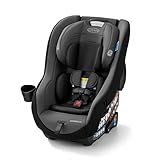
Overview: The Contender Slim targets a specific niche: families requiring premium safety credentials in a highly portable package. This convertible seat serves children from 5 to 65 pounds across rear and forward-facing modes, deliberately omitting booster functionality to prioritize lightweight design. The West Point color provides a classic, versatile appearance. FAA approval and compact dimensions make it ideal for frequent flyers and multi-car families.
What Makes It Stand Out: The Contender Slim’s standout attribute is its portability-weight-safety combination—weighing substantially less than full-featured convertibles while retaining Graco ProtectPlus engineering. This rare pairing enables genuine ease of transfer between vehicles and hassle-free airport navigation. The slim profile saves backseat space without requiring complex mechanisms. FAA certification is explicit and practical, not merely a technical compliance statement. This focused design philosophy serves traveling families better than jack-of-all-trades seats.
Value for Money: Priced at $199.99, it occupies a middle-premium tier. The value proposition hinges on portability needs—if you don’t regularly transfer seats, the $40 savings over the Slimfit may not justify the reduced functionality. However, for families splitting time between vehicles or flying multiple times yearly, the lightweight design saves enough hassle to warrant the cost. It’s $70 more than the Safety 1st Ellaris while adding Graco’s enhanced safety testing but lacking booster mode.
Strengths and Weaknesses: Primary strengths include exceptional portability, premium safety testing, FAA certification, and space-efficient design. The lightweight build doesn’t feel flimsy, maintaining Graco quality standards. Significant weakness is the absence of booster mode, limiting lifespan to approximately age 6 for average children. The 10-pound lower forward-facing weight minimum (vs. 30 lbs in some competitors) provides flexibility. Fewer headrest positions than the Slimfit reduce fine-tuning capability.
Bottom Line: The Contender Slim is the specialist choice for mobility-focused families who refuse safety compromises. It excels as a secondary travel seat or for urban families frequently using rideshares, but shouldn’t be your only seat if seeking decade-long coverage.
6. Baby Trend Trooper™ Slim 3-in-1 Convertible Car Seat, Dash Black

Overview: The Baby Trend Trooper Slim 3-in-1 delivers convertible functionality at an accessible price point, accommodating children from 4 to 65 pounds across three distinct modes. Its compact 17.75-inch width makes it ideal for families needing to maximize backseat space.
What Makes It Stand Out: The standout feature is the innovative rear-facing recline flip foot with a built-in bubble level indicator, eliminating guesswork during installation. The lightweight shell design enables LATCH installation up to 55 pounds—higher than many competitors—while super deep side wings provide enhanced side impact protection that belies its budget-friendly positioning.
Value for Money: At $119.99, this seat undercuts most convertible options by $50-100. While it lacks a booster mode, the three-stage convertible design covers the most critical years. The slim profile effectively eliminates the need to purchase multiple narrow seats for three-across configurations, offering substantial savings for growing families.
Strengths and Weaknesses: Strengths include exceptional space efficiency, user-friendly installation aids, impressive 55-pound LATCH limit, and outstanding affordability. Weaknesses are the absence of a booster mode requiring eventual replacement, lower rear-facing weight limit (40 lbs) compared to premium models, and less robust brand recognition for safety testing than Graco or Britax.
Bottom Line: The Trooper excels for budget-conscious families prioritizing space optimization and straightforward installation. It’s a smart short-to-midterm investment, though parents seeking a single seat solution through age 8 should consider all-in-one alternatives.
7. Graco Extend2Fit Convertible Baby Car Seat, Rear and Forward Facing, Adjustable Extension Panel for Extra Legroom, Gotham

Overview: The Graco Extend2Fit focuses on extended rear-facing safety, supporting children from 4 to 50 pounds rear-facing—far exceeding typical limits. Its convertible design transitions to forward-facing up to 65 pounds, prioritizing the American Academy of Pediatrics’ rear-facing recommendations.
What Makes It Stand Out: The patented 4-position extension panel provides five additional inches of legroom, allowing taller toddlers to remain rear-facing comfortably and safely. Combined with Graco’s ProtectPlus engineering, which rigorously tests for frontal, side, rear, and rollover crashes, this seat represents a safety-first approach. The Simply Safe Adjust system enables simultaneous headrest and harness adjustment in one motion.
Value for Money: At $249.99, this mid-premium seat justifies its price through unique extended rear-facing capabilities that could eliminate the need to purchase a second convertible seat. For safety-conscious parents, the investment translates to potentially two additional years of optimal crash protection.
Strengths and Weaknesses: Strengths include industry-leading rear-facing capacity, innovative legroom extension, superior safety testing protocols, and hassle-free harness adjustment. The primary weakness is the absence of a booster mode, requiring eventual replacement. The seat also occupies significant front-to-back space when extended, potentially challenging smaller vehicles.
Bottom Line: Perfect for parents committed to maximizing rear-facing duration without compromising comfort. The Extend2Fit is a specialized tool for extended safety, best suited for families prioritizing this specific protection phase over all-in-one longevity.
8. Safety 1st Crosstown Slim All-in-One Convertible Car Seat, City Storm
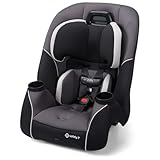
Overview: The Safety 1st Crosstown Slim All-in-One delivers complete travel system functionality from birth to booster, supporting 5-100 pounds across three modes. Its 17-inch width enables three-across installation while providing a comprehensive single-seat solution.
What Makes It Stand Out: This true all-in-one includes a belt-positioning booster mode—uncommon at this price point. The one-hand adjustable harness with eight-position headrest eliminates rethreading frustrations, while easy-access belt paths simplify transitions between modes. Practical touches include dishwasher-safe cupholders and machine-washable pads.
Value for Money: At $129.99, the Crosstown represents exceptional value, undercutting most all-in-one seats by $100-150. The inclusion of booster functionality means no additional purchase through age 8-10, offering potential savings of $80-120 compared to buying a separate booster.
Strengths and Weaknesses: Strengths include unbeatable price-to-functionality ratio, genuine all-in-one design, slim profile, user-friendly adjustments, and practical cleaning features. Weaknesses involve Safety 1st’s less prestigious safety testing reputation compared to Graco ProtectPlus, slightly lower height limits in some modes, and basic aesthetic design.
Bottom Line: The Crosstown is the value champion for families wanting one-and-done purchasing. While it lacks premium brand cachet, its functional completeness and space-saving design make it an intelligent, economical choice for practical parents prioritizing long-term utility over luxury branding.
9. Graco TriRide 3-in-1 Convertible Car Seat - Highback Booster, Forward & Rear Facing Modes, Suitable from Newborn to Preschooler, Perfect for Long Journeys in Redmond Color

Overview: The Graco TriRide 3-in-1 convertible car seat provides comprehensive growth accommodation from newborn to preschooler, supporting 5-100 pounds across rear-facing, forward-facing, and highback booster modes. It balances Graco’s safety reputation with versatile functionality.
What Makes It Stand Out: Graco’s ProtectPlus engineering delivers rigorous multi-directional crash testing beyond federal standards. The Simply Safe Adjust system synchronizes headrest and harness adjustments across ten positions, ensuring optimal fit throughout growth stages. A six-position recline enhances installation angles and child comfort.
Value for Money: Priced at $199.99, the TriRide positions itself as a mid-range premium option. It offers full 3-in-1 functionality with Graco’s advanced safety engineering at a $40-50 discount compared to the SlimFit model, representing strong value for brand-conscious buyers.
Strengths and Weaknesses: Strengths include comprehensive safety testing, seamless adjustability, full 3-in-1 range, and trusted brand reputation. Weaknesses are its standard width (not specifically slim), limited color options, and absence of premium space-saving features found in the SlimFit variant. The recline mechanism, while adequate, lacks the refinement of higher-end models.
Bottom Line: The TriRide is a solid, no-nonsense choice for parents seeking Graco’s safety pedigree in a complete growth system. It sacrifices some space optimization and luxury touches for reliable performance at a moderate price point, making it ideal for average-sized vehicles.
10. Graco Slimfit 3-in-1 Convertible Car Seat, Ultra-Space-Saving Design, Silas, Suitable for Rear and Forward-Facing, Highback Booster Seat with 10-Position Headrest

Overview: The Graco SlimFit 3-in-1 convertible car seat combines premium safety engineering with innovative space-saving design, accommodating children from 5-100 pounds. Its unique rotating cup holders create a 10% slimmer profile, addressing space constraints without sacrificing functionality.
What Makes It Stand Out: The rotating dual integrated cup holders represent genuine innovation, reducing width when needed while maintaining convenience. Graco ProtectPlus engineering ensures comprehensive crash protection tested beyond federal standards. The Simply Safe Adjust system with ten headrest positions provides precise, no-rethread customization throughout all three modes.
Value for Money: At $239.99, this premium seat justifies its cost through space optimization technology and complete all-in-one functionality. For families with multiple children or compact vehicles, the space savings can eliminate the need for a larger vehicle purchase, translating to substantial indirect savings.
Strengths and Weaknesses: Strengths include revolutionary space-saving design, superior safety testing, full 3-in-1 range, and premium adjustability. Potential weaknesses involve the rotating mechanism’s long-term durability and the premium price point. The seat’s complexity may overwhelm minimalists preferring simpler designs.
Bottom Line: The SlimFit is the premium choice for families prioritizing both safety and space efficiency. Its innovative cup holder design solves real space problems while maintaining Graco’s safety standards, making it worth the investment for compact cars, three-across configurations, or anyone valuing backseat real estate.
The Reality of the 3-Across Challenge
Let’s be honest: most compact SUVs weren’t designed with three car seats in mind. The average back seat width in vehicles like the Honda CR-V, Toyota RAV4, or Mazda CX-5 ranges from 52 to 56 inches at the belt line, with even less usable space where the car seats actually sit. Add in contoured seat designs, center humps, and door angle limitations, and you’ve got a puzzle that requires precision.
The challenge intensifies because convertible car seats are inherently larger than infant carriers. They’re built to grow with your child from rear-facing infancy through forward-facing toddlerhood, which means more substantial shells and wider bases. Understanding these spatial constraints before you start shopping saves you from the frustration of returns and the disappointment of discovering your chosen seats don’t actually fit.
Understanding Convertible Car Seat Dimensions
Width: The Make-or-Break Measurement
When shopping for 3-across compatibility, width is your single most important specification. Look for seats measuring 17 inches or less at their widest point—typically the base or the shoulder area. Some manufacturers advertise “slim” designs that are 16.5 inches or narrower, which can be the difference between success and failure.
But here’s the nuance: width isn’t uniform from top to bottom. A seat might have a narrow base but flare out at the headrest, or vice versa. Always check the width at multiple points: the base, the widest part of the shell, and the fully-extended headrest. Request technical specification sheets from manufacturers rather than relying on marketing claims.
Height and Depth: The Hidden Space Thieves
While width gets all the attention, a seat’s height affects how far it can recline without touching the front passenger seat—a common issue in compact SUVs. Rear-facing mode requires significant recline angles (typically 30-45 degrees), which pushes the seat backward.
Depth matters because it determines how far the car seat protrudes into the legroom space. Shallower seats allow more knee room for front passengers and easier access to buckles in 3-across configurations. Measure your vehicle’s seat depth from the backrest to the edge of the cushion to understand your workable space.
Key Features for 3-Across Compatibility
Slim Profile Engineering
True slim-profile seats achieve their narrow width through intelligent design rather than just shrinking safety features. Look for:
- Integrated cup holders that fold away or are removable rather than permanently flared out
- Linear side-impact protection that doesn’t add bulk beyond the shell
- Single-layer headrests without excessive padding wings
These design choices can shave precious inches without compromising the protective structure that matters in a crash.
Flexible Infant Inserts
Most convertible seats include infant inserts for newborns, but these add width. Premium 3-across friendly designs feature modular inserts that can be removed in stages or are exceptionally narrow themselves. This flexibility allows the seat to start slim and grow with your baby, maintaining the tight configuration longer.
Installation Method Impact
The way you install a seat affects its final footprint. Seats that allow both LATCH and seat belt installation give you more positioning options. Some seats require more clearance for belt paths or LATCH connectors, effectively increasing their functional width. Check whether the installation method forces the seat to sit slightly askew or adds hardware bulk on the sides.
Measuring Your Vehicle’s Back Seat Like a Pro
The Belt Line vs. Hip Room Distinction
Vehicle manufacturers advertise “hip room” measurements, but this is taken at the widest point of the cabin—often useless for car seat placement. What you need is the belt line width where the seat cushions meet the backrest, and the bolster-to-bolster measurement at the actual seating surface.
Use a flexible measuring tape to record width at three points: the seat base, the mid-back area where car seat wings rest, and the top of the backrest. Don’t forget to measure the center seating position, which is often narrower due to seat contouring.
Accounting for the Center Hump
That raised center hump in many SUVs isn’t just a footrest—it can tilt car seats, creating unsafe installation angles. Measure its height and width. Some slim car seats have adjustable base feet or leveling systems that accommodate humps better than others. A seat that can straddle the hump while remaining level is worth its weight in gold for 3-across families.
Safety Standards That Matter
Federal Compliance vs. Real-World Performance
All seats sold in the U.S. meet FMVSS 213 standards, but that’s just the baseline. For 3-across configurations, pay attention to side-impact testing protocols. Some manufacturers voluntarily test for “inboard” side impacts—crucial when seats are touching each other.
Look for seats with steel-reinforced frames that maintain structural integrity even when compressed against neighboring seats. The energy-absorbing foam should be dense and strategically placed rather than bulky and widespread.
The Touching Seats Debate
A common myth suggests car seats shouldn’t touch. In reality, most manufacturers allow contact as long as each seat installs independently and moves less than one inch when tested at the belt path. The key is independent installation—you should be able to remove one seat without affecting the others’ security. Always check your specific car seat manual for guidance on this issue.
Weight and Height Limits: The Long-Term View
Extended Rear-Facing in Narrow Seats
The best narrow convertible seats don’t skimp on rear-facing limits. Look for seats accommodating up to 40-50 pounds rear-facing. This keeps toddlers safer longer and delays the switch to forward-facing, which requires more space between seats due to the forward-facing tether.
Forward-Facing Harness Height
When you do turn the seat forward, a tall harness height adjustment (up to 18-19 inches) extends usability. Some slim seats achieve this with external adjustment mechanisms that don’t add width. This matters because prematurely transitioning to booster mode due to outgrowing the harness defeats the 3-across advantage.
Booster Mode Considerations
If the seat converts to a high-back or backless booster, check whether the belt guide positions work when squeezed between two other seats. Some booster modes require more lateral space for proper shoulder belt positioning, which can fail in tight 3-across setups.
Installation Mastery for Tight Spaces
LATCH System Limitations
LATCH anchors have weight limits (typically 65 pounds combined child+seat weight) and are often positioned too wide for true 3-across use. In many compact SUVs, the center position lacks dedicated LATCH anchors, forcing seat belt installation anyway. Plus, LATCH connectors on adjacent seats can interfere with each other.
Seat Belt Installation Advantages
Seat belt installation often yields a more centered, narrower fit. Learn the “lock-off” features on your car seat and your vehicle’s seat belt locking mechanism. Some seats include built-in lock-offs that make belt installation as secure as LATCH while allowing micro-adjustments for perfect positioning.
The Inch Test in Crowded Configurations
The standard “less than one inch of movement” test becomes harder to perform when you can’t get your hand between seats. Use a broomstick or dowel to apply force to the belt path area. Install seats one at a time, testing each independently before adding the next.
Fabric and Material Choices for Daily Sanity
Breathability in Compressed Spaces
When three seats touch, airflow decreases. Mesh fabrics and ventilation channels in the seat shell prevent heat buildup. Dark colors absorb more heat in tight configurations, while lighter shades show stains more easily—find your compromise.
Washability Without Removal
In 3-across setups, removing a car seat for cleaning is a major undertaking. Look for seats with wipe-clean fabrics and removable, machine-washable covers that detach without uninstalling the seat. Some premium fabrics repel stains and odors, a worthwhile investment when you can’t easily launder them.
Adjustability Features That Preserve Space
No-Rethread Harness Systems
Traditional harness adjustment requires threading straps through slots, which is nearly impossible when seats are touching. No-rethread systems use a sliding headrest that automatically positions the harness. This feature isn’t just convenient—it makes 3-across configurations viable long-term by allowing adjustments without disrupting the entire row.
Strategic Recline Positions
Multiple recline positions help achieve proper angles in different seating positions. The center seat might need more recline to accommodate the hump, while outboard seats can sit more upright. Seats with bubble indicators or clear angle guides ensure each position meets safety standards regardless of how crowded the row is.
Budget Strategy: Cost vs. Value
The Premium Narrow Seat Justification
Slim-profile seats with advanced features command premium prices—often $300-400 each. For three seats, that’s a significant investment. However, consider the alternative cost of buying a larger vehicle. These seats are engineered with higher R&D budgets specifically for space constraints, and their durability often means they’ll last through multiple children.
Long-Term Cost Analysis
Calculate cost-per-year based on the seat’s full usable range. A $350 seat that works from birth to booster mode (potentially 8-10 years) costs $35-44 per year. Buying three cheaper seats that need replacement or don’t fit properly could cost more in the long run. Factor in resale value too—premium narrow seats hold their value exceptionally well.
Critical Mistakes That Ruin 3-Across Success
Ignoring Your Vehicle Manual
Your SUV’s manual contains crucial information: approved seating positions for car seats, LATCH anchor locations, and warnings about airbag zones. Some vehicles prohibit car seats in the center position if it overlaps with outboard anchors. Others have specific guidance about seat overhang limits that become critical in tight fits.
Overlooking Future Growth
That perfect infant fit might become a toddler nightmare. Always test-fit seats with the headrest at maximum extension and the harness at top slots. Simulate forward-facing mode even if you’re months away from turning the seat. A common failure point is discovering that the seat becomes too tall or too wide in forward-facing mode, breaking your 3-across configuration.
Sacrificing Passenger Comfort
A functional 3-across setup that makes kids miserable won’t last. Ensure each child has adequate shoulder room and that the seat wings don’t press against their heads. Outboard passengers need enough space to avoid constant contact with doors. Remember, a crying child can be as distracting as an unsafe installation.
Pre-Purchase Testing Strategies
Retailer Return Policies Are Your Safety Net
Even with perfect measurements, real-world fit can surprise you. Only purchase from retailers with 60-90 day return policies and free return shipping. Some specialty baby stores offer “fit guarantee” programs for 3-across families. Keep all packaging and receipts until you’ve test-fitted all three seats together.
In-Store Demonstration Tactics
Bring a cardboard cutout of your vehicle’s seat dimensions to the store. While you can’t install floor models in your car, you can place three seats next to each other on a flat surface to gauge total width. Measure the combined width at multiple points. Some stores have display vehicles or partner with local CPSTs (Child Passenger Safety Technicians) for fit checks.
Accessories: Helpful or Harmful?
Seat Protectors: Proceed with Caution
Many vehicle manufacturers and car seat makers warn against aftermarket seat protectors because they can interfere with installation. If you must use one, choose a thin, grippy mat specifically approved by your car seat manufacturer. Avoid padded protectors that add height and compromise the tight fit you’ve engineered.
Organizational Solutions
Back-of-seat organizers can add bulk, but slim pocket designs work well in 3-across setups. Avoid hard cup holder attachments that increase width. Instead, look for seats with integrated, collapsible cup holders. For mirrors, choose flexible, low-profile designs that strap tightly to headrests without adding protrusions.
Transitioning from Infant Carriers
Timing the Switch Strategically
Moving from three infant buckets to three convertibles is a major spatial shift. Infant seats are typically narrower at the base. Plan this transition for when your vehicle’s space is least critical—perhaps during a non-carpool period. Consider transitioning one child at a time to troubleshoot fit issues gradually.
Phasing In New Seats
Install the largest convertible seat first (usually the one with the highest rear-facing limits), then work outward. This ensures your most restrictive seat gets priority positioning. Take photos at each stage to document how the configuration evolves and to reference if you need to reinstall after cleaning.
Air Travel and Portability Factors
Narrow convertible seats often become excellent travel companions—many are FAA-approved for airplane use. Look for seats under 25 pounds if you’ll be flying. Some slim designs include travel bags or have handles that make airport navigation easier. Consider whether the seat’s narrowness helps in tight airplane seats as well as your SUV.
Frequently Asked Questions
Can I mix different car seat brands in a 3-across setup?
Absolutely. In fact, mixing brands often works better than using three identical seats because different designs may nest together more efficiently. The key is ensuring each seat installs independently and securely, regardless of its neighbors. Focus on complementary widths rather than brand loyalty.
Will three car seats fit in any compact SUV?
No. While many compact SUVs can accommodate 3-across configurations, some simply lack the necessary width or have seat contours that make it impossible. Vehicles with flat, bench-style rear seats have better odds than those with heavily sculpted buckets. Always measure your specific vehicle rather than relying on general claims.
Is it safe for car seats to touch each other?
In most cases, yes—provided each seat is installed correctly and independently. The critical factor is that contact doesn’t prevent proper installation or create pressure points that deform the seats. Always consult each seat’s manual, as policies vary. The “no touching” rule is largely a myth unless specifically prohibited.
What’s the narrowest convertible car seat available?
The market leader hovers around 16.5 inches at the base, but widths change annually as new models release. More important than the absolute narrowest is finding a seat that maintains its slim profile through all adjustment stages. Focus on seats designed specifically for 3-across rather than just narrow infant seats.
Should I use the center seat position?
The center is statistically the safest position, but only if you can achieve a proper installation. In 3-across setups, the center often has the least space and no LATCH anchors. If the center install is compromised, it’s safer to place two seats outboard and find an alternative for the third child.
How do I know if my installation is too tight?
If you cannot thread the harness straps or adjust the chest clip without excessive force, the installation is too tight. Each seat should function as designed. The harness adjuster strap should pull smoothly, and the harness release should work easily. Difficulty operating the seat indicates pressure that’s potentially unsafe.
Do I need to replace seats more frequently in 3-across setups?
Not necessarily. The seats don’t experience more wear from being close together. However, the installation process can be more stressful on seat components. Inspect buckle stalks and LATCH connectors regularly for stress. The bigger risk is outgrowing the configuration, not the seats wearing out faster.
Can I install three seats with LATCH?
Rarely. Most vehicles have only two sets of LATCH anchors, and weight limits usually make LATCH impractical for three seats anyway. Plan on using seat belt installation for at least one seat, likely the center position. Some families use LATCH for two and belt for the third, but never use both methods on the same seat.
What’s the best vehicle for 3-across car seats?
While not a compact SUV, the Subaru Forester consistently ranks high for flat rear seats and generous width. Among true compacts, the Honda CR-V and Toyota RAV4 offer decent space, while the Volkswagen Tiguan’s sliding rear seat can help. Always test-fit before buying a vehicle if 3-across is a priority.
How do I handle three different-aged children in 3-across?
Mix seat types strategically. Place your rear-facing seat in the center (if it fits well there) since it needs the most recline. Put your forward-facing harnessed seat behind the driver for easy driver access, and your booster-ready child outboard. Adjust front seats to accommodate the rear-facing seat’s space needs first.