Bathing your baby should be a joyful bonding experience, not a painful chore that leaves you wincing and reaching for the heating pad. Yet countless parents find themselves hunched over tubs, kneeling on hard tiles, and twisting into awkward positions that wreak havoc on their backs, necks, and shoulders. The good news? The right ergonomic design can transform this daily routine from a physical strain into a comfortable, sustainable practice that protects your body while keeping your little one safe and happy.
Ergonomic baby bath tubs and accessories aren’t just luxury items—they’re essential tools for any caregiver who wants to prioritize their own physical health without compromising on their baby’s safety. By understanding what makes a bathing setup truly back-friendly, you can make informed decisions that will serve your family from the newborn stage through toddlerhood and beyond. Let’s dive deep into the world of ergonomic baby bathing solutions and discover how smart design can save your spine.
Top 10 Ergonomic Baby Bath Tubs
Detailed Product Reviews
1. Angelcare Baby Bath Support (Gray) | Ideal for Babies Less Than 6 Months Old

Overview: The Angelcare Baby Bath Support in Gray is a streamlined bathing solution designed for newborns up to six months. This simple yet effective support cradles your infant directly in your bathtub, freeing both hands for washing and playing while ensuring baby remains secure and comfortable throughout the experience.
What Makes It Stand Out: The ergonomic mesh design stands out for its quick-drying, hygienic properties that prevent mold and mildew. The soft-touch material warms rapidly to water temperature, keeping baby calm. The integrated hanging loop enables convenient storage, while the minimalist approach eliminates complicated adjustments or parts that could confuse sleep-deprived parents.
Value for Money: At $19.78, this represents exceptional value for budget-conscious parents. Unlike multi-stage tubs costing twice as much, it focuses on doing one thing exceptionally well. The durable construction ensures it can be reused for multiple children, maximizing your investment during those crucial first six months without unnecessary features you’ll never use.
Strengths and Weaknesses: Strengths include its lightweight simplicity, superior hygiene due to mesh drainage, space-saving storage, and ergonomic comfort for infants. The compact design fits most standard tubs. Weaknesses are its limited six-month lifespan, lack of convertible features for older babies, and inability to use it as a standalone tub. It’s also less suitable for parents wanting an all-in-one solution.
Bottom Line: Perfect for minimalists seeking an affordable, hygienic newborn bathing solution without unnecessary frills. If you only need support for the first six months and value simplicity, this is an excellent choice that delivers reliable performance at an unbeatable price.
2. Skip Hop Infant Bath Tub 3-Stage Grow With Baby Smart Sling MOBY Bathtub Grey Age 0+

Overview: The Skip Hop MOBY 3-Stage Bathtub is a premium convertible bathing system engineered to adapt from newborn to toddler stages. This versatile tub grows with your child through three distinct phases, supporting weights up to 25 pounds with its innovative Smart Sling technology and thoughtful ergonomic engineering.
What Makes It Stand Out: The adjustable Mesh Smart Sling offers two ergonomic positions—cradling newborns in an upper position and supporting sitting infants in a lower configuration. Once your baby sits independently, the sling removes completely for a spacious toddler tub. The swivel hook enables flexible hanging options, while the non-slip interior ensures safety during every bath.
Value for Money: Priced at $39.99, this tub costs more than basic supports but eliminates the need to purchase separate bathing solutions. The three-year usable lifespan significantly outweighs the initial investment, making it economical long-term. Parents save money and storage space compared to buying multiple specialized products throughout early childhood.
Strengths and Weaknesses: Strengths include exceptional versatility, thoughtful ergonomic design, lightweight portability at 3.6 lbs, and space-saving storage. The modern aesthetic complements any bathroom. Weaknesses include a higher upfront cost that may not suit all budgets, potentially being more product than needed for those planning quick transitions, and the sling mechanism requiring proper installation.
Bottom Line: Ideal for parents prioritizing longevity and adaptability. This smart investment eliminates the need for multiple bath purchases, making it the best choice for families seeking a comprehensive, grow-with-baby solution that maintains comfort and safety throughout early childhood.
3. Angelcare Baby Bath Support (Aqua) | Ideal for Babies Less Than 6 Months Old

Overview: The Angelcare Baby Bath Support in Aqua delivers the same trusted functionality as its gray counterpart, providing secure, hands-free bathing for newborns up to six months. This identical design offers parents a color alternative while maintaining the brand’s commitment to ergonomic infant comfort and hygiene during bath time.
What Makes It Stand Out: Like the gray version, its unique ergonomic mesh design warms quickly to water temperature, keeping babies calm. The hygienic material allows rapid drainage and air drying, preventing mold buildup. The handy hanging loop enables convenient storage, while the fuss-free operation requires no assembly or complicated adjustments that could frustrate new parents.
Value for Money: At $19.99, this aqua variant costs just $0.21 more than the gray model—a negligible difference for color preference. It delivers identical value: focused performance for the first six months at a price point that undercuts convertible tubs by 50%. The durable construction ensures longevity for multiple children.
Strengths and Weaknesses: Strengths mirror the gray version: lightweight simplicity, superior hygiene, space-saving storage, and ergonomic comfort. The color option allows bathroom coordination. Weaknesses include the same six-month limitation, lack of extended usability, and inability to function as a standalone tub. Parents seeking long-term solutions will need to purchase additional products later.
Bottom Line: Choose based purely on color preference. Both Angelcare versions offer identical performance and value. If aqua better matches your bathroom aesthetic or gender preferences, the minimal price difference makes this an equally smart purchase for parents wanting simple, reliable newborn bathing support without complexity.
4. GloTika Baby Bathtub Support for Babies 0-6 Months, Foldable Portable Infant Bathtub, Ergonomic Mesh Baby Bath Tub, Blue

Overview: The GloTika Baby Bathtub Support offers a portable, foldable alternative for newborns to six months. This ergonomic support features a unique collapsible design that sets it apart from rigid models, making it ideal for travel or space-constrained homes while providing secure, comfortable positioning during bath time.
What Makes It Stand Out: The foldable mechanism enables compact storage and easy transport, a feature absent in traditional bath supports. The curve design conforms to baby’s spinal contour, while the non-slip surface prevents sliding. The sturdy plastic frame wrapped in gentle mesh fabric balances durability with comfort, creating a practical hybrid design for modern families.
Value for Money: At $22.99, this support positions itself between basic non-folding models and premium convertible tubs. The added portability justifies the slight price premium over fixed designs. For families who travel frequently or have minimal storage, the convenience factor delivers strong value, eliminating the need to purchase separate travel bathing solutions.
Strengths and Weaknesses: Strengths include excellent portability, space-saving foldability, ergonomic spinal support, and mid-range affordability. The hybrid construction offers stability without excessive weight. Weaknesses include more moving parts that could wear over time, plastic components that may feel less premium than fully mesh designs, and limited brand recognition compared to established competitors.
Bottom Line: An excellent choice for mobile families or those with limited bathroom storage. The foldable design solves genuine space and travel challenges without sacrificing safety. If portability ranks high on your priority list, this support justifies its modest price increase over basic fixed models while delivering reliable performance.
5. Fisher-Price™ Baby to Toddler Bath 4-in-1 Sling ‘N Seat Tub with Removable Infant Support and 2 Toys, Pacific Pebble
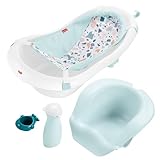
Overview: The Fisher-Price 4-in-1 Sling ‘N Seat Tub is a comprehensive bathing system that transitions from newborn to toddler stages. This feature-rich tub includes a soft mesh sling, Sit-Me-Up insert, and two toys, supporting babies up to 25 pounds through four distinct developmental phases in one integrated unit.
What Makes It Stand Out: The four-stage design exceeds most competitors’ offerings, while the included water-play toys add entertainment value. The Sit-Me-Up insert specifically addresses the tricky transitional phase when babies are learning to sit independently. Fisher-Price’s trusted brand reputation and the convenient drain plug with storage hook enhance its practical appeal.
Value for Money: At $37.69, this tub competes directly with other convertible options while including toys typically sold separately. The four-stage functionality eliminates purchasing multiple products, offering substantial savings. Parents receive a complete bathing solution from a reputable brand at a price point that undercuts buying individual components separately.
Strengths and Weaknesses: Strengths include maximum versatility with four stages, included toys for developmental play, trusted brand reliability, and comprehensive transitional support. The design fits most sinks and tubs. Weaknesses include potential bulkiness compared to simple supports, toys that some parents may view as unnecessary, and a complexity that might overwhelm those preferring minimalist solutions.
Bottom Line: The ultimate all-in-one solution for parents wanting every feature in a single purchase. This tub eliminates guesswork and additional shopping, making it perfect for first-time parents or gift-givers. If you value comprehensive functionality and brand trustworthiness, this offers unmatched convenience from newborn through toddler stages.
6. Inflatable Baby Bathtub, Collapsible Baby Bath Back Support, Portable Newborn Travel Bath tub with Drain Hole, Foldable Baby Bath Tubs for Infant to Toddler 0-24 Months (White)

Overview: This inflatable bathtub offers a practical solution for parents seeking portability without sacrificing functionality. Designed for infants and toddlers from 0-24 months, it supports up to 30 pounds through its reinforced PVC construction. The ergonomic curve provides essential back and spine support for younger babies while the collapsible design makes it ideal for travel, small apartments, or grandparents’ homes.
What Makes It Stand Out: The 22 reinforced rods distinguish this from flimsy inflatable alternatives, creating a surprisingly sturdy bathing environment. The double-layer air valve prevents frustrating mid-bath deflation—a common issue with budget inflatables. Its textured anti-slip base addresses safety concerns on wet surfaces while insulating against cold floors. The single-chamber design enables rapid inflation and deflation, and the strategically placed drain hole simplifies cleanup without requiring tub tilting.
Value for Money: At $16.99, this represents exceptional value for budget-conscious families. Comparable hard plastic tubs start at $25+ and lack portability. While premium foldable options exceed $40, this delivers core functionality—safety, support, and convenience—at less than half the price. The 0.33mm PVC thickness suggests reasonable durability for the price point, though long-term longevity may not match TPE alternatives.
Strengths and Weaknesses: Strengths: Extremely lightweight and portable; reinforced structure prevents sagging; ergonomic support for infants; excellent price point; quick setup and storage.
Weaknesses: PVC material may develop leaks over time; requires lung power or pump; less stable than non-inflatable options; limited aesthetic appeal; potential chemical odor initially.
Bottom Line: This bathtub excels as a secondary or travel option for families needing occasional portability. While not a permanent daily-use solution for everyone, its combination of safety features, ergonomic design, and unbeatable price makes it a smart purchase for vacations, small spaces, or as a backup. Perfect for parents prioritizing convenience and value over premium materials.
7. MoreFeel Collapsible Baby Bathtub for Newborn with Thermometer & 1 Hooded Towel & 1 Soft Floating Cushion,Portable Travel Bathtub with Drain Hole, Durable Foldable Baby Tubs for Infants to Toddler

Overview: MoreFeel positions this as a premium all-in-one bathing solution for babies 0-36 months. The package includes not just the tub but a hooded towel and floating cushion—essentials that streamline the bathing routine. Constructed from PP+TPE materials, it promises durability from newborn through toddler stages while maintaining a focus on space-saving design and temperature safety.
What Makes It Stand Out: The double-fold mechanism collapses the tub to under 4 inches—significantly slimmer than most competitors. The integrated real-time temperature sensor eliminates guesswork, displaying water temperature visibly while the surround-lock system retains heat longer. The off-the-ground drain design is genuinely thoughtful, allowing water removal without lifting a heavy, water-filled tub. The included hooded towel and floating cushion, valued separately at over $15, add immediate practical value.
Value for Money: At $36.98, this mid-range option delivers compelling value. The accessories alone justify $15-20 of the price, effectively making the premium tub itself cost around $20—comparable to basic models. The extended 0-36 month usability spreads the investment across three years, unlike infant-specific products requiring replacement. While not the cheapest option, the feature set and included extras make it competitively priced against similar premium foldable tubs.
Strengths and Weaknesses: Strengths: Innovative ultra-slim folding; integrated thermometer enhances safety; quality accessories included; durable PP+TPE construction; off-ground drainage prevents back strain; odor-free materials.
Weaknesses: Higher initial cost than basic tubs; folded dimensions may still be bulky for some storage spaces; temperature sensor requires battery maintenance; cushion may not suit all babies’ preferences.
Bottom Line: This tub hits the sweet spot for parents wanting premium features without luxury pricing. The space-saving design makes it ideal for apartment dwellers, while the safety features provide peace of mind. The included accessories eliminate separate purchases, making it an excellent gift for expectant parents. A top contender for those prioritizing convenience, safety, and long-term value.
8. Angelcare Baby Bath Support (Pink) | Ideal for Babies Less than 6 Months Old

Overview: Angelcare’s mesh bath support takes a minimalist approach to infant bathing. Designed specifically for newborns up to 6 months (or 20 pounds), this isn’t a standalone tub but a supportive seat used within your existing bathtub or sink. Its primary purpose is hands-free security, cradling baby safely while parents wash and play. The simple design focuses on hygiene, comfort, and space efficiency.
What Makes It Stand Out: The hygienic mesh material sets this apart—water drains instantly and air drying prevents mold and mildew growth, a common problem with padded alternatives. The ergonomic design mimics a natural cradling position, while the soft-touch material warms quickly to water temperature, preventing the cold shock of plastic. The hanging loop enables vertical storage, taking virtually zero bathroom space. Its fuss-free operation requires no inflation, folding, or assembly.
Value for Money: At $19.98, this is reasonably priced for a specialized newborn tool. However, the 6-month usage window limits long-term value compared to convertible options. Parents will need to purchase a separate toddler tub later, making the total investment higher over time. That said, its durability and resale potential offset some cost concerns. For those planning multiple children, the extended usability across siblings improves value.
Strengths and Weaknesses: Strengths: Superior hygiene with quick-dry mesh; simplest operation possible; space-saving hanging storage; comfortable ergonomic design; no inflation or complex setup; lightweight and portable.
Weaknesses: Extremely limited 6-month usage window; requires separate bathtub or sink; no temperature monitoring; minimal padding for extended baths; pink color may not suit all preferences; not suitable for older infants.
Bottom Line: This support excels for newborns but represents a short-term solution. It’s perfect for parents who prioritize hygiene and simplicity during the earliest months, especially those with limited storage. However, families seeking longevity should consider convertible options. Ideal as a secondary support for travel or as a primary solution only if you’re comfortable purchasing a follow-up tub within months.
9. babove Baby Bath Support | Newborn Bathtub, With Thermometer, Collapsible, Ergonomically Designed, Baby Tubs for Newborn Essentials Must Haves (Pink)

Overview: Babove offers a feature-rich bath support that bridges the gap between basic supports and full tubs. Designed for newborns with safety as the priority, it combines a silicone construction with practical add-ons like a temperature card, bath toys, and sponge. The collapsible design and compact dimensions (19.6" x 12.2" x 9.1") ensure it fits most standard tubs and sinks while remaining travel-friendly.
What Makes It Stand Out: The 2-position adjustable tilt is genuinely useful, accommodating different baby sizes and water depths as infants grow. The silicone bottom provides superior grip compared to plastic alternatives, staying secure even on wet surfaces. The temperature reminder card offers visual safety monitoring without battery dependency. Including bath toys and a sponge transforms this from a simple support into a bathing kit, addressing common newborn bath-time challenges like temperature anxiety and infant distraction.
Value for Money: Priced at $29.98, this positions itself in the mid-range but includes accessories that would cost $10-15 separately. The silicone construction justifies a premium over basic plastic models, offering better durability and hygiene. While not the cheapest option, the adjustable tilt extends its usable lifespan beyond typical newborn-only supports, improving cost-per-use value. It competes directly with similar products but adds thoughtful extras.
Strengths and Weaknesses: Strengths: Adjustable tilt grows with baby; superior non-slip silicone base; included toys and sponge add value; compact foldable design; temperature monitoring included; easy-to-clean material.
Weaknesses: May still be too large for some sinks; limited color options; accessories are basic quality; silicone can attract dust when stored; unclear maximum weight limit; requires adult tub or sink.
Bottom Line: This support system offers excellent functionality for the price, particularly for parents wanting more than a basic mesh seat. The adjustable tilt and included accessories make it practical for daily use, while the silicone construction ensures safety and longevity. It’s a smart choice for those seeking a middle-ground solution—not as temporary as basic supports, but not as expensive as full-featured tubs. Highly recommended for first-time parents.
10. Collapsible Baby Bathtub with Stand - Large Capacity Baby Bath Tub with Thermometer & Soft Cushion | Portable Travel Newborn Infant Bathtub | Foldable Toddler Bathtub for Baby 0 to 36 Months

Overview: This premium bathing system targets parents willing to invest in comfort and longevity. The integrated stand elevates the tub to ergonomic height, eliminating the back strain of floor-level bathing. With 25% more capacity than standard foldable tubs, it accommodates newborns through 36 months. The translucent PP+TPE construction promises durability while maintaining the portability of a collapsible design, folding flat in just 3 seconds.
What Makes It Stand Out: The stand is the game-changer—adapting to parents 150-200cm tall and eliminating 90% of spinal strain. The 3-second, two-step folding mechanism is genuinely faster than competitors requiring multiple latch actions. Four-corner support creates exceptional stability compared to tripod designs. The bottom-positioned drain hole allows water release without bending, complementing the ergonomic benefits. The larger capacity means less cramped bathing for active toddlers, extending usability.
Value for Money: At $79.99, this is a significant investment. However, the 0-36 month range spreads cost to roughly $2.20 per month—cheaper than buying separate infant and toddler tubs. The stand’s back-saving benefits have tangible health value, potentially preventing expensive physiotherapy. While premium-priced, it replaces multiple products: infant tub, toddler tub, and kneeling pad. For parents prioritizing physical comfort and long-term use, the price is justified.
Strengths and Weaknesses: Strengths: Unmatched ergonomic stand design; fastest folding mechanism; superior stability with four-corner support; spacious interior; high-quality materials; bottom drain prevents lifting; long-term 0-36 month usability.
Weaknesses: Premium price point; folded dimensions may not fit small closets; stand adds weight reducing true portability; over-engineered for parents with spacious bathrooms; requires assembly initially; takes up more floor space than floor tubs.
Bottom Line: This is the luxury sedan of baby bathtubs—expensive but delivering genuine comfort and quality-of-life improvements. The stand alone justifies the cost for parents with back issues or those tall enough to find floor bathing uncomfortable. While overkill for occasional use or small apartments, it’s unbeatable for daily bathing of multiple children. If budget allows and space permits, this is the most parent-friendly option available. Invest in your spine.
Why Ergonomics Matter: Protecting Your Back During Baby’s Bath
Back pain is one of the most common complaints among new parents, and bath time is a prime culprit. The combination of bending, lifting, and holding a slippery, wiggly baby creates a perfect storm for musculoskeletal strain. When you repeatedly compromise your posture during this daily task, you’re not just risking immediate discomfort—you’re potentially setting yourself up for chronic issues that can persist long after your child outgrows the tub. Ergonomic solutions redistribute the physical load, bringing your baby to a comfortable working height and supporting both of you in natural, neutral positions.
Understanding the Mechanics of Back Strain
The average newborn bath requires parents to maintain a flexed spine position for 10-15 minutes, often while supporting 7-10 pounds of baby weight at arm’s length. This creates tremendous leverage stress on your lower back. When you add in the dynamic movement of a kicking infant and the slippery environment that demands constant vigilance, your stabilizing muscles work overtime. Understanding these biomechanics helps you appreciate why features like height adjustability and proper lumbar support aren’t just nice-to-haves—they’re critical for preventing the micro-traumas that accumulate into serious back problems.
Key Ergonomic Features to Prioritize
When evaluating baby bath solutions, certain features separate the truly back-saving designs from the merely adequate. Look for elevated platforms that bring baby to your standing height, contoured surfaces that support your forearms while reaching, and designs that minimize the distance between you and your child. Integrated handles should allow you to maintain a neutral wrist position, while stable bases eliminate the need for awkward stabilizing movements. Remember, the best ergonomic features work silently in the background, requiring no conscious effort from you during an already demanding task.
Height-Adjustable Bath Tubs: A Game-Changer
Height-adjustable systems represent the gold standard in ergonomic baby bathing. These innovative designs allow you to raise or lower the bathing surface to match your specific height, whether you’re 5'2" or 6'3". The mechanism should operate smoothly with one hand, since your other arm will be supporting your baby. Look for sturdy locking systems that prevent accidental lowering and a range that accommodates both sitting and standing positions. The ability to fine-tune the height as your baby grows—and as your own body changes postpartum—makes these systems a wise long-term investment in your spinal health.
Convertible Designs That Grow With Your Child
Smart economics meet smart ergonomics in convertible bath systems that adapt from newborn support to toddler independence. These designs typically feature removable inserts or adjustable contours that transform the tub’s shape and depth. From an ergonomic perspective, this means you’re not constantly replacing equipment and relearning new systems. Your body develops muscle memory for a single setup, and you avoid the physical stress of researching, purchasing, and assembling new products every few months. The best convertible designs maintain their ergonomic benefits throughout every configuration.
Sink Inserts vs. Standalone Tubs: Making the Right Choice
Sink inserts offer natural height advantages by utilizing your existing kitchen or bathroom sink, bringing baby to a comfortable waist-level position. However, they require you to lean against countertops and can strain your back if the sink depth forces excessive forward bending. Standalone tubs with adjustable legs provide more customization but demand more floor space. Consider your home’s layout, your height relative to your fixtures, and whether you’ll be bathing baby in multiple locations. The right choice depends on your specific physical dimensions and daily routines.
Bath Support Accessories: Enhancing Comfort and Safety
Ergonomic accessories can transform even basic tubs into back-friendly stations. Bath support cushions that cradle your baby’s head and torso reduce the arm strength needed to keep them stable, allowing you to relax your shoulders and neck. Forearm rests that attach to the tub’s edge provide crucial support during longer baths, preventing the fatigue that leads to poor posture. Look for accessories with quick-dry, antimicrobial materials that maintain their supportive properties without becoming waterlogged or breeding bacteria.
The Importance of Non-Slip Features
A secure bathing environment directly correlates with your ability to maintain proper posture. When you’re not constantly compensating for a sliding tub or shifting baby, your core muscles can remain relaxed rather than braced for instability. Non-slip bases should grip firmly to various floor types without damaging surfaces, while internal textures should keep your baby safely positioned without restricting their movement. This stability allows you to stand or sit with confidence, maintaining the natural curves of your spine throughout the bath.
Smart Temperature Indicators
While primarily a safety feature, accurate temperature indicators contribute to ergonomic comfort by eliminating the need for repeated manual testing. Constantly dipping your elbow or wrist to check water temperature requires awkward arm positions that strain your rotator cuff and upper back. Digital displays or reliable color-changing indicators let you set the perfect temperature once and maintain it, reducing the repetitive motions that contribute to overuse injuries. Some advanced systems even maintain consistent water temperature throughout the bath.
Efficient Drainage Systems
Bending to lift a heavy, water-filled tub is a common source of acute back injury for parents. Ergonomic designs incorporate drainage hoses or strategically placed plugs that allow water to empty directly into your tub or sink without requiring you to move the entire unit. Look for systems with one-touch drainage controls and hoses long enough to reach your drain comfortably. This feature becomes increasingly important as your baby grows and the water volume increases, potentially adding 20-30 pounds of weight to maneuver.
Integrated Storage Solutions
Reaching for soap, washcloths, and toys while maintaining a secure hold on your baby creates twisting motions that torquespine. Integrated storage pockets, caddies, or attached organizers keep necessities within arm’s reach, eliminating the need for repetitive rotation and extension. The most ergonomic designs position these storage elements at the same height as your baby, creating a centralized workspace that keeps your movements efficient and your spine aligned. This seemingly small feature can significantly reduce the cumulative strain of hundreds of bath times.
Material Safety and Durability
Ergonomic benefits mean nothing if the materials compromise safety or deteriorate quickly. Food-grade, BPA-free plastics should be sturdy enough to maintain their structural integrity without flexing under your baby’s weight. Soft, cushioned components must retain their supportive properties after repeated use and cleaning. Consider the weight of the unit itself—heavy materials may be stable but difficult to move, while ultra-light options might lack the heft needed for true stability. The sweet spot combines durability with manageable weight for occasional repositioning.
Budget Considerations Without Compromising Ergonomics
Back-saving features exist across all price points if you know what to prioritize. Height adjustability often commands premium pricing, but excellent ergonomic benefits can be found in well-designed fixed-height models that match your specific measurements. Focus your budget on features that address your particular pain points—if you have existing back issues, invest in superior height adjustment. If space is your challenge, prioritize compact designs with integrated storage. Remember that preventing one serious back injury saves far more in medical costs than any price difference between product tiers.
Proper Bathing Posture Techniques
Even the most ergonomic tub can’t compensate for poor body mechanics. Stand with your feet shoulder-width apart, keeping your weight balanced. When reaching for your baby, hinge at your hips rather than rounding your back. Keep your elbows close to your body rather than extended, and engage your core muscles gently to support your spine. If sitting, choose a chair that allows your feet to rest flat on the floor with your knees at hip level. Take micro-breaks to roll your shoulders and stretch your neck between washing different body parts.
Setting Up Your Ergonomic Bathing Station
Location matters as much as equipment. Position your tub where you have adequate lighting to avoid leaning forward to see clearly. Ensure the floor surface is level and dry before starting. If using a sink insert, place a non-fatigue mat where you’ll stand to cushion your feet and reduce pressure on your lower back. Keep a small stool nearby for older siblings to stand on if they want to help, preventing you from lifting them to see. The goal is creating a complete environment that supports ergonomic practices from every angle.
Maintenance and Longevity
An ergonomic tub that becomes difficult to clean or develops mold loses its back-saving benefits when you’re scrubbing aggressively or replacing it prematurely. Choose designs with smooth, non-porous surfaces and minimal crevices where grime accumulates. Removable components should be dishwasher-safe or easily hand-washable without requiring awkward scrubbing positions. Regular maintenance preserves both the hygienic environment your baby needs and the structural integrity that protects your back. Inspect adjustable mechanisms periodically to ensure they continue operating smoothly and safely.
Frequently Asked Questions
1. Can ergonomic baby tubs really prevent back pain, or is this just marketing hype?
Ergonomic designs are backed by occupational therapy principles that reduce harmful postures and repetitive strain. While no product can guarantee zero back pain—especially if you have pre-existing conditions—well-designed tubs significantly reduce the risk factors associated with bath time. The key is choosing features that address your specific height, space constraints, and physical needs.
2. At what point should I start considering an ergonomic tub during pregnancy?
The best time to evaluate ergonomic bathing solutions is during your third trimester. Your changing center of gravity and loosening ligaments make you more susceptible to back strain, and you’ll want the system in place before the sleep-deprived newborn phase begins. Setting up your ergonomic station ahead of time also allows you to practice the movements without the pressure of handling a slippery infant.
3. Are height-adjustable tubs worth the extra cost compared to standard models?
If multiple caregivers of different heights will be bathing your baby, or if you have any history of back problems, height adjustability is invaluable. The ability to fine-tune the bathing surface prevents the compensatory postures that cause strain. For single-height households without existing pain issues, a well-chosen fixed-height tub that matches your measurements can provide similar benefits at a lower price point.
4. How do I know if a tub’s height is right for my body?
Stand naturally and bend your elbows at 90 degrees. The ideal tub height places your baby’s body at the level of your forearms when they’re in this position. You shouldn’t need to hunch your shoulders or extend your arms fully to reach your baby. If shopping in person, mimic the bathing motion to test comfort. Online, check the product specifications against your own measurements and look for generous return policies.
5. Can sink inserts damage my plumbing or countertops?
Quality sink inserts designed for baby bathing distribute weight evenly and shouldn’t damage properly installed fixtures. However, they can scratch surfaces if grit gets trapped underneath, and very heavy babies might stress older plumbing. Always place a protective mat beneath the insert, check your sink’s weight capacity, and inspect for leaks regularly. The ergonomic trade-off is worth it for many parents, but proper installation and care are essential.
6. What’s the safest way to transition from an infant insert to a toddler tub without losing ergonomic benefits?
Look for convertible systems where the transformation doesn’t require you to lift a heavy, water-filled unit. The best designs allow you to remove inserts while the tub is empty and stable. During the transition period, maintain the same height settings and keep accessories in their familiar positions. Your muscle memory for safe posture remains intact while your growing child gains independence.
7. Do ergonomic features compromise the baby’s safety or comfort?
On the contrary, ergonomic designs typically enhance safety by creating more stable, secure environments. Features that support your back—like non-slip bases and integrated supports—also prevent baby from sliding or rolling. The focus on proper positioning means babies are less likely to be jostled or dropped. Always verify that ergonomic products meet current safety standards, but there’s no inherent conflict between parent comfort and infant safety.
8. How can I make bath time ergonomic if I have to bathe my baby in different locations?
Consider a lightweight, portable ergonomic tub with a stable base that you can move between rooms. Alternatively, invest in ergonomic accessories—a quality bath support cushion and a height-adjustable stool you can bring anywhere. Create a “bath caddy” with all supplies at the right height to minimize reaching. Consistency in your technique matters more than consistency in location when you can’t control the environment.
9. What postpartum conditions make ergonomic tubs especially important?
Diastasis recti, pelvic floor dysfunction, and cesarean recovery all benefit enormously from ergonomic bathing solutions. These conditions make core engagement painful or difficult, meaning your back bears more load during bending and lifting. Height-adjustable tubs that minimize forward flexion are crucial. After c-sections, avoid any design requiring you to lift weight while twisting, as this strains the healing incision.
10. How long can I expect an ergonomic baby tub to last with daily use?
Quality ergonomic tubs constructed from durable materials typically last through multiple children or about 3-4 years of daily use. Pay attention to warranty coverage for adjustable mechanisms, as these are often the first components to show wear. Proper cleaning and storage extend lifespan significantly. Consider it an investment in your health that pays dividends well beyond the baby years if it prevents chronic back issues.