Watching your little one wiggle, kick, and reach with boundless energy is one of parenting’s greatest joys—and its most exhausting challenges. Active babies crave movement and exploration, yet traditional baby gear often restricts their natural momentum or becomes obsolete within weeks. Enter the convertible floor seat: a brilliantly engineered solution that evolves alongside your child’s developmental milestones while keeping them safely engaged. These versatile seats have revolutionized how parents approach floor time, transforming it from a passive activity into an interactive, growth-enhancing experience.
When you’re searching for that perfect baby shower gift or a thoughtful present for new parents, a high-quality convertible floor seat checks every box. It’s practical, promotes healthy development, offers exceptional longevity, and—most importantly—gives caregivers those precious hands-free moments without compromising on safety or stimulation. Unlike single-purpose baby equipment that gathers dust after a few months, the best convertible models adapt from supported sitting to active play stations, making them a gift that truly keeps on giving through multiple stages.
Top 10 Convertible Floor Seats for Active Babies
Detailed Product Reviews
1. Ingenuity Baby Base 2-in-1 Booster Feeding and Floor Seat with Self-Storing Tray - Slate

Overview: The Ingenuity Baby Base 2-in-1 is a versatile seating solution that transitions seamlessly from an infant floor seat to a dining chair booster. Designed for babies who can sit up independently, it supports up to 33 pounds and features a smart self-storing tray system that tucks underneath when not in use. The Slate color offers a modern, gender-neutral aesthetic that complements most home decor while providing parents with a portable, easy-clean option for feeding and playtime.
What Makes It Stand Out: This seat’s true innovation lies in its dual-functionality and clever engineering. The removable foam insert allows it to grow with your child from baby to toddler stage, while the integrated strap storage keeps everything organized. The dishwasher-safe tray is a game-changer for busy parents, and the ability to securely attach it to most dining chairs via adjustable 22-inch bottom straps and 36-inch back strap makes it exceptionally versatile for on-the-go families.
Value for Money: At $36.72, this product delivers exceptional value by essentially replacing two separate purchases. Comparable floor seats alone cost $30-40, while quality boosters run $25-35. You’re getting both functions plus premium features like dishwasher-safe components and a self-storing tray at a mid-range single-purpose seat price. The durability through multiple growth stages further justifies the investment.
Strengths and Weaknesses: Strengths include remarkable versatility, easy maintenance with wipe-clean surfaces and dishwasher-safe tray, compact portability, and secure harness system. The self-storing design minimizes clutter. Weaknesses involve a somewhat complex initial assembly, non-removable seat back after installation, and a 33-pound weight limit that may not suit larger toddlers. Strap adjustment can be finicky on certain chair styles.
Bottom Line: The Ingenuity Baby Base 2-in-1 is a smart, space-saving investment for parents seeking maximum functionality. Its dual-purpose design and thoughtful features make it superior to single-use alternatives, despite minor assembly quirks. Highly recommended for families wanting one seat that truly grows with their child.
2. Bright Starts Learn-to-Sit Baby Floor Seat, 2-Positions Grow with Infant, Portable Baby Chair, Includes Sensory Toys, Unisex, 4-12 Months, Playful Paradise

Overview: The Bright Starts Learn-to-Sit Floor Seat is a developmental positioning system designed specifically for babies aged 4-12 months who are mastering independent sitting. This two-stage seat offers both a reclined position for younger infants with head control and an upright position for older babies ready to engage with their surroundings. The Playful Paradise design features integrated sensory toys and a machine-washable pad in a gender-neutral rainbow theme.
What Makes It Stand Out: Unlike static floor seats, this product’s two-position design genuinely supports developmental progression. The lower position cradles younger babies safely while building core strength, while the upright position encourages active play. The included rainbow toy, textured leaf teether, and Taggies ribbons provide immediate entertainment without requiring separate purchases. Its ability to fold completely flat distinguishes it from bulkier competitors, making it ideal for travel or compact storage.
Value for Money: Priced at $44.99, this seat sits in the mid-to-upper range for floor seats but justifies the cost through its dual-position functionality and included toy package. Purchasing separate developmental toys would add $15-20, making the bundled approach economical. However, its 12-month maximum age limit means a shorter usable lifespan than convertible options, slightly diminishing long-term value.
Strengths and Weaknesses: Strengths include the genuinely useful two-position system, excellent portability with flat-fold design, engaging sensory toys, comfortable padded seating, and easy machine-washable maintenance. The high back provides superior support. Weaknesses are its single-purpose floor seat design (no booster conversion), limited 8-month usage window, and toys that may not appeal to all babies. The weight limit isn’t specified, potentially concerning for larger infants.
Bottom Line: Perfect for parents prioritizing developmental support and portability over long-term versatility. The Bright Starts Learn-to-Sit excels as a dedicated floor seat for babies learning to sit independently, though families wanting multi-year use should consider convertible alternatives.
3. Fisher-Price Portable Baby Chair Sit-Me-Up Floor Seat With Developmental Toys & Machine Washable Seat Pad, Pacific Pebble

Overview: The Fisher-Price Sit-Me-Up Floor Seat is a straightforward, no-fuss solution for parents seeking a stable, portable seating option for babies learning to sit upright. The Pacific Pebble colorway offers a calming neutral tone that blends into any room. This seat prioritizes stability with its wide base design and provides basic entertainment through two linkable toys while maintaining the brand’s reputation for safety and durability. It folds flat for storage and features a removable, machine-washable seat pad.
What Makes It Stand Out: Fisher-Price’s engineering excellence shines through the exceptionally wide, sturdy base that prevents tipping even with active babies. The simplicity of design is refreshing—no complex adjustments or assembly required. The linkable toy system allows parents to customize play options by adding their own toys, and the seat’s ability to fold completely flat with minimal effort makes it more travel-friendly than many competing models. The trusted brand name provides peace of mind for safety-conscious parents.
Value for Money: At $46.49, this seat commands a slight premium over basic floor seats but remains competitive. The price reflects Fisher-Price’s quality reputation and the product’s robust construction. While it lacks the multi-functionality of convertible seats, its durability and brand reliability justify the cost for parents wanting a straightforward, dependable floor seat. However, the included toy selection is minimal compared to similarly priced alternatives.
Strengths and Weaknesses: Strengths include outstanding stability from the wide base, effortless flat-fold portability, premium machine-washable fabric, simple intuitive design, and trusted brand safety standards. The toy links offer customization flexibility. Weaknesses involve the basic two-toy set that may underwhelm some babies, lack of position adjustments, absence of booster conversion capability, and a plain design that some may find uninspired. No specified weight limit transparency.
Bottom Line: An excellent choice for parents who value safety, simplicity, and brand reliability over flashy features. The Fisher-Price Sit-Me-Up Floor Seat does its single job exceptionally well, making it ideal for those wanting a dependable, portable floor seat without unnecessary complexity.
4. Ingenuity Baby Base 2-in-1 Booster Feeding and Floor Seat with Self-Storing Tray - Cashmere

Overview: The Ingenuity Baby Base 2-in-1 in Cashmere offers identical functionality to its Slate counterpart, providing a seamless transition from infant floor seat to dining chair booster. This warm, neutral beige tone appeals to parents preferring softer nursery aesthetics. Designed for sitting babies up to 33 pounds, it features the same self-storing tray system and convertible foam insert that defines this product line. The seat attaches securely to most dining chairs using adjustable straps and serves as a compact floor seat for playtime.
What Makes It Stand Out: This model shares the same standout engineering as other Baby Base units: the innovative tray storage compartment eliminates kitchen clutter, while the removable foam insert creates true longevity from infancy through toddlerhood. The Cashmere colorway specifically targets parents seeking a warmer, more traditional nursery palette compared to the modern Slate. The dishwasher-safe tray and integrated strap storage system remain category-leading features that simplify daily routines.
Value for Money: Priced at $39.99, the Cashmere version costs $3.27 more than the Slate option for identical functionality. While still delivering strong value as a dual-purpose seat, the color premium slightly reduces its competitive edge. Parents committed to the Cashmere aesthetic will find the upcharge negligible for matching their decor, but value-focused buyers should consider the Slate version for equivalent performance at a lower price point.
Strengths and Weaknesses: Strengths mirror the Slate model: exceptional versatility, clutter-reducing self-storage, dishwasher-safe convenience, portable compact design, and genuine growth adaptability. The harness system provides security in both floor and booster modes. Weaknesses include the permanent seat back installation, potentially confusing initial setup, 33-pound weight capacity that may not serve larger toddlers, and strap compatibility issues with certain chair designs. The color upcharge is a minor drawback.
Bottom Line: Functionally identical to the Slate version, the Cashmere Baby Base 2-in-1 is an excellent dual-purpose seat whose value depends entirely on color preference. Choose Cashmere for warmer decor schemes, but opt for Slate if budget is paramount. The product itself remains a top-tier convertible seating solution.
5. Fisher-Price Portable Baby Chair Sit-Me-Up Floor Seat with Developmental Toys & Machine Washable Seat Pad, Rainbow Showers
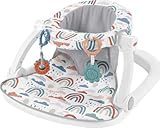
Overview: The Rainbow Showers variant of Fisher-Price’s Sit-Me-Up Floor Seat delivers the same trusted stability and portability as the Pacific Pebble model, but with a vibrant, playful color scheme featuring bright rainbow accents. This seat helps babies practice upright sitting through its wide, sturdy base design while keeping them engaged with included clacker and flower teether toys. The removable, machine-washable pad ensures easy cleaning, and the flat-fold design supports effortless travel and storage for families on the move.
What Makes It Stand Out: Fisher-Price’s commitment to safety and stability remains this seat’s primary differentiator, with a base width that exceeds most competitors for superior tipping resistance. The Rainbow Showers design appeals to parents wanting more visual stimulation and gender-neutral bright colors. The linkable toy system continues to offer customization flexibility, allowing you to swap in favorite toys as baby develops. The one-handed fold mechanism and lightweight construction make it exceptionally practical for grandparents’ homes or frequent travel.
Value for Money: At $46.43, this version is priced essentially the same as the Pacific Pebble model, representing a fair value for a Fisher-Price product with proven durability. The minimal price difference between color options shows appropriate pricing parity. While you can find cheaper floor seats, the brand’s safety reputation and robust construction justify the moderate premium. However, the limited toy variety remains a value drawback compared to seats with more elaborate activity centers.
Strengths and Weaknesses: Strengths include the market-leading stable base, instant flat-fold portability, premium machine-washable materials, trusted brand safety record, and cheerful rainbow aesthetic. The toy links provide customization options. Weaknesses involve the sparse two-toy inclusion, lack of positional adjustments, single-purpose floor seat design, and absence of transparent weight limit specifications. Some parents may find the bright colors too stimulating for calm environments.
Bottom Line: Choose between Rainbow Showers and Pacific Pebble based purely on aesthetic preference—both deliver Fisher-Price’s signature reliability and stability. This seat excels as a safe, portable floor option for parents wanting trusted brand quality without unnecessary frills, though toy variety remains modest.
6. Skip Hop Baby Ergonomic Activity Floor Seat for Upright Sitting Lightweight and Travel-Friendly Silver Lining Cloud Grey Age 0+

Overview: The Skip Hop Baby Ergonomic Activity Floor Seat is a thoughtfully designed solution for parents seeking portable, posture-supporting seating for infants who can hold their heads up unassisted. This lightweight seat prioritizes healthy spinal alignment while offering engaging play features in a travel-friendly package that works well for families on the move.
What Makes It Stand Out: Unlike bulkier activity centers, this seat’s open layout allows parents to easily lift baby in and out while giving infants freedom to stretch and move. The ergonomic design is genuinely focused on healthy posture development rather than just containment. The detachable multisensory toy bar features a mirror, spinner rattle, and bead mover that stimulate development without overwhelming young infants. The Silver Lining Cloud Grey design is sleek and modern, while the padded head/neck support and tactile foot pad provide comfort and sensory exploration.
Value for Money: At $49.99, this seat occupies a sweet spot between basic floor seats and more expensive 3-in-1 systems. While it lacks booster seat conversion, its emphasis on ergonomic design and portability justifies the price for parents who prioritize healthy posture and travel convenience. The quality materials and thoughtful engineering offer better value than cheaper alternatives that may not support proper alignment.
Strengths and Weaknesses: Strengths include excellent ergonomic support, lightweight portability, easy parent access, and engaging yet simple toys. The 3-point harness provides security without restriction. Weaknesses are the 25-pound weight limit, which limits longevity compared to convertible models, and the lack of snack tray or booster functionality. Some parents may find the toy attachment limited compared to elaborate activity centers.
Bottom Line: This seat excels for parents wanting a portable, posture-focused floor seat for younger infants. It’s ideal for travel and small spaces, though its shorter usable lifespan means you’ll need a separate booster later. Choose it for ergonomic design over multi-stage versatility.
7. Baby Einstein SuperSeat Touch of Tunes 3-in-1 Activity Seat, with Music & Lights, Ages 6 Months and Up

Overview: The Baby Einstein SuperSeat Touch of Tunes is a versatile 3-in-1 solution that evolves from an activity seat to a supportive floor seat and finally a booster seat for dining chairs. Designed for ages 6 months to 3 years (up to 33 pounds), it combines entertainment with practical functionality, featuring an interactive piano that introduces numbers and colors in four languages.
What Makes It Stand Out: The detachable Cal the Caterpillar piano sets this seat apart with its multilingual educational content and melodic playback. The 360-degree rotating tray with built-in compartments offers unparalleled convenience, allowing easy access and transforming into a dishwasher-safe snack tray. Its ability to attach to most dining chairs as a booster provides exceptional longevity, while the BPA-free components and wipe-clean surfaces simplify maintenance for busy parents.
Value for Money: Priced at $54.99, this 3-in-1 seat delivers strong value by replacing three separate products. The educational piano and premium features like the rotating tray and dishwasher-safe components justify the modest price increase over basic models. Compared to buying individual activity seats and boosters, this represents significant savings while maintaining quality and safety standards.
Strengths and Weaknesses: Strengths include impressive versatility, educational multilingual content, easy-clean features, and secure 3-point harness. The 33-pound weight limit and three-stage design maximize usability. Weaknesses include a later starting age (6 months) that excludes younger infants, piano batteries not included, and a bulkier footprint than floor-only seats. Some parents may find the rotating tray mechanism complex initially.
Bottom Line: This is an excellent investment for parents seeking a versatile, educational seat that grows with their child. The combination of entertainment, dining functionality, and quality construction makes it a standout choice for families wanting maximum utility without sacrificing developmental benefits.
8. Infantino Music & Lights 3-in-1 Discovery Seat & Booster, Toddler Booster Seat for Dining Table or Kitchen Chair, Baby Activity Center & Snack Tray, Lavender

Overview: The Infantino Music & Lights 3-in-1 Discovery Seat in Lavender adapts from a floor activity center to a snack seat and toddler booster, accommodating children from 4 months to 4 years (up to 33 pounds). This convertible design prioritizes long-term value while keeping babies entertained with music, lights, and engaging toys that support developmental milestones.
What Makes It Stand Out: The clever hidden snack tray revealed by sliding toy pods apart is a brilliant design innovation that eliminates awkward transitions between play and feeding. The light-up piano with 20 songs and sounds provides consistent entertainment, while the compact, lightweight frame makes it ideal for small spaces and travel. The inclusion of both a 3-point harness and chair straps ensures safety across all configurations, and the removable, wipeable seat pad simplifies cleaning.
Value for Money: At $58.00, this seat’s extended 4-year usage period offers exceptional value, effectively costing less than $15 per year of use. The seamless transition between modes eliminates the need for separate activity centers, snack chairs, and boosters. While slightly pricier than some competitors, the innovative hidden tray design and portability features justify the premium for space-conscious families.
Strengths and Weaknesses: Strengths include remarkable longevity, clever hidden tray mechanism, entertaining light-up piano, compact portability, and comprehensive safety features. The Lavender color offers a gender-neutral aesthetic. Weaknesses include toy pods that may feel bulky to some users, and the piano’s educational content being less extensive than multilingual alternatives. The seat may feel less substantial than non-portable models.
Bottom Line: Perfect for parents prioritizing longevity and space-saving design. This seat’s innovative hidden tray and extended age range make it a smart choice for apartment dwellers or those wanting one product to last from infancy through toddlerhood. The Lavender finish adds a soothing aesthetic touch.
9. Infantino Music & Lights 3-in-1 Discovery Seat & Booster, Toddler Booster Seat for Dining Table or Kitchen Chair, Baby Activity Center & Snack Tray, Teal

Overview: The Infantino Music & Lights 3-in-1 Discovery Seat in Teal offers identical functionality to its Lavender counterpart, converting from a floor activity center to snack seat and booster for children 4 months to 4 years (up to 33 pounds). The vibrant Teal finish provides a fresh, gender-neutral alternative while maintaining all the innovative features that make this seat a versatile parenting solution.
What Makes It Stand Out: This seat shares the signature hidden snack tray design, where sliding toy pods apart reveals a convenient feeding surface with built-in cup holder. The light-up piano with 20 engaging songs and sounds keeps babies entertained during playtime, while the compact, lightweight construction excels in small spaces and for travel. The Teal colorway offers a modern, energetic aesthetic that complements contemporary home decor while appealing to parents seeking alternatives to traditional pink or blue.
Value for Money: At $58.00, the Teal version delivers identical value to the Lavender model, effectively providing four years of use for less than $15 annually. The color choice is purely aesthetic and doesn’t affect the seat’s impressive versatility or functionality. For parents who prioritize both longevity and style, having color options adds value without increasing cost compared to single-color competitors.
Strengths and Weaknesses: Strengths mirror the Lavender model: exceptional 4-year lifespan, innovative hidden tray, entertaining piano, portability, and dual safety harnesses. The Teal color is vibrant yet versatile. Weaknesses include the same bulky toy pods that may not suit minimalist preferences, and piano content that focuses more on entertainment than education. Some may find the Teal shows stains more readily than darker colors.
Bottom Line: Choose the Teal version if you love the 3-in-1 functionality but prefer a bolder, more energetic color scheme. It delivers the same excellent longevity and clever design as the Lavender model, making it ideal for style-conscious parents who need a space-saving, multi-stage seat that truly grows with their child.
10. Fisher-Price Portable Baby Chair Kick & Play Deluxe Sit-Me-Up Seat with Piano Learning Toy & Tray for Infants to Toddlers, Purple Monkey

Overview: The Fisher-Price Portable Baby Chair Kick & Play Deluxe stands as the most versatile option in this category, offering four distinct modes from newborn kick piano through toddler booster. The Purple Monkey-themed seat accommodates infants to toddlers with its removable piano toy featuring 65+ songs, sounds, and Smart Stages learning technology that adapts content as your child develops.
What Makes It Stand Out: The Kick & Play mode for newborns is unique among these seats, allowing use from day one. The piano’s three Smart Stages levels evolve from sensory stimulation to counting and shapes, providing unprecedented educational depth. The ability to fold flat for storage and travel addresses a common pain point with bulky baby gear. The machine-washable fabric seat pad and dishwasher-safe snack tray demonstrate exceptional consideration for real-world messes.
Value for Money: At $61.79, this is the priciest option but offers the longest potential use from birth through toddlerhood. The four-mode versatility eliminates the need for separate newborn play gyms, floor seats, and boosters, representing significant overall savings. The extensive educational content and premium washable materials justify the higher upfront investment for parents seeking one product to rule them all.
Strengths and Weaknesses: Strengths include unmatched versatility from newborn stage, comprehensive Smart Stages learning system, easy-clean features, and space-saving fold-flat design. The Purple Monkey theme is playful and engaging. Weaknesses include the highest price point, theme-specific design that may not suit all decor, and potentially more complex transitions between modes. The newborn feature may be unnecessary for parents already owning a play gym.
Bottom Line: This is the ultimate all-in-one solution for parents wanting maximum longevity and educational value from birth onward. While the price is highest, the four-mode versatility and Smart Stages technology make it worth every penny for families seeking to minimize baby gear while maximizing developmental benefits. Ideal for first-time parents building their registry.
What Makes a Floor Seat “Convertible” and Why It Matters
The term “convertible” in baby gear has evolved far beyond a simple marketing buzzword. At its core, a convertible floor seat is designed with modular components that reconfigure to meet your baby’s changing physical abilities and cognitive interests. This adaptability fundamentally changes the value proposition, turning a three-month tool into an 18-month companion.
The Evolution from Static to Dynamic Seating
Traditional floor seats served one purpose: keeping a non-sitting baby upright. Modern convertible designs, however, understand that babies aren’t static creatures. They transform from providing 360-degree support for a six-month-old just learning trunk control to offering minimal assistance for a ten-month-old who wants to practice getting in and out independently. Some advanced models even convert into activity tables or booster seats, extending their lifespan well into toddlerhood. This evolution mirrors how babies themselves develop—not in linear steps, but in explosive bursts of new skills that demand flexible support.
Longevity: The Gift That Grows
When evaluating convertible features, think in terms of cost-per-use over time. A seat that serves from 4 months to 3 years delivers exponentially more value than one that becomes obsolete at 9 months. The most thoughtfully designed options include removable inserts that adjust seat depth, adjustable harness systems that accommodate growing bodies, and conversion kits that transform the base into entirely new configurations. For gift-givers, this longevity means your present won’t just be appreciated at the baby shower—it’ll be remembered at the child’s second birthday party.
Key Developmental Benefits for Active Babies
Active babies aren’t just busy; they’re building the neurological foundation for every future physical and cognitive milestone. The right convertible floor seat becomes a developmental partner in this critical work.
Core Strength and Postural Control
A well-designed convertible seat doesn’t do the work for your baby—it provides just enough support to let them do the work themselves. The ideal model offers a slightly angled seat that encourages natural spinal alignment while allowing babies to engage their core muscles to maintain balance. This “assisted but not restricted” approach strengthens the deep muscles of the abdomen and back far more effectively than either lying flat or being fully supported. Look for seats with tapered sides that allow babies to reach and twist, activating oblique muscles essential for crawling and walking.
Spatial Awareness and Sensory Integration
Active babies are constantly processing proprioceptive input—their understanding of where their body exists in space. Convertible floor seats with rotating trays, detachable toys, and varied textures create a rich sensory environment that supports this integration. When babies can lean slightly in different directions to reach objects, they’re developing vestibular balance and learning cause-and-effect relationships. The best designs position toys at varying heights and distances, encouraging babies to shift their weight and develop the coordination that translates directly to crawling and walking.
Fostering Independence and Exploration
There’s a sweet spot in baby development where your little one wants to engage with the world but lacks the physical ability to do so independently. A convertible floor seat bridges this gap, offering a secure base from which they can explore without constant adult handling. This independence builds confidence and allows for longer periods of focused play, which is essential for developing attention spans. Models with 360-degree access to activities prevent frustration and keep babies engaged from every angle, supporting the natural curiosity that drives learning.
Essential Safety Features Every Parent Should Know
Safety standards for baby floor seats have evolved dramatically, but not all products on the market meet the same rigorous criteria. Understanding what makes a seat genuinely safe versus merely marketed as such is crucial for any gift-giver.
Understanding Weight and Age Limits
Convertible seats typically advertise broad age ranges, but the devil is in the details. The safest designs have clearly defined weight minimums (usually around 10-12 pounds) to ensure babies have enough muscle tone to support themselves, and maximums that extend to 40-50 pounds for toddler conversion modes. More importantly, look for seats with developmental stage indicators rather than just age ranges. These might include “supported sitter,” “independent sitter,” and “active toddler” modes with specific physical milestones listed for each stage.
Material Safety and Non-Toxic Certifications
Active babies explore with their mouths, making material safety non-negotiable. The gold standard is GREENGUARD Gold certification, which screens for over 10,000 chemicals and VOCs. Additionally, look for seats that meet or exceed ASTM F2613 (Standard Consumer Safety Specification for Children’s Chairs and Stools) and are free from BPA, phthalates, and flame retardants. For fabric components, OEKO-TEX Standard 100 certification ensures no harmful substances remain from manufacturing. These certifications should be clearly stated on packaging or product listings—if they’re not, consider it a red flag.
Stability and Anti-Tip Design
An active baby’s movements can generate surprising force. Premium convertible seats feature wide, weighted bases that lower the center of gravity and prevent tipping during enthusiastic reaching or kicking. The base should extend beyond the seat perimeter by several inches in all directions. Some advanced models include non-slip grip pads that work on both hardwood and carpeted surfaces. Test the stability by ensuring the seat doesn’t rock when you press down on one edge—any wobble indicates a design that could fail under a real baby’s dynamic movements.
Convertibility Features That Maximize Value
The difference between a seat that simply adjusts and one that truly converts lies in the engineering of its transformation mechanisms.
Multi-Stage Configurations
True convertibility means fundamentally changing the seat’s function, not just adjusting its size. Stage one typically functions as a supportive floor seat with a high back and snug insert. Stage two removes the insert for a roomier fit and adds interactive elements. Stage three might convert to a booster seat for feeding or an activity table for standing play. The most innovative designs include a fourth stage as a toddler chair for reading or quiet time. When evaluating options, examine how easily these conversions happen—if it requires tools or complex disassembly, it’s less likely to be used.
Adjustable Height and Recline Options
While floor seats are by definition low to the ground, some convertible models feature adjustable leg positions that slightly elevate the seat as babies grow. This isn’t about getting them higher off the floor but about changing the angle of hip flexion to accommodate longer legs and different activities. Recline adjustments are equally important for babies who aren’t quite ready for full upright sitting. The mechanism should lock securely with audible clicks, and there should be minimal play or wiggle once locked.
From Floor Seat to Activity Center
The most valuable conversion is often into a self-contained play station. This typically involves adding a detachable activity arch or converting the tray into an activity surface with built-in sensory elements. The key is that these additions don’t compromise the seat’s core stability. Look for designs where the activity components can be removed for cleaning or replaced with new toys as your baby’s interests evolve. Some premium models even allow you to attach your own toys to customizable bars, preventing the boredom that often ends a seat’s useful life.
Material and Comfort Considerations
An uncomfortable baby won’t stay in any seat, no matter how developmentally perfect it is. Comfort engineering is what separates seats that get daily use from those that become expensive closet clutter.
Breathable Fabrics for Active Babies
Active babies generate heat quickly, and a sweaty baby is a cranky baby. Advanced seats use 3D mesh fabrics that allow air circulation while maintaining structural integrity. This material should cover not just the seat back but also the areas where baby’s thighs and back make contact. For cooler climates, some models offer reversible inserts with breathable mesh on one side and cozy fabric on the other. Avoid seats with extensive vinyl or plastic surfaces directly against baby’s skin—these create uncomfortable temperature fluctuations and can cause skin irritation.
Cushioning and Support Systems
The cushioning should be firm enough to provide support but responsive enough to be comfortable. Memory foam is generally too soft for babies who need postural support; instead, look for high-density foam with a compression rating appropriate for infant use. The seat shape matters enormously—it should have a slight bucket design that prevents sliding forward without forcing the legs into an unnatural position. For convertible models, the insert system should be substantial enough for new users but easy to remove without leaving uncomfortable gaps or seams.
Ease of Cleaning and Maintenance
Every parent knows that baby gear must survive everything from spit-up to pureed sweet potato. The best convertible seats feature completely removable, machine-washable covers with zipper access that doesn’t require disassembling the entire seat. The base should be wipeable with smooth, non-porous surfaces. For activity components, check whether toys can be sanitized separately and whether the tray has drainage holes for easy washing. Some innovative designs even include a waterproof barrier layer between the cover and foam to prevent liquids from penetrating the core.
Portability and Storage: Real-World Practicality
A seat that lives in one spot quickly becomes part of the furniture—and often not in a good way. Real-world usability depends on how easily it moves with your family’s life.
Lightweight vs. Sturdy Construction
There’s an inherent tension between a seat being light enough to carry and heavy enough to be stable. The sweet spot is typically between 5-8 pounds for the base unit, with activity attachments adding 1-2 pounds. Materials like reinforced polypropylene offer the best strength-to-weight ratio. Some designs feature integrated carry handles that don’t compromise the seat’s profile, while others have removable components that lighten the load for transport. Consider where the seat will be used most—if it’s moving between rooms daily, weight becomes a critical factor.
Fold-Flat Designs for Small Spaces
Urban living and modern homes often lack dedicated baby gear storage. Convertible seats that fold flat to less than 6 inches thick can slide under beds or stand in closets. The folding mechanism should be one-handed and should lock securely in both open and closed positions. When folded, all activity attachments should either nest within the seat or attach compactly to prevent losing pieces. This feature transforms the seat from a space-hogging liability into a convenient tool that appears when needed and disappears when not.
Activity Attachments and Sensory Features
The difference between a seat that entertains for five minutes and one that captivates for twenty lies in the sophistication of its activity design.
Removable Toy Bars and Play Trays
Fixed toys become boring; removable ones create endless possibilities. The best systems feature toy bars that click in and out with one hand, allowing parents to customize the play experience or remove distractions during snack time. The attachment points should be universal enough to work with third-party toys but secure enough that a determined baby can’t yank them free. Play trays should have raised edges to contain small toys and cup holders sized appropriately for sippy cups without being so deep that babies can’t reach the bottom.
Sensory Elements That Stimulate Development
Beyond simple plastic toys, look for seats that incorporate varied textures, crinkly fabrics, mirrors (baby-safe and unbreakable), and cause-and-effect mechanisms like spinners or sliders. The color palette should be engaging without being overwhelming—high contrast patterns for younger babies, more nuanced colors for older infants. Some advanced models include elements that respond to baby’s actions with lights or sounds, but these should have volume controls and on/off switches to prevent overstimulation. The key is variety that matches developmental stages: tactile elements for younger babies, manipulation challenges for older ones.
Making the Perfect Gift Choice: A Buyer’s Mindset
Selecting a convertible floor seat as a gift requires thinking beyond the registry and into the daily reality of parenting an active baby.
Consider the recipient’s lifestyle: Do they travel frequently? Prioritize portability and compact folding. Is this their second child? They’ll value durability and easy cleaning above all. Do they live in a minimalist space? A sleek design that converts to a toddler chair extends usefulness. The most appreciated gifts solve problems the parents haven’t yet anticipated—like how to contain a crawling baby during a sibling’s soccer game or create a safe play zone in a home office.
Presentation matters, too. Gift the seat with a small collection of developmentally appropriate toys that attach to the system, or include a book about baby development that explains why floor time matters. A handwritten note explaining why you chose this particular style of seat—perhaps mentioning their active lifestyle or small apartment—transforms a practical item into a thoughtful gesture.
Frequently Asked Questions
At what age can my baby safely start using a convertible floor seat?
Most convertible floor seats are designed for babies who can hold their head up steadily, typically around 4 months old. However, the key milestone isn’t age but physical readiness: your baby should have good head and neck control and show interest in sitting upright. Some seats with substantial inserts and recline options can accommodate babies as young as 3 months, while others are better suited for 5-6 month olds. Always check the manufacturer’s minimum weight requirement, usually 10-12 pounds, and consult your pediatrician if your baby has any developmental concerns.
How long can my baby safely stay in a convertible floor seat each day?
Pediatric physical therapists recommend limiting structured seat time to 15-20 minutes per session, with total daily use under an hour. This prevents over-dependence on external support and ensures babies get plenty of free floor movement for natural development. Think of the seat as a tool for engagement, not containment. Use it when you need hands-free moments—preparing a bottle, helping an older sibling—but balance it with ample tummy time, crawling practice, and unrestricted play. Active babies especially need breaks to burn off energy and practice emerging skills.
What’s the difference between a convertible floor seat and a traditional bouncer?
The fundamental difference lies in purpose and design. Bouncers are reactive—baby moves, the seat responds with motion, often requiring minimal active engagement. Convertible floor seats are proactive, providing a stable base that encourages intentional movement and interaction with the environment. Floor seats sit directly on the ground, offering better stability and a different perspective on the world. They’re designed for awake, alert playtime rather than the rest or soothing function of bouncers. Additionally, convertible seats grow with your child, while bouncers become obsolete once baby can sit unassisted or exceeds weight limits.
Are convertible floor seats safe for babies with reflux or GERD?
Many parents find floor seats helpful for reflux because the upright position can aid digestion, but the key is adjustability. Look for models with significant recline options in the earliest stage—positions that keep baby at a 30-45 degree angle rather than fully upright. The seat should never replace medical treatment or positioning recommendations from your pediatrician. Some babies with severe reflux do better with minimal pressure on their abdomen, so ensure the seat has a generous leg opening and doesn’t force the knees upward. Always supervise reflux babies closely in any seat and avoid use immediately after feeding.
Can a convertible floor seat replace tummy time?
Absolutely not, and any suggestion otherwise should be considered a major red flag. Tummy time is irreplaceable for developing the neck, shoulder, and back muscles needed for crawling and sitting. Convertible floor seats complement tummy time by offering a different vantage point and encouraging different muscle groups, but they cannot substitute for the weight-bearing, anti-gravity work babies do on their stomachs. The best approach is to use the seat as a reward after tummy time or as a change of scenery, not as an alternative. Active babies especially need both—floor seats for focused play and tummy time for gross motor development.
What safety certifications should I prioritize when choosing a seat?
Start with ASTM F2613 certification, which specifically addresses children’s chairs and stools. For activity components, look for ASTM F963 (toy safety). GREENGUARD Gold certification ensures low chemical emissions, while OEKO-TEX Standard 100 covers fabric safety. JPMA (Juvenile Products Manufacturers Association) certification indicates voluntary testing beyond minimum requirements. For international models, CE marking and adherence to EN standards are important. Don’t just look for logos—verify current certification through the manufacturer’s website, as standards are periodically updated. A truly safe product will prominently display these certifications rather than hiding them in fine print.
How do I clean a convertible floor seat properly without damaging it?
Develop a two-tier cleaning routine. For daily messes, wipe plastic surfaces with a damp cloth and mild soap—avoid harsh disinfectants that can degrade materials. Most quality seats have machine-washable covers; use gentle cycle with baby-safe detergent and air dry to prevent shrinkage. For the foam core, spot clean only with minimal water, as moisture can create mold. Activity toys should be removed and sanitized according to their material—plastic toys can often go in the dishwasher’s top rack. Monthly, do a deep clean by disassembling all removable parts and checking crevices for hidden crumbs or moisture. Never submerge the entire seat or use abrasive cleaners that compromise safety features.
Are convertible floor seats worth the higher price compared to basic models?
The value equation depends on your priorities. A quality convertible seat typically costs 2-3 times more than a basic floor seat but lasts 3-4 times longer. When you factor in not having to purchase subsequent gear like activity tables or toddler chairs, the financial break-even point usually occurs around 12-14 months of use. Beyond cost, consider the developmental benefits—convertible models are engineered with child development in mind, not just containment. For gift-givers, the higher price point reflects a more substantial, memorable gift. If budget is a concern, look for previous-year models from reputable manufacturers, which often have the same core features at reduced prices.
Can I use a convertible floor seat on carpeted floors, or does it need a hard surface?
Most convertible floor seats work safely on both surfaces, but performance differs. On carpet, the seat may sink slightly, creating a more stable (but harder to move) base. On hardwood, ensure the base has non-slip pads that won’t damage floors. The main concern on carpet is cleanliness—crumbs and spills embed in fibers beneath the seat. Place a washable, non-slip mat underneath for easier maintenance. For thick pile carpets, check that the seat doesn’t tilt or become unstable due to uneven weight distribution. Some premium models include adjustable base feet to accommodate different floor types, a feature worth seeking if you have mixed flooring in your home.
What should I do if my baby seems to hate the seat or cries when placed in it?
First, rule out physical discomfort—check that the insert isn’t pinching, the harness isn’t twisted, and there are no sharp edges or hot spots. Next, consider timing; a tired, hungry, or overstimulated baby won’t enjoy any seat. Try introducing it gradually: place baby in the seat for 2-3 minutes with a favorite toy, then remove them before fussing starts, slowly extending time. Position the seat where baby can see you and interesting action, like near (but not in) the kitchen during meal prep. Some babies dislike confinement; try removing the activity bar initially to reduce the “contained” feeling. If resistance continues after a week of gentle attempts, the seat may not suit your baby’s temperament—some active babies simply prefer unrestricted movement. In that case, consider returning it and exploring floor-based activity mats instead.